Creating Effective Interactions – Dr. M Risse – working biobibliography
(authors in bold have additional publications which are not included in this list)
Abdul-Jabbar, Wisam. 2024. “Towards a ‘Study at Home’ Education in the Arab Gulf Region: Reterritorializing the ‘Study Abroad’ Mode.” Journal of Gulf Studies 1.1: 21-39.
Abu-Lughod, Lila. 2016/1986. Veiled Sentiments: Honor and Poetry in a Bedouin Society. Berkeley: University of California Press.
—. 2016. “The Cross-publics of Ethnography: The Case of ‘the Muslimwoman’.” American Ethnologist 43.4: 595-608.
—. 2013. Do Muslim Women Need Saving? Cambridge, MA: Harvard University Press.
—. 2011. “Seductions of the Honor Crime.” Differences: A Journal of Feminist Cultural Studies 22.1: 17-63.
—. 2008. Writing Women’s Worlds: Bedouin Stories. Berkeley: University of CA Press.
—. 1991. “Writing Against Culture,” in Recapturing Anthropology. Richard Fox, ed. Santa Fe: School of American Research Press. 137-62.
—. 1990. “Anthropology’s Orient: The Boundaries of Theory in the Arab World,” in Theory, Politics and the Arab World: Critical Responses. Hisham Sharabi, ed. New York: Routledge. 81-131.
—. 1989. “Zones of Theory in the Anthropology of the Arab World.” Annual Review of Anthropology 18: 267-306.
—. 1985. “A Community of Secrets: The Separate World of Bedouin Women.” Signs: A Journal of Women in Culture and Society 10: 637-57.
—. 1985. “Honor and Sentiments of Loss in a Bedouin Society.” American Ethnologist 12: 245-61.
Adra, Najwa. 2011. “Tribal Mediations in Yemen and its Implications to Development.” AAS Working Papers in Social Anthropology 19. Vienna: Institut für Sozialanthropologie. 1-17.
Adra, Najwa, Marieke Brandt, Steven Caton, Paul Dresch and Andre Gingrich, eds. 2021. Tribes in Modern Yemen: An Anthology (Denkschriften Der Philosophisch-historischen Klasse 531). Vienna: Institut für Sozialanthropologie der Österreichischen Akademie der Wissenschaften.
Ahmed, Qanta. 2008. In the Land of Invisible Women: A Female Doctor’s Journey in the Saudi Kingdom. Naperville, IL: Sourcebooks.
Al-Amadi, Dana, Mark David Major, Heba Tannous and Amina AlKandari. 2023. “Diving for the Spatio-functional Qualities of Exclusivity at The Pearl-Qatar.” Habitat International 138. https://www.sciencedirect.com/science/article/pii/S0197397523001169?via%3Dihub
Al Farsi, Sulaiman. 2013. Democracy and Youth in the Middle East: Islam, Tribalism and the Rentier State in Oman. New York: I.B. Tauris.
Al-Ghanim, Kaltham, Andrew Gardner and Noora Lari. 2023. “Contemporary Women in Qatar: An Ethnographic Study of Their Challenges in Terms of Traditional Applications and Modern Requirements.” Sage Open. 1-17. DOI: 10.1177/21582440231196030
Al-Hajri, Hilal. 2006. “British travelers in Oman from 1627-1970.” Modern Oman: Studies in Politics, Economy, Environment and Culture of the Sultanate. Andrzej Kapiszewski, Abdulrahman al Salimi and Andrej Pikulski, eds. Krakow: Ksiegarnia Akademicka. 63-88.
Al-Hikmani, Hadi and Andrew Spalton. 2021. Dhofar: Monsoon Mountains to Sand Seas – Sultanate of Oman. Chicago: Gilgamesh Publishing.
Al Hussein, Mira. 2022, Nov. 10. “UAE: National Identity and the Social Contract.” Carnegie Endowment for International Peace. https://carnegieendowment.org/sada/88371
—. 2021, Dec. 30. “The Economic Contracts of New Gulf Citizenships.” Orient XXI. https://orientxxi.info/magazine/the-economic-contracts-of-new-gulf-citizenships,5265.
—. 2021, Oct. “Citizenship in the Gulf.” Konrad-Adenauer-Stiftung Policy Report 40. https://www.kas.de/en/web/rpg/detail/-/content/citizenship-in-the-gulf
—.2021, Sept. 15. “The UAE’s ‘Foreign Talent’ Dilemma.” London School of Economics Blog. blogs.lse.ac.uk/mec/2021/09/15/the-uaes-foreign-talent-dilemma
Al Ismaili, Ahmed. 2018. “Ethnic, Linguistic, and Religious Pluralism in Oman: The Link with Political Stability.” Al Muntaqa 1.3: 58-73.
Al Maazmi, Ahmed. 2021. “The Apocalyptic Hijab: Emirati Mediations of Pious Fashion and Conflict Talk.” Journal of Women of the Middle East and the Islamic World 19: 5–27.
Al Mutawa, Rana. 2024. Everyday Life in the Spectacular City: Making Home in Dubai. Berkely: University of California Press.
—. 2022. “‘We’re Not Like the Newbies’: Belonging Among Dubai’s Long-term Residents.” Journal of Ethnic and Migration Studies. https://doi.org/10.1080/1369183X.2022.2142105
—. 2022. “Navigating the Cosmopolitan City: Emirati Women and Ambivalent Forms of Belonging in Dubai,” in Migration in the Making of the Gulf Space Social, Political, and Cultural Dimensions. Antia Mato Bouzas and Lorenzo Casini, eds. New York: Berghahn Books. 67-85.
—. 2020, Dec. 9. “Dishdasha Blues: Navigating Multiple Lived Experiences in the Gulf.” London School of Economics Middle East Blog Posts https://blogs.lse.ac.uk/mec/2020/12/09/dishdasha-blues-navigating-multiple-lived-experiences-in-the-gulf/
—. 2019, Nov 8. “Dubai Mall or Souq Naif? The Quest for ‘Authenticity’ and Social Distinction.” London School of Economics Middle East Blog Posts. https://blogs.lse.ac.uk/mec/2019/11/08/dubai-mall-or-souq-naif-the-quest-for-authenticity-and-social-distinction/
—. 2019, April 30. “You Can’t Sit with Us: Prejudice and ‘Othering’ between Khaleejis.” Sekka. https://sekkamag.com/2019/04/30/you-cant-sit-with-us-the-othering-within-arab-gulf-societies/
—. 2019. “The Mall Isn’t Authentic!: Dubai’s Creative Class And The Construction of Social Distinction.” Urban Anthropology and Studies of Cultural Systems and World Economic Development 48: 1-2: 183-223.
—. 2018, Dec.4. “Challenging Concepts of ‘Authenticity’: Dubai and Urban Spaces in the Gulf.” London School of Economics Middle East Blog Posts. https://blogs.lse.ac.uk/mec/2018/12/04/challenging-concepts-of-authenticity-dubai-and-urban-spaces-in-the-gulf/
—. 2017. “Women and Restrictive Campus Environments: A Comparative Analysis Between Public Universities and International Branch Campuses in the UAE.” Higher Education in the Gulf States: Present and Future. 17-9.
Al-Nowaihi, Magda. 2001. “Resisting Silence in Arab Women’s Autobiographies.” International Journal of Middle East Studies. 33.4: 477-502.
Al-Qasimi, Noor. 2012. “The ‘Boyah’ and the ‘Baby Lady’: Queer Mediations,” in Wawa Series. Journal of Middle East Women’s Studies 8.3. Fatima Al Qadiri and Khalid Al Gharaballi, eds. 139-42.
—. 2010. “Immodest Modesty: Accommodating Dissent and the ’Abayah-as-Fashion in the Arab Gulf States.” Journal of Middle East Women’s Studies 6.1: 46-74.
Al-Rasheed, Madawi. 2013. A Most Masculine State: Gender, Politics, and Religion in Saudi Arabia. Cambridge: Cambridge University Press.
—. 2013, Apr. 22. “Theorizing the Arabian Peninsula Roundtable: Knowledge in the Time of Oil.” Jadaliyya. https://www.jadaliyya.com/Details/28472/Theorizing-the-Arabian-Peninsula-Roundtable-Knowledge-In-the-Time-of-Oil
Al Salimi, Abdulrahman. 2018. Oman, Ibadism and Modernity (Studies on Ibadism and Oman). Hildesheim, Germany: Georg Olms Verlag.
Alsharekh, Alanoud, ed. 2007. The Gulf Family: Kinship Policies and Modernity. London: Saqi Books.
Altorki, Soraya, ed. 2015. A Companion to the Anthropology of the Middle East. Oxford: Wiley Blackwell.
—. 1988. “At Home in the Field,” in Arab Women in the Field: Studying Your Own Society. Soraya Altorki and Camillia El-Solh, eds. Syracuse: Syracuse University Press. 49-68.
—. 1986. Women in Saudi Arabia: Ideology and Behavior among the Elite. New York: Columbia University Press.
—. 1982. “The Anthropologist in the Field: A Case of “Indigenous Anthropology” from Saudi Arabia,” in Indigenous Anthropology in Non-Western Countries. H. Fahim, ed. Durham, NC: Carolina Academic Press. 167-75.
—. 1980. “Milk-kinship in Arab Society.” Ethnology 19: 233-44.
Altorki, Soraya and Camillia El-Solh, eds. 1988. Arab Women in the Field: Studying Your Own Society. Syracuse: Syracuse University Press.
Ali-Karamali, Sumbul. The Muslim Next Door: The Qur’an, the Media, and That Veil Thing. Ashland, OR: White Cloud Press, 2008.
Ammann, Ludwig. 2002. “Islam in Public Space.” Public Culture 14.1: 277-79.
Anderson, Esther. 2021. “Positionality, Privilege, and Possibility: The Ethnographer ‘at Home’ as an Uncomfortable Insider.” Anthropology and Humanism 46.2: 212-25.
Antrosio, Jason. 2018. “Starbucks Enlightenment: Is Anthropology Better than Starbucks?” Living Anthropologically. https://www.livinganthropologically.com/starbucks-enlightenment/. First posted 28 April 2018. Revised 3 June 2020.
Appadurai, Arjun. 1986. “Theory in Anthropology: Center and Periphery.” Comparative Studies in Society and History 28.2: 356-61.
Arciniega, Luzilda Carrillo. 2018, May 24. “Starbucks, Racism, and the Anthropological Imagination.” Anthropology News. https://www.luzilda-arciniega.com/public-scholarship/project-two-kzr4a
Arebi, Saddeka. 1994. Women and Words in Saudi Arabia. New York, Columbia University Press.
Armstrong, Karen. 1994. A History of God: The 4,000-Year Quest of Judaism, Christianity and Islam. New York: Ballantine Books.
Asad, Talal. 1986. “The Idea of an Anthropology of Islam.” Occasional Papers Series, Center for Contemporary Arab. Georgetown University.
Aslan, Reza. 2011/2006. No God but God: The Origins, Evolution, and Future of Islam. New York: Random House.
Asmi, Rehenuma. 2016. “Finding a Place to Sit How Qatari Women Combine Cultural and Kinship Capital in the Home Majlis.” Anthropology of the Middle East 11.2: 18-38.
Assaf, Laure. 2020. “‘Abu Dhabi is my Sweet Home’: Arab Youths, Interstitial Spaces and the Building of a Cosmopolitan Locality.” City 24.5-6. https://doi.org/10.1080/13604813.2020.1837562.
—. 2018. “Who is the Right One? The Meanings of (Marital) Love in the United Arab Emirates,” in Reinventing Love? Gender, Intimacy and Romance in the Arab World. C. Fortier, A. Kreil and I. Maffi, eds. Berne: Peter Lang.
Augustin, Anne-Linda. 2018. “Rumours, Fears and Solidarity in Fieldwork in Times of Political Turmoil on the Verge of War in Southern Yemen.” Contemporary Social Science 13.3-4: 444-56.
Baer, Brian James. 2020. “From Cultural Translation to Untranslatability – من الترجمة الثقافية إلى استحالة الترجمة: Theorizing Translation outside Translation Studies.” Alif: Journal of Comparative Poetics 40: 139-63.
Ball, Lawrence, Douglas MacMillan, Joseph Tzanopoulos, Andrew Spalton, Hadi Al Hikmani and Mark Moritz. 2020. “Contemporary Pastoralism in the Dhofar Mountains of Oman.” Human Ecology. https://doi.org/10.1007/s10745-020-00153-5
Barth, Fredrik. 1983. Sohar: Culture and Society in an Omani Town. Baltimore: Johns Hopkins University Press.
Beaugrand, Claire. 2016. “Deconstructing Minorities/ Majorities in Parliamentary Gulf States (Kuwait and Bahrain).” British Journal of Middle Eastern Studies 43.2: 234-49.
Beckett, Greg. 2019, June 22. “Staying with the Feeling: Trauma, Humility, and Care in Ethnographic Fieldwork.” Anthrodendum. https://anthrodendum.org/2019/06/22/staying-with-the-feeling-trauma-humility-and-care-in-ethnographic-fieldwork/
Belhaven (same as Hamilton). 1960. Review: “The Empty Quarter No More, review of Thesiger’s Arabian Sands.” The Geographical Journal 126.1: 73-4.
Bell, Duncan. 2003. “Mythscapes: Memory, Mythology, and National Identity.” The British Journal of Sociology 54.1: 63-81.
Bent, James and Mabel Bent. 2005/ 1900. Southern Arabia. London: Elibron.
Bent, James. 1895. Exploration of the Frankincense Country, Southern Arabia. The Geographical Journal 6.2: 109-33.
Berry, Maya, Claudia Chávez Argüelles, Shanya Cordis, Sarah Ihmoud, and Elizabeth Velásquez Estrada. 2017. “Toward a Fugitive Anthropology: Gender, Race, and Violence in the Field.” Cultural Anthropology 32: 537-565.
Bidwell, Robin. 1978. “Bibliographical Notes on European Accounts of Muscat 1500-1900.” Arabian Studies 4: 123-59.
Blommaert, Jan and Dong Jie. 2020. Ethnographic Fieldwork: A Beginner’s Guide 2nd ed. Bristol: Multilingual Matters.
Bodoh-Creed, Jessica. 2020. The Field Journal for Cultural Anthropology. London: Sage.
Bohannan, Laura. 1966. “Shakespeare in the Bush.” Natural History. https://www.naturalhistorymag.com/picks-from-the-past/12476/shakespeare-in-the-bush
Bonnefoy, Laurent and Ahmed al-Rabaani. 2022. “Exploring Narratives on Omani Peace Culture.” Arabian Humanities 16. https://doi.org/10.4000/cy.8335
Booth, Marilyn. 2010. “‘The Muslim Woman’ as Celebrity Author and the Politics of Translating Arabic: Girls of Riyadh Go on the Road.” Journal of Middle East Women’s Studies 6.3: 149-82.
Bowen, Donna Lee and Evelyn Early, eds. 2002. Everyday Life in the Muslim Middle East 2nd ed. Bloomington: Indiana University Press.
Brandt, Marieke. 2022. “Tribes and Rulers, 3.0: Dominance and the ‘Subaltern’ in Huthi Yemen,” in The Huthi Movement in Yemen: Ideology, Ambition and Security in the Arab Gulf. Abdullah Hamidaddin, ed. London: I.B. Tauris. 77-91.
—. 2021. “Introduction: The Concept of Tribe in the Anthropology of Yemen,” in Tribes in Modern Yemen: An Anthology (Denkschriften Der Philosophisch-historischen Klasse 531). Najwa Adra, Marieke Brandt, Steven Caton, Paul Dresch, Andre Gingrich, eds. Vienna: Institut für Sozialanthropologie der Österreichischen Akademie der Wissenschaften. 11-8.
—. 2021. “Some Remarks on Blood Vengeance (Tha’r) in Contemporary Yemen,” in Tribes in Modern Yemen: An Anthology (Denkschriften Der Philosophisch-historischen Klasse 531). Najwa Adra, Marieke Brandt, Steven Caton, Paul Dresch, Andre Gingrich, eds. Vienna: Institut für Sozialanthropologie der Österreichischen Akademie der Wissenschaften. 63-78.
—. 2017. “The Delocalization of Fieldwork and (Re)Construction of Place: Doing Ethnography in Wartime Yemen.” International Journal of Middle East Studies 49.3: 506-10.
Braun, Bruce. 2004. “Nature and Culture: On the Career of a False Problem,” in A Companion to Cultural Geography. J. Duncan, N. Johnson and R. Schein, eds. Oxford: Blackwell. 15-79.
Breteau, Marion. 2020. “When Love is Neither Showing nor Giving: The Challenges of Valentine’s Day in Oman,” in Quotidian Youth Cultures in the Gulf Peninsula: Changes and Challenges. Ildikó Kaposi and Emanuela Buscemi, eds. London: Routledge.
—. 2019. Amours à Mascate: Espaces, Rôles de Genre et Représentations Intimes chez les Jeunes (Sultanat d’Oman). Thèse de doctorat; Ecole Doctorale Espaces, Cultures, Sociétés; Aix-Marseille Université.
—. 2018. “Outline Pixels of Intimacy: Online Love among Young People in Muscat,” in Reinventing Love? Gender, Intimacy and Romance in the Arab World. C. Fortier, A. Kreil and I. Maffi, eds. Berne: Peter Lang. 91-111.
Breteau, Marion and Ahmed al-Suleimani. 2022. “Education, Youth and Employment in Oman.” Arabian Humanities 16. https://doi.org/10.4000/cy.8329
Brettell, Caroline. 1996. When They Read What We Write: The Politics of Ethnography. London: Bergin & Garvery.
Bristol-Rhys, Jane. 2016/2010. Emirati Women: Generations of Change. London: Hurst.
—. 2012. “Socio-spatial Boundaries in Abu Dhabi,” in Migrant Labor in the Persian Gulf. Mehran Kamrava and Zahra Babar, eds. London: Hurst. 82-3.
—. 2009. “Emirati Historical Narratives.” History and Anthropology 20.2: 107-21.
—. 2007. “Weddings, Marriage and Money in the United Arab Emirates.” Anthropology of the Middle East 2.1: 20–36.
Bristol-Rhys, Jane and Caroline Osella. 2018. “Contexts of Respectability and Freedom: Sexual Stereotyping in Abu Dhabi.” New Diversities 20.2: 1-20.
—. 2016. “Neutralized Bachelors, Infantilized Arabs: Between Migrant and Host Gendered and Sexual Stereotypes in Abu Dhabi,” in Masculinities Under Neoliberalism. Andrea Cornwall, Frank G. Karioris and Nancy Lindisfarne, eds. London: Zed.
Brodkin, Karen, Sandra Morgen and Janis Hutchinson. 2011. “Anthropology as White Public Space?” American Anthropologist 113.4: 545-56.
Brondo, Keri Vacanti. 2020. Cultural Anthropology: Contemporary, Public, and Critical Readings 2nd ed. Oxford: Oxford University Press.
Brooks, Geraldine. Nine Parts of Desire: The Hidden World of Islamic Women. New Yok: Anchor, 1995.
Bryant, Rebecca. 2020. “The Anthropology of the Future.” Etnofoor 32.1: 11-22.
Buccitelli, Anthony. 2020. “(Folk)Life, Interrupted: Challenges for Fieldwork, Empathy, and Public Discourse in the Age of Trump.” The Journal of American Folklore – Critical Folkloristics Today 133.530: 412-29.
Buscemi, Emanuela and Ildiko Kaposi, eds. 2020. Everyday Youth Cultures in the Gulf Peninsula: Changes and Challenges. London: Routledge.
Candea, Matei. 2013. “The Fieldsite as Device.” Journal of Cultural Economy 6.3: 241-58. https://www.tandfonline.com/doi/abs/10.1080/17530350.2012.754366
—. 2007. “Arbitrary Locations: In Defense of the Bounded Field-site.” Journal of the Royal Anthropological Institute 13: 167-84.
Carapico, Sheila. 2004. “Arabia Incognita: An Invitation to Arabian Peninsula Studies,” in Counter-Narratives. Madawi Al-Rasheed and Robert Vitalis, eds. New York: Palgrave Macmillan. 11-33.
Carter, Henry. 1852. “Memoir of the Geology of the South-East Coast of Arabia.” Journal of the Bombay Branch of the Royal Asiatic Society 3: 21-96.
—. 1847. “Notes on the Mahrah Tribe of Southern Arabia, with a Vocabulary of their Language, to which is appended additional Observations on the Gara Tribe.” Journal of the Bombay Branch of the Royal Asiatic Society 2: 339-64.
—. 1845. “Notes on the Gara Tribe.” Journal of the Bombay Branch of the Royal Asiatic Society 2: 195-201.
Carter, J. R. L. 1982. Tribes in Oman. London: Peninsular Publishing.
Caton, Steve. 2005. Yemen Chronicle: An Anthropology of War and Mediation. New York: Hill and Wang.
—. 1993. ‘Peaks of Yemen I Summon’: Poetry as Cultural Practice in a North Yemeni Tribe. Oakland, CA: University of California Press.
—. 1987. “Power, Persuasion and Language: A Critique of the Segmentary Model in the Middle East.” International Journal of Middle East Studies 19: 77-102.
—. 1986. “’Salam Tahiyah’: Greetings from the Highlands of Yemen.” American Ethnologist 13.2: 290-308.
Chatty, Dawn. 2013.“Negotiating Authenticity and Translocality in Oman: The ‘Desertscapes’ of the Harasiis Tribes,” in Regionalizing Oman: Political, Economic and Social Dynamics. Steffen Wippel, ed. Heidelberg: Springer. 129-45.
—. 2013. “Rejecting Authenticity in the Desert Landscapes of the Modern Middle East: Development Processes in the Jiddat Il-Harasiis, Oman,” in Anthropology of the Middle East and North Africa. Sherine Hafez and Susan Slyomovics, eds. Bloomington: Indiana University Press. 145-64.
—. 2009. “Rituals of Royalty and the Elaboration of Ceremony in Oman: View from the Edge.” International Journal of Middle East Studies 41: 39-58.
—. 2000. “Integrating Participation into Research and Consultancy: A Conservation Example from Arabia.” Social Policy and Administration 34.4: 408-18.
—. 2000. “Women Working in Oman: Individual Choice and Cultural Constraints.” International Journal of Middle Eastern Studies 32: 241-54.
—. 1998. “Enclosures and Exclusions: Conserving Wildlife in Pastoral Areas of the Middle East.” Anthropology Today 14:4: 2-7.
—. 1997. Mobile Pastoralists: Development Planning and Social Change in Oman. New York: Columbia University Press.
—. 1976. “From Camel to Truck.” Folk 18:114-28.
Chay, Clemens. 2015. “Kuwait’s Diwaniyyas: Dislocation and Dissent in an Urban Gulf Society.” HH Sheikh Nasser al-Mohammad al-Sabah Publication Series 15. Durham: Durham University. 1-25.
Clapp, Nicholas. 1999. The Road to Ubar: Finding the Atlantis of the Sands. Boston: Houghton Mifflin.
Clark, Janine and Francesco Cavatorta, eds. 2018. Political Science Research in the Middle East and North Africa: Methodological and Ethical Challenges. Oxford: Oxford University Press.
Cohen, Jeffery. 2015. Eating Soup without a Spoon: Anthropological Theory and Method in the Real World. Austin: University of Texas Press.
Cole, Donald and Soraya Altorki, 1992. “Was Arabia Tribal: A Reinterpretation of the Pre-Oil Society.” Journal of South Asian and Middle Eastern Studies 15.4: 71-87.
Cole, Juan. 2024. “Terraforming Yemen: Geoeconomic Imperialism, the UAE and the Southern Secessionists.” Journal of Gulf Studies 1.1: 59-79.
Cooke, Miriam. 2014. Tribal Modern: Branding New Nations in the Arab Gulf. Berkeley: University of California Press.
Cozzi, Paulino Robles-Gil. 2018. “Blood Diplomacy: Saudi Arabia between Yemen and Jamal Khashoggi.” Gulf Insights Series – 4. Doha: College of Arts and Sciences, Qatar University.
Craufurd, C. 1919. “The Dhofar District.” The Geographical Journal 53.2: 97-105.
Criado, Tomás Sánchez. 2020. “Anthropology as a Careful Design Practice?” Zeitschrift für Ethnologie (ZfE) / Journal of Social and Cultural Anthropology 145.1: 47-70.
Cruttenden, Charles. 1838. “Journal of an Excursion from Morbat to Dyreez, the Principal Town of Dhofar.” Transactions of the Bombay Geographical Society 1: 184-88.
Cumings, Bruce. 1993. “Revising Postrevisionism, or The Poverty of Theory in Diplomatic History.” Diplomatic History 17.4: 539-69.
Dahlgren, Susanne. 2013. “Revisiting the Issue of Women’s Rights in Southern Yemen: Statutory Law, Sharia and Customs.” Arabian Humanities 1. https://doi.org/10.4000/cy.2039
Davidson, Christopher. 2015. After the Sheikhs: The Coming Collapse of the Gulf Monarchies. London: Hurst.
—, ed. 2011. Power and Politics in the Persian Gulf Monarchies. New York: Columbia University Press.
Davis, Thomas. 1999. “Revisiting Group Attachment: Ethnic and National Identity.” Political Psychology 20.1: 25-47.
Dawson, Andrew. 2021. “‘Let’s Talk About Me – 101’: Epistemological Vanity in Anthropology and Society.” Etnofoor 33.1: 73-90.
De Koning, Anouk. 2009. Global Dreams: Class, Gender, and Public Space in Cosmopolitan Cairo. Cairo: American University in Cairo Press.
De Regt, Marina. 2010. “Ways to Come, Ways to Leave: Gender, Mobility, and Il/legality among Ethiopian Domestic Workers in Yemen.” Gender and Society 24.2: 237-60.
—. 2009. “Preferences and Prejudices: Employers’ Views on Domestic Workers in the Republic of Yemen.” Signs 34.3: 559-81.
Deeb, Lara and Jessica Winegar. 2012. “Anthropologies of Arab-Majority Societies.” Annual Review of Anthropology 41: 537-58.
Dekeersmaeker, Maria. 2015. Whispers of Oman. Salalah, Oman: Dhofar National Printing Press.
—. 2011. The DNA of Salalah, Dhofar: A Tourist Guide. Salalah, Oman: Dhofar National Printing Press.
—. 2011. Treasure Chest Salalah, Oman Serial 1. Salalah, Oman: Dhofar National Printing Press.
Derbal, Nora. 2022. Charity in Saudi Arabia: Civil Society under Authoritarianism. Cambridge: Cambridge University Press. https://doi.org/10.1017/9781009072656
Determann, Jörg Matthias. 2022. “Review of Beyond Exception: New Interpretations of the Arabian Peninsula.” Journal of Arabian Studies 12.1: 127-8.
DeVore, Marc 2012. “A More Complex and Conventional Victory: Revisiting the Dhofar Counterinsurgency.” Small Wars & Insurgencies 23: 144-73.
—. 2011. “The United Kingdom’s Last Hot War of the Cold War: Oman, 1963–75.” Cold War History 11: 441-71.
Diphoorn, Tessa and Grassiani, Erella. 2020. “‘Why Do We Need Your Research?’: The Ethics of Studying Security and the Dilemmas of the Anthropologist-Expert.” Journal of Extreme Anthropology 4.1: 116-34. https://doi.org/10.5617/jea.7605
Diwan, Kristin. 2014. “Breaking Taboos: Youth Activism in the Gulf States.” Atlantic Council. https://www.atlanticcouncil.org/in-depth-research-reports/issue-brief/breaking-taboos-youth-activism-in-the-gulf-states/
Dominguez, Virginia and Brigittine French. 2020. Anthropological Lives: An Introduction to the Profession of Anthropology. New Brunswick: Rutgers University Press.
Dorman, Deborah. 2017. “A Nasraniyya in Sanaa, 1988-99,” in Architectural Heritage of Yemen: Buildings that Fill my Eye. Trevor Marchand, ed. London: Ginko. 179-86.
Dorsey, James. 2014, July 10. “Wahhabism vs. Wahhabism: Qatar Challenges Saudi Arabia.” Singapore Middle East Reflections 4. 1-51.
Dorsky, Susan. 1986. Women of ʿAmran: A Middle Eastern Ethnographic Study. Salt Lake City: University of Utah Press.
Doumato, Eleanor. 2000. Getting God’s Ear: Women, Islam, and Healing in Saudi Arabia and the Gulf. New York: Columbia University Press.
Dresch, Paul. 1989. Tribes, Government and History in Yemen. Oxford: Clarendon Press.
Due-Gundersen, Nicolai and Francis Owtram. 2022. “The Foundation, Development and Future of the Omani Rentier State: From the Dhofar War to Vision 2040.” Arabian Humanities 16. https://doi.org/10.4000/cy.8328
Eickelman, Christine. 1988. “Women and Politics in an Arabian Oasis,” in A Way Prepared: Essays on Islamic Culture in Honor of Richard Bayly Winder. New York: New York University Press. 199-215.
—. 1984. Women and Community in Oman. New York: New York University Press.
Eickelman, Dale. 1992. “Mass Higher Education and the Religious Imagination in Contemporary Arab Societies.” American Ethnologist 19.4: 643-655.
—. 1989. “National Identity and Religious Discourse in Contemporary Oman.” International Journal of Islamic and Arabic Studies 6.1: 1-20.
—. 1985: “From Theocracy to Monarchy: Authority and Legitimacy in Inner Oman, 1935–1957.” International Journal of Middle East Studies 17.1: 3–24.
—. 1983. “Omani Village: The Meaning of Oil,” in The Politics of Middle Eastern Oil. J. E. Peterson, ed. Washington, D.C.: The Middle East Institute. 211-19.
Eickelman, Dale and M.G. Dennison. 1994. “Arabizing the Omani Intelligence Services: Clash of Cultures?” International Journal of Intelligence and CounterIntelligence 7.1: 1-28.
Emerson, Robert, Rachel Fretz and Linda Shaw. 2011. Writing Ethnographic Fieldnotes 2nd ed. Chicago: University of Chicago Press.
Ennis, Crystal. 2020. “Citizenship without Belonging? Contesting Economic Space in Oman.” International Journal of Middle East Studies 52.4: 759-64.
—. 2019. “The Gendered Complexities of Promoting Female Entrepreneurship in the Gulf.” New Political Economy 24.3: 365-84.
—. 2015. “Between Trend and Necessity: Top-Down Entrepreneurship Promotion in Oman and Qatar.” The Muslim World 105.1: 116-38.
—. n.d. “Oman Resource Guide.” The Association for Gulf and Arabian Peninsula Studies. https://agaps.org/wp-content/uploads/2018/09/Oman-Research-Resource-Guide.pdf
Fabietti, Ugo. 2000. “State Politics and Beduin Adaptations in Saudi Arabia, 1900-1980,” in The Transformation of Nomadic Society in the Arab East. Martha Mundy and Basim Musallam, eds. Cambridge: Cambridge University Press.
Fahim, Hussein. 1982. Indigenous Anthropology in Non-Western Countries. Durham, NC: Carolina Acadamic Press.
Fardon, Richard, ed. 1989. Localizing Strategies: Regional Traditions of Ethnographic Writing. Washington, D.C.: Smithsonian Inst. Press.
Fernea, Elizabeth Warnock. 1989/1969. Guests of the Sheikh: An Ethnography of an Iraqi Village. New York: Anchor Books.
Ferraro, Gary. 2016. Classic Readings in Cultural Anthropology 4th ed. Boston: Cengage.
Ferraro, Gary and Susan Andreatta. 2018. Cultural Anthropology: An Applied Perspective 11th ed. Boston: Cengage.
Freitag, Ulrike and Hanne Schönig, 2000. “Wise Men Control Wasteful Women: Documents on ‘Customs and Tradition’ in the Kathiri State Archive, Sayʾun.” New Arabian Studies 5: 67–96.
Gallien, Claire. 2020. “A Decolonial Turn in the Humanities – المنعطف ﺍﻟﻤﻘﻮﱢﺽ للاستعمار في الإنسانيات.” Alif: Journal of Comparative Poetics 40: 28-58.
Gardner, Andrew. 2024. The Fragmentary City: Migration, Modernity, and Difference in the Urban Landscape of Doha, Qatar. Ithaca: Cornell University Press.
—. 2021. “Cosmopolitanism and Urban Space in Doha, Qatar.” Journal of Arabian Studies 11.2: 210-22.
—. 2020. “On Teaching Ethnography in Troubled Times.” Teaching Anthropology 9.1: 86-92.
—. 2020. “A Window to Urban Arabia.” Anthropology Now 12: 64–73.
—. 2017. “The Journey to Arabia.” Anthropology Now 9.3: 73-90.
—. 2015. “Migration, Labor and Business in the Worlding Cities of the Arabian Peninsula.” Institute of Developing Economies – Discussion Paper no. 513. 1-11.
—. 2014. “Ethnography, Anthropology and Migration to the Arabian Peninsula: Themes from an Ethnographic Research Trajectory.” Gulf Labour Markets and Migration 10. https://www.academia.edu/9779995/Ethnography_Anthropology_and_Migration_to_the_Arabian_Peninsula
—. 2014. City of Strangers: Gulf Migration and the Indian Community in Bahrain. Ithaca: ILR Press.
—. 2006. “The Unwelcome Guest: Episodes from a Year in Bahrain,” in Dispatches from the Field: Neophyte Ethnographers in a Changing World. Andrew Gardner and David M. Hoffman, eds. Long Grove, IL: Waveland Press. 65-77.
Gardner, Andrew and David Hoffman, eds. 2006. Dispatches from the Field: Neophyte Ethnographers in a Changing World. Long Grove, IL: Waveland Press.
—. 2006. “Fieldwork and Writing from the Field,” in Dispatches from the Field: Neophyte Ethnographers in a Changing World. Andrew Gardner and David M. Hoffman, eds. Long Grove, IL: Waveland Press. 1-15.
Gardner, Andrew and Sharon Nagy. 2008. “Introduction – New Ethnographic Fieldwork among Migrants, Residents and Citizens in the Arab States of the Gulf.” City & Society 20.1: 1-4.
Gardner, Andrew and Momina Zakzouk. 2014. “Car Culture in Contemporary Qatar,” in Everyday Life in the Muslim Middle East, third edition. Donna Lee Bowen, Evelyn Early, and Becky Schulthies, eds. Bloomington, IN: Indiana University Press. 133-42.
Gasparini, Fabio. 2024. “Why a Language Dies: The Case of Bəṭaḥrētin Oman,” in Global and Local Perspectives on Language Contact. Katrin Pfadenhauer, Sofia Rüdiger and Valentina Serreli, eds. Berlin: Language Science Press. 129-150.
Geertz, Clifford. 1972. “Deep Play: Notes on the Balinese Cockfight.” Daedalus 101.1: 1-37.
Geraint, Hughes. 2009. “A ‘Model Campaign’ Reappraised: The Counter-Insurgency War in Dhofar, Oman, 1965–1975.” Journal of Strategic Studies 32: 271–305.
Ghaffar-Kucher, Ameena. 2014. “Writing Culture; Inscribing Lives: A Reflective Treatise on the Burden of Representation in Native Research.” International Journal of Qualitative Studies in Education. http//dx.doi.org/10-1080/09518398.2014.974720
Ghubash, Hussein. 2007. “Oman: A Thousand Years of Democratic Tradition.” Journal of Islamic Studies 18.2: 274-276.
—. 2006. Oman: The Islamic Democratic Tradition. Mary Turton, trans. London: Routledge.
Gilman, Lisa and John Fenn, eds. 2019. Handbook for Folklore and Ethnomusicology Fieldwork. Bloomington: Indiana University Press.
Gilsenan, Michael. 1989. “Very Like a Camel: The Appearance of an Anthropologist’s Middle East,” in Localizing Strategies: Regional Traditions of Ethnographic Writing. R. Fardon, ed. Washington DC: Smithsonian Inst. Press.
Ginsburg, Faye. 2006. “Ethnography and American Studies.” Cultural Anthropology 21.3: 487-95.
Gledhill, John. 2016. World Anthropologies in Practice: Situated Perspectives, Global Knowledge. London: Routledge.
Goldstein, Diane E. 2021, Spring. “The Place Where Things Fall Apart: The World from Inside a Fragment.” The Journal of American Folklore – Unfinished Stories: Problematizing Narrative Completion 134.532: 196-207.
Grassiani, Erella. 2023. “‘You Are One of Us’, but I Wasn’t: Managing Expectations and Emotions when Studying Powerful Security Actors,” in The Entanglements of Ethnographic Fieldwork in a Violent World. Nerina Weiss, Erelle Grassiani and Linda Green, eds. London: Routledge. 59-62. https://doi.org/10.4324/9781003333418-6
—. 2019. “Critical Engagement when Studying Those You Oppose,” in Secrecy and Methods in Security Research: A Guide to Qualitative Fieldwork. Marieke De Goede, Esmé Bosma and Polly Pallister-Wilkins, eds. London: Routledge.
Gray, Matthew. 2024. “A Case and Research Agenda for the Study of Scent and Perfumery in the Gulf.” Journal of Gulf Studies 1.1: 41-58.
Greenough, Karen Marie. 2006. “Dispatch from the Sahelian Range: Renegotiating Expectations and Relationships among the Wodaabe of Niger,” in Dispatches from the Field: Neophyte Ethnographers in a Changing World. Andrew Gardner and David M. Hoffman, eds. Long Grove, IL: Waveland Press. 137-151.
Guest, Kenneth. 2023. Cultural Anthropology Fieldwork Journal 4th ed. New York: Norton.
Hafez, Sherine and Susan Slyomovics, eds. 2013. Anthropology of the Middle East and North Africa. Bloomington: Indiana University Press.
Haines, Stafford. 1839. “Memoir to Accompany a Chart of the South Coast of Arabia from the Entrance of the Red Sea to Misenat, in 50, 43, 25 E. Part I.” Journal of the Royal Geographical Society of London 9: 125-56.
—. 1845. “Memoir of the South and East Coasts of Arabia: Part II.” Journal of the Royal Geographical Society of London 15: 104-60.
Hadimioglu, Çagla. 2001. “Black Tents.” Thresholds 22: 18-25.
Halliday, Fred. 1975. Arabia without Sultans: A Political Survey of Instability in the Arab World. New York, Vintage.
Hamilton, A. (same as Belhaven). 1949. The Kingdom of Melchior: Adventure in South West Arabia. London: John Murray.
Hanieh, Adam. 2018, Dec. 11. “Money, Markets, and Monarchies: The Gulf Cooperation Council and the Political Economy of the Contemporary Middle East.” Jadaliyya. https://www.jadaliyya.com/Details/38229
—. 2013. “Theorizing the Arabian Peninsula Roundtable: Capital and Labor in the Gulf States: Bringing the Region Back In.” Jadaliyya. https://www.jadaliyya.com/Details/28470
—. 2011. Capitalism and Class in the Gulf Arab States. New York: Palgrave Macmillan.
Hauter, Ashwak Sam. 2023, Sept. 18. “Ethics in Ethnography: Lessons of Amana and Ghayb in the Middle East for Medical Anthropology.” Medical Anthropology. https://doi.org/10.1080/01459740.2023.2257017
Heard-Bey, Frauke. 2006. “Conflict Resolution and Regional Co-operation: The Role of the Gulf Co-operation Council 1970-2002.” Middle Eastern Studies 42.2: 199-222.
—. 2004/1982. From Trucial States to United Arab Emirates. Dubai: Motivate Publishing.
—. 1972. “Social Changes in the Gulf States and Oman.” Asian Affairs 59.3: 309-16.
Heidemann, Frank. 2021. “Between Devotee and God: The Study of Atmosphere in a South Indian Temple Festival.” Asian Ethnology 80.2: 343-66.
Henig, David. 2020. “Anthropology Has a Village Problem: A View from Somewhere.” Etnofoor 32.1: 139-44.
Hill, Jane. 1998. “Language, Race, and White Public Space.” American Anthropologist 100.3: 680-9.
Hoek, Corien. 2011, Mar. 31. “Oman – State, Tribes and Revolution.” CLOSER: An Anthropology of Muslims in Europe. https://religionresearch.org/closer/2011/03/31/oman-state-tribes-and-revolution/
Hussain, Hassan. 2021. “Cyber Tribes: Social Media and the Representation and Revitalization of Arab Tribal Identities in the Internet Age.” Middle East Journal of Culture and Communication 14.1-2: 112-34. doi: https://doi.org/10.1163/18739865-01401009
Ingrams, Doreen. 2013/ 1970. A Time in Arabia: Life in Hadhramaut. London: Eland.
Ingrams, Harold. 1943. Arabia and the Isles. London: John Murray.
Janzen, Jorg. 2000. “The Destruction of Resources among the Mountain Nomads of Dhofar,” in The Transformation of Nomadic Society in the Arab East, University of Cambridge Oriental Publications 58. Martha Mundy and Basim Musallam, eds. Cambridge: Cambridge University Press. 160-75.
—. 1986. Nomads in the Sultanate of Oman: Tradition and Development in Dhofar. London: Westview Press.
Johnstone, T. M. 1983. “Folk-Tales and Folk-lore of Dhofar.” Journal of Oman Studies 6.1: 123-27.
—. 1978. “A St. George of Dhofar.” Arabian Studies 4: 59-65.
—. 1976: “Knots and Curses.” Arabian Studies 3: 79-83.
—. 1975. “Oath-Taking and Vows in Oman.” Arabian Studies 2: 7-18.
—. 1974. “Folklore and Folk Literature in Oman and Socotra.” Arabian Studies 1: 7-24.
—. 1972. “The Language of Poetry in Dhofar.” The Bulletin of the School of Oriental and African Studies 35.1: 1-17.
Jones, Clive. 2012. “A Guiding Hand or Controlling Grasp? Britain, Intelligence, and the War in Oman, 1970–1976,” in Imperial Crossroads: The Great Powers and the Persian Gulf. Jeffery Macris and Saul Kelly, eds. Annapolis: U.S. Naval Institute Press. 91-107.
—. 2011. “Military Intelligence, Tribes, and Britain’s War in Dhofar, 1970-1976.” Middle East Journal 65.4: 557-74.
Jones, Jeremy and Nicholas Ridout. 2015. History of Moden Oman. Cambridge: Cambridge University Press.
—. 2012. Oman, Culture and Diplomacy. Edinburgh: Edinburgh University Press.
Jones, M., R. Porter and Marc Valeri, eds. 2018. Gulfization of the Arab World. Berlin: Gerlach Press.
Jones, Toby. 2013, April 22. “Theorizing the Arabian Peninsula Roundtable: Thinking Globally About Arabia.” Jadaliyya. https://www.jadaliyya.com/Details/28471/Theorizing-the-Arabian-Peninsula-Roundtable-Thinking-Globally-About-Arabia
Kanna, Ahmed. 2013, Apr. 22. “Theorizing the Arabian Peninsula Roundtable: Towards a Critical Cartography of the Political in the Arabian Peninsula.” Jadaliyya. https://www.jadaliyya.com/Details/28469/Theorizing-the-Arabian-Peninsula-Roundtable-Towards-a-Critical-Cartography-of-the-Political-in-the-Arabian-Peninsula
—. 2011. Dubai: The City as Corporation. Minneapolis: University of Minnesota Press.
—. 2007. “Dubai in a Jagged World.” Middle East Report 243 – The War Economy of Iraq. on-line. https://merip.org/2007/06/dubai-in-a-jagged-world/
Kanna, Ahmed, Amélie Le Renard, Neha Vora. 2020. Beyond Exception: New Interpretations of the Arabian Peninsula. Ithaca: Cornell University Press.
Kaposi, Ildikó and Emanuela Buscemi, eds. 2020. Quotidian Youth Cultures in the Gulf Peninsula: Changes and Challenges. London: Routledge.
Karolak, Magdalena. 2010. “Preserving Arab Culture in the Kingdom of Bahrain,” in Perception, Meaning and Identity. Irena Veljanova, ed. Leiden: Brill. 23-34.
Kaufman Shelemay, Kay. 2020, Winter. “Ethnography as a Way of Life.” Ethnomusicology 64.1: 1-18.
Kechichian, Joseph. 2006. Political Participation and Stability in the Sultanate of Oman. Dubai, United Arab Emirates: Gulf Research Center.
—. 1995. Oman and the World: The Emergence of an Independent Foreign Policy. Santa Monica, CA: Rand.
Kelly, Ann. 2012. “The Experimental Hut: Hosting Vectors.” Journal of the Royal Anthropological Institute 18. S145-60. https://www.jstor.org/stable/41506676
Kendall, Elisabeth. 2020. “Making Sense of the Yemen War,” in Past and Present: To Learn from History. Kurt Almqvist and Mattias Hessérus, eds. Stockholm: Ax:ss Johnson Foundation.
—. 2018. “The Mobilization of Yemen’s Eastern Tribes: Al-Mahra’s Self-Organization Model,” in Yemen and the Search for Stability. Power, Politics and Society after the Arab Spring. Marie-Christine Heinze, ed. London: Bloomsbury. 71–92.
Koch, Natalie. 2024, Jan. 23. “Gulf Sport Geopolitics and Western Cultural Hegemony.” Aspenia. https://aspeniaonline.it/gulf-sport-geopolitics-and-western-cultural-hegemony/
—. 2023. Arid Empire: The Entangled Fates of Arizona and Arabia. London: Verso.
—. 2023. “Milk Nationalism: Branding Dairy and the State in the Arabian Peninsula,” in Branding the Middle East: Communication Strategies and Image Building from Qom to Casablanca. Steffen Wippel, ed. Berlin: De Gruyter. 185-203. https://doi.org/10.1515/9783110741100-008
—. 2023. “Event Ethnography: Studying Power and Politics through Events.” Geography Compass. https://doi.org/10.1111/gec3.12729
Kondo, Dorrine. 1984. “Dissolution and Reconstitution of Self: Implications for Anthropological Epistemology.” Cultural Anthropology 1: 74-88.
Kottak, Conrad. 2014. Cultural Anthropology 16th ed. New York: McGraw-Hill Education.
Lackner, Helen. 2017, June 12. “Yemen’s Rural Population: Ignored in an Already-Forgotten War.” London School of Economics and Political Science. blogs.lse.ac.uk/mec/2017/06/12/yemens-rural-population-ignored-in-an-already-forgotten-war/
Lancaster, William. 1997. The Rwala Bedouin Today 2nd ed. Prospect Heights, IL: Waveland Press.
Lancaster, William and Fidelity Lancaster. 2020. “Some Relations between ‘Tribes’ and ‘Territory’ in the Arabian Peninsula in the Recent Past.” Semitica et Classica: International Journal of Oriental and Mediterranean Studies 13. 177-87. https://doi.org/10.1484/J.SEC.5.122987
—. 2013. People, Land, and Water in the Arab Middle East: Environments and Landscapes in the Bilâd ash-Shâm. Reading: Harwood Academic Publishers.
—. 2011. Honour Is in Contentment: Life Before Oil in Ras Al-Khaimah (UAE) and Some Neighbouring Regions (Studien zur Geschichte und Kultur des islamischen Orients, N.F. 25). Berlin: De Gruyter.
Le Renard, Amélie. 2021. Western Privilege: Work, Intimacy and Postcolonial Hierarchies in Dubai. Stanford: Stanford University Press.
—. 2014. “The Politics of ‘Unveiling Saudi Women’: Between Postcolonial Fantasies and the Surveillance State.” Jadaliyya. https://www.jadaliyya.com/Details/31570
—. 2014. A Society of Young Women: Opportunities of Place, Power and Reform in Saudi Arabia. Stanford: Stanford University Press.
Lee, Richard Borshay. 1969. “Eating Christmas in the Kalahari.” Natural History. 60-64.
Lenze, Nele and Charlotte Schriwer, eds. 2019. Participation Culture in the Gulf: Networks, Politics and Identity. London: Routledge.
Lewis, Krista. 2022. “The Land of Frankincense: Dhofari Sites as National and World Heritage,” in Sultan Qaboos and Modern Oman, 1970–2020. Allen James Fromherz and Abdulrahman al-Salimi, eds. Edinburgh: Edinburgh University Press. 67-88.
—. 2007. “Fields and Tables of Sheba: Food, Identity, and Politics in Early Historic Southern Arabia,” in The Archaeology of Food and Identity. K. Twiss, ed. Carbondale, IL: Center for Archaeological Investigations. 192-217.
Lienhardt, Peter. 1993. Disorientations: A Society in Flux – Kuwait in the 1950s. Ahmed al-Shahi, ed. Reading: Ithaca Press.
Liloia, Alainna. 2023. “State Discourses on Women’s Empowerment in Qatar: The ‘Ideal Qatari Woman’ as a Neoliberal Feminist Subject.” Journal of Arabian Studies 12.1. https://doi.org/10.1080/21534764.2022.2199371
Lim, Hwee Ling. 2018. “Perceptions of Emirati Youths on National Service at Initial Implementation Stage.” Sage Open. 1-15.
Limbert, Mandana. 2016. “Liquid Oman: Oil, Water, and Causality in Southern Arabia.” The Journal of the Royal Anthropological Institute 22.1: 147-162.
—. 2015. “Law, Marriage, and the Production of Place in Southern Arabia,” in Asia: Inside-Out. Eric Tagliocozzo and Helen Siu, eds. Cambridge: Harvard University Press. 302-320.
—. 2010. In the Time of Oil: Piety, Memory and Social Life in an Omani Town. Stanford: Stanford University Press.
—. 2008. “The Sacred Date: Gifts of God in an Omani Town.” Ethnos. 73.3: 361-76.
—. 2007. “Marriage, Status and the Politics of Nationality in Oman,” in The Gulf Family: Kinship Policies and Modernity. Alanoud Alsharekh, ed. London: Saqi Books. 167-79.
Losier, Rahel, Fernando Camacho Padilla and Jessica Stites Mor. 2024. “Statelessness and Solidarity: Palestinians, Dhofaris, and Saharawis in Tricontinental Media.” Bandung: Journal of the Global South 11: 67-101.
Louër, Laurence. 2017. “Sectarian Discrimination and Extremism in Bahrain’s Security Forces.” Americans for Democracy & Human Rights in Bahrain. https://www.adhrb.org/wp-content/uploads/2017/11/2017.Sectarian-Discrimination-and-Extremism-in-Bahrains-Security-Forces_ADHRB-White-Paper.pdf
—. 2016. Book review: After the Sheikhs. The Coming Collapse of the Gulf Monarchies.” European Review of International Studies 3.2: 119-122.
—. 2012, April 4. “Houses Divided: The Splintering of Bahrain’s Political Camps.” Carnegie Endowment for International Peace. https://carnegieendowment.org/sada/47726
Lozovan, Corina. 2022. “A Vision of Modernity: Narratives of Historical (Dis)continuity in Oman.” Arabian Humanities 16. https://doi.org/10.4000/cy.8330
Lynch, Marc and Shibley Telhami. 2023, Dec. 5. “Scholars Who Study the Middle East Are Afraid to Speak Out: Polling Data Indicate Widespread Self-censorship.” The Chronicle of Higher Education. https://www.chronicle.com/article/scholars-who-study-the-middle-east-are-afraid-to-speak-out
Mackintosh-Smith, Tim. 2019. Arabs: A 3,000-Year History of Peoples, Tribes and Empires. New Haven: Yale University Press.
—. 2007/1997. Yemen: Travels in Dictionary Land. London: John Murray.
Maclagan, Ianthe. 2023. Bread and Henna: My Time with the Women of a Yemeni Mountain Town. Chesham: Brandt.
—. 1994. “Food and Gender in a Yemeni Community,” in Culinary Cultures of the Middle East. Sami Zubaida and Richard Tapper, eds. New York: I. B. Tauris Publishers. http://food.oregonstate.edu/ref/culture/middleeast/yemen_zubaida.html
Macris, Jeffrey. 2010. “The Persian Gulf Theater in World War II.” Journal of the Middle East and Africa 1: 97–107.
Mahmood, Cynthia Keppley. 2008. “Anthropology from the Bones: A Memoir of Fieldwork, Survival, and Commitment.” Anthropology and Humanism 33: 1-11. https://doi.org/10.1111/j.1548-1409.2008.00001.xCitations: 16
Mahmoud, Saba. 2012/2005. Politics of Piety: The Islamic Revival and the Feminist Subject. Princeton: Princeton University Press.
Maisel, Sebastian. 2013. “The Construction of Virtual Identities: On-line Tribalism in Saudi Arabia and Beyond,” in Anthropology of the Middle East and North Africa: Into the New Millennium. Sherine Hafez and Susan Slyomovics, eds. Bloomington: Indiana University Press. 285-300.
Major, Mark David and Heba Tannous. 2020. “Form and Function in Two Traditional Markets of the Middle East: Souq Mutrah and Souq Waqif.” Sustainability 12: 1-21.
Makhlouf, Carla. 1979. Changing Veils: Women and Modernisation in North Yemen. London: Croom Helm.
Mallowan, Agatha Christie. 1995/1946. Come, Tell Me How You Live. London: HarperCollins.
Maneval, Stefan. 2019. New Islamic Urbanism: The Architecture of Public and Private Space in Jeddah, Saudi Arabia. London: UCL Press.
Mantha, Yogamaya, Elizabeth Jose, Marwa Saleh, Zaid Haque, Nora Biary, Elma Atic, Andrew Gardner, Autumn Watts and Kristin Giordano, 2011. Constructing Qatar: Migrant Narratives from the Margins of the Global System. Amazon Digital Services.
Martinez, Asia. n.d. “Researching Dress and Identity in Saudi Arabia.” Asfar. https://www.asfar.org.uk/researching-dress-and-identity-in-saudi-arabia-what-a-strange-power-there-is-in-clothing-isaac-bashevis-singer/
Marvasti, Amir and Jaber Gubrium, eds. 2023. Crafting Ethnographic Fieldwork: Sites, Selves and Social Worlds. London: Routledge.
Mashimi, Kristina, Thomas Stodulka, Hansjörg Dilger, and Anita von Poser. 2020. “Introduction: Envisioning Anthropological Futures (and Provincializing their Origins).” Zeitschrift für Ethnologie (ZfE) / Journal of Social and Cultural Anthropology (JSCA) 145.1: 3-26.
McCurdy, David, Dianna Shandy and James Spradley, eds. 2016. Conformity and Conflict: Readings in Cultural Anthropology 15th ed. Boston: Pearson.
Meneley, Anne. 2007/1996. Tournaments of Value: Sociability and Hierarchy in a Yemeni Town. Toronto: University of Toronto Press.
—. 2007. “Fashions and Fundamentalisms in Fin-De-Siecle Yemen: Chador Barbie and Islamic Socks.” Cultural Anthropology 22.2: 214–43.
Menoret, Pascal. 2020. Graveyard of Clerics: Everyday Activism in Saudi Arabia. Palo Alto: Stanford University Press.
—. 2019. “Learning from Riyadh: Automobility, Joyriding, and Politics.” Comparative Studies of South Asia, Africa and the Middle East 39.1: 131-42.
—. 2018. “Urban Sprawl and Politics in Saudi Arabia,” in “Wise Cities” in the Mediterranean? Challenges of Urban Sustainability. Eckart Woertz, ed. Barcelona: CIDOB Edicions. 201-9.
—. 2017. “The Suburbanization of Islamic Activism in Saudi Arabia. City and Society 29.1: 162-86.
—. 2014. Joyriding in Riyadah: Oil, Urbanism, and Road Revolt. New York: Cambridge University Press.
Mernissi, Fatima. 1987/ 1975. Beyond the Veil: Male-Female Dynamics in Modern Muslim Society. Bloomington: Indiana University Press.
Michrina, Barry and CherylAnne Richards. 1996. Person to Person: Fieldwork, Dialogue, and the Hermeneutic Method. New York: Garland Reference.
Miles, Samuel Barrett. 1994/1919. The Countries and Tribes of the Persian Gulf. Reading, U.K.: Garnet.
Miner, Horace. 1956. “Body Ritual Among the Nacirema.” American Anthropologist. 503–7.
Molotch, Harvey and Davide Ponzini. 2019. “The New Arab Urban: Test Beds, Work-arounds, and the Limits of Enacted Cities.” AlMuntaqa 2.1: 9-23. https://www.jstor.org/stable/10.31430/almuntaqa.2.1.0009
—, eds. 2019. The New Arab Urban: Gulf Cities of Wealth, Ambition and Distress. New York: New York University Press.
Morris, Jan. Sultan in Oman. 2008/ 1957. London: Eland.
Morris, Miranda. 1997. “The Harvesting of Frankincense in Dhofar,” in Profumi d’Arabia. Alessandra Avanzini, ed. Rome: L’Erma Bretschneider. 231-50.
—. 1987. “Dhofar – What Made It Different,” in Oman: Economic, Social and Strategic Development, B.R. Pridham, ed. London: Croom Helm. 51-78.
—. 1985. “A Poem in Jibbali.” Journal of Oman Studies 7: 121-130.
Morris, Rachel. 2007. “There is no ‘U’ in Qatar.” Australian Quarterly 79.6: 28-33. https://www.jstor.org/stable/20638520
Mould, Tom. 2021, Spring. “Refinishing the Story: Transforming Stories of Life into Life Stories.” The Journal of American Folklore – Unfinished Stories: Problematizing Narrative Completion 134.532: 147-64.
Murphy, Caryle. 2013. A Kingdom’s Future: Saudi Arabia Through the Eyes of its Twentysomethings. New York: Wilson Center.
Nagy, Sharon. 2006. “Making Room for Migrants, Making Sense of Difference: Spatial and Ideological Expressions of Social Diversity in Urban Qatar.” Urban Studies 43.1: 119-137.
—. 2004. “Keeping Families Together: Housing Policy, Social Strategies and Family in Qatar.” The MIT Electronic Journal of Middle East Studies 4: 42-58.
—. 2000. “Dressing up Downtown: Urban Development and Government Public Image in Qatar.” City and Society 12.1: 125-47.
—. 1998. “‘This Time I think I’ll try a Filipina’: Global and Local Influences on Relations between Foreign Household Workers and their Employers in Doha, Qatar.” City and Society 10.1: 83-103.
—. 1998. “Social Diversity and Changes in the Form and Appearance of the Qatari House.” Visual Anthropology 10.2: 281-304.
Nanda, Serena and Richard Warms. 2023. Cultural Anthropology 13th ed. London: Sage.
Navarro, Tami, Bianca Williams and Attiya Ahmad. 2013. “Sitting at the Kitchen Table: Fieldnotes from Women of Color in Anthropology.” Cultural Anthropology 28.3: 443-63.
Nelson, Cynthia. 1987. “Old Wine, New Bottles: Reflections and Projections Concerning Research on Women in Middle Eastern Studies,” in The Contemporary Study of the Arab World. E. Sullivan and T. Ismael. eds. Alberta: Alberta Univ. Press.
—. 1974. “Public and Private Politics: Women in the Middle Eastern World.” American Ethnology 1.3: 551-63.
Notestine, Patrick. 2009. Paramedic to the Prince: An American Paramedic’s Account of Life Inside the Mysterious World of the Kingdom of Saudi Arabia. North Charleston, SC: Booksurge.
Noyes Dorothy. 2021, Summer. “Talking about the Weather: Common Sense, Common Sensing, Commonplaces.” The Journal of American Folklore 134: 272-91.
Okin, Susan Moller. 1999. Is Multiculturalism Bad for Women? Joshua Cohen, Matthew Howard and Martha C. Nussbaum, eds. Princeton: Princeton University Press.
Onley, James and Gerd Nonneman. 2020. “The Journal of Arabian Studies and the Development of Gulf and Arabian Peninsula Studies.” Journal of Arabian Studies, 10:1: 1-50. https://doi.org/10.1080/21534764.2020.184724
Ossman, Susan. 2021. Shifting Worlds, Shaping Fieldwork: A Memoir of Anthropology and Art. London: Routledge.
Peoples, James and Garrick Bailey. 2017. Humanity: An Introduction to Cultural Anthropology 11th ed. Boston: Cengage Learning.
Perecman, Ellen and Sara Curran, eds. 2016. A Handbook for Social Science Field Research: Essays and Bibliographic Sources on Research Design and Methods. London: Sage.
Peters-Golden, Holly. 2011. Culture Sketches: Case Studies in Anthropology 6th ed. Boston: McGraw Hill.
Peterson, John. 2014. “The Arabian Peninsula in Modern Times: A Historiographical Survey of Recent Publications.” Journal of Arabian Studies 4.2: 244-74. DOI:10.1080/21534764.2014.97908
—. 2004.“Oman’s Diverse Society: Southern Oman.” Middle East Journal 58.2: 254-69.
—. 2004. “Oman: Three and a Half Decades of Change and Development.” Middle East Policy 11.2: 125-37.
—. 1991. “The Arabian Peninsula in Modern Times: A Histographical Survey.” The American Historical Review 96.5: 1435-49.
—, ed. 1983. The Politics of Middle Eastern Oil. Washington, D.C.: The Middle East Institute.
Peutz, Nathalie. 2018. Islands of Heritage: Conservation and Transformation in Yemen. Stanford.: Stanford University Press.
—. 2013. “Targeted Women and Barred Development in Soqotra, Yemen.” Arabian Humanities 1. https://doi.org/10.4000/cy.1991
—. 2013, Apr 22. “Theorizing the Arabian Peninsula Roundtable: Perspectives from the Margins of Arabia.” Jadaliyya. https://www.jadaliyya.com/Details/28474
—. 2006. “Of Goats and Foreigners: Research Lessons on Soqotra Island, Yemen,” in Dispatches from the Field: Neophyte Ethnographers in a Changing World. Andrew Gardner and David M. Hoffman, eds. Long Grove, IL: Waveland Press. 83-103.
Phillips, Wendell. 1966. Unknown Oman. New York: David McKay.
Podolefsky, Aaron and Peter Brown, eds. 2003. Applying Cultural Anthropology: An Introductory Reader. Boston: McGraw-Hill.
Potts, D. T. 1990. The Arabian Gulf in Antiquity. Oxford: Oxford University Press.
Prager, Laila. 2014. “Introduction. Reshaping Tribal Identities in the Contemporary Arab World: Politics, (Self-)Representation, and the Construction of Bedouin History.” Nomadic Peoples 18.2: 10-15.
Pratt, Mary Louise. 1995. “Comparative Literature and Global Citizenship,” in Comparative Literature in the Age of Multiculturalism. Charles Bernheimer, ed. Baltimore: Johns Hopkins UP, 58-65.
Pridham, B. R. ed. 1987. Oman: Economic, Social and Strategic Developments. London: Croom Helm.
Pyburn, K. Anne. 2003. “Worthless Women,” in Personal Encounters: A Reader in Cultural Anthropology. Linda Walbridge and April Sievert, eds. Boston: McGraw Hill. 9-14.
Puri, Shalini and Debra A. Castillo, eds. 2016. Theorizing Fieldwork in the Humanities: Methods, Reflections, and Approaches to the Global South. New York: Palgrave Macmillan.
Rabi, Uzi. 2006. The Emergence of States in a Tribal Society: Oman under Sa’id bin Taymur, 1932-1970. Eastbourne, UK.: Sussex Academic Press.
Rabinow, Paul. 2007. Reflections on Fieldwork in Morocco 2nd ed. Oakland: University of California Press.
Redding, Terry and Cheney, Charles, eds. 2022. Profiles of Anthropological Praxis: An International Casebook. New York: Berghahn.
Redman, James. 2010. “Review of Emirati Women: Generations of Change.” Digest of Middle East Studies 21.1: 211-3.
Reyes-Foster, Beatriz and Rebecca Lester. 2019. “Trauma and Resilience.” Anthrodendum. https://anthrodendum.org/author/trauma-and-resilience/
Robben, Antonius and Jeffrey Sluka. 2012. Ethnographic Fieldwork: An Anthropological Reader. Oxford: Wiley.
Roche, Thomas, Erin Roche and Ahmed Al Saidi. 2014. “The Dialogic Fashioning of Women’s Dress in the Sultanate of Oman.” Journal of Arabian Studies 4:1: 38-51.
Rodionov, Mikhail. 2012. “Honey, Coffee, and Tea in Cultural Practices of Ḥaḍramawt,” in Herbal Medicines in Yemen: Traditional Knowledge and Practice, and Their Value for Today’s World. Ingrid Hehmeyer and Hanne Schönig, eds. Brill: Boston. 143-52.
—. 2011. “Contemporary Trial Versions of Local History in Hadramawt.” Proceedings of the Seminar for Arabian Studies 41: 333-38.
—. 2008: “The Jinn in Hadramawt Society in the Last Century.” Proceedings of the Seminar for Arabian Studies 38: 277-82.
Rosaldo, Michelle. 1980. “The Uses and Abuses of Anthropology: Reflections on Feminism and Cross-Cultural Understandings.” Signs 5: 389-417.
Rosaldo, Renato. 1983. “Grief and a Headhunter’s Rage: On the Cultural Force of Emotions,” in Text, Play and Story: The Construction and Reconstruction of Self and Society. Edward Bruner, ed. Long Grove, IL: Waveland Press. 178-195.
Ruth, Alissa, Katherine Mayfour, Thurka Sangaramoorthy, Bryan Brayboy, Melissa Beresford, Alexandra Brewis, H. Russell Bernard, Meskerem Glegziabher, Jessica Hardin, Krista Harper, Pardis Mahdavi, Jeffrey Snodgrass, Cindi Sturtz Sreetharan and Amber Wutich. 2022. “Teaching Ethnographic Methods for Cultural Anthropology: Current Practices and Needed Innovation.” Teaching Anthropology 11.2: 59-72. https://www.teachinganthropology.org/ojs/index.php/teach_anth/article/view/634
Sabban, Rima. 2020. “From Total Dependency to Corporatisation: The Journey of Domestic Work in the UAE.” Migration Letters 17.5: 653-70.
—. 2020. “The Debt of Gratitude”: Mobilizing ‘Motherhood’ in Times of Unrest in the United Arab Emirates.” Social Science Quarterly 101.7: 2507-21.
Sabban, Rima and Hannah Kasak-Gliboff. 2022. “Written to be Erased: Paper Rights and the Visibility of Migrant Domestic Workers,” in Gender Visibility and Erasure 33. Marcia Texler Segal and Vasilikie Demos, eds. Leeds: Emerald Insight. 109-25. https://www.emerald.com/insight/content/doi/10.1108/S1529-212620220000033014/full/html
Sachedina, Amal. 2021. Cultivating the Past, Living the Modern: The Politics of Time in the Sultanate of Oman. Ithaca: Cornell University Press.
Salama, Ashraf. 2015. “Urban Traditions in the Contemporary Lived Space of Cities on the Arabian Peninsula.” Traditional Dwellings and Settlements Review 27.1: 27-39.
—. 2014. “A Century of Architecture in the Arabian Peninsula: Evolving Isms and Multiple Architectural Identities in a Growing Region,” in Architecture from the Arab World (1914-2014): A Selection: Bahrain Catalogue in Biennale Venice. G. George Arbid, ed.. Manama: Bahrain Ministry of Culture. 137-43.
Sale, J. 1980. “The Ecology of the Mountain Region of Dhofar.” The Journal of Oman Studies: Special Report 2: The Oman Flora and Fauna Survey 1975. Muscat: Diwan of H. M. for Protocol. 25-54.
Saliba, Teresa, Carolyn Allen and Judith Howard, eds. 2002. Gender, Politics and Islam. Chicago: University of Chicago Press.
Samin, Nadva. 2012. “Kafāʾa fī l-Nasab in Saudi Arabia: Islamic Law, Tribal Custom, and Social Change.” Journal of Arabian Studies: Arabia, the Gulf, and the Red Sea 2.2: 109-26.
Sarmadi, Behzad. 2016. “Following a ‘Standstill’: An Ethnographic Approach to Financialization.” Anthropology Today 32.3: 13-5. https://doi.org/10.1111/1467-8322.12254
—. 2013. “‘Bachelor’ in the City: Urban Transformation and Matter Out of Place in Dubai.” Journal of Arabian Studies 3.2: 196-214.
Saunders, J. P. 1846. “A Short Memoir of the Proceedings of the Honorable Company’s Surveying Brig ‘Palinurus,’ during Her Late Examination of the Coast between Ras Morbat and Ras Seger, and between Ras Fartak and the Ruins of Mesinah.” Journal of the Royal Geographical Society of London 16: 169-86.
Shahin, Jasmine. 2022. The Poetics of Arabian Sūqs: A Hermeneutic Reading of the Development of Arabian Sūqs from the Pre-Islamic Era to Present. London: Routledge.
—. 2016. “The Poetics of the Arabian Souq.” International Association for the Study of Traditional Environments annual conference. Kuwait.
Shannon, Jonathan. 2022, Jan. 25. “Ethnographic Entanglements: Reflections on Fieldwork with Musicians of the Syrian Diaspora.” Items – Insights from the Social Sciences. https://items.ssrc.org/10-years-after-the-arab-spring/ethnographic-entanglements/
Shelby, Audra Grace. 2011. Behind the Veils of Yemen: How an American Woman Risked her Life, Family and Faith to Bring Jesus to Muslim Women. Grand Rapids, MI: Chosen.
Shweder, Richard and Robert LeVine. 2003/1984. Culture Theory: Essays on Mind, Self and Emotion. Cambridge: Cambridge University Press.
Skeet, Ian. 1992. Oman: Politics and Development. London: Macmillan.
—. 1974. Muscat and Oman: The End of an Era. London: Faber and Faber.
Smith, Linda Tuhiwai. 2012. “Foreword” and “Introduction,” in Decolonizing Methodologies: Research and Indigenous Peoples. London: Zed.
Smits, Fenna and Rebeca Ibáñez Martín. 2019. “‘The Village’ as a Site for Multispecies Innovation.” Etnofoor 31.2: 67-86.
Sobh, Rana and Russell Belk. 2011. “Domains of Privacy and Hospitality in Arab Gulf Homes.” Journal of Islamic Marketing 2.2: 125-37.
—. 2011. “Privacy and Gendered Spaces in Arab Gulf Homes.” Home Cultures 8.3: 317-40.
Sobh, Rana, Russell Belk, and Jonathan Wilson. 2013. “Islamic Arab Hospitality and Multiculturalism.” Marketing Theory 13.4: 443-63.
Spivak, Gayatri Chakravorty. 1988. “Can the Subaltern Speak?” in Marxism and the Interpretation of Culture. Cary Nelson and Lawrence Grossberg, eds. Urbana, IL: University of Illinois Press. 271-316.
St Albans, Suzanne (Duchess). 1980. Where Time Stood Still: A Portrait of Oman. London: Quartet Books Ltd.
Stadnicki, Roman. 2023. “Branding Backlash: The Erring of Urban Advertising in Gulf Cities,” in Branding the Middle East: Communication Strategies and Image Building from Qom to Casablanca (Studies on Modern Orient, 38). Steffen Wippel, ed. Berlin: de Gruyter. 497-516
Stark, Freya 2002/1940. A Winter in Arabia: A Journey through Yemen. New York: Overlook Press.
—. 2001/1936. The Southern Gates of Arabia. New York: Modern Library.
Steil, Jennifer. 2011. The Woman Who Fell from the Sky: An American Woman’s Adventures in the Oldest City on Earth. New York: Broadway Paperbacks.
Stein, Rebecca and Philip Stein. 2017. The Anthropology of Religion, Magic, and Witchcraft 4th ed. New York: Routledge.
Stephenson, Lindsey. 2011. “Women and the Malleability of the Kuwaiti Dīwāniyya.” Journal of Arabian Studies 1.2: 183-99.
Stöckli, Sigrid. 2008. “National Entity – Tribal Diversity: Tribes and State in Oman.” Unpublished master’s thesis, University of Zürich. GRIN: Norderstedt, Germany.
Stoler, Ann. 2007. “The Pulse of the Archive.” Ab Imperio 3: 225-64.
Strathern, M. 1987. “An Awkward Relationship: The Case of Feminism and Anthropology.” Signs 12: 276-92.
Sultan Qabus and Judith Miller. 1997. “Creating Modern Oman: An Interview with Sultan Qabus.” Foreign Affairs 76.3: 13-8.
Tabook, Salim Bakhit. 1997. Tribal Practices and Folklore of Dhofar, Sultanate of Oman. Unpublished PhD thesis, Faculty of Arts, Exeter University. (same author as below)
Tabuki, Salim Bakhit. 1982. “Tribal Structures in South Oman.” Arabian Studies 6: 51-6. (same author as above)
Takriti, Abdul Razzaq. 2013. Monsoon Revolution: Republicans, Sultans and Empires in Oman 1965-1976. Oxford: Oxford University Press.
Tannous, Heba, Mark David Major, Farsana A. Abdulla, Haya Mohammed, Ghazal Shakerpoor and Labeeb A. Ellath. 2022. “Space, Time, and Natural Movement in Old Doha: The Morphological Case of Souq Waqif.” Proceedings of the 13th Space Syntax Symposium. 1-22.
Tatchell, Jo. 2009. A Diamond in the Desert: Behind the Scenes in Abu Dhabi, the World’s Richest City. New York: Black Cat Publishing.
Teaching Anthropology: A Journal of the Royal Anthropological Institute. https://teachinganthropology.org/
Thesiger, Wilfred. 1991/ 1959. Arabian Sands. New York: Penguin.
Thomas, Bertram. 1932. Arabia Felix: Across the Empty Quarter of Arabia. Jonathan Cape: London. reprint.
—. 1932. “Anthropological Observations in South Arabia.” The Journal of the Royal Anthropological Institute of Great Britain and Ireland 62: 83-103.
—. 1931. Alarms and Excursions in Arabia. Jonathan Cape: London. reprint.
—. 1929. “Among Some Unknown Tribes of South Arabia.” The Journal of the Royal Anthropological Institute of Great Britain and Ireland 59: 97-111.
Tidjani Alou, Antoinette and Jean-Pierre Olivier de Sardan. 2015. Epistemology, Fieldwork, and Anthropology. New York: Palgrave Macmillan.
Trofimov, Yarslav. 2008. The Siege of Mecca: the 1979 Uprising at Islam’s Holiest Shrine. New York: Anchor Books.
Trouillot, Michel-Ralph. 2003. “Anthropology and the Savage Slot: The Poetics and Politics of Otherness,” in Global Transformations. New York: Palgrave Macmillan. 7-28.
Ulrichsen, Kristian Coates. 2024. “The Gulf and its Foreign Policies.” Journal of Gulf Studies 1.1: 5-19.
—. 2020. Qatar and the Gulf Crisis. Oxford: Oxford University Press.
—. ed. 2017. The Changing Security Dynamics of the Persian Gulf. London: Hurst.
Valeri, Marc. 2022. “Une affaire de famille: Reconfiguration du pacte oligarchique dans les monarchies de Bahreïn et d’Abou Dhabi au début du XXIe siècle.” Mondes En Developpement 198: 55-71.
—. 2017. “Towards the end of the Oligarchic Pact? Business and Politics in Abu Dhabi, Bahrain and Oman,” in The Changing Security Dynamics of the Persian Gulf. Kristian Ulrichsen, ed. London: Hurst. 77-98.
—. 2010. “High Visibility, Low Profile: The Shi’a in Oman Under Sultan Qaboos.” International Journal of Middle East Studies 42.2: 251-68.
—. 2009. Oman: Politics and Society in the Qaboos State. New York: Columbia.
van der Geest, Sjaak. 2021. “Vanity in Anthropology: About the Art of Showing through Non-Showing.” Etnofoor 33.1: 91-106.
Varenne, Herve. 2007. “Difficult Collective Deliberations: Anthropological Notes Toward a Theory of Education.” The Teachers College Record 109.7: 1559-88.
Vivanco, Luis. 2017. Field Notes: A Guided Journal for Doing Anthropology. Oxford: Oxford University Press.
Vogler-Fiesser, Gisela and Musallem Hassan Al Mahri. 2023. Dhofar’s Nomads How Oman’s Renaissance Changed a Way of Life Forever. Online publisher: Nomad Publishing.
Volpp, Leti. 2011.“Framing Cultural Difference: Immigrant Women and the Discourses of Tradition.” differences: A Journal of Feminist Cultural Studies 22.1: 90-110.
—. 2001.“Feminism versus Multiculturalism.” Columbia Law Review 101.5: 1181-1218.
—. 2000. “Blaming Culture for Bad Behavior.” Yale Journal of Law and Humanities 12: 91-116.
vom Bruck, Gabriele. 2018. Mirrored Loss: A Yemeni Woman’s Life Story. New York: Hurst.
—. 2017. “Bodies on the Move: Gender Dynamics on a Sanaani Minibus,” in Architectural Heritage of Yemen: Buildings that Fill my Eye. Trevor Marchand, ed. London: Gingko Library. 187-93.
—. 2005. “The Imagined ‘Consumer Democracy’ and Elite Re-Production in Yemen.” Journal of the Royal Anthropological Institute 11.2: 255-75.
—. 1997. “A House Turned Inside Out: Inhabiting Space in a Yemeni City.” Journal of Material Culture 2.2: 139-72.
Vora, Neha. 2018. Teach for Arabia: American Universities, Liberalism, and Transnational Qatar. Palo Alto, CA: Stanford University Press.
—. 2013. Impossible Citizens: Dubai’s Indian Diaspora. Durham, NC: Duke University Press.
—. 2013, Apr. 22. “Theorizing the Arabian Peninsula Roundtable: Unpacking Knowledge Production and Consumption.” Jadaliyya. https://www.jadaliyya.com/Details/28473/Theorizing-the-Arabian-Peninsula-Roundtable-Unpacking-Knowledge-Production-and-Consumption
Watson, Janet and Abdullah Musallam Al-Mahri. 2023. “Developing Resources for Modern South Arabian Languages,” in Communicating Linguistics: Language, Community and Public Engagement. Hazel Price and Dan McIntyre, eds. New York: Routledge. 168-79.
Watson, Janet, Jon Lovett and Roberta Morano, eds. 2023. Language and Ecology in Southern and Eastern Arabia. London: Bloomsbury.
Watson, Janet, Miranda J. Morris, Abdullah al-Mahri, Munira al-Azraqi, Saeed al-Mahri and Ali al-Mahri. 2019. “Modern South Arabian: Conducting Fieldwork in Dhofar, Mahrah and Eastern Saudi Arabia.” Arabic Dialectology 11. https://api.semanticscholar.org/CorpusID:210624878}
Weir, Shelagh. 2007. A Tribal Order: Politics and Law in the Mountains of Yemen. Austin: University of Texas Press.
Weiss, Nerina, Erella Grassiani and Linda Green, eds. 2023. The Entanglements of Ethnographic Fieldwork in a Violent World. London: Routledge.
Wikan, Unni. 1982. Behind the Veil in Arabia: Women in Oman. Chicago: University of Chicago Press.
Wilkinson, J.C. 2013. Water and Tribal Settlement in South-East Arabia (Studies on Ibadism and Oman) New York: Georg Olms Verlag.
—. 2010. Ibâḍism: Origins and Early Development in Oman. Oxford: Oxford University Press.
—. 1987. The Imamate Tradition of Oman. Cambridge, Cambridge University Press.
—. 1983. “Traditional Concepts of Territory in South Arabia.” Geographical Journal 149.3: 301-15.
—. 1971. “The Oman Question: The Background to the Political Geography of South-East Arabia.” The Geographical Journal 137.3: 361-71.
Willis, John. 2013, Apr. 22. “Theorizing the Arabian Peninsula Roundtable: Writing Histories of the Arabian Peninsula or How to Narrate the Past of a (Non)Place.” Jadaliyya. https://www.jadaliyya.com/Details/28485/Theorizing-the-Arabian-Peninsula-Roundtable-Writing-Histories-of-the-Arabian-Peninsula-or-How-to-Narrate-the-Past-of-a-NonPlace
Wilson, Alice. 2023. Afterlives of Revolution: Everyday Counterhistories in Southern Oman. Stanford: Stanford University Press.
—. 2016. “Oman’s Consultative Council Elections: Shaking up Tribal Hierarchies in Dhufar.” Middle East Report 281: 41-3.
Wilson, G. Willow. 2012. Alif the Unseen. New York: Grove Press.
—. 2011. Butterfly Mosque. New York: Grove Press.
Wippel, Steffen, ed. 2023. Branding the Middle East: Communication Strategies and Image Building from Qom to Casablanca Studies on Modern Orient, 38. Berlin: de Gruyter.
—. 2013. Regionalizing Oman: Political, Economic and Social Dynamics United Nations University Series on Regionalism 6. Heidelberg: Springer.
Wippel, Steffen, Katrin Bromber and Birgit Krawietz. 2016. Under Construction: Logics of Urbanism in the Gulf Region. London: Routledge.
Yadav, Stacey Philbrick. 2018. “Ethnography Is an Option. Learning to Learn in Yemen,” in Political Science Research in the Middle East and North Africa: Methodological and Ethical Challenges. Janine A. Clark and Francesco Cavatorta, eds. Oxford: Oxford University Press. 165–74.
Yamani, Mai Ahmed Zaki. 1986. “Birth and Behaviour in a Hospital in Saudi Arabia.” Bulletin (British Society for Middle Eastern Studies) 13.2: 169-76.
Yateem, Abdullah. 2001. “Aspects of Social and Symbolic Boundaries Amongst the Bedouin of the Emirates.” Journal of the Gulf and Arabian Peninsula Studies 103: 49-87.
Zimmerle, William. 2017. Crafting Cuboid Incense Burners in the Land of Frankincense: The Dhofar Ethnoarchaeology Preservation Project. Washington: Sultan Qaboos Cultural Center/Liberty House Press.
Marielle Risse
Books
Houseways in Southern Oman. Routledge, 2023
This book explains how modern, middle-class houses are sited, designed, built, decorated and lived in with an emphasis on how room-usage is determined by age, gender, time of day and the presence of guests. Combing ethnography and architectural studies, the author draws on over sixteen years of living in the Dhofar region to analyze the cultural perceptions regarding houses and how residential areas fit within the urban areas in southern Oman. Dhofari houses are also compared to houses in other Arabian Peninsula countries and positioned within the theoretical frameworks of the “Islamic city” and the “Islamic house.”
Foodways in Southern Oman. Routledge, 2021
This book examines the objects, practices and beliefs relating to producing, obtaining, cooking, eating and disposing of food in the Dhofar region of southern Oman. The chapters consider food preparation, who makes what kind of food, and how and when meals are eaten. Foodways connects what is consumed to themes such as land usage, gender, age, purity, privacy and generosity. It also discusses how foodways are related to issues of morality, safety, religion, and tourism. The volume is a result of fourteen years of collecting data and insights in Dhofar, covering topics such as catching fish, herding camels, growing fruits, designing kitchens, cooking meals and setting leftovers out for animals.
Community and Autonomy in Southern Oman. Palgrave Macmillan, 2019
This book explores how, in cultures which prize conformity, there is latitude for people who choose not to conform either for a short time and how the chances to assert independence change over time. The main focus is on how the traits of self-control and self-respect are manifested in the everyday actions of several groups of tribes whose first language is Gibali (Jebbali/ Jebali, also referred to as Shari/ Shahri), a non-written, Modern South Arabian language. Although no work can express the totality of a culture, this text describes how Gibalis are constantly shifting between preserving autonomy and signaling membership in family, tribal and national communities.
Publications – scholarly articles and chapters – anthropology/ culture/ travel writing
“Lifeways of Traditional Fishermen in Dhofar, Oman,” in Fish as Food: Lifestyle and a Sustainable Future. Helen Macbeth, ed. International Commission on the Anthropology of Food and Nutrition – Alimenta Populorum series. 2024: 155-170. https://archive.org/details/macbeth-young-and-roberts-ed-fish-as-food-anthropological-and-cross-disciplinary
“An Ethnographic Discussion of Fairy Tales from Southern Oman,” Fabula: Zeitschrift für Erzählforschung / Journal of Folktale Studies / Revue d’Etudes sur le Conte Populaire 60.3-4 (De Gruyter, Berlin) 2019: 318–335.
“Understanding Communication in Southern Oman,” North Dakota Quarterly 84.1 (Special Issue on Transnationalism) 2017: 174-184.
“Generosity, Gift-giving and Gift-avoiding in Southern Oman,” Proceedings of the Seminar for Arabian Studies 45 (Oxford: Archeopress) 2015: 289-296.
“Understanding the Impact of Culture on the TESOL Classroom: An Outsider’s Perspective,” TESOL Arabia’s Perspective 18.2, 2011: 15-19.
“Cultural Refraction: Using Travel Writing, Anthropology and Fiction to Understand the Culture of Southern Arabia,” Interdisciplinary Humanities 26:1, 2009: 63-78.
Publications – scholarly articles and chapters – literature/ pedagogy
“Using Cultural Understandings to Improve Teaching in Oman,” in Unpackaging Theory and Practice in Educational Sciences. Abdülkadir Kabadayı, ed. Lyon: Livre de Lyon. 2023: 129-141. https://www.livredelyon.com/educational-sciences/unpackaging-theory-practice-in-educational-sciences_595.
“Teaching Paired Middle Eastern and Western Literary Texts,” in Advancing English Language Education. Wafa Zoghbor and Thomaï Alexiou, eds. Dubai: Zayed University Press, 2020: 221-223.
“Teaching Literature on the Arabian Peninsula,” Anthropology News website, October 7 2019. http://www.anthropology-news.org/index.php/2019/10/07/teaching-literature-on-the-arabian-peninsula/
“Selecting the Right Literary Texts for Middle Eastern Students: Challenges and Reactions,” in Focusing on EFL Reading: Theory and Practice. Rahma Al-Mahrooqi, ed. Muscat: Sultan Qaboos University Press, 2014: 165-188.
“Frosty Cliffs, Frosty Aunt and Sandy Beaches: Teaching Aurora Leigh in Oman,” Ariel: A Review of International English Literature 43.4, 2013: 123-145.
“Who Are You Calling ‘Coddled’?: ‘Cloistered Virtue’ and Choosing Literary Texts in a Middle Eastern University,” Pedagogy 13.3, 2013: 415-427.
“Do You know a Creon?: Making Literature Relevant in an Omani University,” in Literature Teaching in EFL/ESL: New Perspectives. Rahma Al-Mahrooqi, ed. Muscat: Sultan Qaboos University Press, 2012: 302-314.
“Reader’s Guide” for the English version of Khadija bint Alawi al-Thahab’s My Grandmother’s Stories: Folk Tales from Dhofar (Translated by W. Scott Chahanovich, U.S. Fulbright Scholar at Dhofar University, 2009-2010). Washington, D.C: Sultan Qaboos Cultural Center, 2012: 17-23.
Conference Presentations – anthropology/ culture/ travel writing
“Conducting Research on the Arabian Peninsula: Creating Effective Interactions,” Middle East Studies Association Annual Conference. Nov. 14, 2024.
“Windguru and Other Gurus: Fishing off the Coast of Dhofar, Oman,” Navigating the Transcultural Indian Ocean: Texts and Practices in Contact Conference, sponsored by the Rutter Project. June 5, 2024
“Crafting a Home: Interior Home Design in Southern Oman.” Home/Making Symposium, Concordia University. Montreal. May 12, 2023. https://www.concordia.ca/finearts/events/home-making.html
“Good Governance and Open Spaces: How the State and Residents Negotiate the Use of Government Land in Dhofar, Oman.” AnthroState Talks for the European Association of Social Anthropologists Network on Anthropologies of the State. May 4, 2023. https://easaonline.org/networks/anthrostate/talks
“Explorations in the North-west Indian Ocean: The Research Journeys of the ‘Palinurus’ along the Omani Coast in the mid-1800s.” Research Expeditions to India and the Indian Ocean in Early Modern and Modern Times, sponsored by the German Maritime Museum / Leibniz Institute for Maritime History. Nov. 3, 2022.
“Private Lives in Public Spaces: Perceptions of Space-Usage in Southern Oman.” Middle East Studies Association annual conference. Montreal, Quebec. December 2, 2021.
“The Costs and Benefits of Fishing in Southern Oman.” Fish as Food: Lifestyle and a Sustainable Future, annual conference of the International Commission on the Anthropology of Food and Nutrition, hosted at the University of Liverpool. Sept. 1, 2021.
“Ethical Eating in Southern Oman.” Just Food, virtual conference of the Association for the Study of Food and Society; Agriculture, Food and Human Values Society; Canadian Association for Food Studies and the Society for the Anthropology of Food and Nutrition, hosted by the Culinary Institute of America and New York University. June 12, 2021.
“Foodways in Southern Oman,” for the session “Uncovering Truths, Building Responsibility in A Pandemic: Insights from Emerging Monographs at the Nexus of Culture, Food, and Agriculture.” American Anthropological Association. Nov. 9, 2020.
with Keye Tersmette. “Ghurba at Home – Views from Oman.” The Arab World as Ghurba: Citizenship, Identity and Belonging in Literature and Popular Culture, University of Warwick. June 21, 2019.
“Accounts from the Journeys of the Brig ‘Palinurus’ Along the Dhofar Coast in the mid-1800s.” Maritime Exploration and Memory Conference, National Maritime Museum, Greenwich, England. Sept. 15, 2018.
“Recent Views on Oman.” British Society for Middle East Studies, University of Edinburgh. July 6, 2017.
“Female, Femininity, Male and Masculinity in the Gibali-speaking Tribes of Southern Oman.” The Gulf Research Conference, Cambridge University. August 2, 2017.
“‘Words Mean Nothing’: Fluency in Language and Fluency in Culture in Anthropology Fieldwork in Southern Oman.” British Society for Middle Eastern Studies, University of Wales. July 15, 2016.
“’Why Would I Hurt a Woman?’: Respectful/ Respecting Women in Southern Oman.” Middle East Studies Association Conference, Denver. Nov. 21, 2015.
“Generosity, Gift-giving and Gift-avoiding in Southern Oman.” British Foundation for the Study of Arabia’s Seminar for Arabian Studies, The British Museum, London. July 27, 2014.
“‘I Do Not Need the Night’: The Gibali Conception of Self-Respect in Southern Oman.” Middle East Studies Association Conference, New Orleans. October 12, 2013.
“They Came, They Saw, They Fought, They Compromised, They Left: The Foreign Military Presence in the Dhofar War (Oman, 1965-1975).” Royal Geographical Society Annual Conference; Edinburgh. July 3, 2012.
“Waiting for [both] the Barbarians”: Tourism in the Dhofar Region of Oman.” Traditions and Transformations: Tourism, Heritage and Cultural Change in the Middle East and North Africa Region; Amman, Jordan. April 6, 2009.
Conference presentations – literature/ pedagogy
“Finding the Right Texts for Teaching Literature, Cultures, and Empathy in the Middle East.” American Comparative Literature Association Conference. April 9, 2021.
“‘I Came to You for Good’: An Ethnographic Discussion of Folk Tales from Southern Oman.” Third Joint Seminar of The Folklore Society and the Royal Anthropological Institute, Royal Anthropological Institute, London. Oct. 26, 2017.
“Antigone, Alcestis, Deanira and Philoketes visit the Empty Quarter: The Reception of Greek Drama on the Arabian Peninsula.” American Comparative Literature Association Conference, University of Utrecht. July 8, 2017.
“‘A Man Was Always Catching Fish’: Fairy Tale Elements in the Ali al-Mahri/ Johnstone/ Rubin Gibali Texts from Southern Oman.” American Comparative Literature Association Conference, Harvard University, Cambridge, MA. March 18, 2016.
“Analyzing Arabic Teaching to Improve English Teaching.” TESOL Arabia Annual Conference; Dubai. March 14, 2014.
“John Clare Looks Good in a Dishdash: Linking John Clare to Middle Eastern Poetry.” Modern Language Association Annual Conference, Chicago. January 7, 2011.
“How Can You Hate the Sun?: Translating Western Conceptions of Nature.” Humanities Education and Research Association, Chicago, Illinois. April 9, 2009.
“Do You Have Anything on Cowboys?: Creating a University Library in the Middle East,” with Chris Sugnet. Southwest/Texas Popular Culture Association Conference, Albuquerque. Feb., 2000.
Creative Non-fiction
“Yemen with Yul,” in Emanations 11. Independently published, 2024: 417-429.
“Questions About Food and Ethics,” in Emanations: When a Planet was a Planet. Brookline, MA: International Authors, 2021: 403-408
“Ok Kilito, I Won’t Speak Your Language: Reflections after Reading Thou Shalt Not Speak My Language,” in Octo-Emanations. Carter Kaplan, ed. Brookline, MA: International Authors, 2020: 233-236.
“Predator Anthropologists, Anthropologist Predators: Anthropological Metaphors in Popular Movies,” Open Anthropology Research Repository. Aug. 25, 2020. https://www.openanthroresearch.org/doi/abs/10.1002/oarr.10000333.1
“What’s in Your Bag?” Anthropology News. American Anthropological Association. Oct. 30, 2019. http://www.anthropology-news.org/index.php/2019/07/23/whats-in-your-bag-2019-edition/
“Living Expat,” in Emanations: Chorus Pleiades. Carter Kaplan, ed. Brookline, MA: International Authors, 2018: 308-318.
“Research in Foreign Cultures,” in Emanations: Foray into Forever. Carter Kaplan, ed. Brookline, MA: International Authors, 2014: 355-358.
“Throwing Children in the Street: Explaining Western Culture to Omanis,” in Emanations: Third Eye. Carter Kaplan, ed. Brookline, MA: International Authors, 2013: 265-274.
“To Learn Arabic, You Have to Talk the Talk,” The Chronicle of Higher Education. May 31, 2012. http://chronicle.com/article/To-Learn-Arabic-You-Have-to/132057
“Your Zimbabwe Stories” and “Memsahib 101,” in Emanations: Sidestepping Academic Dicta into the Higher Ecstatic Ethos. Carter Kaplan, ed. Brookline, MA: International Authors, 2012: 305-312.
“Bringing Theory Home in Oman,” The Chronicle of Higher Education. July 10, 2011: B24.
http://chronicle.com/article/Bringing-Theory-Home-in-Oman/128139/
“In the House of the Infidel or Perfume: The Great Healer,” Button 16, 2011: 6-9.
“For Middle East expats, a fake-holly, not-so-jolly Christmas,” The Washington Post, Dec. 23, 2009: C3.
“An Open Letter to Alice Walker,” The Chronicle of Higher Education. Feb. 20, 2009: B11.
http://chronicle.texterity.com/chronicle/20090220b/?pg=11#pg11


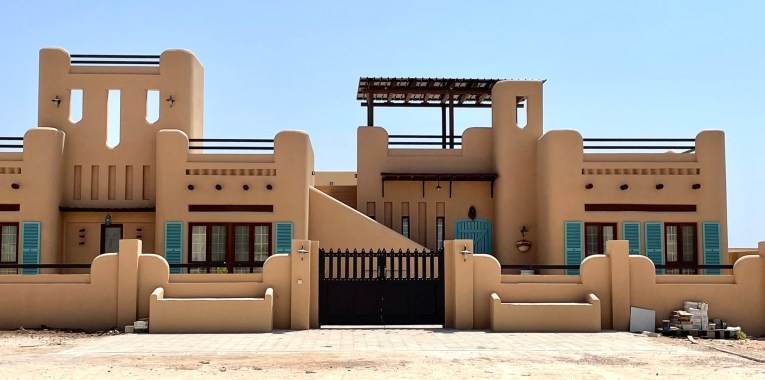



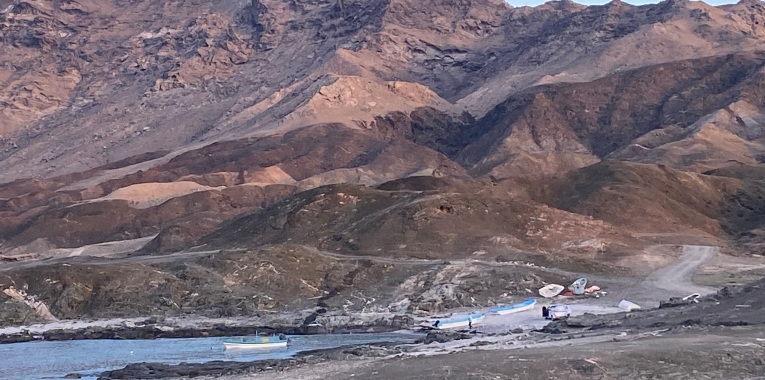
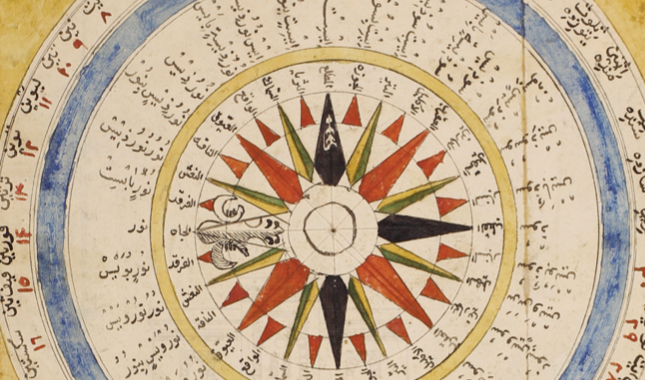

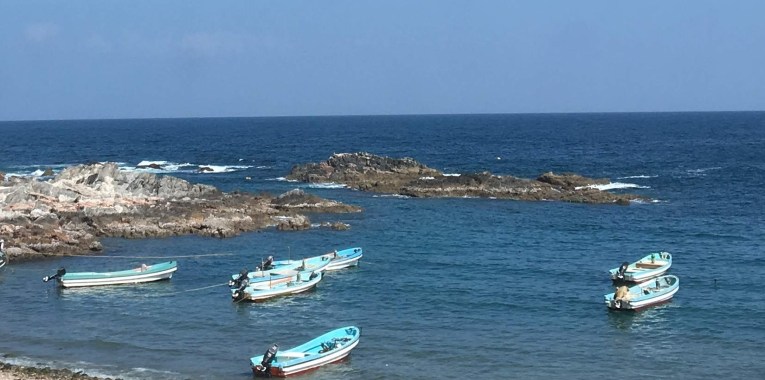


You must be logged in to post a comment.