Reflections on Ethnographic Research: Situating Expat Workers (part 2 of 4)

Reflections on Ethnographic Research: Deciding to Hire Expat Workers (part 1 of 4)

Overview

By chance in the past few weeks I have read several articles about labor and migration on the Arabian Peninsula such as

  • Gardner, Andrew and Sharon Nagy. (2008). “Introduction: New Ethnographic Fieldwork Among Migrants, Residents and Citizens in the Arab States of the Gulf.” City and Society 20.1: 1-4.
  • Nagy, Sharon. (1998). “‘This Time I Think I’ll Try a Filipina’: Global and Local Influences on Relations Between Foreign Household Workers and Their Employers in Doha, Qatar.” City and Society 10: 83-103.
  • Sarmadi, Behzad. (2013). “‘Bachelor’ in the City: Urban Transformation and Matter Out of Place in Dubai.” Journal of Arabian Studies 3: 196-214.

There are lots of numbers, data sets, opinions and ideas in these texts – but no sense of what it’s like to interact with expat workers. There is ethnographic work with and about them, but nothing about the writer’s personal economic exchanges: how to hire, discuss and pay wages, decide work load, etc. This isn’t a fault of the articles which have different objectives, but reading these texts made me reflect on my connections to other expat workers, how I manage them and how they manage me.

This essay will talk about my decision to hire help. The previous essay talked about my decision to hire help and later essays will talk in more detail about some of the people who have worked for me and the types of adjustments that we both make. [The information about wages and dates are from monthly lists of expenses that I have kept since I moved to Dhofar. 1 Omani Riyal is about $2.40; there are 1000 baisa in one Riyal so the 500 baisa bill is worth about $1.20.]

************

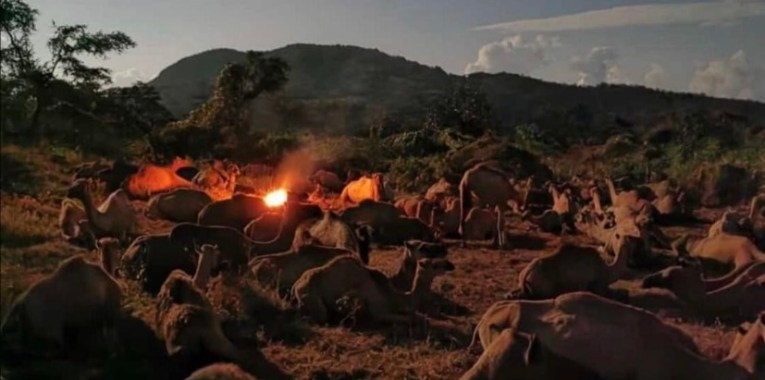
(photo by S. B.)

First, I want to highlight that my experiences are with other individual expat women and men who have come to Oman on their own, meaning they are sponsored by one Omani or a small company, not as part of teams hundreds of men strong. I can’t speak about the life of workers at large construction businesses beyond memories from 1997 of trying to walk between the buildings of the American University of Sharjah (AUS) as the men who were building the campus napped in the shaded walkways. As I stepped over their sleeping forms, I thought that I was probably being grossly culturally inappropriate, but they took up every inch of the shade so it was either don’t walk during nap-time, walk in the full sun or make one’s way amid the resting men. It was a great lesson in the practicalities of construction. I, with my Ray-bans and air-conditioned office, needed to understand that making the buildings required a lot of labor and that labor had the right to relax out of the noon-day sun.

I had a second lesson while living in campus housing at AUS. The man who was in charge of the apartments rang the doorbell one afternoon. When I opened the door, he was standing with 4 other men, one of whom was carrying a large TV set. “I am having coffee with women,” I said, “can you please come back in 2 hours?” He said, “Yes.” And I didn’t get my TV for a month. He had been ready to install it and I should have asked my female guests to leave so he could do his job. By saying “no,” I had insulted him and he installed every other TV on campus, waited another two weeks for good measure, then came back and did mine. Lesson learned.

Since I moved to Oman, I give up whatever I am doing when a repair person comes – no matter how inconvenient the time. I say “yes” to AC repairmen who want to tear open vents as I am trying to write midterm exams and telephone repair people who want to come in the middle of a birthday party.

Sometimes Omani friends and the research guys mention encounters with expat laborers; usually there is a clear divide between stories from men and women. Men work with expats laborers usually in connection to construction and the stories are usually negative. It’s hard to parse what is genuine confusion, what is incompetence and what is deliberate malice. The men don’t want to tell me details (as it is not common to dwell on negative people/ events) but here is one example from my life this year.

I wanted to have three rooms painted. Another expat I know brought an expat painter and his assistant to my house to give an estimate. The painter had been working in Oman for five years so he had a lot of experience.

He was very careful to ask if I was using “regular paint” or “machine paint” (paint in which the color is added when you buy it, available at only one store). I said, “machine.” He told me I would need 20 liters for each room and that the machine paint came in cans of 20 liters so I only need one can for each room. He also said he would need 3 rolls of tape to over the woodwork around the doors and light switches. That seemed like too much paint and not enough tape to me, but I haven’t painted a room in over 10 years so I deferred to his expertise.

When I got to the one store that mixes paint on request, I learned that “machine paint” comes in 4 or 18 liter cans and I was surprised that the painter had gotten the size of the can wrong. Since he had said 20 liters was needed, I bought an 18 liter can and a 4 liter can in each of the three colors for a cost of 64 Omani Riyal, thinking it was better to have too much than too little. I would keep the extra on-hand for touch-ups.

I got help to move the furniture into the middle of the rooms and cover everything with tarps. The painter arrived on time, looked at the 3 rolls of tape and announced that this was not nearly enough, so the person who was helping drove off to the store and bought more.

The painter and assistance worked from 8 to 5pm with a few breaks and did a great job. When they finished I paid the agreed price – 60 Riyal, plus I gave a 4 Riyal tip to each and they could take the tarps and the rest of the packet of water I had brought for them.

Then I went to take the paint cans to the trash and realized that they had only used about 12 liters per room; the large cans were 1/3 full and the 4 liter cans were untouched. As the paint was custom mixed, I could not return it and was stuck with a large amount of paint. I wondered how a person who has spent the last five years painting rooms would not know how much paint I should buy.

Stories from Dhofari women about female expat workers in their homes are usually about very positive interactions. For example, when I asked a female, Dhfoari friend if she wanted to have coffee, I was told that their maid was going back to her country, so my friend and her sisters were taking her shopping to get presents for the maid’s family. Once I was sitting in a female friend’s salle to have coffee and saw a new maid bring in a tray. My friend explained, “she’s new and very young, we didn’t think she would be so young, she misses her family so we are buying her many phone cards.”

Most of my female friends have workers who stay with the family for 10 years or more and they make adjustments to help the workers. One, for example, told me, “my father’s driver, his mother is sick so he is at home for a month so we rented a bus to bring the kids to school.”

Their stories made me realize that my basic assumption (I hire someone and they do the work) was not accurate. When someone works for you for a while, you create a relationship that must be respected. My obligation to the people who work for me is not simply that I pay the salary, a topic I will discuss in my next short essay.

Reflections on Ethnographic Research: Expat Workers and Reciprocity (part 3 of 4)

Reflections on Ethnographic Research: Expat Workers and Issues of Payment (part 4 of 4)

Reflections on Ethnographic Research: Getting it Wrong

Teaching: Reflective Teaching and Motivation

Reflections on Ethnographic Research: Claiming Knowledge and Shifting Perceptions

Reflections on Ethnographic Research: Deciding to Hire Expat Workers (part 1 of 4)

Overview

By chance in the past few weeks I have read several articles about labor and migration on the Arabian Peninsula such as

  • Gardner, Andrew and Sharon Nagy. (2008). “Introduction: New Ethnographic Fieldwork Among Migrants, Residents and Citizens in the Arab States of the Gulf.” City and Society 20.1: 1-4.
  • Nagy, Sharon. (1998). “‘This Time I Think I’ll Try a Filipina’: Global and Local Influences on Relations Between Foreign Household Workers and Their Employers in Doha, Qatar.” City and Society 10: 83-103.
  • Sarmadi, Behzad. (2013). “‘Bachelor’ in the City: Urban Transformation and Matter Out of Place in Dubai.” Journal of Arabian Studies 3: 196-214.

There are lots of numbers, data sets, opinions and ideas in these texts – but no sense of what it’s like to interact with other expat workers. There is ethnographic work with and about them, but nothing about the writer’s personal economic exchanges: how to hire, discuss and pay wages, decide work load, etc. This isn’t a fault of the articles which have different objectives, but reading these texts made me reflect on my connections to other expat workers, how I manage them and how they manage me.

This essay will talk about my decision to hire help, later essays will talk in detail about some of the people who have worked for me and the types of adjustments that we both make. [The information about wages and dates are from monthly lists of expenses that I have kept since I moved to Dhofar. 1 Omani Riyal is about $2.40; there are 1000 baisa in one Riyal so the 500 baisa bill is worth about $1.20.]

***********

(photo by S. B.)

It is difficult to write about hiring people without sounding complacent, a point that was brought home when I read an ethnographic text about Western expats on the Arabian Peninsula who hired nannies and housekeepers. The author vilified the employers as spoiled, lazy, racist and delusional. The author had obviously never hired anyone to do work for them and had a healthy dislike of those who did.

Writing back against that attitude is not easy. I know I could do all the housework myself but I choose to hire someone to clean my house. This can be seen as indolent but I think it’s more helpful to situate one’s positionality when being critical. “I would never…” is very different than “I have never been in the position to…”.

My decision to hire help is predicated on several lifestyle differences such as how housing designs here allow bugs and sand to enter, the monsoon season and the size of houses.

When I visit my mom in the summer it always takes me a few days to tone down my bug vigilance. “MOM, CRUMBS!!!” I yell on the first morning when I walk into the kitchen and see evidence of sliced bread on the countertop. I quickly rinse the bread board, wipe down the bread knife and inspect the countertops for any speck of bread. Luckily, she has great tolerance for this and within a day or two I mellow out as I remember that a few crumbs on the counter sink will not induce hordes of critters to invade her kitchen.

When I get back to my own kitchen in Dhofar, I return to my watchful ways because I live in a cement block house where ants and cockroaches come out from cracks in the tiling and up from the sink and floor drains. They even crawl out though the electric outlet openings. Twice I have had mice scurry up to my first-floor apartment through the washing machine outtake pipe. There are lizards on the walls, bees flying in through the AC vents and spiders galore.

When I talk about the people I have hired to help me by cleaning my house, I know it can seem like I am lazy. I moved to the Middle East with bona fides of self-sufficiency. When I was a child, I had daily chores and once I lived on my own, I have doing all the cleaning myself. But life is different herein Oman.

For example, I have done my own laundry since I was in 6th grade and it’s simple: put everything in washing machine, then the dryer, fold and put away. But there are no dryers here and my top-loading washer has two bins. You put the clothes in the left-hand side bin, add soap, let it fill with water and turn the knob to agitate the water. Then you let the water drain and lift the sopping wet fabric up and place it in the right-hand bin which spins the water out. Then you hang everything on drying racks, wait for it all to dry, fold and put away. Going to a friend’s house and using her washer/dryer combo in the States makes me ask, “What do you do with all your spare time? Put your clothes in the machine, come back an hour later to find everything clean and dry? It’s a dream!”

Also, my friends’ houses are not in close proximity to deserts. “Sweeping the floor” means one thing in my mom’s house and something very different after a 3-day, 40 kph sandstorm in my Dhofari house where you can see daylight between the window frames and house walls. It’s a joy to sweep in my mom’s house; it takes about 5 minutes and you end up with a tiny pile to discard. After a sandstorm here I need to sweep the entire house and dust everything which takes hours. And there are usually more than 5 sandstorms every winter.

In addition, from June until the end of August, Dhofar has a monsoon season with drizzle and fog on most days. As this is also the time of annual vacation, if there is no one to clean the floors, turn fans on and off and keep watch, mold can grow. I brought a friend home from the airport when she returned to start the school year and when we walked into her living room, her sofas were coated with black mold. When I came back from vacation this summer and opened my car door, the front seats and dashboard cover were green with mold, there were even threads of mold hanging down from steering wheel.

When I lived in Madison, Boston, Minneapolis, and Grand Forks, I had a studio or one-bedroom apartment which was easy to take care of. In Salalah, apartment buildings are usually exclusively expat and I want to live in Omani neighborhoods, which means renting a small house or a floor of a house which are built for extended families. My “small” apartment has a salle, majlis, kitchen, 3 small bedrooms and 3 bathrooms. Friends who have rented houses with 4 or 5 bedrooms just shut the doors of the rooms they don’t use but I would rather hire someone to clean all the spaces.

A related point is that it’s better for me to have a slightly larger place to live as there are fewer “third spaces” here. In the month of Ramadan, for example, cafes are closed until after sunset. In the monsoon season, roads can be so crowded, it’s better to stay home. During Covid lockdowns and curfews I was really grateful I could turn the 3rd bedroom into a work space for on-line teaching. I also like that the woman who cleans my house has a key and can feed the cats if I am away for the weekend camping.

In addition to the calculations of spending time (washing clothes, sweeping, getting rid of mold) vs. spending money (paying someone to clean my house), there is the aspect of how easy it is to get help from someone who wants to work.

When I owned a car in the States, I would wash it now and then but here it is a government regulation that cars must be clean. So I could either spend ten minutes every morning wiping the sand off my truck or I hire someone to do it for me. In most parking lots of large stores, there are expat men who do this work for a small fee. Where I work, there are two men who come every morning to the covered parking area. You can pay them 500 baisa for each cleaning if you want it now and then or 10 Riyal for the month.

There are many such opportunities and I usually much hire and/ or tip everyone both because it makes my life easier and because I have been in need in my own life. I spent years without health insurance because I couldn’t afford it. I have always worked since I was in high school but I had to take out student loans for college. If my older brother had not kindly settled my student loans, it would have taken me at least a decade to pay them off. After the 1997 Red River flood, I ate Red Cross meals for weeks. Having received so much help in my life, I feel I need to be generous.

Every week, I give a money to the people who clean the building where I work and I tip the men who bag groceries. Although it’s not habitually done here, I always tip wait-staff and delivery men. When expat government employees are cutting weeds near my house, I hand out cash and bottles of water. If it’s safe to pull to the side of the road and I have cash in dashboard cubby hole, I give cash to the men who sweep streets. If I have time when there is a team of expat men gardening along the roadside near my house, I will buy cookies, as well as liters of water and soda, and hand them over.

Before I became an Associate Professor, I worked in sandwich shops, restaurants, libraries, a bookstore and an antique store and I can push my own grocery cart. But if I am walking in the parking lot of a grocery store and a man in the jumpsuit uniform of a cleaner walks towards me with his hands extended, I know he is asking to bring my cart to my car for a 1 Riyal tip. So I step away from my cart and let him push – a move that can be seen as being lazy/ exploitative or giving someone a chance to earn extra money.

Reflections on Ethnographic Research: Situating Expat Workers (part 2 of 4)

Reflections on Ethnographic Research: Expat Workers and Reciprocity (part 3 of 4)

Reflections on Ethnographic Research: Expat Workers and Issues of Payment (part 4 of 4)

Outline and Chapter Abstracts for ‘Researching, Teaching and Working on the Arabian Peninsula: Creating Effective Interactions’

Houseways: Podcast, a discussion with Ahmed Almaazmi and Ayesha Mualla

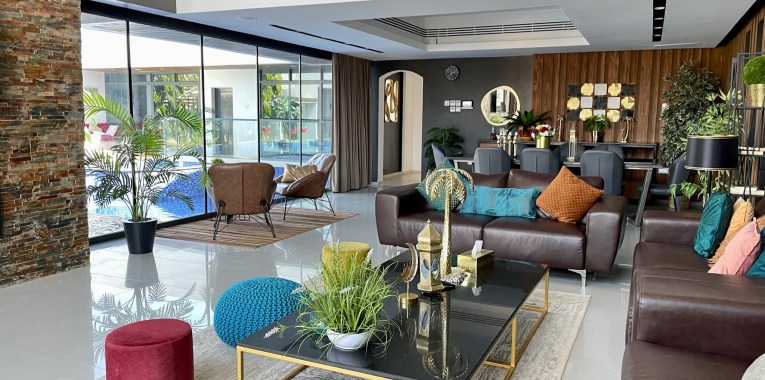
(photo by Onaiza Shaikh, living room in a rental house in Dhofar)

I had a great conversation yesterday with Ahmed Almaazmi and Ayesha Mualla for the Indian Ocean World – New Books Podcast.

https://newbooksnetwork.com/houseways-in-southern-oman

One interesting point that came up in our talk was how changes in house design affect the inhabitants. For much of the Arabian Peninsula, the most common type of house had a central courtyard until the 1970s, 1980s or 1990s depending on the area. With this type, not often found in Dhofar, all the rooms of the house open onto a center space that is exposed to the sky. Thus there are open sightlines in all directions; while more recently built houses are often ‘closed’ with hallways and corners which drastically cut down on the chance of seeing other inhabitants.

The reaction to this change can vary from person to person/ family to family. Some might celebrate the feeling of openness and togetherness found in a house with many vantage points to see most or all of the rooms, where it was easy to cross path with family members. Others see modern houses with limited sightlines as a great advantage in that people can come in and leave without others knowing.

One Dhofari friend told me that having a large open area near the front door, big enough for a few sofas, has been a blessing for her elderly father who can sit in that space all day and see every person as they move between the salle, majlis, kitchen, stairs and front door.

On the other hand, a different Dhofari woman told me about the early years of her marriage when she lived with her husband’s parents and felt a tremendous pressure to have herself and her children always well dressed and on-view in the public areas of the house. She and her husband eventually moved into a small rental hour so that she could have a more peaceful life.

This is one of Maneval’s main points in New Islamic Urbanism: The Architecture of Public and Private Space in Jeddah, Saudi Arabia (2019): the built elements for privacy (high walls, limited sightlines in houses etc.) allow for people to act as they chose as they can create non-observed spaces for themselves.

Thus one can imagine a courtyard house with an family member who rigidly watches, criticizes and controls all the movements or a house in which inhabitants happily greet each other and sit together in harmony. Just as there are modern houses in which people are thankful to have privacy and chances to live as they please and other modern houses in which people feel cut off from each other and lonely.

The only drawback to our talk was that, to prepare, I read a published copy of my Houseways in Southern Oman book and found numerous typos. It was disappointing to see so many mistakes: Salalah misspelled, the author R. Guest written with a small ‘g’ and Modern South Arabian languages referred to as “South Arabian languages.” The proof I was given to check was write-protected, so I could make edits but I could not ‘accept’ the changes to see what the corrected version would look like. The result is odd spacing, missing words and small errors. Very frustrating!

Houseways: House plans

Houseways: Dhofari/ non-Dhofari house plans

Houseways is published and more examples of houseplans

Selected references related to Houseways in Southern Oman, Oct. 2022

Houseways in Southern Oman

Selected references related to Houseways in Southern Oman, Oct. 2022

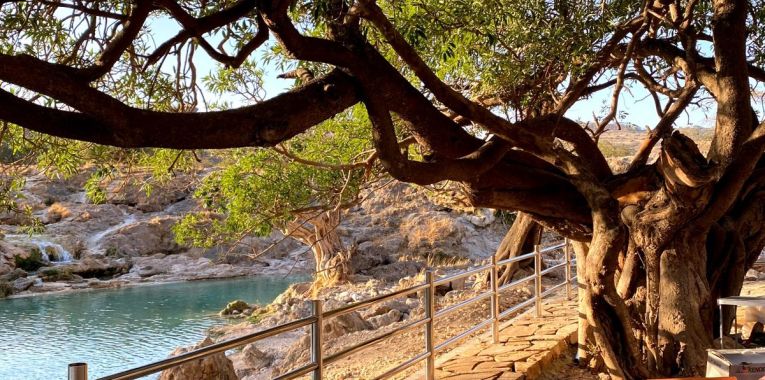
(photo by Onaiza Shaikh)

Selected references related to Houseways in Southern Oman – Dr. Marielle Risse

bibliography last updated Oct. 2022

[references for pre-historic and pre-modern Dhofar are also listed in separate topic-specific bibliographies at the end]

Abdelghani, Montasser. 2013. “The Impact of Shopping Malls on Traditional Retail Stores in Muscat. Case Study of Al-Seeb Wilayat.” Regionalizing Oman. Steffen Wippel, ed. New York: Springer. 227-47.

Abu-Lughod, Janet. 1989. “What Is Islamic about a City? Some Comparative Reflections,” in Urbanism in Islam: The Proceedings of the International Conference on Urbanism in Islam (Tokyo: Middle Eastern Culture Center): 193-217.

—. 1987. “The Islamic City: Historical Myth, Islamic Essence and Contemporary Relevance.” International Journal of Middle East Studies 19.2: 155-76.

Adam, Khalid and Liudmila Cazacova, 2012. “The Round Dhofari House Popularity Uniting the Past and the Present.” Proceedings of the 6th International Seminar on Vernacular Settlements. Eastern Mediterranean University, Famagusta, North Cyprus. 365-74.

Akcan, Esra. 2014. “Postcolonial Theories in Architecture” in A Critical History of Contemporary Architecture (1960-2010). Elie Haddad and David Rifkind, eds. London: Ashgate. 119-40.

—. 2014. “Global Conflict and Global Glitter: Architecture in West Asia (1960-2010)” in A Critical History of Contemporary Architecture (1960-2010). Elie Haddad and David Rifkind, eds. London: Ashgate. 317-43.

Al Gandel, Thamna and Ibrahim Bryan Finn. 2017. Learn About Dhofar from 530 Questions and Answers. Muscat: Dar al Wraq.

Al Harthy, Sultan. 1992. The Traditional Architecture of Oman: A Critical Perspective. Unpublished M.Arch. thesis. The University of Arizona. https://repository.arizona.edu/bitstream/handle/10150/555398/AZU_TD_BOX353_YARP_1120.pdf?sequence=1https://repository.arizona.edu/handle/10150/555398

Al Hinai, H., W. J. Batty and S. D. Probert. 1993. “Vernacular Architecture of Oman: Features that Enhance Thermal Comfort Achieved within Buildings.” Applied Energy 44.3: 233-44. 10.1016/0306-2619(93)90019-L

Al Ismaili, Ahmed. 2018. “Ethnic, Linguistic, and Religious Pluralism in Oman: The Link with Political Stability.” Al Muntaqa 1.3: 58-73.

Al Kathiri, Muna Salim and Liudmila Cazacova. 2014. “Islamic Architecture Features and Modern Housing: A Case Study of the North Awqad District in Salalah, Oman.” The International Journal of the Constructed Environment 4: 1-18.

Al Mohannadi, Asmaa Saleh, Raffaelo Furlan and Mark David Major. 2019. “Socio-Cultural Factors Shaping the Spatial Form of Traditional and Contemporary Housing in Qatar: A Comparative Analysis based on Space Syntax.” Proceedings of the 12th Space Syntax Symposium.

Al Mohannadi, Asmaa Saleh and Raffaello Furlan. 2019. “Socio-cultural Patterns Embedded into the Built Form of Qatari Houses: Regenerating Architectural Identity in Qatar.” Journal of Urban Regeneration and Renewal 12.4: 1-23.

Al Thahab, Ali, Sabah Mushatat, and Mohammed Abdelmonem. 2014. “Between Tradition and Modernity: Determining Spatial Systems of Privacy in the Domestic Architecture of Contemporary Iraq.” ArchNet – International Journal of Architectural Research 8.3: 238-250.

Albright, Franklin. 1982. The American Archaeological Expedition in Dhofar, Oman, 1952-1953. Washington DC: American Foundation for the Study of Man.

Alexander, Christopher, Sara Ishikawa, Murray Silverstein, Max Jacobson, Ingrid Fiksdahl-King and Shlomo Angel. 1977. A Pattern Language: Towns, Buildings, Construction. Oxford: OUP (Center for Environmental Structure Series).

Alkhalidi, Abdulsamad. 2013. “Sustainable Application of Interior Spaces in Traditional Houses of the United Arab Emirates.” Procedia – Social and Behavioral Sciences 102: 288-299.

AlMutawa, Rana. 2022. “Navigating the Cosmopolitan City: Emirati Women and Ambivalent Forms of Belonging in Dubai,” in Migration in the Making of the Gulf Space Social, Political, and Cultural Dimensions. Antia Mato Bouzas and Lorenzo Casini, eds. New York: Berghahn Books. 67-85.

—. 2020, Dec. 9. “Dishdasha Blues: Navigating Multiple Lived Experiences in the Gulf.” London School of Economics Middle East Blog Posts https://blogs.lse.ac.uk/mec/2020/12/09/dishdasha-blues-navigating-multiple-lived-experiences-in-the-gulf/

—. 2019, Nov 8. “Dubai Mall or Souq Naif? The Quest for ‘Authenticity’ and Social Distinction.” London School of Economics Middle East Blog Posts. https://blogs.lse.ac.uk/mec/2019/11/08/dubai-mall-or-souq-naif-the-quest-for-authenticity-and-social-distinction/

—. 2019. “The Mall Isn’t Authentic!: Dubai’s Creative Class And The Construction of Social Distinction.” Urban Anthropology and Studies of Cultural Systems and World Economic Development 48: 1-2: 183-223.

—. 2018, Dec.4. “Challenging Concepts of ‘Authenticity’: Dubai and Urban Spaces in the Gulf.” London School of Economics Middle East Blog Posts. https://blogs.lse.ac.uk/mec/2018/12/04/challenging-concepts-of-authenticity-dubai-and-urban-spaces-in-the-gulf/

—. 2017. “Women and Restrictive Campus Environments: A Comparative Analysis Between Public Universities and International Branch Campuses in the UAE.” Higher Education in the Gulf States: Present and Future. 17-9.

Ammann. Ludwig. 2006. “Private and Public in Muslim Civilization,” in Islam in Public: Turkey, Iran and Europe. Nilüfer Göle and Ludwig Ammann, eds. Istanbul Bilgi University Press. 77-125.

—. 2002. “Islam in Public Space.” Public Culture 14.1: 277-79.

Anderson, Esther. 2021. “Positionality, Privilege, and Possibility: The Ethnographer ‘at Home’ as an Uncomfortable Insider.” Anthropology and Humanism 46.2: 212-25.

Anderson, John. 1896. “A Sketch of the Physical Features of the Coast of South-East Arabia.” A Contribution to the Herpetology of Arabia. London: R.H. Porter. 2-18.


Atlas of Archaeological Survey in the Governorate of Dhofar Sultanate of Oman. 2013. Muscat: Office of the Advisor to His Majesty the Sultan for Cultural Affairs.

Andraos, Amale. 2016. “The Arab City.” Places Journal. https://doi.org/10.22269/160531

Arnaud, Jean-Luc. 1995. “La Formation de l’Architecture Contemporaine à Sanaa,” in Sanaa hors les Murs, une Ville Arabe Contemporaine. Franck Mermier and Gilbert Grandguillaume, eds. Urbama – CFEY: Tours. 165-226.

Asmi, Rehenuma. 2016. “Finding a Place to Sit How Qatari Women Combine Cultural and Kinship Capital in the Home Majlis.” Anthropology of the Middle East 11.2: 18–38.

Avanzini, Alessandra, ed. 2008. A Port in Arabia between Rome and the Indian Ocean (3rd C.BC. – 5th C.AD) Khor Rori Report 2. Rome: L’Erma di Bretschneider.

—. 2007.“Sumhuram: A Hadrami Port on the Indian Ocean,” in The Indian Ocean in the Ancient Period: Definite Places, Translocal Exchange BAR International Series 1593. Eivind Heldaas Seland, ed. Oxford: Archaeopress. 23-31.

—. 2002. “Incense Routes and Pre-Islamic South Arabian Kingdoms.” Journal of Oman Studies 12: 17-24.

Avanzini, Alessandra and Alexander Sedov. 2005. “The Stratigraphy of Sumhuram: New Evidences.” Proceedings of the Seminar for Arabian Studies 35: 11-7.

Ball, Lawrence, Douglas MacMillan, Joseph Tzanopoulos, Andrew Spalton, Hadi Al Hikmani and Mark Moritz. 2020. “Contemporary Pastoralism in the Dhofar Mountains of Oman.” Human Ecology. https://doi.org/10.1007/s10745-020-00153-5

Bandyopadhyay, Soumyen. 2019. “The Bait as-Sail Rehabilitation and Restoration Project, Salalah, Oman.”  Architecture and Cultural Heritage of India, Arabia and the Maghreb. https://www.archiam.co.uk/ghassani-house-adaptive-reuse-project/

—. 2011. Manah: An Omani Oasis, an Arabian Legacy Architecture and Social History of an Omani Settlement. Liverpool: ‎Liverpool University Press.

—. 2006. “The Deconstructed Courtyard: Dwellings of Central Oman,” in Courtyard Housing: Past, Present and Future. B. Edwards, M. Sibley, M. Hakmi, and P. Land. eds. New York: Taylor & Francis. 109-21.

—. 2002. “Problematic Aspects of Synthesis and Interpretation in the Study of Traditional Built Environment.” Global Built Environment Review 2.2: 16-28.

Barth, Fredrik. 1983. Sohar: Culture and Society in an Omani Town. Baltimore: Johns Hopkins University Press.

Beeston, Alfred. 1976. “The Settlement at Khor Rori.” The Journal of Oman Studies 2: 39-41.

Belfioretti, Luca and Tom Vosmer. 2010. “Al-Balīd Ship Timbers: Preliminary Overview and Comparisons.” Proceedings of the Seminar for Arabian Studies 40: 111-18.

Belk, Russell. 2012. “People and Things,” in Handbook of Developments in Consumer Behavior. Victoria Wells and Gordon Foxall, eds.  Cheltenham: Elgar. 15-46.

Benkari, Naima. 2021. “The Formation and Influence of the Military Architecture in Oman during the al Ya’ariba Period (1034-1162 AH/ 1624-1749 AD). Journal of Islamic Architecture 6.4: 217-228.

—. 2021. “Community-led Initiatives for the Rehabilitation and Management of Vernacular Settlements in Oman: A Phenomenon in the Making.” Built Heritage 5.1: 1-20.

—. 2019. “Local Community Involvement in the Adaptive Reuse of Vernacular Settlements in Oman,” in Vernacular and Earthen Architecture: Towards Local Development. Miles Lewis, Shao Yong, Gisle Jakhelln and Mariana Correia, eds. Shanghai: Tongji University Press. 557-64.

—. 2017. “Urban Development in Oman: An Overview.” Transactions on Ecology and the Environment 226.1: 143–156.

Benkari, Naima, and Alya Al-Hashim. 2015. “Omani Traditional Houses and Settlements: New Options for Developing a Sustainable Tourism.” unpublished.

Bent, J.T. 1895. “Exploration of the Frankincense Country, Southern Arabia.” The Geographical Journal 6.2: 109-33.

Bent, Theodore and Mabel. 2005/ 1900. Southern Arabia. London: Elibron.

Bianca, Stefano. 2000. “Basic Principles of Islam and Their Social, Spatial and Artistic Implications” in Urban Form in the Arab World. London: Thames & Hudson. 23-48.

Biancifiori, M. 1994. Works of Architectural Restoration in Oman. Rome: Edizioni De luca.

bin Zayyad, Sabeen and Brian Sinclair, 2017. “Culture, Context + Environmental Design: Reconsidering Vernacular in Modern Islamic Urbanism.” presented at the 10th EAAE/ARCC International Conference. https://www.researchgate.net/publication/314218959_Culture_context_environmental_design_Reconsidering_vernacular_in_modern_Islamic_urbanism

Blue, Lucy, Nasser Said Al-Jahwari, Eric Staples, Lorena Giorgio, Paolo Croce, Alessandro Ghidoni, Ayyoub Nagmoush Al Busaidi and Luca Belfioretti. 2014. “Maritime Footprints: Examining the Maritime Cultural landscape of Masirah Island, Oman, Past and Present.” Proceedings of the Seminar for Arabian Studies 44. 53-68.

Bontenbal, Marike. 2017. “Policy Brief – Opportunities and Constraints of Female Labour Participation in Oman’s Private Sector.” Economic Research Forum – German University of Technology in Oman. 1-8.

—. 2015. “Residential Satisfaction and Place Identity in a Traditional Neighborhood: The Case of Mutrah, Oman,” in Gateways to the World: Port Cities in the Gulf: Working Group Summary Report. Doha: Center for International and Regional Studies at the Georgetown University School of Foreign Service in Qatar. 189-215.

—. 2013. “Place Attachment and Sense of Belonging in Oasis Villages in the Capital Area of Muscat, Oman.” Trialog: A Journal for Planning and Building in the Global Context 3. 16-20.

Bortolini, Eugenio and Olivia Munoz. 2015. “Life and Death in Prehistoric Oman: Insights from Late Neolithic and Early Bronze Age Funerary Practices (4th – 3rd mill. BC).” Proceedings of the Symposium: The Archaeological Heritage of Oman. Paris: UNESCO. 61-80.

Bourdieu, Pierre. 1972. “The Kabyle House or the World Reversed,” in Algeria 1960. Cambridge: Cambridge University Press. 133-54.

Brandt. Marieke. 2021. “Introduction: The Concept of Tribe in the Anthropology of Yemen,” in Tribes in Modern Yemen: An Anthology (Denkschriften Der Philosophisch-historischen Klasse 531). Najwa Adra, Marieke Brandt, Steven Caton, Paul Dresch, Andre Gingrich, eds. Vienna: Institut für Sozialanthropologie der Österreichischen Akademie der Wissenschaften. 11-8.

—. 2021. “Some Remarks on Blood Vengeance (Tha’r) in Contemporary Yemen,” in Tribes in Modern Yemen: An Anthology (Denkschriften Der Philosophisch-historischen Klasse 531). Najwa Adra, Marieke Brandt, Steven Caton, Paul Dresch, Andre Gingrich, eds. Vienna: Institut für Sozialanthropologie der Österreichischen Akademie der Wissenschaften. 63-78.

Breteau, Marion. 2020. Amours à Mascate: Espaces, Rôles de Genre et Représentations Intimes chez les Jeunes (Sultanat d’Oman). Anthropologie Sociale et Ethnologie. Aix-Marseille Université.

Buffa, V and A.V. Sedov. 2008. “The Residential Quarter” in A Port in Arabia between Rome and the Indian Ocean (3rd C. BC – 5th C. AD). A. Avanzini, ed. Khor Rori Report 2, Roma: L’Erma di Bretschneider: 15-59.

Carter, Henry. 1852. “Memoir of the Geology of the South-East Coast of Arabia.” Journal of the Bombay Branch of the Royal Asiatic Society 3: 21-96.

—. 1851. “A Geographical Description of Certain Parts of the Southeast Coast of Arabia.” Journal of the Bombay Branch of the Royal Asiatic Society 3: 224-317.

—.  1847. “Notes on the Mahrah Tribe of Southern Arabia, with a Vocabulary of their Language, to which is appended additional Observations on the Gara Tribe.” Journal of the Bombay Branch of the Royal Asiatic Society 7.2: 339-64.

—. 1846. “The Ruins of El Balad.” Journal of the Royal Geographical Society of London 16: 187-99.

—. 1845. “Notes on the Gara Tribe.” Journal of the Bombay Branch of the Royal Asiatic Society 2: 195-201.

Carter, J. R. L. 1982. Tribes in Oman. London: Peninsular Publishing.

Carter, Robert and Daniel Eddisford. 2017. “The Vernacular Architecture of Doha, Qatar.” Post-Medieval Archaeology. 1-26. doi: 10.1080/00794236.2017.1320918

Caton, Steve. 2005. Yemen Chronicle: Anthropology of War and Mediation. New York: Hill and Wang.

Causevica, Senija and Mark Neal. 2019. “The Exotic Veil: Managing Tourist Perceptions of National History and Statehood in Oman.” Tourism Management 71: 504-17.

Cazacova, Liudmila., Maria Hidalgo, M. Farhan, F. Al-Masikhi, F. Al-Hafidh, H. Qatan, J. Hubais, L. Ghafoor, M. Al-Marhoon, M. Darwish, M. Al-Amri, S. Al-Baraami, S. Al-Shanfari and S. Al-Rawas, 2014. “Recognition of Mirbat Town’s Old Area as Historical Environment.” Proceedings of REHAB. Tomar, Portugal. 581-91. doi: 10.14575/gl/rehab2014

Cazacova, Liudmila and Balkiz Yapicioglu. 2021. “Residential Architecture: Evaluation of Tenants’ Satisfaction in Private Culture.” WIT Transactions on Ecology and the Environment 253: 409-22.

—. 2014. “Fertile Crescent Defensive Cities Architectural Features Influenced by the Land of Incense Culture.” Proceedings of the CAUMME II International Symposium: Architectural and Urban, Architectural and Urban Research, Education, and Practice in the Era of Post-Professionalism. Girne American University, Girne, North Cyprus. 322-46.

Charpentier, Vincent, Jean-Francois Berger, Rémy Crassard, Fredico Borgi and Philippe Béarez. 2016. “Les Premiers Chasseurs-collecteurs Maritimes d’Arabie (IXe-IVe millénaires avant notre ère) [Early Maritime Hunter-Gatherers in Arabia (9th – 4th Millennium before the Current Era)] Archéologie des Chasseurs-collecteurs Maritimes. Catherine Dupont and Gregor Marchand, eds. Paris: Société Préhistorique Française. 345-66. https://www.researchgate.net/publication/311650424_Les_premiers_chasseurs-collecteurs_maritimes_d’Arabie_IXe-IVe_millenaires_avant_notre_ere

Charpentier, Vincent, Alex de Voogt, Remy Crassard, Jean-Francois Berger, Federico Borgi and Ali Al-Mashani. 2014. “Games on the Seashore of Salalah: The Discovery of Mancala Games in Dhofar, Sultanate of Oman.” Arabian Archaeology and Epigraphy 25: 115-20.


Chatty, Dawn. 2013. “Rejecting Authenticity in the Desert Landscapes of the Modern Middle East: Development Processes in the Jiddat Il-Harasiis, Oman,” in Anthropology of the Middle East and North Africa. Sherine Hafez and Susan Slyomovics, eds. Bloomington: Indiana University Press. 145-64.

—. 2013. “Negotiating Authenticity and Translocality in Oman: The ‘Desertscapes’ of the Harasiis Tribe,” in Regionalizing Oman: Political, Economic and Social Dynamics. Steffen Wippel, ed. Heidelberg: Springer. 129-45.

—. 2000. “Women Working in Oman: Individual Choice and Cultural Constraints.” International Journal of Middle Eastern Studies 32: 241-54.

—. 2000. “Integrating Participation into Research and Consultancy: A Conservation Example from Arabia.” Social Policy and Administration 34.4: 408-18.

—. 1998. “Enclosures and Exclusions: Conserving Wildlife in Pastoral Areas of the Middle East.” Anthropology Today 14.4: 2-7.

—. 1997. Mobile Pastoralists: Development Planning and Social Change in Oman. New York: Columbia University Press.

—. 1976. “From Camel to Truck.” Folk 18: 114-28.

Clements, Frank. 1977. “The Islands of Kuria Muria: A Civil Aid Project in the Sultanate of Oman Administered from Salalah, Regional Capital of Dhofar.” Bulletin (British Society for Middle Eastern Studies) 4.1: 37-9.

Cleuziou, Serge and Maurizio Tosi. 2020. In the Shadow of the Ancestors: The Prehistoric Foundations of the Early Arabian Civilization in Oman, second edition. Dennys Frenez and Roman Garba, eds. Muscat: Ministry of Heritage and Tourism.

Cleveland, R. L. 1960. “The 1960 American Archaeological Expedition to Dhofar.” Bulletin of the American Schools of Oriental Research 159: 14-26.

—. 1959. “The Sacred Stone Circle of Khor Rori (Dhofar).” Bulletin of the American Schools of Oriental Research 155: 29-31.

Cordes, Rainer and Fred Scholz. 1980. “Changes in the Nomad Region of Oman” and “Settlement Projects in Inner Oman, and Other Measures to Develop the Rural/Nomad Region,” in Bedouins, Wealth, and Change: A Study of Rural Development in the United Arab Emirates and the Sultanate of Oman. Tokyo: United Nations University. https://archive.unu.edu/unupress/unupbooks/80143e/80143E00.htm

Costa, Paulo. 2001. Historic Mosques and Shrines of Oman. Oxford: British Archaeological Reports.

—. 1994. Studies in Arabian Architecture (Variorum Collected Studies). London: Routledge.

—. 1991. Musandam: Architecture and Material Culture of a Little Known Region of Oman. London: Immel.

—. 1983. “Notes on Settlement Patterns in Traditional Oman.” Journal of Oman Studies 6.2: 247-68.

—. 1979. “The Study of the City of Zafar (Al-Balid).” Journal of Oman Studies 5: 111-50.

Costa, Paulo and Stephen Kite. 1985. “The Architecture of Salalah and the Dhofar Littoral.” Journal of Oman Studies 7: 131-58.

Craufurd, C. 1919. “The Dhofar District.” The Geographical Journal 53.2: 97-105.

Cremaschi, Mauro, Andrea Zerboni, Vincent Charpentier, Remy Crassard, Ilaria Isola, Eleonora Regattieri, Giovanni Zanchetta. 2015. “Early-Middle Holocene Environmental Changes and pre-Neolithic Human Occupations as Recorded in the Cavities of Jebel Qara (Dhofar, southern Sultanate of Oman).” Quaternary International 382: 264-76.

Cruttenden, Charles. 1838. “Journal of an Excursion from Morbat to Dyreez, the Principal Town of Dhofar.” Transactions of the Bombay Geographical Society 1: 184-88.

Damluji, Salma Samar. 1998. The Architecture of Oman. Reading: Ithaca Press.

De Bel-Air, Françoise. 2015. “Demography, Migration, and the Labour Market in Oman.” Gulf Research Center – Gulf Labor Markets and Migration – EN – No. 9/2015. https://cadmus.eui.eu/bitstream/handle/1814/37398/GLMM_ExpNote_09_2015.pdf;jsessionid=D57068437CF3E9B040792393699299B9?sequence=1

de Cardi, Beatrice. 2002. “British Archeology in Oman: The Early Years.” Journal of Oman Studies 12: 11-15.

De Koning, Anouk. 2009. Global Dreams: Class, Gender, and Public Space in Cosmopolitan Cairo. Cairo: American University in Cairo Press.

De Regt, Marina. 2010. “Ways to Come, Ways to Leave: Gender, Mobility, and Il/legality among Ethiopian Domestic Workers in Yemen.” Gender and Society 24.2: 237-60.

—. 2009. “Preferences and Prejudices: Employers’ Views on Domestic Workers in the Republic of Yemen.” Signs 34.3: 559-81.

De Siqueira, Gustavo and Amal Al Balush. 2020. “Co-designing the Pedestrian Revolution in Muscat.” City, Territory and Architecture 7.11: 1-15. doi: 10.1186/s40410-020-00119-6

Deeb, Lara and Jessica Winegar. 2012. “Anthropologies of Arab-Majority Societies.” Annual Review of Anthropology 41: 537-58.

Degli Esposti, Michele and Alexia Pavan. 2020. “Water and Power in South Arabia: The Excavation of “Monumental Building 1” (MB1) at Sumhuram (Sultanate of Oman).” Arabian Archeology and Epigraphy. 1-29. doi: 10.1111/aae.12159

Dorman, Deborah. 2017. “A Nasraniyya in Sanaa, 1988-99,” in Architectural Heritage of Yemen: Buildings that Fill my Eye. Trevor Marchand, ed. London: Ginko. 179-86.

Dorsky, Susan. 1986.  Women of ‘Amran: A Middle Eastern Ethnographic Study. Salt Lake City: University of Utah Press.

Eickelman, Christine. 1988. “Women and Politics in an Arabian Oasis,” in A Way Prepared: Essays on Islamic Culture in Honor of Richard Bayly Winder. New York: New York University Press. 199-215.

—. 1984. Women and Community in Oman. New York: New York University Press.

Eickelman, Dale. 1989. “National Identity and Religious Discourse in Contemporary Oman.” International Journal of Islamic and Arabic Studies 6.1: 1-20.

—. 1983. “Omani Village: The Meaning of Oil,” in The Politics of Middle Eastern Oil. J. E. Peterson, ed. Washington, D.C.: The Middle East Institute. 211-19.

—. 1974. “Is There an Islamic City? The Making of a Quarter in a Moroccan Town.” International Journal of Middle East Studies 5.3: 274-94.

Eddisford, Daniel and Colleen Morgan, 2013. The Radwani House: Architecture, Archaeology and Social History. 1-92. https://www.academia.edu/33365222/The_Radwani_House_Architecture_Archaeology_and_Social_History

Eddisford, Daniel and Robert Carter. 2017. “The Vernacular Architecture of Doha, Qatar.” Post-Medieval Archaeology 51.1: 81-107.

Escher, Anton. 2019. “Eugen Wirth (1925-2012) – Geographer of the Oriental City in North Africa and the Near East.” Middle East – Topics & Arguments 12.1: 122-6. doi:10.17192/meta.2019.12.7940.

Flahive, Robert. 2021, Dec. 2. “Settler Colonialism Beyond the Settler State? Remaking the Past through Architectural Preservation in Casablanca.” Presentation at the Middle East Studies Association annual conference. Montreal, Quebec.

Fletcher, Richard and Erin Stepney. n.d. “Morphologies of Housing in Doha: from Bayt Sha’bi to Suburban Villa.” 1-23. https://www.academia.edu/41429399/Morphologies_of_Housing_in_Doha_from_bayt_shabi_to_suburban_villa

Franke-Vogt, Ute. 2002. “Remarks on the Classification of the Pottery from Al-Balid, Dhofar (Oman).” Unpublished ms., Office of the Advisor to HM the Sultan for Cultural Affairs: Muscat-Salalah.

Fusaro, Agnese. 2021. “The Islamic Port of al-Balīd (Oman), between Land and Sea: Place of Trade, Exchange, Diversity, and Coexistence.” Journal of Material Cultures in the Muslim World 1.1-2: 67-95. doi: https://doi.org/10.1163/26666286-12340003

Gallagher, Winifred. 2007. House Thinking: A Room-by-room Look at How We Live. New York: HarperCollins.

Galletti, Christopher, Billie Turner and Soe Myint. 2016. “Land Changes and their Drivers in the Cloud Forest and Coastal Zone of Dhofar, Oman, between 1988 and 2013.” Regional Environmental Change 16.7: 2141–53.

Garba, Roman. 2020. “Window 48- Triliths. Hinterland Monuments of Ancient Nomads. Window 48,” in In the Shadow of the Ancestors: The Prehistoric Foundations of the Early Arabian Civilization in Oman, second edition. Dennys Frenez and Roman Garba, eds.Muscat: Ministry of Heritage and Tourism. 500-10.

Garba, Roman, Alžběta Danielisová, Maria Pia Maiorano, Mahmoud Abbas, Dominik Chlachula, David Daněček, W. Al-Ghafri, Stephanie Neuhuber, Denis Štefanisko and Jakub Trubač. 20202. TSMO (Trilith Stone Monuments of Oman) Research Project Expedition Report of the 2nd Season 2019-2020 (campaigns TSMO 2A & 2B). Muscat: Ministry of Heritage and Culture, Sultanate of Oman. https://www.researchgate.net/publication/341193620_TSMO_EXPEDITION_REPORT_OF_THE_2nd_SEASON_2019-2020_campaigns_TSMO_2A_2B_Ministry_of_Heritage_and_Culture_Sultanate_of_Oman

Garba, Roman and Peter Farrington. 2011. “Walled Structures and Settlement Patterns in the South-western Part of Dhofar, Oman (poster).” Proceedings of the Seminar for Arabian Studies 41: 95–100.

Gardner, Andrew. 2015. “Migration, Labor and Business in the Worlding Cities of the Arabian Peninsula.” Institute of Developing Economies – Discussion Paper no. 513. 1-11.

Gardner, Andrew and Momina Zakzouk. 2014. “Car Culture in Contemporary Qatar,” in Everyday Life in the Muslim Middle East, third edition. Donna Lee Bowen, Evelyn Early, and Becky Schulthies, eds. Bloomington, IN: Indiana University Press. 133-42.

Gardiner, Ian. 2007. In the Service of the Sultan: A First-hand Account of the Dhofar Insurgency. South Yorkshire: Pen and Sword Military.

Gateways to the World: Port Cities in the Gulf: Working Group Summary Report. 2015. Doha: Center for International and Regional Studies at the Georgetown University School of Foreign Service in Qatar.

Gaube, Heinz, Lorenz Korn, Abdulrahman al-Salimi, Faysal al-Hafiyan, Ruba Kanaan, Seth M. N. Priestman, Birgit Mershen and Lorenz Korn. 2008. Islamic Art in Oman. Muscat: Al Roya Press.

Ghannam, Farah. 2011. “Mobility, Liminality, and Embodiment in Urban Egypt.” American Ethnologist 38.4: 790–800.

Giunta, Roberta. 2009. “Coins from Al Balid, A Preliminary Report.” Unpublished ms, Office of the Advisor to HM the Sultan for Cultural Affairs: Muscat-Salalah.

Göle, Nilüfer and Ludwig Ammann, eds. 2006. Islam in Public: Turkey, Iran and Europe. Istanbul: Istanbul Bilgi University Press.

Griffiths, Merlyn and Mary Gilly. 2012. “Sharing Space: Extending Belk’s (2010) ‘Sharing’.” Journal of Research for Consumers 22: 1-24. http://jrconsumers.com/Academic_Articles/issue_22/Griffiths-Gilly-AcademicArticle.pdf

Guest, R. 1935. “Zufar in the Middle Ages.” Islamic Culture 9: 402-10.

Hadimioglu, Çagla. 2001. “Black Tents.” Thresholds 22: 18-25.

Haggag, Mahmoud. 2004. “The Impact of Globalization on Urban Spaces in Arab Cities.” 35-46. https://www.irbnet.de/daten/iconda/CIB5930.pdf

Haines, Stafford. 1839. “Memoir to Accompany a Chart of the South Coast of Arabia from the Entrance of the Red Sea to Misenat, in 50, 43, 25 E. Part I.” Journal of the Royal Geographical Society of London 9: 125-56.

—. 1845. “Memoir of the South and East Coasts of Arabia: Part II.” Journal of the Royal Geographical Society of London 15: 104-60.

Haggag, Mahmoud. 2004. “The Impact of Globalization on Urban Spaces in Arab Cities.” 35-46. https://www.semanticscholar.org/paper/THE-IMPACT-OF-GLOBALIZATION-ON-URBAN-SPACES-IN-ARAB-Haggag/b0aa96129c20489f0c23166e7af080c388c21cbd

Hakim, Besim. 2008. Arabic-Islamic Cities: Building and Planning Principles. London: Kegan Paul.

Hanssen, Jens. 2010. “History, Heritage and Modernity: Cities in the Muslim world Between Destruction and Reconstruction,” in The New Cambridge History of Islam 6. R. Hefner (ed.). Cambridge: Cambridge University Press. 521-48.

Harvey, David. 2000. “Cosmopolitanism and the Banality of Geographical Evils.” Public Culture 12.2: 529-64.

Hawker, Ronald. 2008. Traditional Architecture of the Arabian Gulf: Building on Desert Tides. Southampton: WIT Press.

Hegazy, Soheir. 2015. “Cultural Sustainability between Traditional and Contemporary Omani Residences – A Comparative Case Study.” European Journal of Sustainable Development 42: 185-94.

—. 2014. “Conservation of Omani Archaeological Sites, Harat Al Bilad – A Case Study.” International Journal of Arts & Sciences 7.4: 435-48.

Heim, Bernhard, Marc Joosten, Aurel v. Richthofen and Florian Rupp. 2018. “Land-allocation and Clan-formation in Modern Residential Developments in Oman.” City Territory and Architecture 5.8: 1-9. https://doi.org/10.1186/s40410-018-0084-6

Hendawy, Gamal. 2015. “Socio-Demographic Characteristics of Indian Immigrants in the Sultanate of Oman (1993-2010).” Athens: ATINER’s Conference Paper Series, No. DEM2015-1514. 1-27.

Henderson, Joan. 2015. “The Development of Tourist Destinations in the Gulf: Oman and Qatar Compared.” Tourism Planning and Development 12:3: 350-61.

Hilbert, Yamandu. 2013. “Khamseen Rock Shelter and the Late Palaeolithic-Neolithic Transition in Dhofar.” Arabian Archeology and Epigraphy 24: 51-8.

Hilbert, Yamandu, Ash Parton, Mike Morley, Lauren Linnenlucke, Zenobia Jacobs, Laine Clark-Balzan, Richard Roberts, Chris Galletti, Jean-Luc Schwenninger and Jeff Rose. 2015. “Terminal Pleistocene and Early Holocene Archaeology and Stratigraphy of the Southern Nejd, Oman.” Quaternary International 282: 250-263. https://www.sciencedirect.com/science/article/abs/pii/S1040618215001603

Hilbert, Yamandu, Jeff Rose and Richard Roberts. 2012. “Late Paleolithic Core Reduction Strategies in Dhofar, Oman.” Proceedings of the Seminar for Arabian Studies 42: 1-18.

Hilbert, Yamandú, Vitaly Usik, Christopher Galletti, Ash Parton, Laine Clark-Balzan, Jean-Luc Schwenninger, Mike Morley, Zenobia Jacobs, Lauren Linnenlucke, Richard Roberts and Jeffrey Rose. 2015. “Archaeological Evidence for Indigenous Human Occupation of Southern Arabia at the Pleistocene/Holocene Transition: The Case of al-Hatab in Dhofar, Southern Oman.” Paléorient 41.2: 31-49.

Hulton, Jessop. 2003/1844. South Arabia: The ‘Palinurus’ Journals. W. A. Hulton, ed. London, Oleander. (original journal self-published by older brother)

Hulton, Jessop and James Smith. 1839. “Account of some Inscriptions found on the Southern Coast of Arabia.” Journal of the Royal Asiatic Society 5: 91-101.

—. 1835. “Report on some Inscriptions found at Hammam, on the Southern Coast of Arabia.” Journal of the Asiatic Society of Bengal 4: 533-7.

Ibn Battuta, 1929. Travels in Asia and Africa 1325-1354, H.A, R. Gibb, trans. London: Routeledge.

Ibn al-Mujawir. 2008. A Traveller in Thirteenth-century Arabia. 1204/ 1291. Hakluyt Soceity – third series; no. 19. trans. G. Rex. Smith. London: The Hakluty Soceity.

Ibrahim, Moawiyah and Ali Tigani ElMahi. 1997. “A Report on Two Seasons of Sultan Qaboos University Excavations at Al-Balid, Dhofar 1996-7.” Unpublished ms. Office of the Advisor to HM the Sultan for Cultural Affairs: Muscat- Salalah.

Jaidah, Ibrahim and Malika Bourennane. 2009. The History of Qatari Architecture from 1800 to 1950. Milano: Skira.

Jacobs, Jane. 1961/ 1992. The Death and Life of Great American Cities. New York City: Random House.

Jacobson, Max, Murray Silverstein and Barbara Winslow. 2002. Patterns of Home: The Ten Essentials of Enduring Design. Newtown, CT: Taunton Press.

Jansen, Michael, ed. 2015. “The Archaeological Park of Al-Baleed, Sultanate of Oman. Site Atlas along with selected Technical Reports 1995-2001.” Muscat: Office of the Adviser to His Majesty the Sultan for Cultural Affairs.

Janzen, Jorg. 2000. “The Destruction of Resources among the Mountain Nomads of Dhofar,” in The Transformation of Nomadic Society in the Arab East, University of Cambridge Oriental Publications 58. Martha Mundy and Basim Musallam, eds. Cambridge: Cambridge University Press. 160-75.

—. 1986. Nomads in the Sultanate of Oman: Tradition and Development in Dhofar. London: Westview Press.

The Journal of Oman Studies: Special Report 2: The Oman Flora and Fauna Survey 1975. 1980. Muscat: Diwan of H. M. for Protocol.

Julier, Alice. 2015. “Family and Domesticity,” in A Cultural History of Food in the Modern Age (The Cultural Histories Series). Amy Bentley, ed. London: Bloomsbury Academic. 145-64.

Khan, Hayder, Saleh Al-Saadi, Naima Benkari, and Aliya Al-Hashim. 2022. “Numerical Simulation of Ventilation Potential in Traditional Omani House: Bait Al Khandaq as an Example.” The Journal of Engineering Research 18.2:  91-100.

Kanafani, Aida Sami. 1979. Aesthetics and Ritual in the United Arab Emirates. unpublished dissertation, University of Texas at Austin.

Kay, Shirley and Dariush Zandi. 1991. Architectural Heritage of the Gulf. Dubai: Motivate Publishing.

Kelly, J.B.  1976. “Hadramaut, Oman, Dhufar: The Experience of Revolution,” Middle East Studies Association Bulletin, 12.2: 213-30.

Kite, Stephen. 2002. “The Poetics of Oman’s Traditional Architecture: Towards an Aesthetic Interpretation.” The Journal of Oman Studies 12: 133-55.

Klinger, Thibaut. 2022. L’Oman contemporain: Aménagement du territoire et identité nationale. Berlin: De Gruyter. https://doi.org/10.1515/9783110748222

Koch, Natalie. 2020. “The Desert as Laboratory: Science, State‐making, and Empire in the Drylands.” Transactions of the Institute of British Geographers. https://doi.org/10.1111/tran.12414

Komecoglu, Ugur. 2006. “New Sociabilities: Islamic Cafes in Istanbul,” in Islam in Public: Turkey, Iran and Europe. Nilüfer Göle and Ludwig Ammann, eds. Istanbul: Istanbul Bilgi University Press. 163-89.

Kotnik, Toni. 2005. “The Mirrored Public Architecture and Gender Relationship in Yemen.” Space and Culture 8.4: 472-83.

Lancaster, William and Fidelity Lancaster. 2020. “Some Relations between ‘Tribes’ and ‘Territory’ in the Arabian Peninsula in the Recent Past.” Semitica et Classica: International Journal of Oriental and Mediterranean Studies 13. 177-87. https://doi.org/10.1484/J.SEC.5.122987

Le Renard, Amélie. 2014. A Society of Young Women: Opportunities of Place, Power and Reform in Saudi Arabia. Stanford: Stanford University Press.

Lees, G. M. 1928. “The Physical Geography of South-Eastern Arabia.” Geographical Journal 71.5: 441-70.

Limbert, Mandana. 2010. In the Time of Oil: Piety, Memory and Social Life in an Omani Town. Stanford: Stanford University Press.

—. 2008. “The Sacred Date: Gifts of God in an Omani Town.” Ethnos 73.3: 361-76.

Liverani, Mario. 1997. “Beyond Deserts, Beyond Oceans” in Profumi d’Arabia. Alessandra Avanzini, ed. Rome: L’Erma Bretschneider. 557-64.

Maclagan, Ianthe. 1994. “Food and Gender in a Yemeni Community,” in Culinary Cultures of the Middle East. Sami Zubaida and Richard Tapper, eds. New York: I. B. Tauris Publishers. http://food.oregonstate.edu/ref/culture/middleeast/yemen_zubaida.html

Makhlouf, Carla. 1979. Changing Veils: Women and Modernisation in North Yemen. London: Croom Helm.

Maneval, Stefan. 2019. New Islamic Urbanism: The Architecture of Public and Private Space in Jeddah, Saudi Arabia. London: UCL Press.

—. 2019. “Navigating Urban Space: Jeddah, Early Twenty-first Century,” in New Islamic Urbanism: The Architecture of Public and Private Space in Jeddah, Saudi Arabia. London: UCL Press, 170-216.

Marchand, Trevor, ed. 2017. Architectural Heritage of Yemen: Buildings that Fill my Eye. London: Ginko.

McCorriston, Joy, Michael Harrower, Tara Steimer, Kimberly D. Williams, Matthew Senn, Mas‘ūd Al Hādhari, Mas‘ūd Al Kathīrī, ‘Ali Ahmad Al Kathīrī, Jean-François Saliège and Jennifer Everhart. 2014. “Monuments and Landscape of Mobile Pastoralists in Dhofar: The Arabian Human Social Dynamics (AHSD) Project 2009-2011.” Journal of Oman Studies 12: 117-44.

Meneley, Anne. 2017. “The Zabidi House,” in Architectural Heritage of Yemen: Buildings that Fill my Eye. Trevor Marchand, ed. London: Gingko Library. 195-203.

—. 2007. “Fashions and Fundamentalisms in Fin-De-Siecle Yemen: Chador Barbie and Islamic Socks.” Cultural Anthropology 22.2: 214–43.

—. 1996. Tournaments of Value: Sociability and Hierarchy in a Yemeni Town. Toronto: University of Toronto Press.

Menoret, Pascal. Joyriding in Riyadh: Oil, Urbanism, and Road Revolt. New York: Cambridge University Press, 2014.

Mershen, Birgit. 1999. “Settlement Space and Architecture in South-Arabian Oases: Preliminary Remarks on the Use and Division of Space in Omani Oasis Settlements.” Proceedings of the Seminar for Arabian Studies 29: 103-10.

Molotch, Harvey and Davide Ponzini. 2019. “The New Arab Urban: Test Beds, Work-arounds, and the Limits of Enacted Cities.” AlMuntaqa 2.1: 9-23. https://www.jstor.org/stable/10.31430/almuntaqa.2.1.0009

—, eds. 2019. The New Arab Urban: Gulf Cities of Wealth, Ambition and Distress. New York: New York University Press.

Montgomery, Charles. 2014. Happy City: Transforming Our Lives Through Urban Design. New York: Farrar, Strauss and Giroux.

Morris, Jan. 1957/ 2008. Sultan in Oman. London: Eland.

Morris, Miranda. 1997. “The Harvesting of Frankincense in Dhofar,” in Profumi d’Arabia. Alessandra Avanzini, ed. Rome: L’Erma Bretschneider. 231-50.

—. 1987. “Dhofar – What Made it Different” in Oman: Economic, Social and Strategic Development. B.R. Pridham, ed. London: Croom Helm. 51-78.

Nagieb, Maher, Stefan Siebert, Eike Luedeling, Andreas Buerkert, and Jutta Haser. 2004. “Settlement History of a Mountain Oasis in Northern Oman – Evidence from Land-use and Archaeological Studies.” Die Erde 135.1: 81-106.

Nagy, Sharon. 2004. “Keeping Families Together: Housing Policy, Social Strategies and Family in Qatar.” The MIT Electronic Journal of Middle East Studies 4: 42-58.

—. 1998. “Social Diversity and Changes in the Form and Appearance of the Qatari House.” Visual Anthropology 10.2: 281-304.

Nastasi, Michele. 2019. “A Gulf of Images: Photography and the Circulation of Spectacular Architecture,” in The New Arab Urban: Gulf Cities of Wealth, Ambition and Distress. Molotch, Harvey and Davide Ponzini, eds. New York: New York University Press. 99-129.

Newton, Lynne. 2010. “Shrines in Dhofar,” in Death and Burial in Arabia and Beyond: Multidisciplinary Perspectives, Society for Arabian Studies Monographs 10. Lloyd Week, ed. 329-40.

Newton, Lynne and Juris Zarins. 2017. The Archaeological Heritage of Oman. Dhofar Through the Ages. An Ecological, Archaeological and Historical Landscape. Muscat: Ministry of Heritage and Culture Sultanate of Oman.

—. 2014. “A Possible Indian Quarter at al-Baleed in the Fourteenth-Seventeenth Centuries AD?” Proceedings of the Seminar for Arabian Studies 44: 257-76.

Orazi, Roberto. 2002. “The Harbour and City of Khor Rawri.” Journal of Oman Studies 12: 210-22.

Othman, Zulkeplee, Rosemary Aird, and Laurie Buys. 2015. “Privacy, Modesty, Hospitality, and the Design of Muslim Homes: A Literature Review.” Frontiers of Architectural Research 4: 12–23. http://dx.doi.org/10.1016/j.foar.2014.12.001

Ovington, John. 1929.  A Voyage to Surat in the Year 1689. H. G. Rawlinson, ed. London: Oxford University Press.

Pavan, Alexia. 2020. “The Port of Al Baleed (southern Oman), the Trade in Frankincense and Its Coveted Treasures.” Polish Archaeology in the Mediterranean 29.1. doi:10.31338/uw.2083-537X.pam29.1.13

—. 2017-2018. “Husn Al Baleed: Civil and Military Architecture along the Indian Ocean in Medieval Times.” Journal of Indian Ocean Archaeology 13-14: 28-41.

Pavan, Alexia and Michele Degli Esposti, 2016. The Urban Shrine in Quarter A at Sumhuram: Stratigraphy, Architecture, Material Culture. Quaderni di Arabia Antica 4, Roma: L’Erma di Bretschneider.

Pavan, Alexia, Agnese Fusaro, Chiara Visconti, Alessandro Ghidoni, and Arturo Annucci. 2020. “New Researches at The Port of Al Balid and Its Castle (Husn): Interim Report (2016-2018).” The Journal of Oman Studies 21: 172-99.

Pavan, Alexia, S. Laurenza, and R. Valentini, 2020. “Masonry and Building Techniques in a Medieval City Port of the Sultanate of Oman: Preliminary Typological Atlas at al-Balīd.Newsletter Archeologia 10: 321-46.

Pavan, Alexia and Chiara Visconti. 2020. “Trade and Contacts between Southern Arabia and East Asia: The Evidence from al-Balīd (southern Oman).” Proceedings of the Seminar for Arabian Studies 50: 243–57.

Pirenne, J. 1975. “The Incense Port of Moscha (Khor Rori) in Dhofar.” Journal of Oman Studies 1: 81-96.

“Population.” 2022. Data Portal – National Centre for Statistics and Information. https://data.gov.om/OMPOP2016/population. June 2.

Potts, Daniel. 2016. “Trends and Patterns in the Archaeology and Pre-Modern History of the Gulf Region,” in The Emergence of the Gulf States: Studies in Modern History. J.E. Peterson (ed.). London: Bloomsbury. 19-42.

Ragette, Friedrich. 2003. Traditional Domestic Architecture of the Arab Region. Felbach: Edition Axel Menges.

Raymond, André. 1994. “Islamic City, Arab City: Orientalist Myths and Recent Views.” British Journal of Middle Eastern Studies 21.1: 3-18. https://sci-hub.se/10.1080/13530199408705589

Remali, Adel, Ashraf Salama, Florian Wiedmann and Hatem G. Ibrahim. 2016. “A Chronological Exploration of the Evolution of Housing Typologies in Gulf Cities.” City, Territory and Architecture 3.14: 1-15. doi:10.1186/s40410-016-0043-z

Richthofen, Aurel von. 2019. Spatial Diversity and Sustainable Urbanisation in Oman. unpublished dissertation. Technische Universitaet Carolo-Wilhelmina zu Braunschweig. https://doi.org/10.24355/dbbs.084-201901220928-0

—. 2016. “Visualizing Urban Form as Mass Ornament in Muscat Capital Area” in Visual Culture(s) in the Gulf: An Anthology. N. Mounajjed, eds. Gulf Research Centre Cambridge. 137-58.

Risse, Marielle. 2021. Foodways in Southern Oman. London: Routledge.

—. 2021. “Private Lives in Public Spaces: Perceptions of Space-Usage in Southern Oman,” presentation at Middle East Studies Association annual conference. Montreal, Quebec. December 2.

—. 2019. Community and Autonomy in Southern Oman. Cham, Switzerland: Palgrave Macmillan.

—. 2018. “Accounts from the Journeys of the Brig ‘Palinurus’ Along the Dhofar Coast in the mid-1800s.” Maritime Exploration and Memory Conference, National Maritime Museum, Greenwich, England. Sept. 15.

—. 2015. “Generosity, Gift-giving and Gift-avoiding in Southern Oman.” Proceedings of the Seminar for Arabian Studies 45: 289-96.

—. 2013. “Verstehen/ Einfühlen in Arabian Sands (1959): Wilfred Thesiger as Traveler and Anthropologist.” Journeys: The International Journal of Travel & Travel Writing 14.1: 23-39.

—. 2009. “Cultural Refraction: Using Travel Writing, Anthropology and Fiction to Understand the Cultures of Southern Arabia.” Interdisciplinary Humanities 26:1: 63-78.

Roche, Thomas, Erin Roche and Ahmed Al Saidi. 2014. “The Dialogic Fashioning of Women’s Dress in the Sultanate of Oman.” Journal of Arabian Studies 4:1: 38-51.

Rose, Jeff. 2022. An Introduction to Human Prehistory in Arabia: The Lost World of the Southern Crescent. New York: Springer.

Rose, Jeff and Yamandu Hilbert. 2014. “New Paleolithic Sites in the Southern Rub’ Al Khali Desert, Oman.” Antiquity 88.341. https://antiquity.ac.uk/projgall/rose341

Rose, Jeff, Yamandu Hilbert, Anthony Marks and Vitaly Usik. 2018. The First People of Oman: Palaeolithic Archaeology of the Nejd Plateau. Sultanate. Muscat: Ministry of Heritage and Culture.

Rose, Jeff, Vitaly Usik, A. Marks, Yamandu Hilbert, Chris Galletti, A. Parton, V. Černý, J. Geiling, M. Morley, and R. Roberts. 2011. “The Nubian Complex of Dhofar, Oman: An African Middle Stone Age Industry in Southern Arabia.” PLoS ONE 6(11) e28239.

“Salalah al-Wusta & Gharbiya: Dhofar Governorate: Documentation and Heritage Management Plan.” 2016. University of Liverpool and the Ministry of Heritage and Culture. https://issuu.com/archiam/docs/20170908_hmp_salalah

Salama, Ashraf. 2015. “Urban Traditions in the Contemporary Lived Space of Cities on the Arabian Peninsula.” Traditional Dwellings and Settlements Review 27.1: 27-39.

—. 2014. “A Century of Architecture in the Arabian Peninsula: Evolving Isms and Multiple Architectural Identities in a Growing Region,” in Architecture from the Arab World (1914-2014): A Selection: Bahrain Catalogue in Biennale Venice. G. George Arbid (ed.). Manama: Bahrain Ministry of Culture. 137-43.

Sale, J. 1980. “The Ecology of the Mountain Region of Dhofar.” The Journal of Oman Studies: Special Report 2: The Oman Flora and Fauna Survey 1975. Muscat: Diwan of H. M. for Protocol. 25-54.

Saunders, J. P. 1846. “A Short Memoir of the Proceedings of the Honorable Company’s Surveying Brig ‘Palinurus,’ during Her Late Examination of the Coast between Ras Morbat and Ras Seger, and between Ras Fartak and the Ruins of Mesinah.” Journal of the Royal Geographical Society of London 16: 169-86.

Scholz, Fred. 1980. “Part III. Case Study: The Sultanate of Oman,” in Bedouins, Wealth, and Change: A Study of Rural Development in the United Arab Emirates and the Sultanate of Oman. Tokyo: United Nations University. https://archive.unu.edu/unupress/unupbooks/80143e/80143E07.htm

Singh, Kaushalendra. 2018., Jan 12. “A Saga of Legacy at Bait al Ghassani.” Oman Observerhttps://www.omanobserver.om/article/64672/Front Stories/a-saga-of-legacy-at-bait-al-ghassani

Smith, G. Rex and Venetia Porter. 1988. “The Rasulids in Dhofar in the VIIth-VIIIth/XIII-XIVth Centuries.” The Journal of the Royal Asiatic Society of Great Britain and Ireland 1: 26-44.

Smith, John Alexander. 1991.“The Islamic Garden in Oman: Sanctuary and Paradise.” Garden History 19: 187-208.

—. 1983. “Desert Developments.” Building Design 11: 18-21.

Sobh, Rana and Russell Belk. 2011. “Domains of Privacy and Hospitality in Arab Gulf Homes.” Journal of Islamic Marketing 2.2: 125-37.

—. 2011. “Privacy and Gendered Spaces in Arab Gulf Homes.” Home Cultures 8.3: 317-40.

Sobh, Rana, Belk, Russell and Justin Gressel. 2010. “Conflicting Imperatives of Modesty and Vanity Among Young Women in the Arabian Gulf,” in Advances in Consumer Research 38. D. W. Dahl, G. V. Johar, and S. M. J. van Osselaer, eds. Duluth, MN: Association for Consumer Research.

Speck, Jeff. 2013. Walkable City: How Downtown Can Save America One Step at a Time. New York: North Point Press.

St Albans, Suzanne. 1980. Where Time Stood Still: Portrait of Oman. London: Quartet Books.

Stephenson, Lindsey. 2011. “Women and the Malleability of the Kuwaiti Dīwāniyya.” Journal of Arabian Studies 1.2: 183-99.

Stephenson, M.I., Karl, A.R. and David, E. 2010. “Islamic Hospitality in the UAE: Indigenization of Products and Human Capital.” Journal of Islamic Marketing 1.1: 9-24.

Tabook, Salim Bakhit. 1997. Tribal Practices and Folklore of Dhofar, Sultanate of Oman. Unpublished PhD thesis, Faculty of Arts, Exeter University.

Tabuki, Salim Bakhit. 1982. “Tribal Structures in South Oman.” Arabian Studies 6: 51-6. (same author as above)

Takriti, Abdul Razzaq. Monsoon Revolution: Republicans, Sultans and Empires in Oman 1965-1976. Oxford: Oxford University Press, 2013.

Thesiger, Wilfred. 1991/ 1959. Arabian Sands. New York: Penguin.

Thomas, Bertram. 1932, reprint. Arabia Felix: Across the Empty Quarter of Arabia. London: Jonathan Cape.

Usik, Vitaly, Jeff Rose, Yamandu Hilbert, P. Van Peer, and Anthony Marks. 2013. “Nubian Complex Reduction Strategies in Dhofar, Southern Oman.” Quaternary International 300: 244-66.

van Nes, Akkelies and Claudia Yamu. 2018. “Space Syntax: A Method to Measure Urban Space Related to Social, Economic and Cognative Factors,” in The Virtual and the Real in Planning and Urban Design: Perspectives, Practices and Applications. C. Yamu, A. Poplin, O. Devisch, and G. de Roo, eds. Routledge: New York. 136-150.

Varanda, Frenando. 2017. “The Domestic Architecture of the Northern Plateaux and Eastern Slopes of Yemen: Building Attitudes and Formal Identities,” in Architectural Heritage of Yemen: Buildings that Fill my Eye. Trevor Marchand, ed. London: Gingko Library. 89-99.

vom Bruck, Gabriele. 2018. Mirrored Loss: A Yemeni Woman’s Life Story. New York: Hurst.

—. 2017. “Bodies on the Move: Gender Dynamics on a Sanaani Minibus,” in Architectural Heritage of Yemen: Buildings that Fill my Eye. Trevor Marchand, ed. London: Gingko Library. 187-93.

—. 2005. “The Imagined ‘Consumer Democracy’ and Elite Re-Production in Yemen.” Journal of the Royal Anthropological Institute 11.2: 255-75.

—. 1997. “A House Turned Inside Out: Inhabiting Space in a Yemeni City.” Journal of Material Culture 2.2: 139-72.

Walsh, Tony. 2013. Walking Through History: Oman’s World Heritage Sites.

Wanucha, Elizabeth and Zahra Babar, eds. 2018. Hawwa, CIRS Special Issue: Family in the Arabian Peninsula 16.1-3.

Weir, Shelagh. 2007. A Tribal Order: Politics and Law in the Mountains of Yemen. Austin: University of Texas Press.

Wikan, Unni. 1982. Behind the Veil in Arabia: Women in Oman. Chicago: University of Chicago Press.

Winter, Tim. 2015. “Urban Sustainability in the Arabian Gulf: Air Conditioning and its Alternative.” Urban Studies. 1-15. doi: 10.1177/0042098015608782

Wolfe, Charles. 2020, Sept. 9. “Five Principles of the ‘Urbanism of Experience’.” Public Square. https://www.cnu.org/publicsquare/2020/09/09/five-principles-urbanism-experience

Yapicioglu, Balkiz and Liudmila Cazacova. 2018. “‘Omani Burqa’ vs. Decorated Facade of Modern Omani House: The Case of Salalah, Dhofar Region, Oman.” The Academic Research Community Publication. 101-111. ISSN online: 2537-0162

—. 2016. “The Building as a Statement of an Artefact: The Mijmara.” International Journal of Ecology & Development 31.3: 99-116.

—. 2016. “Culture Embedded in City’s Architecture; Incense Burning Custom and Its Effects on Modern Buildings’ Features of Salalah, Oman.” Proceedings of the 5th International Conference on Sustainable Tourism and Cultural Heritage. Istanbul, Turkey.

Yarwood, John. 2012. Urban Planning in the Middle East: Case Studies. Newcastle upon Tyne: Cambridge Scholars Publishing.

Yule, Paul and K.K. Mohammad. 2006/ 1998. “Report on Al-Baleed Pottery: Reference Collection,  RWTH Aachen University” Muscat: Office of the Adviser to His Majesty the Sultan for Cultural Affairs.

Zarins, Juris. 2009. “The Latest on the Archaeology of Southern Oman.” Journal of the American Oriental Society 129.4:  665-74.

—. 2007. “Aspects of Recent Archaeological Work at al-Balid (Zafar), Sultanate of Oman.” Proceedings of the Seminar of Arabian Studies 37: 309-24.

—. 2001. The Land of Incense: Archaeological Work in the Governorate of Dhofar, Sultanate of Oman, 1990-1995. Muscat, Oman: Sultan Qaboos University Publications.

—. 1997. “Mesopotamia and Frankincense: The Early Evidence,” in Profumi d’Arabia. Alessandra Avanzini, ed. Rome: L’Erma Bretschneider. 251-72.

—. 1997. “Persia and Dhofar: Aspects of Iron Age International Politics and Trade,” in Crossing Boundaries and Linking Horizons. G. Young, M. Chavalas and R. Averbeck, eds. Bethesda: CDL Press. 615-89.

Zarins, Juris and Newton, Lynne. 2012 “Al Balid: Ancient Zafar, Sultanate of Oman. Report of Excavations, 2005-2011 and Salalah Survey.” Unpublished ms., Muscat-Salalah.

Zerboni, Andrea, Alessandro Perego, Guido S. Mariani, Filippo Brandolini, Mohammed Al Kindi, Eleonora Regattieri, Giovanni Zanchetta, Federico Borgi, Vincent Charpentier and Mauro Cremaschi. 2020. “Geomorphology of the Jebel Qara and Coastal Plain of Salalah (Dhofar, southern Sultanate of Oman).” Journal of Maps 16.2: 187-98.

Zimmerle, William. 2017. Cultural Treasures from the Cave Shelters of Dhofar: Photographs of the Painted Rock Art Heritage of Southern Oman. Washington: Sultan Qaboos Cultural Center/Liberty Press.


—. 2017. Crafting Cuboid Incense Burners in the Land of Frankincense: The Dhofar Ethnoarchaeology Preservation Project. Washington: Sultan Qaboos Cultural Center/Liberty House Press.

Selected references – Al Baleed and Sumhuram

Albright, Franklin. 1982. The American Archaeological Expedition in Dhofar, Oman, 1952-1953. Washington DC: American Foundation for the Study of Man.

Avanzini, Alessandra, ed. 2008. A Port in Arabia between Rome and the Indian Ocean (3rd C.BC. – 5th C.AD) Khor Rori Report 2. Rome: L’Erma di Bretschneider.

—. 2007.“Sumhuram: A Hadrami Port on the Indian Ocean,” in The Indian Ocean in the Ancient Period: Definite Places, Translocal Exchange BAR International Series 1593. Eivind Heldaas Seland, ed. Oxford: Archaeopress. 23-31.

—. 2002. “Incense Routes and Pre-Islamic South Arabian Kingdoms.” Journal of Oman Studies 12: 17-24.

Avanzini, Alessandra and Alexander Sedov. 2005. “The Stratigraphy of Sumhuram: New Evidences.” Proceedings of the Seminar for Arabian Studies 35: 11-7.

Belfioretti, Luca. and Tom Vosmer. 2010. “Al-Balīd Ship Timbers: Preliminary Overview and Comparisons.” Proceedings of the Seminar for Arabian Studies 40: 111-18.

Buffa, V and A.V. Sedov. 2008. “The Residential Quarter,” in A Port in Arabia between Rome and the Indian Ocean (3rd C. BC – 5th C. AD). A. Avanzini, ed. Khor Rori Report 2, Roma: L’Erma di Bretschneider: 15-59.

Carter, Henry. 1846. “The Ruins of El Balad.” Journal of the Royal Geographical Society of London 16: 187-99.

Cleveland, R. L. 1960. “The 1960 American Archaeological Expedition to Dhofar.” Bulletin of the American Schools of Oriental Research 159: 14-26.

—. 1959. “The Sacred Stone Circle of Khor Rori (Dhofar).” Bulletin of the American Schools of Oriental Research 155: 29-31.

Costa, Paulo. 1982. “The Study of the City of Zafar (Al-Balid).” Journal of Oman Studies 5: 111-50.

Degli Esposti, Michele and Alexia Pavan. 2020. “Water and Power in South Arabia: The Excavation of “Monumental Building 1” (MB1) at Sumhuram (Sultanate of Oman).” Arabian Archeology and Epigraphy. 1 – 29. DOI: 10.1111/aae.12159

Franke-Vogt, Ute. 2002. “Remarks on the Classification of the Pottery from Al-Balid, Dhofar (Oman).” Unpublished ms., Office of the Advisor to HM the Sultan for Cultural Affairs: Muscat-Salalah.

Fusaro, Agnese. 2021. “The Islamic Port of al-Balīd (Oman), between Land and Sea: Place of Trade, Exchange, Diversity, and Coexistence.” Journal of Material Cultures in the Muslim World 1.1-2: 67-95. doi: https://doi.org/10.1163/26666286-12340003

Giunta, Roberta. 2009. “Coins from Al Balid, A Preliminary Report.” Unpublished ms, Office of the Advisor to HM the Sultan for Cultural Affairs: Muscat-Salalah.

Ibrahim, Moawiyah and Ali Tigani ElMahi. 1997. “A Report on Two Seasons of Sultan Qaboos University Excavations at Al-Balid, Dhofar 1996-7.” Unpublished ms. Office of the Advisor to HM the Sultan for Cultural Affairs: Muscat- Salalah.

Jansen, Michael, ed. 2015. “The Archaeological Park of Al-Baleed, Sultanate of Oman. Site Atlas along with selected Technical Reports 1995-2001.” Muscat: Office of the Adviser to His Majesty the Sultan for Cultural Affairs.

Newton, Lynne and Zarins, Juris. 2014. “A Possible Indian Quarter at al-Baleed in the Fourteenth-Seventeenth Centuries AD?” Proceedings of the Seminar for Arabian Studies 44: 257-76.

Orazi, Roberto. 2002. “The Harbour and City of Khor Rawri.” Journal of Oman Studies 12: 210-222.

Pavan, Alexia. 2020. “The Port of Al Baleed (southern Oman), the Trade in Frankincense and Its Coveted Treasures.” Polish Archaeology in the Mediterranean 29.1. doi:10.31338/uw.2083-537X.pam29.1.13

—. 2017-2018. “Husn Al Baleed: Civil and Military Architecture along the Indian Ocean in Medieval Times.” Journal of Indian Ocean Archaeology 13-14: 28-41.

Pavan, Alexia and Michele Degli Esposti, 2016. The Urban Shrine in Quarter A at Sumhuram: Stratigraphy, Architecture, Material Culture. Quaderni di Arabia Antica, Roma: L’Erma di Bretschneider.

Pavan, Alexia, Agnese Fusaro, Chiara Visconti, Alessandro Ghidoni, and Arturo Annucci. 2020. “New Researches at The Port of Al Balid and Its Castle (Husn): Interim Report (2016-2018).” The Journal of Oman Studies 21: 172 – 199

Pavan, Alexia, S. Laurenza, and R. Valentini, 2020. “Masonry and Building Techniques in a Medieval City Port of the Sultanate of Oman: Preliminary Typological Atlas at al-Balīd.Newsletter Archeologia 10.

Pavan, Alexia and Chiara Visconti. 2020. “Trade and Contacts between Southern Arabia and East Asia: The Evidence from al-Balīd (southern Oman).” Proceedings of the Seminar for Arabian Studies 50: 243–257.

Pirenne, J. 1975. “The Incense Port of Moscha (Khor Rori) in Dhofar.” Journal of Oman Studies 1: 81-96.

Yule, Paul and K.K. Mohammad. 2006/ 1998. “Report on Al-Baleed Pottery: Reference Collection,  RWTH Aachen University” Muscat: Office of the Adviser to His Majesty the Sultan for Cultural Affairs.

Zarins, Juris. 2007. “Aspects of Recent Archaeological Work at al-Balid (Zafar), Sultanate of Oman.” Proceedings of the Seminar of Arabian Studies 37: 309-24.

Zarins, Juris and Newton, Lynne. 2012 “Al Balid: Ancient Zafar, Sultanate of Oman. Report of Excavations, 2005-2011 and Salalah Survey.” Unpublished ms., Muscat-Salalah.

Selected references: Himbert, Rose and Usik – Pre-historic

Hilbert, Yamandu. 2013. “Khamseen Rock Shelter and the Late Palaeolithic-Neolithic Transition in Dhofar.” Arabian Archeology and Epigraphy 24: 51-8.

Hilbert, Yamandu, Ash Parton, Mike Morley, Lauren Linnenlucke, Zenobia Jacobs, Laine Clark-Balzan, Richard Roberts, Chris Galletti, Jean-Luc Schwenninger and Jeff Rose. 2015. “Terminal Pleistocene and Early Holocene Archaeology and Stratigraphy of the Southern Nejd, Oman.” Quaternary International 282: 250-263. https://www.sciencedirect.com/science/article/abs/pii/S1040618215001603

Hilbert, Yamandu, Jeff Rose and Richard Roberts. 2012. “Late Paleolithic Core Reduction Strategies in Dhofar, Oman.” Proceedings of the Seminar for Arabian Studies 42: 1-18.

Hilbert, Yamandú, Vitaly Usik, Christopher Galletti, Ash Parton, Laine Clark-Balzan, Jean-Luc Schwenninger, Mike Morley, Zenobia Jacobs, Lauren Linnenlucke, Richard Roberts and Jeffrey Rose. 2015. “Archaeological Evidence for Indigenous Human Occupation of Southern Arabia at the Pleistocene/Holocene Transition: The Case of al-Hatab in Dhofar, Southern Oman.” Paléorient 41.2: 31-49.

Rose, Jeff. 2022. An Introduction to Human Prehistory in Arabia: The Lost World of the Southern Crescent. New York: Springer.

Rose, Jeff and Yamandu Hilbert. 2014. “New Paleolithic Sites in the Southern Rub’ Al Khali Desert, Oman.” Antiquity 88.341. https://antiquity.ac.uk/projgall/rose341

Rose, Jeff, Yamandu Hilbert, Anthony Marks and Vitaly Usik. 2018. The First People of Oman: Palaeolithic Archaeology of the Nejd Plateau. Sultanate. Muscat: Ministry of Heritage and Culture.

Rose, Jeff, Vitaly Usik, A. Marks, Yamandu Hilbert, Chris Galletti, A. Parton, V. Černý, J. Geiling, M. Morley, and R. Roberts. 2011. “The Nubian Complex of Dhofar, Oman: An African Middle Stone Age Industry in Southern Arabia.” PLoS ONE 6(11) e28239.

Usik, Vitaly, Jeff Rose, Yamandu Hilbert, P. Van Peer, and Anthony Marks. 2013. “Nubian Complex Reduction Strategies in Dhofar, Southern Oman.” Quaternary International 300: 244-66.

Other selected references – pre-modern

Adam, Khalid and Liudmila Cazacova, 2012. “The Round Dhofari House Popularity Uniting the Past and the Present.” Proceedings of the 6th International Seminar on Vernacular Settlements. Eastern Mediterranean University, North Cyprus. 365-74.

Bortolini, Eugenio and Olivia Munoz. 2015. “Life and Death in Prehistoric Oman: Insights from Late Neolithic and Early Bronze Age Funerary Practices (4th – 3rd mill. BC).” Proceedings of the Symposium: The Archaeological Heritage of Oman. Paris: UNESCO. 61-80.

Charpentier, Vincent, Jean-Francois Berger, Rémy Crassard, Fredico Borgi and Philippe Béarez. 2016. “Les Premiers Chasseurs-collecteurs Maritimes d’Arabie (IXe-IVe millénaires avant notre ère) [Early Maritime Hunter-Gatherers in Arabia] Archéologie des Chasseurs-collecteurs Maritimes. Catherine Dupont and Gregor Marchand, eds. Paris: Société Préhistorique Française. 345-66. https://www.researchgate.net/publication/311650424_Les_premiers_chasseurs-collecteurs_maritimes_d’Arabie_IXe-IVe_millenaires_avant_notre_ere

Charpentier, Vincent, Alex de Voogt, Remy Crassard, Jean-Francois Berger, Federico Borgi and Ali Al-Mashani. 2014. “Games on the Seashore of Salalah: The Discovery of Mancala Games in Dhofar, Sultanate of Oman.” Arabian Archaeology and Epigraphy 25: 115-120.

Cleuziou, Serge and Maurizio Tosi. 2020. In the Shadow of the Ancestors: The Prehistoric Foundations of the Early Arabian Civilization in Oman, second edition. Dennys Frenez and Roman Garba, eds. Muscat: Ministry of Heritage and Tourism.

Costa, Paulo. 2001. Historic Mosques and Shrines of Oman. Oxford: British Archaeological Reports.

—. 1983. “Notes on Settlement Patterns in Traditional Oman.” Journal of Oman Studies 6.2: 247-68.

Cremaschi, Mauro, Andrea Zerboni, Vincent Charpentier, Remy Crassard, Ilaria Isola, Eleonora Regattieri, Giovanni Zanchetta. 2015. “Early-Middle Holocene Environmental Changes and pre-Neolithic Human Occupations as Recorded in the Cavities of Jebel Qara (Dhofar, southern Sultanate of Oman).” Quaternary International 382: 264-76.

de Cardi, Beatrice. 2002. “British Archeology in Oman: The Early Years.” Journal of Oman Studies 12, 2002.

Garba, Roman. 2020. “Window 48- Triliths. Hinterland Monuments of Ancient Nomads. Window 48,” in In the Shadow of the Ancestors: The Prehistoric Foundations of the Early Arabian Civilization in Oman, second edition. Dennys Frenez and Roman Garba, eds.Muscat: Ministry of Heritage and Tourism. 500-10.

Garba, Roman, Alžběta Danielisová, Maria Pia Maiorano, Mahmoud Abbas, Dominik Chlachula, David Daněček, W. Al-Ghafri, Stephanie Neuhuber, Denis Štefanisko and Jakub Trubač. 20202. TSMO (Trilith Stone Monuments of Oman) Research Project Expedition Report of the 2nd Season 2019-2020. Muscat: Ministry of Heritage and Culture. https://www.researchgate.net/publication/341193620_TSMO_EXPEDITION_REPORT_OF_THE_2nd_SEASON_2019-2020_campaigns_TSMO_2A_2B_Ministry_of_Heritage_and_Culture_Sultanate_of_Oman

Garba, Roman and Peter Farrington. 2011. “Walled Structures and Settlement Patterns in the South-western Part of Dhofar, Oman (poster).” Proceedings of the Seminar for Arabian Studies 41: 95–100.

Hulton, Jessop and J. Smith. 1830. “Account of Some Inscriptions Found on the Southern Coast of Arabia.” Journal of the Royal Asiatic Society of Great Britain and Ireland 5.1: 91-101.

McCorriston, Joy, Michael Harrower, Tara Steimer, Kimberly D. Williams, Matthew Senn, Mas‘ūd Al Hādhari, Mas‘ūd Al Kathīrī, ‘Ali Ahmad Al Kathīrī, Jean-François Saliège and Jennifer Everhart. 2014. “Monuments and Landscape of Mobile Pastoralists in Dhofar: The Arabian Human Social Dynamics Project 2009-2011.” Journal of Oman Studies 12: 117-44.

Newton, Lynne. 2010. “Shrines in Dhofar,” in Death and Burial in Arabia and Beyond: Multidisciplinary Perspectives, Society for Arabian Studies Monographs 10. Lloyd Week, ed. 329-340.

Newton, Lynne and Juris Zarins. 2017. The Archaeological Heritage of Oman. Dhofar Through the Ages. An Ecological, Archaeological and Historical Landscape. Muscat: Ministry of Heritage and Culture Sultanate of Oman.

Potts. D. 2016. “Trends and Patterns in the Archaeology and Pre-Modern History of the Gulf Region,” in The Emergence of the Gulf States: Studies in Modern History. J.E. Peterson (ed.). London: Bloomsbury. 19-42.

Zarins, Juris. 2001. The Land of Incense: Archaeological Work in the Governorate of Dhofar, Sultanate of Oman, 1990-1995. Muscat: Sultan Qaboos University Publications.

Zerboni, Andrea, Alessandro Perego, Guido S. Mariani, Filippo Brandolini, Mohammed Al Kindi, Eleonora Regattieri, Giovanni Zanchetta, Federico Borgi, Vincent Charpentier and Mauro Cremaschi. 2020. “Geomorphology of the Jebel Qara and Coastal Plain of Salalah (Dhofar, southern Sultanate of Oman).” Journal of Maps 16:2, 187-198.

Zimmerle, William. 2017. Cultural Treasures from the Cave Shelters of Dhofar: Photographs of the Painted Rock Art Heritage of Southern Oman. Washington: Sultan Qaboos Cultural Center/Liberty Press.

—. 2017. Crafting Cuboid Incense Burners in the Land of Frankincense: The Dhofar Ethnoarchaeology Preservation Project. Washington: Sultan Qaboos Cultural Center/Liberty House Press.

I will be presenting my talk “Good Governance and Open Spaces in Dhofar, Oman” hosted by AnthroState Talks, for the European Association of Social Anthropologists Network on Anthropologies of the State

(photos by Onaiza Shaikh)

“Good Governance and Open Spaces: How the State and Residents Negotiate the Use of Government Land in Dhofar, Oman.” AnthroState Talks for the European Association of Social Anthropologists Network on Anthropologies of the State. May 4, 2023. https://easaonline.org/networks/anthrostate/talks

“Good Governance and Open Spaces” explores a central question that developed from my work on houses and neighborhoods in Oman: how do the federal and municipal government structures create pleasant, well-used public areas within the southern Dhofar region? First I situate my work on housing within three common paradigms: the “happy” city, the Islamic City and the bifurcation within some large, modern Arabian Peninsula cities. I explain how the Omani government has concentrated on a few basics such as trash pick-up and a few amenities such as shelters in scenic areas, leaving many open spaces for citizens and residents to use as they see fit. The result is an unspoken pact in which residents use open areas as they like within certain self-imposed guidelines which prevents harm to the land. If this pact is broken, the government carefully steps in to restore balance.

Dr. Marielle Risse has taught cultural studies, literature and education for 20 years on the Arabian Peninsula. Her latest book, Houseways in Southern Oman (Routledge, 2023), explores how houses are created, maintained and conceptualized in southern Oman. Based on long-term research in Dhofar, it draws on anthropology, sociology, urban studies and architectural history to explain the physical, functional, cultural and social aspects of homes. Her other books are Community and Autonomy in Southern Oman (Palgrave Macmillan, 2019) and Foodways in Southern Oman (Routledge, 2021).

2cfa9799-d7fc-47ce-b059-455da1628dbf

التحدث – Houseways: Talking Privately in Crowded Rooms – التحدث :على انفراد في الغرف المزدحمة

[I am very grateful to Arooba Al Mashikhi for this translation and to my colleagues Dr. Ali Mohamed Algryani, Dr. Amer Ahmed and Dr. Yasser Sabtan for additional assistance in translating.] first published: Houseways: Talking Privately in Crowded Rooms

In an earlier essay, I discussed how rooms were arranged: https://mariellerisse.com/2021/07/03/houseways-comparisons-types-of-rooms-and-sightlines/

ناقشت في مقال سابق كيف يتم – ترتيب الغرف:

https://mariellerisse.com/2021/07/03/houseways-comparisons-types-of-rooms-and-sightlines/

This essay is one of three related pieces about the interplay between behavior and space: how certain behaviors create a need for a certain kind of space (entryways), how a certain kind of space creates the need for certain behaviors (talking in the salle) and the intermix of house design and behavior (front doorways).

هذا المقال هو واحد من ثلاثة مقالات – مرتبطة بالتفاعل بين – السلوك والمساحة: كيف – تولّدُ أنواعٌ مُعينةٌ من السلوك – حاجة لنوع معين من المساحة (المداخل) ، وكيف – يولّدُ نوع معين من المساحة الحاجة إلى سلوكيات معينة (التحدث في الصالة) والتداخل بين تصميم المنزل وسلوكياته (المداخل الأمامية)

majlis and salle are usually large enough to seat at least 20 people and square/ rectangular with all the furniture pushed against the walls. Houses are built from concrete block and have tile floors, sometimes partially covered with an area rug, thus everyone in the room can see and hear each other – in a sizable, echoing space, how do people manage to have private conversations?

عادة ما يكون المجلس والصالة كبيران بما يكفي لاستيعاب 20 شخصًا على الأقل ومربع / مستطيل مع دفع قطع الأثاث بمحاذاة الجدران. – تُشيَّدُ المنازل من كتل خرسانية ولها أرضيات من البلاط ، وأحيانًا تكون مغطاة جزئيًا بسجادة تغطي فقط جزءاً من الأرضية، وبالتالي يمكن لكل فرد في الغرفة رؤية وسماع بعضهم – الآخر – في مساحة كبيرة ينتشر فيها الصوت ، كيف يتمكن الأشخاص من – التحدث على انفراد؟

Two types of behavior, non-verbal and talking very quietly, [as discussed in: https://mariellerisse.com/2021/07/03/houseways-comparisons-types-of-rooms-and-sightlines/ ], work for short communications such as imparting information, asking a question and giving a command. In this essay I would like to talk about another strategy: Dhofaris tuning out/ turning away/ politely ignoring visitors. This behavior means that people can have private conversations, after the requirements of hospitality and respect have been met, and that a person who is new to the group has time to adjust.

هنالك نوعان من السلوك؛ السلوك غير اللفظي والتحدث بهدوء شديد (كما تمت مناقشته في: https://mariellerisse.com/2021/07/03/houseways-comparisons-types-of-rooms-and- sightlines/

يعملان على التواصل القصير مثل نقل معلومة أو طرح سؤال أو إعطاء أمر. في هذا المقال أود أن أتحدث عن استراتيجية أخرى: كيف الظفاريون  / يرفضون /  يبعدون ويتجاهلون الزوار بأدب. يعني هذا السلوك أنه يمكن للأشخاص إجراء محادثات خاصة  بعد تلبية متطلبات الضيافة والاحترام ، وأن الشخص الجديد في مجموعة ما لديه الوقت للتكيف.

A female Dhofari friend (A) lived outside of Dhofar for several months where she met an Omani woman (X). When A’s brother (B) came to visit A, he met X’s husband (Y). So when X, Y and their children came to visit Dhofar, A invited them to dinner at her house with the understanding that B would host Y in the majlis with other of A’s male relatives and A would host X in the salle with other of A’s female relatives. I was invited as I had also met X previously.

عاشت صديقة ظفارية (أ) خارج ظفار لعدة أشهر حيث التقت بامرأة عمانية (س). عندما جاء شقيق (أ) المدعو  ب لزيارة أ ، التقى بزوج (س). لذلك عندما جاء أطفالهم لزيارة ظفار ، دعتهم “أ” إلى العشاء في منزلها على أساس أن “ب”  يستضيف “ص” في المجلس مع أقارب آخرين من “أ” وأن “أ” ستستضيف “س” في الصالة مع أقارب أخريات من الإناث. . لقد دعيت لأنني التقيت أيضًا  “س” سابقًا

When X and Y arrived, they were greeted by A and B who stood outside the door, then brought to the respective sitting rooms. When X walked into the salle, all the women (X’s mom, sisters, sisters-in-law, and nieces) greeted X and she was led to a sofa in the middle of the south wall, a few spaces down from A’s mom. A sat in the middle of the east wall and I was in the middle of the north wall. The first twenty minutes was the necessary polite, general conversation in which X asked about everyone’s health and everyone asked X about her health, her family’s health, her trip to Dhofar, where she was staying and did she like the hotel while A was offering drinks and snacks to X and her children. The first round done, the second round started in which more specific questions were asked about X’s health, the health of X’s children and female relatives, their trip to Dhofar and X started to ask about how A’s mother was doing and who were the other women in the room. A’s mother was included in all the questions and responses; X looked at her more frequently than anyone else and the other women, including me, listened to everything with polite attention.

عندما  وصل (س) و (ص) – ، استقبلهم (أ) و (ب) الذين وقفوا خارج الباب ، ثم أدخلوهم إلى غرف الجلوس الخاصة بهم. عندما دخلت (س) – الصالة ، استقبلت جميع النساء ( والدة (أ)  ، والأخوات ، وأخوات زوجها ، وبنات أختها) (س) وأجلسوها – على أريكة في منتصف الجدار الجنوبي ، على بعد مسافة قليلة من والدة (أ). (أ) جلست في منتصف الجدار الشرقي وكنت في منتصف الجدار الشمالي. كانت أول عشرين دقيقة محادثة عامة مهذبة سألت فيها (س) عن صحة الجميع وسأل الجميع (س) عن صحتها وصحة عائلتها ورحلتها إلى ظفار وأين كانت تقيم وإذا ما كان يعجبها، بينما كانت (أ) تقدم المشروبات والوجبات الخفيفة لـ (س) وأطفالها. – انتهت المرحلة الأولى ، وبدأت المرحلة الثانية حيث – طُرِحَت أسئلة أكثر تحديدًا حول صحة (س) وصحة أطفال (س) والأقارب الإناث ورحلتهم إلى ظفار وثم بدأت (س) في السؤال عن حال والدة (أ) ومن هن النساء الأخريات في الغرفة. كانت والدة (أ) مشتركة في جميع الأسئلة والردود ؛ ونظرت اليها (س) أكثر من أي شخص آخر ، – وأظهرت النساء الأخريات ، بمن فيهم أنا ، تأدباً في الاستماع إلى كل شيء -.

Then we moved to the dining table (on the south side) to eat dinner, then back to the sofas. A few minutes later, with hands washing after dinner and X given a plate of sweets, there was a gradual change in that A’s mother and other female relatives turned their attention away from X by saying prayers using a misbaha (prayer beads), looking at their phone, talking to children or each other. A and X, more than 1 1/2 hours after X had arrived, were able to talk freely about people they knew/ experiences they had had in common.

ثم انتقلنا إلى طاولة الطعام (في الجانب الجنوبي) لتناول العشاء ، – وبعدها عدنا إلى الجلسات وبعد بضع دقائق ، مع غسل اليدين بعد العشاء و بعد أن قدمت (أ) طبقا من الحلوى ، كان هناك تغيير تدريجي في أن والدة (أ) وقريباتها الأخريات صرفن انتباههن عن (س) من خلال التسبيح باستخدام مسبحة خرزية، والنظر إلى هواتفهم ، والتحدث إلى الأطفال أو بعضهن البعض. (أ) و (س) ، بعد أكثر من ساعة ونصف الساعة من وصول (س) ، كن قادرات على التحدث بحرية عن – معارفهن من الاشخاص و تجاربهن المشتركة.

There were the same number of people sitting in the same places as when X had arrived, but instead of one person talking at a time with X and A’s mother as the twin focal points, now A and X were a dyad. A’s female relatives and I sat quietly, sometimes listening, sometimes talking to each other. As the time to leave grew closer, the talk again became more general with people offering X suggestions about where to go site-seeing and what restaurants to eat at. X was invited back to the house, which she parried with how short their stay was and how they had relatives to visit.

كان هناك نفس عدد الأشخاص الذين يجلسون في نفس الأماكن عندما وصلت (س) ، ولكن بدلاً من تحدث شخص واحد في وقت واحد مع (س) و والدة (أ) كمحاور الحديث ، أصبحن (أ) و (س) ثنائي. جلست مع قريبات (أ) بهدوء نستمع أحيانًا، وأحيانًا نتحدث مع بعضنا البعض. مع اقتراب وقت المغادرة ، أصبح الحديث مرة أخرى أكثر عمومية مثل  اقتراح حول الأماكن التي يجب أن تزورها (س) والمطاعم التي يمكن تناول الطعام فيها. – دُعيت (س) للعودة مجددا إلى المنزل ورفضت ذلك مع قصر فترة إقامتهم والتزامهم بزيارات عائلية أخرى.

In thinking about this visit beforehand, I had thought that it was too bad A and X would not get time alone (such as meeting at a coffee shop) to catch up. But what happened was that A’s family created that conversational freedom for them, without changing the space or their locations, by shifting their attention away. In a room with 10 women and five children, A and X were able to share reminiscences and catch up on mutual acquaintances.

عندما فكرت في هذه الزيارة مسبقًا، كنت أعتقد أنها كانت سيئة للغاية لأن (أ) و (س) لن – تنفردا بإحداهما الأخرى -(مثلما كان عليه الحال لو أنهما – التقيتا في مقهى) للحديث. ولكن ما حدث هو أن عائلة (أ) أوجدت حرية المحادثة لهم ، دون تغيير المساحة أو مواقعهم ، عن طريق تحويل انتباههم بعيدًا. في غرفة بها 10 نساء وخمسة أطفال ، تمكنت (أ) و (س) من تبادل الذكريات و تعويض مافات من الامور المشتركة. .

To look at this issue from another angle, I was once visiting a Dhofari friend when an older female relative (M) stopped by. I had not met M before and was surprised that the younger women (N) with her was wearing elaborate make-up, a lot of jewelry and a highly decorated dress, shorter in front than in usual for normal visiting. My friend looked at me and said, “bride” in Arabic; women who are newly married usually dress up for visits in the weeks after the wedding. N had recently married M’s son and M was bringing N to meet M’s/ N’s husband’s relatives. N sat silently, looking bored, as we spoke; I felt kind of sorry for her as she must have had several of these types of visits with her new mother-in-law.

للنظر في هذه القضية من زاوية أخرى ، كنت أزور صديقة ظفارية عندما توقفت إحدى قريباتها الأكبر سنًا (م). لم أقابل (م) من قبل وفوجئت أن الشابة معها كانت –قد بالغت في وضع مستحضرات التجميل- ، وتلبس الكثير من المجوهرات وفستانًا مزخرفاً  وأقصر في المقدمة من المعتاد في الزيارات العادية. نظرت إلي صديقتي وقالت: “عروس”. عادة ما تلبس النساء المتزوجات حديثًا  بهذه الطريقة للزيارات في الأسابيع التي تلي الزواج. (ن) تزوجت مؤخرًا من ابن (م) وكانت (م) تحضر (ن) معها لتلتقي بأقارب زوجها. جلست (ن) بصمت، متمللة، بينما كنا نتحدث. – اشفقت عليها قليلاً لأنها لابد وأنها قامت بالكثير من هذا النوع من الزيارات مع حماتها الجديدة.

But about two years later I saw that situation from a different angle. A female Dhofari friend invited me to her wedding; I agreed but with some trepidation as I had not met any of her family before. I arrived at the house for the party and her mother took me into the salle. I could hear quiet comments of women “placing me” (telling each other who I was) as I walked around to greet each woman. But once I sat down, all the women ignored me. This might sound negative, but it was very freeing – I was in a tightly packed room with every seat taken. All the women were in pretty, loose dresses with lots of perfume, children ran in and out, maids came around offering tea, coffee, juice and water, as well as snacks – there was lots of see and do. Women who came in shook my hand and the women next to me encouraged me to eat and drink so I did not feel any hostility, just a sense that everyone had collectively decided to leave me alone. After about an hour, the woman next to me asked me a few simple questions, I think to test both my level of Arabic and my willingness to engage. When I answered readily, other women joined in with questions and we ended up having a lovely time – joking about husbands and driving cars and studying.

لكن بعد حوالي عامين رأيت هذا الوضع من زاوية مختلفة عندما دعتني صديقة ظفارية لحضور حفل زواجها. وافقت ولكن بتردد لأنني لم أقابل أيًا من عائلتها من قبل. وصلت إلى المنزل من أجل حفل الزواج وأخذتني والدتها إلى الصالة. كان بإمكاني سماع تعليقات صامتة من النساء يحاولن معرفة من أنا (ويخبرن بعضهن البعض من أنا) بينما كنت أمشي لأحيي كل امرأة. لكن بمجرد أن جلست ، تجاهلتني جميع النساء. قد يبدو هذا سلبيا ، لكنه أشعرني بالحرية للغاية – كنت في غرفة مكتظة كل مقاعدها مشغولة. – كانت جميع النساء يرتدين ثيابًا جميلة وفضفاضة مع الكثير من العطور ، وكان الأطفال يركضون ويخرجون ، وكانت الخادمات يقدمن الشاي والقهوة والعصير والماء ، بالإضافة إلى الوجبات الخفيفة – كان هناك الكثير من المشاهدة والحركة. صافحتني النساء اللواتي جئن ، وشجعتني النساء اللواتي يجلسن بجانبي على تناول الطعام والشراب ، لذا لم أشعر بأي نشوز ، فقط شعرت بأن الجميع قرروا بشكل جماعي أن يتركوني وشأني. وبعد حوالي ساعة سألتني المرأة بجواري بعض الأسئلة البسيطة، وأعتقد أنها اختبرت مستواي في اللغة العربية ورغبتي في المشاركة. عندما أجبت بسرعة ، انضمت نساء أخريات لطرح الأسئلة وانتهى بنا الأمر بقضاء وقت ممتع – المزاح حول الأزواج وقيادة السيارات والدراسة.

As I drove home, I thought about the silent bride (N) and wondered if perhaps what I marked as boredom was relief that the women in my friend’s house had given her the same sort of emotional/ psychological break of ignoring her so she could be with a lot of unfamiliar people without having to make conversation. These were women she would know and visit for the rest of her life and rather than perhaps making a misstep at the start of the relationship, she had the chance to look around, listen to the talk, and start to form ideas/ opinions about the women before being expected to join in.

– وبينما كنت أقود سيارتي عائدة للمنزل ، فكرت في العروس الصامتة (ن) وتساءلت عما إذا كان ما أشرت إليه على أنه ملل هو الارتياح لأن النساء في منزل صديقتي قد أعطوها نفس النوع من الراحة العاطفية والنفسية بتجاهلها حتى تتمكن من التعايش مع الكثير من الأشخاص غير المألوفين دون الحاجة إلى إجراء محادثة. كانت هؤلاء النساء ستعرفهن وتزورهن لبقية حياتها وبدلاً من أن ترتكب خطأً في بداية معرفتهم ، أتيحت لها الفرصة للنظر حولها والاستماع إلى الحديث والبدء في تكوين أفكار و آراء حولهن قبل أن – تتوقع  منها الأخريات – – الانضمام إليهن.

The spaces within a house for visiting are few and large, thus Dhofaris have created a series of behaviors that make accommodations for others. In certain circumstances, everyone will tacitly ignore 1) people who want to talk about someone that is interest only to them and 2) people who they feel might not want to or be able to join in the conversation. Being able to see and hear others in the same room does not automatically mean it is necessary to engage with them, so privacy is possible even in a crowded salle.

المساحات داخل المنزل للزيارة قليلة وكبيرة ، وبالتالي ابتكر الظفاريون– أنواعاً من السلوك لإقامة الآخرين معهم. في ظروف معينة ، سيتجاهل الجميع ضمنيًا أولا، الأشخاص الذين يرغبون في التحدث عن شخص يهمهم فقط وثانيًا الأشخاص الذين يشعرون أنهم قد لا يرغبون في الانضمام إلى المحادثة أو قادرين عليها. القدرة على رؤية وسماع الآخرين في نفس الغرفة لا تعني تلقائيًا أنه من الضروري التعامل معهم ، لذا فإن الخصوصية ممكنة حتى في صالة – مكتظة بالناس.

Another example of creating privacy for others was discussed in https://mariellerisse.com/2021/07/10/houseways-who-visits-which-rooms/ . Women usually return to their mother’s house after they have their first child. One family I know lives in a house with a mother, several unmarried daughters and several married sons and their families. When a married daughter came back to stay for a few weeks with her new baby, she and husband met in the majlis. The husband was not a close relative so it would not be appropriate for him to spend a lot of time in the salle and it was not possible for him to come to her bedroom as this would mean entering the private area of the house. The men in the house willingly did not use the majlis at certain times so their sister’s husband could visit her and the baby alone.

تمت مناقشة مثال آخر لخلق الخصوصية للآخرين في:

https://mariellerisse.com/2021/07/10/houseways-who-visits-which-rooms/

تعود النساء عادةّ إلى منازل – أمهاتهن بعد إنجاب طفلهن الأول. عائلة واحدة أعرفها تعيش في منزل مع أم وبناتها غير المتزوجات والأبناء المتزوجين وأسرهم. عندما عادت الابنة المتزوجة لقضاء بضعة أسابيع مع طفلها الجديد ، التقت هي وزوجها في المجلس. لم يكن الزوج من الأقارب المقربين، لذلك لن يكون من المناسب له أن يقضي الكثير من الوقت في الصالة ولم يكن من الممكن أن يأتي إلى غرفة نومها لأن هذا يعني دخول المنطقة الخاصة بالمنزل. الرجال في المنزل لم يستخدموا المجلس – في أوقات معينة حتى يتمكن زوج أختهم من زيارتها هي وطفلها بمفردهم.

Houseways: Entrance Ways – Form Follows Function; طرق المداخل – الشكل يتبع الاختصاص

Houseways in Dhofar: Placement of Furniture and Sightlines – التقاليد المتبعة في ترتيب المناز بظفار

Houseways: Who Visits Which Rooms? – التقاليد المتبعة في ترتيب المنازل: أي حجرة يحق للشخص الجلوس فيها؟

– طرق الطعام : بحث في ممارسات الصيد في ظفار وببليوجرافيات مختارة – Foodways: Researching Fishing Practices in Dhofar (in Arabic) and Selected Bibliographies

New Publication on the Archaeology of Dhofar

Persistent Pastoralism: Monuments and Settlements in the Archaeology of Dhofar – The Archaeological Heritage of Oman 10

by Joy McCorriston

https://www.archaeopress.com/Archaeopress/Products/9781803274539

abstract:

A summary of archaeological teamwork along the Dhofar plateau and its backslope into the Nejd of Southern Oman, this book documents survey and excavation of small-scale stone monuments and pastoral settlements. Whether used as burial places, as landmarks, as mnemonic devices, or for other purposes, monuments are the enduring and prominent traces of desert pastoralists. In Dhofar, pastoralists constructed monuments in discrete pulses over 7500 years. Recognizing the dynamic ecosystems and climate regimes of Arabian prehistory, the author suggests that mobile pastoralists used monuments to link dispersed households into broader social communities. Furthermore, the range of practical adjustments to monuments as a consistent means of messaging among mobile people showcases the adaptive strength of Dhofar’s prehistoric inhabitants over time. A singular episode of settlement during a particularly arid period highlights the longer tradition of pastoral people on the move. With fictional vignettes to imagine the people who used these monuments, the chapters introduce archaeological analysis of the social identities, patterns of resource access, contacts, aversions, and exchanges with neighboring groups. Finally, the book underscores the rich heritage of persistent pastoralism within contemporary Oman.

other titles in this series

The First Peoples of Oman: Palaeolithic Archaeology of the Nejd Plateau – The Archaeological Heritage of Oman 5

by Jeffrey I. Rose, Yamandú H. Hilbert, Anthony E. Marks, Vitaly I. Usik

https://www.archaeopress.com/Archaeopress/Products/9781789692846

Dhofar Through the Ages: An Ecological, Archaeological and Historical Landscape – The Archaeological Heritage of Oman 1

by Lynne S. Newton, Juris Zarins

https://www.archaeopress.com/Archaeopress/Products/9781789691603

I am happy to announce that I will talking about Interior Home Design in Dhofar at the Home/Making Symposium at Concordia University, Montreal

“Crafting a Home: Interior Home Design in Southern Oman.” Home/Making Symposium, Concordia University, Montreal. Forthcoming May 12, 2023. https://drive.google.com/file/d/1sU1fHYgk2WC7Be3b-sUAarjcfgFJjW4J/view

My presentation will explain, using photos of the interiors of houses, how Dhofari house-owners use specific color schemes, types of furniture and objects such as vases and mirrors to create beautiful interiors. My talk will highlight three specific points. Firstly, as almost all houses are designed by the people who will live in the space, the rooms are built to the families’ specifications. Give than most Dhofaris live in multi-generational clusters of 30 or more family members, this means consulting the wishes of many people. Secondly, although most writing on the Arabian Peninsula highlights the separation of men and women, many Dhofari houses are built for both genders and all ages to enjoy the same spaces at the same times. Lastly, interior design is controlled by different people at different times. For example, the senior woman might be in charge of decorating the kitchen, the senior man might choose the colors of the main sitting room, while a sister might design the room for her brother and his new wife. I will also discuss how families procure the decorations, including traveling to other countries, having furniture custom-made and using hand-made objects.


Houseways: Doorways – Design and Culture/ المداخل

[I am very grateful to Arooba Al Mashikhi for this translation and to my colleagues Dr. Ali Mohamed Algryani, Dr. Amer Ahmed and Dr. Yasser Sabtan for additional assistance in translating.]

first published July 30, 2021

In an earlier essay, I discussed how rooms were arranged: Houseways: Doorways – Design and Culture

ناقشت في مقال سابق كيف يتم تنسيق الغرف:  Houseways: Doorways – Design and Culture

This essay is one of three related pieces about the interplay between behavior and space: how certain behaviors create a need for a certain kind of space (entryways), how a certain kind of space creates the need for certain behaviors (talking in the salle) and the intermix of house design and behavior (front doorways).

هذا المقال هو واحد من ثلاثة مقالات ذات صلة حول التفاعل بين السلوكيات والمساحة: كيف تخلق سلوكيات معينة حاجة لنوع معين من المساحة (المداخل) ، وكيف يخلق نوع معين من المساحة الحاجة إلى سلوكيات معينة (التحدث في الصالة) والتداخل بين تصميم المنزل وسلوكياته (المداخل الأمامية)

Talking about front doors is, to me, a chicken-and-egg issue. Did behaviors help form door shapes or did door shapes help form behaviors? Impossible to tell.

الحديث عن الأبواب الأمامية هو  بالنسبة لي مثل الحديث عن معضلة الدجاجة والبيضة. هل ساعدت السلوكيات في تشكيل أشكال الأبواب أم هل ساعدت أشكال الأبواب في تشكيل سلوكيات؟ من المستحيل التيقن من ذلك.

Whatever the cause, most Dhofari houses have two front doors of differing sizes. The main door, leading to the main hallway, usually faces is the street and is both larger and more decorated than the door which leads to the majlis, which is often at a 90 degree angle to the main door and the street.

مهما كان السبب ، فإن معظم المنازل الظفارية لها بابان أماميان بأحجام مختلفة. عادةً ما يكون الباب الرئيسي المؤدي إلى الممر الرئيسي يواجه الشارع ويكون أكبر حجمًا وأكثر زخرفة من الباب المؤدي إلى المجلس ، والذي غالبًا ما يكون بزاوية 90 درجة إلى الباب الرئيسي والشارع.

In Salalah, main doors of houses that are set-back from the street are often Palladian-style with an arched transom window and thin vertical windows with opaque glass on either side. They are also often wider than average to allow large furniture to be moved in and out. This usually means either one wide door or double doors in which the right-side door is used daily while the left is locked in place and only opened when more space is needed. There is never a post between the two doors as this would defeat the purpose of having a large open space. Screen doors are seldom, if ever, used.

في صلالة ، غالبًا ما تكون الأبواب الرئيسية للمنازل المنعكسة عن الشارع على الطراز البالادي مع نافذة عرضية مقوسة ونوافذ عمودية رفيعة مع زجاج غير شفاف على كلا الجانبين. كما أنها غالبًا ما تكون أوسع من المتوسط للسماح بنقل الأثاث الكبير إلى الداخل والخارج. يعني هذا عادةً إما بابًا واحدًا عريضًا أو بابًا مزدوجًا حيث يتم استخدام باب الجانب الأيمن يوميًا بينما يتم قفل الباب الأيسر في مكانه ولا يُفتح إلا عند الحاجة إلى مساحة أكبر. لا يوجد أبدًا عمود بين البابين لأن هذا من شأنه أن يلغي الغرض من وجود مساحة مفتوحة كبيرة. ونادرا ما يتم استخدام أبواب زجاجية.

The majlis door is usually the standard size [apx. 115 cm wide, 210 cm high] and, while it might have a transom window, there are usually not windows on either side. It might be a double door, but I have never seen one that was as wide or wider than the main door.

عادة ما يكون باب المجلس بالحجم القياسي (عرض 115 سم، ارتفاع 210 سم كحد أقصى)، وعلى الرغم من أنه قد يحتوي على نافذة رافدة، فعادة لا توجد نافذة على كلا الجانبين وقد يكون بابًا مزدوجًا. لكن لم يسبق لي أن رأيت بابًا بعرض أوسع من الباب الرئيسي.

In terms of the connection between structures and behaviors, having wider doors at the main entrance makes sense as this is used by the people who live in the house and women who are visiting. And a Dhofari woman does not often go visiting by herself, she will bring children, sisters, her mother and/ or aunts along and when they arrive, they are greeted by the children who live in the house so that perhaps ten people are standing in/ near the doorway or just inside in the foyer.

فيما يتعلق بالعلاقة بين هيكل التصميم والسلوكيات ، فإن وجود أبواب أوسع عند المدخل الرئيسي أمر منطقي حيث يستخدمه الأشخاص الذين يعيشون في المنزل والنساء الزائرين. والمرأة الظفارية لا تذهب في كثير من الأحيان للزيارة بنفسها ، فهي تجلب معها الأطفال ، والأخوات ، و / أو والدتها و / أو عماتها ، وعندما يصلون ، يتم الترحيب بهم من قبل الأطفال الذين يعيشون في المنزل بحيث ربما يقف عشرة أشخاص في المنزل. / بالقرب من المدخل أو من الداخل في الردهة.

Whereas it is more usual for a man to visit a house by himself, and even if a group of men approach the majlis door together there are, as one Dhofari friend says, “protocols” of how men should enter a building. Anyone who visits Dhofar will get used to the logjam/ shuffle that occurs when several men walk up to a doorway. Younger men will step to the side or backwards to show respect; older men will move aside to avoid acting as if they want to go ahead, sometimes gently pulling on the shoulder of another man’s dishdash to allow him the honor of going first. Sometimes the negotiations will take 15 seconds until one man is persuaded to enter, then there might be further parleys until it is decided who will go second. Dhofari men go through doorways one at a time after careful demonstrations of respect and good-will.

في حين أنه من المعتاد أن يزور الرجل منزلًا بمفرده ، وحتى إذا اقتربت مجموعة من الرجال من باب المجلس معًا ، فهناك ، كما يقول أحد الأصدقاء الظفاريين ، “بروتوكولات” لكيفية دخول الرجال إلى المبنى. سوف يعتاد أي شخص يزور ظفار على الخلط / الزحام الذي يحدث عندما يسير العديد من الرجال إلى المدخل. يتقدم الرجال الأصغر سنًا إلى الجانب أو للخلف لإظهار الاحترام ؛ سيتحرك الرجال الأكبر سناً جانبًا لتجنب الظهور كما لو كانوا يريدون التقدم ، وأحيانًا يربتون على كتف رجل آخر بلطف للسماح له بشرف الذهاب أولاً. في بعض الأحيان تستغرق المفاوضات 15 ثانية حتى يتم إقناع رجل واحد بالدخول ، ثم قد يكون هناك المزيد من المفاوضات حتى يتم تحديد من سيذهب في المرتبة الثانية. يمر الرجال الظفاريين عبر المداخل واحدًا تلو الآخر بعد مظاهر متأنية من الاحترام وحسن النية.

The same sequence does not usually occur with women. If four women approach a doorway at the same time, there will not be a delay in entering. Perhaps a young woman might let an older woman go first but for example, children might race ahead or tug their mother’s abayah to pull her forward or a younger woman might enter, then turn around to help an older woman over the threshold.

لا يحدث نفس التسلسل عادة مع النساء. إذا اقتربت أربع نساء من مدخل في نفس الوقت ، فلن يكون هناك تأخير في الدخول. ربما تسمح امرأة شابة للمرأة الأكبر سنًا بالذهاب أولاً ، ولكن على سبيل المثال ، قد يتسابق الأطفال إلى الأمام أو يسحبون عباءة والدتهم لسحبها إلى الأمام أو قد تدخل امرأة أصغر سنًا ، ثم تستدير لمساعدة امرأة أكبر سنًا على تجاوز العتبة.

When leaving, the same dichotomy exists. Women leave together by the main door, unconcerned about who goes through the door first and, in any case, the door is usually wide enough to allow two or more to walk through at the same time. The doorway cluster can be the group of women who came together or, if a single woman came to visit, then the hostess, children and perhaps other women in the house will be near the door to say “goodbye.”

عند المغادرة ، يوجد نفس الانقسام. تغادر النساء معًا عند الباب الرئيسي ، غير مهتمات بمن يمر من الباب أولاً ، وفي أي حال ، يكون الباب عريضًا بما يكفي للسماح بمرور شخصين أو أكثر في نفس الوقت. يمكن أن تكون مجموعة المدخل عبارة عن مجموعة النساء اللاتي اجتمعن ، أو إذا حضرت امرأة واحدة للزيارة ، فستكون المضيفة والأطفال وربما النساء الأخريات في المنزل بالقرب من الباب ليقولوا “مع السلامة”.

From the majlis, unrelated men leave singly, trying to time “goodbyes” so that one is not approaching the door at the same moment as another man which would necessitate at least a symbolic “after you – oh no, you first – please, I insist – I couldn’t, please go ahead” sort of exchange.

من المجلس ، يغادر الرجال غير الأقارب بمفردهم ، محاولين توقيت “التوديع” حتى لا يقترب أحدهم من الباب في نفس اللحظة التي يقترب فيها رجل آخر مما يتطلب شكليات رمزية أقلها “بعدك – أوه لا ، أنت أولاً – من فضلك ، أنا أصر – لا أستطع ، تفضل!”

Men who are related or friends can leave in groups as the order of precedence (or lack thereof) is established and will not require gestures of politeness.

يمكن للرجال من الأقارب أو الأصدقاء المغادرة في مجموعات حسب ترتيب الأسبقية (أو عدم وجودها) ولن يتطلب الأمر لفتات مهذبة.

To explain this phenomenon another way, there is a general cultural understanding in Dhofar that the person standing on the right hand side of a doorway should enter first. But whereas men will actively try to maneuver themselves towards the left and another man towards the right, women will not attempt to change their position or the position of another woman as they approach a door.

لشرح هذه الظاهرة بطريقة أخرى ، هناك فهم ثقافي عام في ظفار بأن الشخص الذي يقف على الجانب الأيمن من المدخل يجب أن يدخل أولاً. ولكن في حين أن الرجال سيحاولون بنشاط مناورة أنفسهم نحو اليسار ورجل آخر نحو اليمين ، فإن النساء لن يحاولن تغيير وضعهن أو وضع امرأة أخرى عند اقترابهن من الباب

I don’t know all the reasons for the why of this behavior. I think it is partly due to women not wanting to draw attention to themselves in public and wanting to get to an inside space as quickly as possible. Women are also often carrying or leading children. Sometimes a woman might have a crying baby or sleeping toddler who needs to be settled which is of more importance than who walks in the door first. Also, as women’s faces are usually covered while men’s aren’t, a man stepping aside to let another man go first is publicly showing his good behavior.

لا أعرف كل أسباب هذا السلوك ولكن أعتقد بأنه يرجع جزئيًا إلى عدم رغبة النساء في لفت الانتباه إلى أنفسهن في الأماكن العامة والرغبة في الوصول إلى مساحة داخلية في أسرع وقت ممكن. غالبًا ما تحمل النساء أو تدلُّ الأطفال ، و قد يكون لدى المرأة في بعض الاحيان طفلاً يبكي أو طفلاً نائماً بحاجة إلى الاستقرار، ألأمر الذي يُولى أهمية أكبر من  من يدخل عبر الباب أولاً. أيضًا ، نظرًا لأن وجوه النساء غالبًا ما تكون مغطاة بينما الرجال ليسوا كذلك ، فإن تنحي الرجل جانبًا للسماح لرجل آخر بالرحيل أولاً يُظهر علنًا سلوكه الجيد

From watching men’s behaviors in cafe and on picnics and women’s behavior in the salle, the same dichotomy exists in terms of seating: men actively try to give other men the ‘best seat’ (most central, closest to AC, most comfortable) while women sit where there is space closest to women they know. If there are no seats open in the salle, younger women and/ or women who live in the house will stand up to make place, but if the guest waves them down, there is not a protracted back and forth. Some older women prefer to sit on cushions on the floor and if a woman has settled herself, no one will try to force her to another place.

من مشاهدة سلوكيات الرجال في المقهى وفي النزهات وسلوك النساء في الصالة ، يوجد نفس الانقسام من حيث الجلوس: يحاول الرجال باصرار منح الرجال الآخرين “ أفضل مقعد ” (الأكثر مركزية ، والأقرب إلى مكيف الهواء ، والأكثر راحة) بينما النساء يجلسن حيث تجلس أقرب إمرأة يعرفنها. إذا لم تكن هناك مقاعد مفتوحة في الصالة ، فستقف النساء الأصغر سنًا و / أو النساء اللائي يعشن في المنزل لتوفير مكان ، ولكن إذا قامت الضيفة بتوجيههن للجلوس فلن يكون هناك نقاشا مطولا. تفضل بعض النساء الأكبر سنًا الجلوس على وسائد على الأرض وإذا استقرت المرأة بنفسها ، فلن يحاول أحد إجبارها على الانتقال إلى مكان آخر.

Houseways in Dhofar: Placement of Furniture and Sightlines – التقاليد المتبعة في ترتيب المناز بظفار

Houseways: Entrance Ways – Form Follows Function; طرق المداخل – الشكل يتبع الاختصاص

Houseways: Who Visits Which Rooms? – التقاليد المتبعة في ترتيب المنازل: أي حجرة يحق للشخص الجلوس فيها؟

Houseways: Entrance Ways – Form Follows Function; طرق المداخل – الشكل يتبع الاختصاص

[I am very grateful to Arooba Al Mashikhi for this translation and to my colleagues Dr. Ali Mohamed Algryani, Dr. Amer Ahmed and Dr. Yasser Sabtan for additional assistance in translating.]

first published July 17, 2021

In an earlier essay, I discussed how rooms were arranged: Houseways: Entrance Ways – Form Follows Function

Houseways: Comparisons – Types of Rooms and Sightlines  — ناقشت طريقة تخطيط الغرف في مقال سابق

This essay is one of three related pieces about the interplay between behavior and space: how certain behaviors create a need for a certain kind of space (entryways), how a certain kind of space creates the need for certain behaviors (talking in the salle) and the intermix of house design and behavior (front doorways).

هذا المقال هو واحد من ثلاثة مقالات ذات صلة حول التفاعل بين السلوكيات والمساحة: كيف تخلق سلوكيات معينة حاجة لنوع معين من المساحة (المداخل) ، وكيف يخلق نوع معين من المساحة الحاجة إلى سلوكيات معينة (التحدث في الصالة) والتداخل بين تصميم المنزل وسلوكياته (المداخل الأمامية)

Several members of my family work in the fields of design and planning, so I grew up listening to a lot of talk about architectural details and the effective organization between and within buildings. A favorite mantra was: form follows function, meaning the purpose of the space determines the size and shape of the space.

يعمل العديد من أفراد عائلتي في مجالات التصميم والتخطيط ، لذلك نشأت وأنا أستمع إلى أحاديث كثيرة عن التفاصيل المعمارية والتنظيم الفعال بين المباني وداخلها. كان الشعار المفضل: الشكل يتبع الاختصاص ، بمعنى أن الغرض من المساحة يحدد حجم وشكل المساحة.

This is a good way to start to think of entrances to houses. When I first visited Dhofari houses I was surprised by the large space near the front door that leads to the main hall. The foyers were empty and, to me, unnecessary. Kids did not use the area to play in, no one sat there, there was no furniture except perhaps a rectangular side table pushed against the wall with a mirror above it or nearby – just a large empty space that had to be air-conditioned.

هذه طريقة جيدة للبدء في التفكير في مداخل المنازل. عندما زرت منازل ظفارية لأول مرة فوجئت بالمساحة الكبيرة بالقرب من الباب الأمامي المؤدي إلى القاعة الرئيسية. كان البهو فارغًا ، وبالنسبة لي ، كان غير ضروري. لم يستخدم الأطفال المنطقة للعب فيها ، ولم يجلس أحد هناك ، ولم يكن هناك أثاث باستثناء ربما طاولة جانبية مستطيلة يتم وضعها بمحاذاة الحائط مع مرآة تعلوها أو قريبة منها – مجرد مساحة فارغة كبيرة ومكيفة.

After more visits, I started to see the purpose and began to be very grateful for the entrance space as a helpful liminal space between being public (outside where everyone could see me) and private (in the salle in view of women and children).

بعد المزيد من الزيارات ، بدأت أرى الهدف وصرت أشعر بالامتنان الشديد لمساحة المدخل كمساحة محايدة مفيدة بين أن تكون في مكان عام (في الخارج حيث يمكن للجميع رؤيتي) ومكان خاص (في الصالة أمام النساء والأطفال).

To aggregate several dozen experiences, when I arrive at a house, I wear a dhobe (loose, Dhofari housedress) which is covered by a “head ababyah” (a large, black polyester square that is pulled over the head and drapes to cover my body down to the knees). It is often worn for short distances, such as from car to inside house or between neighbors’ houses; some older women wear it while shopping.

لأتمكن من جمع خبرات أكثر كنت عندما أزور منزل ، أرتدي ثوبًا (ثوبًا فضفاضًا ظفاريّا) مغطى بـ “عباية الرأس” (مربع كبير من البوليستر الأسود يتم سحبه فوق رأسي وستائر لتغطية الجسد حتى الركبتين). غالبًا ما يتم ارتداؤه لمسافات قصيرة مثل من السيارة إلى داخل المنزل أو بين منازل الجيران وترتديه بعض النساء الأكبر سناً أثناء التسوق

If the front door is open, I call out to show that I am there, step into the foyer, take off “head ababyah” and put it in my purse, check that my lossi (headscarf) is covering my hair, then walk into the salle. If the door is locked, I ring the bell and when it is answered, there is usually one woman with a group of children behind her who have come to see who it is. The woman will welcome me, but not ask me questions, and shoo the children away. She will stay back a few feet and not give any pressure such as saying “everyone’s waiting for you!” as I check that I am ready to go into the salle. When I start to move, she will walk to the opening of the salle with me and sit in her place. Once in the salle, all eyes will turn to me and there are sometimes questions and explanations as to who I am as I walk in a circle, greeting each woman and shaking her hand, then I find a place to sit and get ready to talk.

إذا كان الباب الأمامي مفتوحًا ، فأنا أرفع صوتي ليعرفوا أنني هناك وادخل البهو ، وأخلع “عباءة الرأس” وأضعها في حقيبتي ، وأتحقق من أن غطاء الرأس يغطي شعري ، ثم أدخل الصالة. إذا كان الباب مقفلاً ، أقرع الجرس وعندما يتم الرد، عادة ما تكون هناك امرأة واحدة مع مجموعة من الأطفال خلفها يأتون ليروا من الزائر. سترحب بي المرأة ، لكنها لا تسألني وتبتعد عن الأطفال. ستبقى إلى الخلف بضعة أقدام ولن تمارس أي ضغط مثل قول “الجميع في انتظارك!” عندما أتحقق من أنني جاهز للدخول إلى الصالة. عندما أبدأ في التحرك ، سوف تمشي معي إلى فتحة الصالة وتجلس في مكانها. بمجرد وصولي إلى الصالة ، ستلتفت كل العيون إليّ وهناك أحيانًا أسئلة وتفسيرات حول من أنا بينما أسير في دائرة ، أحيي كل امرأة وأصافحها ، ثم أجد مكانًا للجلوس واستعد للحديث.

The large, empty foyer uses gives me the chance to move from outside presentation (shapeless black figure) to inside (still shapeless but brightly colored). I can check my hair and lipstick, smooth down my dhobe and get ready to be part of the conversation. Even if there is a wedding party with over 50 women in the house, the foyer is empty and women who are further down the hallway will not come to say “hello,” until I have moved away from the door area.

تتيح لي استخدامات الردهة الكبيرة الفارغة الفرصة للانتقال من العرض التقديمي الخارجي (سواد غير واضح المعالم) إلى الداخل (لا يزال غير واضح المعالم ولكن بألوان زاهية). يمكنني التحقق من شعري وأحمر الشفاه وترتيب شعري والاستعداد للمشاركة في المحادثة. حتى لو كان هناك حفل زفاف مع أكثر من 50 امرأة في المنزل ، فإن البهو فارغ ولن تأت النساء اللواتي يجلسن في نهاية الردهة ليقولن “مرحبًا” ، حتى أبتعد عن منطقة الباب.

The area makes me think of texts from the 1800s and 1900s in which there are depictions of women going into a small dressing room to take off their wraps and change into dancing shoes such as Katherine Mansfield’s “Her First Ball.” It’s public, women in the hallway can see me and sometimes children stand nearby, but also private in that I am not expected to make small talk or answer questions.

المنطقة تجعلني أفكر في نصوص من القرن التاسع عشر والتسعينيات حيث توجد صور لنساء يذهبن إلى غرفة خلع الملابس الصغيرة لخلع لفافاتهن وتغيير الأحذية الراقصة مثل “حفلتها الراقصة الأولى” لكاثرين مانسفيلد. إنه مكان عام حيث يمكن للنساء في الردهة رؤيتي وأحيانًا يقف الأطفال في مكان قريب ، ولكنه أيضًا مكان خاص حيث لا يُتوقع مني إجراء محادثة قصيرة أو الإجابة على الأسئلة.

When I leave the house, the space again is useful as, after I say my goodbyes, step out of the salle and into the foyer, I have a moment to get my “head ababyah” back on, check my phone and get out my car keys. Perhaps my friend will come stand with me, to walk to the portico with me to wave goodbye, but the talk is easy: “say hello to your mother for me” and “I hope you have a nice weekend” sort of phrases.

عندما أغادر المنزل ، تكون تلك المساحة مفيدة مرة أخرى ، بعد أن أودعهم ، أخرج من الصالة إلى الردهة ، لدي لحظة لأعيد ارتداء “عباءة الرأس” ، والتحقق من هاتفي وأخرج مفاتيح السيارة. ربما تأتي صديقتي لتمشي معي إلى الرواق للتلويح بالوداع ، ويكون الحديث سهل: “سلّمي على والدتك”  و “أتمنى أن تحظى بعطلة نهاية أسبوع سعيدة” وهكذا عبارات.

At the end of a wedding party, there might be several women standing near the door waiting for a car to drive them home, but there is plenty of space even with children running about. And there are no expectations of doing formal greetings; when I walk into the foyer, I don’t have to say ‘hello’ to each woman. We see each other and shift to give room for whoever is leaving to get to the door, but we don’t have to interact.

في نهاية حفل الزفاف ، قد يكون هناك العديد من النساء الواقفات بالقرب من الباب في انتظار سيارة لتوصيلهن إلى المنزل ، ولكن هناك مساحة كبيرة حتى مع وجود أطفال يركضون. ولا توجد توقعات للقيام بتحيات رسمية ؛ عندما أمشي في الردهة ، لا يتعين علي أن أقول “مرحبًا” لكل امرأة. نرى بعضنا البعض ونفسح المجال لمن يغادر للوصول إلى الباب ، لكن لا يتعين علينا التواصل معا.

Thus, it’s a space that is used only for a few moments of time several times during the day but is necessary given common Dhofar behaviors. A large foyer is needed not because there are usually more than five small children living in one house, but the fact that children love to run to the door when someone knocks (or are sent to see who it is) and often stand near the door to look at a person arriving or leaving.

وبالتالي ، فهي مساحة تُستخدم فقط لبضعة لحظات عدة مرات خلال اليوم ولكنها ضرورية نظرًا للسلوكيات الشائعة في ظفار. هناك حاجة إلى بهو كبير ليس لأن هناك عادة أكثر من خمسة أطفال صغار يعيشون في منزل واحد ، ولكن حقيقة أن الأطفال يحبون الركض إلى الباب عندما يقرع أحدهم الباب (أو يتم إرسالهم لمعرفة من هو) وغالبًا ما يقفون بالقرب من الباب للنظر إلى شخص قادم أو مغادر.

As children like to be together, they might all gather in the entrance way when school age children are leaving. Mini-vans/buses come into or next to the hosh as children don’t usually walk to and wait at a bus stop since it is often very hot. With a large foyer, there is space for the mom, the children who are going to school and young children to all wait inside where it is cool. Or the space can be used by a group of sisters waiting for a car to take them shopping or visiting relatives so they don’t have to stand outside the house in view of the neighborhood.

نظرًا لأن الأطفال يحبون أن يكونوا معًا ، فقد يتجمعون جميعًا في طريق المدخل عندما يغادر الأطفال في سن المدرسة. تأتي السيارات العائلية الصغيرة / الحافلات إلى أو بجوار الحوش حيث لا يمشي الأطفال عادةً إلى موقف الحافلات وينتظرون لأن الطقس غالبًا ما يكون شديد الحرارة. مع بهو كبير تكون هناك مساحة للأم والأطفال الذين يذهبون إلى المدرسة والأطفال الصغار ينتظرون جميعًا بالداخل حيث يكون الجو أبرد. أو يمكن استخدام المساحة من مجموعة أخوات ينتظرن سيارة لاصطحابهن للتسوق أو زيارة الأقارب حتى لا يضطررن إلى الوقوف خارج المنزل أمام الحي.

[There is a difference between houses in towns and in the countryside, as rural houses usually have a dekka, seating area in the front or side of the house which means you are on display as soon as you leave the car.]

(هناك فرق بين المنازل في المدن والريف ، حيث تحتوي المنازل الريفية عادةً على دكة ، ومنطقة جلوس في مقدمة المنزل أو بجانبه ، مما يعني أنك مقابلهم بمجرد مغادرتك السيارة)

(photo above: mirror in entry way; photo below: mirror in entry way to the left, ahead to the left is entry to salle, ahead to the right is doorway of short hall leading to majlis – both photos taken by informants and used with permission)

(الصورة أعلاه: مرآة في طريق الدخول ؛ الصورة أدناه: المرآة في طريق الدخول إلى اليسار ، والأمام على اليسار مدخل الصالة ، والأمام على اليمين مدخل الممر القصير المؤدي إلى المجلس – تم التقاط الصورتين من قبل المخبرين وقمت بنشرها مع الإذن للإستخدام.

ta - hall

Houseways: Doorways – Design and Culture/ المداخل

Houseways in Dhofar: Placement of Furniture and Sightlines – التقاليد المتبعة في ترتيب المناز بظفار

التحدث – Houseways: Talking Privately in Crowded Rooms – التحدث :على انفراد في الغرف المزدحمة