Foodways and Literature – Animal Poems

As I was looking for food poems last week, I realized how many animal poems I have taught and have written out a partial list below.

One starting place is the Mu’allaqa, most of which have many vivid descriptions of desert animals, for example in Imru al-Qays “Halt, friends” and Labid’s “The campsites at Mina.” Another group of early poems which feature animals are by the sa’alik poets; no one who has read Shanfara’s Lamiyyat (“Sons of my mother”) can forget the wolf metaphors.

“Aunt Jennifer’s Tigers,” Adrienne Rich

“Bear,” Valerie Worth

“Butterflies,” Fawziyya Abu Khalid

“Cat, Valerie Harper

“The Crocodile,” Lewis Carroll

“The Darkling Thrush,” Thomas Hardy

“Darwin’s Finches,” Deborah Digges

“December Snow,” May Sarton

“The Dromedary,” Archibald Young Campbell

“The Eagle,” Alfred, Lord Tennyson

“The Face of the Horse,” Nikolai Alekseevich Zabolotsky

“The Gazelle Calf,” D. H. Lawrence

“The Goat Paths,” James Stephens

“The Horses of the Sea,” Christina Rossetti

“How To See Deer,” Philip Booth

“The Last Wolf,” Mary Tall Mountain

“Minnows,” Valerie Worth

“A Night with a Wolf,” Bayard Taylor

“Not Swans,” Susan Ludvigson

“The Nymph Complaining for the Death of her Fawn,” Andrew Marvell

“Pangur Ban,” unknown, Irish

“The Plaint of the Camel,” Charles Edward Carryl

“The Poet and the Moth,” Ahmad Qandeel

“The Raven,”  E.A.  Poe

“The Seal’s Lullaby,” Rudyard Kipling

“Sister Cat,” Frances Mayes

“Snake,” Emily Dickinson

“Snake,” Valerie Worth

“The Terrapin,” Wendell Berry

“To a Skylark,” Percy Bysshe Shelley

“Turtle Came to See Me,” Margarita Engle

“Upon a Snail,” John Bunyan

“The Vixan,” John Clare

“The War God’s Horse,” unknown, from the Navajo

“The White Stallion,” Abu I-Salt Umayyah

and many poems by Mary Oliver including “Ravens,” “Swans of the River Ayr,” “Turtle” and “White Heron”

More of her poems can be found at: https://www.poetryfoundation.org/poets/mary-oliver

Short stories: “Pepsi” by Mohammad Al Murr, “A White Heron” and “A Dunnet Shepherdess” by Sarah Orne Jewett and all the Jungle Book stories by Rudyard Kipling

Foodways and Literature – Food Stories and Poems

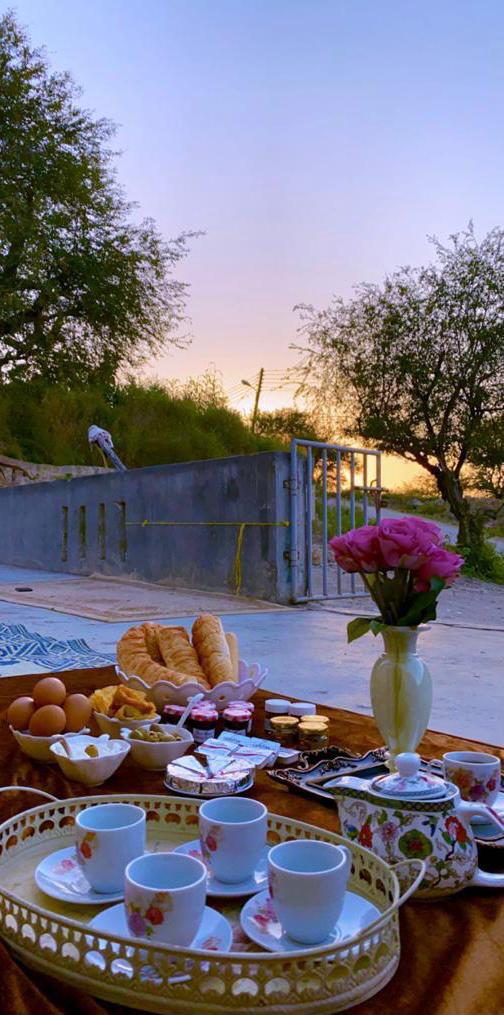
(photo by Salwa Hubais)

I teach literature classes but my most recent book is on foodways, which might seem like two dissimilar topics but food is omnipresent in poems, stories and dramas so my students and I often have conversations that include foodways, literature and cultural differences. Explaining a reference to Persephone in a poem led to my telling the story of Demeter/ Ceres, which led to a conversation about cereals.

Sometimes I focus simply to the vocabulary aspect: explicating “civil as an orange/ and something of that jealous complexion” in Much Ado about Nothing or “cucumber sandwiches”  and “sugar tongs” in The Importance of Being Earnest. But occasionally food takes center stage as with the fishing with a sword scene in Tawfiq Al Hakim’s Princess Sunshine when the question of ‘who makes dinner’ helps carry the theme of the play. Another food-centered example is the dual breakfast scene in Thornton Wilder’s Our Town. On our first run-through, it’s simply a confusing jumble of random statements. But when we have read it a few times and then ‘perform’ it with one student per character, the beauty (and sadness) of that section shine through. Students often remark, “it’s like that at my home.”

Some stories show cultural similarities, such as Laura bringing food to the widow in Mansfield’s “Garden Party,” but they can also show differences. Unlike in Oman, only Laura visits the house (not with her mother and older sister) and she only stays a brief time.

Another Mansfield story “The Doll’s House” uses food to give insights into the social standing of the schoolgirls – having a sandwich with meat shows wealth while a jam sandwich wrapped in newspaper points to poverty. Similarly, the social niceties observed in the dining room at the beginning of Room with a View preview the theme of the novel. Who sits at which table reveals the hierarchies which Lucy will eventually break.

Food issues can even be the comic element of a story as with Elizabeth Gaskell’s magnificent Cranford with its details of manage your cook, take care of your cow and why you should eat your orange in your room (so you can roll it under your bed to check if anyone is hiding there and then slurp the orange sections in private).

Food essays are also wonderful for sparking good student writing. “Jam” and “A Thing Shared” from The Gastronomical Me  by M. F. K. Fisher, “Girl” by Jamaica Kincaid and “In Search of Our Mother’s Gardens” by Alice Walker are great example texts to help students see how to write about their own food experiences.

As for poems about food, we have to start with

“Talk,” Gökhan Tok

You never hear it

but at breakfast the sweetest talk

is between the jam and the honey.

and Naomi Shihab Nye’s wonderful “Arabic Coffee,” “My Father and the Fig Tree,” “Sifter,” “The Traveling Onion” and “The Tray.” For more, please see https://www.poetryfoundation.org/poets/naomi-shihab-nye and https://poets.org/poet/naomi-shihab-nye

Other poems include:

  • “After Apple-Picking,” Robert Frost
  • “The Angler,” Thomas Buchanan Read
  • “The Bean-Stalk,” Edna St. Vincent Millay
  • “Blackberry-Picking,” Seamus Heaney
  • “Coolness of the Melons,” Matsuo Basho
  • “Cynddylan on a Tractor,” R.S. Thomas
  • “The [Date] Palm Tree,” Adnan Mohsin
  • “The Fisherman,” Goethe
  • “From Blossoms,” Li-Young Lee
  • “I Return to the Place I was Born,” T’ao Yuan Ming
  • “Love Poem With Toast,” Miller Williams
  • “Mending Wall,” Robert Frost
  • “The Solitary Reaper,” William Wordsworth
  • “Sorry I Spilled It,” Shel Silverstein
  • “What’s That Smell in the Kitchen?” Marge Piercy

A few food-oriented short stories include: “A Dash of Light” by Ibrahim Aslan, “I Saw the Date Palms” by Radwa Ashour, “A Cup of Tea” by  Katherine Mansfield and “Lamb to the Slaughter” by Roald Dahl, as well as several by Mohammed al Murr including “A Late Dinner,” “The Night’s Catch,” “Look After Yourself” and my favorite: “Dinner by Candlelight.”

y - morning coffee

I am pleased to announce that my chapter “Teaching Paired Middle Eastern and Western Literary Texts” has been published

Risse, Marielle. 2020. “Teaching Paired Middle Eastern and Western Literary Texts.” Advancing English Language Education,  Wafa Zoghbor and Thomaï Alexiou (eds.). Dubai: Zayed University Press. 221-223.

“Teaching Paired Middle Eastern and Western Literary Texts” – This chapter focuses on a technique which increases students’ participation, creativity and analytical ability in literature and language classrooms. By teaching two texts in English together, one from a Western and one from a Middle Eastern culture, students can compare and contrast a familiar text to one that has new settings, themes, people and opinions. This analysis allows students to see how characters, leitmotifs and points of view can be both similar and different across cultures, and in turn improves students’ reading, writing, speaking and critical thinking abilities. As some teachers might be hesitant to use literature in a language classroom or be unfamiliar with texts from a different culture, this chapter gives several specific examples, in addition to explaining how to teach paired texts. When teachers overcome the fear of working with new texts, they can pass on their insights to students.

Click to access AELE_Book_ALLT_ZU_Web_V02.pdf

Literature and Ethnography

I love turning from ethnography to literature, then back to ethnography. Thinking about culture helps me understand fiction and reading poems helps me see differences between cultures more clearly. As I sit down each semester to find new poems and stories to teach, I always think of “Finding Poems for my Students” by Mohja Kahf (complete poem below):

O my students,

I scour the world of words

to bring you poems like the rocks

my girls dig up in riverbanks

and come running to show me

because the notches in them

say something true, something

that an ancient Wisdom

wanted us to see.

I run to you, pockets full of poems…

One day,…

may the poem be for you

the one phone number in the universe

you were looking for

There is a pure joy in opening a new book of poems to see what is inside, to read how someone found a new way to describe the sky, a bird, a feeling, a person or even poetry itself. And sometimes a poem opens a door for understanding and I want to use it in a culture, not literature, class. For example in excerpt from “Four in the Morning” by Wislawa Szymborska (complete poem below) :

The hour swept clean to the crowing of cocks.

The hour when earth betrays us.

The hour when wind blows from extinguished stars.

The hour of and-what-if-nothing-remains-after-us.

The hollow hour.

Blank, empty.

The very pit of all other hours.

No one feels good at four in the morning.

If ants feel good at four in the morning

–three cheers for the ants. And let five o’clock come

if we’re to go on living.

The words “The hollow hour./ Blank, empty.” struck me as odd, so I had to reflect and unpack until I could express what surprised me. In Oman, “Four in the Morning” is a dark time, but not “hollow” or “blank” or “empty” – it is the time of anticipation, the time before the first call to prayer. The dangerous time on the Arabian Peninsula is midday, under the killing sun. The “empty” time is in early afternoon, when lunch is finished, stores are closed and everyone is relaxing.

I do a lot of talking with students about metaphors in literature classes, e.g. the moon is positive in Arabian culture, with no connotations of werewolves or danger. In culture studies classes, we talk about time relativity, e.g. if you say that you “ate dinner late,” what time does that mean? In some cultures, a “late” dinner means 8pm, in others it means 2am.

We look at examples such as:

  •   It took a long time to get to work.
  •   She left work early.
  •   She did her shopping quickly.
  •   She had a short visit with her sister.

to see the different ways to interpret the phrases. Is a “short visit” 30 minutes or 2 days? In both literature and culture classes my students and I talk about how everything changes when you change locations. In the States, on a rainy day, you stay inside or use an umbrella; on rainy days here, people sit outside and have a picnic, saving unbrellas for sunny days.

When Szymborska writes that 4am is “The very pit of all other hours” she’s opening a window into her culture that allows us to see what she sees, but also allows us to be able to articulate something we knew, but never expressed, about our own cultures.

“Finding Poems for my Students,” Mohja Kahf

O my students,

I scour the world of words

to bring you poems like the rocks

my girls dig up in riverbanks

and come running to show me

because the notches in them

say something true, something

that an ancient Wisdom

wanted us to see.

I run to you, pockets full of poems.

I select: This poem will help you pass a test.

Here is one that is no help at all,

but is beautiful; take it, take it.

O my scroungers after merely passing grades,

I bring you poems I have hiked high

and far to find, knowing

they will mostly end up like the rocks

my daughters find, tossed in drawers

with old batteries, mislaid keys,

scraps bearing the addresses

of people whose names

you no longer recognize or need.

Your current glazed-eye indifference

doesn’t bother me.  One day,

when you are either cleaning house

or moving (and sooner or later

everyone must do one or the other),

you will shake the drawer and the poem

will fall out.  And may the poem be for you

the one phone number in the universe

you were looking for, and may it be

for you the mislaid key

to your greatest need.

On that day,

you will read.

 “Four in the Morning” by Wislawa Szymborska:

The hour from night to day.

The hour from side to side.

The hour for those past thirty.

The hour swept clean to the crowing of cocks.

The hour when earth betrays us.

The hour when wind blows from extinguished stars.

The hour of and-what-if-nothing-remains-after-us.

The hollow hour.

Blank, empty.

The very pit of all other hours.

No one feels good at four in the morning.

If ants feel good at four in the morning

–three cheers for the ants. And let five o’clock come

if we’re to go on living.

My Job

(photo by M. A. Al Awaid)


It’s possible for someone to be your mentor without every meeting them. Over ten years ago, when I started to do anthropology research, I found articles and books by Lila Abu Lughod and realized that she set the standard I wanted to emulate. Now a professor at Columbia University, she did research among the Awlad’ Ali tribe in Egypt for years, writing numerous articles and books which make the women come alive as complex, thinking, reasoning beings.

When I first read her work, I had a profound sense of relief – HERE was someone, finally, writing about Arab, Muslim, tribal women who were not passive, oppressed cardboard figures but real women who experienced emotions, trying to create a good life for themselves and their families. The women in her work are like the women I know here.

Her Writing Women’s Worlds: Bedouin Stories (1993/ 2008) is brilliant: section after section of real people talking about real life. One part that stands out for me is her writing about an older married man talking with his first wife, and later private conversations with each one about the changes in their lives when he married again. Abu Lughod lets the couple speak; she shows the short- and long-term effects and costs of multiple marriages on all the people involved and how the effects change over time. It is a nuanced, heart-breaking discussion of polygamy, how different people think different things are important at different times and she shows the cost to the husband. This section, and all her work, stand in contrast to so much lazy, sloppy, overheated and stereotypical writing about Muslim and Arab people who have never spent significant time in the area.

So I was stunned when I went to a conference and another woman on my panel made a dismissive remark about her – how could an Arab, Muslim woman disparage Abu Lughod, who has dedicated her life to understanding and helping others understand the lives of Arab, Muslim women? I talked to the woman for a while, trying to get to the root of her anger. She explained that she felt Abu Lughod was being used by traditionalists to show that Arab, Muslim women are happy and they have all their freedoms (i.e. there is no need for change and/ or reform in terms of women’s lives and choices).

I countered, as I can’t address how traditionalists/ conservationist are using Abu Lughod’s work, that she has spent her life articulating the lives of Arab, Muslim women. But therein lay another problem. The young academic felt that Abu Lughod had positioned her work towards non-Muslims, non-Arabs rather than working for increasing women’s freedoms in the Arab world.

I couldn’t think of a way to argue back because the statement which came to mind [“It’s not the responsibility of all women to fight the fight you are most interested in”] sounded too curt, so we agreed to disagree.

At the same conference, another Muslim, Arab woman took issue with a statement I made that it’s not my duty to make my students “modern.” I was speaking about trying to find texts that fit within the conservative worldview of the area where I teach; the woman suggested that I put modern novels (about social change) on my syllabus even if I don’t discuss them in class. I responded that it wasn’t my job to teach works with aspects (alcohol, adultery, etc.) that were not acceptable in the local culture. She countered that it was my job to open my students to new/ modern/ open ways to thinking. I laughed and said that as an American Christian, some students and some of their parents are already nervous that I might try to push a political or social agenda in my teaching and “It’s not my responsibility to change my students.” That conversation also ended in a strained silence.

As I wrote in an earlier essay, the image that comes to mind is the velvet rope blocking off the entrance to a room in a museum. The tour guide slips under the rope and shows off the treasures of the room, explaining their history and importance while the tourists stay outside, looking in. Against the colleagues who believe that Westerners should ‘liberate’ the students, I believe my job is to show that there are different ways to live and different ways to believe. The presentation should be honest but neither cheerleading (we do it better!) nor insulting. The tourist/ student should learn about different cultures but not feel pressured to adopt the manners and customs depicted, in the same way that I see Omani culture but am not able to enter fully as I am not Muslim or Arab. If the tourist/ student wants to change, that is a personal choice, not the responsibility of the tour guide.

When I worked at MIT, I went to a lecture by Noam Chomsky. During the question period, another person in the audience asked what could he (we) do about the persecution of the Falun Gong in China. Chomsky said, “Nothing.”  He continued by explaining that we weren’t there. A person can only work honestly and effectively in the place where they are.

The two Arab women I met at the conference had ideas and strategies that were effective from them where they are, but they would not work for me where I am, or for Abu-Lughod where she is. She specifically addresses these issues in a recent article [“The Cross-publics of Ethnography: The Case of ‘the Muslimwoman’,” American Ethnologist Nov. 2016].

Time and time again in her writing Abu Lughod argues that:

others live as we perceive ourselves living – not as automatons programmed according to ‘cultural rules’ or acting out social roles, but as people going through life wondering what they should do, making mistakes, being opinionated, vacillating, trying to make themselves look good, enduring tragic personal losses, enjoying others, and finding moments of laughter (Writing Women’s Worlds 27)

My students and the people I write about in my research are people who live valid lives and make valid choices – it is not my job to change them. It is my job to listen carefully and speak honestly. In teaching, I should find interesting, relevant texts and give assignments that allow students to express their own opinions and improve their language skills. In my research, I should observe as accurately as possible, ask questions and write only after reflection and double-checking. That’s my job.