

General Bibliography for Research about Dhofar, Oman – Dr. Marielle Risse, updated spring 2023
Neither despise, nor oppose, what thou dost not understand – William Penn
Below is the list of texts I have used for research on Southern Oman from the fields of Arabian Peninsula studies; archeology; architecture; anthropology; cultural studies; education and pedagogy; folklore; foodways; history; Islamic studies, literature, literary compilations and secondary writing on literature; memoir; military history; Modern South Arabian languages including grammar, linguistics and translation; ornithology; political science; travel writing, secondary writing on travelers, tourism; women studies; zoology
bibliography for my Houseways project: Selected references related to Houseways in Southern Oman, Oct. 2022
other bibliographies: Bibliographies
my publications about Dhofar/ Oman in the fields of anthropology; architecture; cultural acquisition, education and studies; education/ pedagogy; fairytales and folklore; fishing; foodways; gift/ gift theory; honor killing; houseways; literature, literary compilations and secondary writing on literature; translation; travel writing, travelers and tourism; urban studies
books
Risse, Marielle. 2023. Houseways in Southern Oman. London: Routledge.
—. 2021. Foodways in Southern Oman. London: Routledge.
—. 2019. Community and Autonomy in Southern Oman. New York: Palgrave Macmillan.
articles/ book chapters
Risse, Marielle 2021. “Questions About Food and Ethics,” in Emanations: When a Planet was a Planet. Brookline, MA: International Authors. 403-08.
—. 2020. “Ok Kilito, I Won’t Speak Your Language: Reflections after Reading Thou Shalt Not Speak My Language,” in Octo-Emanations. Carter Kaplan, ed. Brookline, MA: International Authors.: 233-36.
—. 2020. “Teaching Paired Middle Eastern and Western Literary Texts,” in Advancing English Language Education. Wafa Zoghbor and Thomaï Alexiou, eds. Dubai: Zayed University Press. 221-23.
—. 2019, October 7. “Teaching Literature on the Arabian Peninsula,” Anthropology News website. http://www.anthropology-news.org/index.php/2019/10/07/teaching-literature-on-the-arabian-peninsula/
—. 2019. “An Ethnographic Discussion of Fairy Tales from Southern Oman,” Fabula: Zeitschrift für Erzählforschung / Journal of Folktale Studies / Revue d’Etudes sur le Conte Populaire 60.3-4 (De Gruyter, Berlin): 318–35.
—. 2017. “Understanding Communication in Southern Oman.” North Dakota Quarterly (Special Issue on Transnationalism) 84.1: 174-84.
—. 2015. “Generosity, Gift-giving and Gift-avoiding in Southern Oman.” Proceedings of the Seminar for Arabian Studies 45: 289-96.
—. 2013. “Throwing Children in the Street: Explaining Western Culture to Omanis.” Emanations: Third Eye. Carter Kaplan, ed. Brookline, MA: International Authors. 265-74.
—. 2013. “Who Are You Calling ‘Coddled’?: ‘Cloistered Virtue’ and Choosing Literary Texts in a Middle Eastern University.” Pedagogy 14: 415-27.
—. 2013. “Frosty Cliffs, Frosty Aunt and Sandy Beaches: Teaching Aurora Leigh in Oman.” Ariel: A Review of International English Literature 43.4: 123-45.
—. 2013. “Verstehen/ Einfühlen in Arabian Sands (1959): Wilfred Thesiger as Traveler and Anthropologist.” Journeys: The International Journal of Travel and Travel Writing 14.1: 23-39.
—. 2012. “Reader’s Guide” for the English version of Khadija bint Alawi al-Thahab’s My Grandmother’s Stories: Folk Tales from Dhofar. W. Scott Chahanovich, trans. Washington, D.C: Sultan Qaboos Cultural Center. 17-23.
—. 2012, May 31. “To Learn Arabic, You Have to Talk the Talk,” The Chronicle of Higher Education. http://chronicle.com/article/To-Learn-Arabic-You-Have-to/132057
—. 2012. “Do You know a Creon?: Making Literature Relevant in an Omani University,” in Literature Teaching in EFL/ESL: New Perspectives. Rahma Al-Mahrooqi, ed. Muscat: Sultan Qaboos University Press. 302-14.
—. 2011, July 10. “Bringing Theory Home in Oman,” The Chronicle of Higher Education. B24. http://chronicle.com/article/Bringing-Theory-Home-in-Oman/128139/
—. 2009. “Cultural Refraction: Using Travel Writing, Anthropology and Fiction to Understand the Culture of Southern Arabia.” Interdisciplinary Humanities 26.1: 63-78.
—. 1997. “White Knee Socks vs. Photojournalist Vests: Distinguishing between Travelers and Tourists,” in Travel Culture. Carol Williams, ed. Westport, CT: Praeger. 40-50.
Bibliography – updated spring 2023
Abdel Malek, Anouar. 1963. “Orientalism in Crisis.” Diogenes 44: 103-140.
Abou-Zeid, Ahmed. 1966. “Honor and Shame among the Bedouins of Egypt,” in Honor and Shame. J. G. Peristiany, ed. Chicago: University of Chicago Press. 243-59.
Abu-Lughod, Lila. 2016/1999. Veiled Sentiments: Honor and Poetry in a Bedouin Society. Berkeley: University of California Press.
—. 2013. Do Muslim Women Need Saving? Cambridge, MA: Harvard University Press.
—. 2011. “Seductions of the Honor Crime.” Differences: A Journal of Feminist Cultural Studies 22. 1: 17-63.
—. 2008. Writing Women’s Worlds: Bedouin Stories. Berkeley: University of CA Press.
—. 1991. “Writing Against Culture,” in Recapturing Anthropology. Richard Fox, ed. Santa Fe, N.M.: School of American Research Press. 37-62.
—. 1990. “Anthropology’s Orient: The Boundaries of Theory in the Arab World,” in Theory, Politics and the Arab World: Critical Responses. Hisham Sharabi, ed. New York: Routledge. 81-131.
—. 1989. “Zones of Theory in the Anthropology of the Arab World.” Annual Review of Anthropology 18: 267-306.
—. 1985. “A Community of Secrets: The Separate World of Bedouin Women.” Signs: A Journal of Women in Culture and Society 10: 637-57.
—. 1985. “Honor and Sentiments of Loss in a Bedouin Society.” American Ethnologist 12: 245-61.
Abu-Odeh, Lama 1997. “Comparatively Speaking: The ‘Honor’ of the East and the ‘Passion’ of the West.” Utah Law Review 2: 287-307.
Abu-Zahra, Nadia. 1974. “Material Power, Honour, Friendship and the Etiquette of Visiting.” Anthropological Quarterly 47: 120-38.
—. 1972. “On the Modesty of Women in Arab Muslim Villages – A Reply.” American Anthropologist 72.3: 1079-87.
Ahmed, Qanta. 2008. In the Land of Invisible Women: A Female Doctor’s Journey in the Saudi Kingdom. Naperville, IL: Sourcebooks.
Aitken, Stuart and Gill Valentine, eds.2006. Approaches to Human Geography. London: Sage.
Akehurst, John. 1982. We Won a War: The Campaign in Oman, 1965-1975. Wilton, Salisbury: Russell.
Akers, Deborah and Abubaker Bagader, eds and trans. 2008. Oranges in the Sun: Short Stories from the Arabian Gulf. London: Lynne Rienner.
Al-Abri, A., E. Podgoma, J. Rose, L. Pereira, C.J. Mulligan, N. Silva, R. Bayoumi, P. Soares, and V. Černý. 2012. “Pleistocene – Holocene boundary in Southern Arabia from the Perspective of Human mtDNA Variation.” American Journal of Physical Anthropology 149.2: 91-298.
Al-‘Amri, Musallim. 2008. Learn and Speak the Jibali Language: Language of the Civilization of ‘Aad. Doha, Qatar: Dar al-Thiqafa.
Al Balushi, Khalid, trans. 2016. Contemporary Omani Poetry in English. Muscat: Ministry of Heritage and Culture.
Al-Belushi, Mohammed. 2008. “Managing Oman’s Archaeological Resource: Historical Perspectives.” Public Archaeology 7.3: 149-173.
Al Dhahab, Ahmed. 1987. The Historical Development of Education in Oman: From the First Modern School in the 1893 to the First Modern University in 1986. Unpublished Ph.D. dissertation. Boston College.
Al Farsi, Abdulaziz. 2013. Earth Weeps, Saturn Laughs: A Modern Omani Novel. Nancy Roberts, trans. Cairo: American University of Cairo Press.
Al Farsi, Sulaiman. 2013. Democracy and Youth in the Middle East: Islam, Tribalism and the Rentier State in Oman. London: I. B. Tauris.
Al Farsy, Muntasir Shaaban. 2015. Happy Platinum Jubilee to the Al Asaidiya. no city; no publisher.
Al-Ghassani, Salim bin Ahmed. 2010. The Way and the Guide [English translation of title]. Salalah, Oman.
Al-Hajri, Hilal. 2006. “British Travelers in Oman from 1627-1970.” Modern Oman: Studies in Politics, Economy, Environment and Culture of the Sultanate. Andrzej Kapiszewski, Abdulrahman al Salimi and Andrej Pikulski, eds. Krakow: Ksiegarnia Akademicka. 63-88.
Al Hamdani, Ibrahim. 2010. Winning Hearts and Minds: Development as an Anti-insurgency Weapon – The Dhofar War. Muscat: Establishment for Press, Publications and Advertising.
Al Harthi, Aisha. 2005. “Distance Higher Education Experiences of Arab Gulf Students in the United States: A Cultural Perspective.” International Review of Research in Open and Distance Learning, 6.3: 1-14.
Al Hashimi, Said Sultan. 2011: “The Omani Spring: Towards the Break of a New Dawn.” Arab Reform Brief 52. http://www.arab-reform.net/en/node/433
Al Hikmani, Hadi and Khaled al Hikmani. 2012. “Arabian Leopard in Lowland Region on the South face of Jebel Samhan, Oman.” Cat News 57: 4-5.
Al-Hikmani, Hadi and Andrew Spalton. 2021. Dhofar: Monsoon Mountains to Sand Seas – Sultanate of Oman. Chicago: Gilgamesh Publishing.
Al Kabani, Said bin Rashid. 2015. A Soldier from Oman: Memory’s Nectar. Khalid al Balushi, trans. Muscat: Bait al Ghasham.
Al-Mandhari, Ahmed, Mohammed Al-Shafaee, Mohammed Al-Azri, Ibrahim Al-Zakwani, Mushtaq Khan, Ahmed Al-Waily and Syed Rizvi. 2008. “A Survey of Community Members’ Perceptions of Medical Errors in Oman.” BMC Medical Ethics 9.13. http://bmcmedethics.biomedcentral.com/articles/10.1186/1472-6939-9-13
Al-Marshudi, Ahmed Salim and Hemesiri Kotagama. 2006. “Socio-Economic Structure and Performance of Traditional Fishermen in the Sultanate of Oman.” Marine Resource Economics 21: 221-230.
Al-Ma’shani, Ahmed bin Mahad. 2014. Dictionary of the Dhofari Tongue [English translation of title].
Al Mutawa, Rana. 2022. “Navigating the Cosmopolitan City: Emirati Women and Ambivalent Forms of Belonging in Dubai,” in Migration in the Making of the Gulf Space Social, Political, and Cultural Dimensions. Antia Mato Bouzas and Lorenzo Casini, eds. New York: Berghahn Books. 67-85.
—. 2020, Dec. 9. “Dishdasha Blues: Navigating Multiple Lived Experiences in the Gulf.” London School of Economics Middle East Blog Posts https://blogs.lse.ac.uk/mec/2020/12/09/dishdasha-blues-navigating-multiple-lived-experiences-in-the-gulf/
—. 2019, Nov 8. “Dubai Mall or Souq Naif? The Quest for ‘Authenticity’ and Social Distinction.” London School of Economics Middle East Blog Posts. https://blogs.lse.ac.uk/mec/2019/11/08/dubai-mall-or-souq-naif-the-quest-for-authenticity-and-social-distinction/
—. 2019, April 30. “You Can’t Sit with Us: Prejudice and ‘Othering’ between Khaleejis.” Sekka. https://sekkamag.com/2019/04/30/you-cant-sit-with-us-the-othering-within-arab-gulf-societies/
—. 2019. “The Mall Isn’t Authentic!: Dubai’s Creative Class And The Construction of Social Distinction.” Urban Anthropology and Studies of Cultural Systems and World Economic Development 48: 1-2: 183-223.
—. 2018, Dec.4. “Challenging Concepts of ‘Authenticity’: Dubai and Urban Spaces in the Gulf.” London School of Economics Middle East Blog Posts. https://blogs.lse.ac.uk/mec/2018/12/04/challenging-concepts-of-authenticity-dubai-and-urban-spaces-in-the-gulf/
—. 2017. “Women and Restrictive Campus Environments: A Comparative Analysis Between Public Universities and International Branch Campuses in the UAE.” Higher Education in the Gulf States: Present and Future. 17-9.
Al-Nowaihi, Magda. 2004. “The ‘Middle East’? Or…/ Arabic Literature and the Postcolonial Predicament,” in A Companion to Postcolonial Studies. Henry Schwarz and Sangeeta Ray, eds. New Jersey: Wiley-Blackwell. 282-303.
Al-Qasimi, Noor. 2012. “The ‘Boyah’ and the ‘Baby Lady’: Queer Mediations in Fatima Al Qadiri and Khalid Al Gharaballi’s Wawa Series.” Journal of Middle East Women’s Studies 8.3: 139-142.
—. 2010. “Immodest Modesty: Accommodating Dissent and the ’Abayah-as-Fashion in the Arab Gulf States.” Journal of Middle East Women’s Studies 6.1: 46-74.
Al-Rasheed, Madawi. 2013. A Most Masculine State: Gender, Politics, and Religion in Saudi Arabia. Cambridge: Cambridge University Press.
—. 2013, Apr. 22. “Theorizing the Arabian Peninsula Roundtable: Knowledge In the Time of Oil.” Jadaliyya. https://www.jadaliyya.com/Details/28472/Theorizing-the-Arabian-Peninsula-Roundtable-Knowledge-In-the-Time-of-Oil
Al-Rawas, Ali bin Omar. 2003. “Some Customs and Traditions of Marriages in Dhofar – Sultanate of Oman.” Ma’thurat al-sha’biyya 18.67: 7-40.
Al Salimi, Abdulrahman. 2018. Oman, Ibadism and Modernity (Studies on Ibadism and Oman). Hildesheim, Germany: Georg Olms Verlag.
Al Salimi, Abdulrahman and Eric Staples, eds. 2016. A Maritime History (Studies on Ibadism and Oman). Hildesheim, Germany: Georg Olms Verlag,
Al-Sharari, Ali Ahmed. 1994. How We Began and Raised Human Civilization in the Arabian Peninsula: Dhufar, Ancient Inscriptions and Drawings. Dubai: privately published, 1994. (cited in Peterson, John. 2004. “Oman’s Diverse Society: Southern Oman.” Middle East Journal 58.2: 254-69. Footnote 4, pg 256.)
—. 1991. “Grave Types and ‘Trilith’ in Dhofar.” Arabian Archaeology and Epigraphy 3.2: 182-95.
—. 1991. “Recent Epigraphic Discoveries in Dhofar.” Proceedings of the Seminar for Arabian Studies 21: 173-91.
Al Taie, Hatim and Joan Pickersgill. 2008. Omani Folk Tales. Muscat, Oman: Al Roya Press and Publishing House.
Al Thahab, Khadija bint Alawi. 2012. Stories of My Grandmother. W. Scott Chahanovich et al, trans. Washington, D.C: Sultan Qaboos Cultural Center.
Al Yahya, Eid. 2006. Travellers in Arabia: British Explorers in Saudi Arabia. London: Stacey.
Al Zubair, Mohammad. 2004. Oman – My Beautiful Country. Muscat: Bait Al Zubair Foundation.
Albright, Frank. 1982. The American Archaeological Expedition in Dhofar, Oman, 1952-1953. Washington, D.C.: American Foundation for the Study of Man.
Allen, Calvin. 1987. Oman: The Modernization of the Sultanate, London: Routledge, 1987.
Allen, Calvin and Akbar S. Ahmed. 2002. Oman: Creation of the Modern Middle East. New York: Chelsea House Publications.
Allen, Calvin and W. Lynn Rigsbee. 2002. Oman Under Qaboos: From Coup to Constitution, 1970-1996. London: Routledge.
Allen, Roger. 2005. The Arabic Literary Heritage: The Development of its Genres and Criticism. Cambridge, Cambridge University Press.
Allfree, P. S. 2008/ 1968. Warlords of Oman. London: Robert Hale.
—. 1967. Hawks of the Hadhramaut. London: Robert Hale.
Alsharekh, Alanoud, ed. 2007. The Gulf Family: Kinship Policies and Modernity (SOAS Middle East Issues). London: Saqi.
Althen, Greg. 1988. American Ways: A Guide for Foreigners in the United States. Yarmouth, ME: Intercultural Press.
Altorki, Soraya. ed. 2015. A Companion to the Anthropology of the Middle East. Oxford: Wiley Blackwell.
—. 1986. Women in Saudi Arabia: Ideology and Behavior among the Elite. New York: Columbia University Press.
—. 1982. “The Anthropologist in the Field: A Case of ‘Indigenous Anthropology’ from Saudi Arabia,” in Indigenous Anthropology in Non-Western Countries. H. Fahim, ed. Durham, NC: Carolina Acadamy Press. 167-75.
—. 1980. “Milk-kinship in Arab Society.” Ethnology 19: 233-44.
Altorki, Soraya and Camillia El-Solh, eds. 1988. Arab Women in the Field: Studying Your Own Society. Syracuse: Syracuse University Press.
Amireh, Amal, and Lisa Suhair Majaj, eds. 2000. Going Global: The Transnational Reception of Third World Women Writers. New York: Garland.
Anderson, John. 1896. “A Sketch of the Physical Features of the Coast of South-East Arabia.” A Contribution to the Herpetology of Arabia. London: R.H. Porter. 2-18.
Antoun, Richard. 1972. “Pertinent Variables in the Environment of Middle Eastern Village Politics: A Comparative Analysis,” in Rural Politics and Social Change in the Middle East. Richard Antoun and Iliya Harik, eds. Bloomington: Indiana University Press. 118-62.
—. 1968. “On the Modesty of Women in Arab Muslim Villages: A Study in the Accommodation of Traditions.” American Anthropologist 70.4: 671-97.
Ansary, Tamim. 2009. Destiny Disrupted: A History of the World through Islamic Eyes. New York: Public Affairs.
Appadurai, Arjun. 2011/1986. “Introduction: Commodities and the Politics of Value,” in The Social Life of Things: Commodities in Cultural Perspective. Arjun Appadurai, ed. Cambridge: Cambridge University Press. 3-63.
—. 1988. “Putting Hierarchy in its Place.” Cultural Anthropology 3.1: 36-49.
—. 1986. “Theory in Anthropology: Center and Periphery.” Comparative Studies in Society and History 28.2: 356-61.
—, ed. 1986. The Social Life of Things: Commodities in Cultural Perspective. Cambridge: Cambridge University Press.
Arebi, Saddeka. 1994.Women and Words in Saudi Arabia. New York, Columbia University Press.
Arkless, David. 1988. The Secret War: Dhofar 1971/1972. London: William Kimber.
Asad, Talal. 1986. “The Idea of an Anthropology of Islam.” Occasional Papers Series, Center for Contemporary Arab. Georgetown University.
Aubaile-Sallenave, F. 2006. “Bodies, Odors and Perfumes in Arab-Muslim Societies”, in The Smell Culture Reader. J. Drobnick, ed. Oxford: Berg. 391-9.
Augustin, Anne-Linda Amira. 2018. “Rumours, Fears and Solidarity in Fieldwork in Times of Political Turmoil on the Verge of War in Southern Yemen.” Journal of Contemporary Social Science 13.3-4: 444-56. https://doi.org/10.1080/21582041.2017.1418523
Avanzini, Alessandra. 2007. “Sumhuram: A Hadrami Port on the Indian Ocean,” in The Indian Ocean in the Ancient Period: Definite Places, Translocal Exchange BAR International Series 1593. Eivind Heldaas Seland, ed. Oxford: Archaeopress. 23-31.
—. 2002. “Incense Routes and Pre-Islamic South Arabian Kingdoms.” Journal of Oman Studies 12: 17-24.
Awad, Abdul Aziz. 1985. “The Gulf in the Seventeenth Century.” Bulletin (British Society for Middle Eastern Studies) 12.2: 123-34.
Bailey, Clinton. 1985. July 7. “The Tribal Side of Mideast Terrorism.” The New York Times. E15.
Badger, George Percy, trans. 1871. History of the Imâms and Seyyids of ‘Omân by Ḥamīd ibn Muḥammad Ibn Ruzayq. London: Hakluyt Society.
Baer, Brian James. 2020. “From Cultural Translation to Untranslatability – من الترجمة الثقافية إلى استحالة الترجمة: Theorizing Translation outside Translation Studies.” Alif: Journal of Comparative Poetics 40: 139-63.
Bakir, Murtadha. 2011, Mar. 6. “Wh-questions in Jibbali.” Paper delivered at the Third Conference on Linguistics in the Gulf. Qatar University, Qatar.
Balfour-Paul, Glencairn. 2006. “Review of Wilfred Thesiger: The Life of the Great Explorer.” The British Yemeni Society. http://b-ys.org.uk/journal/book-reviews/wilfred-thesiger-life-great-explorer
Barri Jones, Geraint. 2004. “The Myth of the ‘Lost City of the Arabian Sands’,” in Proceedings of the Seminar for Arabian Studies 34: 105-20.
Barth, Fredrik. 1983. Sohar: Culture and Society in an Omani Town. Baltimore: Johns Hopkins University Press.
—. 1974. “On Responsibility and Humanity: Calling a Colleague to Account.” Current Anthropology 15: 99-103.
Barrett, Roby. 2015. Oman: The Present in the Context of a Fractured Past. Lexington, KY: Joint Special Operations University Press.
“Basic Law of the Sultanate of Oman (as last amended by Royal Decree No. 99/2011).” 2011. World Intellectual Property Organization. http://www.wipo.int/wipolex/en/text.jsp?file_id=269893
Bates, D. 1971. “The Role of the State in Peasant-Nomad Mutualism.” Anthropology Quarterly 44.3: 109-31.
Bataille, Georges. 1985. Visions of Excess: Selected Writings, 1927–1939. Allan Stoekl, Carl Lovitt and Donald Leslie, Jr, trans. Minneapolis: University of Minnesota Press.
Beasant, John. 2013/2002. Oman: The True-life Drama and Intrigue of an Arab State. Edinburgh: Mainstream Publishing.
Beaugrand, Claire. 2016. “Deconstructing Minorities/ Majorities in Parliamentary Gulf States (Kuwait and Bahrain).” British Journal of Middle Eastern Studies 43.2: 234-49.
Beckingham, C. F. 1949. “Some Early Travels in Arabia.” Journal of the Royal Asiatic Society of Great Britain 81: 156-76.
Beckingham. C. F. and R. B. Sarjeant, 1950. “A Journey of Two Jesuits from Dhufār to San’ā in 1590.” The Geographical Journal 11. 4/6: 194-207.
Beeston, A. 1976. “The Settlement at Khor Rori.” Journal of Oman Studies 2: 39-42.
—. 1971. “Functional Significance of the Old South Arabian Town.” Proceedings of the Seminar for Arabic Studies. 26-28.
Belanger, Kelly. 1997. “James Theodore Bent and Mabel Virginia Anna Bent.” British Travel Writers: 1876-1909. Detroit: Gale Research. 31-40.
Belhaven. 1960. “The Empty Quarter No More” [review of Thesiger’s Arabian Sands]. The Geographical Journal 126.1: 73-74. [aka Robert Hamilton]
Belk, Russell. 2012. “People and Things,” in Handbook of Developments in Consumer Behaviour. Victoria Wells and Gordon Foxall, eds. Cheltenham, UK: Edward Elgar Publishing.
—. 2010. “Sharing.” Journal of Consumer Research 36: 715-34.
Bell, Duncan. 2003. “Mythscapes: Memory, Mythology, and National Identity.” The British Journal of Sociology 54.1: 63-81.
Bent, James. 1895. “Exploration of the Frankincense Country, Southern Arabia.” The Geographical Journal 6.2: 109-33.
Bent, James and Mabel Bent. 2005/ 1900. Southern Arabia. London: Elibron.
Bent, Mabel. 2010. The Travel Chronicles of Mrs. J. Theodore Bent, Volume III: Deserts of Vast Eternity, Southern Arabia and Persia. Gerald Brisch, ed. London: Archaeopress.
Berque, Jacques. 1983. Arab Rebirth: Pain and Ecstasy. Quintin Hoare, trans. London: Al Saqi Books.
Betteridge, Anne. 1980. “The Controversial Vows of Urban Muslim Women in Iran,” in Unspoken Words: Women’s Religious Lives in Non-Western Cultures. Nancy Auer Falk and Rita M. Gross, eds. San Francisco: Harper and Row. 141-55.
Bidwell, Robin. 1994. Travellers in Arabia. Reading: Garnet.
—. 1978. “Bibliographical Notes on European Accounts of Muscat 1500-1900.” Arabian Studies 4: 123-59.
Billings, Dorothy. 1998. “Is Fieldwork Art or Science,” in The Humbled Anthropologist: Tales from the South Pacific. Philip DeVita, ed. Florence, KY: Wadsworth Publishing. 1-7.
Bird, Christaine. 2010. The Sultan’s Shadow: One Family’s Rule at the Crossroads of East and West. New York: Random House.
Boehm, Christopher. 1983. “The Political Ecology of Refuge Area Warriors: Some Implications for Pastoral Nomads.” Nomadic People 12: 4-13.
Bohnet, Iris, F. Grieg, B. Herrmann, and R. Zeckhauser. 2008. “Betrayal Aversion: Evidence from Brazil, China, Oman, Switzerland, Turkey and the United States.” American Economic Review 98.1: 294-310.
Bonnefoy, Laurent. 2002. “Oman: When Pandemic and Political Transition Coincide (2020-2022).” SciencesPo-Center for International Studies. https://www.sciencespo.fr/ceri/en/content/oman-when-pandemic-and-political-transition-coincide-2020-2022.html
—. 2018. Yemen and the World: Beyond Insecurity. London: Hurst & Co.
—. 2011. Salafism in Yemen: Transnationalism and Religious Identity. London: Hurst & Co.
Booth, Marilyn. 2010. “‘The Muslim Woman’ as Celebrity Author and the Politics of Translating Arabic: Girls of Riyadh Go on the Road.” Journal of Middle East Women’s Studies 6.3 -Special Issue: Marketing Muslim Women: 149-82.
—. 2008. “Translator v. Author (2007): Girls of Riyadh Go to New York.” Translation Studies 1.2: 197-211.
Bourdieu, Pierre. 1997. “Selections from The Logic of Practice,” in The Logic of the Gift: Toward an Ethic of Generosity. Alan Schrift, ed. London: Routledge. 190-230.
—. 1993. The Field of Cultural Production: Essays on Art and Literature. New York: Columbia University Press.
—. 1979. “The Sense of Honor,” in Algeria, 1960. Cambridge: Cambridge UP. 95-132.
Boustead, Hugh. 2002/ 1971. The Wind of Morning: An Autobiography. Fresno, CA: Craven Street.
Bowen, Donna Lee and Evelyn Early, eds. 2002. Everyday Life in the Muslim Middle East, 2nd ed. Bloomington: Indiana University Press.
Bowen, Richard and Frank Albright. 1958. Archaeological Discoveries in South Arabia. Baltimore: Johns Hopkins Press.
Boxhall, P. G. 1966. “Socotra: ‘Island of Bliss’.” The Geographical Journal 132.2: 213-22.
Boyd, Fenice. 2002. “Conditions, Concessions, and the Many Tender Mercies of Learning through Multicultural Literature.” Reading Research and Instruction 42.1: 58-92.
Brandt, Marieke. 2019. “Neue Literatur/ New Literature on Yemen.” Jemen-Report 50.1/2: 132-8.
Brettell, Caroline. 1996. When They Read What We Write: The Politics of Ethnography. London: Bergin & Garvery.
Bromwich, David. 2014. Moral Imagination. Princeton: Princeton University Press.
Brooks, Wanda. 2006. “Reading Representations of Themselves.” Reading Research Quarterly 41: 372-92.
Brumann, Christoph. 1999. “Writing for Culture: Why a Successful Concept Should Not Be Discarded,” in Culture, a Second Chance? Supplement Special Issues Current Anthropology 40: S1-13.
Brunsden, Denys. 1986. The Wahiba Sands: A Description of the Wahiba Sands of Oman. University of Durham: Centre for Overseas Research and Development.
Bryce, Derek, MacLaren, Andrew and O’Gorman, Kevin. 2013. “Historitising Consumption: Exploring Orientalist Expectations in the Middle East.” Consumption Markets and Culture 16: 45-64.
Bury, G. Wyman [Mansur, Abdullah]. 1998/1915. Arabia Infelix or The Turks in Yemen. Reading: Garnet Publishing.
—. 1998/1911. The Land of Uz. Reading: Garnet Publishing.
Carapico, Sheila. 2004. “Arabia Incognita: An Invitation to Arabian Peninsula Studies,” in Counter-Narratives. Madawi Al-Rasheed and Robert Vitalis, eds. New York: Palgrave Macmillan.11-33.
Carter, Henry. 1852. “Memoir of the Geology of the South-East Coast of Arabia.” Journal of the Bombay Branch of the Royal Asiatic Society 3: 21-96.
—. 1851. “A Geographical Description of Certain Parts of the Southeast Coast of Arabia.” Journal of the Bombay Branch of the Royal Asiatic Society 3: 224-317.
—. 1848. “A Description of the Frankincense Tree of Arabia, with remarks on the Misplacement of the ‘Libanophorous Region’ in Ptolemy and Geography.” Journal of the Bombay Branch of the Royal Asiatic Society 2.11: 380-90.
—. 1847. “Notes on the Mahrah Tribe of Southern Arabia, with a Vocabulary of their Language, to which is appended additional Observations on the Gara Tribe.” Journal of the Bombay Branch of the Royal Asiatic Society 2: 339-64.
—. 1846. “The Ruins of El Balad.” Journal of the Royal Geographical Society of London 16: 187-99.
—. 1845. “Notes on the Gara Tribe.” Journal of the Bombay Branch of the Royal Asiatic Society 2: 195-201.
Caton, Steve. 2005. Yemen Chronicle: Anthropology of War and Mediation. New York: Hill and Wang.
—. 1999. Lawrence of Arabia: A Film’s Anthropology. Oakland, CA: University of California Press.
—. 1993. ‘Peaks of Yemen I Summon’: Poetry as Cultural Practice in a North Yemeni Tribe. Oakland, CA: University of California Press.
—. 1987. “Power, Persuasion and Language: A Critique of the Segmentary Model in the Middle East.” International Journal of Middle East Studies 19: 77-102.
—. 1986. “’Salam Tahiyah’: Greetings from the Highlands of Yemen.” American Ethnologist 13.2: 290-308.
Caton-Thompson, G. and E. W. Gardner. 1939. “Climate, Irrigation and Early Man in the Hadhramaut.” Geographical Journal 93.1:18-35.
Cecil, Charles. 2006. “Oman’s Progress toward Participatory Government.” Middle East Policy 13.1: 60-8. http://www.thefreelibrary.com/Oman’s+progress+toward+participatory+government.-a0143719618
“Census 2010 – Final Result [Oman].” 2010. General Census of Population, Housing and Establishments 2010. https://www.ncsi.gov.om/Elibrary/LibraryContentDoc/bar_Census%20Final%20Result%202010_388bd9c6-a938-467d-8c92-f6950cc1785f.pdf
Charpentier, Vincent, Alex de Voogt, Remy Crassard, Jean-Francois Berger, Federico Borgi and Ali Al-Mashani. 2014. “Games on the Seashore of Salalah: The Discovery of Mancala Games in Dhofar, Sultanate of Oman.” Arabian Archaeology and Epigraphy 25: 115-120.
Chatty, Dawn. 2013. “Rejecting Authenticity in the Desert Landscapes of the Modern Middle East: Development Processes in the Jiddat Il-Harasiis, Oman,” in Anthropology of the Middle East and North Africa. Sherine Hafez and Susan Slyomovics, eds. Bloomington: Indiana University Press. 145-64.
—. 2013. “Negotiating Authenticity and Translocality in Oman: The ‘Desertscapes’ of the Harasiis Tribe,” in Regionalizing Oman: Political, Economic and Social Dynamics. Steffen Wippel, ed. Heidelberg: Springer. 129-45.
—. 2009. “Rituals of Royalty and the Elaboration of Ceremony in Oman: View from the Edge.” International Journal of Middle East Studies 41: 39-58.
—. 2000. “Women Working in Oman: Individual Choice and Cultural Constraints.” International Journal of Middle Eastern Studies 32: 241-54.
—. 2000. “Integrating Participation into Research and Consultancy: A Conservation Example from Arabia.” Social Policy and Administration 34.4: 408-18.
—. 1998. “Enclosures and Exclusions: Conserving Wildlife in Pastoral Areas of the Middle East.” Anthropology Today 14.4: 2-7.
—. 1997. Mobile Pastoralists: Development Planning and Social Change in Oman. New York: Columbia University Press.
—. 1976. “From Camel to Truck.” Folk 18: 114-28.
Chatty, Dawn and J.E. Peterson. 2001. “Oman,” in Countries and Their Cultures, Vol 3. Carol Ember and Melvin Ember, eds. New York: Macmillan Reference. 1681-1689.
Cheesman, R. E. 1926. In Unknown Arabia. London: Macmillan.
Clapp, Nicholas. 1999. The Road to Ubar: Finding the Atlantis of the Sands. Boston: Houghton Mifflin.
Clarke, M and D. Otaky. 2006. “Reflection ‘on’ and ‘in’ Teacher Rducation in the United Arab Emirates.” International Journal of Educational Development 25: 111-22.
Clark, Terence. 2002. “The British in Oman since 1645,” in Unfolding the Orient: Travelers in Egypt and the Near East. Paul and Janet Starkey, eds. Reading: Ithaca Press.
Clements, Frank, complier. 1994. Oman. (World Bibliographical Series, Vol. 29, revised) Oxford: Clio Press.
—. 1980. Oman: The Reborn Land. London: Longman.
—. 1977. “The Islands of Kuria Muria: A Civil Aid Project in the Sultanate of Oman Administered from Salalah, Regional Capital of Dhofar.” Bulletin (British Society for Middle Eastern Studies) 4.1: 37-39.
Cleveland, R. L. 1960. “The 1960 American Archaeological Expedition to Dhofar.” Bulletin of the American Schools of Oriental Research 159: 14-26.
—. 1959. “The Sacred Stone Circle of Khor Rori (Dhofar).” Bulletin of the American Schools of Oriental Research 155: 29-31.
Clifford, James. 1980. “Review of Orientalism.” History and Theory 19: 204-223.
Clifford, James and George E. Marcus, eds. 1986. Writing Culture: The Politics and Poetics of Ethnography. Berkeley: University of California Press.
Cohen, Erik. 1977. “Recent Anthropological Studies of Middle Eastern Communities and Ethnic Groups.” Annual Review of Anthropology 6: 315-47.
—. 1972. “Towards a Sociology of International Tourism.” Social Research 39: 164-82.
—. 1971. “Arab Boys and Tourist Girls in a Mixed Jewish-Arab Community.” International Journal of Comparative Sociology 12.4: 217-33.
Cole, Donald and Soraya Altorki, 1992. “Was Arabia Tribal: A Reinterpretation of the Pre-Oil Society.” Journal of South Asian and Middle Eastern Studies 15.4: 71-87.
Cole, Roger and Richard Belfield. 2011. SAS Operation Storm: The SAS under Siege: Nine Men against Four Hundred. London: Hodder and Stoughton.
Cooke. Miriam. 2014. Tribal Modern: Branding New Nations in the Arab Gulf. Berkeley: University of California Press.
Cordes, R. and Fred Scholz. 1980. “Bedouins, Wealth, and Change: A Study of Rural Development in the United Arab Emirates and Oman.” Tokyo, Japan: United Nations University. http://archive.unu.edu/unupress/unupbooks/80143e/80143E00.htm
Costa, P. 1985. “The Architecture of Salalah and the Dhofar Littoral.” Journal of Oman Studies 7: 131-55.
—. 1983. “Notes on Settlement Patterns in Traditional Oman.” Journal of Oman Studies 6.2: 247-68.
—. 1979. “The Study of the City of Zafar (al Balid).” Journal of Oman Studies 5: 111-50.
Cox, Percy. 1925. “Some Excursions in Oman.” The Geographical Journal 66.3: 193-221.
Craufurd, C. 1919. ‘The Dhofar District,’ The Geographical Journal 53.2: 97-105.
Critchfield, Lois. 2010. Oman Emerges: An American Company in an Ancient Kingdom. Vista, CA: Selwa Press.
“Cross-dressing Women Targeted in Dubai Campaign.” 2011, June 1. Violence is Not Our Culture. http://www.violenceisnotourculture.org/content/united-arab-emirates-cross-dressing-women-targeted-dubai-campaign
Crouch, Michael. 2000/ 1993. An Element of Luck: To South Arabia and Return. West Perth: Rawlhouse.
Cruttenden, Charles. 1838. “Journal of an Excursion from Morbat to Dyreez, the Principal Town of Dhofar.” Transactions of the Bombay Geographical Society 1: 184-8.
Darke, Diana and Tony Walsh. 2017. Oman (Bradt Travel Guide). Chalfont St. Peter, UK: Brandt Travel Guide.
Davidson, Christopher. 2015. After the Sheikhs: The Coming Collapse of the Gulf Monarchies. London: Hurst.
—, ed. 2011. Power and Politics in the Persian Gulf Monarchies. New York: Columbia University Press.
de Bel-Air, Françoise. 2018. “Demography Migration and the Labour Market in Oman: Explainatory Note 7.” Gulf Labour Markets, Migration and Population programme of the Migration Policy Center and the Gulf Research Center. http://gulfmigration.org/media/pubs/exno/GLMM_EN_2018_07.pdf
de Cardi, Beatrice. 2015. “Exploring the Lower Gulf, 1947–2007. Antiquity: A Quarterly Review of World Archaeology 82.315: 165-77.
—. 2002. “British Archeology in Oman: The Early Years.” Journal of Oman Studies 12.
De Regt, Marina. 2010. “Ways to Come, Ways to Leave: Gender, Mobility, and Il/legality among Ethiopian Domestic Workers in Yemen.” Gender and Society 24.2: 237-60.
—. 2009. “Preferences and Prejudices: Employers’ Views on Domestic Workers in the Republic of Yemen.” Signs 34.3: 559-81.
de Maigret, Alessandro. 2009. Arabia Felix: An Exploration of the Archaeological History of Yemen. London: Stacey International.
Deane-Drummond, Anthony. 1992. Arrows of Fortune. London: Leo Cooper.
Deeb, Lara and Jessica Winegar. 2016. Anthropology’s Politics: Disciplining the Middle East. Stanford, CA; Stanford University Press.
Delaney Carol. 1987. “Seeds of Honor, Fields of Shame,” in Honor and Shame and the Unity of the Mediterranean. David Gilmore, ed. Washington, D.C.: American Anthropological Association. 35-48.
“Dhofar.” Oman. n.d. http://omansultanate.com/governorates-dhofar.htm
Diener, Paul and Eugene Robkin. 1978. “Ecology, Evolution and the Search for Cultural Origins: The Question of Islamic Pig Prohibition.” Current Anthropology 19.3: 493-540.
“Discussion of Evidence For/Against Wife Beating.” 2010, Feb. 10. Wife beating in Islam? The Quran Strikes Back! http://www.quran434.com/wife-beating-islam.html
Doe, Brian. 1983. Monuments of South Arabia. Cambridge: Oleander Press.
—. 1971. Southern Arabia. New York: McGraw-Hill.
Doniger, Wendy. 1999. Presidential Address: “’I have Scinde’: Flogging a Dead (White Male Orientalist) Horse.” The Journal of Asian Studies 58.4: 940-60.
Doornbos, Klaas. 2014. Shipwreck and Survival in Oman, 1763: The Fate of the Amstelveen and Thirty Castaways on the South Coast of Arabia. Amsterdam: Amsterdam University Press.
Dorsky, Susan. 1986. Women of ‘Amran: A Middle Eastern Ethnographic Study. Salt Lake City: University of Utah Press.
Dostal, Walter. 1972. “The Shihuh of Northern Oman: A Contribution to Cultural Ecology.” Geographical Journal 138.1: 1-7.
Doumato, Eleanor. 2000. Getting God’s Ear: Women, Islam, and Healing in Saudi Arabia and the Gulf. New York: Columbia University Press.
Drabble, Dennis. 2000, Sept. 3. “The Book Club: Wilfred Thesiger’s Arabian Sands.” The Washington Post. WBK 13.
Düster, Joachim, complier. 1999, July 18. “Basic Readings on Oman: An Introductory Bibliography.” Oman Studies Centre. http://www.oman.org/reading.htm
Dutton, R.W. and N. de N. Winser. 1987. “The Oman Wahiba Sands Project.” Geographical Journal 153.1: 48-58.
Dresch, Paul. 1989. Tribes, Government and History in Yemen. Oxford: Clarendon Press.
Eakin, Hugh. 2014, Oct. 23. “Zanzibar Comes to Arabia” a response to his “In the Heart of Mysterious Oman.” The New York Review of Books. https://www.nybooks.com/articles/2014/10/23/zanzibar-comes-arabia/
—. 2014, Aug. 14. “In the Heart of Mysterious Oman” [review of Abdel Razzaq Takriti’s Monsoon Revolution: Republicans, Sultans, and Empires in Oman, 1965–1976 and Marc Valeri’s Oman: Politics and Society in the Qaboos State]. The New York Review of Books. http://www.nybooks.com/articles/2014/08/14/heart-mysterious-oman/
Eccles, G.J. 1927. “The Sultanate of Muscat and ‘Oman, with a Description of a Journey into the Interior Undertaken in 1925.” Journal of The Royal Central Asian Society 14.1: 19-42.
Eickelman, Christine. 1988. “Women and Politics in an Arabian Oasis,” in A Way Prepared: Essays on Islamic Culture in Honor of Richard Bayly Winder. New York: New York University Press. 199-215.
—. 1984. Women and Community in Oman. New York: New York University Press.
Eickelman, Dale. 1992. “Mass Higher Education and the Religious Imagination in Contemporary Arab Societies.” American Ethnologist 19.4: 643-655.
—. 1989. “National Identity and Religious Discourse in Contemporary Oman.” International Journal of Islamic and Arabic Studies 6.1: 1-20.
—. 1985: “From Theocracy to Monarchy: Authority and Legitimacy in Inner Oman, 1935–1957.” International Journal of Middle East Studies 17.1: 3–24.
—. 1983. “Omani Village: The Meaning of Oil,” in The Politics of Middle Eastern Oil. J. E. Peterson, ed. Washington, D.C.: The Middle East Institute. 211-219.
Eickelman, Dale and M.G. Dennison. 1994. “Arabizing the Omani Intelligence Services: Clash of Cultures?” International Journal of Intelligence and CounterIntelligence 7.1: 1-28.
El-Baz, Farouk. 2004. Wadis of Oman: Satellite Image Atlas. Muscat: Office of the Advisor to His Majesty the Sultan for Cultural Affairs.
El-Solh, Raghid. 1997. Oman and the South-Eastern Shore of Arabia: Archive Documents on the History of the Arab World Series. Dryden, NY: Ithaca Press.
Elie, Serge. 2006. “Soqotra: South Arabia’s Strategic Gateway and Symbolic Playground.” British Journal of Middle Eastern Studies 33.2: 131-60.
Eltahir, Elfatih. n.d. “Pilot Study on Biosphere-Atmosphere Interactions in Dhofar, Oman.” Eltahir Research Group. http://web.mit.edu/eltahir/www2/dhofar/index.html
Emerson, Ralph Waldo. 1997/1844. “Gifts,” in The Logic of the Gift: Toward an Ethic of Generosity. Alan Schrift, ed. London: Routledge. 25-27.
—. 1844. “Politics.” http://www.panarchy.org/emerson/politics.1844.html
Emerson, Robert, Rachel Fretz and Linda Shaw. 2011. Writing Ethnographic Fieldnotes, 2nd edition. Chicago: University of Chicago Press.
Ennis, Crystal. 2020. “Citizenship without Belonging? Contesting Economic Space in Oman.” International Journal of Middle East Studies 52.4: 759-64.
—. 2019. “The Gendered Complexities of Promoting Female Entrepreneurship in the Gulf.” New Political Economy 24.3: 365-84.
—. 2015. “Between Trend and Necessity: Top-Down Entrepreneurship Promotion in Oman and Qatar.” The Muslim World 105.1: 116-38.
—. n.d. “Oman Resource Guide.” The Association for Gulf and Arabian Peninsula Studies. https://agaps.org/wp-content/uploads/2018/09/Oman-Research-Resource-Guide.pdf
Ennis, Crystal and Said Al-Saqri. 2021. “Oil Price Collapse and the Political Economy of the Post-2014 Economic Adjustment in the Sultanate of Oman,” in Oil and the Political Economy in the Middle East: Post-2014: Adjustment Policies of the Arab Gulf and Beyond. Martin Beck and Thomas Richter, eds. Manchester: Manchester University Press. 79-101.
Ennis, Crystal and Margaret Walton-Roberts. 2018. “Labour Market Regulation as Global Social Policy: The Case of Nursing Labour Markets in Oman.” Global Social Policy 18.2: 169-88.
Erikesen, Hanne and Jens Eriksen. 2010. Common Birds in Oman: An Identification Guide. Muscat: Roya Press.
—. 2005. Common Birds in Oman. Muscat: Roya Press.
—. 2001. Birdwatching Guide to Oman. Muscat: Roya Press.
Eriksen, Jens, Dave Sargeant and Reginald Victor. 2003. Oman Bird List. Muscat: Sultan Qaboos University, Centre for Environmental Studies and Research.
Errico, E. 1983. “Introduction to Omani Military Architecture of the Sixteenth, Seventeenth, and Eighteenth Centuries.” Journal of Oman Studies 6.2: 291-306.
Fabietti, Ugo. 2000. “State Politics and Beduin Adaptations in Saudi Arabia, 1900-1980,” in The Transformation of Nomadic Society in the Arab East. Martha Mundy and Basim Musallam, eds. Cambridge: Cambridge University Press.
Fähndrich, Hartmut. 2000. “Viewing ‘The Orient’ and Translating its Literature in the Shadow of The Arabian Nights.” Yearbook of Comparative and General Literature 48: 95-106.
Fahim, Hussein. 1982. Indigenous Anthropology in Non-Western Countries. Durham, NC: Carolina Acad. Press.
Falcon, N. L. 1973. “The Musandam (Northern Oman) Expedition 1971/1972.” Geographical Journal 139.1: 1-19.
Fardon, Richard. ed. 1989. Localizing Strategies: Regional Traditions of Ethnographic Writing. Washington, D.C.: Smithsonian Inst. Press.
Farhi, Paul. 2008, Mar. 8. “Hitting the Funny Bones of Contention: Axis of Evil Comedy Tour Detonates Some Explosive Stereotypes.” The Washington Post. http://www.washingtonpost.com/wp-dyn/content/article/2008/03/07/AR2008030703253.html
Farrin, Raymond. 2011. Abundance from the Desert: Classical Arabic Poetry. Syracuse: Syracuse University Press.
Fayein, Claude. 1957. A French Doctor in Yemen. London: Robert Hale.
Fernea, Elizabeth Warnock. 1989/1969. Guests of the Sheikh: An Ethnography of an Iraqi Village. New York: Anchor Books.
Fernea, Robert and James Malarkey. 1975. “Anthropology of the Middle East and North Africa: A Critical Assessment.” Annual Review of Anthropology 4: 183-206.
Ferraris, Zoe. 2012. Kingdom of Strangers. New York: Little Brown.
—. 2011. City of Veils. New York: Back Bay Books.
—. 2009. The Night of the Mi’raj [also published as Finding Nouf]. New York: Abacas.
Fraser, George MacDonald. 1995. Quartered Safe Out Here: A Recollection of the War in Burma. London: HarperCollins.
Freeman, Chas. 2010. American’s Misadventures in the Middle East. Charlottesville, NC: Just World Books.
Funsch, Linda Pappas. 2015. Oman Reborn: Balancing Tradition and Modernization. London: Palgrave Macmillan.
Gallagher, Michael. 2002. “Observations on Juzur Hallaniyat (Kuria Muria) Islands of Oman.” Journal of Oman Studies 12.
Gallagher, Winifred. 2007. House Thinking: A Room-by-room Look at How We Live. New York: HarperCollins.
Galletti, Christopher, Billie Turner II, and SoeMyint. “Land changes and their Drivers in the Cloud Forest and Coastalzone of Dhofar, Oman, between 1988 and 2013.” 2016. Regional Environmental Change 16.7: 2141–53. https://link.springer.com/article/10.1007/s10113-016-0942-2
Gardiner, Ian. 2007. In the Service of the Sultan: A First-hand Account of the Dhofar Insurgency. South Yorkshire: Pen and Sword Military.
Gardner, Andrew. 2015. “Migration, Labor and Business in the Worlding Cities of the Arabian Peninsula.” Institute of Developing Economies, Paper 513. 1-9.
—. 2014. “Ethnography, Anthropology and Migration to the Arabian Peninsula: Themes from an Ethnographic Research Trajectory.” Gulf Labour Markets and Migration 10. https://www.academia.edu/9779995/Ethnography_Anthropology_and_Migration_to_the_Arabian_Peninsula
Gardner, Andrew and Nagy, S. 2008. “New Ethnographic Fieldwork among Migrants, Residents and Citizens in the Arab States of the Gulf.” City and Society 20.1: 1-4.
Geertz, Clifford. 1979. “Suq: The Bazaar Economy in Sefrou,” in Meaning and Order in Moroccan Society. Clifford Geertz, Hildred Geertz and Lawrence Rosen, eds. Cambridge: Cambridge University Press. 123-244.
—. 1977. The Interpretation of Cultures. New York: Basic Books.
—. 1976. “‘From the Native’s Point of View’: On the Nature of Anthropological Understanding,” in Meaning in Anthropology. Henry Selby and K. Basso, ed. Albuquerque: University of New Mexico. 221-237.
Geertz, Clifford, Hildred Geertz and Lawrence Rosen. 1979. Meaning and Order in Moroccan Society. Cambridge: Cambridge University Press.
Georges, Robert and Michael Jones. 1980. People Studying People: The Human Element in Fieldwork. Berkeley: University of CA Press.
Ghaffar-Kucher, Ameena. 2014. “Writing Culture; Inscribing Lives: A Reflective Treatise on the Burden of Representation in Native Research.” International Journal of Qualitative Studies in Education. http//dx.doi.org/10-1080/09518398.2014.974720
Ghazal, Rym. 2011, May 12. “My Tomboy Days When I was a Rebel with Too Many Causes.” The National. http://www.thenational.ae/thenationalconversation/comment/my-tomboy-days-when-i-was-a-rebel-with-too-many-causes.
Ghubash, Hussein. 2007. “Oman: A Thousand Years of Democratic Tradition.” Journal of Islamic Studies 18.2: 274-276.
—. 2006. Oman: The Islamic Democratic Tradition. Mary Turton, trans. London: Routledge.
Gill, A. 2006, Jan, 29. “Oman: The Turban Warrior.” The Times online. http://www.timesonline.co.uk/tol/travel/destinations/middle_east/article716337.ece
Gilsenan, M. 1990. “Very Like a Camel: The Appearance of an Anthropologist’s Middle East,” in Localizing Strategies: Regional Traditions of Ethnographic Writing. R. Fardon, ed. Washington DC: Smithsonian Inst. Press.
Ginat, Joseph.1981. Reply to Gideon Kressel’s “Sorocide/ Filiacide: Homicide for Family Honor.” Current Anthropology 22.2: 153.
Godbout J. and Alain Caillé. 2000. The World of the Gift. Donald Winkler, trans. London: McGill-Queen’s University Press.
Godelier, Maurice. 1999. The Enigma of the Gift. Nora Scott, trans. Chicago: University of Chicago Press.
Goldner, Fred. 1967. “Role Emergence and the Ethics of Ambiguity,” in Ethics, Politics and Social Research. Gideon Sjoberg, ed. Cambridge, MA: Schenkman Publishing. 245-266.
Gordon, Raymond. 2005. “Languages of Oman,” Ethnologue: Languages of the World, 15th ed. SIL International. http://www.ethnologue.com/
Gravina, Richard. 2014. “The Vowel System of Jibbali.” Supplement to the Proceedings of the Seminar for Arabian Studies: Languages of Southern Arabia 44. Orhan Elmaz and Janet Watson, eds. 43-56.
Graz, Liesl. 1983. The Omanis, Sentinels of the Gulf. London: Longman.
Gregory, James. 1984. “The Myth of the Male Ethnographer and the Woman’s World.” American Anthropologist 86: 316-27.
Griffiths, Merlyn A. and Mary C. Gilly. 2012. “Dibs! Customer Territorial Behaviors.” Journal of Service Research 15.2: 131-49.
Groom, Nigel. 2002. Sheba Revealed: A Posting to Bayhan in the Yemen. London: London Center of Arab Studies.
Guinness, Lulu. 2008, May 20. “When a Girl Really Needs Oman.” Telegraph. https://www.telegraph.co.uk/travel/destinations/middleeast/oman/1986860/Lulu-Guinness-When-a-girl-really-needs-Oman.html
Gumperz, J. 2005. “Interethnic Communication,” in Intercultural Discourse and Communication: The Essential Readings. S. Kiesling and C. Bratt Paulston, eds. Oxford: Blackwell. 33-44.
Gwynne-James, David. 2001. Letters from Oman: A Snapshot of Feudal Times as Oil Signals Change. London: Trafford.
Hafez, Sherine and Susan Slyomovics, eds. 2013. Anthropology of the Middle East and North Africa: Into the New Millennium. Bloomington: Indiana University Press.
Haines, Stafford. 1839. “Memoir to Accompany a Chart of the South Coast of Arabia from the Entrance of the Red Sea to Misenat, in 50, 43, 25 E. Part I.” Journal of the Royal Geographical Society of London 9: 125-56.
—. 1845.“Memoir of the South and East Coasts of Arabia: Part II.” Journal of the Royal Geographical Society of London 15: 104-60.
Hall, J. 2002. Teaching and Researching Language and Culture. New York: Longman.
Halliday, Fred. 1985, Feb. “The Arabian Peninsula Opposition Movements.” MERIP Reports: The Contest for Arabia 130: 13-15.
—. 1978, May. “Economic Decline in Oman: PFLO’s New Political Strategy.” MERIP Reports 67: 18-21.
—. 1977. “Labor Migration in the Middle East.” MERIP Reports 59: 3-17.
—. 1975. Arabia without Sultans: A Political Survey of Instability in the Arab World. New York, Vintage.
Hamad, Abdulsalam. 2006. Omani Folk Tales. Seeb: Al-Dhamri Bookshop.
Hamilton, Alastair. 2012. An Arabian Utopia: The Western Discovery of Oman. London: The Arcadian Library.
Hamilton, Robert. 1949. The Kingdom of Melchior: Adventure in South West Arabia. London: John Murray. [aka Belhaven]
Han, Carolyn. 2004. From the Land of Sheba: Yemeni Folk Tales (International Folk Tale Series) Northampton, MA: Interlink Books.
Hanieh, Adam. 2011. Capitalism and Class in the Gulf Arab States. New York: Palgrave Macmillan.
Harding, John. 2009. Roads to Nowhere: A South Arabian Odyssey 1960-1965. London: Arabian Publishers.
Harrison, David. 1975. “The Oman Flora and Fauna Survey 1975.” Journal of Oman Studies: Special Report 1.
Harrison, Paul. 1940. Doctor in Arabia. New York: John Day.
Hastings, A., J. Humphries, and R. Meadow. 1975. “Oman in the Third Millennium BCE.” Journal of Oman Studies 1: 9-55.
Heard-Bey, Frauke. 2006. “Conflict Resolution and Regional Co-operation: The Role of the Gulf Co-operation Council 1970-2002.” Middle Eastern Studies 42.2: 199-222.
—. 2004/1982. From Trucial States to United Arab Emirates. Dubai: Motivate Publishing.
—. 1972. “Social Changes in the Gulf States and Oman.” Asian Affairs 59.3: 309-16.
Heble, Ayesha. 2007. “Teaching Literature On-line to Arab Students: Using Technology to Overcome Cultural Restrictions.” Arts and Humanities in Higher Education 6.2: 219-26.
Heidemann, Frank. 2021. “Between Devotee and God: The Study of Atmosphere in a South Indian Temple Festival.” Asian Ethnology 80.2: 343-66.
Henderson, Edward. 1993/1988. This Strange Eventful History: Memoirs of Earlier Days in the UAE and the Sultanate of Oman. Dubai: Motivate Publishing.
Hennessey, Katherine. 2018. Shakespeare on the Arabian Peninsula. SpringerLink (eBook). https://www.palgrave.com/gp/book/9781137584700
Herb, Michael. 1999. All in the Family: Absolutism, Revolution and Democracy in the Middle Eastern Monarchies. Albany” State University of New York Press.
Herzfeld, M. 1980. “Honor and Shame: Some Problems in the Comparative Analysis of Moral Systems.” Man 15: 339-51.
Higgins, Andrew. 2011. With the S.A.S. and Other Animals: A Vet’s Experiences during the Dhofar War 1974. Barnsley: Pen and Sword Publishing.
Hilbert, Y., V. Usik, C. Galletti, M. Morley, A. Parton, L. Clark-Balzan, J-L Schwenninger, L. Linnenlucke, R. Roberts, Z. Jacobs, and J. Rose. 2015. “Archaeological Evidence for Indigenous Human Occupation of Southern Arabia at the Pleistocene/Holocene Transition: The Case of al-Hatab Dhofar, Southern Oman.” Paléorient 41.2: 31-49.
—, A. Parton, M. Morley, L. Linnenlucke, Z. Jacobs, L. Clark-Balzan, R. Roberts, C. Galletti, J-L Schwenninger, and J. Rose. 2015. “Terminal Pleistocene and Early Holocene Archaeology and Stratigraphy of the Southern Nejd, Oman.” Quaternary International 382: 250-63.
—, J. Rose, and R. Roberts.2012. “Late Paleolithic Core Reduction Strategies in Dhofar, Oman.” Proceedings of the Seminar for Arabian Studies 42: 1-18.
Hildebrandt, Anke and Elfatih Eltahir. 2008. “Using a Horizontal Precipitation Model to Investigate the Role of Turbulent Cloud Deposition in Survival of a Seasonal Cloud Forest in Dhofar.” Journal of Geophysical Research: Biogeosciences 113.G4. doi:10.1029/2008JG000727.
Hildebrandt, Anke, Mohammed Al Aufi, Mansoor Amerjeed, Mahaad Shammas, and Elfatih A. B. Eltahir. 2007. “Ecohydrology of a Seasonal Cloud Forest in Dhofar:1. Field Experiment.” Water Resources Research 43.W10411. doi:10.1029/2006WR005261.
Hildebrandt, Anke and Elfatih Eltahir. “Ecohydrology of a Seasonal Cloud Forest in Dhofar: 2. Role of Clouds, Soil Type, and Rooting Depth in Tree-Grass Competition.” 2007. Water Resources Research 43.W11411. doi: 10.1029/2006WR005262.
— . 2006. “Forest on the Edge: Seasonal Cloud Forest in Oman Creates its own Ecological Niche.” Geophysical Research Letters 33.L11401. doi:10.1029/2006GL026022.
Hinkel, Eli. ed. 1999. Culture in Second Language Teaching and Learning. Cambridge: Cambridge UP.
Hirji, Zulfikar. 2007. “Relating Muscat to Mombasa: Spatial Tropes in the Kinship Narratives of an Extended Family Network in Oman.” Anthropology of the Middle East 2.1: 55-69.
Hoffmann-Ruf, Michaela and Abdulrahman Al Salimi, eds. 2013. Oman and Overseas (Studies on Ibadism and Oman). Hildesheim, Germany: Georg Olms Verlag.
Hofstede, Ande. 1988, Dec. 31. “Modern South Arabian Languages: An Overview.” Foundation for Endangered Languages OGMIOS Newsletter # 10. http://www.ogmios.org/ogmios_files/105.htm
Holden, David. 1966. Farewell to Arabia. London: Faber and Faber.
Hopkins, Marycarol. 1996. “Is Anonymity Possible? Writing about Refugees in the United States,” in When They Read What We Write: The Politics of Ethnography. Caroline Brettell, ed. London: Bergin & Garvery. 121-30.
Horwitz, Richard. 1996. “Just Stories of Ethnographic Authority,” in When They Read What We Write: The Politics of Ethnography. Caroline Brettell, ed. London: Bergin & Garvery. 131-44.
Hoskins, Alan. 1988. A Contract Officer in the Oman. Tunbridge Wells, Kent: Costello.
Hulton, Jessop. 2003/1884. South Arabia: The ‘Palinurus’ Journals. W. A. Hulton, ed. London, Oleander.
Hulton, Jessop and J. Smith. 1839. “Account of Some Inscriptions Found on the Southern Coast of Arabia.” Journal of the Royal Asiatic Society of Great Britain and Ireland 5.1: 91-101.
—. 1835. “Report on Some Inscriptions found at Hammam, on the Southern Coast of Arabia.” Journal of the Asiatic Society of Bengal 4: 533-37.
Hussain, Hassan. 2021. “Cyber Tribes: Social Media and the Representation and Revitalization of Arab Tribal Identities in the Internet Age.” Middle East Journal of Culture and Communication 14.1-2: 112-34. doi: https://doi.org/10.1163/18739865-01401009
Ibn al-Mujāwir. 2008. A Traveler in Thirteenth-Century Arabia: Ibn al-Mujāwir’s Tarikh al-Mustabir 19, Third Series, G. R. Smith, trans. London: Ashgate for the Hakluyt Society.
Ibn Battuta, Travels in Asia and Africa 1325-1354. 1929. H.A, R. Gibb, trans. London: Routledge.
Ingrams, Doreen. 2013/ 1970. A Time in Arabia: Life in Hadhramaut. London: Eland.
Ingrams, Harold. 1943. Arabia and the Isles. London: John Murray.
Insight Guides Pocket Oman. 2018. London: Insight Guides.
Irwin, Robert. 2002. Night and Horses and the Desert: An Anthology of Classical Arabic Literature. New York: Anchor.
Issac, Michael. 2004. A Historical Atlas of Oman. New York: Rosen Publishing.
Janzen, Jorg. 1986. Nomads in the Sultanate of Oman: Tradition and Development in Dhofar. London: Westview Press.
—. 2000. “The Destruction of Resources among the Mountain Nomads of Dhofar,” in The Transformation of Nomadic Society in the Arab East, University of Cambridge Oriental Publications 58. Martha Mundy and Basim Musallam, eds. Cambridge: Cambridge University Press. 160-75.
Jayyusi, Salma Khadra. 2006. Introduction, in On Entering the Sea: The Erotic and Other Poetry of Nizar Qabbani. Lena Jayyusi and Sharif Elmusa, trans. Northampton, MA: Interlink Publishing.
—, ed. 1988. Ed.Jayyusi. The Literature of Modern Arabia: An Anthology. London: Kegan Paul International.
Jeapes, Tony. 1980. SAS: Operation Oman. Nashville: The Battery Press.
Johnson, R. 1994. “Discussion Notes on Wilfred Thesiger’s Arabian Sands: 1359.” Melbourne: Council of Adult Education.
Johnson, R. 1993. “Editor’s Introduction: Pierre Bourdieu on Art, Literature and Culture,” in Pierre Bourdieu’s The Field of Cultural Production: Essays on Art and Literature. New York: Columbia University Press. 1-25.
Johnston, Charles. 1964. The View from Steamer Point: Being an Account of Three Years in Aden. London: Collins.
Johnstone, T. M. 1987. Mehri Lexicon and English-Mehri Word List. Compiled by G.R. Smith. London: The School of Oriental and African Studies.
—. 1983. “Folk-Tales and Folk-lore of Dhofar.” Journal of Oman Studies 6.1: 123-27.
—. 1981. Jibbali Lexicon. Oxford: Oxford University Press.
—. 1978. “A St. George of Dhofar.” Arabian Studies 4: 59-65.
—. 1976: “Knots and Curses.” Arabian Studies 3: 79-83.
—. 1975. “Oath-Taking and Vows in Oman.” Arabian Studies 2: 7-18.
—. 1974. “Folklore and Folk Literature in Oman and Socotra.” Arabian Studies 1: 7-24.
—. 1972. “The Language of Poetry in Dhofar.” The Bulletin of the School of Oriental and African Studies 35.1: 1-17.
—. 1970. “A Definite Article in the Modern South Arabian Languages.” The Bulletin of the School of Oriental and African Studies 33.2: 295-307.
—. 1967. Eastern Arabian Dialect Studies. (London Oriental Series 17) London: Oxford University Press.
Joly, Dom. 2007, Dec. 16. “Chasing Shadows in Oman.” Times online. https://www.thetimes.co.uk/article/chasing-shadows-in-oman-dkpwcsx8dw2
Jones, Clive. 2011. “Military Intelligence, Tribes, and Britain’s War in Dhofar, 1970–1976.” Middle East Journal 65.4: 557-74.
Jones, Jeremy. 2006. Review of Hussain Ghubash’s Oman: A Thousand Years of Democratic Tradition [sic, this is the title of Ghubash’s 2007 article, his book is correctly titled Oman: The Islamic Democratic Tradition]. Journal of Islamic Studies 18.2: 274-6.
—. 2006. “Book Review: A Modern History of Oman: Formation of the State Since 1920 by Francis Owtram.” Journal of Islamic Studies 17: 81-3.
Jones, Jeremy and Nicholas Ridout. 2015. History of Modern Oman. Cambridge: Cambridge University Press.
—. 2012. Oman, Culture and Diplomacy. Edinburgh: Edinburgh University Press.
—. 2005. “Democratic Development in Oman.” Middle East Journal 59.3: 376-92.
Jones, Toby. 2013, April 22. “Theorizing the Arabian Peninsula Roundtable: Thinking Globally About Arabia.” Jadaliyya. https://www.jadaliyya.com/Details/28471/Theorizing-the-Arabian-Peninsula-Roundtable-Thinking-Globally-About-Arabia
Joseph, Suad, ed. 2018. Arab Family Studies: Critical Reviews (Gender, Culture, and Politics in the Middle East). Syracuse: Syracuse Univeristy Press.
“Journal of Oman Studies Contents – volumes 1 (1975) -15 (2007).” World Documents. https://vdocuments.net/journal-of-oman-studies-contents.html
Jupp, Elly. 2014. Review of Sulaiman Al Farsi’s Democracy and Youth in the Middle East: Islam, Tribalism and the Rentier State in Oman. Middle East Policy Council 11.2. http://mepc.org/journal/middle-east-policy-archives/democracy-and-youth-middle-east-islam-tribalism-and-rentier-state-oman
Kahf, Mohja. 2000. “Packaging Huda: Sha’rawi’s Memoirs in the US Reading Environment,” in Going Global: The Transitional Reception of Third World Women Writers. Amal Amireh and Lisa Suhair Majaj, eds. New York: Garland. 148-72.
Kanna, Ahmed. 2013, Apr. 22. “Theorizing the Arabian Peninsula Roundtable: Towards a Critical Cartography of the Political in the Arabian Peninsula.” Jadaliyya. https://www.jadaliyya.com/Details/28469/Theorizing-the-Arabian-Peninsula-Roundtable-Towards-a-Critical-Cartography-of-the-Political-in-the-Arabian-Peninsula
—. 2011. Dubai: The City as Corporation. Minneapolis: University of Minnesota Press.
—. 2007. “Dubai in a Jagged World.” Middle East Report 243 – The War Economy of Iraq. on-line. https://merip.org/2007/06/dubai-in-a-jagged-world/
Kanna, Ahmed, Amélie Le Renard, Neha Vora. 2020. Beyond Exception: New Interpretations of the Arabian Peninsula. Ithaca: Cornell University Press.
Kaplan, Robert. 2011, Mar, 1, “Oman’s Renaissance Man.” Foreign Policy. http://foreignpolicy.com/2011/03/01/omans-renaissance-man-2/
—. 2010. Monsoon: The Indian Ocean and the Future of American Power. New York: Random House.
Kechichian, Joseph. 2010. Review of Marc Valeri’s Oman: Politics and Society in the Qaboos State. Middle East Policy Council 17.1. http://mepc.org/create-content/book-review/oman-politics-and-society-qaboos-state
—. 2006, Political Participation and Stability in the Sultanate of Oman. Dubai, United Arab Emirates: Gulf Research Center.
—. 1995. Oman and the World: The Emergence of an Independent Foreign Policy. Santa Monica, CA: Rand.
Keddie, Nikki. 1979. “Problems in the Study of Middle Eastern Women.” International Journal of Middle Eastern Studies 10: 225-40.
Kelly, J.B. 1980. Arabia, The Gulf and The West. London: Basic Books.
—. 1976, May. “Hadramaut, Oman, Dhufar: The Experience of Revolution,” Middle East Studies Association Bulletin 12.2: 213-30.
Kendall, Elisabeth. 2020. “Making Sense of the Yemen War,” in Past and Present: To Learn from History. Kurt Almqvist and Mattias Hessérus, eds. Stockholm: Ax:ss Johnson Foundation.
—. 2018. “The Mobilization of Yemen’s Eastern Tribes: Al-Mahra’s Self-Organization Model,” in Yemen and the Search for Stability. Power, Politics and Society after the Arab Spring. Marie-Christine Heinze, ed. London: Bloomsbury. 71–92.
Kiesling, S. and C. Bratt Paulston, eds. 2004. Intercultural Discourse and Communication: The Essential Readings. Oxford: Blackwell.
King, Diane. 2008. “The Personal is Patrilineal: Namus as Sovereignty.” Identities: Global Studies in Culture and Power 15.3: 317-42.
Kitson, Frank. 1977. Bunch of Five. London: Faber and Faber.
Kondon, Dorinne. 1984. “Dissolution and Reconstitution of Self: Implications for Anthropological Epistemology.” Cultural Anthropology 1: 74-88.
Kopytoff, Igor. 2011/ 1986. “The Cultural Biography of Things: Commoditization as Process,” in The Social Life of Things: Commodities in Cultural Perspective. Arjun Appadurai, ed. Cambridge: Cambridge University Press.
Kressel, Gideon. 1981. “Sorocide/ Filiacide: Homicide for Family Honor.” Current Anthropology 22.2: 141-58.
Kruk, Remke. 1993. “Warrior Women in Arabic Popular Romance: Qannâsa Bint Muzâhim and Other Valiant Ladies – Part One.” Journal of Arabic Literature 24: 213-30.
—. 1994. “Warrior Women in Arabic Popular Romance: Qannâsa Bint Muzâhim and Other Valiant Ladies – Part Two.” Journal of Arabic Literature 25: 16-33.
Lacey, Robert. 2009. Inside the Kingdom: Kings, Clerics, Modernists, Terrorists and the Struggle for Saudi Arabia. New York: Penguin.
Lackner, Helen. 2023. Yemen in Crisis: Devastating Conflict, Fragile Hope. London: Saqi.
—. 2019. Yemen in Crisis: Road to War. London: Verso.
Ladwig III, Walter. 2008. “Supporting Allies in Counterinsurgency: Britain and the Dhofar Rebellion.” Small Wars and Insurgencies 19.1: 62-88.
Lancaster, William. 1997/ 1981. The Rwala Bedouin Today. Prospect Heights, IL: Waveland Press.
Lancaster, William and Fidelity Lancaster. 2013. People, Land, and Water in the Arab Middle East: Environments and Landscapes in the Bilâd ash-Shâm. Reading: Harwood Academic Publishers.
—. 1995. “Nomadic Fishermen of Ja’alân, Oman.” Nomadic Peoples 36/37: 227-44.
Lawrence, T. E. 2008/1935. The Seven Pillars of Wisdom: A Triumph. London: Vintage Books.
Lawton, John. 1988, Jan./Feb. “Secrets of the Sands.” Aramco World. 6-15.
Lavie, S. 1988. “Birds, Bedouins and Desert Wanderlust.” MERIP Middle East Report 150: 40-4.
Layton. Robert. 2012. An Introduction to Theory in Anthropology. Cambridge: Cambridge University Press.
Le Renard, Amélie. 2014. A Society of Young Women: Opportunities of Place, Power and Reform in Saudi Arabia. Stanford: Stanford University Press.
Lebling, Robert and Donna Pepperdine. 2006. Natural Remedies of Arabia. London: Stacey International.
Lee, Richard Borshay. 1969. “Eating Christmas in the Kalahari.” Natural History. 60-64.
Lees, G. M. 1928. “The Physical Geography of South-Eastern Arabia.” Geographical Journal 71.5: 441-70.
Lévy-Bruhl, Lucien. 1952. “A Letter to E. E. Evans-Pritchard (1934).” The British Journal of Sociology 3.2: 117-23.
Lewis, I.M. 1986/1976. Social Anthropology in Perspective: The Relevance of Social Anthropology. Cambridge: Cambridge University Press.
Lienhardt, Peter. 1993. Disorientations: A Society in Flux – Kuwait in the 1950s. Ahmed al-Shahi, ed. Reading: Ithaca Press.
—. 1972. “Some Social Aspects of the Trucial States,” in The Arabian Peninsula: Society and Politics (School of Oriental and African Studies on Modern Africa and Asia, No. 8). Derek Hopwood, ed. London: George Allen and Unwin. 219-30.
Limbert, Mandana. 2010. In the Time of Oil: Piety, Memory and Social Life in an Omani Town. Stanford: Stanford University Press.
—. 2008. “The Sacred Date: Gifts of God in an Omani Town.” Ethnos 73.3: 361-76.
Lindquist, Sven. 2000. Desert Divers. Joan Tate, trans. London: Granta.
Lonntet, A. 1991. “La Découverte du Sudarabique Moderne: le Ehhkili de Fresnel (1838).” Matériaux Arabes et Sudarabiques [MAS] 3: 15-89.
Macfarquhar, Neil. 2010. The Media Relations Department of Hezbollah Wishes you a Happy Birthday: Unexpected Encounters in the Changing Middle East. New York: New York.
Mackintosh-Smith, Tim. 2007/1997. Yemen: Travels in Dictionary Land. London: John Murray.
Maclagan, Ianthe. 2023. Bread and Henna: My Time with the Women of a Yemeni Mountain Town. Chesham: Brandt.
—. 1994.“Food and Gender in a Yemeni Community,” in Culinary Cultures of the Middle East. Sami Zubaida and Richard Tapper, eds. New York: I. B. Tauris Publishers. http://food.oregonstate.edu/ref/culture/middleeast/yemen_zubaida.html
McCorriston, Joy. 2023. Persistent Pastoralism: Monuments and Settlements in the Archaeology of Dhofar – The Archaeological Heritage of Oman 10. Oxford: Archaeopress.
Mahmoud, Saba. 2012/2005. Politics of Piety: The Islamic Revival and the Feminist Subject. Princeton: Princeton University Press.
Maisel, Sebastian. 2013. “The Construction of Virtual Identities: On-line Tribalism in Saudi Arabia and Beyond,” in Anthropology of the Middle East and North Africa: Into the New Millennium. Sherine Hafez and Susan Slyomovics, eds. Bloomington: Indiana University Press. 285-300.
Maitland, Alexander. 2006. Wilfred Thesiger: The Life of the Great Explorer. Dubai: Motivate Publishing.
Makhlouf, Carla. 1979. Changing Veils: Women and Modernisation in North Yemen. London: Croom Helm.
Marcus, George and Rick Cushman.1982. “Ethnographies as Texts.” Annual Review of Anthropology 11: 25-69.
Marin, Manuela. 1983. “References to Oman in the Literature of Arabian Geography.” Journal of Oman Studies 6.1.
Marshall, Brian. 1989. “The Journeys of S. B. Miles in Oman, between 1875-1885.” Journal of Oman Studies 10.
—. 1985. “Bertram Thomas and the Crossing of the al-Rub Al-Khali.” Arabian Studies 7: 139-50.
Martin, Robin Ann. 2011. “Service Projects and Women’s Agency in Salalah, Oman: A Portrait of Pre-Service Dhofari English Teachers.” International Journal of Educational Development. doi:10.1016/j.iedudev.2011.05.002
Martinez, Asia. n.d.“Researching Dress and Identity in Saudi Arabia.” Asfar. https://www.asfar.org.uk/researching-dress-and-identity-in-saudi-arabia-what-a-strange-power-there-is-in-clothing-isaac-bashevis-singer/
Martinez, Ian Illych. 2012. “The Battle of Morbat: Turning Point in the Omani Dhofar Rebellion.” Small Wars and Insurgencies 23.3: 517-26.
Mascia-Lees, Francis, Patricia Sharpe, and Colleen Cohen. 1999. “The Postmodernist Turn in Anthropology: Cautions from a Feminist Perspective,” in Art and Interpretation. Eric Dayton, ed. Calgary: Broadview Press. 567-82.
Mauss, Marcel. 2011/1924. The Gift: Forms and Functions of Exchange in Archaic Societies. Mansfield Centre, CA: Martino Publishing.
Mayne, Peter. 1957. The Alleys of Marrakesh. London: Penguin Books.
Mbaga, Msafiri Daudi. 2015. “The Prospects of Sustainable Desert Agriculture to Improve Food Security in Oman.” Consilience 13: 114-28. http://www.jstor.org/stable/26427275
McCabe, J. 1983. “FBD Marriage: Further Support of the Westermarck Hypothesis of the Incest Taboo?” American Anthropologist 85: 50-69.
McDermott, Anthony and Peter Harvery. 1972, Jan. 8. “UK Troops Fighting Rebels in Oman.” Manchester Guardian. 11.
McGrath, Ginny. 2007. Dec. 19. “Spa Woman in Oman.” Times online. https://www.thetimes.co.uk/article/spa-woman-in-oman-mzwpqw7whgs
Meagher, John. 1985. “The Jebel Akhdar War Oman 1954-1959.” Global Security. http://www.globalsecurity.org/military/library/report/1985/MJB.htm
Melamid, Alexander. 1984. “Dhofar.” Geographical Review 74.1: 106-9.
Meneley, Anne. 2017. “The Zabidi House,” in Architectural Heritage of Yemen: Buildings that Fill my Eye. Trevor Marchand, ed. London: Gingko Library. 195–203.
—. 2007/ 1996. Tournaments of Value: Sociability and Hierarchy in a Yemeni Town. Toronto: University of Toronto Press.
—. 2007. “Fashions and Fundamentalisms in Fin-De-Siecle Yemen: Chador Barbie and Islamic Socks.” Cultural Anthropology 22.2: 214–43.
Menoret, Pascal. 2020. Graveyard of Clerics: Everyday Activism in Saudi Arabia. Palo Alto: Stanford University Press.
—. 2019. “Learning from Riyadh: Automobility, Joyriding, and Politics.” Comparative Studies of South Asia, Africa and the Middle East 39.1: 131-42.
—. 2018. “Urban Sprawl and Politics in Saudi Arabia,” in “Wise Cities” in the Mediterranean? Challenges of Urban Sustainability. Eckart Woertz, ed. Barcelona: CIDOB Edicions. 201-09.
—. 2017. “The Suburbanization of Islamic Activism in Saudi Arabia. City and Society 29.1: 162-86.
—. 2014. Joyriding in Riyadh: Oil, Urbanism, and Road Revolt. New York: Cambridge University Press.
Mernissi, Fatima. 1987/1975. Beyond the Veil: Male-Female Dynamics in Modern Muslim Society. Bloomington: Indiana University Press.
Mershen, Birgit. 2004. “Ibn Muqaarab and Naynuh: A Folk-tale from Tiwi.” Journal of Oman Studies 13: 91-7.
Messick, B. 1988. “Kissing Hands and Knees: Hegemony and Hierarchy in Shari’a Discourse.” Law Society Review 22: 637-59.
Meulen, Daniel van der. 1961. Faces in Shem. London: John Murray.
—. 1958/1947. Aden to the Hadramaut: A Journey in South Arabia. London: John Murray.
Michael, Barbara. 1991/2. “How I was Cataloged, Classified and Came Out of Seclusion: An Anthropologist and Librarian in Libya.” High Plains Applied Anthropologist 1 and 2: 168-93.
Michalak-Pikulska, Barbara. 2009. “The Mosaic of Quotations and the Labyrinth of Interpretations: The Problems of Intertextuality in the Modern Literature of the Gulf,” in Intertextuality in Modern Arabic Literature since 1967. Luc Deheuvels, Barbara Michalak-Pikulska, and Paul Starkey, eds. Manchester: University of Manchester Press. 187-199
—. 2002. Modern Poetry and Prose of Oman: 1970-2000. Krakow: The Enigma Press.
Miles, Hugh. 2011. Playing Cards in Cairo: Mint Tea, Tarneeb and Tales of the City. London: Abacus.
Miles, Samuel Barrett. 1994/1919. The Countries and Tribes of the Persian Gulf. Reading, U.K.: Garnet.
—. 1910. “On the Border of the Great Desert: A Journey in Oman – Part 1.” Geographical Journal 36.4: 159-78.
—. 1910. “On the Border of the Great Desert: A Journey in Oman – Part 2.” Geographical Journal 36.4: 405-25.
—. 1901. “Across the Green Mountains of Oman.” Geographical Journal 18.5: 465-98.
—. 1877. “On the Route between Sohár and el’-Bereymi in Omán, with a Note on the Zatt or Gipsies in Arabia.” Journal of the Asiatic Society of Bengal 46.1: 41-60.
—. 1844-85. “Visit of the Political Agent, Muscat, to Ra’s Fartak – 1884.” The Persian Gulf Administration Reports: 1873-1947 3: 19-23.
Miller, Anthony, Miranda Morris, and Susanna Stuart-Smith. 1988. Plants of Dhofar, the Southern Region of Oman: Traditional, Economic, and Medicinal Uses. Muscat: Office of the Adviser for Conservation of the Environment, Diwan of Royal Court.
Ministry of Information, Sultanate of Oman. 1995. Oman in History. London: Immel Publishing.
Moran, Patrick. 2001. Teaching Culture: Perspectives in Practice London: Heinle & Heinle.
Morris, Miranda. 2012. “The Aloe and the Frankincense Tree in Southern Arabia: Different Approaches to Their Use,” in Herbal Medicines in Yemen: Traditional Knowledge and Practice, and Their Value for Today’s World. Ingrid Hehmeyer and Hanne Schönig, eds. Brill: Boston. 103-26.
—. 2007, Apr. 19. “The Pre-literate, Non-Arabic Languages of Oman and Yemen.” Lecture at a joint meeting of the Anglo-Omani and British-Yemeni Societies. http://www.al-bab.com/bys/articles/morris07.htm.
—. 1997. “The Harvesting of Frankincense in Dhofar,” in Profumi d’Arabia. Alessandra Avanzini, ed. Rome: L’Erma Bretschneider. 231-50.
—. 1987. “Dhofar – What Made It Different,” in Oman: Economic, Social and Strategic Development. B. R. Pridham, ed. London: Croom Helm. 51-78.
—. 1985. “A Poem in Jibbali.” Journal of Oman Studies 7: 121-30.
Morris, Miranda, Janet Watson, D. Eades and community members. 2019. “A Comparative Cultural Glossary of Modern South Arabian.” Journal of Semitic Studies supplement series.
Morsey, Soheir. 1988. “Fieldwork in my Egyptian Homeland,” in Arab Women in the Field: Studying Your Own Society. Soraya Altorki and Camillia El-Solh, eds. Syracuse: Syracuse University Press. 69-90.
Muir, Richard, Hugh Arbuthnott, and Sir Terence Clark. 2008. British Missions Around the Gulf, 1575-2005: Iran, Iraq, Kuwait, and Oman. Leiden: Brill.
Mundy, Martha and Basim Musallam, eds. 2000. The Transformation of Nomadic Society in the Arab East. University of Cambridge Oriental Publications 58. Cambridge: Cambridge University Press.
Murphy, Caryle. 2013. A Kingdom’s Future: Saudi Arabia Through the Eyes of its Twentysomethings. New York: Wilson Center.
Murphy, Robert. 1970. “Social Distance and the Veil [Tuareg],” in People and Cultures of the Middle East: An Anthropological Reader 1: Cultural Depth and Diversity. Louise Sweet, ed. Garden City, NY: The Natural History Press. 290-314.
My Journey, My Footsteps. 2013, Feb. 26. “Comments on an Article by a so-called ‘Expert on Oman’.” [response to “‘Qaboos Can Make Mistakes Like Anybody Else’-The Sultan of Oman De-sacralized” by Marc Valeri] Musings of a 3omani Bibi: A Septuagenarian’s Views through the Eyes of Experience. http://3omanibibi.blogspot.com/#! ’
Nagy, Sharon. 2006. “Making Room for Migrants, Making Sense of Difference: Spatial and Ideological Expressions of Social Diversity in Urban Qatar.” Urban Studies 43.1: 119–37.
—. 1998. “Social Diversity and Changes in the Form and Appearance of the Qatari House.” Visual Anthropology 10.2: 281–304.
Nanda, Serene and Richard Warms. 2002. Cultural Anthropology 7th ed. Wadsworth: Stamford, CT.
National Centre for Statistics and Information. https://www.ncsi.gov.om/Pages/NCSI.aspx
Naumkin, Vitaly. 1993. Island of the Phoenix: An Ethnographic Study of the People of Socotra. Chicago: Paul & Co Pub Consortium.
Naveem, M.A. 1996. The Sultanate of Oman: Prehistory and Protohistory from the most Ancient Times (c. 1,000,000 B.C. to 100 B.C.) Hyderabad: Hyderabad Publishers.
Nelson, Cynthia. 1987. “Old Wine, New Bottles: Reflections and Projections Concerning Research on Women in Middle Eastern Studies,” in The Contemporary Study of the Arab World. E. Sullivan and T. Ismael, eds. Alberta: Alberta University Press. 127-52.
—. 1974. “Public and Private Politics: Women in the Middle Eastern World.” American Ethnology 1.3: 551-63.
—. 1971. “Self, Spirit Possession and World View: An Illustration from Egypt.” International Journal of Social Psychiatry 17: 194-209.
Newsinger, John. 1998. “Jebel Akhdar and Dhofar: Footnote to Empire.” Race and Class 39.3: 41-59.
Newton, Lynne. 2010. “Shrines in Dhofar,” in Death and Burial in Arabia and Beyond: Multidisciplinary Perspectives, Society for Arabian Studies Monographs 10. Lloyd Week, ed. 329-340.
Newton, Lynne, Juris Zarins and Dennys Frenez. 2019. Dhofar through the Ages: An Ecological, Archaeological and Historical Landscape – The Archaeological Heritage of Oman. Oxford: Archaeopress.
Niebuhr, Carsten. 1792, reprint. Travels through Arabia, and Other Countries in the East. Morison and Son: Edinburgh.
Nielsen, Stig Pors. 2014. Oman: Stories from a Modern Arab Country. Bloomington, IN: AuthorHouse.
Niven, B. M. 1992. Special Men, Special War: Portraits of the SAS and Dhofar. New York: Effect Publishers.
Notestine, Patrick. 2009. Paramedic to the Price: An American Paramedic’s Account of Life Inside the Mysterious World of the Kingdom of Saudi Arabia. North Charleston, SC: Booksurge.
Norris, Miranda and Pauline Shelton. 1998. Oman Adorned: A Portrait in Silver. London: Art Books International.
“Number and Percentage Distribution of Population (Omani/Expatriate) in Dhofar Governorate by Wilayat,” Census 2010 Final Results, http://www.mone.gov.om/documents/Census_2010.pdf; https://www.ncsi.gov.om/Elibrary/Pages/LibraryContentDetails.aspx?ItemID=Z8IrPfD8tBHwm1UXWqoQRQ%3d%3d
Nydell, Margaret. 2002. Understanding Arabs: A Guide for Westerners, 3rd edition. Yarmouth, ME: Intercultural Press.
Nye, Naomi Shihab. 2016. The Turtle of Oman. New York: Greenwillow Books.
Ogulnick, K. 2005. “Learning Language/ Learning Self,” in Intercultural Discourse and Communication: The Essential Readings. S. Kiesling and C. Bratt Paulston, eds. Oxford: Blackwell. 250-4.
Okin, Susan Moller. 1999. “Is Multiculturalism Bad for Women?,” in Is Multiculturalism Bad for Women? Joshua Cohen, Matthew Howard and Martha C. Nussbaum, eds. Princeton: Princeton University Press. 7-24.
Oldenburg, Ray. 1999. The Great Good Place: Cafes, Coffee Shops, Bookstores, Bars, Hair Salons and Other Hangouts at the Heart of a Community. New York: Marlowe and Company.
“Oman.” FindTheData. http://country-facts.findthedata.com/l/181/Oman
“Oman Bibliographies – Oman Studies Bibliographic Info.” 1997, Aug. 30. Oman Studies Centre. http://www.oman.org/biblio1.htm
Oman Off-Road. 2008. Dubai: Explorer Group.
“Oman History.” 2019. Global Edge. Michigan State University. http://globaledge.msu.edu/countries/oman/history
“Oman Population 2019.” World Population Review. http://worldpopulationreview.com/countries/oman-population/
Omezzine, Abdallah. 1998. “On-shore Fresh Fish Markets in Oman.” Journal of International Food and Agribusiness Marketing 10.1: 53-69.
Omezzine, Abdallah, Lokman Zaibet and Hamad Al-Oufi. 1996. “The Marketing System of Fresh Fish Products on the Masirah Island in the Sultanate of Oman.” Marine Resources Economics 11: 203-10.
Onley, James and Gerd Nonneman. 2020. “The Journal of Arabian Studies and the Development of Gulf and Arabian Peninsula Studies.” Journal of Arabian Studies, 10:1: 1-50. https://doi.org/10.1080/21534764.2020.184724
Orazi, Roberto. 2002. “The Harbour and City of Khor Rawri.” Journal of Oman Studies 12: 210-22.
Orchard, Jocelyn. 1982. “Finding the Ancient Sites in Southern Yemen.” Journal of Near Eastern Studies 41.1: 1-21.
Ovington, John. 1929. A Voyage to Surat in the Year 1689. H. G. Rawlinson, ed. London: Oxford University Press.
Owtram, Francis. 2004. A Modern History of Oman: Formation of the State since 1920. London: I.B. Tauris.
Paine, Patty, Jesse Ulmer and Michael Hersrud, eds. 2013. The Donkey Lady and Other Tales from the Arabian Gulf. Highclere, Berkshire: Berkshire Academic Press.
Parker, O. 1986. “Cultural Clues to the Middle Eastern Student,” in Culture Bound. Joyce Merrill Valdes, ed. Cambridge: Cambridge UP: 94-101.
Parry, Jonathan. 1986. “The Gift, the Indian Gift and the ‘Indian Gift’.” Man 21.3: 453-73.
Parton, A., A. Farrant, M. Leng, J.-L. Schwenninger, J. Rose, H.-P. Uerpmann and A. Parker. 2013. “An Early MIS 3 Pluvial Phase within Southeast Arabia: Climatic and Archaeological Implications.” Quaternary International 300: 62-74.
Paulson, C. 2005. “Biculturalism: Reflections and Speculations,” in Intercultural Discourse and Communication: The Essential Readings. S. Kiesling and C. Bratt Paulston, eds. Oxford: Blackwell. 198-216.
Pavan, Alexia. 2020. “The Port of Al Baleed (southern Oman), the Trade in Frankincense and Its Coveted Treasures.” Polish Archaeology in the Mediterranean 29.1. doi:10.31338/uw.2083-537X.pam29.1.13
—. 2017-2018. “Husn Al Baleed: Civil and Military Architecture along the Indian Ocean in Medieval Times.” Journal of Indian Ocean Archaeology 13-14: 28-41.
—. 2011. “Sumhuram as International Centre: The Imported Pottery,” in Along the Aroma and Spice Routes: The Harbour of Sumhuram, its Territory and the Trade Between the Mediterranean, Arabia and India. Alessandra Avanzinia, ed. Rome: L’Erma di Bretschneider. 99-112.
Pavan, Alexia and Michele Degli Esposti, 2016. The Urban Shrine in Quarter A at Sumhuram: Stratigraphy, Architecture, Material Culture. Quaderni di Arabia Antica 4, Roma: L’Erma di Bretschneider.
Pavan, Alexia, Agnese Fusaro, Chiara Visconti, Alessandro Ghidoni, and Arturo Annucci. 2020. “New Researches at The Port of Al Balid and Its Castle (Husn): Interim Report (2016-2018).” The Journal of Oman Studies 21: 172-99.
Pavan, Alexia, S. Laurenza, and R. Valentini, 2020. “Masonry and Building Techniques in a Medieval City Port of the Sultanate of Oman: Preliminary Typological Atlas at al-Balīd.” Newsletter Archeologia 10: 321-46.
Pavan, Alexia and Heidrun Schenk. 2012. “Crossing the Indian Ocean before the Periplus: A Comparison of Pottery Assemblages at the Sites of Sumhuram (Oman) and Tissamaharama (Sri Lanka).” Arabian Archaeology and Epigraphy 23: 191-202.
Pavan, Alexia and Chiara Visconti. 2020. “Trade and Contacts between Southern Arabia and East Asia: The Evidence from al-Balīd (southern Oman).” Proceedings of the Seminar for Arabian Studies 50: 243–57.
Peacock, James. 1986. The Anthropological Lens: Harsh Light, Soft Focus. CUP; New York.
Peristiany, J. G. 1966. Honor and Shame: The Values of Mediterranean Society. Chicago: University of Chicago Press.
Perkins, Ken. 1979. “Oman 1975: The Year of Decision.” Journal of the Royal United Services Institute for Defense Studies 124.1: 38-45.
“The Periplus of the Erythraean Sea: Travel and Trade in the Indian Ocean by a Merchant of the First Century.” Ancient History Sourcebook. Fordham Univeristy. http://sourcebooks.fordham.edu/ancient/periplus.asp
Peterson, John. 2016/ 1978. Oman in the Twentieth Century: Political Foundations of an Emerging State. London: Routledge Library Editions.
—. 2014. “The Arabian Peninsula in Modern Times: A Historiographical Survey of Recent Publications.” Journal of Arabian Studies 4.2: 244-74. DOI:10.1080/21534764.2014.97908
—. 2007. Oman’s Insurgencies: The Sultanate’s Struggle for Supremacy. London: Saqi.
—. 2006. Historical Muscat: An Illustrated Guide and Gazetteer (Handbook of Oriental Studies: Section 1, the Near and Middle East). Leiden: Brill.
—. 2004. “Oman’s Diverse Society: Southern Oman.” Middle East Journal 58.2: 254-69.
—. 2004. “Oman: Three and a Half Decades of Change and Development.” Middle East Policy 6.2: 125-37.
—. 1990. “Oman.” Online edition from http://www.JEPeterson.net (posted October 2001). Originally published as “Oman” (part article of “Arabia”). Encyclopedia Britannica.
—. 1991. “The Arabian Peninsula in Modern Times: A Histographical Survey.” The American Historical Review 96.5: 1435-49.
Petouris, Thanos. 2018. “Britain and Yemen: The End of British Rule in South Arabia Through the Eyes of a Young Political Officer.” Asian Affairs 49.1: 56–81. DOI 10.1080/03068374.2018.1419013.
Peutz, Nathalie. 2018. Islands of Heritage: Conservation and Transformation in Yemen. Palo Alto, CA: Stanford University Press.
—. 2013, Apr 22. “Theorizing the Arabian Peninsula Roundtable: Perspectives from the Margins of Arabia.” Jadaliyya. https://www.jadaliyya.com/Details/28474
Philby, Harry St. John. 1986. The Empty Quarter: Being a Description of the Great South Desert of Arabia known as Rub ‘al Khali. London: Constable & Company Ltd, 1933; London: Century, 1986, reprint.
—. 1930. Arabia. London: Ernest Benn.
—. 1928. Arabia of the Wahhabis. London: Constable.
Phillips, Wendell. 1966. Unknown Oman. New York: David McKay.
—. 1967. Oman: A History. London: Longmans.
—. 1955. Qataban and Sheba: Exploring Ancient Kingdoms on the Biblical Spice Routes of Arabia. London: Victor Gollancz.
Pirenne, J. 1975. “The Incense Port of Moscha (Khor Rori) in Dhofar.” Journal of Oman Studies 1: 81-96.
Plekhanov, Sergey. 2004. A Reformer on the Throne: Sultan Qaboos Bin Said Al Said. London: Trident.
Podolefsky, Aaron and Peter Brown, eds. 2003. Applying Cultural Anthropology: An Introductory Reader. Boston: McGraw-Hill.
Potts, D. T. 1990. The Arabian Gulf in Antiquity. Oxford: Oxford University Press.
Pratt, Mary Louise. 2007. Imperial Eyes: Travel Writing and Transculturation, 2nd ed. London: Routledge.
—. 1995. “Comparative Literature and Global Citizenship,” in Comparative Literature in the Age of Multiculturalism. Charles Bernheiner, ed. Baltimore: Johns Hopkins University Press. 58-65.
Prescott, Orville. 1959, Oct. 30. “Books of the Times: Wilfred Thesiger.” New York Times. 25. https://www.nytimes.com/1959/10/30/archives/books-of-the-times.html
Price, David. 1975. Oman: Insurgency and Development. Conflict studies; no. 53. London: Institute for the Study of Conflict.
Pridham, B., ed. 1987. Oman: Economic, Social and Strategic Development. London: Croom Helm.
Pyburn, K. Anne. 2003. “Worthless Women.” in Personal Encounters: A Reader in Cultural Anthropology. Linda Walbridge and April Sievert, eds. Boston: McGraw Hill. 9-14.
Quennell, Peter. 1959, Nov. 1. “Like Primitive Heroes of Homer’s World: Arabian Sands.” New York Times. BR6. https://www.nytimes.com/1959/11/01/archives/like-primitive-heroes-of-homers-world-arabian-sands-by-wilfred.html
Rabi, Uzi. 2006. The Emergence of States in a Tribal Society: Oman under Sa’id bin Taymur, 1932-1970. Eastbourne, UK.: Sussex Academic Press.
Reade, Julian. 2000. “Sacred Places in Ancient Oman.” Journal of Oman Studies 11: 133-8.
Ramsey, Gail. 2009. “The Past in the Present: Aspects of Intertextuality in Modern Literature in the Gulf,” in Intertextuality in Modern Arabic Literature since 1967. Luc Deheuvels, Barbara Michalak-Pikulska, and Paul Starkey, eds. Manchester: University of Manchester Press. 161-86.
Ramsay, Gail. 2004. “Confining the Guest Labourers to the Realm of the Subaltern in Modern Literature from the Gulf.” Orientalia Succana 53: 133-42.
Raswan, Carl.1998/ 1935. Black Tents of Arabia: My Life Among the Bedouins. St. Paul, MN: Hungry Mind Press.
Ray, Bryan. 2008. Dangerous Frontiers: Campaigning in Somaliland and Oman. Pen and Sword, Ltd.
The Regionalization of the War in Oman and the Fate of the Tribal Groups in Dhofar – June Studies: Popular Front for the Liberation of Oman, Central Information Committee. 1975? Collection of articles previously published in “The Information Bulletin of the Popular Front for the Liberation of Oman,” The Voices of the Revolution. published in Oman?
Reilly, Benjamin. 2016. “Arabian Travellers, 1800-1950: An Analytical Bibliography.” British Journal of Middle Eastern Studies 43.1: 71-93.
Rentz, G. 1974. “A Sultanate Asunder.” Natural/ National History 83.3: 57-68.
Richardson, Patricia. 2004. “Possible Influences of Arabic-Islamic Culture on the Reflective Practices Proposed for an Education Degree at the Higher Colleges of Technology in the United Arab Emirates.” International Journal of Educational Development 24: 429-36.
Rieff, David. 1991. “Review of Sandstorms: Days and Nights in Arabia by Peter Theroux.” Transition 51: 246-50.
Riphenburg, Carol. 1998. Oman: Political Development in a Changing World. Westport, CT: Praegerm.
Risso, Patricia. 1986. Oman and Muscat: An Early Modern History. London: Routledge.
Roberts, Hugh. 2011, Nov. 17. “Who said Gaddafi Had to Go?” The London Review of Books 33.22: 8-18.
Robison, Gordon. 1996. Arab Gulf States: Bahrain, Kuwait, Oman, Qatar, Saudi Arabia and the United Arab Emirates (Lonely Planet Travel Survival Kit). New York: Lonely Planet.
Robinson, Jane. 1990. Wayward Women: A Guide to Woman Travellers. Oxford: Oxford University Press.
Rodionov, Mikhail. 2012. “Honey, Coffee, and Tea in Cultural Practices of Ḥaḍramawt,” in Herbal Medicines in Yemen: Traditional Knowledge and Practice, and Their Value for Today’s World. Ingrid Hehmeyer and Hanne Schönig, eds. Brill: Boston. 143-52.
—. 2011. “Contemporary Trial Versions of Local History in Hadramawt.” Proceedings of the Seminar for Arabian Studies 41: 333-38.
—. 2008: “The Jinn in Hadramawt Society in the Last Century.” Proceedings of the Seminar for Arabian Studies 38: 277-282.
Rollins, James. 2004. Sandstorm. New York: Harper Collins.
Rosaldo, Michelle. 1980. “The Uses and Abuses of Anthropology: Reflections on Feminism and Cross-Cultural Understandings.” Signs 5: 389-417.
Rosaldo, Renato. 1986. “From the Door of his Tent: The Fieldworker and the Inquisitor,” in Writing Culture: The Politics and Poetics of Ethnography. J. Clifford and G. Marcus, eds. Berkeley: University of Calif. Press. 77-97.
—. 1983. “Grief and a Headhunter’s Rage: On the Cultural Force of Emotions,” in Text, Play and Story: The Construction and Reconstruction of Self and Society. Edward Bruner, ed. Washington, DC: American Ethnological Society. 178-195.
Rose, Jacqueline. 2009. “A Piece of White Silk”: review of Murder in the Name of Honour, Rana Husseini; In Honour of Fadmie, Unni Wikan; Honour Killing: Stories of Men Who Killed, Ayse Onal. London Review of Books 31.21: 5-8 and 48-49.
Rose, Jeff, V. Černý, and R. Bayoumi. 2013. “Tabula Rasa or Refugia? Using Genetic Data to Assess the Peopling of Arabia.” Arabian Archaeology and Epigraphy 24: 95-101.
—, Yamandú Hilbert, Anthony Marks and Vitaly Usik. 2019. The First Peoples of Oman: Paleolithic Archaeology of the Nejd Plateau – The Archaeological Heritage of Oman 5. Oxford: Archaeopress. https://www.archaeopress.com/Archaeopress/Products/9781789692846
— and Yamandú Hilbert. 2014. “New Paleolithic Sites in the Southern Rub’ Al Khali Desert, Oman.” Antiquity 341.88. https://antiquity.ac.uk/projgall/rose341
— and Anthony Marks. 2014. “’Out of Arabia’ and the Middle-Upper Paleolithic Transition in the Southern Levant.” Quartär: International Yearbook for Ice Age and Stone Age Research / A 61: 49-85.
—, Vitaly Usik, Anthony Marks, Yamandú Hilbert, Chris Galletti, A. Parton, V. Černý, J. Geiling, M. Morley and R. Roberts. 2011. “The Nubian Complex of Dhofar, Oman: An African Middle Stone Age Industry in Southern Arabia.” PLOS ONE. https://doi.org/10.1371/journal.pone.0028239
—, Vitaly Usik, A. al-Mahrooqi, and D. Angelucci. 2011. “A Stratified Early/Middle Holocene Site inside the Qarat al-Kibrit Dome.” Journal of Oman Studies 17: 51-71.
Rough Guides.2018. The Rough Guide to Oman. London: Rough Guides.
Rubin, Aaron. 2021. “A Ḥarsusi Text Re-examined.” Brill’s Journal of Afroasiatic Languages and Linguistics 13: 333-52.
—. 2019. “Mehri,” in The Semitic Languages. John Huehnergard and Na’ama Pat-El, eds. London: Routledge. 257-79.
—. 2018. Omani Mehri: A New Grammar with Texts. Leiden: Brill.
—. 2017. “On the Reliability of Published Mehri Texts.” Brill’s Journal of Afroasiatic Languages and Linguistics 9: 33-48.
—. 2015. “Recent Developments in Jibbali.” Journal of Semitic Studies 60.2: 431–41.
—. 2015. “The Classification of Hobyot,” in Semitic Languages in Contact. Aaron Butts, ed. Leiden: Brill. 311-32.
—. 2014. The Jibbali Language of Oman: Grammar and Texts. Leiden: Brill Publishers.
—. 2014. “Hulton’s Jibbali Word-List of 1836.” Bulletin of the School of Oriental and African Studies 77.3: 467-85.
—. 2014. “A Brief Comparison of Mehri and Jibbali,” in Languages of South Arabia (Supplement to the Proceedings of the Seminar for Arabian Studies 44). Orhan Elmaz and Janet Watson, eds. Oxford: Archaeopress. 125-36.
—. 2012. “The Future Tense in Jibbali,” in Grammaticalization in Semitic. Domenyk Eades, ed. Oxford: Oxford University Press. 193-203.
—. 2011. “Mehri Dialect Studies: Omani and Šarqīyah Mehri.” Zeitschrift für Arabische Linguistik 54: 67-83.
—. 2010. The Mehri Language of Oman. Leiden: Brill.
—. 2009. “Ḥōm Sweet Ḥōm: The Unusual Mehri Verb ‘to want’.” Zeitschrift für Arabische Linguistik 51: 76-84.
—. 2009. “The Functions of the Preposition k- in Mehri.” Journal of Semitic Studies 54.1: 221-6.
—. 2008. “Interrogatives in Mehri: Their Use and Etymologies.” Zeitschrift für Arabische Linguistik 48: 75-90.
—. 2007. “The Mehri Participle: Form, Function, and Evolution.” Journal of the Royal Asiatic Society (Series 3) 17: 381-8.
— and Sabrina Bendjaballah. 2020. “The 3fs Perfect in Omani Mehri.” Journal of Semitic Studies 65.2: 511-29.
Rubin, Paul. 2010, March 31. “Honor thy Father: A Muslim man in Phoenix ‘Honor Killed’ his Americanized Daughter.” Riverfront Times. https://www.riverfronttimes.com/stlouis/honor-thy-father-a-muslim-man-in-phoenix-honor-killed-his-americanized-daughter/Content?oid=2492622
Ruete Sayyida, Princess of Zanzibar, Emily. 2009/ 1886. Memoirs of an Arabian Princess from Zanzibar. New York: Dover.
Russell, Kamala. 2022. “The Surface of Politesse: Acting murtāh in Dhofar, Oman,” in Rethinking Politesse with Henri Bergson. Allesandro Duranti, ed. Oxford: Oxford UP. 109-20.
—. 2020. “Facing Another: The Attenuation of Contact as Space in Dhofar, Oman.” Signs in Society, 8.2: 290-318.
Sadleir, George Forest. 1977/ 1866. Diary of a Journey across Arabia: From El Khatif in the Persian Gulf, to Yambo in the Red Sea, During the Year 1819. Cambridge: Cambridge UP.
Sahlins, Marshall. 1997. “The Spirit of the Gift,” in The Logic of the Gift: Toward an Ethic of Generosity. Alan Schrift, ed. London: Routledge. 70-99.
Said, Edward. Orientalism. 2014/1978. New York, Vintage.
Said-Ruete, Rudolph. 1929. Said bin Sultan (1791-1856) Ruler of Oman and Zanzibar: His Place in the History of Arabia and East Africa. London, Alexander-Ouseley.
Saliba, Teresa, Carolyn Allen and Judith Howard, eds. 2002. Gender, Politics and Islam. University of Chicago: University of Chicago Press.
Salisbury, Peter. 2012, Oct. 19. “Insulting the Sultan in Oman.” Foreign Policy. http://foreignpolicy.com/2012/10/19/insulting-the-sultan-in-oman/
Salzman, P. 1999. The Anthropology of Real Life: Events in Human Experience. Prospect Heights, IL: Waveland Press.
Sarmadi, Behzad. 2016. “Following a ‘Standstill’: An Ethnographic Approach to Financialization.” Anthropology Today 32.3: 13-5. https://doi.org/10.1111/1467-8322.12254
—. 2013. “‘Bachelor’ in the City: Urban Transformation and Matter Out of Place in Dubai.” Journal of Arabian Studies 3:2: 196-214. DOI: 10.1080/21534764.2013.863681
Saunders, Daniel. n.d. A Journal of the Travels and Sufferings of Daniel Saunders, Jun. A Mariner on Board the Ship Commerce of Boston, Samuel Johnson, Commander, which was Cast Away near Cape Morebat on the Coast of Arabia, July 10, 1792. Farmington Hills: Gale Ecco Print.
Saunders, J. P. 1846. “A Short Memoir of the Proceedings of the Honorable Company’s Surveying Brig ‘Palinurus,’ during Her Late Examination of the Coast between Ras Morbat and Ras Seger, and between Ras Fartak and the Ruins of Mesinah.” Journal of the Royal Geographical Society of London 16: 69-186.
Schippmann, Klaus. 2001. Ancient South Arabia: From the Queen of Sheba to the Advent of Islam. Allison Brown, trans. Princeton, NJ: Markus Wiener.
Schmierer, Richard. 2016. “Review Essay: Oman Today. Review of Jeremy Jones and Nicholas Ridout, A History of Modern Oman (2015) and Linda Pappas Funsch, Oman Reborn: Balancing Tradition and Modernization (2015).” Middle East Policy Council 23.1. http://www.mepc.org/journal/middle-east-policy-archives/essay-oman-today
Schneider, Jane. 1971. “Of Vigilance and Virgins: Honor, Shame and Access to Resources in Mediterranean Societies.” Ethnology 10.1: 1-24.
Schrift, Alan, ed. 1997. The Logic of the Gift: Toward an Ethic of Generosity. London: Routledge.
Scollon, Ron and Suzanne Wong Scollon. 2001. Intercultural Communication: A Discourse Approach. Oxford: Blackwell Publishing.
Searle, Pauline. 1975. Dawn over Oman. Beirut: Khayat Book and Publishing Company.
Segall, Berta. 1955. “Sculpture from Arabia Felix the Hellenistic Period.” American Journal of Archaeology 59.3: 207-14.
Selby, Henry and Keith Basso, eds. 1976. Meaning in Anthropology. Albuquerque: University of New Mexico.
Shaheen, Jack. 2014. Reel Bad Arabs: How Hollywood Vilifies a People. Northampton, MA: Interlink.
Shannon, Jonathan. 2022, Jan. 25. “Ethnographic Entanglements: Reflections on Fieldwork with Musicians of the Syrian Diaspora.” Items – Insights from the Social Sciences. https://items.ssrc.org/10-years-after-the-arab-spring/ethnographic-entanglements/
Shannon, Michael. 1978. Oman and Southeastern Arabia: A Bibliographic Survey. Boston, MA: G.K. Hall.
Shehadeh, Raja and Penny Johnson, eds. 2016. Shifting Sands: The Unraveling of the Old Order in the Middle East. Northampton, MA: Interlink
Shelby, Audra Grace. 2011. Behind the Veils of Yemen: How an American Woman Risked her Life, Family and Faith to Bring Jesus to Muslim Women. Grand Rapids, MI: Chosen.
Sheldon, Pauline. 1995. The Heritage of Oman: A Celebration in Photographs. (photographs by Ozzie Newcombe). Reading: Garnet Publishing Limited.
Sheline, Annelle. 2013. “Strategic Nationalism: Imposing A Peaceful National Identity.” Paper presented at the MESA Annual Meeting.
“The Shehri Language in Southern Oman English Language Essay.” 2016. UKEssays. https://www.ukessays.com/essays/english-language/the-shehri-language-in-southern-oman-english-language-essay.php
Shippey, Tom. 2010, July 22. “No Surrender.” London Review of Books 32.14: 26.
Shweder, Richard. 1984. “Anthropology’s Romantic Rebellion against the Enlightenment, or There’s More to Thinking than Reason and Evidence,” in Culture Theory: Essays on Mind, Self and Emotion. Richard Shweder and Robert LeVine, eds. Cambridge: Cambridge University Press,.
Shweder, Richard and Robert LeVine. 2003/1984. Culture Theory: Essays on Mind, Self and Emotion. Cambridge: Cambridge University Press.
Sibley, Paul. 2011. A Monk in the SAS. London: Spiderwize.
Silverton, Kate. 2008, July 28. “Kate Silverton’s Heaven on Earth.” Telegraph. https://www.telegraph.co.uk/travel/destinations/middleeast/oman/2461282/Kate-Silvertons-heaven-on-earth.html
Simeone-Senelle, Marie-Claude. 1997. “The Modern South Arabian Languages,” in The Semitic Languages. Robert Hetzron, ed. New York: Routledge. 378-423.
Skeet, Ian. 1992. Oman: Politics and Development. London: Macmillan.
—. 1974. Muscat and Oman: The End of an Era. London: Faber and Faber.
Slyomovics, S. 1986. “Arabic Folk Literature and Political Expression.” Arabic Studies Quarterly 8:2: 178-85.
Smiley, David with Peter Kemp. 1975. Arabian Assignment. London: Leo Cooper.
Smith, G. Rex. 1985. “Ibn-Al-Mujawir on Dhofar and Socotra.” Proceedings of the Seminar for Arabian Studies 15: 79-91.
Smith, John Alexander. 1991. “The Islamic Garden in Oman: Sanctuary and Paradise.” Garden History 19: 187-208.
—. 1983. “Desert Developments.” Building Design 11: 18-21.
Sobh, Rana and Russell Belk. 2011. “Privacy and Gendered Spaces in Arab Gulf Homes”. Home Cultures 8.3: 317-40.
—. 2011. Domains of Privacy and Hospitality in Arab Gulf homes. Journal of Islamic Marketing 2.2: 125-37.
Sobh, Rana, Belk, Russell and Gressel, J. 2012. “Modest Seductiveness: Reconciling Modesty and Vanity by Reverse Assimilation and Double Resistance.” Journal of Consumer Behaviour 11.3: 357–67.
—. 2010. “Conflicting Imperatives of Modesty and Vanity Among Young Women in the Arabian Gulf.” Advances in Consumer Research 38. D. W. Dahl, G. V. Johar, and S. M. J. van Osselaer, eds. Duluth, MN: Association for Consumer Research.
Sobh, Rana, Russell Belk, and Jonathan Wilson. 2013. “Islamic Arab Hospitality and Multiculturalism.” Marketing Theory 13.4: 443-63.
Spalton, Andrew, Hadi Al Hikmani, and Khalid Mohammed Al Hikmani. 2014. The Arabian Leopards of Oman. London: Stacey International.
Spalton, Andrew, Hadi Musalam al Hikmani, David Willis and Ali Salim Bait Said. 2006. “Critically Endangered Arabian Leopards (Panthera pardus nimrpersist) in the Jabal Samhan Nature Reserve, Oman.” Oryx 40.3: 287-94.
Spivak, Gayatri Chakravorty. 2003. Death of a Discipline. New York: Columbia University Press.
—. 1993/ 1988. “Can the Subaltern Speak?” in Colonial Discourse and Post-Colonial Theory: A Reader. Patrick Williams and Laura Chrisman, eds. London. 66–111.
Stark, Freya. 1948. Perseus in the Wind. London: John Murray.
—. 2002/1940. A Winter in Arabia: A Journey through Yemen. New York: Overlook Press.
—. 2001/1936. The Southern Gates of Arabia. New York: Modern Library.
Steil, Jennifer. 2011. The Woman Who Fell from the Sky: An American Woman’s Adventures in the Oldest City on Earth. New York: Broadway Paperbacks.
Stephenson, Marcus, Karl Russell and David Edgar. 2010. “Islamic Hospitality in the UAE: Indigenization of Products and Human Capital.” Journal of Islamic Marketing 1.1: 9–24.
Stöckli, Sigrid. 2008. “National Entity – Tribal Diversity: Tribes and State in Oman.” Unpublished master’s thesis. University of Zürich. GRIN: Norderstedt, Germany.
Storti, Chris. 1989. The Art of Crossing Cultures. Yarmouth, ME: Intercultural Press.
Strathern, Marilyn. 1987. “Out of Context: The Persuasive Fictions of Anthropology.” Current Anthropology 28.3: 251-70.
Strathern, M. 1987. “An Awkward Relationship: The Case of Feminism and Anthropology.” Signs 12: 276-92.
Stroomer, Harry. 1999. Mehri Texts from Oman: Based on the Field Materials of T. M. Johnstone. Wiesbaden, Germany: Harrassowitz Verlag.
Stuster, J. Dana. 2016. Jan. 15. “Guantanamo Detainees Resettled in Oman.” Foreign Policy. http://foreignpolicy.com/2016/01/15/guantanamo-detainees-resettled-in-oman/
Sullivan, E. and T. Ismael. 1987. The Contemporary Study of the Arab World. Alberta: Alberta University Press.
Sultan Qabus and Judith Miller. 1997. “Creating Modern Oman: An Interview with Sultan Qabus.” Foreign Affairs 76.3: 13-18.
Swanson, Lealan Anderson Nunn. 1997. Historical Considerations in Yemeni Vernacular Architecture: Houses from the Sulayid Dynasty (439/1047) to the Modern Period. Unpublished PhD dissertation. Columbus: Ohio State University
Sykes, Karen. 2005. Arguing with Anthropology: An Introduction to the Critical Theories of the Gift. London: Routledge.
Synder, Mark. 1974. “Self-monitoring of Expressive Behavior.” Journal of Personality and Social Psychology 30.4: 526-37.
Tabook, Salim Bakhit. 1997. Tribal Practices and Folklore of Dhofar, Sultanate of Oman. Unpublished PhD thesis, Faculty of Arts, Exeter University. (same author as below)
Tabuki, Salim Bakhit. 1982. “Tribal Structures in South Oman.” Arabian Studies 6: 51-6. (same author as above)
Tatchell, Jo. 2009. A Diamond in the Desert: Behind the Scenes in Abu Dhabi, the World’s Richest City. New York: Black Cat Publishing.
Taylor, Andrew. 2005. Travelling the Sands: Sagas of Exploration in the Arabian Peninsula. Dubai: Motivate.
Tedlock, Barbara. 1991. “From Participant Observation to the Observation of Participation: The Emergence of Narrative Ethnography,” Journal of Anthropological Research 47: 69-94.
Testen, David. “Review of Harsusi Texts from Oman, Based on Field Materials of T M. Johnstone by Harry Stroomer).” Journal of Near Eastern Studies 69 (1), 2010, 144-146.
Thesiger, Wilfred. 1991/1959. Arabian Sands. New York: Penguin.
—. 1951. “Obituary of Bertram Thomas, C.M.G., O.B.E.” Geographical Journal 117.1: 117-9.
—. 1950. “The Badu of Southern Arabia.” Journal of the Royal Central Asian Society 37: 53–61.
—. 1950. “Desert Borderlands of Oman.” Geographical Journal 116: 137-71.
—. 1949. “A Further Journey across the Empty Quarter.” Geographical Journal 113: 21-46.
—. 1948. “Across the Empty Quarter.” Geographical Journal 111: 1-21.
—. 1946. “A New Journey in Southern Arabia.” Geographical Journal 108: 129-45.
Thomas, Bertram. 1932. Arabia Felix: Across the Empty Quarter of Arabia. Jonathan Cape: London.
—. 1932. “Anthropological Observations in South Arabia.” The Journal of the Royal Anthropological Institute of Great Britain and Ireland 62: 83-103.
—. 1931. Alarms and Excursions in Arabia. Jonathan Cape: London.
—. 1929. “Among Some Unknown Tribes of South Arabia.” The Journal of the Royal Anthropological Institute of Great Britain and Ireland 59: 97-111.
Tinti, Peter. 2017. “Migrant Smuggling Paths from the Horn of Africa to Yemen and Saudi Arabia.” Institute for Security Studies: Africa in the World Report 7. https://issafrica.org/research/africa-report/migrant-smuggling-paths-from-the-horn-of-africa-to-yemen-and-saudi-arabia
Todino-Gonguet, Grace. 2008. Halimah and the Snake, and other Omani Folk Tales. London: Stacey International.
Tosi, Maurizio. 1986. “The Emerging Picture of Prehistoric Arabia.” Annual Review of Anthropology 15: 461-90.
Trabulsi, Fawwaz. 1972, Jan. “The Liberation of Dhufar.” MERIP Reports 6: 3-11.
Tremayne, Penelope. 1977. “End of A Ten Years War.” Journal of the Royal United Services Institute for Defense Studies 122.1: 44-8.
—. 1974. “Guevara through the Looking Glass: A View of the Dhofar War.” Journal of the Royal United Services Institute for Defense Studies 119.3: 39-43.
Trofimov, Yarslav. 2008. The Siege of Mecca: the 1979 Uprising at Islam’s Holiest Shrine. New York: Anchor Books.
Tuson, Penelope. 2003. Playing the Game: Western Women in Arabia. New York: I. B. Tauris.
Uhl, Sarah. 1991. “Forbidden Friends: Cultural Veils of Female Friendship in Andalusia.” American Ethnologist 18.1: 90-105.
Ullendorff, E. 1980. “Review of Wilfred Thesiger’s Desert Marsh and Mountain: The World of a Nomad.” Bulletin of the School of Oriental and African Studies 43.3: 597-8.
Ulrichsen, Kristian, ed. 2017. The Changing Security Dynamics of the Persian Gulf. London: Hurst.
Um, Nancy. 2009. The Merchant Houses of Mocha: Trade and Architecture in an Indian Ocean Port. Seattle: University of Washington Press.
“US sends 6 Guantanamo detainees to Oman for resettlement.” 2015, June 13. Gulf Times. 09:04 AM. http://www.gulf-times.com/story/443036/US-sends-6-Guantanamo-detainees-to-Oman-for-resett
Usik, V., Jeff Rose, Y. Hilbert, P. Van Peer and Anthony Marks. 2013. “Nubian Complex Reduction Strategies in Dhofar, Southern Oman.” Quaternary International 300: 244-66.
Vaidya, Sunil. 2011, Oct. 21. “Oman’s Sultan Qaboos gives Larger Role to Shura: Royal Decree Allows Members of Majlis Shura to Enjoy More Powers.” Gulf News. http://gulfnews.com/news/gulf/oman/oman-s-sultan-qaboos-gives-larger-role-to-shura-1.910984
van Beek, G. W. 1958. “Frankincense and Myrrh in Ancient South Arabia.” Journal of the American Oriental Society 78.3: 141-151.
van Nieuwkerk, Karin, Mark Levine and Martin Stokes, eds. 2016. Islam and Popular Culture. Austin: University of Texas Press.
Varanda, Frenando. 2017. “The Domestic Architecture of the Northern Plateaux and Eastern Slopes of Yemen: Building Attitudes and Formal Identities,” in Architectural Heritage of Yemen: Buildings that Fill my Eye. Trevor Marchand, ed. London: Gingko Library. 89-99.
Varisco, Daniel Martin. 2018. Culture Still Matters: Notes from the Field, Leiden: Brill.
Vogler, Gisela and Musallem Hassan Al Mahri. 2023. Dhofar’s Nomads: How Oman’s Renaissance Changed a Way of Life Forever. London: Nomad Publishing.
Volpp, Leti. 2011. “Framing Cultural Difference: Immigrant Women and the Discourses of Tradition.” differences: A Journal of Feminist Cultural Studies 22.1: 90-110.
—. 2001. “Feminism versus Multiculturalism.” Columbia Law Review 101.5: 1181-218.
—. 2000. “Blaming Culture for Bad Behavior.” Yale Journal of Law and Humanities. 91-3.
vom Bruck, Gabriele. 2018. Mirrored Loss: A Yemeni Woman’s Life Story. New York: Hurst.
—. 2017. “Bodies on the Move: Gender Dynamics on a Sanaani Minibus,” in Architectural Heritage of Yemen: Buildings that Fill my Eye. Trevor Marchand, ed. London: Gingko Library.
von Maanen, John. 2011. Tales of the Field: On Writing Ethnography, 2nd edition. Chicago: University of Chicago Press.
Vora, Neha. 2018. Teach for Arabia: American Universities, Liberalism, and Transnational Qatar. Palo Alto, CA: Stanford University Press.
—. 2013, Apr. 22. “Theorizing the Arabian Peninsula Roundtable: Unpacking Knowledge Production and Consumption.” Jadaliyya. https://www.jadaliyya.com/Details/28473/Theorizing-the-Arabian-Peninsula-Roundtable-Unpacking-Knowledge-Production-and-Consumption
Walbridge, Linda and April Sievert, eds. 2003. Personal Encounters: A Reader in Cultural Anthropology. Boston: McGraw Hill.
Walker, Jenny and Sam Owen. 2007. Off-Road in the Sultanate of Oman. Arabian Heritage Guide. London: Motivate Publishing.
Walsh, Tony. 2018. The Land of Frankincense: The Guide to the History, Locations and UNESCO Sites of Frankincense in Dhofar Oman. Arabesque.
Walter, Bonna. 2016. History of Oman: Government, Politics, Economy, Society, Religion, Tourism. CreateSpace.
Walzer, Michael. 1992. “The New Tribalism: Notes on a Difficult Problem.” Dissent. 164-71.
Wanucha, Elizabeth and Zahra Babar, eds. 2018. Hawwa, CIRS Special Issue: Family in the Arabian Peninsula 16.1-3.
Ward, Philip. 1987. Travels in Oman: On the Track of the Early Explorers. New York: Oleander Press.
Watson, Janet. 2018. “South Arabian and Arabic Dialects,” in The Historical Dialectology of Arabic. C. Holes, ed. Oxford: Oxford University Press. 316-34.
—. 2017. “Gesture in Modern South Arabian Languages: Variation in Multimodal Constructions during Task-based Interaction.” Journal of Afroasiatic Languages and Linguistics 9.1: 1-24.
—. 2014. “Southern Semitic and Arabic dialects of the South-western Arabian Peninsula.” Supplement to the Proceedings of the Seminar for Arabian Studies 44: Languages of Southern Arabia. Orhan Elmaz and Janet C.E. Watson, eds.147-54.
—. 2013. “Travel to Mecca in the Pre-motorized Period,” in The Hajj: Collected Essays. Venetia Porter and Liana Saif, eds. London: The British Museum. 96–9.
—. 2012. The Structure of Mehri. Wiesbaden: Harrassowitz.
—. 2011. “Dialects of the Arabian Peninsula,” in The Semitic Languages. S. Weninger, G. Khan, M. Streck and J. Watson, eds. Walter de Gruyter: Berlin,.897-908.
Watson, Janet and Abdullah Musallam Al-Mahri. 2023. “Developing Resources for Modern South Arabian Languages,” in Communicating Linguistics: Language, Community and Public Engagement. Hazel Price and Dan McIntyre, eds. New York: Routledge. 168-79.
—. 2017. “Language and Nature in Dhofar,” in RiCOGNIZIONI. Rivisti di Lingue e Letterature straniere e Culture moderne. S. Bettega and F. Gasparini, eds. Turin: University of Turin.
Watson, Janet, D. Eades and M. al-Mahri. 2013. “Camel Culture and Camel Terminology amongst the Omani Bedouin.” Journal of Semitic Studies 58: 169-86.
Watson, Janet, Jon Lovett and Roberta Morano, eds. 2023. Language and Ecology in Southern and Eastern Arabia. London: Bloomsbury.
Webster, Steven. 1982. “Dialogue and Fiction in Ethnography.” Dialectical Anthropology 7: 91-114.
Weir, Shelagh. 2007. A Tribal Order: Politics and Law in the Mountains of Yemen. Austin: University of Texas Press.
Wellsted, James. 1838. Travels in Arabia, Volume 1: Oman and Nakab el Hajar. London: John Murray.
—. 1837. “Narrative of a Journey into the Interior of Oman, in 1835.” Journal of the Royal Geographical Society 7: 102-13, map (103-4).
—. 1837. “Travels in Arabia.” Journal of the Royal Geographical Society 7: 20-34.
“The White Book: The Basic Law.” Political Science Resources. http://www.politicsresources.net/docs/basiclaw_e.htm
White, Rowland. 2011. Storm Front. London: Bantam Press.
Wilkinson, J.C. 2013. Water and Tribal Settlement in South-East Arabia (Studies on Ibadism and Oman) New York: Georg Olms Verlag.
—. 1983. “Traditional Concepts of Territory in South Arabia.” Geographical Journal 149.3: 301-15
—. 1972. “The Origins of the Omani State,” in The Arabian Peninsula: Society and Politics. Derek Hopwood, ed. Towowa, N.J.: Rowman and Littlefield. 67-88.
—. 1971. “The Oman Question: The Background to the Political Geography of South-East Arabia.” The Geographical Journal 137.3: 361-71.
Wikan, Unni. 1996. “The Nun’s Story: Reflections on an Age-Old Postmodern Dilemma.” American Anthropologist 98.2: 279-89.
—. 1995. “The Self in a World of Urgency and Necessity.” Ethos 23.3: 259-85.
—. 1992. “Beyond the Words: The Power of Resonance.” American Ethnologist 19.3: 460-82.
—. 1991. “Toward an Experience-Near Anthropology.” Cultural Anthropology 6.3: 285-305.
—. 1984. “Shame and Honor: A Contestable Pair” Man 19: 635-52.
—. 1982. Behind the Veil in Arabia: Women in Oman. Chicago: University of Chicago Press.
—. 1977. “Man Becomes Woman: Transexualism in Oman as a Key to Gender Roles.” Man 12: 304-19.
Wilkinson, J.C. 1987. The Imamate Tradition of Oman. Cambridge, Cambridge University Press.
—. 1983. “Traditional Concepts of Territory in South East Arabia.” The Geographical Journal 149.3: 301-15.
—. 1977. Water and Tribal Settlement in South-east Arabia: A Study of the Aflāj of Oman. Oxford: Clarendon Press.
—. 1972. “The Origins of the Omani State,” in The Arabian Peninsula: Soceity and Politics. Derek Hopwood, ed. Towowa, N.J.: Rowman and Littlefield. 67-88. (paper in the 1969 Oxford-SOAS conference on the Arabian Peninsula)
—. 1971. “The Oman Question: The Background to the Political Geography of South-East Arabia.” The Geographical Journal 137.3: 361-71.
Willis, John. 2013, Apr. 22. “Theorizing the Arabian Peninsula Roundtable: Writing Histories of the Arabian Peninsula or How to Narrate the Past of a (Non)Place.” Jadaliyya. https://www.jadaliyya.com/Details/28485/Theorizing-the-Arabian-Peninsula-Roundtable-Writing-Histories-of-the-Arabian-Peninsula-or-How-to-Narrate-the-Past-of-a-NonPlace
Wilson, G. Willow. 2012. Alif the Unseen. New York, Grove Press.
Winser, Nigel, R. Dutton, Oman Wahiba Sands Project, Royal Geographical Society, and the Office of the Adviser for Conservation of the Environment [Oman]. 1988. The Scientific Results of the Royal Geographical Society’s Oman Wahiba Sands Project, 1985-1987. Muscat, Oman: Office of the Adviser for Conservation of the Environment.
Wippel, Steffen, ed. 2013. Regionalizing Oman: Political, Economic and Social Dynamics. Heidelberg: Springer.
“Women and the Revolution in Oman.” 1975. Written, translated and edited by the Gulf Committee, London, and the Oman Solidarity Campaign, Leeds. London: Gulf Committee c/o ICDP.
Woodward, Richard.2007, Dec. 30. “Armchair Traveler: Arabian Sands.” New York Times. https://www.nytimes.com/2007/12/30/travel/30armchair.html
Worrall, James. 2014. Statebuilding and Counterinsurgency in Oman: Political, Military and Diplomatic Relations at the End of Empire. London: IB Tauris.
—. 2012, Sept. 12. “Oman: The ‘Forgotten Corner’ of the Arab Spring.” Middle East Policy 19.3: 98-115.
Worth, Robert. 2005, Oct. 30. “Essay: The Reporter’s Arab Library.” New York Times. G27. https://www.nytimes.com/2005/10/30/books/review/the-reporters-arab-library.html
Yadav, Stacey Philbrick. 2018. “Ethnography Is an Option: Learning to Learn in/through Practice,” in Political Science Research in the Middle East and North Africa: Methodological and Ethical Challenges. Janine A. Clark and Francesco Cavatorta, eds. Oxford: OUP. 165–74.
Yamani, Mai Ahmed Zaki. 1986. “Birth and Behaviour in a Hospital in Saudi Arabia.” Bulletin (British Society for Middle Eastern Studies) 13.2: 169-76.
Years of Endeavour and Achievement: Glimpses of the Past. 1995. Muscat, Oman: Ministry of Information.
Years of Endeavour and Achievement: Dhofar. 1995. Muscat, Oman: Ministry of Information.
Yule, Paul, ed. 1999. Studies in the Archaeology of the Sultanate of Oman (Orient-Archaologie 2). Rahden: Verlag Marie Leidorf.
Zafar, M. Najmuz. 2013, April 23. “Oman Population Hits 3.83mn Mark.” Muscat Daily. http://www.muscatdaily.com/Archive/Oman/Oman-population-hits-3.83mn-mark-27eq
Zohar, Mattanyah. 1992. “Pastoralism and the Spread of the Semitic Languages,” in Pastoralism in the Levant. Archaeological Materials in Anthropological Perspectives, Monographs in World Archaeology 10. O. Bar-Yosef and A. Khazanov, eds. Madison: Prehistory Press. 165-180.
Zarins, Juris. 2009. “The Latest on the Archaeology of Southern Oman.” Journal of the American Oriental Society 129.4: 665-74.
—. 2001. The Land of Incense: Archaeological Work in the Governorate of Dhofar, Sultanate of Oman, 1990-1995. Muscat, Oman: Sultan Qaboos University Publications.
—. 1978. “The Camel in Ancient Arabia: A Further Note.” Antiquity 52: 44-46.
Zarins, Juris and Newton, Lynne. 2017. “Islamic Period Maritime Trade and Travel along the Southern Arabian Coasts of the Indian Ocean: The Case for Socotra, the Hallaniyat, Masirah, and Mahut Islands,” in The Ports of Oman. Abdulrahman Al Salimi and Eric Staples, eds. New York: Olms.
Zeid, Abou. 1965. “Honor and Shame among the Bedouins of Egypt,” in Honor and Shame. J. Peristiany, ed. Chicago: University of Chicago Press. 243-59.
Zimmerle, William. 2018. “The Arabian Incense Burner,” in The Gulf in World History: Arabia at the Crossroads. A. Fromherz, ed. Edinburgh: University of Edinburgh Press.
—. 2017. Cultural Treasures from the Cave Shelters of Dhofar: Photographs of the Painted Rock Art Heritage of Southern Oman. Washington: Sultan Qaboos Cultural Center/Liberty Press.
—. 2017. Crafting Cuboid Incense Burners in the Land of Frankincense: The Dhofar Ethnoarchaeology Preservation Project. Washington: Sultan Qaboos Cultural Center/Liberty House Press.
—. 2014. “Aromatics of All Kinds: Cuboid Incense Burners in the Ancient Near East from the late Third to the late First Millenia BC.” Unpublished PhD thesis. Philadelphia: University of Pennsylvania. http://repository.upenn.edu/dissertations/AAI3671000
Zinberg, Dorothy. 2014, April 16, undated June 16, 2014. “Oman: Foreigners Go Home…” The World Post. http://www.huffingtonpost.com/dorothy-zinberg/oman-foreigners-go-home_b_5161281.html
Additional Sources
Allen, Rory Patrick. 2010. Oman: Under Arabian Skies. CreateSpace.
Dekeersmaeker, Maria. 2015. Whispers of Oman. Salalah, Oman: Dhofar National Printing Press.
—. 2011. The DNA of Salalah, Dhofar: A Tourist Guide. Salalah, Oman: Dhofar National Printing Press.
—. 2011. Treasure Chest Salalah, Oman Serial 1. Salalah, Oman: Dhofar National Printing Press.
Fiennes, Ranulph. 1992. Atlantis of the Sands: The Search for the Lost City of Ubar. London: Bloomsbury.
—. 1991. The Feathermen. New York: Dell.
—. 1975. Where Soldiers Fear to Tread. London: Mandarin.
Heines, Matthew. 2005. My Year in Oman: An American Experience in Arabia During the War on Terror. CreateSpace.
—. 2010. Another Year in Oman: Between Iraq and a Hard Place. CreateSpace.
Jones M., R. Porter and Marc Valeri, eds. 2018. Gulfization of the Arab World. Berlin, Gerlach Press.
Kaiksow, Sarah. 2008. “Subjectivity and Imperial Masculinity: A British Soldier in Dhofar (1968-1970).” Journal of Middle East Women’s Studies 4.2: 60-80.
Morris, Jan. 2008/ 1957. Sultan in Oman. London: Eland.
Nonneman, G. and Marc Valeri. 2017. “The ‘Heritage’ Boom in the Gulf: Critical and Interdisciplinary Perspectives.” Journal of Arabian Studies 7.2: 155-56.
St Albans, Suzanne (Duchess). 2000. Mango and Mimsoa. London: Virago.
—. 1980. Where Time Stood Still: A Portrait of Oman. London: Quartet Books Ltd.
Shaw, Sebastian. 2000. Dhofar Doppleganger. iUniverse.
Smith, Nick. 2020. Oman, My Dear: Living and Working in the Jewel of Arabia. Independently published.
Takriti, Abdul Razzaq. 2013. Monsoon Revolution: Republicans, Sultans and Empires in Oman 1965-1976. Oxford: Oxford University Press.
Theroux, Peter. 1991. Sandstorms: Days and Nights in Arabia. New York: W.W. Norton and Co.
Valeri, Marc. 2022. “Une affaire de famille: Reconfiguration du pacte oligarchique dans les monarchies de Bahreïn et d’Abou Dhabi au début du XXIe siècle.” Mondes En Developpement 198: 55-71.
—. 2021. “Economic Diversification and Energy Security in Oman: Natural Gas, the X Factor?” Journal of Arabian Studies 10.1: 159-174.
—. 2021. “Oman: Fin de l’état de grâce pour le nouveau sultan,” in Ramses 2022. T. Montbrial and D. David, eds. Paris: Dunod. 272-275.
—.2018. “So Close, So Far. National Identity and Political Legitimacy in UAE-Oman Border Cities,” in Twin Cities: Urban Communities, Borders and Relationships over Time. J. Garrard and E. Mikhailova, eds. London: Routledge, 313-327.
—. 2017. “Iran-Oman Relations since the 1970s: A Mutually Beneficial Modus Vivendi,” in Security and Bilateral Issues between Iran and its Arab Neighbours. G. Bahgat, A. Ehteshami and N. Quilliam, eds. Palgrave MacMillan, 149-166.
—. 2017/ 2009. Oman: Politics and Society in the Qaboos State. London: Hurst.
—. 2017. “Towards the end of the Oligarchic Pact? Business and Politics in Abu Dhabi, Bahrain and Oman,” in The Changing Security Dynamics of the Persian Gulf. Kristian Ulrichsen, ed. London: Hurst. 77-98.
—. 2015. “The Suhar Paradox: Social and Political Mobilisations in the Sultanate of Oman since 2011.” Arabian Humanities 4. http://cy.revues.org/2828
—. 2015. “Simmering Unrest and Succession Challenges in Oman.” Carnegie Paper – Middle East Series, Carnegie Endowment for International Peace. http://carnegieendowment.org/files/omani_spring.pdf
—. 2013. “Domesticating Local Elites: Sheikhs, Walis and State-Building Under Sultan Qaboos,” in Regionalizing Oman. Political, Economic and Social Dynamics. S. Wippel, ed. Heidelberg: Springer. 267-277.
—. 2012, Nov. 18. “‘Qaboos can make mistakes like anybody else’– The Sultan of Oman De-sacralized.” Jadaliyya. http://www.jadaliyya.com/pages/index/8430/%E2%80%9Cqaboos-can-make-mistakes-like-anybody-else_-the-s
—. 2011. “The Qaboos-State under the Test of the ‘Omani Spring’: Are the Regime’s Answers Up to Expectations?” http://www.sciencespo.fr/ceri/sites/sciencespo.fr.ceri/files/art_mv.pdf
—. 2010. “High Visibility, Low Profile: The Shi’a in Oman Under Sultan Qaboos.” International Journal of Middle East Studies 42.2: 251-68.
—. 2007. “Something Stirring under the Still Waters of Oman. Tightening the Grip or Revitalizing the Monarchy?” Les Chroniques Yemenites 14: 105-116.
Webb, Katherine. 2016. The English Girl. London: Orion.
Wilson, Alice. 2023. Afterlives of Revolution: Everyday Counterhistories in Southern Oman. Stanford: Stanford UP
—. 2020. “Kinship and a Counter-Hegemonic Social Order: Former Revolutionaries in Southern Oman.” Journal of the Royal Anthropological Institute 26.2: 302-20. https://doi.org/10.1111/1467-9655.13249
—. 2019. “Invisible Veterans: Defeated Militants and Enduring Revolutionary Social Values in Dhufar, Oman.” Conflict and Society 5.1: 132-49.
—. 2016. “Oman’s Consultative Council Elections: Shaking up Tribal Hierarchies in Dhufar.” Middle East Report 281: 41-3.
Websites
Enfleurage
Environment Society of Oman
J.E. Peterson
- a comprehensive “Bibliography of the Arabian Peninsula” at: http://www.jepeterson.net/sitebuildercontent/sitebuilderfiles/Peterson_Bibliography_of_the_Arabian_Peninsula.pdf
Janet Watson
- https://ahc.leeds.ac.uk/languages/staff/151/janet-c-e-watson
- https://ahc.leeds.ac.uk/centres-groups/doc/centre-endangered-languages-cultures-ecosystems-1
- https://ahc.leeds.ac.uk/modern-south-arabian-languages
Janet Watson and Miranda Morris
- https://glocal.soas.ac.uk/endangered-languages-archive/
- https://www.elararchive.org/uncategorized/SO_cb303bf4-7176-4387-89cb-85ad2506da36/
Janet Watson has a comprehensive “Bibliography of the Modern South Arabian Languages” which includes some works concentrating on history and anthropology, as well as languages – it can be accessed through: https://www.researchgate.net/publication/345983960_Bibliography_of_the_Modern_South_Arabian_languages_Compiled_by_Janet_Watson_and_Miranda_Morris
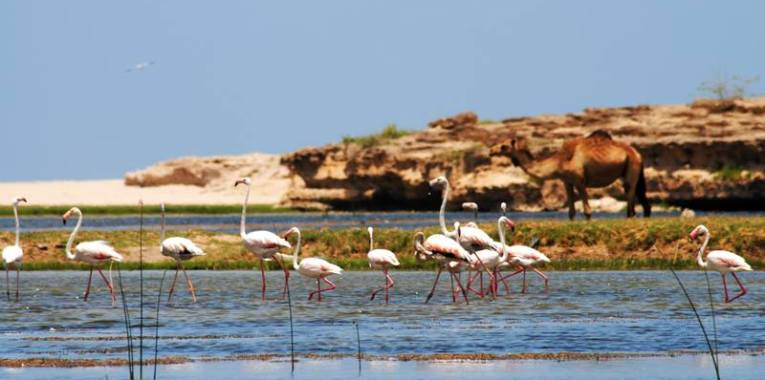


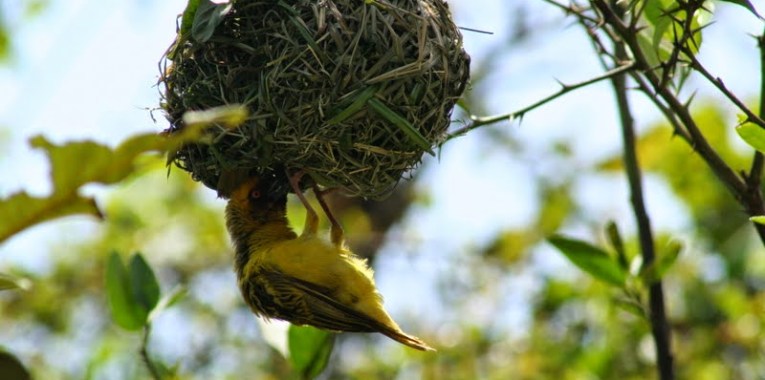

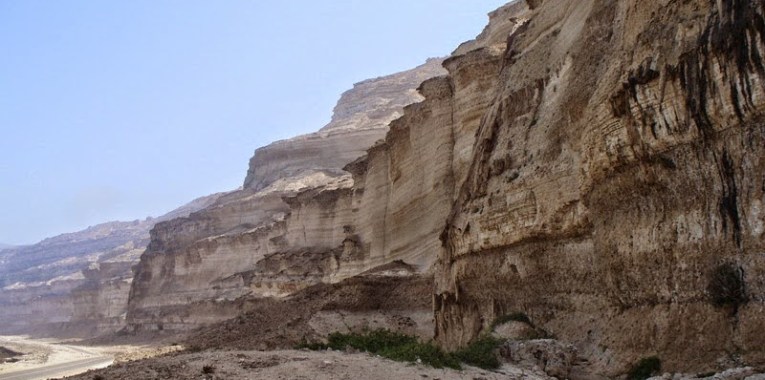




You must be logged in to post a comment.