Musing

Cooking is a Language

gm - coffee 3

Excerpt from the essay “The Culinary Triangle: What can Claude Lévi-Strauss teach us about food fads today?” by Sara Davis

The Culinary Triangle

Lévi-Strauss placed the three phases of food at the points of a triangle to emphasize both the opposition between different stages and the degrees between them. If you look at the diagram from the point of view of raw food, you might see the other two points as the outcomes of two different transformations: Cooked food is the product of cultural processes, such as the application of heat or tools; rotten food is the product of natural processes, time and decomposition. Truly raw food, for Lévi-Strauss, is unmarked by human intervention or decay; even the uncooked foods we eat have been washed, peeled, sliced, and prepared for human consumption. But though a chopped salad and a roast chicken might both appear on the dinner table, they occupy fundamentally different places in our cultural imagination.

Alternatively, if you tip the triangle onto its side to position “cooked” at the top of the pyramid, then the other two points indicate food that falls outside the category of edibility — what we might decide not to eat because it is underprepared or tainted. This visual tool permits a more nuanced framework for cultural comparison than an us/them contrast: We can perceive the French and Italian methods of preparing uncooked vegetables as points along a scale of cultural mediation, different in degree rather than kind; we can explain that the American soldiers had a wider conceptualization of the rotten than the French fromagers.

Of course, mapping foodways with this tool is just the tip of the triangle for Lévi-Strauss. Because the categories of “raw,” “rotten,” and “cooked” are culturally constructed, thinking about food in this way leads us into the realm of metaphors and ideas: The oppositions between points on the culinary triangle frequently point to other clusters of oppositional concepts in a particular society’s beliefs and practices. “Cooking is a language,” writes Lévi-Strauss, “through which society unconsciously reveals its structure.” Cultural values and fears might manifest through actual cooking and eating practices, as when we bake our most elaborate pastries for milestones such as birthdays or weddings, or when we refuse to eat food that has fallen on the floor because it has strayed into the zone of the rotten. At times, the allusions of the culinary triangle are mapped out in language itself, as when the life cycle of food is invoked to describe the life cycle of human beings, who might be said to be “green” or “raw” if they are not yet fully inculcated into the manners of civilization, or “crunchy” if they deliberately refuse certain trappings of society in favor of those closer to nature.

Foodways and Society in Oman – Food and Culture

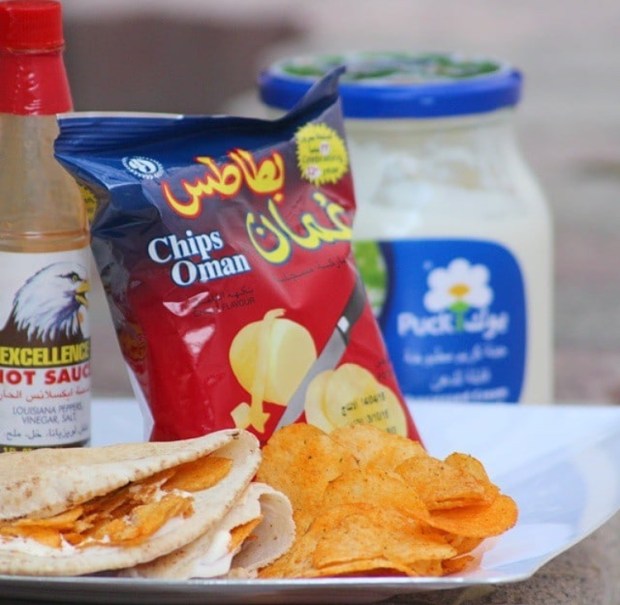
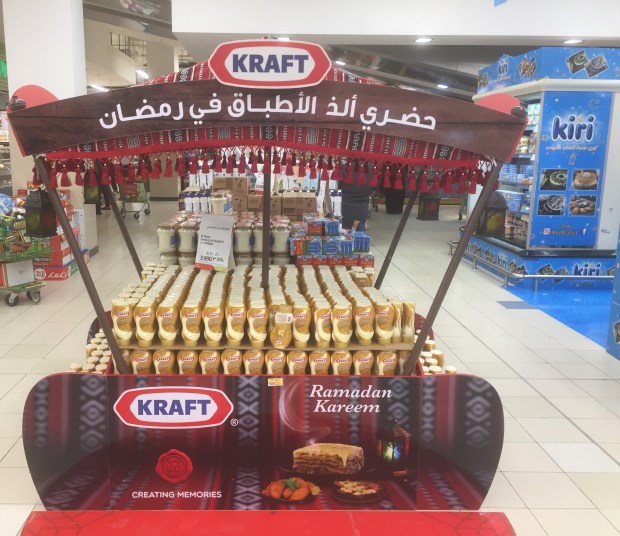
My current research focuses on the practices and perceptions of buying, making, eating and disposing of food among Dhofaris in the southern region of Oman. I am examining details of food preparation (who makes what kind of food in which location), as well as when, where and how food is eaten. I will also compare Dhofari food traditions with anthropological accounts from Yemen and recent changes in food culture including expanding selection of foods, hiring people to help with cooking, dieting, monetizing food and cooking methods.

“Accounts from the Journeys of the Brig ‘Palinurus’ along the Dhofar Coast Oman in the mid-1800s” – presentation at the National Maritime Museum, Greenwich, Sept. 15, 2018

[painting: Island of Faroun near the head of the Sea of Akabah. Showing the HEIC’s surveying vessel Palinurus. © National Maritime Museum, Greenwich, London]

I will be presenting “Accounts from the journeys of the brig ‘Palinurus’ along the Dhofar Coast in the mid-1800s” at the Exploration and Memory Conference, Mational Maritime Museum, September 14 and 15th.

https://www.rmg.co.uk/see-do/exhibitions-events/exploration-and-memory-conference

This three-day conference, from Thursday to Saturday, will consider exploration from the vibrant perspective of memory studies. Presentations will focus on the history, poetics, and material and visual culture of exploration, exploring how these have changed over the years and what their legacies have been, and continue to be.

Thursday

  • Collections and memory

Unseen Art of Australia’s First Fleet; Naval collecting between Cook and Darwin; Sir Rex Nan Kivell: ‘Collecting the explorers’ and not recalling ones’ past

  • Remembering people

Mapping movement and memories of coastal South America, 1680–1750; Representations of James Cook in Australia during the 1920s and 1930s; Convicts and Cartography in the Australian Colonies

  • Memorialization

Remembering the shipwreck of the Querina, 1431–32; Lost and forgotten: the story of the first Cook memorial; 21st Century challenges to the memorialisation of explorers

Friday

  • Knowledge and Encounter

British perceptions of difference in voyage narratives to the South Seas in the 1740 and 1760s; Encountering a “Savage” Land in the Romantic Era; Indigenous knowledge in New South Wales and London in the early nineteenth century

  • Histories

The Afro-Brazilian architectural heritage in Nigeria and the Republic of Benin; Exploring inter-personal spaces in India-Bangladesh borderlands

  • Making memory

Pacific Encounters: museums and memory making; The Taonga have memories too; Rites of space at ‘the shrine of geography’: the Royal Geographical Society, memory and exploration

  • Film, science and exploration

Arctic expedition and encounter; Fragmented Landscapes: Memory, Photography and the Polar Expedition

Saturday

  • Memory and encounter

Cabeza de Vaca’s Naufragios: exploration, ethnography, and identity negotiation; The Battle of Goringhaiqua and the death of Viceroy D’Almeida: contested histories, popular memory and ancestral voices

  • Travel writing

Between poles of memory in Ed O’Loughlin’s Minds of Winter;  Accounts from the journeys of the brig ‘Palinurus’ along the Dhofar Coast in the mid-1800s; Time and memory in Antarctic exploration literature for children

Hurricane Mekunu

Still trying to get my house dried out. Deepest thanks to the electricity, water and phone companies – all three stayed on during the storm which made everything easier. The government did a great job of warning people (to the point of forcing people to evacuate from low-lying areas), arranging free housing, food and water. Many civil aid trucks are out and about; roads are getting cleared. Darbat is RUNNING!

I will be presenting at the Maritime Exploration and Memory Conference, National Maritime Museum, Greenwich, England – Sept. 2018

Accounts from the Journeys of the Brig “Palinurus” Along the Dhofar Coast in the mid-1800s

Dr. Marielle Risse

Although there is a fair amount of written descriptions about the northern part of Oman, there were few travelers who wrote about the southern region of Dhofar until the 1970s. The first sustained exploration by Westerners was done by two teams on the Brig “Palinurus.” Captain Haines and his crew from the Indian Navy surveyed and explored the Dhofar coast in 1834, 1835 and 1836. Commander J. P. Saunders, with the same ship and some of the same crew, continued this surveying work in 1844-1846. Both Haines and Saunders published accounts of their voyages.

The primary focus of these journeys was to figure out how the lands investigated might be of use to the British government and merchant class, as when Haines tried to buy the island of Socotra from Sultan Omar to use as a depot for steam-boat traffic between India and England. But there is a fascinating wealth of cultural and historical information from the articles written by members of the “Palinurus.” For example, the brig’s assistant-surgeon, Henry Carter, wrote up a brief archeological survey of “The Ruins of El Balad” (1846), in which he includes a succession of rulers/ governors of the Dhofari coast. Cruttenden’s short article (1838) details his journey from “Morebat” [Mirbat] to Dyreez [Dhariz],” approximately 71 kilometers along the coast.

My paper will discuss the articles published in relation to the “Palinurus” voyages along the Dhofar coast to compare the details of what was recorded in the mid 1800s to the present day. I will also briefly mention later travelers who came to the region by boat including Theodore & Mabel Bent and Bertram Thomas.


(photo by M. A. Al Awaid)