To start this discussion of apartments in Dhofar, I would like to informally divide apartment buildings into two types: “public” meaning available to be rented to any person (usually expat or non-Dhofari Omani) and “family,” meaning built to be given or rented to only people who the owner knows (usually family or tribe-members) or someone vouched for by a close friend or relative. Thus family-type apartments are almost always rented by Dhofari Omanis.
This difference is sometimes, but not always, by location, as some sections of land in Salalah are occupied by inter-related families within one tribe while others, especially newly-built areas, have a mix of inhabitants.
In general, “public” buildings have several floors and an on-site manager who has a small office and/ or lives in a small apartment near the front door and is responsible for up-keep, fixing problems and keeping an eye on the building.
A person who owns a “public” apartment building will advertise widely, for example hanging a ‘for rent’ sign, taking photos and putting them on social media and/ or registering the apartment with rental companies.
“Family apartment” buildings are usually smaller, either 2 or 3 floors, a subdivided house or apartments built into the back of a family house. When the apartments are ready, the owner will not advertise in any way, but fill the apartments by word of mouth among friends and relatives. There would never be an on-site manager for a family-only building as no one would want someone watching who comes and goes and when.
There are also significant differences in terms of how the rooms are placed and designed which I will discuss in a later essay.
“Family”
For the past 50 years or so, a “house” meant cement-block built living space for a father, mother, unmarried sons and daughters, married sons and their families, older relatives and temporary guests, for example a married daughter whose husband is out of town for work. Sometimes the house would be built to 2 or 3 floors, or one floor was built, then upper floors added when more space was needed.
From the 1990s until recently, sometimes the majlis (the male/ guest sitting room which has its own entrance and bathroom, separated from the rest of the house by an interior door) was rented out in khareef, the monsoon season from the end of June until the end of August. The owner would give the space to family living in other parts of Oman or rent it by letting friends and relatives know the space was available.
Sometimes there was the opposite use of space, in which a house was rented out but the majlis was kept for the owner. For example, if the owner worked in Salalah but lived in the mountains, the owner would be able to use the majlis as a place to nap/ relax and occasionally sleep in and rarely see/ interact with renters who lived in the house.
Another division I have seen (only once) was for the owner to put a new interior wall and a wall in the hosh (courtyard), then broke an exterior wall to make a door, thus lengthwise dividing a one-story house into two apartments: one with the majlis and salle (women’s sitting room) at the front of the house and the second with the kitchen and two bedrooms at the rear. The renters of the back half of the house had a narrow driveway to reach the kitchen door.
A newer style is to buy land that is open on two sides, usually a main road to the front and an alley to one side. The house is designed with a front gate opening to the main road and a smaller gate on the side (which would normally lead to the kitchen) leading to a door which opens to a small landing with 1 or 2 small apartments. Thus the family lives in the main house, sharing a wall (but not entrance) with several small apartments which can be rented to help pay for the mortgage, given to relatives or, in time, given to the married sons so that the couple has some privacy, while still being close to the husband’s family.
Another style is to make a small apartment block with the same type of divided entrances. For example, a 2 story-building with 4 flats in which 2 flats (ground-floor and 1st floor) are accessed though one gate and the other 2 flats (ground-floor and 1st floor) are accessed through a second gate, with a cement-block wall dividing the hosh into two spaces. (example A, discussed below)
There are a few housing complexes, often only 4 to 10 houses surrounded by a wall with narrow, internal road(s), which are usually “public” and rented to expats, as well as Omanis who use the houses for informal get-togethers, not to live in. A few complexes are for one family, for example a wall surrounding 4 houses and a separate majlis for a man with four wives or a father with several sons. Infrequently there are larger complexes (with over 20 large houses) for one extended family.
Apartments and Sightlines
Another factor besides having a manager and number of units to differentiate “family” and “public” types of apartments is that for “family” apartments, it’s important to limit sightlines for outsiders. For example, in a small apartment building (A) as described above, not only are their two entrances, but each ground floor apartment is given control over the small hosh area, while each first-floor apartment is given control over half the flat, tiled roof.
Thus there are two factors to heighten privacy. First, the inhabitants of all four apartments have their own outside area to use for drying clothes, growing plants in pots, etc. The roof area is divided by a low wall, with the built-in drying racks built at opposite sides of the space.
Second, the building design means that the apartment’s front door is seen by very few people. If a person in the ground-floor apartment wants to leave and, while opening the front door, hears footsteps on the stairwell, they can quickly close the door, wait for the person (from the first-floor apartment) to leave, then go out. Thus the residents can limit or prevent being seen by anyone else.
Whereas a “public” style apartment building would have one hallway on each floor and only one main entrance, with perhaps a small back staircase for fire safety if it was several stories high. Every time a person exited their apartment, they would be on display, so to speak, for all the other neighbors to see and everyone would pass through the main entrance.
Two additional notes:
None of these houseways essays argue that these types of buildings/ ways of using the buildings in Dhofar are unique. I am trying to explain the current pragmatics of housing without making a claim that these methods are found only in southern Oman. For example, the methods of small-scale landlords using renters to find other renters (i.e. preferring to fill small buildings by word of mouth and personal recommendation, not using social media or public signs) reminds me of renting while I was getting my PhD in North Dakota. A friend (X) in my program found a beautiful apartment in a converted house that had two other apartments. Within a year both other apartments were also rented by English graduate students. X had parties, everyone liked the building and location, several colleagues asked about the two other apartments and the owners liked X, so as the two apartments came open, the owners asked X for recommendations. I eventually took over X’s apartment and when I left, another English graduate student took that apartment.
I would like to highlight that both men and women can own land and houses, although it is less common for a woman to live in a house she has bought entirely herself. For example, a woman might be given or buy a plot of land and have a house built which is then rented out while she lives in a house which her husband/ husband’s father owns. As I continue to look into houseways in Dhofar, I hope to find statistics on land and house ownership delineated by gender but among my informants I know of many types of ownership:
- one man owning the land/ house where his wife, married sons and unmarried sons and daughters live
- one man owning the land/ house where his wife and children, mother, married brothers and unmarried brothers and sisters live
- brothers and sisters joining together to buy land and build a house for their mother to live in with them if the mother is widowed or divorced, with the deed either in the name of several siblings or one brother’s name (who acknowledges the ownership rights of his siblings although those rights are not legally represented)
- one woman owning the land/ house which is rented out
There are a lot of possible permutations as house/land ownership and house/land occupancy are not necessarily the same. For example, it’s rare but an older woman might live alone in her father’s house when all the other family have moved away. The house might legally belong to a brother or a nephew, but the house is discussed as being “hers,” with the understanding that she has the right to live in it until she passes away. On the other hand, a man might live temporarily on land that is not his. For example, when herding camels, a man might set up a semi-permanent camp and stay for several weeks on land that he does not have a permit for.
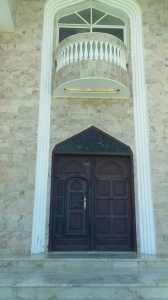
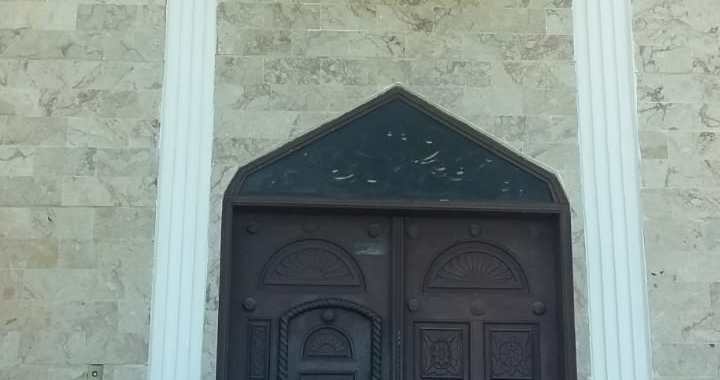
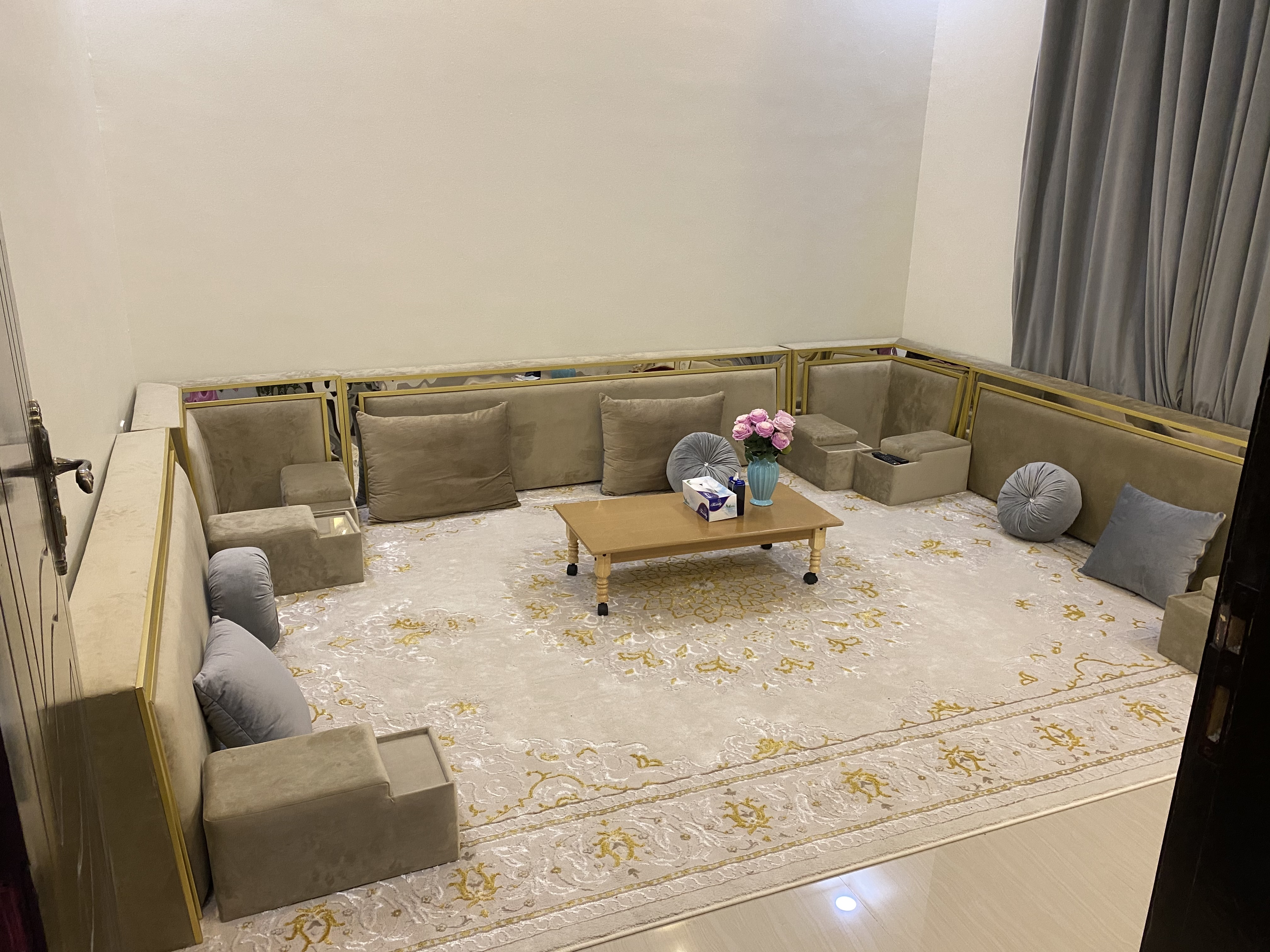
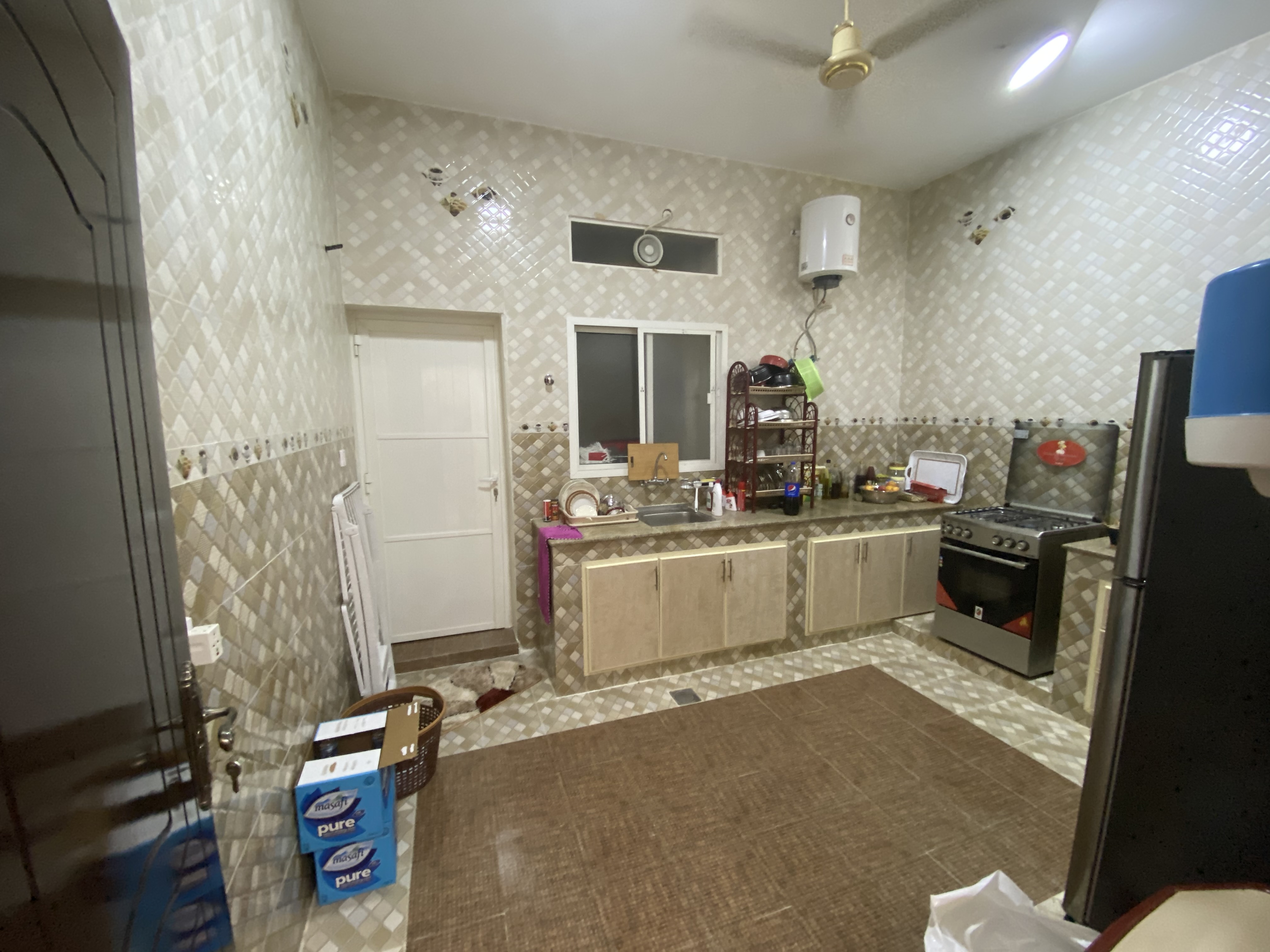
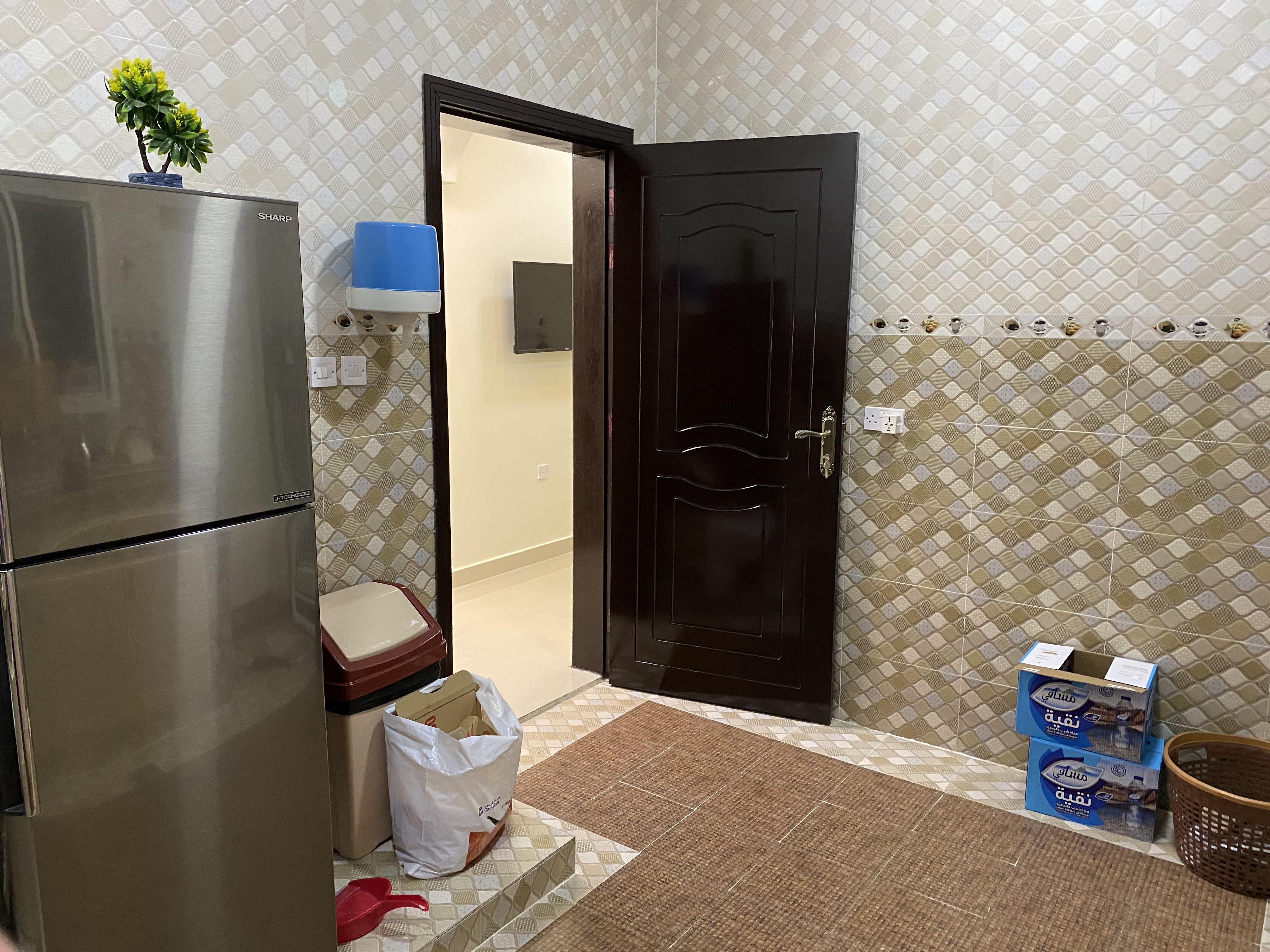
Example of front door to family apartment building, having one door signals that the interior is divided into apartments as almost all single-family houses have two front doors, one for the majlis and one for the main section of the house (photo taken by informant who wishes to remain anonymous and given to me for use on this webpage)














You must be logged in to post a comment.