Ethnographic Work and Pop Songs, updated

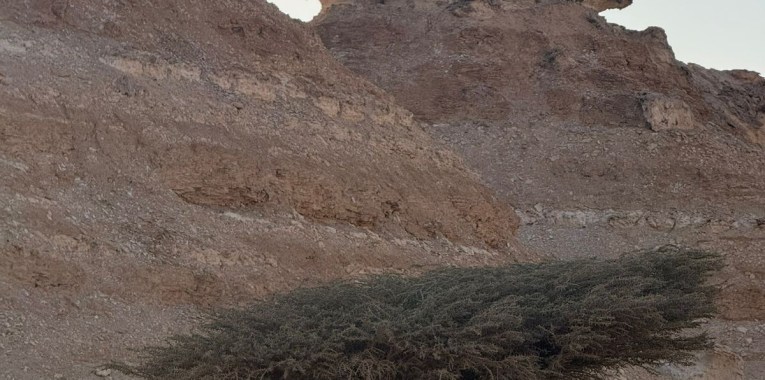
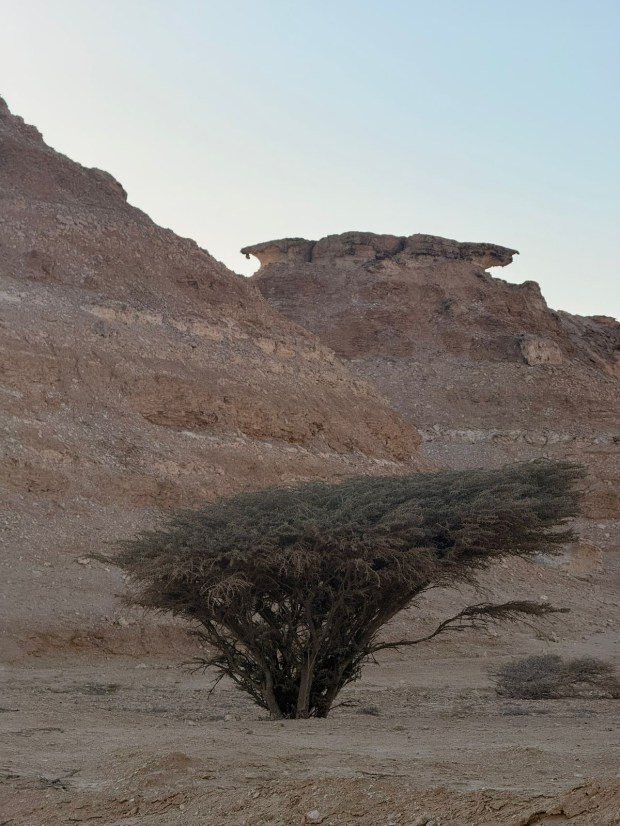
(photo by M. A. Al Awaid)

A friend jokingly asked if I was going to talk about pop songs in my next book as my books were the only ones they had seen in which an academic author thanked Bernice Johnson Reagon, Bruce Springsteen, Elton John, Josh Ritter, the Muppets, Pink, Prince, and Toby Keith in the acknowledgments. I said yes.

Living where I do research and living overseas for more than eighteen years was sometimes difficult. Sometimes I drive around town with the car windows rolled up blasting the Boss; sometimes the only way to get motivated to sit down and work on a Friday morning is to play Toby Keith.  I see listing the songs and singers as a way of being honest about how I do research.

Recognizing that I use pop songs to keep me focused is modeling that researchers do not have to be serious all the time, in the same way I try to model honest behavior for my students. Acknowledging pop songs is similar to my saying to students “I don’t know” or “I am not sure about the spelling of that word.” Sometimes a student will gasp, “YOU DON’T KNOW?” I laugh and explain that there are no spelling bees in Germany because they aren’t needed, but every state in the USA has spelling contents because English spelling can be tricky with all the loan words. So, no, I don’t know how to spell every word in English and I sometimes need to do a quick check to make sure.

About a week after I started on-line teaching I watched the movie Trolls and I loved the song “Get Back Up Again.” All that spring “Get Back” was on constant repeat as I fought unfamiliar tech, attempted new ways of teaching and tried to increase student involvement (“TURN ON YOUR MICROPHONES!”). Now when I hear “Get Back Up Again” I am transported back to those tough weeks in March – May 2020 when I left my apartment once a week to go to the grocery store. Bereft of my café, friends, chats with colleagues, the pool where I went swimming and picnics with the research guys, that saccharine song was my stay-positive mantra.

When I first heard the line “I don’t know when, confused about how as well” from the song “Chasing Cars” by Snow Patrol, I thought: that’s my life as a researcher. I am constantly trying to make sense of what I am seeing and I spend a lot of time living in confusion.

When I used to do teacher-training, I would tell teachers to work from their strengths, be frank when they were lost and ask for help when they needed it. By embracing my inner Top 40 doo-wop persona, I practice what I preach.

from my books:

Researching and Working on the Arabian Peninsula: Creating Effective Interactions. Palgrave Macmillan, 2025
To the singers who helped me through so many long drives late at night on dark roads: Jimmy Buffet, Lucky Ali, Prince, Toby Keith and (just in time) Tortured Poets, as well as “Angel” Sarah McLachlan; “Arms of an Angel” Soweto Gospel Choir; “City of New Orleans” and “My Heros Have Always Been Cowboys” Willie Nelson; “Cloudy Day,” Tones and I; “Gone with the Angels” Shaggy; “Lost and Found” Brooks and Dunn; “Locomotion” Orchestral Manoeuvers in the Dark; “Low” and “Wild Ones” Flo Rida; “Montego Bay” Bobby Bloom; “Ngarra Burra Ferra” Jessica Mauboy, Jade MacRae, Lou Bennett and Juanita Tippens; “Seven Spanish Angels,” Willie Nelson and Ray Charles; and “A World of Your Own” cast of Wonka.

Houseways in Southern Oman. Routledge, 2023

I am grateful for Aida (Broadway and concept albums); “Mama Knows the Highway,” Hal Ketchum; “Unwritten,” Natasha Bedingfield; “La Vie Boheme,” Rent; “Drunk Americans,” Toby Keith; “American Rock ’n Roll,” Kid Rock, “Let the River Run,” Carly Simon, as well as Jimmy Buffet, Pink, Prince, Bob Seger, Shaggy and Tina Turner.

Foodways in Southern Oman. Routledge, 2021

Thanks to Kid Rock (for the slow songs, not the politics, not the rap), Pink, Toby Keith and all the songs picked by Steve Nathans-Kelly which got me through a lot of long drives late at night on dark roads.

Community and Autonomy in Southern Oman. Palgrave Macmillan, 2019

I would like to thank the memory of Gerald Durrell and Lawrence Durrell, whose books pulled me out into the world: Jersey, Cyprus, Rhodes, Provence and Alexandria. I have lived over 15 years overseas and have missed a lot of popular culture, but I am grateful for The Mummy (1932 and 1999 versions), Chariots of Fire (1981), Sahara (2005), Black Gold (2011), Theeb (2014), and A Perfect Day (2016), and “All these Things That I’ve Done” sung by the Killers; “If You’re Going Through Hell” sung by Rodney Akins; “Club Can’t Handle Me” sung by Flo Rida;  Elton John, especially “Island Girl” and Aida; Prince, especially “The One U Want to C”; Bruce Springsteen, especially “From Small Things” and “Frankie Fell in Love”; Toby Keith, especially “How Do You Like Me Now,” “Rum is the Reason,” and “Ain’t No Right Way”; Josh Ritter, especially “Getting Ready to Get Down” and “Girl in the War”; Bernice Johnson Reagon; John Denver; Jimmy Buffett; Kid Rock, and the Muppets.

Getting through Covid:

  • Big Energy – Latto, and the remix with Mariah Carey
  • Devil with the Blue Dress – Mitch Rider and the Detroit Wheels
  • Don’t Start Now – Dua Lipa
  • Duke of Earl – Gene Chandler
  • Happy all the Time from Elf
  • Hello, Hello – Elton John
  • House on Fire – Mimi Webb
  • I Don’t Feel Like Dancing – Scissor Sisters
  • Leave before You Love Me – Marshmello and Jonas Brothers
  • The Lion Sleeps Tonight – The Tokens
  • Mr Brightside – The Killers
  • The Other Side – SZA and Justin Timberlake
  • Pretty in Pink soundtrack
  • So Happy it Hurts – Bryan Adams
  • Thunder – Imagine Dragons

Reflections – Dhofari Conversations

Me Talk Pretty Never: Learning Arabic, part 1

Adjusting to Oman: My Dangerous Taxi

Practicalities: Managing a Short Research Trip to the Arabian Peninsula

Practicalities: Managing a Short Business Trip to the Arabian Peninsula

Predator Anthropologists, Anthropologist Predators: Anthropological Metaphors in Popular Movies

Now that there is a new Predator movie, I will need to watch it and see how it fits into the Predator framework.

Predator Anthropologists, Anthropologist Predators:

Anthropological Metaphors in Popular Movies (Risse 2017)

Time spent viewing anthropological films rarely yields the intellectual rewards of comparable time spent reading. Yet, ironically, time spent with merely ‘entertainment’ films is richly rewarded with ideas about the culture and society in which they originate. (Jarvie 1983 323)

Introduction

The cover of one of my anthropology textbooks has a white man in a white shirt, pressed pants, shoes and the accoutrements of academia (glasses, pen, notebook) talking to a woman with facial tattoos and cloth wrapped around her body. She’s “local,” with local knowledge and he’s the embodiment of a Western-style education. He’s going to take her information, compare it to other knowledge from other cultures, add in some theory and publish. He might get more grants to go out in the “field” again and interview some more locals, perhaps end up with tenure.

But what if the local woman, as she is passing along some native wisdom, hands him a cup of a native beverage, which he accepts as he wants more local experiences. The drink turns him into a terrible beast and, after a frightful rampage, he’s killed by his own colleagues. That’s the plot of The Relic (1997).

When I first saw the movie, I didn’t think of it in terms of anthropology, it was just a fun summer movie. But thinking about it later, I felt it was right on so many levels: the dangerous beast killing people in the museum is not ‘other’ or ‘exotic’; it’s the white, male academic who cluelessly went out to gather local knowledge without any respect for what that knowledge might entail. And after more than 14 years of living on the Arabian Peninsula, the movie is more relevant to me than ever. Going into the “field” changes an anthropologist in unexpected, sometimes unwanted, ways which are captured in films with a variety of metaphors.

Rewatching The Relic (1997) over the years has made me realize how unusually, wonderfully subversive it is and started me thinking about how popular movies can slotted into a taxonomy of the possibilities what can happen when an anthropologist leaves a homespace to enter a world of foreign “local” people.

Although I am not an aid-worker in 1995 in the war-ravaged Balkans, A Perfect Day (2016) is the best cinematic portrayal of my life in the Middle East. I live middle-class comfortable, teaching at a university but the feeling of the characters is very similar: the getting up and spending the day trying to do the right thing in a foreign environment, with no sense if one is ever actually helping anything but doing it anyway. I can relate to that. Tying ropes on the body of a dead, white man so that the local people can later use the ropes to haul the body away and have clean water. That’s an eerily helpful metaphor for teaching Shakespeare, Milton, Wilde and Shaw on the Arabian Peninsula.

 And most people who have lived expat for years, even those not in the military, can relate to the scene in Hurt Locker (2008) in which James (Jeremy Renner) stands stupefied in the cereal aisle and the continual displacement/ disorientation of Billy-Lynn in Billy-Lynn’s Long Half Time Walk (2016) and Krebs in Soldier’s Home (1977), based on a Hemingway short story.

Homespace and “Local” Space

Displacement and disorientation are key to the anthropologist’s experience. To do anthropology, the anthropologist has to come out of some kind of homespace where the rules are known and go out into the “field,” a new place with unknown rules which the anthropologist must learn well enough to explain to people back in the homespace, especially the academics.

The point is to gather knowledge and then go home: “The conventional Western anthropologist, remember, is not really a native and, therefore, finds it necessary to determine when enough is enough, when it is finally time to emerge from the fray of the field to write-up” (Jarvie 2004 34). Sometimes anthropologists do work in their own [known] community, in which case they need to explain the culture in academic terms to foreigners.

At heart there are two places: homespace and ‘away,’ and the two main characters: protagonist/ anthropologist and the locals. Appadurai, using the term “natives,” writes an excellent description:

Natives are in one place, a place to which explorers, administrators, missionaries, and eventually anthropologists, come… Natives are those who are somehow confined to places by their connection to what the place permits…They are confined by what they know, feel, and believe. They are prisoners of their ‘mode of thought’… [they are] are in one place, a place to which explorers, administrators, missionaries, and eventually anthropologists, come (1988 37)

I use “locals” because natives are often not native. Where I work one group claims the status as “natives” but most people I know explain that their tribe originated in another place and moved here centuries ago. In anthropology and movies, the locals are the “marked” set – they are different, distinct. They are the ones who are maybe magic, maybe from another planet, and as the protagonist/ anthropologist is gathering information about the locals, the locals are gathering information about the protagonist/ anthropologist.

There are multitudes of dangers: misunderstanding the locals, over-identifying with locals, romantic entanglements, being pulled into fights (siding with one group of locals against another group of locals, with outsiders against locals or with locals against outsiders) or, most dangerously, switching loyalties and becoming local.

The key film for the last possibility is Avatar (2009), anthropology porn. The hero Jake (Sam Worthington) effortlessly melds with the locals, not needed the pedantic knowledge-based approach of Dr. Grace Augustine (Sigourney Weaver) and Norm Spellman (Joel David Moore). Jake learns, adapts and in the end blends seamlessly into the local society. From my experience, anthropologists are more similar to Richie Lanz (Bill Murray) in Rock the Kasbah (2015) and Kim Baker (Tina Fey) in Whiskey Tango Foxtrot (2016); they arrive lost and clueless, acquire some hard-won knowledge and leave with a better sense of all that they don’t know.

Kids’ and Action Movies – A Short Taxonomy

Two kinds of popular movies often have a character leaving homespace and attempting to understand, perhaps assimilate, into new territory for survival purposes: kids’ and action movies. Kids’ movies are interesting because the new land is adulthood which, once crossed into, can’t be left. The homespace, childhood, is left behind forever. I think part of the reason Avatar was so popular is that it shows that even after you grow up, you can revert to Peter Pan. Jake was a child, became a soldier and then has the chance to go live in a brightly colored, happy culture where he is the equivalent of royalty.

 Action movies are also useful for thinking about representations of anthropology because it’s a genre in which assuming one knows how to navigate unfamiliar territory is almost always punished. Many action (and horror) films are based on the principle of a person going to (or staying in) a place the locals shun and getting chomped.

Without trying to be comprehensive, I would like to briefly sketch out how movies might be sorted out in terms of an protagonist/ anthropologist v. local framework. First, there are the self-contained alien places; people from different areas might interact but there is no one from outside the invented framework, i.e. Hobbit (2012)/ Lord of the Rings (2001, 2002, 2003), Princess Bride (1987), Golden Compass (2007), Star Wars and all the Star Trek iterations.

There are movies in which someone goes to a foreign land in a way which can’t be duplicated such as an innate ability for the main characters as with Inkheart (2008), the Harry Potter films and Stardust (2007); a foreign object that enmeshes you such as the board game in Jumanji (1995); or a location in movies for children such as the Never-ending Story (1984), the three Chronicles of Narnia films (2005, 2008 and 2010), and Night at the Museum (2006, 2009, 2014); in action and horror movies, someone finds or makes a portal such as Stargate (1994).

 A third type is the protagonist/ anthropologist figure who ends up in foreign territory inadvertently, as with the children’s’ movies Lost in the Desert/ Dirkie (1969/1970), Walkabout (1971), A Far-Off Place (1993) and countless action/ horror movies such as Pitch Black (2000), and even in cases when the “locals” are not even sentient such as the deadly vines in The Ruins (2008). In this kind of movie, the protagonist/ anthropologist figure needs to get up to speed quickly on the local culture or die.

 A fourth type is when the protagonist/ anthropologist is ordered into the foreign territory. In children’s movies this is usually because the parents have moved, for example Tiger Eyes (2012) and Inside Out (2015). In the action/ horror genres is it usually because of military orders, i.e. Avatar (2009) and Billy-Lynn’s Long Half Time Walk (2016).

Sometimes the protagonist/ anthropologist goes deliberately into the new territory specifically to learn about the people, as with Spiderwick (2008) and Epic (2013) for children and the Relic (1997), Rock the Kasbah (2015) and Whiskey Tango Foxtrot (2016). Some of the action movies throw in a romantic twist, as in Continental Divide (1981) and Crocodile Dundee (1986). At the end of all of these types of movies, the protagonist/ anthropologist usually returns to the homespace having learned about the place and him/herself – “other” serves as a place to grow and develop as with A Far-Off Place (1993) and Jumanji: Welcome to the Jungle (2017) and whoever survives in the horror/ action movies. In some movies the portal stays open and the protagonist/ anthropologist manages a way to stay connected to homespace and the “other”; this happens most often in children’s movies such as Night at the Museum (2006, 2009, 2014), Spiderwick (2008) and Epic (2013).

Another option is that the protagonist/ anthropologist will choose the new territory and stay there forever, again this is usual in children’s movies when the main character has a magical connection to the new land such as the three Chronicles of Narnia films (2005, 2008 and 2010), and Stardust (2007). For children without inherent magic, those who choose the new territory are always seen as “lost,” as with the Emerald Forest (1985). This type of ending is so perilous, the ending of the books are changed when made into movies so that the child safely reassimilates as with Light in the Forest (1958) and Jungle Book (1967 version). This tension fuels all the versions of Tarzan.

In adult movies, choosing the new territory over homespace is also almost always dangerous. In a few cases, the protagonist is no longer ‘at home’ in the homespace and accepts a better life with the new culture, as with Dances with Wolves (1990) and Avatar (2009), but most often the protagonist/ anthropologist becomes trapped in a nightmarish existence as with Silence (2016).

 The movement can be reversed in which a “local” person from the “marked” territory comes to the “normal” world. This is a staple in children’s movies: Mary Poppins (1964), Peter Pan (2003)/ Pan (2015), and Nanny McPhee (2005). In action movies, the out-of-place character is usually dangerous, i.e. Men in Black (1997), and sometimes danger mixed with humor, i.e. Rush Hour (1998). The “local” usually rejects the “normal” space, for example The Gods Must Be Crazy (1980) and Rabbit-Proof Fence (2002).    

 Movies in which the “local” comes into the “normal” space and successfully assimilates are almost always comedy and romantic, i.e. Enchanted (2007). If not romantic, then it’s usually the sub-genre of sci-fi/ horror such as with the Species and Alien franchises.

The Dangers of Static Frames of Reference and Moving Knowledge

The movies I am most interested in are the ones which center on two aspects of knowledge: learning and bringing it home. In their classic anthropology text, Michrina and Richards explain that the anthropologist “gathers data,” “attributes some meaning” and “constructs an understanding of the whole group from interpreted pieces of data,” most importantly by placing “him- or herself in a ‘one-down’ position in trying to obtain an understanding from informants” (1996 7, 23). From this ‘one-down’ position, one gathers knowledge that is for the benefit, in Jarvie’s term, of the “home society”:

The ethnographic report (E) is evidence about (not part of) the anthropology of a society (S). The anthropological book (B) discussing E is part of the anthropological history (AH) not of the society (S), but of its home society (HS). (1983 324)

 Or as Agar puts it, “The important part was to come home and address colleagues in anthropologese” (2011 10). This can all go wrong in so many terrible (when it happens to you as an anthropologist) and fabulous (when you watch it on a screen) ways.

Static Frames of Reference

 The first danger is not seeing what is in front of you. This is the standard opening of so many entertaining movies in which a character (usually one of the first to be munched) declares something along the lines of: the bats are sure acting funny these days, seems like a lot of spiders around, we have all possible security precautions in place, or of course the sharks can’t learn how to…. Large footprints by the lake, a jump in temperature readings, something that looks like an egg but couldn’t possibly be an egg, etc. are explained away because the people in charge know what is there, know what is what, know what is going on and know what will happen. Until the T-Rex eats them.

 Exactly like anthropologists arriving in “local space” with a knowledge of the language, a living stipend and a research plan approved by their advisor and the university ethics board only to find out that the plan won’t work. It means fully preparing to study X, arriving in the “local space” and realizing that studying X is not possible; for example in Menoret’s Joyriding in Riyadh: Oil, Urbanism, and Road Revolt (2014).

  In Behind the Veil in Arabia: Women in Oman, Wikan writes, “I harbored a dream to meet the real, authentic Arabia” (1982 3). However, Wikan notes that the women’s “calm, quiet, self-control, that mute self-assured poise, was to prove the major obstacle all the way through to getting to know, really to know, the Soharis” (10). In the introduction and appendix, Wikan makes it clear that she finally understood after leaving Oman that this “gracious facade” (13) was the fundamental truth, “what matters is how the other acts, not what he or she ‘really’ thinks”; it is “an axiom of Omani culture that persons are endowed with different natures which determine the way they behave. It is for others to acknowledge and accept this” (13, 238).

 This kind of anthropological journey of understanding is portrayed in cinematic terms in Kong: Skull Island (2017) in which the characters learn that what they thought was the problem, isn’t the problem. Watching Preston Packard (Samuel L. Jackson) argue that Kong is the enemy which needs to be destroyed teaches the viewer two important lessons: don’t let traumatized survivors make tactical decisions and don’t take out the target unless you understand ramifications.

 The film is made with the battle lines of good vs. evil, the hero battling the monster. But I read it as the protagonists (who are not exactly heroes) battling their own dangerously static frames of reference for understanding. At the beginning of Kong Gunpei Ikari (Miyavi) and Hank Marlow (John C. Reilly) think they are each other’s enemy until they realize there is a bigger threat. Bill Randa (John Goodman), the only survivor of a battleship which was destroyed by an undescribed monster, comes to the island looking to flush out and kill the monster(s) he assumes are there. When Kong appears in response to the bombs dropped by Randa and starts swatting the helicopters, it is assumed he is the dangerous monster which needs to be killed.

 James Conrad (Tom Hiddleston), Mason Weaver (Brie Larson) and the soldiers think they are looking at walls when they are looking at people; a soldier sits on a log which is actually an insect, which he shoots, although it is harmless, and the noise of the gun bring the actual danger. Other soldiers think the legs of a giant spider are tree trunks and that a giant moose is an island. Everyone from off-island thinks Kong is the threat but it’s actually the “skull crawlers.” In the final fight, the soldiers, scientists and journalist distract the large skull crawler, but it’s Kong who (before and again now) saves the day. The interlopers brought the monster up out of the ground with their bombs; Kong has to clean up the mess.

 One of the characters, Hank, is the patron saint of people like me who, having lived and researched as an expat in a foreign country for an extended period of time, must deal with newly arrived researchers happy to explain everything to me. Hank, who has been stuck on the island for decades, brings the newly arrived soldiers, scientists and journalists to the local’s village. When the male and female leaders come to meet the group, Hank looks at them silently. After a minute, the two locals bow their heads slightly. Hank says quietly, “Thank you, thank you,” then turns to the Americans and says more loudly, “So, good news, they say you can shack up here.” The lead soldier says, “I didn’t hear them say anything.” Later Hank mutters, “I’ve only been here 28 years, what do I know,” as the soldiers insist on walking into a death trap.

That’s my life. I do research with a group of people who signal violent disagreement with an almost inaudible intake of breath, show anger with a barely perceptible tensing of the body, express displeasure by giving compliments and say “Yes, we will definitely…” when they mean, “No.” Trying to explain this to other expats and researchers leads to the question: “Well why don’t they just say what they mean?” They are saying what they mean, just in signals and words outsiders don’t correctly decipher, often thinking that there is nothing to decipher.

The same faulty premise of an anthropologist landing in new territory and believing they understand what is happening runs through the Predator movies. Both Kong and Predator are fundamentally about the painful process of realizing one’s misunderstandings and recalibrating knowledge

In the original Predator (1987), an elite military team is sent to a central American jungle to rescue a “cabinet minister.” They soon realize that the premise was a set-up and that they, in turn, are being hunted by an alien Predator. Lied to by the CIA agent, lost in every sense of the word, the group are killed off one by one and the hero survives by covering himself in mud, the ultimate blending into the landscape. One woman also survives.

The sequel, Predator 2 (1990), was less successful: I believe partially because it has the more standard premise of ‘alien creatures show up and get killed.’ There’s nothing new or remarkable in terms of theory or execution.

However, the third iteration takes an interesting turn. Predators (2010) starts with several humans waking up in the middle of a parachute drop into a tropical forest similar to the one in Predator. The ones who survive the drop band together when it becomes clear that they are being hunted by a team of 3 super-evolved Predators. They eventually realize that they are on a different planet and they were assembled because “we’re the monsters of our own world,” a serial killer, a gangster, a drug lord, etc.

A human who has survived serval hunting seasons eventually betrays them and the two remaining humans end up untying a captured, lesser-evolved Predator to help them fight. When all the Predators are dead, the remaining man and woman look up to see another group of humans dropping in parachutes and walk away to see if there is a way off the planet with a hopelessness equivalent of Charlton Heston at the end of Planet of the Apes (1968).

The set-up of Predator, the person pursuing knowledge who ends up as prey, is also found in the low-budget Alien vs. Predator (2004) in which a team of scientists and military looking for a mysterious pyramid under Antarctica find themselves in the middle of a fight between the Alien and Predator monsters. The small band of survivors eventually align with the Predator, as Predators and humans are ruthless hunters with a veneer of mortality while the Aliens are simply killers.[1] It’s notable that the only person to survive is a woman of color; in the original Predator, the only survivors are a Latina woman and Arnold.

The last film in the series, Alien vs. Predator – Requiem (2007), is like Predator 2. The Predator’s spaceship seen at the very end of Alien vs. Predator is carrying an Alien. When this is discovered, the fight onboard leads to the spaceship crashing in a small-town Colorado and the townspeople are caught in the middle of the fight between the two species. [2] 

If you sidestep the gore, the first and third movies in the series focus on the danger of thinking you know what you are getting into when navigating new territory and species. In the first Predator, Arnold thinks the enemy are the “guerillas” who shot down a helicopter and took hostages. He is very clear that he only does “rescue missions.” After killing a lot of people, he and his soldiers realize the CIA set them up; it’s a CIA mission, not rescue. Angry at this betrayal, they take the only surviving guerilla as hostage and try to get back to a place where they can be picked up by helicopter. As the move through the thick jungle landscape, they realize the real threat is something else, a creature with super powers which they can’t see. The Predator is not only stalking them, but studying them, recording and practicing their words.

 The hostage “enemy” is the one who understands what is going on but won’t trust Arnold with the truth until he cuts off her handcuffs and treats her as an equal. He, finally understanding the situation, kicks a gun out of her hands as he realizes the Predator only hunts prey worth killing, i.e. something that is trying to kill it. He tells her to run and draws attention to himself to allow her to escape.

Arnold then learns, by accident, that being covered in mud masks him from the Predator’s infrared sight. At the end of the movie, the Predator takes off its’ armor, as it wants to kill Arnold on equal terms; both the Predator and Arnold build traps to catch each other. Arnold backs out of the Predator’s trap but manages to catch the Predator in his trap. The Predator then sets off a massive explosion, assuming it will destroy evidence of itself and kill Arnold.

 In other words, the anthropologist arrives in country assured of moral superiority (Arnold only does “rescues”), starts to research, realizes all previously held assumptions are wrong, learns the “enemy” is actually the most helpful person, and it is not just previous training (how to build traps) but sacrifice, luck, and caution that allow success.

 The next movie, Predators, shows that it’s not just a matter of following Helmuth von Moltke’s advice that “no plan survives contact with the enemy,” but that one often can’t figure out what or who the enemy is. The characters first assume the other humans are the adversary, then realize it’s the Predators, then comprehend that there are different kinds of Predators, and lastly, that some of the humans are actually the most dangerous opponent.[3] A Mexican drug cartel enforcer, a Spetsnaz soldier, an Israel Defense Forces sniper, a Revolutionary United Front office, a Yakuza enforcer, and a mercenary/ former Black Ops soldier can’t see that it’s the meek doctor who is the biggest hazard to survival.

  The humans are constantly misreading the landscape by not understanding that they are on a different planet, they need to band together against the Predators, the person who comes to their ‘rescue’ is leading them into a trap and the doctor is only pretending to help them.

To look at the situation from the other perspective, the Predator arrives on Earth to hunt for material, figures out the locals are gathering knowledge about it as it is gathering knowledge about the locals, believes itself to be fully capable of decoding the landscape (unaware of the concealing properties of mud), and finally comprehends how far behind the learning curve it is. In Predators the aliens misread the situation, assuming they are the ones in charge of what is happening, not imagining that some of the humans will set the lesser-evolved Predator loose to hunt them.[4]

  The real-world implications of this are important. In an article about killings of Americans by Afghan security forces, Nissenbaum (2011) mentions the Afghani perceptions of Americans “violent, reckless, intrusive, arrogant, self-serving, profane, infidel bullies hiding behind high technology” and the American perceptions of Afghanis: “cowardly, incompetent, obtuse, thieving, complacent, lazy, pot-smoking, treacherous and murderous rascals.”

 In a later article, Nissenbaum (2012) quotes the draft of a US Army handbook, “Understand that they may have poor conflict resolution skills and that insults cause irrational escalation of violence.” Who do you think the “they” refers to? Who exactly have the “poor conflict resolution skills” and who cause an “irrational escalation of violence” if insulted?

Discussing this handbook, Mullins (2012) writes that it “takes the position that the killings of coalition forces by Afghans security personnel is caused at least in part by a cultural ignorance of some American and European troops in dealing with Afghans.”

 I know that hunt for information predominantly from one side, me talking to the local men in my research group, asking questions, trying out theories, watching, taking notes, reading other researchers etc., but I have also been on the receiving end of the hunt for information when relatives of female friends try to proselytize me. My friends know that I will not change my religion, but they can’t simply tell the other women “she won’t convert” as that would be impolite. I always smile and give my standard answer that “I can’t change from the religion of my parents,” and I tell my friends to make sure everyone knows that my friends have tried often to convert me.

 Often the women back down after a few tries, but some keep fighting. They try to explain Islam to me and when my friends say that I have read about it, they express frustration. They can’t understand how someone who lives in a Muslim country, who knows about Islam could refuse to become Muslim. They have found peace and joy in their religion and wish the same blessing for me; that I would find peace in my own religion makes no sense. There’s always a sameness and a sadness to these conversations: I am sitting in their style of clothes, at their relative’s house, speaking their language, why aren’t I crossing over to their religion?

 Sometimes people’s frameworks can stretch. I was sitting on a beach with one of the men (Z) in my research group and he asked if I had ever been married. I said no; one man wanted to ask me, but he wanted me at home with children and I… I paused. Z was a very religious, conservative man, and I wasn’t sure how he would take my choice. He waited a moment, then said, “You wanted to see the world, you wanted your career.” Z made the jump; he could envision the path to happiness that was right for me, although it was antithetical to his all beliefs. People talk about failure to communicate, but I think it’s actually a failure to imagine the possible correctness of actions that aren’t correct for you.

Moving Knowledge Between Homespace and Local

A second type of film focuses on the time after the protagonists/ anthropologists have finally acquired the knowledge that they left the homespace to acquire. What they know has to be codified/ organized/ structured and made to fit into homespace norms. But what happens when the knowledge so changes the person that there is no way to explain what one knows? As Tedlock explains

It is as though fieldwork were supposed to give us two totally independent things: reportable significant knowledge and unreportable mysticism and high adventure. If we were so foolish as to make the mistake of combining these elements, it would somehow seriously discredit our entire endeavor. (1991 71)

The danger for the academic Whittlesey in the Relic (1997) is he gets his high adventure, but it’s so unreportable, that he can’t impart the scientific knowledge he picked up along the way. In the book The Relic (1995), there is a thought-out reason why the culture created a way to turn a human into a monster, but the movie starts with the anthropologist Dr. Julian Whittlesey (Lewis van Bergan) being offered a “local” beverage during a night-time ceremony. In the quest for authentic knowledge, he drinks it and turns into a monster.

The slogan on the movie poster is: “They did the unthinkable. They brought it back.” But it’s misleading, there’s no “they,” only Whittlesey and “it” wasn’t “brought back,” he returns of his own volition. The movie ad plays on the assumption that danger is from outside, but the monster is Whittlesey, who returns to the museum where he worked. He’s got all the “local” knowledge he was so hungry for – an amazing scientific discovery about gene mutation, now that he can’t fit back into his homespace and he’s killed. The movie gives a fictional rendering of the danger of the protagonist/ anthropologist going “native,” not being able to create the necessary academic distance.

 The characters printed with words in Inkheart (2008) are another fictional representation of the chaos created when a person is caught between two worlds. “Half read out of the book,” they live in the “normal” world but words from the books they come from are etched on their skin to show they are still partially attached to their homespace. They can’t live fully in either space. As T.E. Lawrence in his classic Seven Pillars of Wisdom writes:

In my case the efforts of three years to live in the dress of Arabs, and to imitate their mental foundations, quitted me of my English self and let me look at the West and its conventions with new eyes; they destroyed it all for me. At the same time I could not sincerely take on the Arab skin; it was an affectation only. Easily was a man made an infidel…Sometimes these selves would converse in the void: and then madness was very near, as I believe it would be near the man who could see things through the veils at once of two customs, two educations, two environments. (1953 30)

In Steve Caton’s book about the movie, Lawrence of Arabia, Caton expands on this theme:

According to the movie, the cost of living with such a split cultural identity for a man like Lawrence is madness or burnout. This view is very much a modernist one, expounding the need for a stable, grounded, and holistic subject, no matter how complex and ambiguous that subject may be. The idea that a person could contain many different identities, depending on the context of action, some of the contradictory, is something that we are only now beginning to entertain as same and perhaps even desirable in a “postmodern” world. (1999 166)

Agar talks about what happens when two people “encounter each other in a way that estranges them from themselves” (2011 15). When I meet one of the local men in my research group in a public place like a café, every person who sees us, local or expat, codes our relationship as romantic. It isn’t but there is no way to make that clear. A large neon sign with the words “NOPE – JUST RESEARCH” would be seen as protesting too much. We want to talk and it’s not appropriate for him to come to my apartment nor me to his, so we meet, talk then go home to face our respective communities.

Discussion

  Beyond the fact that it’s not a good sign that soldiers stumbling around in foreign lands shooting people are so easily compared to anthropologists, what is the lesson of Kong and Predators? I don’t want to hash out or join the ‘anthropologists as government-funded oppressors’ argument, but to focus on one aspect: their certainty.

 Many expat researchers I have met have been imbued with a sense of conviction I find both admirable and lamentable. I don’t want to break the confidence of someone setting out in the field, but it is worrying to have so many conversations in which I am told X is dangerous, when it is not, and that Y is not dangerous, when it actually is. Not dangerous in the terms of large apes, aliens or lizards, but dangerous in terms of getting in the way of accomplishing one’s research.

I know researchers who have come with prestigious scholarships and fellowships who have told me that they have no interest or need in talking to the locals. Others seem unprepared for the draining emotional and mental displacement that living in a foreign country, no matter how beautiful the scenery and how charming the people, entails. Some brush aside my caution that living on someone else’s terms is difficult.

 When I sit on a beach with local men from my research group, they are never my antagonists. My misunderstandings, cultural prejudices, inability to get out of my own perspective and inattention to detail are what are holding me back from understanding. I have had luminous times, moments of clarity and insight, but also a lot of time spent cold, wet, exhausted, and hungry.

 “It’s all different,” I try to explain to researchers and am told something along the lines of, “Yes, of course, I know, I understand” but when the difference happens, the results are almost always painful. Agar says, “It is obvious that social/ cultural anthropology translates various emic ‘cultures’ into a shared etic framework” (2011 5) but what happens when the researcher and I, both expats, can’t find that shared framework? It is a mystery to me why, although here are frequent misunderstandings between me and my research group, I feel cultural gaps most frequently when talking to people whose life’s work is reaching across cultural gaps.

References

Agar, Michael. 2011. Making Sense of One Other for Another: Ethnography as Translation. Ethknoworks LLC. http://www.ethknoworks.com/files/Language_and_Communication_article.pdf

Appadurai, Arjun. 1988. “Putting Hierarchy in its Place.” Cultural Anthropology 3.1: 36-49.

Caton, Steve. 1999. Lawrence of Arabia: A Film’s Anthropology. Oakland, CA: University of California Press.

Jarvie, I.C. 1983. “The Problem of the Ethnographic Real.” Current Anthropology 24.3: 313-325.

Mullins, Michael. 2012, Dec. 12. “Top US Commander in Afghanistan Rejects Cultural Sensitivity Handbook.” The Washington Post http://www.newsmax.com/TheWire/afghanistan-cultural-sensitivity-handbook/2012/12/12

Lawrence, T. E. 2008 [1935]. The Seven Pillars of Wisdom: A Triumph. London: Vintage Books.

Michrina, Barry and Cherylanne Richards. 1996. Person to Person: Fieldwork, Dialogue and the Hermeneutic Method. Albany: State Univ. of NY Press.

Menoret, Pascal. 2014. Joyriding in Riyadah: Oil, Urbanism, and Road Revolt. New York: Cambridge University Press.

Nissenbaum, Dion. 2011, June 17. “Report Sees Danger in Local Allies: Study Says Killings of Americans by Afghan Security Forces Represent a ‘Systematic Threat’ to the U.S. War Effort.” The Wall Street Journal http://online.wsj.com/news/articles/SB10001424052702303499204576389763385348

Nissenbaum, Dion. 2012, Dec. 11. “Draft Army Handbook Wades into Divisive Afghan Issue.” The Wall Street Journal. https://www.wsj.com/articles/SB10001424127887324024004578171561230647852

Tedlock, Barbara. 1991. “From Participant Observation to the Observation of Participation: The Emergence of Narrative Ethnography.” Journal of Anthropological Research 47: 69-94.

Wikan, Unni. 1982. Behind the Veil in Arabia: Women in Oman. Chicago: University of Chicago Press.

Other articles about culture and/ or movies

Abu-Lughod, Lila. 1991. “Writing Against Culture.” In Recapturing Anthropology, ed. Richard Fox. Santa Fe, N.M.: School of American Research Press. 137-62.

Brumann, Christoph. 1999. “Writing for Culture: Why a Successful Concept Should Not Be Discarded,” In Culture, a Second Chance? Supplement Special Issues Current Anthropology 40: S1-13.

Jackson, John. 2004. “An Ethnographic Filmflam, Giving Gifts, Doing Research and Videotaping the Native Subject/Object.” American Anthropologist 106.1: 32-42. 

Morphy, Howard. 1994. “The Interpretation of Ritual: Reflections from Film on Anthropological Practices.” Man 29: 117-146.

Movies Mentioned

Alien (1979)

Alien vs. Predator (2004)

Alien vs. Predator – Requiem (2007)

Avatar (2009)

Billy-Lynn’s Long Half Time Walk (2016)

The Chronicles of Narnia: The Lion, the Witch and the Wardrobe (2005)

The Chronicles of Narnia: Prince Caspian (2008)

The Chronicles of Narnia: The Voyage of the Dawn Treader (2010)

Continental Divide (1981)

Crocodile Dundee (1986)

Dances with Wolves (1990)

Emerald Forest (1985)

Enchanted (2007)

Epic (2013)

A Far-Off Place (1993)

The Gods Must Be Crazy (1980)

Godzilla (2014)

Golden Compass. (2007)

Harry Potter and the Sorcerer’s Stone (2001)
Harry Potter and the Chamber of Secrets (2002)
Harry Potter and the Prisoner of Azkaban (2004)
Harry Potter and the Goblet of Fire.(2005)
Harry Potter and the Order of the Phoenix (2007)
Harry Potter and the Half Blood Prince (2009)
Harry Potter and the Deathly Hallows – Part 1 (2010), Part 2 (2011)

Hobbit (2012)

Hurt Locker (2008)

Inkheart (2008)

Inside Out (2015)

Jumanji (1995)

Jumanji: Welcome to the Jungle (2017)

Jungle Book (1967 version)

Kong: Skull Island (2017)

Light in the Forest (1958)

Lord of the Rings (2001, 2002, 2003),

Lost in the Desert/ Dirkie (1969/1970)

Mary Poppins (1964)

Men in Black (1997)

Nanny McPhee (2005)

Night at the Museum (2006, 2009, 2014)

Pan (2015)

Passengers (2016)

A Perfect Day (2016)

Peter Pan (2003)

Pitch Black (2000)

Planet of the Apes (1968)

Predator (1987)

Predator 2 (1990

Predators (2010)

Princess Bride (1987)

Rabbit-Proof Fence (2002)

The Relic (1997)

Rock the Kasbah (2015)

The Ruins (2008)

Rush Hour (1998)

Silence (2016)

Soldier’s Home (1977)

Species (1995)

Spiderwick (2008)

Star Wars Episode IThe Phantom Menace (1999)

Star Wars: Episode II—Attack of the Clones (2002)

Star Wars: Episode III—Revenge of the Sith (2005)

Star Wars Episode IV A New Hope (1977)

Star Wars: Episode V—The Empire Strikes Back (1980)

Star Wars: Episode VI—Return of the Jedi (1983)

Star Wars: Episode VII—The Force Awakens (2015)

Star Wars: Episode VIIThe Last Jedi (2017)

Stardust (2007)

Tarzan (with various titles and subtitles, 1932, 1981, 1984, 1999, 2013, 2016)

Tiger Eyes (2012)

Walkabout (1971)

Whiskey Tango Foxtrot (2016)

            [1] The other point of difference is that Aliens incubate in humans, while Predators take human skeletons as trophies. Bursting out of one’s stomach is generally seen as more awful than displaying one’s bones. Another researcher could look at the importance of physiognomy in the hierarchy of monsters but in match-ups, the more human-like/ less insect-like one always win: Predator vs. Alien, Godzilla vs. MUTO, Kong vs. Skull-crawlers, etc. Further, the Predator has the human aspect of laughing in contemplation of a future event at the end of Predator.

            [2] My point about people who go looking for something and find an alien is more interesting than “aliens show up and get killed”  is somewhat confirmed by review percentages: Predator (1987) (Rotten Tomatoes Tomatometer 80 / Rotten Tomatoes Audience Score 87 – 7.8 IMDB), Predator 2 (1990) (28/43 – 6.2), Predators (2010) (64/51 – 6.4), Alien vs. Predator (2004) (20/ 39 – 5.6), Alien vs. Predator – Requiem (2007) (11/ 30 – 4.7). The ranking is Predator (killers become prey), Predators (killers become prey), Predator 2 (aliens show up), Alien vs. Predator (scientist become prey), Alien vs. Predator – Requiem (aliens show up).

            [3] The same sequence obtains in the 2014 version of Godzilla. In the opening credits, Godzilla is the monster, but it turns out that Godzilla is the only one who can save humans from the truly destructive monster, the “Massive Unidentified Terrestrial Organism.”

            [4] There is no escaping the grisly comparisons. A Predator standing in a tree holding up a skull, “Hey look at the thing from a foreign culture that I procured for myself” and me holding up what I have accumulated: an oryx horn, an old and traditionally made piece of fabric, a porcupine quill, a handmade basket, etc.

Predator article 

Reflections on Ethnographic Work: The Grasshopper

My Favorite Description of Anthropology

“Yemen with Yul,” travel essay published


New essay: “’Ghayn is for Ghazal” on “The Arabic Alphabet” website (by Michael Beard)

“The Arabic Alphabet” website (written by Michael Beard, illustrated by Houman Mortazavi) – http://alifbatourguide.com/

Ghayn is for ghazal – https://alifbatourguide.com/the-arabic-alphabet/ghazal/

Excerpt:

Shahrazâd’s opening story, the one which initiates the story-telling marathon, famously, keeps replicating itself in miniature. Shahrazâd is telling stories to save her life, but it’s not just her: time after time, in the manner of a fractal, characters in her stories are saved by story-telling too. (There is a beautiful essay by Tzvetan Todorov which says it plainly – that, in the Nights, stories are life. If you’re a character in a fiction, tell a story. What else keeps you alive? The plan is working for Shahrazad.)

In her, by now, familiar opening story, where the merchant, traveling on business, sits down to eat lunch under a tree, it’s familiar ground of traditional story-telling. The self-sufficient individual out alone on the road runs into an obstacle and encounters a challenge. Stories of chivalry in European tradition open that way; they hardly open any other way, with the knight setting off on a quest or perhaps just wandering. The reader is likely to imagine a context where the merchant’s business has taken him to the margin, the غایة , ghâya, limit of human society, a غابةghâba, a forest. In that opening scene, when he reaches into his pack, takes out lunch, and eats, innocently throwing the date pits over his shoulder behind him, he is the picture of vulnerability (not a knight out looking for adventure). It suggests (at least for me) a secure world where merchants can travel alone, settling down to غذاءghadhâ, food, without fear. When the ‘ifrit appears, huge and menacing, to say the merchant must die, it is enough of a disruption to be horrifying, but it’s funny too, and probably less familiar ground for a traditional story. The monster has a motive for being غضبانghad͎bân, angry, though the fact that a flying date pit has killed his son doesn’t register as tragic. We know that sons don’t always resemble their fathers, but an ‘ifrît’s son so fragile that he is killed by a date pit seems an extreme case. (Is this son legitimate?) We also know that we aren’t going to be very frightened by what follows.

The text tells us that everything we’re reading is a spoken story, since we are hearing Shahrzâd’s voice, but the truth is that we are reading it rather than hearing it. This has some advantages. Readers of a story can skip from episode to another, free to speed things up or slow them down. Such is the advantage the alphabet gives us over a listener like King Shahzamân. We can freeze-frame the story, knowing what will happen, and we can be surprised each time we read it (or imagine ourselves surprised, which may be just as good). When the merchant asks for a grace period to settle his affairs and say goodbye to his family, promising to be back at the beginning of the new year, a whole unexpected social world opens up because the‘ifrît accepts, immediately, without an argument. His hyperbolic trust is perhaps as funny as the date pit which kills his son — funny, but it is also, surprisingly, to me, moving. The `ifrît‘s surprising trust is one thing; then when the new year arrives and the merchant actually shows up (thus demonstrating that we can trust him too) we are at the extremes of trust. Exaggeration is funny, but I wonder if it also tells us something about the respect the culture shows for travelers. We expect them to keep their word. It is a world where traveling salesmen are positive figures.

Does everyone know the sequel? While the merchant is waiting to be executed, an old man walks by (the kind of respected mature individual referred to as a shaykh) leading a غزالة, a ghazâla on a chain. (Why just then? Don’t ask. No story, the Chinese proverb says, without a coincidence.) Later there will follow two additional shuyûkh, one with a pair of dogs and one with a she-mule, but it is the ghazâla we remember. In part, of course, the reason is on the surface: a ghazâla is synonymous with beauty.

غزالة is a beautiful word both in its Arabic form and in its guise as a loan word in English, gazelle. In European narrative tradition we are more likely to use the gazelle to characterize elegance of motion, but in Arabic its beauty is in the eyes, which are likely to resemble what Edgar Allan Poe emphasizes when he describes the title character in “Ligeia”: “They were, I must believe, far larger than the ordinary eyes of our own race. They were even fuller than the fullest of the gazelle eyes of the tribe of the valley of Nourjahad.” (In the interest of scrupulous accuracy – Nourjahad doesn’t exist in our world; a note in the edition edited by Hardin Craig notes that the phrase comes from a novel, History of Nourjahad [1767] by Sidney Bidulph, pseudonym of Mrs. Frances Sheridan. Poe almost makes you want to read it.) The esthetic of big eyes is everywhere. Cartoon figures and stuffed animals meant to appeal to our sentiments are often portrayed with oversize eyes. (Over the years Donald Duck and Mickey Mouse evolved eyes which hardly seem to leave room for brains.) I wonder if pandas would still have their reputation of cuteness if they didn’t have those big patches surrounding their eyes, looking as if they were eyes in reality.

New essay: “’Ayn is for Arab” on “The Arabic Alphabet” website (by Michael Beard)

New essay: “Ẓâ is for Ẓarf” on “The Arabic Alphabet” website (by Michael Beard)

New Essay: “Ṭâ Is For Talisman” on The Arabic Alphabet website

Using Creative Writing Prompts in Language Learning

photo by Hussein Baomar

Meera Lee Patel just published a new book: Learn to Let Go: A Journal for New Beginnings so I want to post this essay about her (and Katie Daisy’s) work. Their texts are always very effective in helping students improve their writing. Reflecting on how students reacted so positively to their artwork/ writings made me want to help other teachers find the benefits in using non-traditional writing prompts.

Abstract

This article highlights the importance of using interesting writing prompts to help students reach their language goals. The article reviews academic texts on the importance of using writing prompts, then gives examples of different types and explains how different prompts can be used to reach a variety of teaching objectives such as writing argument papers, varying audiences, learning grammar rules and increasing vocabulary. Using creative prompts to promote co-writing and class discussions are also explored. Various types of creative workbooks by Daisy (2018) and Patel (2018) are used as examples of how pairing prompts with appealing visuals can help students write longer and better essays. The procedures and positive results of using prompts are also discussed. Specifically, the author has found that using prompts means less delay in students beginning to do in-class writings, as well as creating longer and more detailed texts.

keywords: Language learning, creativity, writing prompts, writing journals

Introduction

It might seem odd to be discussing creative writing texts in a scholarly text about language learning, but in order to increase proficiency students need to produce writing. Colorful, vibrant, engaging texts will draw students in and make writing more enjoyable. Further, having an interesting prompt will help students write more and create the need for new vocabulary.

The impetus for my research on the topic of using interesting texts to help promote language learning started in a bookstore over ten years as I was looking for a text to help me learn Arabic. There were four choices. The first was a huge, thick paperback, as I paged through I saw that the vocabulary list for the first chapter had over 40 words. It seemed overwhelming so I set it down. The next two books were A4-sized paperbacks with a grammar rule at the top of each page and then 10-15 lines to write practice sentences.

The fourth book was a small paperback filled with black and white cartoon drawings and a wide variety of exercise (matching, fill-in-the-blank, true-false, charts, etc.). I not only bought it, I worked my way through the entire book eventually completing every page. Then I went on to buy and finish three more books by the same authors (Wightwick and Gaafar 2021). The user-friendliness of that Arabic textbook with its cute drawings, diverse tasks, short vocabulary lists and student-appropriate vocabulary made it easy to motivate myself to study every week. The lessons were not just about grammar rules, but included realistic conversations and creative expression. Making learning fun was a key element to my continued learning.

When I create syllabi for writing classes such as Advanced Academic English, Advanced English Language, Culture in the Classroom, Psychology of Language, Situational English, Writing for the Professions and Writing Workshop I take my person experience into account and think about my students’ attitudes towards learning. Sometimes I might give a short piece of literature, a question, a quote or an interesting painting as a prompt.

The purpose of this paper is to explain the pedagogical background for using creative writing prompts and to give specific examples of texts that language teachers might use.

Review of literature

Creative Writing

There is wide-spread agreement increasing student’s access to and use of creative writing into the language classroom is useful. This is usually accomplished through using interesting speaking and writing prompts, as well as literature such as poems or stories.

For example, both the Oxford University Press and the British Council recommend using creative writing to help create effective lessons in the EFL classroom. In the article “7 ways to bring Creative Writing into the #EFL classroom” published on the Oxford University Press website, various teachers explain writing prompts that engage students. The ideas include giving student the first part of a story then having students write their own ending and giving a non-written stimulus, such as playing music and let students write their reaction.

On the British council website, Maley (n.d.) argues that creative writing “aids language development at all levels: grammar, vocabulary, phonology and discourse.” Further, “a key characteristic of creative writing is a willingness to play with the language.” Morissey (n.d) explains that “Most teachers would agree that what we want to say, what comes from the heart, we are happier to work on [and thus] Creative writing involves playful but rigorous work with language.” For example, “to say precisely what they mean, students have to be very careful in their use of vocabulary and idioms.”

The website TEFL UK, which offers on-line English teacher training classes, states that “Learning a language is a process that requires different types of activities to be involved for the student to truly progress…And, it’s the teacher’s job to make these activities as engaging and useful as possible” (6 Creative Writing Activities 2021).

Discussing motivation, Arshavskaya (2015) presents research that “suggests that creative writing assignments can serve as an important mediational tool that fosters greater motivation and engagement with writing” (75).

Further, Deveci (2020) argues that the “development of creativity in students will contribute to their personal triumphs and the economic and social development of their societies” (30). His research highlights four themes which show how students perceive themselves to be creative four (Originality, Problem-solving, Designing and Interest in learning). These are incorporated into writing using nine strategies:

  • Experience – using personal facts and historical information, having real, interesting, evidence
  • Lexis – using synonyms, simple words, attractive words, interesting words, varying registers, picking the right word
  • Language use – using good/perfect grammar, correct punctuation, no spelling mistakes, proofreading, using figurative language and rhetorical questions, writing that is not too simple, repetitive, long or complex, using a mixture of simple and complex sentences, avoiding long boring sentences
  • Familiarity with readers – knowing audience, reader interest areas, reader concerns, readers’ behavior and relevance to readers
  • Originality – using something new, out of ordinary, original ideas
  • Organization – linking ideas together, linking words, avoiding repetition of ideas/information
  • Length – not too long, not too detailed, enough information, focusing on relevant ideas
  • Voice – using the active voice, directed to reader, self
  • Detail – using specifics (34)

Language Learning and Literature

Talking about English language classrooms in Japan, Smith (2013) discusses how “students’ creative use of language, in particular in literary writing, may serve as an aid to certain aspects of language acquisition (particularly grammar and certain kinds of vocabulary)…Such tasks also appear to be motivating” (11). Celika, Mahmut, Violeta Dimovaa and Biljana Ivanovska (2012) make a similar point about using children’s literature in Macedonia classrooms.

Alsyouf (2020) contends that “Involving creative writing as a method to learn and teach languages in this regard can play a significant role in stimulating students to improve their communicative skills” (33). For example, he states that “Poetry…can function as a prolific source of vocabulary for the language of poetry appeals to the mind where it is easily memorised and from which it is smoothly retrieved” (35).

Similarly, Sinha (2017) argues that “Poetry can play a significant role in language learning in general and English poems can be used in the language classrooms for effective language learning for ELLs” (245). He explores “how contextualizing poetry teaching with a linguistically oriented model, with certain well-defined steps, offers an extensive variety of language learning opportunities” (245). The stages are

Step 1: Putting the poem in context

Step 2: Performing the poem

Step 3: Investigation of the title

Step 4: Progress through the poem

Step 5: Reading of the poem

Step 6: Profiling the poem linguistically

Step 7: Critical appreciation of a poem (245)

In terms of specific texts, Felemban (2012) makes the point that using the famous play The Importance of Being Ernest by Oscar Wilde allows students to increase communicative competence by understanding how to use polite expressions in English. Learning how to use words in realistic ways means that students can avoid “conflict and misunderstanding” (76). More examples can be found in Gardner’s (2023) article “Teaching Language Through Literature.”

Prompts

In Best’s essay about “How to Teach Creative Writing” (2020), the first two steps for inspiring students to write are are “Create inspiring and original prompts” and “Unpack the prompts together.”[1] Daskalovska and Dimova (2012) state that “If learners are to be encouraged to participate in a conversation in the classroom, they should be given a meaningful content that will provoke their interest, capture their imagination and give them something important to talk about” (1182).

As the scholarly agreement is clear that good prompts are important, the issue becomes: which texts to use? There are two kinds of texts which are beneficial for language teachers. One is a straight-forward book written for classrooms such as Yeh and O’Reilly’s Creative Writing: A Workbook with Readings (2022). Similarly, Thorpe’s Teaching Creative Writing to Second Language Learners (2021) has chapters which include: Brainstorming, Dialogue, Word Choice, Digital Composition and Editing, all of which would be useful in any language classroom.

A second type of text is not written for a classroom, but has a lot of benefits for teachers such as Daisy’s How to Be a Wildflower (2013) and Patel’s Made Out of Stars (2018). These books are classified as self-expression journals meaning there are blank pages with decorations around the edges so that the reader can write out responses to the vividly illustrated quotes and questions.

A key element of these type of journals is that they engage students who are less verbally focused. For example, in How to Be a Wildflower (2013), there is the quote “Afoot and light-hearted I take to the open road, healthy, free, the world before me” (16). The words are written on a page with a painting of a road vanishing into the distance with fields with flowers and trees on either side. A student who might be intimidated or unsure when faced with an empty page can take ideas from the illustration.

When looking for journals, teachers need to be be careful that the book fits within their students’ culture. For example, Kelly’s True You (2020) has an emphasis on personal issues such as spirituality might not be appropriate for some classrooms.

Method

In this section, I discuss various methods and procedures for helping students produce interesting writings which can be used as foundation texts for language learning such as student journals, interesting prompts and creative workbooks.

Journals

Student journals might seem better suited for creative writing classes, but I have used journals for non-fiction writing classes such as Writing Workshop and Writing for the Professions. Each student has to bring an A4, lined book and for the first 10 minutes of class, they do free-writing based on a prompt I give to the class.

Having all their writing collected in one place means that there is always writing at hand which can serve as a springboard for lessons. For example, I can ask students to take their free writing and turn it from first person to third person, from present tense to past tense, to add an adjective to every noun, etc.

Writing prompts

Best (2020) suggests using the following prompts:

  • personal memories (“Write about a person who taught you an important lesson”)
  • imaginative scenarios
  • lead-in sentences (“I looked in the mirror and I couldn’t believe my eyes. Somehow overnight I…”).
  • Show a thought-provoking image with a directive (e.g. show a photo of a wooden cabin and ask “Who do you think lives in this mountain cabin? Describe their life”).

Some of the prompts I use with classes are:

  • Look out the window, describe what you see
  • If you could only take 5 things from your room, what would you take and why?
  • What is the perfect picnic lunch?
  • Describe someone who is trying to get something in a sneaky way
  • Describe someone who is trying to give advice and the other person is not listening
  • If you could make one wish come true for someone else, who would you give the wish to and what would you wish for?
  • Describe a person you know by describing the person’s room
  • Describe a person you know by describing how the person walks and one object the person has (car, purse, book bag, computer, etc.)
  • Pretend you suddenly jump 5 years ahead in your life – write what you are doing/ what your life is like in the future

As the first step for students who will write argument essays, I use prompts such as

  • Explain something that you learned over the semester break (how to do something, why not to do something, that a person is better or worse than you had thought, etc.)
  • Write about a time when you thought you were right, but it turned out that you were wrong, or a time when you were right and everyone else was wrong
  • Describe a person who you respected more than you should have, or a person who you respected less than you should have
  • Describe something that should change to make your home town better
  • Pretend you are the chief architect and explain why a building on campus should be moved to a different location, or why a municipal building such as the airport or a hospital should be in a different location

Prompts for creative writing include:

  • If you breakfast/ shoes/ desk could talk to you, what would it say?
  • Write a lullaby to something that is NOT a child
  • Describe your life if you lived on the moon
  • Imagine you are writing with something other than a pen/pencil such as a vegetable, a fish or lipstick, what would you choose and what kind of story will you write?
  • If you planted your heart, what would grow?
  • Describe a person using animal metaphors
  • If you could be any animal, which animal would you be and why?

The benefit of these kind of prompts is that they can be modified to meet the needs of different classes. For example, some teachers might find the questions “If you could be any animal, which animal would you be and why?” too low-level for their class. They might try one of these variations: “What animal do you think should disappear from the Earth?,” “What animal should be found in every country?,” “What extinct animal should be brought back to life?” If the students are studying in a foreign country, the teacher can ask “What animal from your country do you miss the most?,” “What animal from your country should be brought here?” or “What animal from this country should be brought back to your country?”

The same type of questions can work with topics such as houses or clothing and can be scaled up or down in view of the students’ level. Writing about a favorite piece of clothing can work for lower-level student using basic vocabulary such colors. Students who are the the intermediate level can use the same question but focus on adjectives of texture (fuzzy, itchy, ironed, lumpy, rough, etc.), material (cotton, leather, linen, silk, wool, etc.) and technique (knitted, quilted, woven, etc.).  Higher level students can work with more descriptive words such as embroidered, nubby, pleated, puffy, ruffled and shimmering.

Questions about non-controversial topics such as food and gardens can lead to expanding vocabulary choices, such as descriptions of slimy, rubbery okra and soggy, syrupy pancakes. When describing their dream garden, students can practice or learn words such as bud, bloom, cobblestones, graveled, paved, prickly, wilted and withered.

All of these prompts create the need for new vocabulary/ expressions and can be expanded into longer pieces of writing. For example, a question about an animal can lead to students writing a description of the animal, its habitat and what it eats, a story about seeing the animal, etc. Teachers also might ask students switch their writing with another student, who can then attempt to add to or ask questions about what is already written.

Co-writing and discussion prompts

Another type of prompt is when two students are asked to write together to produce a dialog which might be realistic such as, write a discussion between two people who have not seen each other in a long time and one person has changed a lot. Some dialogs might be unrealistic such as write out a conversation with a famous person. Another idea is to give students a specific setting, such as write a dialog in a kindergarten, a flower store, on a rainy beach, etc.

If the goal of the lesson is verbal, not written, production teachers can ask for oral responses to prompts, see for example Kaivola, Salomaki & Taina (2012) for a discussion about how working together enriches language learning.

Some of the prompts I use to start conversations include:

  • Is it better to grow up or to be a child forever?
  • If you could have any ‘super power’ (fly, be invisible, to breathe under water…) which would you want to have and why? What would you do?
  • What award for “Best…” would you like to get? i.e. Best Smile, Best Shoes, Best Friend, Best Tea-making, etc.

For students in their teens and early twenties, asking their opinion about their education is usually a good way to get people talking:

  • Should kids under the age of 10 have homework?
  • Should art and music be mandatory at high schools?
  • Should your school have tests every month or only midterms/ finals?
  • Should your school have a requirement for a third foreign language?
  • What times should high schools start? What should be the time of the first (earliest) class at your school?
  • What should be the school colors or mascot for your university?
  • Should you stay friends with someone made a mistake and told someone your secret?

Older students might be more interested in questions that relate to their lives:

  • Are there times when it is ok to lie?
  • Is talent or hard work more important?
  • Should you invite foreign people to your house for dinner?
  • Should you invite people from other countries to your family’s weddings?
  • Should people be forced to use their real names on social media?
  • Should there be a minimum age for women to marry?
  • Should every large business have a day care?
  • Should parents hit their children if they misbehave?

Creative workbooks

I find creative workbooks to be very useful, for example Daisy’s How to Be a Wildflower (2016) and The Wildflower’s Workbook (2018), as well as Patel’s Start Where You Are (2015) and Made Out of Stars (2018). The titles might appear non-academic, but they are valuable resources for language teachers. First, the texts use a variety of colors so they are attractive to look at and catch students’ attention. But the hues are bright, not pastel, and the illustrations are vivid, not cutesy, so students don’t feel that they are working with a children’s book.

The variety of the pages mean that students don’t get bored and the variety of prompts mean that teachers always have a way to connect student writing to a language lesson. For example, a dark blue page with stars and the instruction “take a walk at twilight” can lead into a lesson on giving commands, or the words for different times of day or writing comparisons such as “during the day…, but during the night….”. Pages with a well-crafted quote such “There they stand, the innumerable stars, shining in order like a living hymn written in light” by N. P. Willis as can lead into a discussion of the importance of the repetitions of sound, an easy way to teach alliteration.

In addition to the books, there are also decks of cards with illustrations and quotes which are very also helpful, for example, Daisy’s How to Be a Moonflower Deck (2023). This has 78, 4 by 6 inch cards which are printed on heavy paper; each card has an illustration with a quote or instruction. Thus instead of telling students to go to a specific page, you can ask students to pick the card they like. As the cards are in a variety of colors such as grey, pinks, blues, green and violets, students can take one that interests them.

Seeing a card illustrated with a full moon and blue/grey flowers can lead into students writing about a trip they took at night or hypotheticals questions such as “Would you like to travel to the moon, why or why not”?” or “Imagine there is something living on the moon, what is it and what does it look like?”

Students bring photos

Another way to spark ideas is to use student-generated objects as writing prompts. For example, ask each student to bring in 2 or 3 large, interesting photos, printed from the web or from a magazine. Collect the photos and then hand them out again so that each student has new pictures in front for them. Depending on the language goals for that lesson, you can ask students to describe what they see, make a dialog about the image, create a story that takes place in the picture, etc. An easy way to work on verbal skills is to have one student describe the image out loud without letting anyone see the picture, while other students try to draw the image following the explanation.

Procedure

For all of these methods, my system is the same. At the start of class, students settle down and open their writing journals. I say the writing prompt aloud and ask if the students understand. I wait a moment for them to start writing and walk around the room to see if anyone is confused. Then I sit quietly at the front of the class and take attendance. If anyone comes in late, I walk over to them and tell them the prompt.

After the ten minutes, I use their writing as a basis for the lesson. For example, if it is the beginning of the semester with lower-level students, I can use a simple prompt such as

“Look out the window, describe what you see.” Then I might talk about using all five senses. I ask them what the five senses are, write them on the board and ask which senses they included in their description. Next I ask them to try to add on some sentences to make sure they have descriptions of sound, taste, smell, feel and sight.

In the same way, if the prompt was “Pretend you suddenly jump 5 years ahead in your life – write what you are doing/ what your life is like in the future.” I would ask students what topics they covered and write their ideas on the board, such as their house, their job, their family, where they have traveled to, etc. Then I ask student to add in details to enhance their descriptions. Thus a student who only wrote about their future family might add in information about their house and vacations.

With more advanced students I can ask them to expand their writing by adding, for example a dialog which gives me the chance to teach how to write a conversation using quote marks. This can make the explanation of “Write about a time when you thought you were right, but it turned out that you were wrong, or a time when you were right and everyone else was wrong” more interesting.

I collect the writing journals two or three times during the semester and give a grade on overall amount of writing with a rubric so students know what is required (see Appendix A for an example).

Results

Teacher Perceptions

It is sometimes difficult to tease out exactly why students’ writing improves. For my writing classes, I always see clear improvement in amount and quality of writing when I give interesting writing prompts. But I can’t go so far as to say the prompts are the only reason students show progress in language learning. What I can claim is that with good prompts, students dive quickly into their writing. I don’t have students asking to go to the bathroom, trying to talk to another student, writing off-topic, staring at the walls or doodling. The first, sometimes biggest, hurdle of getting that first sentence down is easily passed. Prompts which catch students’ attention encourage them to write their ideas, while much-used prompts such as “is driving fast dangerous?” “is fast-food healthy” or “is smoking bad for you?” lead to rote, uninteresting essays.

When I collect writing journals, I can see how student’s ability to produce correct sentences improves quickly over time. For a Writing Workshop in Fall 2023, students needed to write five types of essays: personal story, opinion, comparison, analysis and argument. Every class (except exams) started with a non-fiction prompt of the type listed above and 10 minutes of silent writing.

Student X wrote 7 sentences in response to the prompt of the first day of class. After 2 months, they were writing 14 or more sentences. Student Y started at 1 paragraph and was writing 3 paragraphs within 2 months. Student Z had one run-on sentence on the first day and 8 sentences within a month.

Sometimes the improvement is not in the amount, but the organization. On the first day of class, Student 1 wrote 5 sentences, one of which was 12 lines long. Within a month that student’s writing for one day had 3 paragraphs, with 3, 4 and 3 correct sentences respectively.

In a creative writing course in Spring 2023, on the first day I introduced the topic of writing a poem, student A wrote an 8-line poem in ten minutes. After a month, they wrote a 14-line poem in the same time span. The same results occurred with all students, e.g. student B went from 3 lines to 11 lines. Student C went from 4 lines to 10 lines and student D went from 5 lines to 23 lines.

In the same class, for the non-fiction task of doing a detailed, creative description of a person or place, student A wrote one run-on sentence on the first day of the unit. After a month, they wrote 5 short sentences. Student B went from 6 sentences on the first day to 18 sentences on the last day. Student C day went from 4 sentences to 12 sentences; student D went from 4 sentences to 16 sentences.

Learning to compose first, correct later helps get students over the fear of producing writing in the target language. Having ten sentences and editing that down to six is much easier than trying to write six perfect sentences. And having a topic they have a strong opinion on such as “Should your school have tests every month or only midterms/ finals?” means that they are more willing to risk speaking.

Another result of using creative writing prompts is that there is a larger chance that students will do their own work. When prompts are closely tailored for your class, students can’t find anything similar on-line and might even have trouble coming up with AI answers. For example, there are hundreds of on-line samples of essays to respond to: “Should university students have to wear a uniform?” But you can’t find one that answers: “If you suddenly became an Omani animal, which animal would you change into?”

Student Perceptions   

Students’ responses to prompts are generally positive. When I asked 20 former students to fill out a simple, anonymous questionnaire (see Appendix B), every response about writing prompts included words such as “helpful,” beneficial” and “useful.”  These were all third- or fourth year female students who had taken a writing class and/ or a literature class with me.

In answering the question “Do you think it’s better to have a teacher give writing prompts or not? Explain your ideas,” a student wrote, “a teacher gives students writing prompts helps guide students into writing, especially considering that the students may lack creativity.” Another wrote, prompts “help me to have a starting point, this also helps me organize my writing.”

In reply to “Do you think the writing prompts helped you to become a better writer – why or why not?” one student wrote, “yes, because prompts are like the starting point that triggers our writing process to improve.” Another student explained, “they helped me in broadening my perspective, especially when it comes to saying my opinions. This helped me do better in my other courses as well.”

Reacting to the example prompts I listed on the questionnaire, students wrote favorably, for example “they will push the student to look-up new vocabulary” and “they will improve his/ her skills to write or talk about new subjects, that are out of their comfort zone.”

When given the option of which was better for students: the writing prompts I gave or “more serious ones such as: describe your day, write about a vacation you took, is eating at a restaurant healthy?” one student wrote, “I like the above [the ones I gave], because if a student writes about serious topics it will be like memorizing things; it doesn’t develop the sense of creativity and sharing ideas with others.” Another answer was that my examples are “mostly useful, they help us improve our writing by writing on new subjects.”[2]

About using writing journals, students were also positive. In response to the question, “Did you like using a Writing Journal – why or why not?” students wrote ““Yes, because it is basically a practice to write daily and find different ideas about different things,” “Yes, it helped a lot in my other classes,” and “Yes, I learned a new writing style.” For the second question, “Do you think it’s better to have OR not have a writing journal? Explain your ideas,” one student said, “I think it’s better to have a writing journal because it helps us be more organized.” Another student wrote, “I think it’s better to have a writing journal because it develops the sense of creativity and gives us a place to express ourselves and organize our ideas.”

Discussion

As I have argued elsewhere (Risse 2023, 2020, 2019) learning goes smoothly when teachers meet students halfway by creating interesting activities that match students’ levels and interests. In reply to my question “Do you think the writing prompts helped you to become a better writer – why or why not?” one student wrote, “coming up with a new idea can be a bit difficult at the beginning of the writing.” Another student echoed this idea by saying, “students who lack creativity need prompts to help sort their thoughts.”

Further, it can difficult and/ or boring to explain grammar and composition rules with an unexciting model. But if you ask: “If you planted your heart, what would grow?” you can get a paragraph students will enjoy writing and you will be interested to read. That prompt can lead to a lesson on prepositions, e.g. you put your heart in the ground, cover it with soil, give it water from a pot. The same prompt can be used to explain the passive voice, e.g. I planted my heart; my heart was planted. It can also be used to explain the subjunctive mood, e.g. If I planted my heart, then a peach tree would grow.

Whatever I need to teach, it’s easier when students who have a topic they are invested in. For a low-level student describing “their perfect picnic lunch” gives them a chance to ask about words that they want to use. They are not interacting with a pre-planned list of colors; they are trying to figure out the specific colors they need for the food they picked. This puts them in control of their language learning

Teaching students how to write for a specific audience can be tricky as they need to construct a hypothetical reader. When I give a prompt such as “explain why a building on campus should be moved to a different location,” we can talk about how their writing will change if they are talking to other students or to the administration.

For me, the best part about using creative prompts is that I can sometimes reach tuned-out students as I can easily adopt a prompt to find something they want to talk about. If I hand out a Wildflower card saying, “write a conversation with the plant or animal” and an unhappy student responds, “I don’t want to talk to a tree.” I can say, “Well, the tree also does not want to be in this classroom. So where do you and the tree want to go?” If a student responds, “I want to be in a race car.” I can say, “Perfect! Write about taking the tree on a fast ride in a Formula I car, how is the tree going to like that?” Instead of a standard text about “a car I like,” the student has to expand their ideas in a new way: how will a tree fit into their favorite car?

Conclusion

A few years ago at a university Open Day, I was staffing a booth that had examples of students’ writing. A person walked by, picked up one of the poems, read it, then asked me, “Did the student write this or did you give them a prompt?” I said that I gave a prompt and they tossed it back on the table with a dismissive gesture and walked on.

That person, and some educators, think that students should come up with their own topics.         Yet in reply to my question “Do you think the writing prompts helped you to become a better writer – why or why not?” one student wrote, “Yes, because coming up with a new idea can be difficult but the writing prompts are there giving me the whole idea of what I am going to write about which helps a lot becoming a better writer.”

That student’s opinion summarizes my point of view perfectly. I don’t think it’s effective to say to language learners: “Write something!”  Interesting writing prompts help students to take steps towards using their target language in ways that are meaningful to them. If they are faced with a question they want to answer, students will try to find the vocabulary, expressions and grammar points to convey what they want to say. Depending on the students’ level, a good prompt can result in a few sentences or a few paragraphs which can be the basis of many types of lessons to help language learners reach their goals.

References

6 creative writing activities for the ESL classroom. (2021, June, 3). TEFL UK. https://tefluk.com/blog/2021-06-03-6-creative-writing-activities-for-the-esl-classroom

7 ways to bring creative writing into the #EFL classroom. (2016, Oct. 6). Oxford University Press. https://teachingenglishwithoxford.oup.com/2016/10/06/7-ways-to-bring-creative-writing-into-the-efl-classroom/

Arshavskaya, E. (2015). Creative writing assignments in a second language course: A way to engage less motivated students. InSight: A Journal of Scholarly Teaching, 10, 68-75. https://files.eric.ed.gov/fulltext/EJ1074055.pdf

Alsyouf1, A. (2020). Cento as a creative writing approach to language learning. In A. B. Almeida, U. Bavendiek & R. Biasini (Eds), Literature in language learning: New approaches (pp. 33-39). https://doi.org/10.14705/rpnet.2020.43.1093

Best, Jackson. (2020, Nov. 9). How to teach creative writing: 7 steps to get students wordsmithing. https://www.3plearning.com/blog/how-to-teach-creative-writing/

Celika, M., V. Dimovaa and B. Ivanovska. (2012). Motives for socialization, sociability and other positive characteristics in children’s stories. Procedia – Social and Behavioral Sciences, 46, 22-25.

Collie, J. and S. Slater. (1988). Literature in the Language Classroom: A Resource Book of Ideas and Activities. ISBN 9780521312240. https://www.cambridge.org/us/cambridgeenglish/teacher-development/literature-language-classroom

Daskalovska, N. and V. Dimova. (2012). Why should Literature be used in the language classroom? Procedia – Social and Behavioral Sciences, 46,  1182-1186. https://doi.org/10.1016/j.sbspro.2012.05.271.

Daisy, Katie. (2023). How to Be a Moonflower Deck: 78 Ways to Let the Night Inspire You Cards. San Francisco: Chronicle Books.

—. (2021). How to Be a Moonflower. San Francisco: Chronicle Books.

—. (2018). The Wildflower’s Workbook: A Journal for Self-Discovery in Nature. San Francisco: Chronicle Books.

—. (2016). How to Be a Wildflower: A Field Guide. San Francisco: Chronicle Books.

Deveci, T. (2018). The relationship between first-year university students’ academic self-concept and lifelong learning tendency. Learning and Teaching in Higher Education: Gulf Perspectives, 15(1), 68-90. https://doi.org/10.18538/lthe.v15.n1.305

Felemban, Fatima. (2012). Building up learners’ communicative competence: the politeness principle. Procedia – Social and Behavioral Sciences, 46, 70-76.

Kaivola, T., T. Salomaki and J. Taina. (2012). In quest for better understanding of student learning experiences. Procedia – Social and Behavioral Sciences, 46. 8-12.

Gardner, A. (2023, Sept.). Teaching language through literature: 7 important techniques and the major benefits. FluentU – General Educator Blog. https://www.fluentu.com/blog/educator/literature-in-language-teaching-and-learning/

Naji, J., G. Subramaniam and G. White. (2019). Why is literature important for language learning?. New Approaches to Literature for Language Learning (pp 1-23). Cham: Palgrave Macmillan. https://doi.org/10.1007/978-3-030-15256-7_1.

Maley, A. (n.d.). Creative writing for language learners (and teachers). British Council. https://www.teachingenglish.org.uk/professional-development/teachers/understanding-learners/articles/creative-writing-language

Morrissey, F. (n.d.) Write on! – Creative writing as language practice. British Council. https://www.teachingenglish.org.uk/professional-development/teachers/understanding-learners/articles/write-creative-writing-language

Patel, M. (2018). Made Out of Stars: A Journal for Self-Realization. New York. TarcherPerigee

—. (2015). Start Where You Are: A Journal for Self-Exploration Journal. New York. TarcherPerigee.

Risse, M. (2023). Using cultural understandings to improve teaching in Oman. In Abdülkadir Kabadayı (Ed.), Unpackaging Theory and Practice in Educational Sciences. Lyon: Livre de Lyon (pp 129-141).  https://www.livredelyon.com/educational-sciences/unpackaging-theory-practice-in-educational-sciences_595.

—. (2020). Teaching paired middle eastern and western literary texts. In Wafa Zoghbor and Thomaï Alexiou (Eds.), Advancing English Language Education. Dubai: Zayed University Press (pp 221-223).

—. (2019, Oct. 7). Teaching literature on the Arabian Peninsula, Anthropology News. http://www.anthropology-news.org/index.php/2019/10/07/teaching-literature-on-the-arabian-peninsula/

Rostron, M. and Robert M. (2020). English language poetry and Qatari students. Everyday youth cultures in the gulf peninsula. London: Routledge. 217-233.

Sinha, Y. (2017). Teaching poetry in English-medium-instruction universities in the Middle East: A linguistically oriented model. Ponte, 73(2), 245-250. DOI:10.21506/j.ponte.2017.2.19

Smith, C. (2013). Creative writing as an important tool in second language acquisition and practice. The Journal of Literature in Language Teaching, 2(1), 11-18.

Thorpe, R. (2021). Teaching creative writing to second language learners: A guidebook. New York: Routledge. https://www.taylorfrancis.com/books/mono/10.4324/9781003043492/teaching-creative-writing-second-language-learners-ryan-thorpe

Vincent, K. (2020). True you: A self-discovery journal of prompts and exercises to inspire reflection and growth. New York: Rockridge Press.

Wightwick, J. and M. Gaafar. (2021). Mastering Arabic. New York: Hippocrene.

Yeh, J. and S. O’Reilly, editors. (2022). Creative writing: A workbook with readings. New York: Routledge.

Appendix A

Example of Grading Rubric for Journal with Responses to Writing Prompts

Writing Workshop – Rubric for Writing Journal – 10 points

Assignment first check – 3 points second –3 points third –4 points  
large-sized notebook 
only for Writing Workshop class 
date at the top of every page 
at least 1/2 page of writing for each class – even if you were absent  
name on the LAST page of journal 
rubric (this sheet) included on front page of journal 
grade  total
It is ok to:• make mistakes in your writing, the journal is for free-writing and drafts

• use colors

• write more than 1/2 page


Appendix B

Student Survey About Writing Prompts

Your Opinion about Writing Journals and Writing Prompts

Examples of Writing Prompts

Engl 285 – Writing Workshop

  • Write something you learned over the semester break
  • Write about a time when you learned that you were wrong/ vice versa
  • Write about a time you were stupidly not scared, or scared without reason
  • Write about when someone respected you more than you deserved or vice versa
  • Give advice to someone younger/ older/ your age
  • You have the power to move a building to new place (the university, airport, etc.) what you move and why?

Engl 320 – Introduction to Creative Writing

  • Your purse is talking to you, what does it say?
  • What do you want to take with you from your home/ town?
  • students bring in objects in their favorite color – students bring in interesting photos
  • Write about someone trying to cover a mistake
  • What would happen if you became any animal or bird or fish or you had a ‘super power’ (fly, be invisible, etc.)

Engl 315 – The Novel

  • Opinion of a character: Begin with “I like…” or “I do not like…”
  • Compare a character in a story and yourself or someone you know
  • Compare what we are reading to another story or movie
  • Write a different beginning to the novel or a chapter/ Guess what happens next
  • Discuss the text with another person
  • Write a scene from another character’s point of view

Do you think it’s better to have OR not have a writing journal? Explain your ideas.

Do you think it’s better to have a teacher give writing prompts or not? Explain your ideas.

Do you think teachers should give writing prompts like above or more serious ones such as: describe your day, write about a vacation you took, is eating at a restaurant healthy?

If you took a class with Dr. Risse:   write the course name or course number__________

Did you like using a Writing Journal – why or why not?

Do you think using a writing journal helped you improve your writing, why or why not?

Do you think the writing prompts helped you to become a better writer – why or why not?

[1] The following steps are: Writing warm-ups, Start planning, Producing rough drafts, Sharing drafts for peer feedback and Editing (Best 2020).

[2] I asked students to mark out the prompts that they thought were the most interesting.  The most frequently listed were:

Engl 285 – Writing Workshop

    • A time you were stupidly not scared, or scared without reason
    • A time when someone respected you more than you deserved or vice versa
    • You have the power to move a building to new place (the university, airport, etc.) what you move and why?

Engl 320 – Introduction to Creative Writing

    • Your purse is talking to you, what does it say?
    • What do you want to take with you from your home/ town?
    • You became any animal or bird or fish or you have a ‘super power’ (fly, be invisible, etc.)

Engl 315 – The Novel

    • Compare a character in a story and yourself or someone you know
    • Write a different beginning to the novel or a chapter/ Guess what happens next
    • Discuss the text with another person
    • Write a scene from another character’s point of view

Using Cultural Understandings to Improve Teaching, part 1

Selected Fiction (Novels and Short Stories) – Arabian Peninsula

Teaching: Reflections on Culture Shocks

Researching and Working on the Arabian Peninsula: Creating Effective Interactions

Culture Shock – Communication is Always the Worst Part (Don’t Lie), part 2

Screenshot
Screenshot

Back from Ubar or What to Read if You Insist on Staying Home

I am re-reading Apsley Cherry-Garrard’s The Worst Journey in the World (1922), one of my favorite travel books as it is an excellent description of people clinging to ‘civilization’ in difficult circumstances. This is an essay I wrote in 2004 about travel books. 

[O]ur passions are never accidental. We do not by chance…decide to specialize in epaulets  (Evan Connell, A Long Desire)

Friends of mine have a little house on a two-acre island in a small lake in quiet Ontario. I woke up one morning there and realized that from that point on, I would be going back – back in the boat to shore, back in my friend’s van across the border to the bus station, back on a bus to the train station, back in a train to the city where I lived, back on the metro to the station near my house, back in a taxi to my house. It amused me, that from that point I was merely retracing steps. As I was about to walk down to the dock, I realized I was on the very outer limit of the web.

In Women’s Ways of Knowing, the authors posit that women feel more comfortable being in the middle of connections (webs) while men prefer the edge. Perhaps one of the reasons I like traveling and reading about traveling, is that I get to go all the way out to edge and peer over. I rather enjoy edges, that moment you realize the limitations. I like ‘you can’t get there from here’ and all those Italian strikes that keep you stranded for days. I love the moment when the subway car goes underground and the annoying guy yelling into his cell phone suddenly pulls it away from his ear with disgust and shoves it into his bag. You get to the farthest point and there you are, stuck; you now have to wait, turn around, finagle, throw a hissy fit.

If I was going to be perfectly honest about it – I’d say close your computer and go buy Road to Oxiana, West with the Night, Three Men in a Boat, Caesar’s Vast Ghost and The Decline and Fall of the Roman Empire, but I am so seldom able to make people do what they ought to, even when, perhaps especially when, I know what is best. Those are all real travel books, this is a semi-travel essay. But although I’m not promising enjoyment (go read Mark Salzman), you will get a little edification, like it or don’t.

The question is not now, not ever, “why travel?” The solar system travels, Earth travels, you travel. The question is why travel outside of those tiny, minuscule patches of territory you know. “Ahem,” says a voice in the back, “I have lived in Boston all my life, hardly minuscule.”

But do you know where the Tufts college students party, the best Bollywood theater, the real Italian place in Little Italy, where to get your eyebrows threaded, where the cops drink? Do you know Jamaica Plain and Watertown? A person could live in Back Bay their whole life and never know Quincy. Face it, you don’t really know your hometown. You probably don’t even know your neighbors and, if you haven’t been paying attention, you might not even know yourself.

Yet, traveling is not the way to find yourself in any grand scheme: you go along with yourself and your main insights are ‘I hate grey carpeting’ and ‘McDonald’s has better pancakes than Burger King.’ People are always squawking “Paul Theroux” at me, well read his books – what are his insights? He hates it here. It is dirty and the people aren’t nice. And he also hates it over here. It’s dirty. And, quelle surprise, he hates this other place as well. In addition, he hates it over there, too depressing. And, by coincidence, he is unhappy here as well. The people who are impressed with this are mistaking indigestion for insight.

You will get those (very infrequent) moments of revelation, almost all of which will be exasperatingly saccharine. Like me waking up my first morning in Italy and seeing, through a thick fog, a stone wall which enclosed a grove of olive trees (olive trees!) with sheep grazing underneath.

I went to Corfu, Rhodes, Cyprus, and Provence because I was going to write my dissertation on Gerald Durrell and Lawrence Durrell. Then, I spent the night in a sort of bed and breakfast place in Pathos and realized that after six months, I knew pretty much nothing about the Durrells and I would have to expand my focus to all travel writers. If you can’t fail little – fail big.

Most scholarly books on travel writing take some small selection and examine it closely, such as Janice Bailey-Goldschmidt’s and Martin Kalfatovic’s article, “Sex, Lies and European Hegemony: Travel Literature and Ideology,” which sounds like it covers everything a person would need to know. But is it only about European descriptions of travel in India until 1761.

When I was doing my dissertation on travel writing, I read all over the place: Pausanias’ Description of Greece, 2nd century B.C.; Egeria’s Travels, a European abbess’ account of her travels to the Holy Land c. 385 A.D.; Gustave Flaubert, Isabella Bird, James Fenton, Anthony Smith.

I ran through ’Abdallah ibn Battuta’s Travels in Asia and Africa: 1325-1354; Bernal Diaz’s The Conquest of New Spain, a Spanish soldiers’ account of his part in the defeat of the Aztec empire under Hernán Cortés in 1521; Matsuo Basho’s The Narrow Road to the Deep North, and Other Travel Sketches and Back Roads to Far Towns, a Japanese Buddhist monk’s walking tours from the mid to late 1680s.

I adore the English canonicals: Mary Kingsley’s Travels in West Africa, 1897; Apsley Cherry-Garrard’s The Worst Journey in the World, 1922; Laurie Lee’s As I Walked Out One Midsummer Morning, 1969; Eric Newby’s A Short Walk in the Hindu Kush, 1958.

I read the ones you have to: John Steinbeck’s Travels with Charley, 1962; Bruce Chatwin’s In Patagonia, 1977; Jonathan Raban, Mary Morris, Redmond O’Hanlon, Bill Bryson, and Pico Iyer. And the ones I wanted to: Mark Twain, Mark Salzman, Eric Hansen, Tim Cahill, Calvin Trillin, and Robin Magowan.

It’s a measure of my temperament that I deliberately avoided Meriwether Lewis and William Clark’s History of the Expedition under the Command of Lewis and Clark, 1814 and Alexis de Tocqueville’s Democracy in America, 1841. But I devoured J. R. Ackerley’s Hindoo Holiday: An Indian Journal, 1932; Vikram Seth’s From Heaven Lake: Travels Through Sinkiang and Tibet, 1987; and Anthony Smith’s Blind White Fish in Persia, 1953. What heaven to find No News From Throat Lake by Lawrence Donegan, 2001, Getting Stoned with Savages by J. Maarten Troost, 2006 and Driving Over Lemons by Chris Stewart, 1999.

And then there are the immortals: Gerald Durrell and Lawrence Durrell, Wilfred Thesiger, Dervla Murphy (would someone please knight her? She would probably turn it down but, honestly, the gesture ought to be made); and dear, cranky Amelia Edwards, A Thousand Miles up the Nile, 1877.

I got my Ph.D. and moved to the Middle East to teach. While there, one of the places I wanted to visit was Ubar, a stop on an ancient Arabian trading route whose “refinding” is recounted in breathless, “Entertainment Tonight!” prose in Nicholas Clapp’s The Road to Ubar, 1998. I had thought at one point I was close enough to get to it, but it turned out to be much farther away (slavish attention to maps is the hobgoblin of little minds), but I promised myself that I would figure out how to get to Ubar before I moved back to the States.

This involved finding someone to watch the cat, deciphering out airline schedules, securing hotel reservations, faxing the tour company, getting the right visa: pedestrian, unromantic toils. I woke up on the momentous day and hit the first disappointment, I did not have a “real” tour guide; he was a perfectly pleasant guy, but he wasn’t local and had no good stories. Second disappointment – we weren’t going in a Land Rover. As far as I’m concerned, for land travel it is Land Rover or Land Cruiser pick-up or just stay home.

We drove for hours up through the mountains (I think Eden must have looked like this) and then along through the flat, desiccated landscape until the desert started.

The museum at Ubar was closed, so my guide decided to “show me” the Empty Quarter, the Rub al-Khali, an area of 250,000 squares miles of sand dunes. It is the size of France, Belgium and Holland with sand dunes as high as 925 feet. We continued on the road for a few miles, passed a small collection of derelict buildings, then onto drifting sand where the road disappeared. For about 50 yards. Then the car (did I mention it was NOT a Land Rover?) got stuck. It took us about twenty minutes to get unstuck, then the driver turned right around and we were back on the road, headed back to the hotel.

Perhaps aware that the day was not quite the happy culmination of a year’s hope and expectation, after an hour or so, he pulled off the road, navigating between rock outcroppings until he stopped in front of a small group of stubby, scraggily trees with peeling bark.

“Frankincense!” he exclaimed proudly.

Now this indeed was something. Unexpected and marvelous – to actually see the trees close up, especially since the lore is that they are rigorously guarded. Perhaps the driver took every single tourist to this stand of trees. But it was hidden from the road, without other tire tracks, desolate. A quest fulfilled and an extra, unexpected adventure: it was time to go home. Then I was home and what is there to do at home, except plan the next travel?

Verstehen/ Einfühlen in Arabian Sands (1959): Wilfred Thesiger as Traveler and Anthropologist – 2013

Cultural Refraction: Using Travel Writing, Anthropology and Fiction to Understand the Culture of Southern Arabia – 2009

Research on Travelers and Tourists in Dhofar

“Yemen with Yul,” travel essay published

Crafting a Home: Interior Home Design in Southern Oman

This essay is based on the presentation given at the Home/Making Symposium, Concordia University, Montreal on May 12, 2023, with editing suggestions from Elaine Cheasley Paterson and Molly-Claire Gillett

  • Introduction
  • My Positionality
  • Designing a house
  • Rooms
  • Foyer/ main hallway
  • Majlis
  • Salle     
  • Kitchen/ Dining Room
  • Bedrooms
  • Bathrooms
  • Who decorates
  • Decorating a house
  • Generating Ideas       
  • Handmade objects
  • Conclusion
  • Related bibliographies, books, publications and conference presentations

Introduction

Most of the writing about architecture and design on the Arabian Peninsula focuses on either ancient, archeological finds or huge modern edifices. This essay concentrates on the domestic sphere, specifically common practices in decorating a middle-class family house in Dhofar, the southernmost of the 11 governorates in Oman. Dhofar is 99,300 square km and the southern border is the coast of the Indian Ocean. Yemen lies to the west, Saudi Arabia is north, and the other Omani governates are to the east/ north-east.

This paper begins with an overview of how houses are designed, then gives a description of the types of rooms. There is then is a discussion of who decorates the house and how decorations are decided/ agreed on. At the end are several bibliographies on various aspects related to housing on the Arabian Peninsula and links to images of houses.

My Positionality

I lived in Salalah for 19 years, teaching at a small, local university. I taught education, literature and cultural studies classes; my research circled around the question: how do middle-class, Arab, Muslim, tribal, Dhofari people live day to day?

I started research on houses in the summer of 2019 as I was working on my book about foodways. I had to write about how kitchens are situated, designed, decorated and used in Dhofari houses and I found this work so interesting, I started taking notes and asking questions about other rooms in houses, as well as collecting photographs. When the food book was sent to the publisher, I began working on houses full-time by finding and reading texts about houses on the Arabian Peninsula. Between 2020-22, I did targeted interviews and went back through my research notes to compile charts about which houses I had been in and for what reason.

The information presented here is the result of academic research and interviews, as well as simply being friends with Dhofaris and thus being invited by women into their homes for social visits, birthday parties, wedding parties and condolence visits. There are Dhofari houses I have been in more than 30 times and “social visits” include Eid visits, iftar meals at sunset during Ramadan, to meet a new baby, a formal dinner party and to be given a tour of a new house.

With the men in my research group I have been on almost 400 picnics, more than 30 camping trips and over a dozen boat trips. As it is less common for an American woman to be friends with a Dhofari man, I have only been in a few of their houses, for a meal with other men, but eight of the men have sent me photos of their houses and explained the layout.

I also have been invited to see several houses that were being built by Dhofari friends and snuck into more than a dozen houses that were being built in the neighborhoods where I have lived. In addition, I lived in two Dhofari-designed houses within Dhofari neighborhoods for a total of 17 of the 19 years I lived in Oman.

There are no texts which deal with interior design/ room layout in the Dhofar region. As houses are predominately a space for family, the way people know what the inside of other houses look like are ads for rental houses and photos taken on special occasions which circulate through social media. So while I was focusing on houses, I spent a lot of time reviewing what Dhofari friends were posting about houses.

I would like to make clear two limitations of my knowledge. First, all the houses I was in/ saw photos of belonged to middle-class families. Extreme poverty is very rare among Omanis; the government gives subsidies for electricity, water and gas as well as monthly pensions for people in need. There is no homelessness, healthcare is free or with a minimal fee and students with high grades are given free university tuition. I do not know anyone with food scarcity or who could not afford the basics of shelter, clothing, transportation and the ability to host friends, celebrate religious days, hold weddings, etc. On the other side of the scale, I don’t know anyone with extreme wealth, e.g. multiple houses, several cars, ability to pay thousands of dollars for non-essentials such as vacations or jewelry.

Secondly, the houses I describe are Dhofari-designed and decorated. Most of the houses I visited belonged to people who were part of the hakli (Gibali-speaking) tribes. I visited many houses which are rented by expats, but have only included descriptions of the layout if the structures were Dhofari-designed. I have not included descriptions of interior decoration of houses which were lived in by expats or non-Dhofari Omanis.

I have aggregated the evidence I collected into the data presented below, with caveats about personal choices.

Finally, I would also like to be clear that I was visiting houses for many years before I approached design as an academic topic. When I decided to start research on houses, I let my Dhofari friends and informants know this. I asked permission to use descriptions of their houses and did over a dozen interviews. I asked them to please send me photos of their houses (as this was during Covid) if they wanted to. Thus for several houses, I first saw the space as a guest, then as a researcher, then again as a regular guest.

Designing a house

The Dhofar region is considered BWh [arid-desert-hot] in the Köppen-Geiger climate classification. But is often described in non-scientific texts, especially tourist brochures, as tropical or subtropical. From March to the beginning of June is the hot season, with temperatures often in the high 90s with high humidity. In the middle of June, temperatures drop as clouds move in for the South-East khareef (monsoon) season; there is frequent drizzle, occasional rain storms and high seas until the start of September. In the middle of September, the clouds disperse, leaving a green landscape and pleasantly warm weather with blue skies. By December, the grasses have died off, leaving the hills brown and people prepare for the frequent, strong, sand-bearing, north winds from December to March.

This weather pattern means that all houses built in the last 40 years are made of cement block which keeps the wind and drizzle out, but are not energy effective. The houses need air conditioners constantly working to keep cool and the metal and wood window frames and door frames often let in sand and rain during storms.

Dhofari houses are designed by the people who will live in the space so the rooms are built to the families’ specifications.[1] Given than most Dhofaris live in multi-generational clusters of thirty or more family members, this means consulting the wishes of many people. This also means that many people can help contribute. For example a sister might give cash from her salary for building supplies while a brother who does not have a job can do the work of finding the right equipment to rent, bringing workers to and from the job site, supervising, being on hand to answer questions, etc.

The decision to build does not rest solely with the men of a family. Mothers, wives, sisters and daughters are part of decisions relating to the home. Men may not say publicly that they are making decisions based on their relatives’ wishes, but it is expected that the women’s opinions will be consulted. I have heard complaints from Dhofari women that, for example, the kitchen is not well-designed, but among my informants in the hakli group of tribes and in the hakli houses I have visited and seen photos of, the women always had a say in how the house was set up. Several hakli men I know simply handed over the room location and decoration to the women.

Rooms

The most important rooms are the majlis, usually explained as the male or male visitor’s sitting room, and the salle, usually explained as the women’s or family’s sitting room.[2] As the majlis is used more frequently for guests, it is often more showy with a larger TV, elaborate curtains, wall hangings, and gypsum decorations on the ceiling. Care is taken that the two rooms do not have the same color scheme but the spaces are not color-coded for gender in Western terms. For example, the majlis might be light purple or peach while the salle is dark blue or brown.

I think of Dhofari houses as the antithesis of expensive Victorian-era houses in the United Kingdom with many little rooms which each have a separate purpose: the morning room, the seamstress’ room, billiard room, the music room, the library, etc.. In Dhofari houses, there are usually only four types of rooms: sitting room, bedroom, kitchen and bathroom and the first three types are furnished with the same pattern of furniture next to the walls and empty space in the middle.

Another way to think about types of rooms is to consider that many middle- and upper-class North American homes have rooms for work, relaxation and/ or exercise such as a home office, craft room, gym, yoga studio, etc. which might be the former bedroom of a child who has moved out. There is a standard trope of a child going to college and his/ her room ‘disappears’ as it has been entirely repurposed.

In Dhofar, while the people who stay in a room might change, the purpose seldom does. For example, three brothers might share a bedroom on the ground floor. In time, an additional story is added and two boys move to an upstairs bedroom while the original room is redone for the oldest boy and his bride. After this couple have a few children, they move to a suite on the first floor and the bedroom is refurbished for a grandparent who cannot manage to walk upstairs.

Foyer/ main hallway

Looking at the front of a Dhofar house, there are almost always two doors. The smaller/ less decorated door leads to the majlis, explained below, and the larger door opens into a large, wide hallway. This hallway, which runs from the front to the back of most houses, is widest by the front door. There is usually no furniture in the hallway except perhaps a tall, rectangular side table pushed against the wall near the door with a mirror above it or nearby. 

This is a staging-area that is used only for a few moments of time several times during the day but is necessary given common Dhofar behaviors. A large foyer is needed because there are usually more than five small children living in one house and they can use the space as a play area in hot weather; also, children love to run together to the door when someone knocks (or they are sent to see who it is).

As children like to move in groups, they often stand near the door to look at a person arriving or leaving; for example, younger children often gather in the entrance way when older children are going to school. With a large foyer, there is space for the mom, the children who are going to school and young children to all wait inside where it is cool. Or the space can be used by a group of sisters waiting for a car to take them shopping or visiting relatives so they don’t have to stand outside the house in view of the neighborhood.

In some large, recently-built houses, there is no hallway but a circular, open area with a salle through a wide-open archway, the door to the majlis, the door to the kitchen and the steps leading to upper floors. This space is sometimes big enough for chairs/ a sofa and is used as a play area for children, a pass-through/ staging area and an intermediate/ indeterminate location.

For example, a strange man would come to the majlis through the outside door, but a new bride’s brother who wants to visit might not want to ask her to come to the majlis (where there are other men) and might not be comfortable in the salle (where there are women he doesn’t know and is not related to) but could stand with her in this open space to chat.

Majlis

In some cultures on the Arabian Peninsula, the majlis is strictly male territory but in Dhofar among the hakli tribes, a woman, for example, might sit in the majlis and speak with her uncles or male cousins who have come to visit. Further, the space might be used for children to have lessons with a tutor in the early evening. Women use it to entertain female guests or for wedding parties, during which women usually take over the whole house while men are entertained outside. A husband might sit in the majlis in his wife’s parent’s house as a place to talk to his wife when she is temporarily living at her parent’s house if she is caring for a sick member of her family.

When I visit female Dhofari friends at home, where we sit depends on several factors. If their husbands and/ or brothers are not at home, we sit in the majlis. When I visited one male Dhofari friend, we sat in the majlis, but I went to the salle to eat lunch with the women.

The majlis is usually decorated with sofas or cushions on a low wooden frame surrounding the sides of the room, a few coffee tables, a TV, and sometimes decorations such as photos of the Sultan Qaboos or Sultan Haitham. There is an AC and the walls are always painted to coordinate with the curtains and sofas. Often there is a rug in the (empty) center of the room; the color scheme might be shades of beige, pastels or dark shades of brown, blue, or green.

Majlis always have two doors; the first leads to the outside, so that guests may come and go without moving through or seeing other spaces in the interior of the house. The second door leads to the main hallway of the house and is always closed, if not locked. There is often an open sink, to wash hands before and after eating, and a small toilet/ shower room. 

In a very small house, sometimes the majlis is completely repurposed by becoming a bedroom. Then the salle functions as majlis. In one house which was arranged like this, when I was sitting with women and a man entered to meet with the husband, the women and I went to sit in the couple’s bedroom.

There can also be a majlis in the house as well as another majlis in a separate building. This is not common in Dhofar and is usually a marker of a religiously conservative and/ or wealthy family. The outside majlis is usually located close to the wall (sometimes with a doorway cut into the wall) so that visitors do not go anywhere near the house. This majlis often has a large sitting room and bathroom with sometimes a small kitchen (with its own entrance) and/ or a bedroom. When I was with some of the men in the research group visiting a man we knew, we sat in the separate majlis and lunch was brought to us, carried by our friend.

Salle

In the same way that the majlis can be used by women in Dhofar, the salle can be used by men who are not in the family, for example older men who are close, long-term neighbors might sit with women in the salle if there are no men in the house to entertain them.

The salle is always at the front of the house, close to but usually not visible from the front door. The room has three sides, often with windows to the front and side of the house, the side to the front hallway completely open, with a blank back wall. Like the majlis, it is usually decorated with sofas or cushions on a low wooden frame surrounding the sides of the room, a few coffee tables, a TV, and decorative elements such as vases. The bathroom area might be attached to the salle or further down the main hallway of the house.

Although the norm in Dhofar is for a house to have one majlis and one salle, some larger houses have a series of rooms, i.e., a formal salle at the front of the house and then a (usually less formal) salle further inside. Sometimes also a few sofas are placed upstairs in an open area at the head of the stairs (out of sight of the front door) for family members only.

A salle can be a place for siblings to watch horror movies at 1am, somber when the house is in mourning and women come to pay condolence visits, joyful for a graduation celebration, intimate when sisters come to visit and share all the family news, loud when the children are playing, and welcoming for neighbors and guests. The salle is the center of a Dhofari house.

This could be seen as valid for a North American family as well, i.e., someone in Wisconsin might say that the family room is the heart of the house, yet North Americans may also use different home spaces. They might gather in the kitchen or dining room for a meal; go to the den, basement or spare bedroom to watch TV; sit in the living room for formal visits and send children to their bedrooms to play with toys. All of those activities would take place in the salle of a Dhofari house.

Kitchen/ Dining Room

The kitchen is located to the side or back of the house; in newer houses it has its own entrance used by family members if there is parking near that entrance, as well as those who don’t live in the house, for example people bringing in supplies such as bags of groceries and/ or jugs of water for water dispensers. Like bathrooms, kitchens have tiled walls and floors, usually in shades of grey, beige or brown. There are florescent tube lights, a ceiling fan and an extractor fan, but usually not AC. If there is a window (most often over the sink) it has opaque glass.

Often there are long, high counters along one or two walls, with shelving underneath and cupboards above. The below-counter cupboards, as well as the stove, fridge and washing machine are set slightly above floor-level on platforms so that the floor can be cleaned by mopping/ sluicing. Usually the gas canisters for the stoves are located outside the house, next to the kitchen door, with a small hole drilled in the cement wall to bring the gas pipe to the stove/ oven.

As it is common to have thirty or more people (from different generations) in one house, kitchens are big enough to make large meals. Like most rooms, everything is placed around the sides of the room. Sometimes there is a table, but often you can find an empty area in the middle of the room that is five feet square or larger. This is so a lot of women can work together for parties and also because some cooking is done on the floor. For example, large pots of meat are sometimes cooked on gas rings set on the floor because it is easier to stir from a standing position than trying to reach into a pot set on the stovetop. Some kinds of bread are cooked using small gas burners set on the floor.

Kitchens are utilitarian; pretty trays might be leaned against the back-splash or there might be a vase to hold wooden spoons, etc., but kitchens are seldom decorated or set up as welcoming/ comforting spaces in which to sit and relax.

As soon as you walk in, it’s easy to visually orient yourself; often the cupboards have glass fronts so you can see inside them. Most families will have items for hosting in sight and easy to reach: several sets of teacups and saucers, tea and coffee pots, carafes, glass bowls or plates. There are usually several trays as almost all food, drinks and eating utensils, plates, cups, etc. are moved on trays, not carried by hand

Larger and newer houses may have small suites for each married son. This will usually consist of a bedroom with an attached bathroom and a sitting room which might have a galley kitchen with a small sink and microwave so they can make tea and simple meals for themselves. Thus, there will be one large kitchen for a house, with perhaps a few smaller mini-kitchens for couples.

Bedrooms

If the house has one floor, bedrooms are at the back of the house, usually behind the kitchen. In a two- or three-story house there are often one or two bedrooms on the ground floor for older and senior relatives with the rest of the bedrooms on the upper floors.

There is usually a bed with matching nightstands and large wardrobes, as well as a sofa or padded chairs and coffee table. Sometimes there is a desk and chair if the inhabitant is school-age. I have never seen a built-in closet; everything is stored on or in shelving units or cupboards.

In addition to the overhead, usually fluorescent, lights, bedrooms often have a sconce (wall light) with a low-watt or colored bulb so, if the room is shared, one person can move around and/ or parents can look in on children without turning on the bright overhead lights. There is always a fan and AC.  

It is very common for the upper stories to have a series of suites, meaning a door on the main corridor which leads to a small foyer space with three or four doors: two rooms and a bathroom, perhaps a storage room. This configuration can be easily changed as needed. For example, the two rooms might be used as a bedroom and a sitting room for a newly married couple or single older relative; a shared bedroom and a study/ play room for several children; or two shared bedrooms with a variety of configurations such as younger children in one room with an older child in the other or a married couple in one room, children in the other, etc. If the second room is used as a sitting room, there is often a small kitchen area.

If a man has more than one wife in the same house, each suite will be considered as belonging to the wife and the husband will move between the suites. If his second wife is in another house, he will move between houses as, in Islam, a man should spend equal time with each wife. In old-age or in times of sickness, an older man might sleep alone in what was a room for guests.

Sometimes a Dhofari woman will stay in her parent’s house and her husband will move in with her. This doesn’t happen often; usually it occurs when the husband works close to his wife’s family house, if she is the only daughter or her mother has no sons living with her.

Bathrooms

For some houses built in the mountains in the 1980s and before, the bathroom can be a small, separate building. In this case it is a low ceilinged, tiled space with a toilet, sink, shower and washing machine.

Since the 1980s, bathrooms are within the house, usually rectangular and built with the narrow end on an outside wall or lightwell to allow for the window and extractor fan. They usually have tiled walls and floors with an open design (e.g. no interior walls such as a low partition to screen the toilet) with a pedestal sink or sink on a counter with empty space beneath and a shelving unit next to the wall. The sink is always closest to the door.

The shower area usually does not have a curtain and is marked off with a slightly lowered floor with a drain. Some have tiled steps along one side. Bathtubs are rare; if there is one, it usually has a seat. The steps and seat are for the ritual washing before Muslim prayers during which face, hands and feet must be cleaned.

Bathrooms in the family/ private area of the house are often plainly decorated and are built open-plan for one person to use at a time, unless it is a parent helping a small child. Some North American bathrooms are set up with the toilet half-hidden behind a low wall and shower curtains so that two people might use the room at the same time but I have not heard of that in Dhofar. For unmarried inhabitants, if there is not a bathroom attached to the bedroom, there is one nearby.

The guest bathroom that is attached to or near the majlis and salle often has a space with one or more sinks, then there is an inner door which leads to a small room with a toilet, shower and sink so that guests might wash their hands while the toilet/ shower room is in use. These rooms are usually nicely appointed with fancy faucets and attractive tiles.

Who decorates

Given that most Dhofaris live in multi-generational clusters of thirty or more family members, interior design means consulting the wishes of many people. Usually older family members have a more decisive say but different people can be in control of different areas. For example, the senior woman might be in charge of decorating the kitchen, the senior man might choose the colors of the main sitting room, while a sister might design the room for her brother and his new wife. If there is one person in the family who is known for their flair, they might be given responsibility for the salle, main hallway and majlis. Adults usually decorate their own bedrooms.

Some Dhofari women are frustrated that they don’t have a say in designing and decorating but this is often a function of age and tribe. In the hakli families I know mothers, sisters, wives and/or daughters are always consulted or had design control over the parts of houses they lived in and used daily, i.e., salle, kitchen and bedroom.

However, unmarried women in their teens or early twenties might not be consulted, except for the color choices in their rooms, because of age and the expectation that they will not stay in the house for long given that almost all women move to their husband’s house when married.

When a man is getting married, he is either given a new room or his room is completely redone: re-painted, new furniture, new lighting and often a new dropped or decorated ceiling. This room, out of respect for whoever decorated it, should not be changed for several years, so a woman might not have power over her living space until she is in her late twenties or thirties, but from then on, the decorating is made in consultation with her or left entirely up to her.    

Decorating a house

Houses are decorated when they are new or when the family moves in. Usually, a family will bring all new furniture as the old furniture is given away. Refurbishment, new furniture and/ or painting, usually takes place before the two Eids (Muslim holidays) and/ or before a wedding.        

Generating Ideas

Getting design ideas for the exterior of houses is simple, one only has to drive around and see what other people have done. But there are not many chances to get design ideas about interior spaces beyond a few, large furnishing stores that have opened in the past few years. Dhofaris will visit relative’s houses and might stay in hotels or vacation rentals, but there are limited opportunities to see a wide variety of interior styles.

Dhofaris might post photos of a newly decorated room on social media and people who manage rental houses might post photos of interiors but there is, for example, no Omani equivalent of Zillow or Redfin with photos of the inside of millions of homes.

On the other hand, there are many carpenters, iron-mongers and tailors so that Dhofaris are not limited to furniture and curtains they find in stores. As with designing the house, people can take a photo or hand-drawn sketch to a workshop and have beds, wardrobes, sofas, chairs, drapes, etc. made to their specifications.   

Handmade objects

In North America, people often design their houses with personal items which reflect their travels, accomplishments and interests. But in a majlis or salle, there are usually few or no signs of the individuals who live in the house such as photos, books, souvenirs or knickknacks. The window might be decorated with five kinds of fabric, tassels, pull-backs, swags and ruffles, but you won’t be able to tell very much about the family.

While many Dhofaris have an interest in design per se, it is usually manifested in the design of clothes and making of perfumes, not in creating objects that would be on display such as quilts, crocheted afghans/ throws, needlepoint cushions and paintings. The one handmade object which is found is a majmar, a small clay, footed bowl which is used to hold a lit piece of charcoal with a piece of frankincense. The burning tree sap produces clouds of perfumed smoke which create a lovely fragrance in the house. 

Conclusion

Most Dhofaris follow the principle of “people, not things.” When visiting a hakli at home, the house itself is never the focus of the conversation. If it’s a new house, there will be compliments and a short discussion about where and how items were bought but that is only a few moments but the important most element of owning a house is to create a comfortable place for one’s family to gather.

 Risse – bibliographies, essays and images for Houseways

main webpages on research about houses: 

references list: Selected references related to Houseways in Southern Oman, Oct. 2022

images: 

Risse – publications – books

This book outlines strategies for current or soon-to-be business professionals, government employees, anthropologists, researchers and teachers to communicate, study and work effectively on the Arabian Peninsula. Using first-person accounts, as well as scholarly research from the fields of anthropology, history, literature, political science and travel writing, this text gives clear advice so long- and short-term visitors can create successful interactions with people from Arabian Peninsula societies. By discussing how the practicalities of work and research intersect with cultural norms, this book fills the gap between guides aimed at the casual tourists and academic texts on narrowly defined topics.

This book explains how modern, middle-class houses are sited, designed, built, decorated and lived in with an emphasis on how room-usage is determined by age, gender, time of day and the presence of guests. Dhofari houses are also compared to houses in other Arabian Peninsula countries and positioned within the theoretical frameworks of the “Islamic city” and the “Islamic house.”

This book examines the objects, practices and beliefs relating to producing, obtaining, cooking, eating and disposing of food in the Dhofar region of southern Oman. The chapters consider food preparation, who makes what kind of food, and how and when meals are eaten. Dr. Risse connects what is consumed to themes such as land usage, gender, age, purity, privacy and generosity. She also discusses how foodways are related to issues of morality, safety, religion, and tourism. The volume is a result of fourteen years of collecting data and insights in Dhofar, covering topics such as catching fish, herding camels, growing fruits, designing kitchens, cooking meals and setting leftovers out for animals.

This book explores how, in cultures which prize conformity, there is latitude for people who choose not to conform either for a short time and how the chances to assert independence change over time. The main focus is on how the traits of self-control and self-respect are manifested in the everyday actions of several groups of tribes whose first language is Gibali (Jebbali/ Jebali, also referred to as Shari/ Shahri), a non-written, Modern South Arabian language. Although no work can express the totality of a culture, this text describes how Gibalis are constantly shifting between preserving autonomy and signaling membership in family, tribal and national communities.

 Risse – publications

“Lifeways of Traditional Fishermen in Dhofar, Oman,” in Fish as Food: Lifestyle and a Sustainable Future. Helen Macbeth, ed. International Commission on the Anthropology of Food and Nutrition – Alimenta Populorum series. 2024: 155-170. https://archive.org/details/macbeth-young-and-roberts-ed-fish-as-food-anthropological-and-cross-disciplinary

“An Ethnographic Discussion of Fairy Tales from Southern Oman,” Fabula: Zeitschrift für Erzählforschung / Journal of Folktale Studies / Revue d’Etudes sur le Conte Populaire 60.3-4 (De Gruyter, Berlin) 2019: 318–335.

 “Understanding Communication in Southern Oman,” North Dakota Quarterly 84.1 (Special Issue on Transnationalism) 2017: 174-184.

“Generosity, Gift-giving and Gift-avoiding in Southern Oman,” Proceedings of the Seminar for Arabian Studies 45 (Oxford: Archeopress) 2015: 289-296. 

“Cultural Refraction: Using Travel Writing, Anthropology and Fiction to Understand the Culture of Southern Arabia,” Interdisciplinary Humanities 26:1, 2009: 63-78.

 Risse – conference presentations

“Conducting Research on the Arabian Peninsula: Creating Effective Interactions,” Middle East Studies Association Annual Conference. Upcoming, Nov. 11-15, 2024.

“Windguru and Other Gurus: Fishing off the Coast of Dhofar, Oman,” Navigating the Transcultural Indian Ocean: Texts and Practices in Contact Conference, sponsored by the Rutter Project. June 5, 2024

“Crafting a Home: Interior Home Design in Southern Oman.” Home/Making Symposium, Concordia University. Montreal. May 12, 2023. https://www.concordia.ca/finearts/events/home-making.html

“Good Governance and Open Spaces: How the State and Residents Negotiate the Use of Government Land in Dhofar, Oman.” AnthroState Talks for the European Association of Social Anthropologists Network on Anthropologies of the State. May 4, 2023. https://easaonline.org/networks/anthrostate/talks

“Private Lives in Public Spaces: Perceptions of Space-Usage in Southern Oman.” Middle East Studies Association annual conference. Montreal, Quebec. December 2, 2021.

“The Costs and Benefits of Fishing in Southern Oman.” Fish as Food: Lifestyle and a Sustainable Future, annual conference of the International Commission on the Anthropology of Food and Nutrition, hosted at the University of Liverpool. Sept. 1, 2021.

“Ethical Eating in Southern Oman.” Just Food, virtual conference of the Association for the Study of Food and Society; Agriculture, Food and Human Values Society; Canadian Association for Food Studies and the Society for the Anthropology of Food and Nutrition, hosted by the Culinary Institute of America and New York University. June 12, 2021.

“Foodways in Southern Oman,” for the session “Uncovering Truths, Building Responsibility in A Pandemic: Insights from Emerging Monographs at the Nexus of Culture, Food, and Agriculture.” American Anthropological Association. Nov. 9, 2020.

with Keye Tersmette. “Ghurba at Home – Views from Oman.” The Arab World as Ghurba: Citizenship, Identity and Belonging in Literature and Popular Culture, University of Warwick. June 21, 2019.

“Female, Femininity, Male and Masculinity in the Gibali-speaking Tribes of Southern Oman.” The Gulf Research Conference, Cambridge University. August 2, 2017.

“‘I Came to You for Good’: An Ethnographic Discussion of Folk Tales from Southern Oman.” Third Joint Seminar of The Folklore Society and the Royal Anthropological Institute, Royal Anthropological Institute, London. Oct. 26, 2017.

“‘Words Mean Nothing’: Fluency in Language and Fluency in Culture in Anthropology Fieldwork in Southern Oman.” British Society for Middle Eastern Studies, University of Wales. July 15, 2016.

 ***********

            [1] To help pay for the building costs, the house might be rented out for a few years before the owner moves in. Also, if a family moves into a new house, they may give their previous one to a relative.

            [2] Salle is pronounced ‘sall-la,’ not as the French, ‘sall.’


Outline and Chapter Abstracts for ‘Researching, Teaching and Working on the Arabian Peninsula: Creating Effective Interactions’

Practicalities: Managing a Short Research Trip to the Arabian Peninsula

Me Talk Pretty Never: Learning Arabic, part 1

Adjusting to Oman: My Dangerous Taxi

Me Talk Pretty Never: Learning Arabic, part 2

Me Talk Pretty Never: Learning Arabic, part 1

The first authentic (not classroom) Arabic I understood was in a grocery store: an Omani man asked a clerk “wayn shokolata?” (where’s the chocolate?). I think it was very fitting that my first identification involved candy. It is also fitting that there wasn’t a verb.

Arabic is the fourth foreign language I have studied and, given that I am dyslexic and didn’t really start learning it until I was 42 years old, I am stuck at an odd mix of linguistic abilities. I have inadvertently created my own pidgin.

I know hundreds of Arabic nouns. From teaching literature and metaphors, I know colors, animals, birds and geographical features, but I never remember the words for parts of the body such as arm, foot and ears. I know “eyes” because you need it for metaphors of love, but I have no idea about nose or fingers. I know many words for furniture, types of food, rooms in the house and clothes, but I don’t know the word for “fork.”

I know pronouns and lots of adjectives and thank heavens you don’t need the verb “to be” for basic Arabic sentences: just give a pronoun or noun and a modifier: I happy/ he sick

I can rarely conjugate the verbs ‘to go’ and ‘come’ as fast as I need them so I make do with a pronoun, preposition, noun and time-markers: I to store yesterday. It’s incorrect but I can make myself understood in most situations.

After I had been in Oman for 7 years, I paid for an intensive, 6-week, Arabic language summer school in Muscat. All the students lived in an apartment building and took the bus to school every morning – it was like being in summer camp.

When I got back to Dhofar, the first time I met the research guys I ended up (I can’t remember why) explaining the story of Joseph from the Bible. It was the first time I could do an extended story in Arabic and from then on, I gained more and more confidence telling stories and having long conversations and arguments. I paid for another 4-week Arabic language program at the same school the following year and solidified my low intermediate status.

Now I can talk for hours in Arabic with the research guys, but our communication has aspects of a personal language. For example the verb for “talk” has the root of t-k-l-m, and I grasped that as tatakeleum not conjugated, not inflected for gender or tense – whenever I needed to express anything to do with speech, I throw in that word and they extrapolate the meaning.

And then there is learning in the opposite direction, when you are a native speaker of English on the Arabian Peninsula, you are always relearning your own language. When I bought a slice of “coffee cake” I was surprised that it tasted like… coffee. “Coffee cake” is not supposed to taste like coffee; it’s supposed to taste like butter-sugar-flour-eggs-cinnamon.

When female students said: “My mister told me” I assumed they meant husband or father, but they meant teacher. And I had to grit my teeth at being called “Miss,” not “Miss” with my last name, just “Miss.”

And I had to reexplain English to my students, such as the fact that that they could not use the fun cuss words they heard in movies and songs in the classroom. It was so amusing when a shy, quiet student who never wanted to speak in class would yell “#&*)!” when their books slid off the desk. “No,” I would say shaking my head, “you can’t say that at the university.”

We also a lot of time delineating bear/ bare – profit/ prophet – fair/ fare – merry/ marry/ Mary. I clarify that “I’m sorry” in English means “I am not happy to hear your bad news”; in Arabic it means “I am entirely responsible for the negative event that occurred.” So in English if you tell me your father is sick, I say “I’m sorry” but if I say that to someone in Dhofar they will respond, “Why? You don’t make him ill.” And “How are you?” in English means “I am not planning to slap you in the next five minutes,” not “please tell me all the details of your life.”

But with all my efforts to translation words and meanings, I am often happy to have a language barrier. Sitting in cafés amidst a swirl of languages is relaxing; I don’t have to focus on what someone else is talking about. On picnics, the research guys chat in Gibali, and I could just admire the stars. A few times one of them would offer to teach me Gibali, but an unwritten language is a bridge too far for me.

Adjusting to Oman: My Dangerous Taxi

New Essay: “Ṭâ Is For Talisman” on The Arabic Alphabet website

Practicalities: Managing a Short Business Trip to the Arabian Peninsula

Bibliography for ‘Researching and Working on the Arabian Peninsula’ (2025, Palgrave Macmillan)

Me Talk Pretty Never: Learning Arabic, part 1

My favorite depiction of language learning is in the movie The 13th Warrior. Antonio Banderas’ character, Ahmad ibn Fadlan, picks up Old Norse in a matter of weeks by merely listening. Once he understands the words, he begins speaking fluently with conjugated verbs and perfect accent! I wish it were that easy!

I started learning French in middle school, then switched to German in high school. After I got my BA in German literature, I started on Ancient Greek when I was doing my PhD. After graduation, I got a teaching job at a new university in the Emirates.

During the weeks before I moved to Sharjah, I sat in cafés in Bethesda, Maryland practicing my Arabic letters in a beginner’s language book. Sipping lattes and writing out the shapes in my new calligraphy pen, I felt like I was quite the woman of the world.

During my first year of teaching in the Emirates, it was all I could do to keep up with my own students, but at the start of the second year I was part of a group of expat faculty and staff who requested that the administration create an Arabic class for us. I gradually realized, as we jumped through hoop after hoop, that no one wanted the expats to learn Arabic. English was for whatever needed to be said in public; the real decisions were made in Arabic.

We finally got a Westerner who knew Arabic to teach us and we soldiered on twice a week at lunch time for 4 or 5 months. I could transliterate, say simple phrases and bargain in stores but not do anything really useful.

I went back to the States for a few years, then returned to the Middle East. The first semester I was in Oman, I was simply surviving and getting over my culture shock, then I finally got to the point where I was ready to start learning Arabic again. There was an official class but the teacher was not very pleasant, so I asked a Lebanese co-worker if we could met once a week for lessons.

He was a kind man but it took a long time to find the right level for me. He started me on children’s stories without diacritics. Short Arabic vowels are not written as a letter but as a small mark above or below the consonant it is pared with; in regular writing such as in a newspaper, you will see “ktb” and if you don’t know the word, you can’t know if it is kataba, kitibi, kutubu, katibu, kituba, etc. I would sound out the consonants painfully slowly, then make random guesses as to the consonants. Total speculation.

He finally moved to an easier children’s book with diacritics: the mean mouse and the friendly turtle who rescued him. But it was rough going. And at the end of the semester the professor moved away.

In the fall, another American woman happened to remark that she had studied Arabic. “Can you teach me?” I asked and I started my next attempt. She had a young son who she was trying to teach Arabic to, so it worked out well; she would read him baby books in Arabic, then hand them off to me to struggle through. It is amazing to work out a language from the beginning, like a child. Amazing meaning, of course, frustrating.

I am a grown woman. I have navigated foreign countries and unruly students; I have a car and an IRA, and what is that papa hedgehog saying to baby hedgehog – ‘come here’ or ‘I will come’? Is that a past tense verb or a preposition? Where’s the vowel? I read with perfect interest and concentration about Shelly the Shell who got a grain of sand stuck in her mouth, would she recover? Why is that squirrel crying? Will the frog help her friend the turtle turn over? If the painter put blue over the cat’s yellow leg, what would happen? Drama! Tension!

I was happy to pay for the teaching and many Arabic children’s books, but I was always hoping to find a class so I could learn with other students.

One chance was an Arabic class that was offered at a local language school. I went to the first meeting which was difficult as I kept getting stuck in cultural chasms. Most of the other students were expat teachers so they kept articulating their needs (I would like interactive speaking exercises, I would like to have graduated listening activities, etc.) but our Arabic teacher had never taught before, so it was unlikely that they would understand, much less be able to produce what the students wanted.

The second issue was the choice of vocabulary. When our teacher asked us what expressions did we want to know, I said, “You are a brilliant student!” The woman next to me said with scorn, “Oh, you just want someone to say that to you!”

I thought, most of us are teachers, wouldn’t we want to have something positive to say to our students? But no one else was interested in being positive. We did not  learn “please” or “thank you”; we learned third person commands: “Sit! stand up! read! repeat! listen!” as if we were in a dog-training class. We did learn, “Excuse me” but only because one expat wanted to know how to say, “Get out of my way!”

The third issue was the teaching style. During the third class, the teacher presented us with a list of 16 sentences in Arabic. He read them aloud, then we had to put the sentences in the correct order to make a conversation. As I was working on it, I asked him the meaning of one word. He said, “You can figure it out” and said the word slowly.

I said, “No, I don’t know that word, can you please tell me?” As the teacher was fluent in English, I knew that he knew the meaning.

He repeated the word again in Arabic and I said, “I am sorry – repeating it doesn’t help, I don’t understand, could you please just tell me in English what this word means?”

He said, “If you think about it, you will get it.”

I said, “This is not really effective. I am lost here, can you please tell me what this word means?”

He said it again in Arabic.

I didn’t return to that class, but I eventually found an Arabic language summer school to attend, and with the help of Jane Wightwick and Mahmoud Gaafar’s books, I got to a low intermediate level.

Me Talk Pretty Never: Learning Arabic, part 2

Practicalities of Moving to the Arabian Peninsula: Using the Arabic Language

New essay: “’Ayn is for Arab” on “The Arabic Alphabet” website (by Michael Beard)

Selected Books on Dhofar in Arabic

One Year Away – Missing Oman

Adjusting to Oman: My Dangerous Taxi

I left Oman exactly one year ago and I miss Salalah every day. This is one of the first essays I wrote about Dhofar, sent to friends in October 2005

When I said I was moving to the Middle East and people asked me, “Isn’t that dangerous?” I replied “Not really.” What I meant to say was “What is ‘dangerous’ is not what you would understand nor what I would I be able to foretell.” Witness my taxi driver.

In many place in the Middle East, taxis don’t have meters and there is an accepted ‘in-town’ fare for ‘just go’ and one for ‘go and come back’ which, considering how long it takes to get a check cashed, find the right form, mail the letter, etc. basically means the driver will wait 10 minutes or so for free. And since usually you are running around trying to get your errands done Thursday morning (ME equivalent of Saturday morning) from 9 to 12, if you have a driver who doesn’t smoke, spit, leer or drive like a maniac, you will often just keep him all morning, giving him one lump sum when he takes you home.

If you find a really good driver (knows some English but doesn’t ask if you are married), you can work out a weekly rate for taking you to and from work every day and Thursday morning errands. As you can’t lease or buy a car without your official visa, which can take up to a month once you are in-country, getting a good driver quickly is essential. This is usually a process of having a lot of bad taxi rides (blaring music; passing on the wrong side; getting lost) until you find a guy you like. The paradox is that drivers who offer to be a regular driver are usually exactly the wrong kind of guy (a “any club who would have me as a member…” issue – you want a taxi driver who does not particularly want to talk to a Western woman, who treats you as one more anonymous fare).

My second night I was in town, I stopped by a schwarma stand (a few tables inside, clean, well-lit) and sat for a few minutes to have my chicken wrapped in pita bread and fresh fruit juice in peace. My colleague, X, walked in by chance so I started to ask him what some of the items on the menu were. X didn’t know what “Maryam” meant in this country and as we were discussing, a middle-aged local sitting at another table, explained the meaning (mixture of orange and mango juice) to X in Arabic. I asked about another term; X asked the local guy, who explained with a few smiles and gestures, fruit juice and frozen ice cream. I tried a third item; X, not interested in my linguistics endeavors, left. As I was paying, the local man introduced himself as N and asked if I wanted a taxi.

I said no, but, impressed that he had kept talking to X, not trying to talk directly to me until X had left, I asked for his mobile number. After he gave it to me, a man walked up to me and asked “You want a taxi,” I laughed, then glanced at N, who met my eye and laughed too. Ah, a sense of humor!

The next day I asked one of the secretaries to call N to pick me up from work. We went to the telephone company – I wanted a mobile, the ne plus ultra necessity of ME life. I had various forms, all of which were rejected by the clerk. N, who had wandered over to see what the problem was, jumped right in. Fifteen minutes of heated discussion later, the clerk agreed I could have a cell phone. Then it was two hours of paperwork and waiting. Once I had the phone chip in hand, back in the taxi. “Could you please take me somewhere to buy a phone?”

This was a request, but also a test – were we going to end up in his cousin’s overpriced House of Cell Phones? Nope, straight to a real store (i.e. you would get a warranty). But the man at the cell phone counter hadn’t shown up for work yet. I told N I would go to the grocery section for 15 minutes. When I returned 20 minutes later, he tapped his watch and said “I have been waiting five minutes!” Part of me thought “give me a break, I have been in-country 48 hours, I don’t even own a coffee cup”; part of me thought “Getting scolded by your taxi guy is a good sign. The more he sees you as a regular person, the better.”

Cell phone man arrives; I pick out a phone; N takes over. He installs the chip, sets the date and time, adjusts all my settings, programs a password, calls my phone and puts his name on my contact list, then calls himself on my phone so he has my number. We are now joined.

I put my groceries in the truck and collapse into the back seat; “Time to go home” I say. N drives off in the opposite direction. I am going to get a tour of the town and there will be a quiz: “This is Water Roundabout. What is the name of this roundabout?”

“Water.”

“Very good.” Then he heads out of town – as in away from all buildings and up a mountain road. Hmmmm, then he turns off the main road and onto a small side road. I contemplate whether I should ask him to turn around, attempt to jump out of the car or scream. I wonder how one calls the police, given that I have a brand-new cell phone in my purse, which for all he I know he has sabotaged. I wonder if this qualifies as “dangerous.”

I don’t do anything – trust? stupidity? jetlag and culture shock and general weariness? Ten minutes later he pulls up at beautiful scenic overlook. “Too much beautiful” he proclaims. Well yes, not that I wanted to go a scenic overlook, but then I hadn’t seen anything of the town yet except the inside of offices, so it was rather nice.

After sufficiently impressing upon me how nice his town was, he pulls into an open air restaurant and disappears for 5 minutes. When he comes back he hands me over a carefully wrapped plate of something. “Fish,” he says with a smile. “Special fish.”

 Then he drives me home. Where I discover it is a plate of grilled beef cubes. Ok.

Two days later we are out for more errands. We go to find me two small lamps, which he insists on plugging in to make sure they work; fuse boxes, which he inspects carefully; plastic bath mats, which he allows me to choose in peace; cleaning supplies, he picks up and looks at, but doesn’t comment on. I’m starving.

He pulls up to a mini-cafeteria, toots the horn and asks me “chicken or egg?” Well that is a Mobius strip sort of question. The guy comes out of his shop and looks at N. N looks at me. OK. “Egg.”

After a few minutes, the restaurant comes back and hands me a wrapped sandwich which is a bun shaped like a hotdog roll, but sweeter, with a chopped up boiled egg, cucumbers, tomatoes, ketchup, mystery sauce and cold French fries – which pretty much covers whatever one could possibly want or need.

 “Nice?” N asks.

Nice indeed.

He has a real job besides taxi driving so he can’t take me to and from work every day, but I call him for errands and for longer missions. When I was stuck at a hotel far from town with 2 obnoxious Brits and a bunch of local taxi drivers who wanted 5 times the going rate, I called N.

“Let’s take one of these taxis and just pay what we want to pay when we get there, not what we have agreed to pay,” said one of the obnoxious guys.

“You can’t do that. And N said he would come, he’ll come.”

“Why would he come all the way here?”

 You can’t explain the intricacies of the taxi relationship to Middle Eastern newbies, so I keep quiet. N comes; the guys start to ask him why the hotel taxi drivers were ‘so stupid’ as to charge so high a price that I ended up calling him instead. N doesn’t understand the question, thank goodness, and I try to steer the conversation to other issues. But both men spend the taxi ride complaining about Middle Eastern taxis and the Middle East in general.

When we drop off the second guy, N gets out a piece of paper to write his mobile number. “No, no, no,” I say softly in Arabic. N looks at me – why am I depriving him of a customer? – but puts the paper away.

As we head to my home, he says accusingly, “I give my number; you say no.”

“Those men too much bad, argue with you, not pay you fair price. My friend, I give your number. Not bad men.”

“Bad men?” He looks at me in the rearview mirror, not quite believing but sometimes you just have to trust across that cultural divide.

“Too much bad men,” I say.

“Ok.” He drives me home then refuses to let me pay him. “I was sitting, no work, you call, I am happy.” I tell him to look over there, he looks, I drop the cash in the front passenger seat. He laughs.

He goes to his village for a week and brings me back a large plate of fresh dates and an indescribably ugly black plastic bath mat.

I call him to ‘go round.’ He picks me up and we drive out of town. I don’t say where I want to go, just that I need to be back home at 6pm. “7pm,” he says. He switches on the English language radio station and, carefully avoiding the herds of camels in the road, drives for two hours – beautiful scenery flashes by. I drink the water and eat the ‘pizza’ flavored potato chips he insisted on buying for me.

I trust N with my life on steep, winding roads with camel obstacles; I trust him as he drives lonely roads hours outside town to places I couldn’t find on a map. I get in his taxi, say “Bookcase” and he takes me to the, by his carefully reasoned standards, the best place for bookcases in town.

When I said I was moving to the Middle East and people asked, “Isn’t that dangerous?”, I replied “Not really.” What I meant to say was “I have a lot of fresh dates in my kitchen I am trying to give away and a very ugly black plastic mat I am trying to discreetly throw away.” What I meant to say is, “May I introduce you to N?”

Practicalities of Moving to the Arabian Peninsula: How to Sit, Not Wear Shoes and Use Your Hands

Practicalities of Moving to the Arabian Peninsula: Dealing with Loss

Ethnography – Staying Calm

Ethnography – Navigating Shaking Hands on the Arabian Peninsula


One Year Away – Missing Oman

I left Salalah a year ago and am still processing that loss. I miss my friends and so many aspects of Dhofari life, especially:

  • Long conversations – When you sit down to talk to a friend in Oman, it’s expected you will talk for hours. I miss having coffee with a female friend for 2 or 3 hours; picnic dinners with the research guys which could mean 6 or 7 hours of chatting.
  • Gorgeous Nature – Pristine, empty beaches; snorkeling over reefs; boat rides, skimming along next to pods of leaping dolphins; sitting in the desert or on a beach with no ambient lights so you could a dark night sky full of stars; green mountains in the monsoon season
  • Animals – lizards and chameleons; seeing foxes, hearing wolves; the parrots which came to my guava tree; flamingos; camels, especially baby camels
  • Plants – palm trees; banana trees; lemon trees; fig trees; my gardens with papaya trees, henna trees, neem trees, olive trees, hibiscus, bougainvillea, oleander, gardenia, jasmine, aloes, lemongrass, yellow trumpet flower
  • Food – fresh coconut milk, schwarmas, fresh Yemeni bread, lobsters cooked over coals, fresh fruit juice, Balbek (if you know, you know), fresh lemon and mint, fresh fish
  • Teaching literature and 98% of my students – Although it cost me $100s a year, it was fun buying and reading books as I searched for new poems and stories to teach. It was a joy to craft syllabi with texts from different time periods and cultures with similar characters, plots and/ or themes and then the best part, talking about these texts with students who had great insights and could make connections to other texts and their own lives. Some classes were an uphill climb but in some classes we laughed all semester.
  • Discussing religion – Everyone I knew believed in God and was up for talking about religious beliefs; I could say, “I will pray for you” and ask, “Will you pray for me?” as a part of ordinary conversations
  • Multi-cultural everythings – Walking through the grocery store and not knowing what I was looking at: new vegetables, new fruit, words I didn’t understand on jars; all different kinds of clothes and fabrics
  • Active ethnography – I was always watching, listening, trying to figure out what was going on: What was that word? Why did that person do that? It was exhausting but always interesting
  • Constantly learning – students were always teaching me new expressions and gestures; the research guys teaching me how to how to drive on sand (only getting stuck three times!), up steep inclines and over rocks
  • Language barriers – Being able to go through the day without understanding most of the conversations around me was relaxing; now I constantly overhear people venting when I walk home or sit in a café
  • My truck – Driving in Oman is so fun on flat desert roads, twisting mountain roads, roads that curve along the shoreline
  • Houses – High ceilings, archways, lots of counter-space in the kitchen, well-designed bathrooms

What’s nice about where I am

  • Being able to easily see/ talk to friends, my mom and family
  • Working with kind and competent people: no lying, no back-stabbing, no drama and every single person says “Hello”
  • Flower stores, especially Kendall Flower Shop, Brattle Square Florist and Petali
  • Breakfast sandwiches, pizza, salads and ice cream without freezer burn
  • Not sharing my apartment with mice, spiders, bees or armies of ants – quiet ACs

Outline and Chapter Abstracts for ‘Researching, Teaching and Working on the Arabian Peninsula: Creating Effective Interactions’

Practicalities of Moving to the Arabian Peninsula: Using the Arabic Language

Ethnography – Finding the Middle Ground, part 1 of Discussing Photographs

Returning to USA – Culture Shock essays