
I am so pleased to announce a new website dedicated to the Arabic alphabet by my dear friend and Arabic scholar, Dr. Michael Beard
http://alifbatourguide.com/the-arabic-alphabet/alif/
http://alifbatourguide.com/the-arabic-alphabet/alif/

I am so pleased to announce a new website dedicated to the Arabic alphabet by my dear friend and Arabic scholar, Dr. Michael Beard
http://alifbatourguide.com/the-arabic-alphabet/alif/
http://alifbatourguide.com/the-arabic-alphabet/alif/

(photo by Salwa Hubais)
I have updated this bibliography.
https://wordpress.com/page/mariellerisse.com/1181

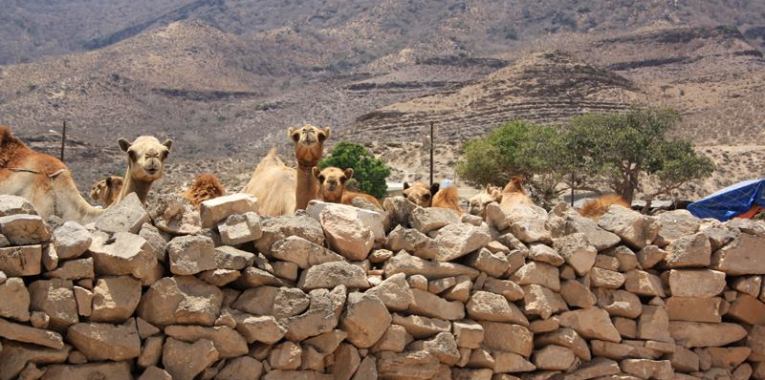
(photo by M. A. Al Awaid)
Driving to work one day, I once saw a big chicken by the road ahead of me. As I came closer, I thought: that is one big chicken. I got closer and thought: that is the biggest chicken I have ever seen. When I passed it I realized it was a peacock, just hanging out by the side of the road. And the funny thing is I know that peacock, he lives in a small palm grove next to the one of the buildings where I work. When I go to a meeting in a building near where it lives, I can hear that peacock calling.
It’s like that when you live in a small town. I was reading outside in my garden one evening and felt something tugging and chewing on my shirt. Looked down to find two goats snacking on my L.L. Bean oxford shirt. Turns out my neighbor had bought three goats to fatten up for Eid, the Muslim holiday. He let them out of his garden every day at 5 pm to let them forage. I would come outside to find them munching my flowers. A few times when I was bringing groceries in from the car, I would find them in my car, nosing through the plastic bags. This is cute and amusing until you have to clean hoof prints off the back seat.
Always on the lookout for texts to give to my students, I often read anthologies of Arabic poetry. An introduction to one anthology stated that there would be “no poems on camels” in a ‘we are all beyond that cliché’ tone, but camels aren’t a trope for me – they are here around me.
I came home once to find about 20 camels tearing at the branches of one of the trees which hung over my garden wall. I got out of my car and walked across the street to watch them. After a few minutes, a pick-up came screeching around the corner and a spry older gentleman hopped out and walked over to the herd yelling.
One of the neighborhood kids was standing with me and I asked him to tell the man to leave the camels alone. The tree was big enough and had enough branches inside the wall that the camels could not kill it. They were doing me a favor by trimming it back. The boy called over to the man who shrugged, got back in his pick-up and waited for them to finish their lunch. Then he moved the herd down the street.
All camels in Oman are owned by someone – but many are simply let loose during the day. As camels stick together and will not travel too far, if someone is not sent to stay with them all day, you can send someone out about 4pm to find them or they will come home by themselves, walking along the road nose to tail. Mothers have their teats tied up in a bag so babies can’t nurse; the need to nurse, eat fodder, drink water, and bed down safely (plus affection) keep camels returning home every night.
As the roads outside of town are often set level with the sand, it is perilously easy to hit one at night. To prevent accidents, it is your duty to signal when you pass camels near the road; the protocol is to turn on hazard lights to warn drivers behind you and those coming from the opposite direction. I now call hazards ‘camel-lights’ because the only time you use them is to signal for camels. Older camels walking in line are normally safe; they will not pay attention to traffic even if cars pass close to them at great speeds, but you never know when one might scare. Young camels are dangerous because they startle easily and might either run into traffic, or spook other camels to run. A young camel bleating for its mother can cause the mother to move hurriedly.
In the Khareef (summer monsoon) season, the camels which live in the mountain must be moved. Camel feet are smooth; they have no traction on slippery wet grass and will easily fall and break their legs so they need to be herded down roads to the flat area at the foot of the mountains. Their owners gather together and decide on a day and time to bring them to the plains in groups. It’s sort of fun if you pass one of the large herds: first there is pickup with hazard lights blinkering to warn oncoming traffic, then dozens of camels interspersed with young men with thin sticks calling to encourage the dozens of camels along. The camels walk steadily, calling out as they go along but in the large groups mothers lose babies so they will bellow, stop, turn around, and go back the way they came. At the end of the herd is another pickup or two.
[written in 2009]

(photo by M. A. Al Awaid)
This paper examines the cultural markers within a set of folk tales recorded in southern Oman. In the 1970s Dr. Tom Johnstone documented the un-written, Modern South Arabian languages of Gibali (also known as Jibbali and Shehri) and Mehri in the Dhofar region of Oman. In 2014, Dr. Aaron Rubin’s published a book on Gibali grammar based on his own research, Johnstone’s notes and data from Gibali speakers living in America; the book includes 70 texts of taped speech transliterated into Gibali with an accompanying English translation which cover a variety of genres including folk tales, autobiography, grammar exercises, and fairy tales.
The paper explains how the folk tales texts are representative of southern Omani culture by analyzing the various textual elements such as characters, setting, plot events and theme, as well as physical markers such as landscape and animals. These texts are among the very few documents written in Gibali and help illustrate ways in which the Dhofari culture has, and has not changed, since the rapid modernization after the 1970s. I will also compare the elements from the Johnston/ Ali Al Mahri/ Rubin texts with folk tales from other texts Khadija bint Alawi al-Thahab’s Stories of My Grandmother: Folk Tales from Dhofar, Hatim Al Taie and Joan Pickersgill’s Omani Folk Tales, and Grace Todino-Gonguet’s Halimah and the Snake, and other Omani Folk Tales.

(photo by M. A. Al Awaid)
Ethnography is unlike literature and like science in that it endeavors to describe real people systematically and accurately, but it resembles literature in that it weaves facts into a form that highlights patterns and principles. As in good literature, so in good ethnography the message comes not through explicit statement of generalities but as concrete portrayal. (Peacock 1986 83).
What is significant is the vision of someone’s (the native’s) existence interpreted through he sensibilities of someone else (the ethnographer) in order to inform and enrich the understanding of the third party (the reader or listener). Ethnography in this sense is like literature: as a source of psychological and philosophical insight (and possibly aesthetic pleasure) when read as the author’s struggle to elucidate a perspective on life through his portrayal of a way of living – as he experienced it and analyzed it. (Peacock 1986 100)
The travel account is generally self-confident and authoritative in tone, and certain of a readership that wants a culturally shared translation of another way of life… but the realist ethnographic account has long been dogmatically dedicated to presenting material as if it were, or faithfully represented, the point of view of its cultural subjects rather than its own culture of reference (Marcus and Cushman 1982 34). [in anthropology] “the style of reportage was always pushed firmly toward generalization rather than maintained at the level of mere detailing of particular facts… it is impossible to work back from a final account to original fieldwork enterprise in anything like the way a chemist can work back through an experiment reported by another chemist (35).
the fact that one’s self is not expendable for a great many people, even when life offers turbulence and disaster; and self-representations shift and change, has two implications: It shelters you from some of the problems attendant on freedom to move ahead-that of keeping a hold of oneself through life. It also anchors you in a material world that clings to you and your biography…You are what you are by virtue of your connection to these things and this world: the same house, the same clothes, the same darned people. Your body, too anchors, you, being for most people a medium we cannot silence. This does not mean that things are fixed, immutable. But they persist, and you have to hang on to them, not just trade in the old car of a new one. (Wikan 1995 275)
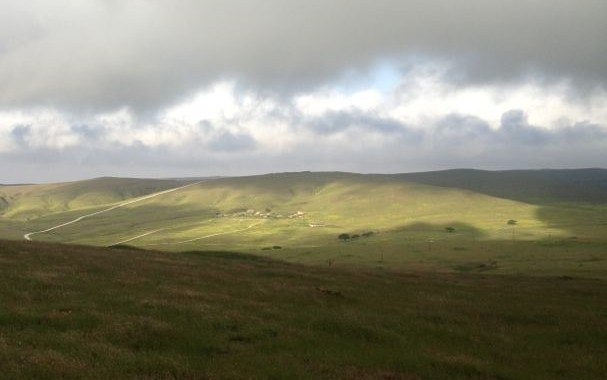
(photo by M. A. Al Awaid)
Bibliography of Works Consulted for Research on Dhofar, Oman
Annotated Bibliography of Texts Pertaining to the Dhofar Region of Oman
Selected References for Research on Foodways and Society in Dhofar, Oman – primarily texts relating to food/ cooking/ cuisine and anthropology
Selected Bibliography: Primary and Secondary Texts for Literature Teachers on the Arabian Peninsula

(image from Instagram account of Tiny Spoon, tiny_spoon, full image below)
Food Practices in Southern Oman – My current research focuses on food practices in the Dhofar region, specifically how food is used to show personal generosity and how eating together defines and enhances social relationships.
[this post reflects my current reading – the permanent link for my updated food/ culture bibliography is: Selected References for Research on Foodways and Society in Dhofar]
Al-Hamad, Sarah. (2016). Cardamom and Lime: Flavors of the Arabian Gulf, the Cuisine of Saudi Arabia, Kuwait, Bahrain, Oman, Qatar and the U.A.E. Singapore: IMM Lifestyle Books.
Avieli, Nir and Rafi Grosglik. (2013). Food and Power in the Middle East and the Mediterranean: Practical Concerns, Theoretical Considerations. Food, Culture and Society 16.2: 181-195.
Appaduari, Arjun. (1985). Gratitude as a Social Mode in South India. Ethos 13.3: 236-245.
Boxhall, P. G. 1966. Socotra: ‘Island of Bliss’. The Geographical Journal 132.2: 213-222.
Brown, Victoria. (2014). Language: A Taste of Reality. One Dish Closer. http://www.onedishcloser.com/food-anthropology/2014/3/19/language-a-taste-of-reality.html
Campbell, Felicia. (2015). The Food of Oman: Recipes and Stories from the Gateway to Arabia. London: Andrew McMeel.
Clements, Frank. (1977). The Islands of Kuria Muria: A Civil Aid Project in the Sultanate of Oman Administered from Salalah, Regional Capital of Dhofar. Bulletin (British Society for Middle Eastern Studies) 4.1: 37-39.
Cleveland, Ray. (1960). The 1960 American Archaeological Expedition to Dhofar. Bulletin of the American Schools of Oriental Research 159: 14-26.
Ciezadlo, Annia. (2011, April 25). Eat, Drink, Protest: Stories of the Middle East’s Hungry Rumblings: Buying Peace, One Feast at a Time. Foreign Policy 186. https://foreignpolicy.com/2011/04/25/eat-drink-protest/
—. (2011, March 15). Eating My Way Through the Cedar Revolution (excerpt). Foreign Policy. http://foreignpolicy.com/2011/03/15/eating-my-way-through-the-cedar-revolution-2/
Coleman, Leo, ed. (2012). Food: Ethnographic Encounters (Encounters: Experience and Anthropological Knowledge). Oxford: Berg.
Counihan, Carole and Penny van Esterik, eds. (2012). Food and Culture: A Reader. London: Routledge.
Crowther, Gillian. (2018). Eating Culture: An Anthropological Guide to Food. Toronto Press: University of Toronto Press.
De Regt, Marina. (2010). Ways to Come, Ways to Leave: Gender, Mobility, and Il/legality among Ethiopian Domestic Workers in Yemen. Gender and Society 24.2: 237-260.
—. (2009). Preferences and Prejudices: Employers’ Views on Domestic Workers in the Republic of Yemen. Signs 34.3: 559-581.
Deeb, Lara and Jessica Winegar. (2012). Anthropologies of Arab-Majority Societies. Annual Review of Anthropology 41: 537-558.
Elie, Serge. (2006). Soqotra: South Arabia’s Strategic Gateway and Symbolic Playground. British Journal of Middle Eastern Studies 33.2: 131-160.
Ferguson, Priscilla. (2011). The Senses of Taste. American Historical Review 116.2: 371-384.
Fieldhouse, Paul. (1998). Food and Nutrition: Customs and Culture. Cheltenham, UK: Stanley Thomas.
Fisher, Jennifer. (2003-2004). “Arabian Coffee” in the Land of Sweets. Dance Research Journal 35.2: 146-163.
Fox, Robin. (2018). Food and Eating: An Anthropological Perspective. Social Issues Research Centre. http://www.sirc.org/publik/foxfood.pdf
Gilette, Maris. (2019). Muslim Foodways, in The Handbook of Food and Anthropology. Jakob Klein and James Watson, eds. London: Bloomsbury Academic. 48-73.
Goody, Jack. Cooking, Cuisine and Class. Cambridge: Cambridge University Press, 1982.
Julier, Alice. (2013). Eating Together: Food, Friendship, and Inequality. Chicago: University of Illinois, 2013.
—. (2013). Meals: ‘Eating In’ and ‘Eating Out’ in The Handbook of Food Research. Anne Murcott, Warren Belasco and Peter Jackson, eds. London: Bloomsbury Academic.
Julier, Alice and Lindenfeld. (2005). Mapping Men onto the Menu: Masculinities and Food. Food & Foodways, 13:1–16.
Jurafsky, Dan. (2014). The Language of Food: A Linguist Reads the Menu. New York: W. W. Norton.
Klein, Jakob and James Watson, eds. (2019). The Handbook of Food and Anthropology. London: Bloomsbury Academic.
Lichfield, Gideon. (2010, January 15). A Look Inside the Middle East’s New Weapons of Mass Consumption. Foreign Policy. https://foreignpolicy.com/2010/01/15/food-fight-4/
Maclagan, Ianthe. (1994). Food and Gender in a Yemeni Community, in A Taste of Thyme: Culinary Cultures of the Middle East. Sami Zubaida and Richard Tapper, eds. New York: I.B. Tauris Publishers. 159-72
Mauss, Marcel. (2011/ 1924). The Gift: Forms and Functions of Exchange in Archaic Societies. Mansfield Centre, CA: Martino Publishing.
Mbaga, Msafiri Daudi. (2015). The Prospects of Sustainable Desert Agriculture to Improve Food Security in Oman. Consilience 13: 114-128. http://www.jstor.org/stable/26427275
Meneley, Anne. (2007). Fashions and Fundamentalisms in Fin-De-Siecle Yemen: Chador Barbie and Islamic Socks. Cultural Anthropology 22.2: 214–243.
Miller, Anthony, Miranda Morris, and Susanna Stuart-Smith. (1988). Plants of Dhofar, the Southern Region of Oman: Traditional, Economic, and Medicinal Uses. Muscat: Office of the Adviser for Conservation of the Environment, Diwan of Royal Court.
Mintz, Sidney. (1996). Tasting Food, Tasting Freedom: Excursions into Eating, Culture, and the Past. Boston: Beacon Press.
Mintz, Sidney, and Du Bois, Christine. (2002). The Anthropology of Food and Eating. Annual Review of Anthropology 31:99-119.
Morris, Miranda. (1997). The Harvesting of Frankincense in Dhofar, Oman. In Alessandra Avanzini, ed. Profumi d’Arabia. Rome: L’Erma Bretschneider: 231-250.
—. (1987). ‘Dhofar – What Made it Different’ in Oman: Economic, Social and Strategic Development. B.R. Pridham, ed. London: Croom Helm. 51-78.
Nagy, Sharon. (2000). Dressing up Downtown: Urban Development and Government Public Image in Qatar. City and Society 12(1): 125-47.
—. (1998). “This Time I think I’ll try a Filipina”: Global and Local Influences on Relations between Foreign Household Workers and their Employers in Doha, Qatar. City and Society 10(1): 83-103.
Omezzine, Abdallah. (1998). On-shore Fresh Fish Markets in Oman. Journal of International Food and Agribusiness Marketing 10(1): 53-69.
Omezzine, Abdallah, Lokman Zaibet and Hamad Al-Oufi. (1996). The Marketing System of Fresh Fish Products on the Masirah Island ion the Sultanate of Oman. Marine Resources Economics 11: 203-210.
Popp, Georg. (2018). Notes on the Omani Kitchen Eating with Tradition. Just Landed. https://www.justlanded.com/english/Oman/Articles/Culture/Notes-on-the-Omani-Kitchen
Rodionov, Mikhail. (2012). Honey, Coffee, and Tea in Cultural Practices of Ḥaḍramawt in Herbal Medicines in Yemen: Traditional Knowledge and Practice, and Their Value for Today’s World. Ingrid Hehmeyer and Hanne Schönig, eds. Brill: Boston. 143-152.
Roseberry, William. (1996). The Rise of Yuppie Coffees and the Reimagination of Class in the United States. American Anthropologist, New Series, 98.4: 762-775.
Rubin, Aaron. (2015). Recent Developments in Jibbali. Journal of Semitic Studies 60: 431–441.
Sadeghin, Farideh. (2015, Oct. 27). The Food of Oman is Too Good to Ignore: Recipe-testing a Middle Eastern Cookbook Gives our Test Kitchen Director a New Love for an Under-appreciated Cuisine. Saveur. https://www.saveur.com/food-of-oman-cookbook-cuisine-felicia-campbell
Stoller, Paul and Cheryl Olkes. (1986). Bad Sauce, Good Ethnography. Cultural Anthropology 1.3: 336-352.
Stork, Joe. (1973, March). Socialist Revolution in Arabia: A Report from the People’s Democratic Republic of Yemen. MERIP Reports 15: 1-25.
Swift, Candice Lowe, ed. (2015). Teaching Food and Culture. London: Routledge.
vom Bruck, Gabriele. (2005). The Imagined ‘Consumer Democracy’ and Elite Re-Production in Yemen. Journal of the Royal Anthropological Institute 11.2: 255-275.
van Esterik, Penny, Alice Julier and Carole Counihan, eds. (2018). Food and Culture: A Reader. London: Routledge.
Watson, Janet C.E. (2013). Travel to Mecca in the Pre-motorized Period in The Hajj: Collected Essays. Venetia Porter and Liana Saif, eds. London: The British Museum. 96–99.
Watson, Janet C.E. & Abdullah al-Mahri. (2017). Language and Nature in Dhofar, in RiCOGNIZIONI. Rivisti di Lingue e Letterature straniere e Culture moderne. Simone Bettega and Fabio Gasparini, eds. Turin: University of Turin. 87–103.
Webster, Roger. (1991, October). Notes on the Dialect and Way of Life of the Āl Wahība Bedouin of Oman. Bulletin of the School of Oriental and African Studies 54.3: 473-485.
Weir, Shelagh. (2007). A Tribal Order: Politics and Law in the Mountains of Yemen. Austin: University of Texas Press.
Yamani, Mai. (2000). You Are What You Cook” Cuisine and Class in Mecca in A Taste of Thyme: Culinary Cultures of the Middle East. Sami Zubaida and Richard Tapper, eds. New York: I.B. Tauris Publishers. 159-72.
Blogs – Omani Food
Mariya. Omani Food. https://omanifood24.blogspot.com/
Omani Recipes. (2015). Arabic Recipes. http://www.encyclopediacooking.com/recipes_in_english/omani-recipes-53-1.html
Traditional Omani Food. (2008, March 1). https://ward-traditionalomanifood.blogspot.com/
Yasmeen. (2018). Omani Cuisine. http://www.omanicuisine.com/
Websites – Expat, Tourist and Commercial
The Delicious Cuisine of Oman! (n. d.). Holidify. https://www.holidify.com/pages/omani-food-230.html
Food and Drink – About Oman. (2018). Rough Guides. https://www.roughguides.com/destinations/middle-east/oman/food-drink/
Guide to Omani Cuisine. (2017, June 14). Expat Woman.com. https://www.expatwoman.com/oman/guide/guide-to-omani-cuisine
Medhat, Gehad. (2017, Dec, 27). The 10 Best Coffee and Tea Shops in Salalah, Oman. Culture Trip. https://theculturetrip.com/middle-east/oman/salalah/food-misc/
Medhat, Gehad. (2017, Dec, 27). The Top Restaurants in Salalah, Oman. Culture Trip. https://theculturetrip.com/middle-east/oman/articles/the-top-restaurants-in-salalah-oman/
Oman. (2018). Countries and Their Cultures. http://www.everyculture.com/No-Sa/Oman.html
Omani Food. (2015). Best Country. http://www.best-country.com/asia/oman/food
Omani recipes and cuisine. (2018). Nestle. http://www.nestle-family.com/english/omani-recipes.aspx
Popp, Georg. (2018). Notes on the Omani Kitchen Eating with Tradition. Just Landed. https://www.justlanded.com/english/Oman/Articles/Culture/Notes-on-the-Omani-Kitchen

(image from Instagram account: Tiny Spoon)

My essay “Living Expat” has been published:
“Living Expat.” Emanations: Chorus Pleiades. Carter Kaplan, ed. Brookline, MA: International Authors, 2018: 308-318.
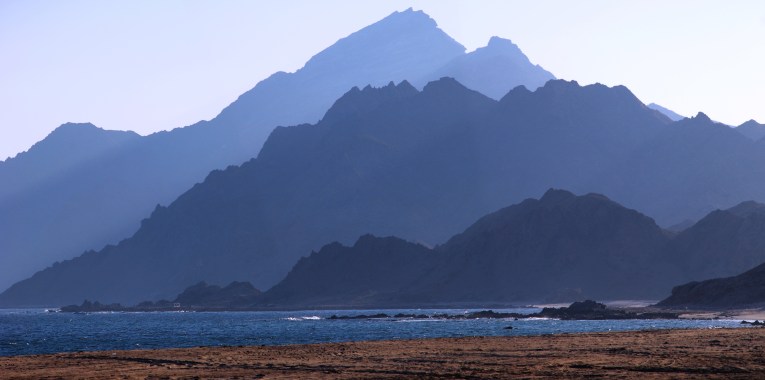
(photo by M.A. Al Awaid)
Abstract from “Issues of Autonomy in Southern Oman” by Dr. Marielle Risse
Gibali (also known as Jibbali, Śḥeret, Shari and Eḥkili) is a non-written, Modern South Arabian language spoken by several groups of tribes in the Dhofar region of Southern Oman. While teaching in Salalah for more than ten years, I have been working with several Gibali-speaking men researching the culture and life-ways of one particular group of tribes, the Qara. Gibalis, both in interviews and from my long-term observations, see their culture as giving both men and women opportunities to craft their own lives and, specifically, to gain a positive reputation for wisdom.
This paper will explore how the Gibalis create and maintain an atmosphere in which both men and women are seen as having access to positive virtues and some control over their own lives. In addition to my observations and interviews, I will include examples from the fields of political science and anthropology, as well as stories from the first set of written texts in the Gibali language.
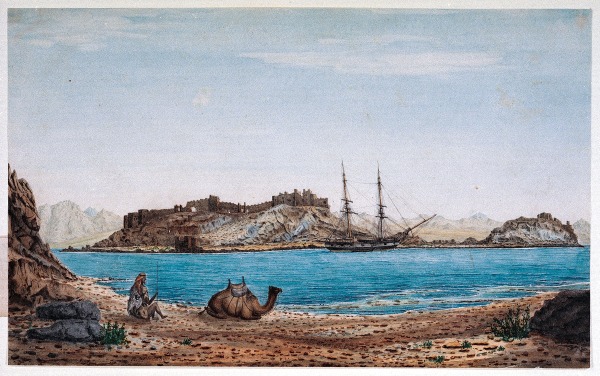
[painting: Island of Faroun near the head of the Sea of Akabah. Showing the HEIC’s surveying vessel Palinurus. © National Maritime Museum, Greenwich, London]
I will be presenting “Accounts from the journeys of the brig ‘Palinurus’ along the Dhofar Coast in the mid-1800s” at the Exploration and Memory Conference, Mational Maritime Museum, September 14 and 15th.
https://www.rmg.co.uk/see-do/exhibitions-events/exploration-and-memory-conference
This three-day conference, from Thursday to Saturday, will consider exploration from the vibrant perspective of memory studies. Presentations will focus on the history, poetics, and material and visual culture of exploration, exploring how these have changed over the years and what their legacies have been, and continue to be.
Unseen Art of Australia’s First Fleet; Naval collecting between Cook and Darwin; Sir Rex Nan Kivell: ‘Collecting the explorers’ and not recalling ones’ past
Mapping movement and memories of coastal South America, 1680–1750; Representations of James Cook in Australia during the 1920s and 1930s; Convicts and Cartography in the Australian Colonies
Remembering the shipwreck of the Querina, 1431–32; Lost and forgotten: the story of the first Cook memorial; 21st Century challenges to the memorialisation of explorers
British perceptions of difference in voyage narratives to the South Seas in the 1740 and 1760s; Encountering a “Savage” Land in the Romantic Era; Indigenous knowledge in New South Wales and London in the early nineteenth century
The Afro-Brazilian architectural heritage in Nigeria and the Republic of Benin; Exploring inter-personal spaces in India-Bangladesh borderlands
Pacific Encounters: museums and memory making; The Taonga have memories too; Rites of space at ‘the shrine of geography’: the Royal Geographical Society, memory and exploration
Arctic expedition and encounter; Fragmented Landscapes: Memory, Photography and the Polar Expedition
Cabeza de Vaca’s Naufragios: exploration, ethnography, and identity negotiation; The Battle of Goringhaiqua and the death of Viceroy D’Almeida: contested histories, popular memory and ancestral voices
Between poles of memory in Ed O’Loughlin’s Minds of Winter; Accounts from the journeys of the brig ‘Palinurus’ along the Dhofar Coast in the mid-1800s; Time and memory in Antarctic exploration literature for children
 Come From Away
You must be logged in to post a comment.