Examines how middle-class Muslim men and women in Dhofar, Oman, make and negotiate marital choices, tracing every stage of marriage through their own personal accounts.
Studying Marriage in Dhofar, Oman explains the choices middle-class, Muslim, tribal Dhofari men and women make when creating a life together. Based on 19 years observations of and discussions about Omani marriages, the book shows all the steps of marriage, including how people decide to get married, the wedding invitations and parties are arranged, the newlyweds’ home is organised, the work within a marriage is delineated, and a marriage succeeds or falls apart. Unlike many texts about family life on the Arabian Peninsula, the author spoke extensively to both men and women, so that the book is rich with examples of Omanis explaining their personal decisions.
There are no comparable texts which look at the complete scope of a marriage from deciding to marry, to asking to marry, arranging the wedding parties, creating a successful marriage, and coping with stresses such as children, divorce, polygamy and widowhood.
The book starts with a discussion of how a man might find a bride and how a young woman might create or avoid situations in which she would be asked to marry. There is a discussion of how people might fight to (or not to) marry and all the steps taken after the engagement, including sending out announcements and preparing where the new couple will live. All types of marriage parties are described, including taking photos and displaying the gifts. Next, there is an overview of how the couple can create a marital relationship, followed by an examination of what might go wrong in a marriage, which looks at topics such as incompatibility, gross misconduct and divorce. There is a chapter on pregnancy, which includes a discussion on how children are named. The books ends with a short overview of specific aspects of marriage such as who has free time and what ‘family time’ means.
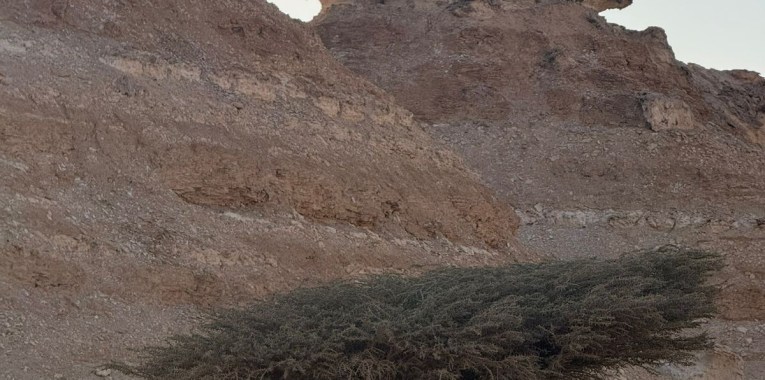
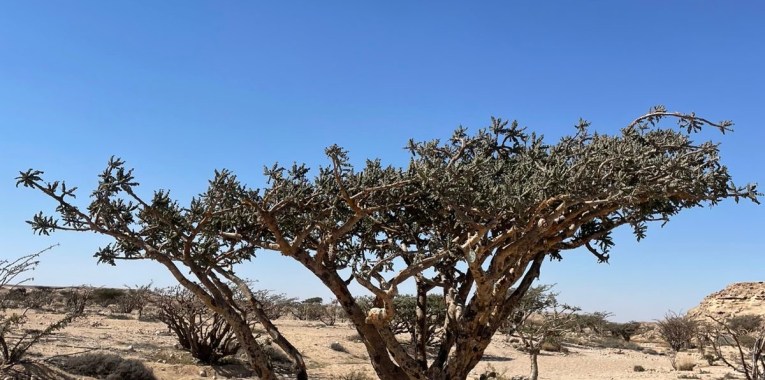
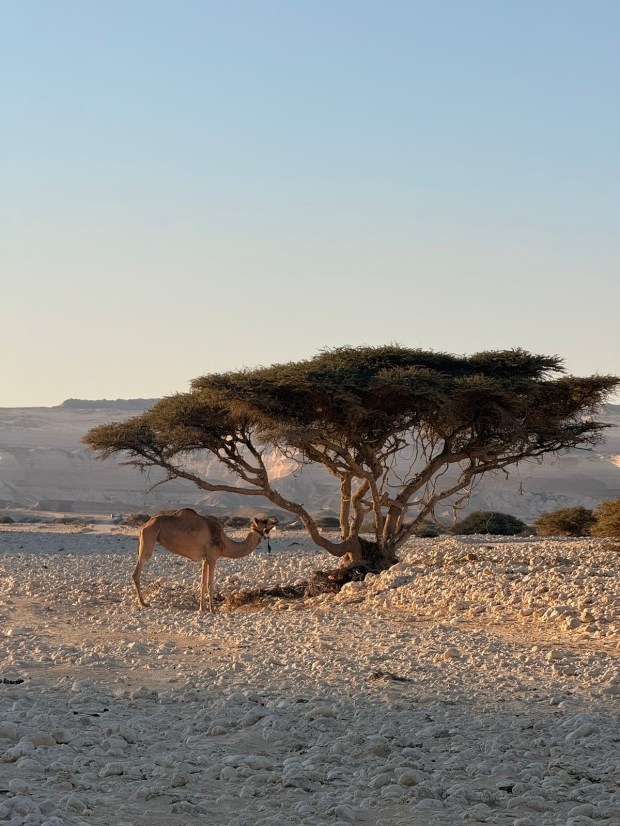
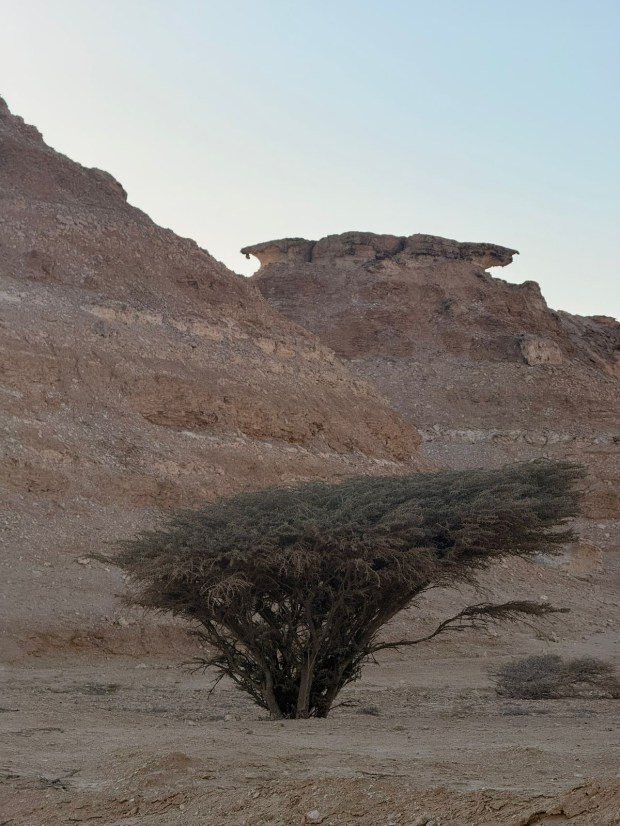
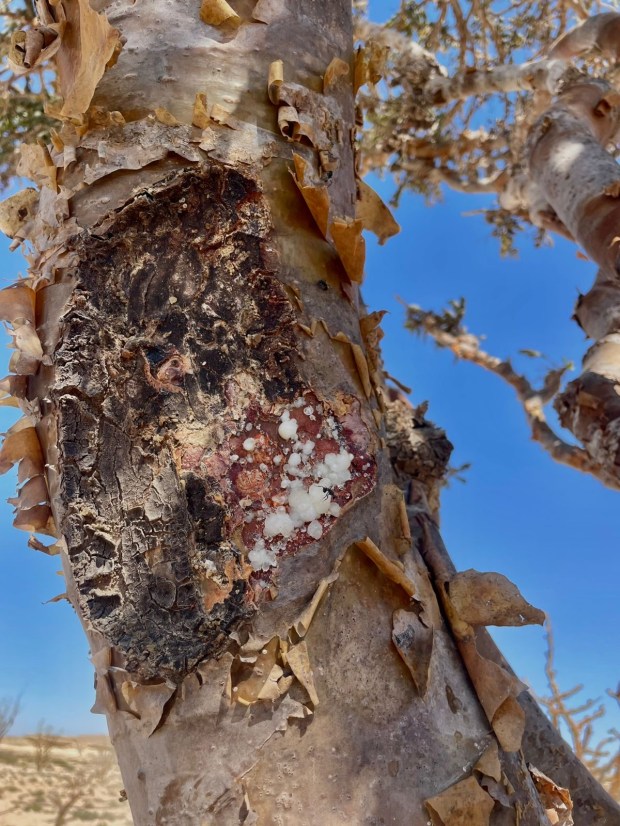
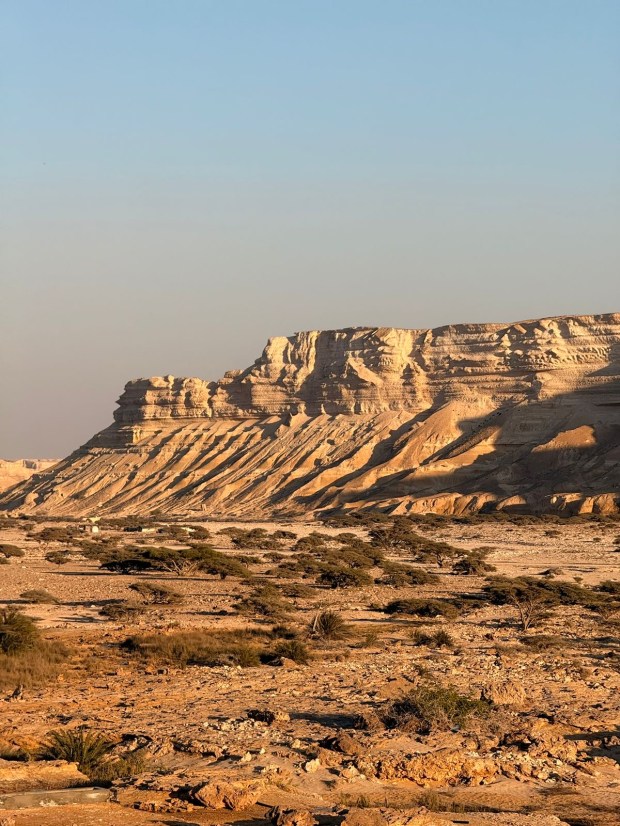
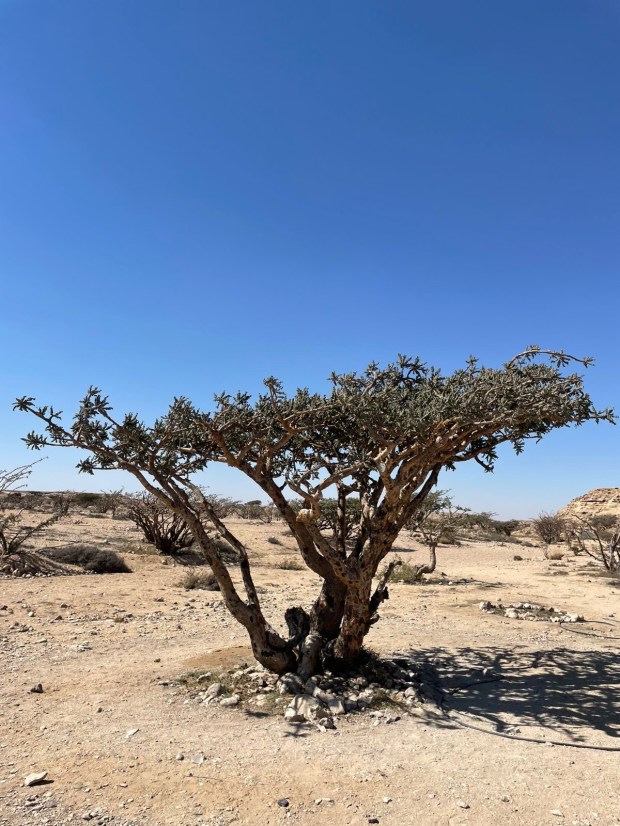
Onaiza Shaikh, whose photographs I have used for several projects, sent me several gorgeous photos so I thought I would do a short post on frankincense in Dhofar.
frankincense sap
frankincense tree
two reputable stores which sell Dhofari frankincense:
We Remember What Frankincense Was Meant to Be. For thousands of years, frankincense was an offering. Carried by hand. Burned with intention. Passed down through memory. Sacrasoul exists to remember. To keep ancient materials whole. The resins. The oils. The traditions. And the people who have guarded them, quietly, for generations. We are not here to improve what already knows how to endure. We are here to pass it on — unchanged.
Pure Aromatics Since 1997 – Established in 1997, stands as New York’s quintessential shop for natural aromatics, including essential oils, absolutes, and enfleurages. Our steadfast commitment to natural essence means we strictly avoid synthetics in all our offerings. Alongside aromatic oils, we’re proud to present an exquisite selection of hydrosols, bespoke botanical perfumes, skincare, haircare, and specialty items like roll-ons, raw incense, and handcrafted frankincense candles.
essay about the use of frankincense in Dhfoari homes
a few texts about frankincense/ the ecology of Dhofar
Al-Hikmani, Hadi and Andrew Spalton. 2021. Dhofar: Monsoon Mountains to Sand Seas – Sultanate of Oman. Chicago: Gilgamesh Publishing.
Ball, Lawrence, Douglas MacMillan, Joseph Tzanopoulos, Andrew Spalton, Hadi Al Hikmani and Mark Moritz. 2020. “Contemporary Pastoralism in the Dhofar Mountains of Oman.” Human Ecology. https://doi.org/10.1007/s10745-020-00153-5
Boom, Andrea. 2024. “Small, Green, and Prickly: Local Botanical Knowledge in Modern South Arabian Languages.” Proceedings of the Semitic Studies Section at the 34th DOT at Freie Universität Berlin. Simona Olivieri and Shabo Talay, eds. 85-99.
Janzen, Jorg. 2000. “The Destruction of Resources among the Mountain Nomads of Dhofar,” in The Transformation of Nomadic Society in the Arab East, University of Cambridge Oriental Publications 58. Martha Mundy and Basim Musallam, eds. Cambridge: Cambridge University Press. 160-75.
—. 1986. Nomads in the Sultanate of Oman: Tradition and Development in Dhofar. London: Westview Press.
Johnson, Stephen, Ali Bait Said, Petr Vahalík, Lukáš Karas, Maïa Sarrouf Willson, Frans Bongers. 2025. Rapid Conservation Assessment of Boswellia Sacra in Oman Reveals Complex Threat and Population Patterns.” Journal of Arid Environments 229.
Lewis, Krista. 2022. “The Land of Frankincense: Dhofari Sites as National and World Heritage,” in Sultan Qaboos and Modern Oman, 1970–2020. Allen James Fromherz and Abdulrahman al-Salimi, eds. Edinburgh: Edinburgh University Press.67-88.
Miller, Anthony, Miranda Morris, and Susanna Stuart-Smith, Plants of Dhofar, the Southern Region of Oman: Traditional, Economic, and Medicinal Uses, (Muscat: Office of the Adviser for Conservation of the Environment, Diwan of Royal Court, 1988).
Morris, Miranda. “The Aloe and the Frankincense Tree in Southern Arabia: Different Approaches to Their Use.” Herbal Medicines in Yemen: Traditional Knowledge and Practice, and Their Value for Today’s World. Ingrid Hehmeyer and Hanne Schönig, eds. Brill: Boston, 2012. 103-126.
—. “The Harvesting of Frankincense in Dhofar.” In Alessandra Avanzini, ed. Profumi d’Arabia. Rome: L’Erma Bretschneider, 1997. 231-250.
Sale, J. 1980. “The Ecology of the Mountain Region of Dhofar.” The Journal of Oman Studies: Special Report 2: The Oman Flora and Fauna Survey 1975. Muscat: Diwan of H. M. for Protocol. 25-54.
Tabook, Salim Bakhit. 1997. Tribal Practices and Folklore of Dhofar, Sultanate of Oman. Unpublished PhD thesis, Faculty of Arts, Exeter University.
Watson, Janet, Jon Lovett and Roberta Morano, eds. 2023. Language and Ecology in Southern and Eastern Arabia. London: Bloomsbury.
Wilson, Jack, Janet C.E. Watson, Andrea Boom and Saeed al-Qumairi. 2022. “Language, Gesture and Ecology in Modern South Arabian Languages,” in Language and Ecology in Southern and Eastern Arabia. Janet Watson, Jon Lovett and Roberta Morano, eds. 15-44.
Zimmerle, William. 2017. Crafting Cuboid Incense Burners in the Land of Frankincense: The Dhofar Ethnoarchaeology Preservation Project. Washington: Sultan Qaboos Cultural Center/Liberty House Press.
I am very grateful to Onazia Shaikh for allowing me to use her photos for the cover of my forth-coming book, Reflections on Marriage in Dhofar, Oman, and this website. She takes gorgeous photos which reflect the beauty of Dhofar.
I am happy to announce that my 5th book, Reflections on Marriage in Dhofar, Oman, has been accepted for publication. I would like to thank Onaiza Shaikh for letting me use her beautiful photos for this book and my webpage. Onaiza writes: “I was born and raised in the beautiful city of Salalah, Oman. Though I’m an Indian citizen, my roots in Salalah run deep, the city holds a special place in my heart and continues to shape who I am.”
Reflections on Marriage in Dhofar, Oman explains the choices middle-class Dhofari men and women make when creating a life together. Based on 19 years observations of and discussions about Omani marriages, the book shows all the steps of marriage including how people decide to get married, the wedding invitations and parties are arranged, the newlyweds’ home is organized, the work within a marriage is delineated and a marriage succeeds or falls apart. Unlike many texts about family life on the Arabian Peninsula, the author spoke extensively to both men and women.
The patience and tolerance to live harmoniously in an unfamiliar culture; the fortitude to be content with less than comfortable circumstances for prolonged periods; an understanding of and sympathy with a foreign history and religion; a willingness to learn a new language; the flexibility, imagination and humility necessary to climb into the head of people who live by a very different set of assumptions; none of these are found automatically in our modern developed Euro-Atlantic culture. (Gardiner, In the Service of the Sultan, 174)
Meera Lee Patel just published a new book: Learn to Let Go: A Journal for New Beginnings so I want to post this essay about her (and Katie Daisy’s) work. Their texts are always very effective in helping students improve their writing. Reflecting on how students reacted so positively to their artwork/ writings made me want to help other teachers find the benefits in using non-traditional writing prompts.
Abstract
This article highlights the importance of using interesting writing prompts to help students reach their language goals. The article reviews academic texts on the importance of using writing prompts, then gives examples of different types and explains how different prompts can be used to reach a variety of teaching objectives such as writing argument papers, varying audiences, learning grammar rules and increasing vocabulary. Using creative prompts to promote co-writing and class discussions are also explored. Various types of creative workbooks by Daisy (2018) and Patel (2018) are used as examples of how pairing prompts with appealing visuals can help students write longer and better essays. The procedures and positive results of using prompts are also discussed. Specifically, the author has found that using prompts means less delay in students beginning to do in-class writings, as well as creating longer and more detailed texts.
keywords: Language learning, creativity, writing prompts, writing journals
Introduction
It might seem odd to be discussing creative writing texts in a scholarly text about language learning, but in order to increase proficiency students need to produce writing. Colorful, vibrant, engaging texts will draw students in and make writing more enjoyable. Further, having an interesting prompt will help students write more and create the need for new vocabulary.
The impetus for my research on the topic of using interesting texts to help promote language learning started in a bookstore over ten years as I was looking for a text to help me learn Arabic. There were four choices. The first was a huge, thick paperback, as I paged through I saw that the vocabulary list for the first chapter had over 40 words. It seemed overwhelming so I set it down. The next two books were A4-sized paperbacks with a grammar rule at the top of each page and then 10-15 lines to write practice sentences.
The fourth book was a small paperback filled with black and white cartoon drawings and a wide variety of exercise (matching, fill-in-the-blank, true-false, charts, etc.). I not only bought it, I worked my way through the entire book eventually completing every page. Then I went on to buy and finish three more books by the same authors (Wightwick and Gaafar 2021). The user-friendliness of that Arabic textbook with its cute drawings, diverse tasks, short vocabulary lists and student-appropriate vocabulary made it easy to motivate myself to study every week. The lessons were not just about grammar rules, but included realistic conversations and creative expression. Making learning fun was a key element to my continued learning.
When I create syllabi for writing classes such as Advanced Academic English, Advanced English Language, Culture in the Classroom, Psychology of Language, Situational English, Writing for the Professions and Writing Workshop I take my person experience into account and think about my students’ attitudes towards learning. Sometimes I might give a short piece of literature, a question, a quote or an interesting painting as a prompt.
The purpose of this paper is to explain the pedagogical background for using creative writing prompts and to give specific examples of texts that language teachers might use.
Review of literature
Creative Writing
There is wide-spread agreement increasing student’s access to and use of creative writing into the language classroom is useful. This is usually accomplished through using interesting speaking and writing prompts, as well as literature such as poems or stories.
For example, both the Oxford University Press and the British Council recommend using creative writing to help create effective lessons in the EFL classroom. In the article “7 ways to bring Creative Writing into the #EFL classroom” published on the Oxford University Press website, various teachers explain writing prompts that engage students. The ideas include giving student the first part of a story then having students write their own ending and giving a non-written stimulus, such as playing music and let students write their reaction.
On the British council website, Maley (n.d.) argues that creative writing “aids language development at all levels: grammar, vocabulary, phonology and discourse.” Further, “a key characteristic of creative writing is a willingness to play with the language.” Morissey (n.d) explains that “Most teachers would agree that what we want to say, what comes from the heart, we are happier to work on [and thus] Creative writing involves playful but rigorous work with language.” For example, “to say precisely what they mean, students have to be very careful in their use of vocabulary and idioms.”
The website TEFL UK, which offers on-line English teacher training classes, states that “Learning a language is a process that requires different types of activities to be involved for the student to truly progress…And, it’s the teacher’s job to make these activities as engaging and useful as possible” (6 Creative Writing Activities 2021).
Discussing motivation, Arshavskaya (2015) presents research that “suggests that creative writing assignments can serve as an important mediational tool that fosters greater motivation and engagement with writing” (75).
Further, Deveci (2020) argues that the “development of creativity in students will contribute to their personal triumphs and the economic and social development of their societies” (30). His research highlights four themes which show how students perceive themselves to be creative four (Originality, Problem-solving, Designing and Interest in learning). These are incorporated into writing using nine strategies:
Experience – using personal facts and historical information, having real, interesting, evidence
Lexis – using synonyms, simple words, attractive words, interesting words, varying registers, picking the right word
Language use – using good/perfect grammar, correct punctuation, no spelling mistakes, proofreading, using figurative language and rhetorical questions, writing that is not too simple, repetitive, long or complex, using a mixture of simple and complex sentences, avoiding long boring sentences
Familiarity with readers – knowing audience, reader interest areas, reader concerns, readers’ behavior and relevance to readers
Originality – using something new, out of ordinary, original ideas
Length – not too long, not too detailed, enough information, focusing on relevant ideas
Voice – using the active voice, directed to reader, self
Detail – using specifics (34)
Language Learning and Literature
Talking about English language classrooms in Japan, Smith (2013) discusses how “students’ creative use of language, in particular in literary writing, may serve as an aid to certain aspects of language acquisition (particularly grammar and certain kinds of vocabulary)…Such tasks also appear to be motivating” (11). Celika, Mahmut, Violeta Dimovaa and Biljana Ivanovska (2012) make a similar point about using children’s literature in Macedonia classrooms.
Alsyouf (2020) contends that “Involving creative writing as a method to learn and teach languages in this regard can play a significant role in stimulating students to improve their communicative skills” (33). For example, he states that “Poetry…can function as a prolific source of vocabulary for the language of poetry appeals to the mind where it is easily memorised and from which it is smoothly retrieved” (35).
Similarly, Sinha (2017) argues that “Poetry can play a significant role in language learning in general and English poems can be used in the language classrooms for effective language learning for ELLs” (245). He explores “how contextualizing poetry teaching with a linguistically oriented model, with certain well-defined steps, offers an extensive variety of language learning opportunities” (245). The stages are
Step 1: Putting the poem in context
Step 2: Performing the poem
Step 3: Investigation of the title
Step 4: Progress through the poem
Step 5: Reading of the poem
Step 6: Profiling the poem linguistically
Step 7: Critical appreciation of a poem (245)
In terms of specific texts, Felemban (2012) makes the point that using the famous play The Importance of Being Ernest by Oscar Wilde allows students to increase communicative competence by understanding how to use polite expressions in English. Learning how to use words in realistic ways means that students can avoid “conflict and misunderstanding” (76). More examples can be found in Gardner’s (2023) article “Teaching Language Through Literature.”
Prompts
In Best’s essay about “How to Teach Creative Writing” (2020), the first two steps for inspiring students to write are are “Create inspiring and original prompts” and “Unpack the prompts together.”[1] Daskalovska and Dimova (2012) state that “If learners are to be encouraged to participate in a conversation in the classroom, they should be given a meaningful content that will provoke their interest, capture their imagination and give them something important to talk about” (1182).
As the scholarly agreement is clear that good prompts are important, the issue becomes: which texts to use? There are two kinds of texts which are beneficial for language teachers. One is a straight-forward book written for classrooms such as Yeh and O’Reilly’s Creative Writing: A Workbook with Readings (2022). Similarly, Thorpe’s Teaching Creative Writing to Second Language Learners (2021) has chapters which include: Brainstorming, Dialogue, Word Choice, Digital Composition and Editing, all of which would be useful in any language classroom.
A second type of text is not written for a classroom, but has a lot of benefits for teachers such as Daisy’s How to Be a Wildflower (2013) and Patel’s Made Out of Stars (2018). These books are classified as self-expression journals meaning there are blank pages with decorations around the edges so that the reader can write out responses to the vividly illustrated quotes and questions.
A key element of these type of journals is that they engage students who are less verbally focused. For example, in How to Be a Wildflower (2013), there is the quote “Afoot and light-hearted I take to the open road, healthy, free, the world before me” (16). The words are written on a page with a painting of a road vanishing into the distance with fields with flowers and trees on either side. A student who might be intimidated or unsure when faced with an empty page can take ideas from the illustration.
When looking for journals, teachers need to be be careful that the book fits within their students’ culture. For example, Kelly’s True You (2020) has an emphasis on personal issues such as spirituality might not be appropriate for some classrooms.
Method
In this section, I discuss various methods and procedures for helping students produce interesting writings which can be used as foundation texts for language learning such as student journals, interesting prompts and creative workbooks.
Journals
Student journals might seem better suited for creative writing classes, but I have used journals for non-fiction writing classes such as Writing Workshop and Writing for the Professions. Each student has to bring an A4, lined book and for the first 10 minutes of class, they do free-writing based on a prompt I give to the class.
Having all their writing collected in one place means that there is always writing at hand which can serve as a springboard for lessons. For example, I can ask students to take their free writing and turn it from first person to third person, from present tense to past tense, to add an adjective to every noun, etc.
Writing prompts
Best (2020) suggests using the following prompts:
personal memories (“Write about a person who taught you an important lesson”)
imaginative scenarios
lead-in sentences (“I looked in the mirror and I couldn’t believe my eyes. Somehow overnight I…”).
Show a thought-provoking image with a directive (e.g. show a photo of a wooden cabin and ask “Who do you think lives in this mountain cabin? Describe their life”).
Some of the prompts I use with classes are:
Look out the window, describe what you see
If you could only take 5 things from your room, what would you take and why?
What is the perfect picnic lunch?
Describe someone who is trying to get something in a sneaky way
Describe someone who is trying to give advice and the other person is not listening
If you could make one wish come true for someone else, who would you give the wish to and what would you wish for?
Describe a person you know by describing the person’s room
Describe a person you know by describing how the person walks and one object the person has (car, purse, book bag, computer, etc.)
Pretend you suddenly jump 5 years ahead in your life – write what you are doing/ what your life is like in the future
As the first step for students who will write argument essays, I use prompts such as
Explain something that you learned over the semester break (how to do something, why not to do something, that a person is better or worse than you had thought, etc.)
Write about a time when you thought you were right, but it turned out that you were wrong, or a time when you were right and everyone else was wrong
Describe a person who you respected more than you should have, or a person who you respected less than you should have
Describe something that should change to make your home town better
Pretend you are the chief architect and explain why a building on campus should be moved to a different location, or why a municipal building such as the airport or a hospital should be in a different location
Prompts for creative writing include:
If you breakfast/ shoes/ desk could talk to you, what would it say?
Write a lullaby to something that is NOT a child
Describe your life if you lived on the moon
Imagine you are writing with something other than a pen/pencil such as a vegetable, a fish or lipstick, what would you choose and what kind of story will you write?
If you planted your heart, what would grow?
Describe a person using animal metaphors
If you could be any animal, which animal would you be and why?
The benefit of these kind of prompts is that they can be modified to meet the needs of different classes. For example, some teachers might find the questions “If you could be any animal, which animal would you be and why?” too low-level for their class. They might try one of these variations: “What animal do you think should disappear from the Earth?,” “What animal should be found in every country?,” “What extinct animal should be brought back to life?” If the students are studying in a foreign country, the teacher can ask “What animal from your country do you miss the most?,” “What animal from your country should be brought here?” or “What animal from this country should be brought back to your country?”
The same type of questions can work with topics such as houses or clothing and can be scaled up or down in view of the students’ level. Writing about a favorite piece of clothing can work for lower-level student using basic vocabulary such colors. Students who are the the intermediate level can use the same question but focus on adjectives of texture (fuzzy, itchy, ironed, lumpy, rough, etc.), material (cotton, leather, linen, silk, wool, etc.) and technique (knitted, quilted, woven, etc.). Higher level students can work with more descriptive words such as embroidered, nubby, pleated, puffy, ruffled and shimmering.
Questions about non-controversial topics such as food and gardens can lead to expanding vocabulary choices, such as descriptions of slimy, rubbery okra and soggy, syrupy pancakes. When describing their dream garden, students can practice or learn words such as bud, bloom, cobblestones, graveled, paved, prickly, wilted and withered.
All of these prompts create the need for new vocabulary/ expressions and can be expanded into longer pieces of writing. For example, a question about an animal can lead to students writing a description of the animal, its habitat and what it eats, a story about seeing the animal, etc. Teachers also might ask students switch their writing with another student, who can then attempt to add to or ask questions about what is already written.
Co-writing and discussion prompts
Another type of prompt is when two students are asked to write together to produce a dialog which might be realistic such as, write a discussion between two people who have not seen each other in a long time and one person has changed a lot. Some dialogs might be unrealistic such as write out a conversation with a famous person. Another idea is to give students a specific setting, such as write a dialog in a kindergarten, a flower store, on a rainy beach, etc.
If the goal of the lesson is verbal, not written, production teachers can ask for oral responses to prompts, see for example Kaivola, Salomaki & Taina (2012) for a discussion about how working together enriches language learning.
Some of the prompts I use to start conversations include:
Is it better to grow up or to be a child forever?
If you could have any ‘super power’ (fly, be invisible, to breathe under water…) which would you want to have and why? What would you do?
What award for “Best…” would you like to get? i.e. Best Smile, Best Shoes, Best Friend, Best Tea-making, etc.
For students in their teens and early twenties, asking their opinion about their education is usually a good way to get people talking:
Should kids under the age of 10 have homework?
Should art and music be mandatory at high schools?
Should your school have tests every month or only midterms/ finals?
Should your school have a requirement for a third foreign language?
What times should high schools start? What should be the time of the first (earliest) class at your school?
What should be the school colors or mascot for your university?
Should you stay friends with someone made a mistake and told someone your secret?
Older students might be more interested in questions that relate to their lives:
Are there times when it is ok to lie?
Is talent or hard work more important?
Should you invite foreign people to your house for dinner?
Should you invite people from other countries to your family’s weddings?
Should people be forced to use their real names on social media?
Should there be a minimum age for women to marry?
Should every large business have a day care?
Should parents hit their children if they misbehave?
Creative workbooks
I find creative workbooks to be very useful, for example Daisy’s How to Be a Wildflower (2016) and The Wildflower’s Workbook (2018), as well as Patel’s Start Where You Are (2015) and Made Out of Stars (2018). The titles might appear non-academic, but they are valuable resources for language teachers. First, the texts use a variety of colors so they are attractive to look at and catch students’ attention. But the hues are bright, not pastel, and the illustrations are vivid, not cutesy, so students don’t feel that they are working with a children’s book.
The variety of the pages mean that students don’t get bored and the variety of prompts mean that teachers always have a way to connect student writing to a language lesson. For example, a dark blue page with stars and the instruction “take a walk at twilight” can lead into a lesson on giving commands, or the words for different times of day or writing comparisons such as “during the day…, but during the night….”. Pages with a well-crafted quote such “There they stand, the innumerable stars, shining in order like a living hymn written in light” by N. P. Willis as can lead into a discussion of the importance of the repetitions of sound, an easy way to teach alliteration.
In addition to the books, there are also decks of cards with illustrations and quotes which are very also helpful, for example, Daisy’s How to Be a Moonflower Deck (2023). This has 78, 4 by 6 inch cards which are printed on heavy paper; each card has an illustration with a quote or instruction. Thus instead of telling students to go to a specific page, you can ask students to pick the card they like. As the cards are in a variety of colors such as grey, pinks, blues, green and violets, students can take one that interests them.
Seeing a card illustrated with a full moon and blue/grey flowers can lead into students writing about a trip they took at night or hypotheticals questions such as “Would you like to travel to the moon, why or why not”?” or “Imagine there is something living on the moon, what is it and what does it look like?”
Students bring photos
Another way to spark ideas is to use student-generated objects as writing prompts. For example, ask each student to bring in 2 or 3 large, interesting photos, printed from the web or from a magazine. Collect the photos and then hand them out again so that each student has new pictures in front for them. Depending on the language goals for that lesson, you can ask students to describe what they see, make a dialog about the image, create a story that takes place in the picture, etc. An easy way to work on verbal skills is to have one student describe the image out loud without letting anyone see the picture, while other students try to draw the image following the explanation.
Procedure
For all of these methods, my system is the same. At the start of class, students settle down and open their writing journals. I say the writing prompt aloud and ask if the students understand. I wait a moment for them to start writing and walk around the room to see if anyone is confused. Then I sit quietly at the front of the class and take attendance. If anyone comes in late, I walk over to them and tell them the prompt.
After the ten minutes, I use their writing as a basis for the lesson. For example, if it is the beginning of the semester with lower-level students, I can use a simple prompt such as
“Look out the window, describe what you see.” Then I might talk about using all five senses. I ask them what the five senses are, write them on the board and ask which senses they included in their description. Next I ask them to try to add on some sentences to make sure they have descriptions of sound, taste, smell, feel and sight.
In the same way, if the prompt was “Pretend you suddenly jump 5 years ahead in your life – write what you are doing/ what your life is like in the future.” I would ask students what topics they covered and write their ideas on the board, such as their house, their job, their family, where they have traveled to, etc. Then I ask student to add in details to enhance their descriptions. Thus a student who only wrote about their future family might add in information about their house and vacations.
With more advanced students I can ask them to expand their writing by adding, for example a dialog which gives me the chance to teach how to write a conversation using quote marks. This can make the explanation of “Write about a time when you thought you were right, but it turned out that you were wrong, or a time when you were right and everyone else was wrong” more interesting.
I collect the writing journals two or three times during the semester and give a grade on overall amount of writing with a rubric so students know what is required (see Appendix A for an example).
Results
Teacher Perceptions
It is sometimes difficult to tease out exactly why students’ writing improves. For my writing classes, I always see clear improvement in amount and quality of writing when I give interesting writing prompts. But I can’t go so far as to say the prompts are the only reason students show progress in language learning. What I can claim is that with good prompts, students dive quickly into their writing. I don’t have students asking to go to the bathroom, trying to talk to another student, writing off-topic, staring at the walls or doodling. The first, sometimes biggest, hurdle of getting that first sentence down is easily passed. Prompts which catch students’ attention encourage them to write their ideas, while much-used prompts such as “is driving fast dangerous?” “is fast-food healthy” or “is smoking bad for you?” lead to rote, uninteresting essays.
When I collect writing journals, I can see how student’s ability to produce correct sentences improves quickly over time. For a Writing Workshop in Fall 2023, students needed to write five types of essays: personal story, opinion, comparison, analysis and argument. Every class (except exams) started with a non-fiction prompt of the type listed above and 10 minutes of silent writing.
Student X wrote 7 sentences in response to the prompt of the first day of class. After 2 months, they were writing 14 or more sentences. Student Y started at 1 paragraph and was writing 3 paragraphs within 2 months. Student Z had one run-on sentence on the first day and 8 sentences within a month.
Sometimes the improvement is not in the amount, but the organization. On the first day of class, Student 1 wrote 5 sentences, one of which was 12 lines long. Within a month that student’s writing for one day had 3 paragraphs, with 3, 4 and 3 correct sentences respectively.
In a creative writing course in Spring 2023, on the first day I introduced the topic of writing a poem, student A wrote an 8-line poem in ten minutes. After a month, they wrote a 14-line poem in the same time span. The same results occurred with all students, e.g. student B went from 3 lines to 11 lines. Student C went from 4 lines to 10 lines and student D went from 5 lines to 23 lines.
In the same class, for the non-fiction task of doing a detailed, creative description of a person or place, student A wrote one run-on sentence on the first day of the unit. After a month, they wrote 5 short sentences. Student B went from 6 sentences on the first day to 18 sentences on the last day. Student C day went from 4 sentences to 12 sentences; student D went from 4 sentences to 16 sentences.
Learning to compose first, correct later helps get students over the fear of producing writing in the target language. Having ten sentences and editing that down to six is much easier than trying to write six perfect sentences. And having a topic they have a strong opinion on such as “Should your school have tests every month or only midterms/ finals?” means that they are more willing to risk speaking.
Another result of using creative writing prompts is that there is a larger chance that students will do their own work. When prompts are closely tailored for your class, students can’t find anything similar on-line and might even have trouble coming up with AI answers. For example, there are hundreds of on-line samples of essays to respond to: “Should university students have to wear a uniform?” But you can’t find one that answers: “If you suddenly became an Omani animal, which animal would you change into?”
Student Perceptions
Students’ responses to prompts are generally positive. When I asked 20 former students to fill out a simple, anonymous questionnaire (see Appendix B), every response about writing prompts included words such as “helpful,” beneficial” and “useful.” These were all third- or fourth year female students who had taken a writing class and/ or a literature class with me.
In answering the question “Do you think it’s better to have a teacher give writing prompts or not? Explain your ideas,” a student wrote, “a teacher gives students writing prompts helps guide students into writing, especially considering that the students may lack creativity.” Another wrote, prompts “help me to have a starting point, this also helps me organize my writing.”
In reply to “Do you think the writing prompts helped you to become a better writer – why or why not?” one student wrote, “yes, because prompts are like the starting point that triggers our writing process to improve.” Another student explained, “they helped me in broadening my perspective, especially when it comes to saying my opinions. This helped me do better in my other courses as well.”
Reacting to the example prompts I listed on the questionnaire, students wrote favorably, for example “they will push the student to look-up new vocabulary” and “they will improve his/ her skills to write or talk about new subjects, that are out of their comfort zone.”
When given the option of which was better for students: the writing prompts I gave or “more serious ones such as: describe your day, write about a vacation you took, is eating at a restaurant healthy?” one student wrote, “I like the above [the ones I gave], because if a student writes about serious topics it will be like memorizing things; it doesn’t develop the sense of creativity and sharing ideas with others.” Another answer was that my examples are “mostly useful, they help us improve our writing by writing on new subjects.”[2]
About using writing journals, students were also positive. In response to the question, “Did you like using a Writing Journal – why or why not?” students wrote ““Yes, because it is basically a practice to write daily and find different ideas about different things,” “Yes, it helped a lot in my other classes,” and “Yes, I learned a new writing style.” For the second question, “Do you think it’s better to have OR not have a writing journal? Explain your ideas,” one student said, “I think it’s better to have a writing journal because it helps us be more organized.” Another student wrote, “I think it’s better to have a writing journal because it develops the sense of creativity and gives us a place to express ourselves and organize our ideas.”
Discussion
As I have argued elsewhere (Risse 2023, 2020, 2019) learning goes smoothly when teachers meet students halfway by creating interesting activities that match students’ levels and interests. In reply to my question “Do you think the writing prompts helped you to become a better writer – why or why not?” one student wrote, “coming up with a new idea can be a bit difficult at the beginning of the writing.” Another student echoed this idea by saying, “students who lack creativity need prompts to help sort their thoughts.”
Further, it can difficult and/ or boring to explain grammar and composition rules with an unexciting model. But if you ask: “If you planted your heart, what would grow?” you can get a paragraph students will enjoy writing and you will be interested to read. That prompt can lead to a lesson on prepositions, e.g. you put your heart in the ground, cover it with soil, give it water from a pot. The same prompt can be used to explain the passive voice, e.g. I planted my heart; my heart was planted. It can also be used to explain the subjunctive mood, e.g. If I planted my heart, then a peach tree would grow.
Whatever I need to teach, it’s easier when students who have a topic they are invested in. For a low-level student describing “their perfect picnic lunch” gives them a chance to ask about words that they want to use. They are not interacting with a pre-planned list of colors; they are trying to figure out the specific colors they need for the food they picked. This puts them in control of their language learning
Teaching students how to write for a specific audience can be tricky as they need to construct a hypothetical reader. When I give a prompt such as “explain why a building on campus should be moved to a different location,” we can talk about how their writing will change if they are talking to other students or to the administration.
For me, the best part about using creative prompts is that I can sometimes reach tuned-out students as I can easily adopt a prompt to find something they want to talk about. If I hand out a Wildflower card saying, “write a conversation with the plant or animal” and an unhappy student responds, “I don’t want to talk to a tree.” I can say, “Well, the tree also does not want to be in this classroom. So where do you and the tree want to go?” If a student responds, “I want to be in a race car.” I can say, “Perfect! Write about taking the tree on a fast ride in a Formula I car, how is the tree going to like that?” Instead of a standard text about “a car I like,” the student has to expand their ideas in a new way: how will a tree fit into their favorite car?
Conclusion
A few years ago at a university Open Day, I was staffing a booth that had examples of students’ writing. A person walked by, picked up one of the poems, read it, then asked me, “Did the student write this or did you give them a prompt?” I said that I gave a prompt and they tossed it back on the table with a dismissive gesture and walked on.
That person, and some educators, think that students should come up with their own topics. Yet in reply to my question “Do you think the writing prompts helped you to become a better writer – why or why not?” one student wrote, “Yes, because coming up with a new idea can be difficult but the writing prompts are there giving me the whole idea of what I am going to write about which helps a lot becoming a better writer.”
That student’s opinion summarizes my point of view perfectly. I don’t think it’s effective to say to language learners: “Write something!” Interesting writing prompts help students to take steps towards using their target language in ways that are meaningful to them. If they are faced with a question they want to answer, students will try to find the vocabulary, expressions and grammar points to convey what they want to say. Depending on the students’ level, a good prompt can result in a few sentences or a few paragraphs which can be the basis of many types of lessons to help language learners reach their goals.
Arshavskaya, E. (2015). Creative writing assignments in a second language course: A way to engage less motivated students. InSight: A Journal of Scholarly Teaching, 10, 68-75. https://files.eric.ed.gov/fulltext/EJ1074055.pdf
Alsyouf1, A. (2020). Cento as a creative writing approach to language learning. In A. B. Almeida, U. Bavendiek & R. Biasini (Eds), Literature in language learning: New approaches (pp. 33-39). https://doi.org/10.14705/rpnet.2020.43.1093
Celika, M., V. Dimovaa and B. Ivanovska. (2012). Motives for socialization, sociability and other positive characteristics in children’s stories. Procedia – Social and Behavioral Sciences, 46, 22-25.
Daskalovska, N. and V. Dimova. (2012). Why should Literature be used in the language classroom? Procedia – Social and Behavioral Sciences, 46, 1182-1186. https://doi.org/10.1016/j.sbspro.2012.05.271.
Daisy, Katie. (2023). How to Be a Moonflower Deck: 78 Ways to Let the Night Inspire You Cards. San Francisco: Chronicle Books.
—. (2021). How to Be a Moonflower. San Francisco: Chronicle Books.
—. (2018). The Wildflower’s Workbook: A Journal for Self-Discovery in Nature. San Francisco: Chronicle Books.
—. (2016). How to Be a Wildflower: A Field Guide. San Francisco: Chronicle Books.
Deveci, T. (2018). The relationship between first-year university students’ academic self-concept and lifelong learning tendency. Learning and Teaching in Higher Education: Gulf Perspectives, 15(1), 68-90. https://doi.org/10.18538/lthe.v15.n1.305
Felemban, Fatima. (2012). Building up learners’ communicative competence: the politeness principle. Procedia – Social and Behavioral Sciences, 46, 70-76.
Kaivola, T., T. Salomaki and J. Taina. (2012). In quest for better understanding of student learning experiences. Procedia – Social and Behavioral Sciences, 46. 8-12.
Naji, J., G. Subramaniam and G. White. (2019). Why is literature important for language learning?. New Approaches to Literature for Language Learning (pp 1-23). Cham: Palgrave Macmillan. https://doi.org/10.1007/978-3-030-15256-7_1.
—. (2020). Teaching paired middle eastern and western literary texts. In Wafa Zoghbor and Thomaï Alexiou (Eds.), Advancing English Language Education. Dubai: Zayed University Press (pp 221-223).
Rostron, M. and Robert M. (2020). English language poetry and Qatari students. Everyday youth cultures in the gulf peninsula. London: Routledge. 217-233.
Sinha, Y. (2017). Teaching poetry in English-medium-instruction universities in the Middle East: A linguistically oriented model. Ponte, 73(2), 245-250. DOI:10.21506/j.ponte.2017.2.19
Smith, C. (2013). Creative writing as an important tool in second language acquisition and practice. The Journal of Literature in Language Teaching, 2(1), 11-18.
Vincent, K. (2020). True you: A self-discovery journal of prompts and exercises to inspire reflection and growth. New York: Rockridge Press.
Wightwick, J. and M. Gaafar. (2021). Mastering Arabic. New York: Hippocrene.
Yeh, J. and S. O’Reilly, editors. (2022). Creative writing: A workbook with readings. New York: Routledge.
Appendix A
Example of Grading Rubric for Journal with Responses to Writing Prompts
Writing Workshop – Rubric for Writing Journal – 10 points
Assignment
first check – 3 points
second –3 points
third –4 points
large-sized notebook
only for Writing Workshop class
date at the top of every page
at least 1/2 page of writing for each class – even if you were absent
name on the LAST page of journal
rubric (this sheet) included on front page of journal
grade
total
It is ok to:• make mistakes in your writing, the journal is for free-writing and drafts
• use colors
• write more than 1/2 page
Appendix B
Student Survey About Writing Prompts
Your Opinion about Writing Journals and Writing Prompts
Examples of Writing Prompts
Engl 285 – Writing Workshop
Write something you learned over the semester break
Write about a time when you learned that you were wrong/ vice versa
Write about a time you were stupidly not scared, or scared without reason
Write about when someone respected you more than you deserved or vice versa
Give advice to someone younger/ older/ your age
You have the power to move a building to new place (the university, airport, etc.) what you move and why?
Engl 320 – Introduction to Creative Writing
Your purse is talking to you, what does it say?
What do you want to take with you from your home/ town?
students bring in objects in their favorite color – students bring in interesting photos
Write about someone trying to cover a mistake
What would happen if you became any animal or bird or fish or you had a ‘super power’ (fly, be invisible, etc.)
Engl 315 – The Novel
Opinion of a character: Begin with “I like…” or “I do not like…”
Compare a character in a story and yourself or someone you know
Compare what we are reading to another story or movie
Write a different beginning to the novel or a chapter/ Guess what happens next
Discuss the text with another person
Write a scene from another character’s point of view
Do you think it’s better to have OR not have a writing journal? Explain your ideas.
Do you think it’s better to have a teacher give writing prompts or not? Explain your ideas.
Do you think teachers should give writing prompts like above or more serious ones such as: describe your day, write about a vacation you took, is eating at a restaurant healthy?
If you took a class with Dr. Risse: write the course name or course number__________
Did you like using a Writing Journal – why or why not?
Do you think using a writing journal helped you improve your writing, why or why not?
Do you think the writing prompts helped you to become a better writer – why or why not?
[1] The following steps are: Writing warm-ups, Start planning, Producing rough drafts, Sharing drafts for peer feedback and Editing (Best 2020).
[2] I asked students to mark out the prompts that they thought were the most interesting. The most frequently listed were:
Engl 285 – Writing Workshop
A time you were stupidly not scared, or scared without reason
A time when someone respected you more than you deserved or vice versa
You have the power to move a building to new place (the university, airport, etc.) what you move and why?
Engl 320 – Introduction to Creative Writing
Your purse is talking to you, what does it say?
What do you want to take with you from your home/ town?
You became any animal or bird or fish or you have a ‘super power’ (fly, be invisible, etc.)
Engl 315 – The Novel
Compare a character in a story and yourself or someone you know
Write a different beginning to the novel or a chapter/ Guess what happens next
Discuss the text with another person
Write a scene from another character’s point of view
I am re-reading Apsley Cherry-Garrard’s The Worst Journey in the World (1922), one of my favorite travel books as it is an excellent description of people clinging to ‘civilization’ in difficult circumstances. This is an essay I wrote in 2004 about travel books.
[O]ur passions are never accidental. We do not by chance…decide to specialize in epaulets (Evan Connell, A Long Desire)
Friends of mine have a little house on a two-acre island in a small lake in quiet Ontario. I woke up one morning there and realized that from that point on, I would be going back – back in the boat to shore, back in my friend’s van across the border to the bus station, back on a bus to the train station, back in a train to the city where I lived, back on the metro to the station near my house, back in a taxi to my house. It amused me, that from that point I was merely retracing steps. As I was about to walk down to the dock, I realized I was on the very outer limit of the web.
In Women’s Ways of Knowing, the authors posit that women feel more comfortable being in the middle of connections (webs) while men prefer the edge. Perhaps one of the reasons I like traveling and reading about traveling, is that I get to go all the way out to edge and peer over. I rather enjoy edges, that moment you realize the limitations. I like ‘you can’t get there from here’ and all those Italian strikes that keep you stranded for days. I love the moment when the subway car goes underground and the annoying guy yelling into his cell phone suddenly pulls it away from his ear with disgust and shoves it into his bag. You get to the farthest point and there you are, stuck; you now have to wait, turn around, finagle, throw a hissy fit.
If I was going to be perfectly honest about it – I’d say close your computer and go buy Road to Oxiana, West with the Night, Three Men in a Boat, Caesar’s Vast Ghost and The Decline and Fall of the Roman Empire, but I am so seldom able to make people do what they ought to, even when, perhaps especially when, I know what is best. Those are all real travel books, this is a semi-travel essay. But although I’m not promising enjoyment (go read Mark Salzman), you will get a little edification, like it or don’t.
The question is not now, not ever, “why travel?” The solar system travels, Earth travels, you travel. The question is why travel outside of those tiny, minuscule patches of territory you know. “Ahem,” says a voice in the back, “I have lived in Boston all my life, hardly minuscule.”
But do you know where the Tufts college students party, the best Bollywood theater, the real Italian place in Little Italy, where to get your eyebrows threaded, where the cops drink? Do you know Jamaica Plain and Watertown? A person could live in Back Bay their whole life and never know Quincy. Face it, you don’t really know your hometown. You probably don’t even know your neighbors and, if you haven’t been paying attention, you might not even know yourself.
Yet, traveling is not the way to find yourself in any grand scheme: you go along with yourself and your main insights are ‘I hate grey carpeting’ and ‘McDonald’s has better pancakes than Burger King.’ People are always squawking “Paul Theroux” at me, well read his books – what are his insights? He hates it here. It is dirty and the people aren’t nice. And he also hates it over here. It’s dirty. And, quelle surprise, he hates this other place as well. In addition, he hates it over there, too depressing. And, by coincidence, he is unhappy here as well. The people who are impressed with this are mistaking indigestion for insight.
You will get those (very infrequent) moments of revelation, almost all of which will be exasperatingly saccharine. Like me waking up my first morning in Italy and seeing, through a thick fog, a stone wall which enclosed a grove of olive trees (olive trees!) with sheep grazing underneath.
I went to Corfu, Rhodes, Cyprus, and Provence because I was going to write my dissertation on Gerald Durrell and Lawrence Durrell. Then, I spent the night in a sort of bed and breakfast place in Pathos and realized that after six months, I knew pretty much nothing about the Durrells and I would have to expand my focus to all travel writers. If you can’t fail little – fail big.
Most scholarly books on travel writing take some small selection and examine it closely, such as Janice Bailey-Goldschmidt’s and Martin Kalfatovic’s article, “Sex, Lies and European Hegemony: Travel Literature and Ideology,” which sounds like it covers everything a person would need to know. But is it only about European descriptions of travel in India until 1761.
When I was doing my dissertation on travel writing, I read all over the place: Pausanias’ Description of Greece, 2nd century B.C.; Egeria’s Travels, a European abbess’ account of her travels to the Holy Land c. 385 A.D.; Gustave Flaubert, Isabella Bird, James Fenton, Anthony Smith.
I ran through ’Abdallah ibn Battuta’s Travels in Asia and Africa: 1325-1354; Bernal Diaz’s The Conquest of New Spain, a Spanish soldiers’ account of his part in the defeat of the Aztec empire under Hernán Cortés in 1521; Matsuo Basho’s The Narrow Road to the Deep North, and Other Travel Sketches and Back Roads to Far Towns, a Japanese Buddhist monk’s walking tours from the mid to late 1680s.
I adore the English canonicals: Mary Kingsley’s Travels in West Africa, 1897; Apsley Cherry-Garrard’s The Worst Journey in the World, 1922; Laurie Lee’s As I Walked Out One Midsummer Morning, 1969; Eric Newby’s A Short Walk in the Hindu Kush, 1958.
I read the ones you have to: John Steinbeck’s Travels with Charley, 1962; Bruce Chatwin’s In Patagonia, 1977; Jonathan Raban, Mary Morris, Redmond O’Hanlon, Bill Bryson, and Pico Iyer. And the ones I wanted to: Mark Twain, Mark Salzman, Eric Hansen, Tim Cahill, Calvin Trillin, and Robin Magowan.
It’s a measure of my temperament that I deliberately avoided Meriwether Lewis and William Clark’s History of the Expedition under the Command of Lewis and Clark, 1814 and Alexis de Tocqueville’s Democracy in America, 1841. But I devoured J. R. Ackerley’s Hindoo Holiday: An Indian Journal, 1932; Vikram Seth’s From Heaven Lake: Travels Through Sinkiang and Tibet, 1987; and Anthony Smith’s Blind White Fish in Persia, 1953. What heaven to find No News From Throat Lake by Lawrence Donegan, 2001, Getting Stoned with Savages by J. Maarten Troost, 2006 and Driving Over Lemons by Chris Stewart, 1999.
And then there are the immortals: Gerald Durrell and Lawrence Durrell, Wilfred Thesiger, Dervla Murphy (would someone please knight her? She would probably turn it down but, honestly, the gesture ought to be made); and dear, cranky Amelia Edwards, A Thousand Miles up the Nile, 1877.
I got my Ph.D. and moved to the Middle East to teach. While there, one of the places I wanted to visit was Ubar, a stop on an ancient Arabian trading route whose “refinding” is recounted in breathless, “Entertainment Tonight!” prose in Nicholas Clapp’s The Road to Ubar, 1998. I had thought at one point I was close enough to get to it, but it turned out to be much farther away (slavish attention to maps is the hobgoblin of little minds), but I promised myself that I would figure out how to get to Ubar before I moved back to the States.
This involved finding someone to watch the cat, deciphering out airline schedules, securing hotel reservations, faxing the tour company, getting the right visa: pedestrian, unromantic toils. I woke up on the momentous day and hit the first disappointment, I did not have a “real” tour guide; he was a perfectly pleasant guy, but he wasn’t local and had no good stories. Second disappointment – we weren’t going in a Land Rover. As far as I’m concerned, for land travel it is Land Rover or Land Cruiser pick-up or just stay home.
We drove for hours up through the mountains (I think Eden must have looked like this) and then along through the flat, desiccated landscape until the desert started.
The museum at Ubar was closed, so my guide decided to “show me” the Empty Quarter, the Rub al-Khali, an area of 250,000 squares miles of sand dunes. It is the size of France, Belgium and Holland with sand dunes as high as 925 feet. We continued on the road for a few miles, passed a small collection of derelict buildings, then onto drifting sand where the road disappeared. For about 50 yards. Then the car (did I mention it was NOT a Land Rover?) got stuck. It took us about twenty minutes to get unstuck, then the driver turned right around and we were back on the road, headed back to the hotel.
Perhaps aware that the day was not quite the happy culmination of a year’s hope and expectation, after an hour or so, he pulled off the road, navigating between rock outcroppings until he stopped in front of a small group of stubby, scraggily trees with peeling bark.
“Frankincense!” he exclaimed proudly.
Now this indeed was something. Unexpected and marvelous – to actually see the trees close up, especially since the lore is that they are rigorously guarded. Perhaps the driver took every single tourist to this stand of trees. But it was hidden from the road, without other tire tracks, desolate. A quest fulfilled and an extra, unexpected adventure: it was time to go home. Then I was home and what is there to do at home, except plan the next travel?
In my book, Researching and Working on the Arabian Peninsula: Creating Effective Interactions (Palgrave Macmillan 2025), I have a section about being “close-to-local” on the Arabian Peninsula if you have managed to do one of several actions, the last of which is: mastered the art of listening politely to people who are making statements that you don’t think are true.
When I wrote that I thought, I need to explain that point further as it could be misinterpreted. I don’t mean: have the ability to listen to liars without reacting. I mean: have the ability to understand that people don’t believe what you believe, and it is not your purpose in life to change their mind. This is a skill I call expat veneer.
If you spend a lot of time living overseas and gaining an understanding of how people see the world differently than you and make different choices that you, you often give up the need to make everyone conform to your expectations. You don’t need to talk (much less argue) about everything; you stay in the safe havens of discussing recipes, interesting places to visit, nice hotels and where to buy mouse traps.
When I left Oman and moved back to the States, I decided to live in Cambridge and try to get a job again at MIT. This seemed like merely prudence, go back to a place I knew and job I had experience in, but when I stated at MIT I felt instantly at home.
It wasn’t just that I was reliving my history – it was that my co-workers had the same kind of expat veneer as my friends in Oman. In thinking this through, I realized that many expats and MIT employees come to the same realization along different paths.
For people who have lived in several different countries, there is no reason to get upset if someone eats X for breakfast or has Y religious creed or wears Z type of clothing. Long-term expats have seen people make all sorts of choices that are antithetical to their beliefs, and they are not interested in fighting over every detail of daily life.
MIT employees, especially academics and administrators who are leaders in their field, know how much time and effort it took them to become an expert and don’t expect others to know the same amount. Further, they are aware that their great knowledge about X is predicated on a great lack of knowledge about Y. You can’t be a leading authority on everything.
Both expats and people who work at MIT have a sense of how large the world is and how many multiples it contains.
Some types of sadness lessen in time, while some submerge, then come back full-strength. Today is three years since Steve Cass passed away. I still miss him terribly – he was so cheerful that he pulled people along with his happy magic. For Steve, every morning was a fresh start, a new chance for good things to happen. The motto he taught students was ‘where there’s a will, there’s a way’ which aptly sums up his philosophy: there is always hope, always a way forward. His joie de vivre was a much-needed tonic for me and many others.
Yet with all his positivity he didn’t ignore, overlook or accept corrupt behavior. He was a gentleman, but also a warrior for better teaching and he continually fought on behalf of our students. His insistence on speaking truth to power gave a jolt of honesty for those who only heard a chorus of approval for their policies, regardless of those policies’ effectiveness or usefulness.
Now that I have moved back to the States, I often wish I could talk over with him all of my culture shock and how much I miss Oman. I know he would have exactly the right words to make this transition easier. He made life brighter for everyone he met.







 Come From Away
You must be logged in to post a comment.