
I have attached selected slides from my presentation on Foodways and Society at the BRISMES 2019 annual conference.
I have attached selected slides from my presentation on Foodways and Society at the BRISMES 2019 annual conference.
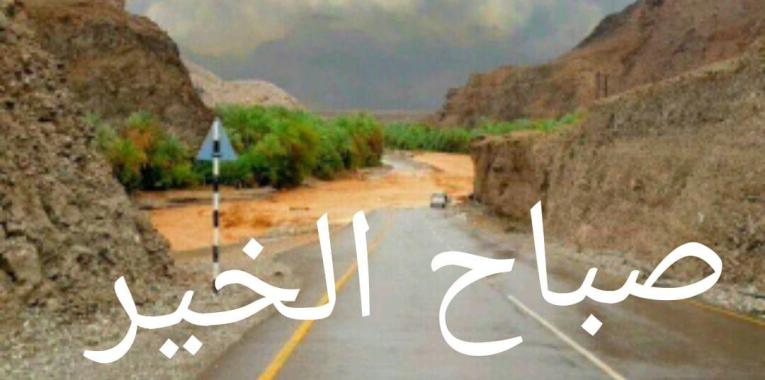
I am interested in ‘little c’ culture – everyday life examples of the values and principles of a culture, not the grand statements. For example, I love this ‘good morning’ greeting (see end of essay). It looks odd at first: “Good morning! The road is flooded and you can’t drive!” In some cultures it might be seen as sarcastic, but here it is heartfelt. Water is a blessing and it’s wonderful to have the wadis full. On the other hand, flooding can be dangerous and both the central government and civic entities work to limit damage by installing flood markers along roads; giving frequent forecasts and warnings; sending military personal to make sure no one attempts to go into flooded areas; and maintaining and training rescue teams, including helicopters.
Two keys to the image (which is don’t think is from Dhofar) are the trees and the clouds. The trees give the reason that the flood is good – periodic inundation means healthy plants and abundant crops. In Western cultures, clouds are a negative symbol, meaning something unclear, blighted, disappointing, but on the Arabian Peninsula clouds are positive. These clouds (which might be a little photoshopped) bring joy, not just for the rain but a respite from the sun. It’s telling that Arab cultures celebrate the moon (the nicest compliment for a woman is that she looks like the moon) while Western songs and poems celebrate the sun (“You are My Sunshine,” “Here Comes the Sun,” “I’ll Tell You How the Sun Rose” by Emily Dickinson, “The Sun Rising” by John Donne and “Solar” by Philip Larkin:
Suspended lion face
Spilling at the centre
Of an unfurnished sky
How still you stand,
And how unaided
Single stalkless flower
You pour unrecompensed.
The eye sees you
Simplified by distance
Into an origin,
Your petalled head of flames
Continuously exploding.
Heat is the echo of your
Gold.
Coined there among
Lonely horizontals
You exist openly.
Our needs hourly
Climb and return like angels.
Unclosing like a hand,
You give for ever.
Another examples of “little c” culture is the cheese sambosas that are a common Iftar treat in Dhofar. My first year here, I attended an all expat women’s Iftar and someone brought cheese sambosas. I was in heaven! Fried cheese pastries, what more could I want? I asked where they came from and was told a bakery. A few days later, I went to a bakery to buy some but none were available. I checked several more places and no luck.
I asked a Dhofari and was told that they usually made at home. Only a few places sold them and then only during Ramadan, which by now had ended. So I waited until the next Ramadan and went searching again, no luck. WHERE ARE THEY HIDING? I asked Dhofari friends and finally learned that they are usually only sold in the 2 hours before Iftar, and only in bakeries with special outdoor stands. I had been walking into bakeries during the morning when I should gone looking at 5pm for bakeries with sloping glass-front display cases set up outside the store.The clues had been there – but I hadn’t read them correctly. Now I am an expert at buying cheese sambosas, but I will never ever tell a Dhofari how I eat them (cold for breakfast with English-style chutney).

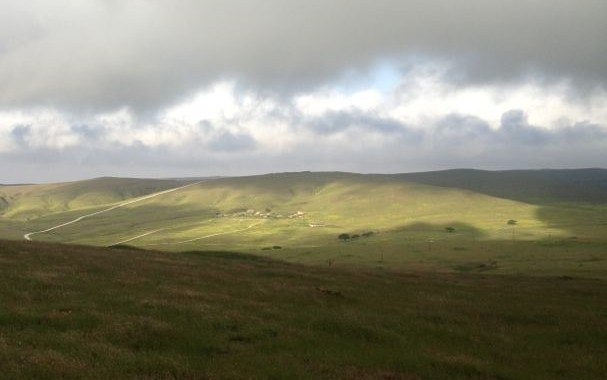
I am pleased to announce that my article “An Ethnographic Discussion of Fairy Tales and Folktales from Southern Oman” will be published in Fabula [https://www.degruyter.com/view/j/fabl]
This article discusses a collection of fairy and folktales from southern Oman to explain how some of the physical and cultural markers described in the texts which are still extant today. The tales, most of which were recorded in the 1970s, were originally spoken in Gibali (also known as Jibbali or Shahri, a non-written, Modern South Arabian language) and are published in Rubin’s The Jibbali Language of Oman: Grammar and Texts (2014). This paper does not place these texts within established codices; rather, the exegesis turns inward, examining how these stories, recorded at the beginning of modernization in the Dhofar region, reflect many traditional elements of Gibali cultures. Further, the article compares the texts to other Dhofari/ Omani fairy and folktales from Al Thahab’s Stories of My Grandmother: Folk Tales from Dhofar (2012), Al Taie and Pickersgill’s Omani Folk Tales (2008), and Todino-Gonguet’s Halimah and the Snake and other Omani Folk Tales (2008) to highlight how the Johnstone/ Al Mahri/ Rubin texts show Dhofari beliefs about oath-taking and the importance of teaching morality in written, but not oral, texts.
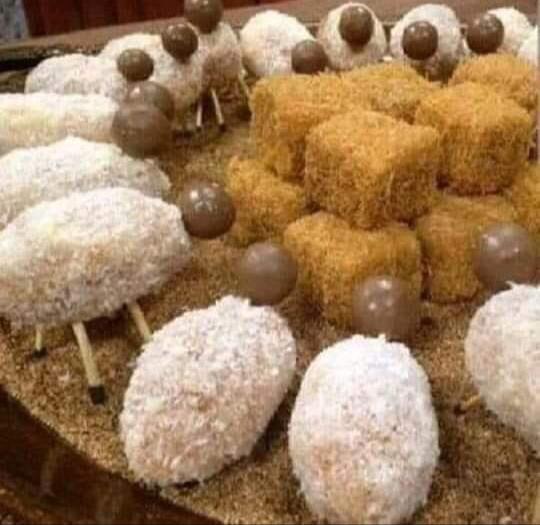
Since Ramadan is the time for religious devotion, reflection and family, I have not been able to meet with my research groups so I have spent a lot of time over the last 4 weeks looking for images connected to food. These posts are a kind of rough draft of research as the first step is to gather data, then comes the comparisons and analysis. I have had a lot of fun, some of the images (like the sheep cake) are amusing, But I am also gathering insights into how social media is connected to foodways in Oman. One thread that has become clear is that varies entities use images to help spread useful information (halal Oreos, raising food prices, etc.) A second thread is that people use social media to monetize food (catering ads and fish prices, etc.). This will be the last ‘images’ post for awhile and I hope you enjoyed the brief excursion from words to pictures.
Getting creative with cakes:
Joke – “the proper treatment for hands after making sambosas,” i.e. buy gold for the women who worked hard to make good Iftars

Notices about food price increases


Warnings about food


Advertisements for home-based catering companies


Food images from home-based catering companies


Announcing fish prices:


Research questions – this image caught my eye because, during more than ten years in Oman, I have never seen fish presented like this. When I looked closely, it was was ad for a Kuwaiti restaurant so I wonder if this is, in fact, a difference of presentation or if I have simply not had the chance to see Omanis serve fish in this manner.

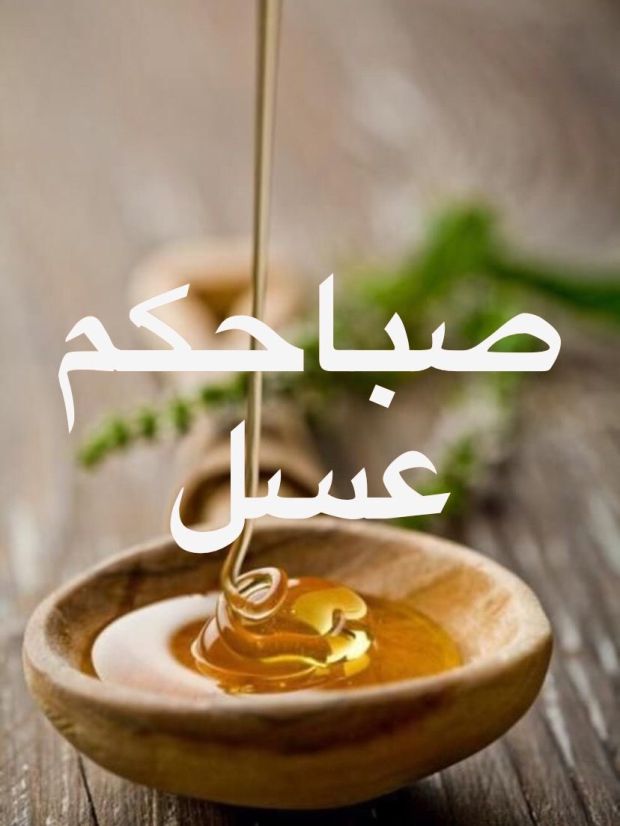
The role of a food product often changes between cultures and sometimes even within a culture. A friend from India once complained to me about how many American desserts and breakfast products and were flavored with cinnamon, explaining that cinnamon is, “not for sweets!”
In Dhofar, local honey is mainly a medicinal product, taken straight by the spoonful for coughs, upper respiratory and stomach ailments. Honey from hives in the mountains is usually bottled into glass bottles (often Vimto) and given to family, friends and neighbors; sometimes a few bottles are sold. This honey is taken in small amounts daily or when a person is sick.
There are also stores and booths at local festivals staffed by Yemenis and selling Yemeni honey. Rodionov has an excellent article discussing the cultural practices with respect to honey in Hadramawt (see below). The Yemeni dish, bint al Sahn, is not served as dessert normally in Dhofar, but it can be found in Yemeni restaurants.
On the other hand, commercially produced honey is bought at a grocery store and drizzled liberally as a sweetener on bread at breakfast. It is not expensive, for example if non-local honey is brought on a camping trip, whatever is not used is often poured out and the container thrown away.
Thus honey inhabits two separate spheres with a huge difference in the cultural importance and function. Honey from Yemen or Dhofar is valuable, not just in price but in worth. A bottle of local honey is a treasured gift, consumed slowly and entirely over weeks or months. The tall glass bottles are kept out in a safe place, out of reach of children. Honey bought at the grocery store usually comes in plastic squeeze bottles and if it is spilled or wasted, it is not perceived as a great loss.
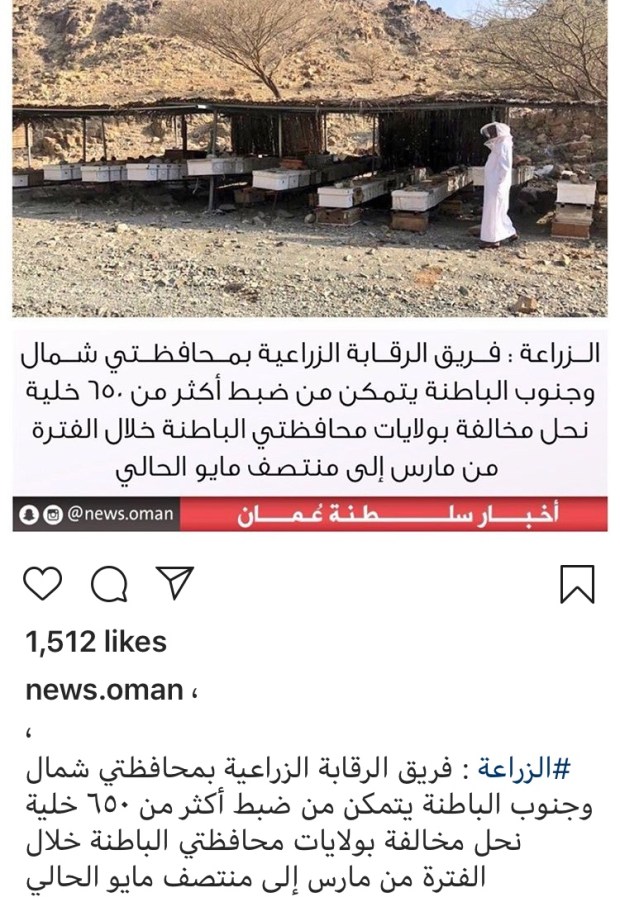
The Omani government supports bee-keeping both in terms of honey production and protecting/ increasing the bee population.
Rodionov, Mikhail. “Honey, Coffee, and Tea in Cultural Practices of Ḥaḍramawt,” in Herbal Medicines in Yemen: Traditional Knowledge and Practice, and Their Value for Today’s World. Ingrid Hehmeyer and Hanne Schönig, eds. Brill: Boston, 2012, 143-152.
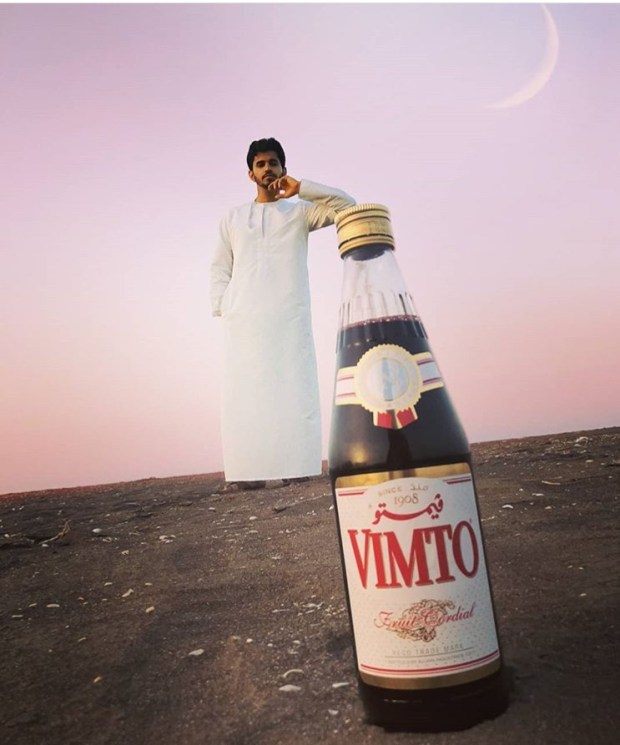
Marieke Brandt (2017) and John Postill (2016) have written about using social media to do anthropological research in places that are difficult to reach; it is also valuable when you are living in the same area. Scanning social media in Dhofar helps me to understand how food is conceptualized during the holy month of Ramadan. The analysis of the images comes next, but for now I am trying to discover the range of images and sorting through to see what kind of categories are found (and not found). In this post are some examples of food images in Ramadan greetings, different type of images with Vimto (a drink that has become associated with Ramadan), efforts by the government/ official channels to encourage good eating and generous behavior and an example of how prepared food is sold.
Food as a part of typical Ramadan greetings


The importance of Vimto!


Vimto at McDonald’s and Baskin-Robbins


Vimto as decoration


Fun with Vimto
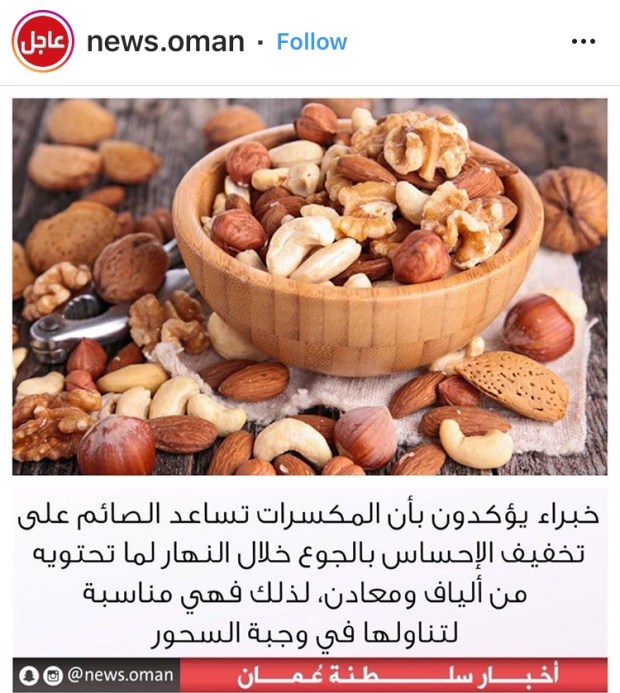
Efforts by government and private entities to improve eating habits during Ramadan
This slideshow is stills from an ad which makes fun of people who have too much of something as a way to caution people against making too much (and then wasting) food at Iftar: a man who has several watches, a woman who has several TVs, a man wearing several hats, then the message.
Stills from a short video reminding people to not embarrass (judge) others during Ramadan. The video starts with 2 women preparing iftar, one is seen by a man as she eats a samosa. Then you see the family sitting at the table and enjoying iftar. The man pretends to ask the girl if she is enjoying the food, then humiliates for breaking her fast. As she looks sad, his wife pulls his dishdash and explains that she has a lawful reason not to fast.


There are many photos to children helping to prepare Iftar/ handing out food
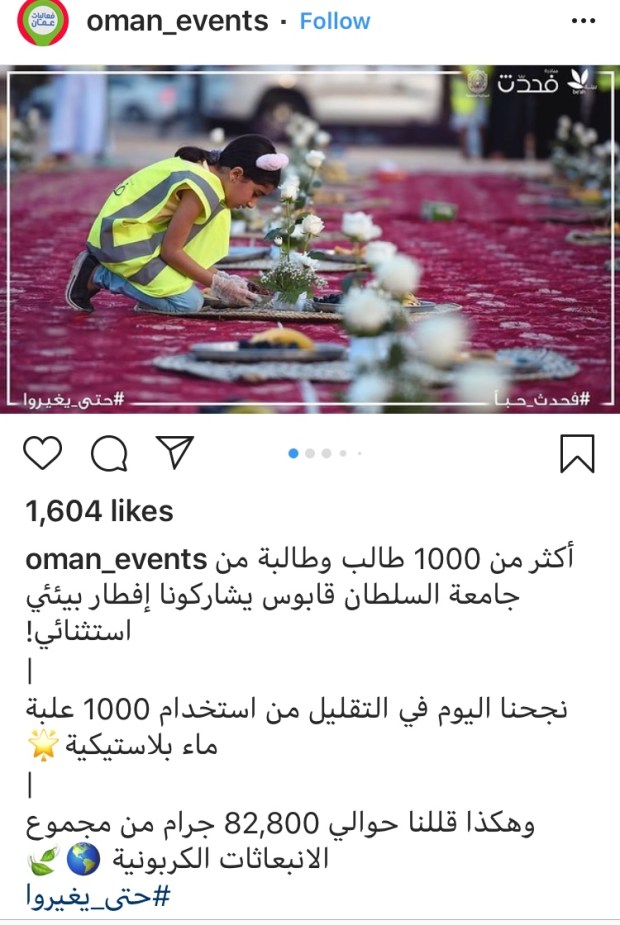
Selling prepared food for Iftar:


The photos of the woman selling food are taken from an ad on social media which shows close-ups of several types of food and an description of the exact location of her tent.
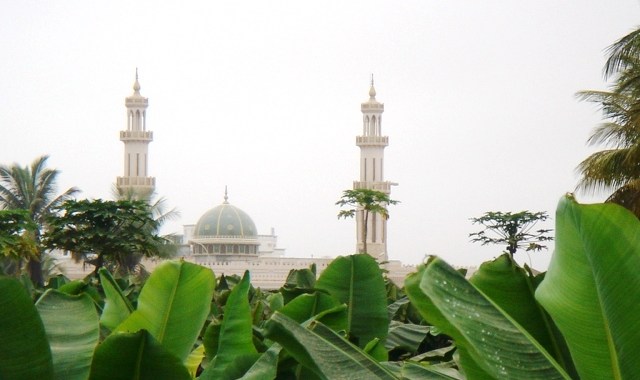
(photo by M.A. Al Awaid)

My short essays on cooking/ food in Dhofar are not meant to be exhaustive or prescriptive. From purchasing food, cooking, eating and doing formal interviews with Dhofari informants for over ten years, as well as academic inquiries, I am attempting to build up a general picture of Dhofari foodways, with the understanding that there are elements I am missing and there is a wide variety of practices between house-holds. When I write “Dhofari” I am referring to Omanis who live in Dhofar, although there are many people from different countries who live in Dhofar with their own food traditions. For more details, see: Foodways and Society in Dhofar, Oman
[image from Sono Moza, for full image see end of post – Vimto has become a steadfast of Iftar, some people hate it but it’s ubiquitous in Ramadan. It is usually served plain (mixed with water), but it can also be jazzed up, for example, as a ‘Vimto Mojito’ which has Vimto mixed with slices of lemon, sprigs of mint, ice and 7-Up or Sprite.]
Drinks
Fruit
Snacks
Sweets
Dinner – usually between 10 p.m and 1 a.m
Suhoor – before sunrise
Ramadan Traditions in Dhofar


[from social media]

Most writing and visuals about food in the Middle East concentrate on one of four topics: food memories connected to loss (e.g. cookbook memoir of displaced people), food scarcity (areas of war/ poverty), elite food (extravagant meals, gourmet cuisine, social media photos) and sharing food at Ramadan (photos of giving away food and communal Iftar at mosques). I am interested in the often not-seen, not-discussed topic of everyday food: what is procured, produced, cooked, eaten, shared and disposed of by Omanis who have neither an insufficiency nor a super-abundance of food. These short essays on cooking/ food in Dhofar are not meant to be exhaustive or prescriptive. From purchasing food, cooking, eating and doing formal interviews with Dhofari informants for over ten years, as well as academic inquiries, I am attempting to build up a general picture of Dhofari foodways, with the understanding that there are elements I am missing and there is a wide variety of practices between house-holds (n.b., when I write “Dhofari” I am referring to Omanis who live in Dhofar, although there are people from different countries who live in Dhofar with their own food traditions). For more details, see: Foodways and Society in Dhofar, Oman
Drinks – offered by waitresses/ groom’s relatives
Snacks offered before dinner
Meals – at a rented house or hall, usually served 8pm – 2am, after the bride has arrived
Meal – at the bride’s house if she will be taken directly to the groom’s house or a hotel, usually served anytime from 5pm – 11pm
Sweets
Typical Foodways at Wedding Celebrations
Groom’s Side
The party for men is usually held on a Saturday (second day of the weekend) morning; it is best if the date is close to the end of the month, after the salary has arrived. The groom’s family will usually arrange a marquee near their house, near a mosque or at a space outside of town. The marquee will be rented for the day and be furnished with rugs and chairs, arranged in a circle. Sometimes there is a secondary tent to the side where the food is prepared. In many Dhofari tribes, the brothers, close friends and cousins of the groom will usually butcher the camels/ cows the night before, or very early in the morning; some meat is then distributed to close relatives and the rest given to restaurant workers to cook. The quantity of food shows the respect for the guests. No one is expecting (or would like) a new recipe or dishes. The two most important components are tea and meat with rice; Omani coffee, Omani sweet (halwa), fruit, soft drinks, water, salad are also served. Brothers and close friends come and go but there is always a core group next to the groom, i.e. he is never without a good friend and a brother or cousin to keep him company and help with the guests. The event ends at the ‘asr (mid afternoon) prayer when all the guests and the groom leave.
Bride’s Side
Sometimes the bride’s party will be quite simple. The bride’s friends and sisters help her get ready at home and serve dinner to female relatives and friends, while male relatives sit with her brothers and father outside the house or in a nearby relative’s house.
Then the bride is brought to the groom’s house by her relatives in a procession of cars. The groom’s sisters and her sisters take her to her new room. Her sisters help arrange her; then the bride’s female relatives come in to see the room and the groom’s female relatives come in to see the bride. She usually does not speak, and never smiles in keeping with the expected cultural ideal that she is “shy,” sad to leave her parents. Sometimes items bought with the mahar and gifts, especially of gold and perfume from friends and relatives, are put on display in the room.
The groom’s family gives the bride’s relatives dinner in the salle and majlis or in an open space near the house, then the bride’s family leaves except for the bride’s mother and/ or a close (older/ already married) sister or aunt. Then the groom, usually carrying a gun as a symbol of his ability to protect her, and his father will come into the room where her mom and (perhaps) sisters are sitting with her. After a short ice-breaker sort of conversation (the bride does not speak), everyone leaves the bride and groom alone.
A more elaborate wedding will be celebrated at a hotel or “hall,” basically an big empty enclosed space. Sometimes this is an issue of wealth but it also happens when there is more than one wedding (e.g. two brothers marrying), or if the bride and groom are from different tribes. In this kind of wedding, the women are invited by phone and sometimes given a ‘card’ for entrance by the groom’s family (who are paying for the event).
Close female relatives of the bride and of the groom show up in finery – often shimmering dresses they have designed themselves. They start to gather about 7 or 8pm; finger-food, sweets and drinks are passed around by waitresses. There is usually water, fruit and maybe snacks laid out on the tables, but no name cards – people sit where they like. The bride makes a triumphal entrance (think the fan fare from 2001: A Space Odyssey) late in the evening, perhaps 12 or even 1am. The main meal is usually served after the bride arrives. Then, with the bride seated on a sofa on the elevated stage, various women dance for her in an open space in front of her or on the elevated stage. At the end of the event, the bride will be brought in a procession of cars to the groom’s house, or the groom might actually come into the room (a very new innovation) and escort her out.
 Come From Away
You must be logged in to post a comment.