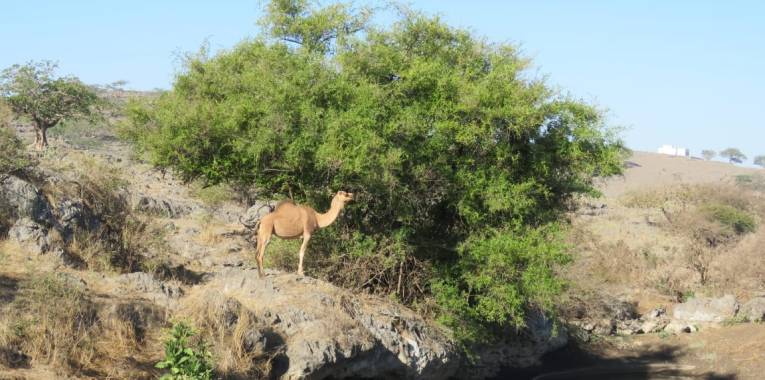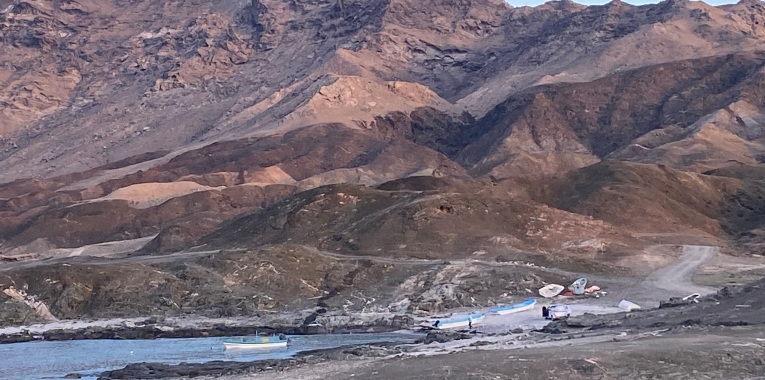
Conference presentation on fishing off the coast of Dhofar, Oman

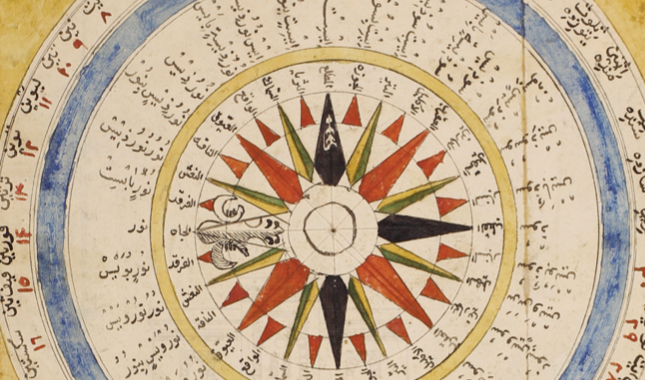
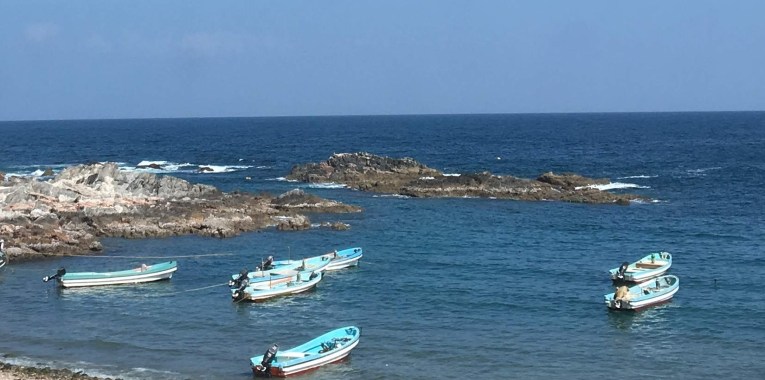
I am happy to announce that I will be presenting “Windguru and Other Gurus: Fishing off the Coast of Dhofar, Oman” for the Navigating the Transcultural Indian Ocean: Texts and Practices in Contact Conference, sponsored by the Rutter Project, June 5, 2024.

Research on Fishing in Dhofar

Foodways: Researching Fishing Practices in Dhofar and Selected Bibliographies

– طرق الطعام : بحث في ممارسات الصيد في ظفار وببليوجرافيات مختارة – Foodways: Researching Fishing Practices in Dhofar (in Arabic) and Selected Bibliographies

Recent publications on important archeological sites in the Dhofar region, updated April 10, 2024

Aston, Warren. 2022. “Mysteries in Stone: The Enigmatic Minjui – Potential Traces of a Forgotten Dynasty in Dhofar.” Popular Archaeology. 1-17. https://popular-archaeology.com/article/mysteries-in-stone/

Degli Esposti, Michele. 2022. “Khor Kharfut (Dhofar). A Reassessment of the Archaeological Remains.” Archeologie tra Oriente e Occidente (CISA) 1: 15-34. http://www.serena.unina.it/index.php/cssaunior/article/view/9559

Ghidoni, Alessandro and Alexia Pavan. 2022. “Boats, Horses, and Moorings: Maritime Activities at al-Balīd in the Medieval Period.” Proceedings of the Seminar for Arabian Studies Volume 51: 169-82. https://archaeopresspublishing.com/ojs/index.php/PSAS/article/view/599

Giunta, Roberta and Alexia Pavan. 2022. “First Archaeological Activities by the University of Naples L’Orientale in Dhofar, Sultanate of Oman.” Archeologie tra Oriente e Occidente 1: 1-10. https://doi.org/10.6093/archeologie/9712

Lischi, Silvia. 2023. “A First Definition of the Dhofar Coastal Culture Archaeological Exploration on the Inqitat Promontory in the Khor Rori Area (Dhofar, Sultanate of Oman).” Ancient Civilizations and Cultural Resources 1: 23-38. https://www.academia.edu/104462977/A_First_Definition_of_the_Dhofar_Coastal_Culture_Archaeological_Exploration_on_the_Inqitat_Promontory_in_the_Khor_Rori_Area_Dhofar_Sultanate_of_Oman

Pavan, Alexia. 2024. “After the Fall of the Caravan Kingdoms: Notes about the Occupation of Sumhuram and the Area of ​​Khor Rori (Oman) from the Fifth Century AD to the Islamic Period.” Études et Travaux 36: 111–31. https://doi.org/10.12775/EtudTrav.36.006

—. 2020. “The Port of Al Baleed (southern Oman), the Trade in Frankincense and its Coveted Treasures.” Polish Archaeology in the Mediterranean 29.1: 249-65.  https://doi.org/10.31338/uw.2083-537X.pam29.1.13.

Pavan, Alexia, Agnese Fusaro, Chiara Visconti, Alessandro Ghidoni, and Arturo Annucci. 2020. “New Researches at The Port of Al Balid and Its Castle (Husn): Interim Report (2016-2018).” The Journal of Oman Studies 21: 172-99.

Rose, Jeffrey. 2023. “Conclusion: Progress Report on the State of Palaeolithic Research in Arabia.” Paléorient: Revue pluridisciplinaire de préhistoire et de protohistoire de l’Asie du Sud-Ouest et de l’Asie centrale 49.1: 155-60.

Antigone and Ismene – Making Difficult Choices

This is a wonderful article:

https://www.washingtonpost.com/opinions/2024/01/15/hong-kong-security-law-chow-hang-tung-jailed/

I have taught Antigone many times. The first was almost by chance. I needed a Greek play and didn’t want to do Oedipus, so I picked up Antigone and was amazed by how powerful the play was. I had forgotten its strength and, importantly for a literature professor, how it balances out everyone’s POV. There is something to be said about each person’s argument. Teaching it was a joy. All the students had an opinion about what should happen and were happy to engage with the characters and plot. I ended up writing some essays and doing some presentations about using Greek plays on the Arabian Peninsula but what was most interesting about Antigone was that students did not judge Ismene harshly.

Gan’s article sets up a dichotomy with Antigone as the brave/ correct one and Ismene as the sister who must be forgiven. My students did not not make that division – each sister was doing what she felt was right. Most agreed that Antigone was correct to bury her brother against the laws of the state, but that did not necessarily mean that Ismene was behaving badly. I found that quality of acceptance very heartening.

Articles:

“Using Cultural Understandings to Improve Teaching in Oman,” in Unpackaging Theory and Practice in Educational Sciences. Abdülkadir Kabadayı, ed. Lyon: Livre de Lyon. 2023: 129-141.  https://www.livredelyon.com/educational-sciences/unpackaging-theory-practice-in-educational-sciences_595.

“Teaching Paired Middle Eastern and Western Literary Texts,” in Advancing English Language Education. Wafa Zoghbor and Thomaï Alexiou, eds. Dubai: Zayed University Press, 2020: 221-223.

“Teaching Literature on the Arabian Peninsula,” Anthropology News website, October 7 2019. http://www.anthropology-news.org/index.php/2019/10/07/teaching-literature-on-the-arabian-peninsula/

“Writing Prompts to Facilitate Creativity and Interesting Texts,” Proceedings of the 15th Oman International ELT Conferences. Muscat: Sultan Qaboos University Press, 2016: 46-52.

“Selecting the Right Literary Texts for Middle Eastern Students: Challenges and Reactions,” in Focusing on EFL Reading: Theory and Practice. Rahma Al-Mahrooqi, ed. Muscat: Sultan Qaboos University Press, 2014: 165-188.

“Who Are You Calling ‘Coddled’?: ‘Cloistered Virtue’ and Choosing Literary Texts in a Middle Eastern University,” Pedagogy 13.3, 2013: 415-427.

“Do You know a Creon?: Making Literature Relevant in an Omani University,” in Literature Teaching in EFL/ESL: New Perspectives. Rahma Al-Mahrooqi, ed. Muscat: Sultan Qaboos University Press, 2012: 302-314.

Selected Fiction (Novels and Short Stories) – Arabian Peninsula

A history-focused Whatsapp group I belong to recently had a discussion which elicited numerous suggestions about fictional works set on the Arabian Peninsula. I am including the works mentioned below along with some texts I have taught in my literature classes and/ or used for my research.

Anthologies

Akers, Deborah and Abubaker Bagader, eds. and trans. 2008. Oranges in the Sun: Short Stories from the Arabian Gulf. London: Lynne Rienner.

Jayyusi, Salma Khadra, ed. 1988. The Literature of Modern Arabia: An Anthology. London: Kegan Paul International.

Michalak-Pikulska, Barbara. 2016. Modern Literature of the Gulf. Bern: Peter Lang GmbH.

Pedagogy

Heble, Ayesha. 2007. “Teaching Literature On-line to Arab students: Using Technology to Overcome Cultural Restrictions.” Arts and Humanities in Higher Education 6.2: 219-226.

Michalak-Pikulska, Barbara. 2006. “The Mosaic of Quotations and the Labyrinth of Interpretations: The Problems of Intertextuality in the Modern Literature of the Gulf.” Intertextuality in Modern Arabic Literature since 1967. 187-200.

Ramsey, Gail. 2006. “The Past in the Present: Aspects of Intertextuality in Modern Literature in the Gulf.” Intertextuality in Modern Arabic Literature since 1967. 161-86.

—. 2004. “Confining the Guest Labourers to the Realm of the Subaltern in Modern Literature from the Gulf. Orientalia Succana, 53: 133-42.

Webb, Allen. 2012. Teaching the Literature of Today’s Middle East. London: Routledg

Short stories/ novels

‘Abd al-Majd / Abde Meguid, Ibrahim. The Other Place.

Algosaibi, Ghazi. An Apartment Called Freedom.

Alshammari, Shahd. Notes on the Flesh.

Wilson, G. Willow. 2012. Alif the Unseen. New York, Grove Press.

Oman

Al-Farsi, Abdulaziz. 2013. Earth Weeps, Saturn Laughs: A Modern Omani Novel. Trans. Nancy Roberts. Cairo: American University of Cairo Press.

Al-Harthi, Jokha. Celestial Bodies

Hamed, Huda. I Saw Her in my Dreams.

Michalak-Pikulska, Barbara. 2002. Modern Poetry and Prose of Oman. Krakow: The Enigma Press.

UAE

Al‑Murr, M. 1998. “The Wink of the Mona Lisa” and Other Stories from the Gulf. J. Briggs, trans. Dubai: United Arab Emirates: Motivate Publishing.

—. 2008. Dubai Tales. P. Clark and J. Briggs, trans. Dubai: Motivate Publishing.

Al-Suwaidi, Thani. The Diesel.

Johnson-Davies, Denys, ed. 2009. In a Fertile Desert: Modern Writing from the United Arab Emirates. Cairo: The American University in Cairo Press.

Krishnadas. 2007. Dubai Puzha.

Michalak-Pikulska, Barbara. 2012. Modern Literature of the United Arab Emirates. Krakow: Jagiellonian University Press.

Unnikrishnan, Deepak. Temporary People.

Kuwait

Abulhawa, Susan. 2020. Against the Loveless World.

Al-Nakib, Mai. 2022. An Unlasting Home.

Alsanousi, Saud. The Bamboo Stalk.

Saudi

Aima, Rahel. Moon Rose – short story https://www.eflux.com/architecture/cascades/400332/moon-rose/

Al-Khamis, Omaima Abdullah. Al-Bahriyat.

al-Sanea, Rajaa. Girls of Riyadh.

Alireza, Marianne. 2002. At the Drop of a Veil.

Alwan, Mohammed. 1988. “Love and Rain” in The Literature of Modern Arabia: An Anthology. Ed. Salma Khadra Jayyusi. London: Kegan Paul International. 302-306.

Benyamin. Goat Days.

Ferraris, Zoe. Finding Noof. 2008. New York: Little Brown, 2012. (also Kingdom of Strangers and City of Veils)

Munif, Abdul Rahman. Cities of Salt.

Yemen

‘Abd al-Wali, Mohammad. They Die Strangers.

Ba-Amer, Salih. 1988. “Dancing by the Light of the Moon,” in The Literature of Modern Arabia: An Anthology. S. K. Jayyusi, ed. London: Kegan Paul International. 318-22.

Bajaber, Khadija Abdalla. 2021. House of Rust.

Dammaj, Zayd Mutee’. The Hostage.

Hunter, Barry Stewart Hunter. 2017. Aden.

Fairy/ Folk Tales

Al Taie, Hatim and Joan Pickersgill. 2008. Omani Folk Tales. Muscat, Oman: Al Roya Press and Publishing House.

Al Thahab, Khadija bint Alawi. 2012. Stories of My Grandmother. [Dhofari] Trans. W. Scott Chahanovich. Washington, D.C:  Sultan Qaboos Cultural Center.

ElMahi, Ali Tigani and Ahmed Mohamed al Khatheri. 2015. “A Folk Story from Dhofar: A Pathway to Indigenous Knowledge.” Journal of Arts and Social Sciences 6.2: 5-12. DOI:10.24200/jass.vol6iss2

Hamad, Abdulsalam. Omani Folk Tales. 2006. Seeb: Al-Dhamri Bookshop.

Johnstone, T.M. 1974. “Folklore and Folk Literature in Oman and Socotra.” Arabian Studies 1: 7-24.

Johnstone, T.M. 1978. “A St. George of Dhofar.” Arabian Studies 4: 59-65.

Johnstone, T. M. 1983.“Folk-Tales and Folk-lore of Dhofar.” Journal of Oman Studies 6.1: 123-127.

Mershen, Birgit. 2004. “Ibn Muqaarab and Naynuh: A Folk-tale from Tiwi.” Journal of Oman Studies 13: 91-97.

Paine, Patty, Jesse Ulmer and Michael Hersrud, eds. 2013. The Donkey Lady and Other Tales from the Arabian Gulf.  Highclere, Berkshire: Berkshire Academic Press.

Todino-Gonguet, Grace. 2008. Halimah and the Snake, and other Omani Folk Tales. London: Stacey International.

Also of interest

The Saif Ghobash Banipal Prize for Arabic Literary Translation [https://www.banipaltrust.org.uk/prize/ ]

Banipal Magazine [ https://www.banipal.co.uk/ ] which has special issues on specific countries, for example: Yemen [ https://www.banipal.co.uk/back_issues/73/issue-36/ ]

Literature and Ethnography

Teaching Literature and Staying au courant – The Man from Nowhere and the Ancient Greeks

Reflections/ Research on Teaching Cultural Studies and Literature

Foodways and Literature – Food Stories and Poems

Foodways and Literature – Animal Poems

Reflections on Ethnographic Work – Trying to Make Sense of Words and Actions

I recently asked one class what “lullaby” meant and one answer I heard was “candy.” I like those moments when I can make sense of where the distortion is as the ‘b’/ ‘p’ distinction is sometime difficult for native speakers of Arabic. I walked to the board and wrote “lullaby” and “lollypop.”

I explained the difference between the two words, then we started another loop of misunderstandings.  I said, “lullaby sounds like your term: lowlay.” My students looked at me in confusion, so I said, “lowlay” again. They were still confused so I tried to change my pronunciation,  “lowlie,” but the word had no meaning for them.

At the start of a different class, I asked, “Does the term ‘lowlay’ mean anything to you?” A few students called out, “it’s a lullaby.”  Aha! I had thought lowlay was a general Arabic term, but it turns out it has only a regional usage.

It’s sometimes exhausting, sometimes fun to be constantly in the middle of making meaning. Of course I expect this when I am teaching and walking my students through color metaphors (such as the connotations of saying “I’m blue,” “she looked green” and “he’s yellow”) and the various shifting frameworks that come up, such as how it’s polite in some cultures to hand cash directly to a person and in other cultures that is rude.

But I believe that as soon as you leave your door-yard, you are confused. I was recently at a grocery store check-out counter sorting things into different bags as some items needed to go to my house, some stayed in the car for camping and some had to go to my office. When I was done, I looked at the clerk and she asked me in Arabic, “Why are you doing this?” and pressed her lips together. “Are you sick?”

Pressing lips together in the States is a common physical reaction to concentrating but it did not hold that meaning for her; she thought it was a reaction to being in pain. I said, “I do this when I am trying to think carefully.” She nodded. I am glad she asked because there are so many chances to misunderstand something or guess the wrong meaning, it’s always better to check.

This makes those moments when I know what to do so much sweeter. Last week I went to an ATM on salary day, the 21st of the month when almost every company in Oman pays the monthly salary and ATMs are very busy. As expected a few men were waiting, not in a line but spaced out to the left and right of the ATM.

I got out of my car and instead of going to stand as close to the ATM as possible (which would signal that I was trying to claim the female and/or expat privilege of cutting into the line), I leaned against the side of the hood. I glanced quickly at the other men, then gazed off into the middle distance. When new men came, I glanced at them quickly and when all the men who were there before me had taken cash, I walked up to the machine.

Because that’s how you do it. There is no clear queue; you need to look at everyone who was scattered around the ATM when you arrived and instantly memorize them (it’s not polite to stare!). Then you wait and watch so that when all the people who were there before you have finished, you move towards the machine. (Make a QUICK first move so the guys who are waiting won’t try to jump ahead of you, then walk slowly.)

When I got back into my car, one of the research guys walked past. He glanced at me and kept walking. So I rolled down the window and read articles on my phone; when he was done, he came to my car and we chatted for 10 minutes.

He first walked by without acknowledging me because to stop would throw off the rhythm; the men who came after him would not know that he was waiting for the ATM. Better to take his position, get his cash, then talk to me. If I had driven off, he would assume that I was in a hurry or that I felt ‘shy’ to speak to him in front of so many men. By waiting and putting the window down, I was signaling that I was happy to talk. If he had walked away without speaking, it would mean he was in a hurry or that there was an older person in the car (i.e. he should not keep that person waiting).

It took a lot of questions in similar circumstances to figure out the permutations of dealing with ATMS and running into research guys by chance. Now I am glad I’ve got the basics down. Sometimes it’s “every new day is a chance to wildly misunderstand what is going on” and sometimes it’s  “every new day is a chance to learn.”

Reflections on Ethnographic Research: What is Missing and What Changes

Reflections on Ethnographic Research: Claiming Knowledge and Shifting Perceptions

Reflections on Ethnographic Research: Getting it Wrong

Reflections on Ethnographic Research: Expat Workers and Reciprocity (part 3 of 4)

Reflections on Ethnographic Research: Deciding to Hire Expat Workers (part 1 of 4)

Reflections on Ethnographic Research: Situating Expat Workers (part 2 of 4)

Overview

By chance in the past few weeks I have read several articles about labor and migration on the Arabian Peninsula such as

  • Gardner, Andrew and Sharon Nagy. (2008). “Introduction: New Ethnographic Fieldwork Among Migrants, Residents and Citizens in the Arab States of the Gulf.” City and Society 20.1: 1-4.
  • Nagy, Sharon. (1998). “‘This Time I Think I’ll Try a Filipina’: Global and Local Influences on Relations Between Foreign Household Workers and Their Employers in Doha, Qatar.” City and Society 10: 83-103.
  • Sarmadi, Behzad. (2013). “‘Bachelor’ in the City: Urban Transformation and Matter Out of Place in Dubai.” Journal of Arabian Studies 3: 196-214.

There are lots of numbers, data sets, opinions and ideas in these texts – but no sense of what it’s like to interact with expat workers. There is ethnographic work with and about them, but nothing about the writer’s personal economic exchanges: how to hire, discuss and pay wages, decide work load, etc. This isn’t a fault of the articles which have different objectives, but reading these texts made me reflect on my connections to other expat workers, how I manage them and how they manage me.

This essay will talk about the issue of reciprocity. Previous essays talked about my decision to hire help and situating expat workers. The next essay will talk in more detail about paying the people who have worked for me and the types of adjustments that we both make. [The information about wages and dates are from monthly lists of expenses that I have kept since I moved to Dhofar. 1 Omani Riyal is about $2.40; there are 1000 baisa in one Riyal so the 500 baisa bill is worth about $1.20.]

*************

(photo by S. B.)

Thought experiment: imagine that you live in a foreign country where most people speak language A, you speak language B and every morning you see a person (X) who speaks language C in your coffee shop. You raise a hand in greeting but never talk and you notice that X, after drinking a cup of coffee, X walks from the coffee shop into a large, nearby building which you have never been inside of. One morning, X leaves a shopping bag in the café by mistake. What would you do? Pick up the bag and head over to the building? You don’t know the local language and you don’t know X’s language. You can describe what X looks like (if, by chance, you find a person who speaks your own language), but you don’t know X’s name, where X works or what X’s job is and it’s a 3-story building which is divided into 4 sections. Each section has 10 to 20 offices, over 200 offices total. Do you venture in to return the bag? Or leave in in the coffee shop expecting X to come back and retrieve it?

One morning I looked up from my desk and saw M, who cleans cars in the parking lot of where I work. He was standing in the doorway with the man who works as a messenger for my department. The messenger pointed to the car-clearer and said, “He says problem with your car, tire.”

I was surprised that M had ventured into my large, 3-story building to find me. He and I don’t share a common language and he had (as far as I knew) no way of knowing where my office was.

When he first started working in the parking lot, he had walked up to me and said, “cleaning” while pointing to my car. “How much?” I asked. “10 Riyal month.” “Ok.” And that was it. The next day I gave him 10 Riyal and for nine years he wiped the sand from the outside of my car and we always raised our hands in greeting if we saw each other in the morning.

I had never had a car-clearer before so I made a list of rules for myself:

  • always pay for the month ahead as soon as I get my salary so he can count on money at a certain time
  • pay the same 10 Riyal every month even if there are vacation days
  • hand over various cleaning supplies (clothes, sponges, tire cleaner) at least once every month
  • pay extra if I want the inside of my car cleaned
  • empty trash out of the truck bed myself before coming to work
  • do not say anything if he doesn’t come during wind/ sand storms or misses a day now and then

Seeing him standing in the office doorway was one of those moments in which I realized I had been working under a whole set of not-shared assumptions. To me: I give money, he cleans my car was the full description of our connection. I would not have imagined that he would have come into the building having no idea where I was to tell me a tire was going flat.

I gave him a tip; but he would not have known I would do that as I had never given tips before so I don’t think the motivation was money. This was years ago and he has since left that work, so I can’t ask him exactly why he made the effort of wandering around the building to try to find me. But that image of him standing in the office doorway stays with me and makes me think of the quote “gifts differing according to grace.”  It was a great kindness for him to find and tell me. I could sort out the tire then, mid-morning when all the shops were open, rather than being surprised when I tried to drive home at the time when shops were closed.

Until I read several articles on expat workers, I hadn’t reflected that I had several similar examples in which I assumed the boundaries were: I pay, they do their specific work, while the person who was working for me saw our connection quite differently.

A second example was a cleaner at work. B was bustling and cheerful. We greeted each other by waving when me met, usually when I was working in the late afternoon, and I would hand over 1 Omani Riyal every week. After he had worked in my department for over a year, one day he walked into my office with three potted plants and set them on the windowsill.

I love plants and had a great garden at home, but never had thought to bring plants to my office. I was happy to have them but also bewildered. Where had they come from? How had he gotten them? And how had he managed to bring them to the university? They were three, large healthy climbing plants (I don’t know the names) in attractive, new pots with matching saucers. I know other people gave him tips so I didn’t think it was for the money and, in any case, he could not have been certain that I wanted them. He wanted plants in my office – so he put them there.

He also gave plants to Steve Cass, whose office was next to mine, but as far as I could tell, to no one else. And he watered and trimmed the plants for as long as he worked in our building.

When I moved out of the house with a garden and into an apartment, with my landlord’s approval, I broke the water pipe and installed a sink on the roof. I then hired P, a gardener, to sweep the roof and water my collection of potted plants.

We don’t have a language in common, so when he first started to work for me, a friend of his came to help translate. I explained what I wanted done; I also said that anything on the small table to the right of the front door should not be touched, but anything I was getting rid of, I put to the left side of the door. If he saw anything he liked, he could take it (such as cushions, towels, bowls, folding tables, etc.) Then I made another series of rules for myself:

  • pay P as soon as I get my paycheck
  • don’t try to figure out when/ how often he works – judge by how well the plants are doing
  • water myself after big windstorms
  • leave packets of small bottles of water in the upstairs storeroom for him so he doesn’t have to drink from the hose

He had worked for me for 14 months when Covid hit. The roof access is from the stairwell so we were never in the same space at the same time, and he continued to work although my routine changed dramatically. I now taught from home and in the first months (spring 2020) I only left the house once a week to get groceries.

My apartment is the only one on the small landing, so I had gotten used to setting trash bags on the left side of the door at night, then bringing them to the dumpster in the morning. But since I was no longer walking down the stairs every day, sometimes there would be a bag or two for a few days. One day when I opened the door to take everything to the dumpster, I was amazed to find that the trash was gone. There was no one else who used the stairwell and the other stuff on the landing (small table and plants) was still there. Who would open the door to the hosh (courtyard), open the door to the house, walk up the stairs and take my trash bags

Bizarre. This bothered me for many days, as it happened twice more and I could not figure out what was going on until I realized P had taken it upon himself to toss the trash. I had never asked him to, didn’t expect him to; he made the decision himself that taking out the trash was his responsibility.

M, B and P all went out of their way for me, spending their time and energy to make my life better in ways I did not ask for or expect. When each of these examples happened I was surprised, the root of which was assuming that our relationship was money-based and the generosity was one-way. For M and P, I gave salary, they gave their labor and as extra I gave tips and supplies (cleaning clothes to M and water for P). B’s salary was paid for but I gave tips. I perceived them as not having further agency in that they would do their assigned work and only that. But their actions showed that they viewed themselves as having the ability and choice to decide what to do.

Reflections on Ethnographic Research: Expat Workers and Issues of Payment (part 4 of 4)

Ethnography: Conversations about Men/ Masculinity, part 1

Reflections on Ethnographic Research: Changes within Cultures

Reflections on Ethnographic Research: Claiming Knowledge and Shifting Perceptions

Reflections on Ethnographic Research: Situating Expat Workers (part 2 of 4)

Reflections on Ethnographic Research: Deciding to Hire Expat Workers (part 1 of 4)

Overview

By chance in the past few weeks I have read several articles about labor and migration on the Arabian Peninsula such as

  • Gardner, Andrew and Sharon Nagy. (2008). “Introduction: New Ethnographic Fieldwork Among Migrants, Residents and Citizens in the Arab States of the Gulf.” City and Society 20.1: 1-4.
  • Nagy, Sharon. (1998). “‘This Time I Think I’ll Try a Filipina’: Global and Local Influences on Relations Between Foreign Household Workers and Their Employers in Doha, Qatar.” City and Society 10: 83-103.
  • Sarmadi, Behzad. (2013). “‘Bachelor’ in the City: Urban Transformation and Matter Out of Place in Dubai.” Journal of Arabian Studies 3: 196-214.

There are lots of numbers, data sets, opinions and ideas in these texts – but no sense of what it’s like to interact with expat workers. There is ethnographic work with and about them, but nothing about the writer’s personal economic exchanges: how to hire, discuss and pay wages, decide work load, etc. This isn’t a fault of the articles which have different objectives, but reading these texts made me reflect on my connections to other expat workers, how I manage them and how they manage me.

This essay will talk about my decision to hire help. The previous essay talked about my decision to hire help and later essays will talk in more detail about some of the people who have worked for me and the types of adjustments that we both make. [The information about wages and dates are from monthly lists of expenses that I have kept since I moved to Dhofar. 1 Omani Riyal is about $2.40; there are 1000 baisa in one Riyal so the 500 baisa bill is worth about $1.20.]

************

(photo by S. B.)

First, I want to highlight that my experiences are with other individual expat women and men who have come to Oman on their own, meaning they are sponsored by one Omani or a small company, not as part of teams hundreds of men strong. I can’t speak about the life of workers at large construction businesses beyond memories from 1997 of trying to walk between the buildings of the American University of Sharjah (AUS) as the men who were building the campus napped in the shaded walkways. As I stepped over their sleeping forms, I thought that I was probably being grossly culturally inappropriate, but they took up every inch of the shade so it was either don’t walk during nap-time, walk in the full sun or make one’s way amid the resting men. It was a great lesson in the practicalities of construction. I, with my Ray-bans and air-conditioned office, needed to understand that making the buildings required a lot of labor and that labor had the right to relax out of the noon-day sun.

I had a second lesson while living in campus housing at AUS. The man who was in charge of the apartments rang the doorbell one afternoon. When I opened the door, he was standing with 4 other men, one of whom was carrying a large TV set. “I am having coffee with women,” I said, “can you please come back in 2 hours?” He said, “Yes.” And I didn’t get my TV for a month. He had been ready to install it and I should have asked my female guests to leave so he could do his job. By saying “no,” I had insulted him and he installed every other TV on campus, waited another two weeks for good measure, then came back and did mine. Lesson learned.

Since I moved to Oman, I give up whatever I am doing when a repair person comes – no matter how inconvenient the time. I say “yes” to AC repairmen who want to tear open vents as I am trying to write midterm exams and telephone repair people who want to come in the middle of a birthday party.

Sometimes Omani friends and the research guys mention encounters with expat laborers; usually there is a clear divide between stories from men and women. Men work with expats laborers usually in connection to construction and the stories are usually negative. It’s hard to parse what is genuine confusion, what is incompetence and what is deliberate malice. The men don’t want to tell me details (as it is not common to dwell on negative people/ events) but here is one example from my life this year.

I wanted to have three rooms painted. Another expat I know brought an expat painter and his assistant to my house to give an estimate. The painter had been working in Oman for five years so he had a lot of experience.

He was very careful to ask if I was using “regular paint” or “machine paint” (paint in which the color is added when you buy it, available at only one store). I said, “machine.” He told me I would need 20 liters for each room and that the machine paint came in cans of 20 liters so I only need one can for each room. He also said he would need 3 rolls of tape to over the woodwork around the doors and light switches. That seemed like too much paint and not enough tape to me, but I haven’t painted a room in over 10 years so I deferred to his expertise.

When I got to the one store that mixes paint on request, I learned that “machine paint” comes in 4 or 18 liter cans and I was surprised that the painter had gotten the size of the can wrong. Since he had said 20 liters was needed, I bought an 18 liter can and a 4 liter can in each of the three colors for a cost of 64 Omani Riyal, thinking it was better to have too much than too little. I would keep the extra on-hand for touch-ups.

I got help to move the furniture into the middle of the rooms and cover everything with tarps. The painter arrived on time, looked at the 3 rolls of tape and announced that this was not nearly enough, so the person who was helping drove off to the store and bought more.

The painter and assistance worked from 8 to 5pm with a few breaks and did a great job. When they finished I paid the agreed price – 60 Riyal, plus I gave a 4 Riyal tip to each and they could take the tarps and the rest of the packet of water I had brought for them.

Then I went to take the paint cans to the trash and realized that they had only used about 12 liters per room; the large cans were 1/3 full and the 4 liter cans were untouched. As the paint was custom mixed, I could not return it and was stuck with a large amount of paint. I wondered how a person who has spent the last five years painting rooms would not know how much paint I should buy.

Stories from Dhofari women about female expat workers in their homes are usually about very positive interactions. For example, when I asked a female, Dhfoari friend if she wanted to have coffee, I was told that their maid was going back to her country, so my friend and her sisters were taking her shopping to get presents for the maid’s family. Once I was sitting in a female friend’s salle to have coffee and saw a new maid bring in a tray. My friend explained, “she’s new and very young, we didn’t think she would be so young, she misses her family so we are buying her many phone cards.”

Most of my female friends have workers who stay with the family for 10 years or more and they make adjustments to help the workers. One, for example, told me, “my father’s driver, his mother is sick so he is at home for a month so we rented a bus to bring the kids to school.”

Their stories made me realize that my basic assumption (I hire someone and they do the work) was not accurate. When someone works for you for a while, you create a relationship that must be respected. My obligation to the people who work for me is not simply that I pay the salary, a topic I will discuss in my next short essay.

Reflections on Ethnographic Research: Expat Workers and Reciprocity (part 3 of 4)

Reflections on Ethnographic Research: Getting it Wrong

Teaching: Reflective Teaching and Motivation

Reflections on Ethnographic Research: Claiming Knowledge and Shifting Perceptions

Reflections on Ethnographic Research: Deciding to Hire Expat Workers (part 1 of 4)

Overview

By chance in the past few weeks I have read several articles about labor and migration on the Arabian Peninsula such as

  • Gardner, Andrew and Sharon Nagy. (2008). “Introduction: New Ethnographic Fieldwork Among Migrants, Residents and Citizens in the Arab States of the Gulf.” City and Society 20.1: 1-4.
  • Nagy, Sharon. (1998). “‘This Time I Think I’ll Try a Filipina’: Global and Local Influences on Relations Between Foreign Household Workers and Their Employers in Doha, Qatar.” City and Society 10: 83-103.
  • Sarmadi, Behzad. (2013). “‘Bachelor’ in the City: Urban Transformation and Matter Out of Place in Dubai.” Journal of Arabian Studies 3: 196-214.

There are lots of numbers, data sets, opinions and ideas in these texts – but no sense of what it’s like to interact with other expat workers. There is ethnographic work with and about them, but nothing about the writer’s personal economic exchanges: how to hire, discuss and pay wages, decide work load, etc. This isn’t a fault of the articles which have different objectives, but reading these texts made me reflect on my connections to other expat workers, how I manage them and how they manage me.

This essay will talk about my decision to hire help, later essays will talk in detail about some of the people who have worked for me and the types of adjustments that we both make. [The information about wages and dates are from monthly lists of expenses that I have kept since I moved to Dhofar. 1 Omani Riyal is about $2.40; there are 1000 baisa in one Riyal so the 500 baisa bill is worth about $1.20.]

***********

(photo by S. B.)

It is difficult to write about hiring people without sounding complacent, a point that was brought home when I read an ethnographic text about Western expats on the Arabian Peninsula who hired nannies and housekeepers. The author vilified the employers as spoiled, lazy, racist and delusional. The author had obviously never hired anyone to do work for them and had a healthy dislike of those who did.

Writing back against that attitude is not easy. I know I could do all the housework myself but I choose to hire someone to clean my house. This can be seen as indolent but I think it’s more helpful to situate one’s positionality when being critical. “I would never…” is very different than “I have never been in the position to…”.

My decision to hire help is predicated on several lifestyle differences such as how housing designs here allow bugs and sand to enter, the monsoon season and the size of houses.

When I visit my mom in the summer it always takes me a few days to tone down my bug vigilance. “MOM, CRUMBS!!!” I yell on the first morning when I walk into the kitchen and see evidence of sliced bread on the countertop. I quickly rinse the bread board, wipe down the bread knife and inspect the countertops for any speck of bread. Luckily, she has great tolerance for this and within a day or two I mellow out as I remember that a few crumbs on the counter sink will not induce hordes of critters to invade her kitchen.

When I get back to my own kitchen in Dhofar, I return to my watchful ways because I live in a cement block house where ants and cockroaches come out from cracks in the tiling and up from the sink and floor drains. They even crawl out though the electric outlet openings. Twice I have had mice scurry up to my first-floor apartment through the washing machine outtake pipe. There are lizards on the walls, bees flying in through the AC vents and spiders galore.

When I talk about the people I have hired to help me by cleaning my house, I know it can seem like I am lazy. I moved to the Middle East with bona fides of self-sufficiency. When I was a child, I had daily chores and once I lived on my own, I have doing all the cleaning myself. But life is different herein Oman.

For example, I have done my own laundry since I was in 6th grade and it’s simple: put everything in washing machine, then the dryer, fold and put away. But there are no dryers here and my top-loading washer has two bins. You put the clothes in the left-hand side bin, add soap, let it fill with water and turn the knob to agitate the water. Then you let the water drain and lift the sopping wet fabric up and place it in the right-hand bin which spins the water out. Then you hang everything on drying racks, wait for it all to dry, fold and put away. Going to a friend’s house and using her washer/dryer combo in the States makes me ask, “What do you do with all your spare time? Put your clothes in the machine, come back an hour later to find everything clean and dry? It’s a dream!”

Also, my friends’ houses are not in close proximity to deserts. “Sweeping the floor” means one thing in my mom’s house and something very different after a 3-day, 40 kph sandstorm in my Dhofari house where you can see daylight between the window frames and house walls. It’s a joy to sweep in my mom’s house; it takes about 5 minutes and you end up with a tiny pile to discard. After a sandstorm here I need to sweep the entire house and dust everything which takes hours. And there are usually more than 5 sandstorms every winter.

In addition, from June until the end of August, Dhofar has a monsoon season with drizzle and fog on most days. As this is also the time of annual vacation, if there is no one to clean the floors, turn fans on and off and keep watch, mold can grow. I brought a friend home from the airport when she returned to start the school year and when we walked into her living room, her sofas were coated with black mold. When I came back from vacation this summer and opened my car door, the front seats and dashboard cover were green with mold, there were even threads of mold hanging down from steering wheel.

When I lived in Madison, Boston, Minneapolis, and Grand Forks, I had a studio or one-bedroom apartment which was easy to take care of. In Salalah, apartment buildings are usually exclusively expat and I want to live in Omani neighborhoods, which means renting a small house or a floor of a house which are built for extended families. My “small” apartment has a salle, majlis, kitchen, 3 small bedrooms and 3 bathrooms. Friends who have rented houses with 4 or 5 bedrooms just shut the doors of the rooms they don’t use but I would rather hire someone to clean all the spaces.

A related point is that it’s better for me to have a slightly larger place to live as there are fewer “third spaces” here. In the month of Ramadan, for example, cafes are closed until after sunset. In the monsoon season, roads can be so crowded, it’s better to stay home. During Covid lockdowns and curfews I was really grateful I could turn the 3rd bedroom into a work space for on-line teaching. I also like that the woman who cleans my house has a key and can feed the cats if I am away for the weekend camping.

In addition to the calculations of spending time (washing clothes, sweeping, getting rid of mold) vs. spending money (paying someone to clean my house), there is the aspect of how easy it is to get help from someone who wants to work.

When I owned a car in the States, I would wash it now and then but here it is a government regulation that cars must be clean. So I could either spend ten minutes every morning wiping the sand off my truck or I hire someone to do it for me. In most parking lots of large stores, there are expat men who do this work for a small fee. Where I work, there are two men who come every morning to the covered parking area. You can pay them 500 baisa for each cleaning if you want it now and then or 10 Riyal for the month.

There are many such opportunities and I usually much hire and/ or tip everyone both because it makes my life easier and because I have been in need in my own life. I spent years without health insurance because I couldn’t afford it. I have always worked since I was in high school but I had to take out student loans for college. If my older brother had not kindly settled my student loans, it would have taken me at least a decade to pay them off. After the 1997 Red River flood, I ate Red Cross meals for weeks. Having received so much help in my life, I feel I need to be generous.

Every week, I give a money to the people who clean the building where I work and I tip the men who bag groceries. Although it’s not habitually done here, I always tip wait-staff and delivery men. When expat government employees are cutting weeds near my house, I hand out cash and bottles of water. If it’s safe to pull to the side of the road and I have cash in dashboard cubby hole, I give cash to the men who sweep streets. If I have time when there is a team of expat men gardening along the roadside near my house, I will buy cookies, as well as liters of water and soda, and hand them over.

Before I became an Associate Professor, I worked in sandwich shops, restaurants, libraries, a bookstore and an antique store and I can push my own grocery cart. But if I am walking in the parking lot of a grocery store and a man in the jumpsuit uniform of a cleaner walks towards me with his hands extended, I know he is asking to bring my cart to my car for a 1 Riyal tip. So I step away from my cart and let him push – a move that can be seen as being lazy/ exploitative or giving someone a chance to earn extra money.

Reflections on Ethnographic Research: Claiming Knowledge and Shifting Perceptions

(photo by S. B.)

I recently read two ethnographic texts about the Arabian Peninsula. Both are well-researched, with many cites from interlocutors and relevant texts but both made me very uncomfortable. Each text examines a sub-set of the population within one Arabian Peninsula country. One author clearly lauds the studied group; the other has a clear animosity towards their group.

There were two interconnected issues. First is that, to me, the texts will have an outsize impact. Both texts are about groups which has not been previously studied and both authors are very well positioned within the milieu of North American/ UK/ EU academia with impressive CVs and permanent jobs in well-regraded institutions.

Thus the two authors will be widely accepted as knowing spokespersons for the countries studied, yet there are many small mistakes in the texts, such as giving places the wrong name, as well as larger concerns. One researcher looked at a subset of a population but because of limited time and narrow focus, the text makes claims of distinctiveness of the group studied which are actually not distinctive, i.e., traits described as being particular to this group I have frequently seen in other groups. To me, the result is awarding a special status to one group of people who share the same social traits with other groups. And there is no way to correct this as I doubt the researcher would want to go back in the field and work with other groups.

There are many slanted comments. For example, one text mentions that a certain group of expats are treated in a negative way when they arrive on the Arabian Peninsula in that they were subject to extensive medical checks and would be deported if there were found to have various diseases, but that is true for anyone, be they laborer, salesclerk, CEO or professor.

A few months ago, I went to get a health check done so I could renew my work visa. At the clinic, by chance, there was a male Omani professor who had brought an expat woman who he had hired to work in his house. That women and I went through the same set of medical tests (including blood drawn and chest x-ray) at the same time. But reading the text, one could easily assume that this kind of bodily investigation only happened to expat workers who had non-professional jobs.

However, the bigger issue for me is that their understandings about the people they are talking to/ about is the same at the start of their work and the end. I happened to meet one of the researchers at the very beginning of their work; the second is clear about their attitudes at the start of the project and that point of view is identical to where they theoretically ended up.

And I am troubled that a researcher’s perceptions of a group of people is exactly the same at the beginning and conclusion of a project. In terms of these two books, with one researcher who was clearly positive about their interlocutors and one who was clearly negative – to go in positive and find only positives, to go in negative and find only negatives seems too easy for me. Were there no surprises? No readjustments? If you can’t articulate both some negatives and some positives about the people you are working with, I wonder if you are well-grounded in their lives.

I feel that everyone is ‘othered’ and out of depth as soon as they leave their home space(s). If you have grasped a foreign culture in its entirety so much so that you don’t change any of your starting attitudes, you are amazingly prescient or perhaps there wasn’t enough time or some other issue is in play.

To me, transformation of original conceptions is an important part of doing ethnographic work – there needs to be space for discovery, reassessment, new considerations; if someone hasn’t shifted their beliefs at all, I am a little wary.

Reflections on Ethnographic Research – What is Missing and What Changes

Reflections on Ethnographic Research – Getting it Wrong

Reflections on Ethnographic Research: Making Adjustments for Positive Multi-Cultural Exchanges/ Events

Reflections on Ethnographic Research: Changes within Cultures

Reflections on Ethnographic Research: What is Missing and What Changes

I recently read two ethnographic texts about the Arabian Peninsula and was troubled that neither author articulated how their perceptions of the people of who they were studying (or themselves) were changed by their months in-country and years of writing.

The learning curve was perfectly flat – i.e. my conception of the project was X and this is what I found – without any mention of what might have been misunderstood or missed. I am not sure if the years of writing smoothed out the research process so that it appears seamless, or perhaps the researchers did not want to publicize or dwell on lacunas. But I don’t think any anthropological work can ever be complete or finished and it’s better to be clear about what changed/ what’s not there/ what questions weren’t asked, etc. I also think it’s important for authors to reflect on how they themselves have changed.

I wrote a book about food (Foodways in Southern Oman, 2021) and weeks after it was at the publisher I realized I had not been clear on the issue of Dhofaris not talking while they are eating. I was having dinner with someone who would say half a sentence, take a bit of food, chew carefully, then finish the sentence. This meant no one else could talk and, at the end of the meal, this person left one bite on their plate and talked on for 20 minutes as no one could leave the table until everyone was done eating. As I was thinking about their actions, I realized that this kind of conversation-hijacking doesn’t happen in Oman.

I had missed a whole series of interrelated food/ dialog practices and understandings. In Dhofar, there is an understanding that being upset can be physically harmful; for example, children (who can’t yet control themselves) should not be allowed to cry. Another example of this belief is that no one should say or do anything distressing while eating. There should be either no conversation or light/ polite/ general talk.

If someone wants to talk, they can – but side conversations are fine and people are concentrating on the food. When a person is done, they will usually stand up to wash their hands. If someone has something important to say, they will not do it during a meal.

In my book, I didn’t include the insight that a whole series of actions/ tropes which are normal in American culture, such as loud arguments at the dinner table (perhaps with screaming, throwing things or stomping away) are very rare in Dhofar. As is someone saying something dramatic, then calmly drinking or eating while everyone else is in an uproar. Eating should be done in a peaceful atmosphere and the Dhofari way to show fury at the dinner table is usually to not eat and not talk.

And as I read the two ethnographic texts about the Arabian Peninsula and wondered at how the authors didn’t change, I questioned how I would make that articulation about myself. How have I been changed by years of working with one group of tribes in Dhofar?

I would say that I am more patient, although this is not the perception of the men in my research group. And I have adapted the belief from the Dhofari people I know that you should frame learning that a friend is untrustworthy as positive. Even if someone you have been friends with for years betrays you, you should be glad that you finally know understand that person’s character.

I realized I had internalized this belief when I watched the last episode of the long-running series Endeavor. The main character (Morse) and his supervisor/ mentor (Thursday) are investigating the death of drug-dealer and trying to find the body of a long-dead boy. Their work is complicated by the impending marriage of Thursday’s daughter, Joan, to another policeman. Thursday is warned that if he continues to search for the culprits, Joan might be put in danger and Morse is torn between finally telling Joan that he loves her and staying stoic.

At the end, Morse figures out that Thursday is connected to a murder; his long-trusted and respected mentor is revealed as a self-serving hypocritic. Quoting Harry IV, Morse breaks with Thursday as Prince Hal did with Falstaff and, in their final scene, rejects Thursday’s attempt to regain their previous friendship when Thursday refers to Morse by his first name. As it’s clear that they will never speak to each other again, it’s a startling end to nine seasons of watching their camaraderie grow and deepen.

My reaction to Morse’s brush off of Thursday’s last effort at reconciliation was thinking, “oh, it’s a good thing that Morse never told Joan he loved her as there is obviously a flaw in the character of that family and who knows when it would have shown up in Joan.” Then I thought, “that’s the POV of the people I do research with.”

It was an interesting moment as I realized that I should have felt sorry for Morse [he lost his mentor and the woman he loved!] but I have adopted another POV over the years of living in Dhofar. When I have gone to a Dhofari friend with a tale of “this person did this awful thing,” I have gotten two reactions. One is, “That’s good! Now you know how that person is” and “Why you are upset when you already knew that person was bad?”

I joked in my first book about how there is no bad news – it’s like living in Voltaire’s Candide without the skepticism. Leibniz and his phrase “the best of all possible worlds” would be at home in the tribes I work with as the Dhofaris in my research group strive to find a positive outcome from negative events.

The framework is that all knowledge is beneficial. If someone revels themselves to be dishonest, this is a good thing because now you can avoid them. Perhaps you might have continued to be friends with them for years without knowing their true personality, unwittingly trusting a misleading and deceitful person. Or perhaps they might have tried to trick you or someone else out of large sums of money or something important. So you should celebrate the fact that you have learned that they are not good. You should not focus on the pain of this betrayal, but on the happiness of avoiding any further (perhaps worse) treachery.

Reflections on Ethnographic Research – Getting it Wrong

Reflections on Ethnographic Research: Making Adjustments for Positive Multi-Cultural Exchanges/ Events

Reflections on Ethnographic Research: (Not) Asking Questions

Ethnography: Conversations about Men/ Masculinity, part 1

Reflections on Ethnographic Research: Changes within Cultures