Houseways: ‘Homespaces’ Away from Home

plans by Maria Cristina Hidalgo, https://www.mariacristinah.com/

This essay focuses on areas which are perceived as a home. For both picnics and camping, all the general understandings of etiquette followed in houses apply although usually everyone takes on the role as host to some degree. For example, rather than the host pushing people to eat or drink, when any person opens the coolbox, they will act like a host (asking each person what they would like) before they take something to drink. Food that is opened is passed around before the person who opened the package takes any. The man who is cooking might ask a man who comes late to bring fresh bread or more supplies such as water although no one would ever ask a “guest” to bring anything to one’s house.

Further, the cook decides when to eat, but unlike inside a home, in which the hosting family must do all the work, all the people should share by clearing space on the mat, setting out a plastic cover, getting the hot sauce, cutting the limes, etc. And people should, of their own accord, help with the clean-up.

In general, picnicking in open space means creating a private salle. Dhofaris on picnics see themselves as inhabiting a homespace which is inviolate. The space is always clearly defined either by bodies (a group of women sitting in a tight circle) or mats; if there are women, the space must never be approached unless there is specific, immediate need. Men will approach other groups of men to ask for information or share food, but not a group of woman. Cars are always parked to block the groups from view.

Some families share one large mat; other families might make two seating areas, one near the car and one at more of a distance. The two spaces act as salle and majlis; as in a house, small children will act as messengers and carriers and have freedom of both mats and the space between them.  

 The exact amount of space depends on the landscape. The zone under temporary control of the family might be very large or, in crowded places like beaches on the night of the full moon, might only encompass a few meters more than the mat with the car at an angle chosen for privacy. In open areas like the desert or near-desert open spaces, people should camp out of sight of others.

Government- and hand-built straha (“hut”) are important in that they are roofed; shade is essential in Dhofar for most of the year. Both kinds of shelters are first come-first serve. Even if a man made the structure himself, if someone has parked in front of it and set up camp, the builder has no recourse and must wait until that person has left. Sometimes, men will leave bundles of wood, their blankets and some supplies in a shelter and go fishing; no one will take the space or steal the provisions.  

Once the car is parked in front; the shelter is treated like a person’s house whether it is occupied for a few hours or days. As with picnics, the car acts as the bab, the gate in the wall around the house. No one will come nearer than the car without calling out loudly and waiting to be greeted. Normally, even if the person is invited to come closer, they will stay on the far side of the car and explain what they want, to ask for something or give away food. Since there are no internal divisions in strahas, the space is like a salle and a man will usually not accept to sit down or come close unless he is a close friend.

Camping is slightly different as there are three layers while strahas and picnics have only the dichotomy of being outside (the far side of the cars, mats or circle of bodies) and inside (where the people are sitting).

The first layer is where the cars are parked, an area that functions like a hosh. Anyone can walk on the far side of the cars without acknowledging/ being acknowledged. On beaches, the area below the high tide mark is see as a free passageway. The passer-by might lift his hand or call out, but a man walking next to the water or beyond the cars is like a man walking on the far side of a house wall. A stranger who approaches a camping area and needs help will not come closer than the cars. For example, he will stand on the far side and call out his request for a tow or a tow-rope.

The second space, like a majlis, is the public area for friends and family, usually delineated by mats in the space bounded by the cars and whatever natural features are used such as the ocean, wadi walls, rocks and drop offs. Once a man has approached, called out and been invited “in,” he may join the group and sit on the mat. If he is older, younger men will offer him their chairs or pillows to lean on. The new-comer, as in a majlis, will be offered whatever there is to eat or drink.

The third space, corresponding to the bedroom, is the area used for sleeping. This can be all or part of the inside of the shelter or the area closest to the overhang and is delineated by either piled or set out sleeping mats, pillows, bags of clothing, etc. This zone should never be acknowledged or approached by anyone who is not spending the night; sleeping bags, blankets and personal gear are treated as invisible. A man might reach over and take his blanket to use as a pillow to lean against, but no one else should touch it unless the owner offers it although food, juice, soda, water and the accoutrements for tea are available to everyone.

Safety on picnics and while camping is first and foremost about wild animals: scorpions and snakes in sandy and rocky places, wolves and hyenas in unpopulated areas. The site has to be chosen with care and a fire needs to be lit after dark. Foodstuffs need to be put in cars or well-packed and placed near the fire/ sleeping people to keep them safe from foxes. Animal attacks are very rare but keeping a fire going is essential in areas away from towns.

Example of picnic site on a beach- note cooking fire is away from mat and cars are parked to provide privacy

Model

Examples of camping sites


This slideshow requires JavaScript.


Bibliographies on topics connected to Dhofar, Oman

(photo by S. B.)

Bibliography of the Modern South Arabian languages, compiled by Janet Watson and Miranda Morris, updated October 2021

https://www.researchgate.net/publication/345983960_Bibliography_of_the_Modern_South_Arabian_languages_Compiled_by_Janet_Watson_and_Miranda_Morris

Bibliographies I have compiled

Houseways

Pre-historical and Historical Houseways in the Dhofar Region: Selected References

Foodways

Updated bibliography from my research on Foodways in Southern Oman

Selected Bibliography: Animals, Birds and Fish in Southern Oman

What I’ve Been Reading: Food, Cooking, Cuisine, Culture, Anthropology, & History

General

Bibliography of Works Consulted for Research on Dhofar, Oman

Annotated Bibliography of Texts Pertaining to the Dhofar Region of Oman

Short bibliography of books about Dhofar in Arabic

Teaching Literature

Selected Bibliography: Primary and Secondary Texts for Literature Teachers on the Arabian Peninsula

Houseways: House plans

(drawings by Maria Cristina Hidalgo, https://www.mariacristinah.com/ )

Below are three houseplans with comments to help illustrate living spaces in Dhofar.Model

House 1 – It is easy to note that this is an older house, probably built in the 1980s or 90s, as it has the salle as the main, not separate, room. The second (back) door is also built off the salle, not from the kitchen as is usual in more modern houses. The unmarked room would be for storage. Also note that the internal door to the majlis opens directly into the salle; now there is usually a short hallway, or at least the entrance is set at an angle so there are no direct sight lines.

Model

House 2- Note that now the salle is now a separate room and there are two doors between the  majlis and the rest of the interior of the house so that the house feels more segmented. Also there is an internal door in the hallway, to give the two back bedrooms more privacy.

IMG_2010

House 3 – built approximately 2010.

These three examples show how the trend in housing is towards creating more closed off/ divided spaces. In house 1, a person sitting in the salle would have visual access to anyone coming or leaving; in house 2 someone in the salle could see the front door but in house 3 only a person sitting opposite the salle entrance could know who was coming or leaving. Likewise in house 1, someone in the kitchen could hear what was being said in the salle; in house 2, it would be more difficult but one could hear the sounds of people in the hallway. In house 3, the kitchen is very cut off from the rest of the house. In both houses 1 and 2, the majlis is separated from the rest of the house by the bathroom area and two doors. 


I am pleased to announce the publication of my essay “Questions about Food and Ethics”

“Questions About Food and Ethics,” in Emanations: When a Planet was a Planet. Brookline, MA: International Authors, 2021. 403-408.

(photo by Salwa Hubais)

selection from “Questions about Food and Ethics”

Is there a benefit to stating kind intentions? Should you explain that you planned to do something thoughtful (but couldn’t actually do it) or simply keep quiet? I would like to use this question as a starting point to think about how what’s “good” and “right” in terms of eating and disposing of food as perceptions can change dramatically between cultures.

What interests me about this topic is the question of whose ethics are you talking about? A behavior which makes perfect sense in one culture, looks odd in another. There is no way to resolve the issues with one ‘best’ answer, but I think it’s helpful to see examples of how ethical systems differ.

First, if I bring cookies to a picnic, I don’t want to open the package because if no one wants them the cookies will get soggy from the humidity and the cookies will be ‘wasted.’ This is not acceptable in Oman. I should open the box, pass the cookies around and then set them out for birds if no one eats them.

I don’t want to feed the birds, especially not my prized Fortnum and Mason cookies but in Dhofar it is shameful to bring something to a picnic/ group meeting and then try to leave with it. If you have brought any kind of prepared food or foodstuff, it should not return to your car and be brought back to your home. If I have brought cookies, either the box needs to be opened or I should give the unopened box to one of the men to give to his children.

A second example is that unwanted food is never spread on sand or dirt as that is seen as unkind to the animals. If there are no rocks, the food is left on pieces of plastic. A few times when I have tried to pick up the plastic that leftover food was placed on, not wanting to leave litter, I was told to leave it. The Gibali men in my research group pick up all the trash from campsites, but it is judged worse to put leftover food on sand than it is to leave it on plastic bags.

Leaving plastic on the ground is not just litter; when eaten by camels and cows, it can cause illness and death. But even a man who owns camels will leave food on a piece of plastic so foxes and birds can have ‘clean’ food, valuing the idea of making sure that the food is eaten, more than the idea of keeping the area clean and preventing a possible future harm.

Houseways: House Construction, part 2

(photos by Onaiza Shaikh)

This is the second of two posts which show the stages of house construction in Dhofar. I am very grateful to Onaiza Shaikh for taking such clear and helpful photos of several houses to show the basic steps.

[Steps 1 – 6 are explained here: Houseways: House construction, part 1 ]

1 – prepare the plot by smoothing the ground and outlining the shape in white chalk

2 – excavating the footprint

3 – building a series of cement block squares that are painted with water-proof paint, then a rebar metal frame in placed inside and the inside is filled with liquid cement, then the surrounding space is re-filled with dirt

4 – creating the sub-base (plinth) and foundation slab by packing earth over the filled-in cement squares, then building up a low cement exterior wall (the outline of the house) and low cement block walls (the interior load-bearing walls), each of these sections are filled in packed earth then covered with a layer of cement – rebar is set into this foundation and sticks up from the smoothed cement base – the result is a base about one meter off the ground with smooth cement walls and a surface which is marked by the tops of cement blocks (6″ or more high) which show the outline of the interior walls

5 – building walls of cement block reinforced with columns of steel and cement (created from liquid cement that is poured into wooden forms constructed around the rebar)

6 – the house begins to take shape

(in this posting)

7 – poles are set up to support wooden forms for the ceilings/ roof/ floors of upper stories

8 – the second story is constructed

9 – the roof is poured using a stretch pumper and the roof wall is built

10 – the major construction is now finished and the house can stay in this unfinished state for months

11 – exterior finishing is added: plaster/ paint, windows and doors

12 – the boundary wall is built

Steps 7 – 9

This slideshow requires JavaScript.

Steps 10 – 12

This slideshow requires JavaScript.

Construction equipment

A note on house photos: I hired Onaiza Shaikh to take photos of design elements (such as windows) and house construction. Given that those photos show only a small part of the house or an unfinished house, it is not possible to tell whose house it is or where it is. Ms. Shaikh or I removed all identifying markers such as signs stating the owner’s name and any people, including workers. Photos of a complete house are a different matter. On one hand, I do not want to post a photo of a house that someone might recognize without the owner’s permission. On the other hand, if I post photos for which I have permission, i.e. photos of friends’ and informants’ houses, then many people in Dhofar will know the houses, thus know who my informants are. I have not yet figured out the answer to this problem.

Houseways: Dhofari/ non-Dhofari house plans

[illustration plan by Maria Cristina Hidalgo, https://www.mariacristinah.com/ ]

Sometimes you can only understand what is “normal” for you when you see the same object used differently or in a different place. That sudden shock can help you understand the unwritten/ unacknowledged rules of your culture.

One housing example is light switches. Americans who move to the Arabian Peninsula are confronted with 6 or 9 identical switches in a room or in a hallway. The switches will be placed higher than expected, almost shoulder height, and will be for the ceiling lights, wall lights and fans. As most ceiling lights are florescent which take a few seconds to turn on and the fan has a separate circular switch for speed-adjustment (but is also turned on and off by a switch) you can spend over a minute pushing switches trying to figure out how to turn things on and off. It’s even more confusing for bathroom fixtures as the switches are outside next to the door and will be for the ceiling light, vanity light and extractor fan, as well as hallway lights.

Another example is looking at house plans; since I have started on this project, I have spent a lot of time looking at house plans and seeing examples from other cultures helps me articulate what are some of the expectations of designing Dhofari houses.

Example 1:

example - walk into kitchen

In this home, you walk into the dining room, something that would not happen in a Dhofari house. Also the kitchen in open-air, with no separating wall, much less a door. This would not work in a culture in which cooking smells are considered as negative. Notice how someone standing at the sink has complete visual access to the dining area, living room and porch; there is no possibility of gender segregation. And there are 21 seats (including the 2 floor cushions in the living room), if the dining room table was rotated 90 degrees and the 2 chairs in the living room were turned, the space could easily hold 25 or more people. The space allows for a large, mixed gender party.

Example 2:

example - maids room - ready

What struck me about about this plan is how little seating there is: only 14 seats in the main area and there doesn’t look like there is enough room for 4 people on the small sofa in the private TV space. If the couple who live here invite another couple for dinner, someone is going to spend the evening sitting on a dining room table chair. Also interesting is the maid’s bedroom and bathroom. Having a female maid live-in is common in Dhofar and the room is usually next to or near the kitchen in a one-story house

Example 3:

example - 4 sitting rooms

I loved trying to figure out this house – it’s the perfect expression of a culture that has a lot of concern over who sees what and how in/ out of the group a person is.

In the bottom left is the most ‘out-group’ space:  it’s a majlis (male sitting room) with NO connection to the interior of the house and no bathroom. To the right is the main male entrance, leading to majlis with a bathroom opposite. Further ahead to the left is a dining room that is set up with two doors so the lower door (near majlis) can be closed/ locked while the table is set up, then the door near the majlis is opened while the upper door (leading into the house) is closed for family privacy. When the men leave, the door near the majlis is closed and the door to the house is opened for clean up, so male visitors can never see or hear any of the house occupants.

To the right, above the majlis, is the family entrance which opens into an entryway with a bathroom opposite the salle (sitting room for female relatives and visitors). If needed, female guests could use the dining room if the lower door (to the majlis) is locked. Notice how, if a female visitor left the salle and turned left, then left again to enter the dining room, there are NO sight-lines for the family seating section or even the doors to the kitchen or bedroom. To get to the family seating area, a visitor would have to turn right and cross the atrium; there is no way someone could do this ‘by accident’ so visitors will never be able to see who else was in the house. 

Family members would pass through the entryway and turn right into the family space, with the family bathroom to the left. Except for the bathroom that is inside the bedroom, all three bathrooms (near majlis, near salle and near family space) are built in two sections with a sink area, then an inner door leading to a toilet and sink.

The kitchen is in the upper right-hand corner (with door to prevent cooking odors from reaching the house) and a door to the outside, for bringing in supplies and taking out trash without entering the family section. The bedroom in the upper left hand corner is, to me, too big for a maid’s room (which I would expect to be on the roof or near the children’s rooms). I would assume that this would be for either an older family member, so that they don’t have to climb the stairs, or the couple most responsible for the house.

There are a lot of details that remind me of Dhofari houses, such as the storeroom off the kitchen that can be locked and the side tables in the corners of all four seating areas (external majlis, main majlis, salle and family sitting space) so that people are always sitting in a circle-shape.

Another detail is the set-back of the bedroom and kitchen doors. If you look at the bedroom door, for example, you can see that it could be moved forward (to the left) so that the doorframe is flush with the end of the lower wall. But in its current position, one can’t see if the door is open or shut unless you are standing in front of it. Further, given that the TV in the family sitting room is on the lower wall (shared with the bathroom for the salle), the people in that area can’t see who is coming out of/ going into the kitchen.

Details I see as non-Dhofari are the separate dining room, the circular table near the family seating area and the door to second staircase (below the family area bathroom). That door surprises me as there is no way from that staircase into the house, one can only go up to the upper floor where I  would expect 5, 6 or 7 bedrooms. In the houses I have seen in Dhofar, where there is a second staircase accessed from outside the house, I have always seen an internal door on the ground-level.

Also the separation of the male visitor (majlis) and female visitor/ family doors is not usual. In Dhofar, the two doors are usually a few feet apart, set at a 90 degree angle. Also the outdoor seating area is unusual in Dhofar. Outside of towns there is usually not a high wall around the house so inhabitants might sit on chairs or the steps with an open view. In towns, there is usually not outside seating by a door.

A last note on sight-lines. To me, the kitchen table next to the outside door is awkward. Anyone bringing in supplies needs to walk past the table and turn. It would make more sense to have the table on the lower wall (i.e. sharing the wall with the chairs for the family sitting room). But if the table were moved, then the people sitting at it would be able to see the door to the bedroom. As it is now, the people sitting at the kitchen table have no sight-lines.

Foodways: Photos for my presentation “The Costs and Benefits of Fishing in Southern Oman,” ‘Fish as Food’ conference, International Comm. on the Anthro. of Food and Nutrition

“The Costs and Benefits of Fishing in Southern Oman,” Dr. M. Risse

Fish as Food: Lifestyle and a Sustainable Future, International Commission on the Anthropology of Food and Nutrition

hosted at the University of Liverpool, Sept 1-3, 2021, http://www.icaf2021.uk/

(photo by Onaiza Shaikh)

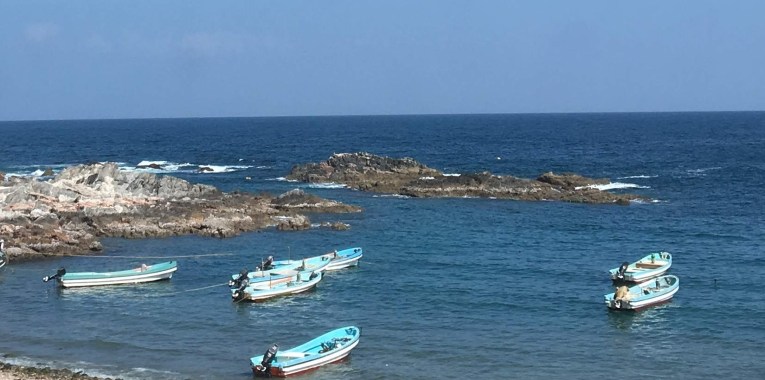
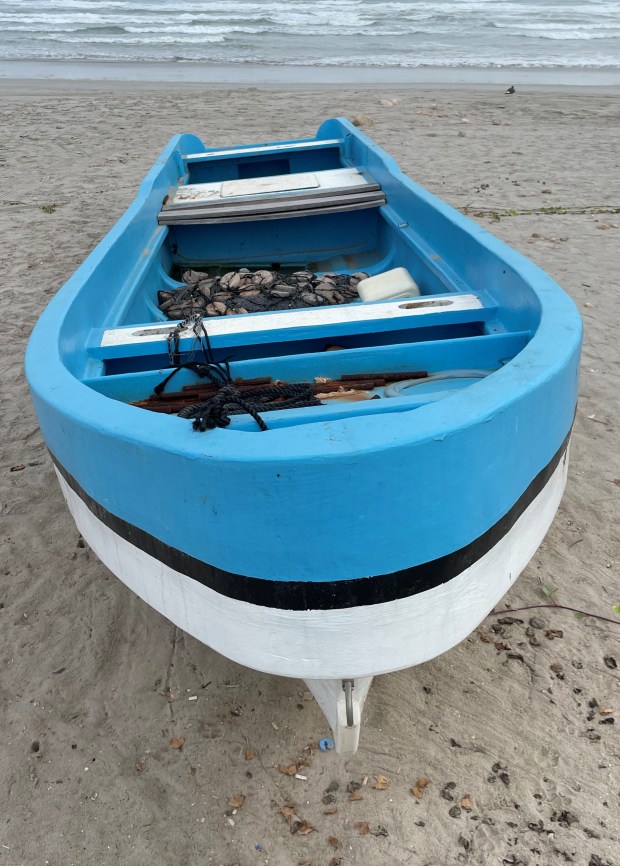
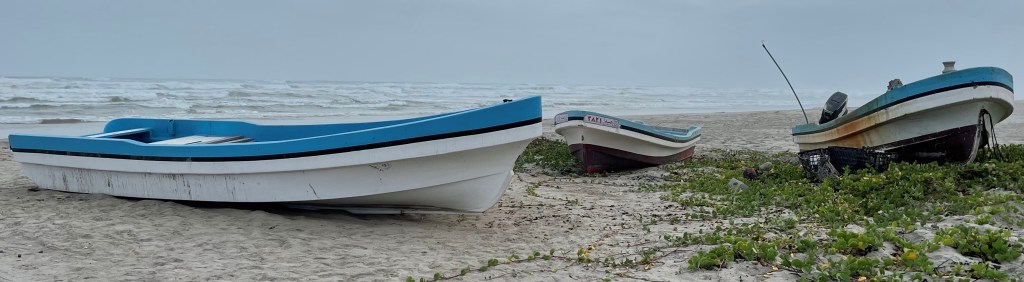
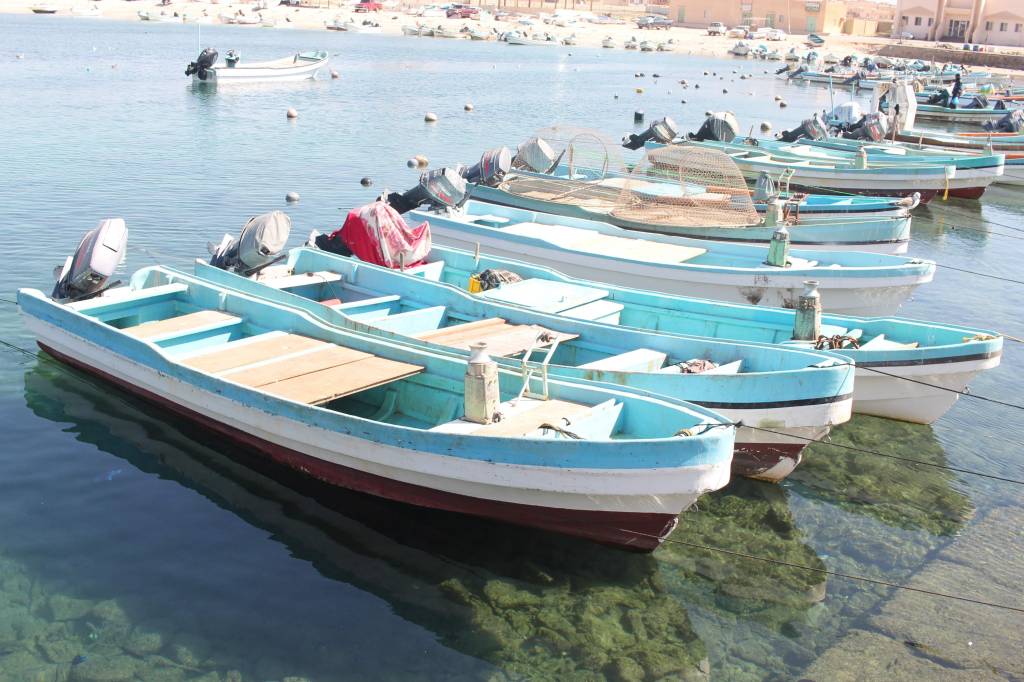
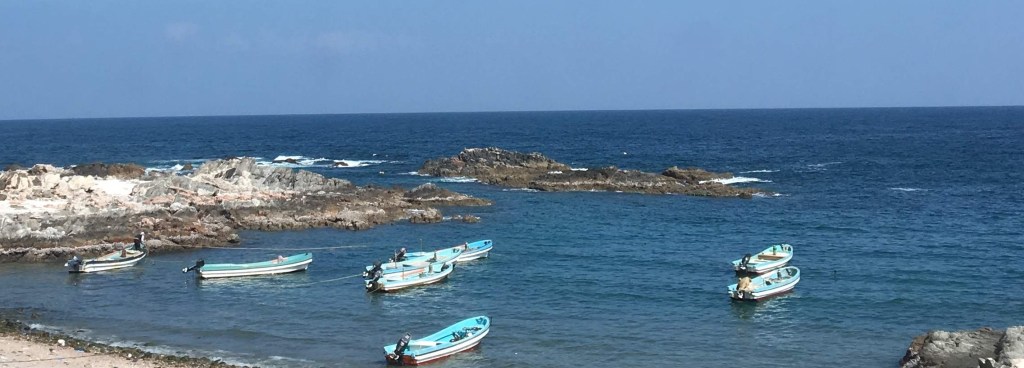
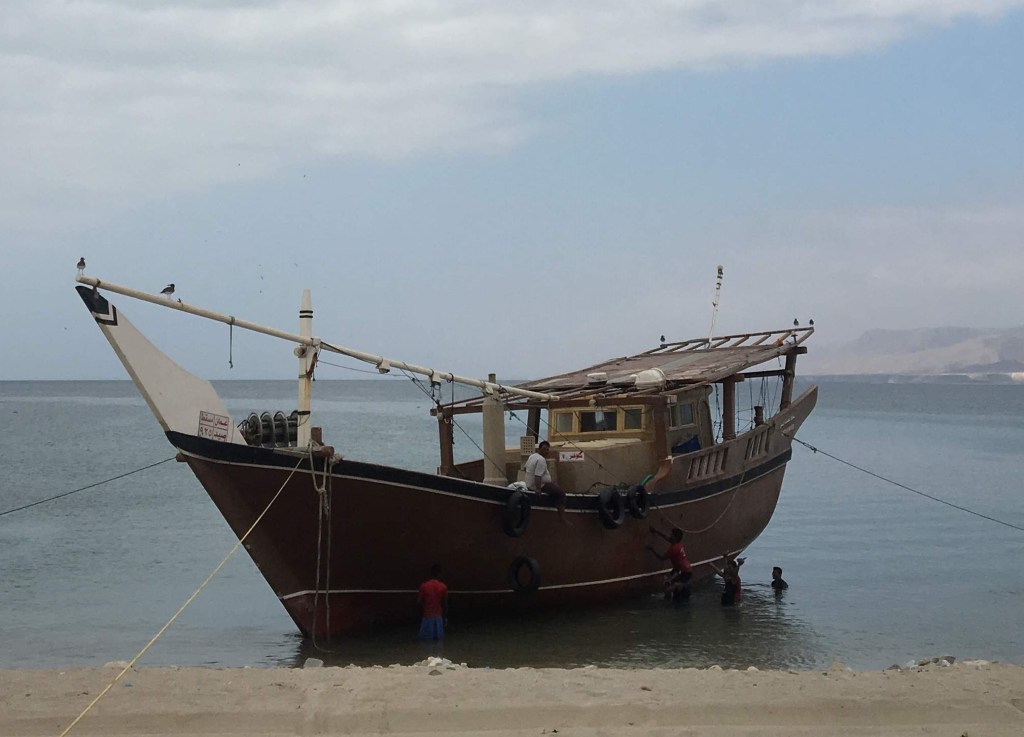
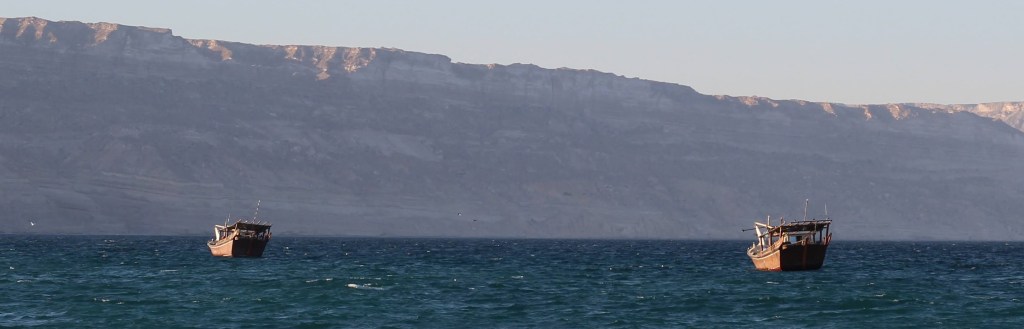
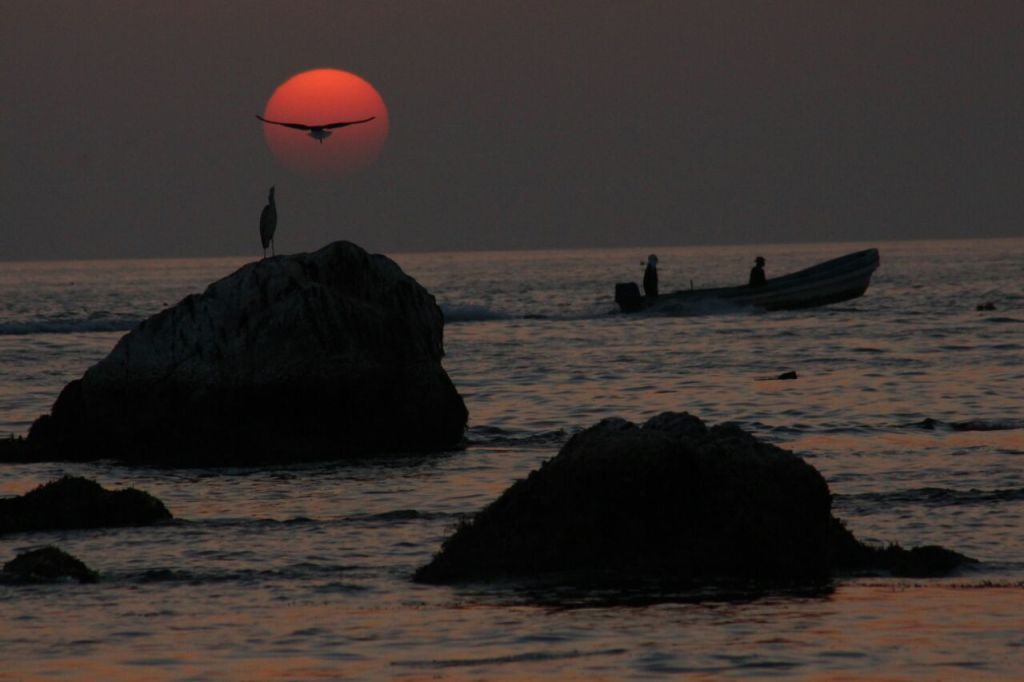
Below are a collection of photos to help document the types of boats used and the coastal areas. I am very grateful to Onaiza Shaikh, Hussein BaOmar, M. A. Al Awaid and S. B. for kindly giving me permission to use their photos to help illustrate cultural issues in Dhofar.

Fishing boats and dhows, photos by Onaiza Shaikh

Fishing boats and fish by Hussein BaOmar

Catching sardines and drying abalone by M. A. Al Awaid

Sardine catch and coastal areas by S. B

Related essays on fishing

Foodways: Researching Fishing Practices in Dhofar and Selected Bibliographies

Foodways: Fishing from or near the Shore – Sardines

Foodways: Fishing from or near the Shore – Boxes

Foodways: Catching Lobsters and Diving for Abalone

Foodways: Fish traps

Foodways: Data for my presentation “The Costs and Benefits of Fishing in Southern Oman,” ‘Fish as Food’ conference, International Comm. on the Anthro. of Food and Nutrition

Foodways: Data for my presentation “The Costs and Benefits of Fishing in Southern Oman,” ‘Fish as Food’ conference, International Comm. on the Anthro. of Food and Nutrition

“The Costs and Benefits of Fishing in Southern Oman,” Dr. M. Risse

Fish as Food: Lifestyle and a Sustainable Future, International Commission on the Anthropology of Food and Nutrition

hosted at the University of Liverpool, Sept 1-3, 2021, http://www.icaf2021.uk/

(photo by S. B.)

This post contains:

  • the abstract
  • data set discussed in the presentation
  • selected bibliography
  • list of seafood
  • list of related essays

Abstract

My presentation discusses two important questions about fishing economics: how much does it cost to catch fish and how does that expense create a social benefit for fishermen, regardless of the money earned from the catch? My research is based in Dhofar, the southern region of Oman, where I have been looking at the theme of generosity, including sharing food, for more than ten years. In this presentation I will explain how much a typical day and season of fishing costs a fisherman, as well as how giving away part of every catch creates a benefit that is more than monetary. Using interviews and personal experiences, I will explain how the cash outlay for gas, nets, bait, etc. is transformed into social, in addition to economic, capital for fishermen.

Data Set

To give an overview of the fishing industry from data collected by the Omani National Center for Statistics and Information (ONCSI), latest available yearly data is 2019, latest monthly data is April 2021:

  • renewed fishing licenses in Dhofar – 2,424 (33%, out of 7,266 for all of Oman)
  • new in Dhofar – 324 (20%, out of 1,607 for all of Oman)
  • renewed boat licenses in Dhofar – 998 (11%, out of 8,847 for all of Oman)
  • new boats in Dhofar – 57 (10%, out of 547 for all of Oman)
  • tons landed by traditional fishermen in Dhofar – 74,400 (14%, out of 550, 210 tons for all of Oman)

In other words, in 2019 in Dhofar 2,748 licensed fishermen using 1,055 boats caught 74,400 tons

Two other data points. First there is a wide seasonal variation because of the monsoon season: approximately 7,794 tons in October 2020 – 10,653 tons in December 2020 – 5,447 tons in February 2021

Secondly, at the last monthly data set available: April 2021: 8,401 tons were landed in Dhofar by traditional fishermen and the same month 1,392 tons landed by all commercial fishermen

information from the ONCSI at:

Selected References about Fish/ Fishing in Dhofar/ Oman (including cooking and historical texts)

In brief, there has been work done on the types of fish along the Omani coast (e.g. Al-Jufaili, Hermosa, Al-Shuaily and Al Mujaini 2010; Choudri, Baawain and Mustaque 2016, Harrison 1980; McKoy, Bagley, Gauthier and Devine 2009) and how fish are sold (e.g. Al-Marshudi and Kotagama 2006; Al Rashdi and Mclean 2014; William and Fidelity Lancaster 1995; “National Aquaculture Sector Overview-Oman” 2019; Omezzine 1998, Omezzine, Zaibet and Al-Oufi 1996; Siddeek, Fouda and Hermosa 1999).

Al-Hamad, Sarah. 2016. Cardamom and Lime: Flavors of the Arabian Gulf, the Cuisine of Saudi Arabia, Kuwait, Bahrain, Oman, Qatar and the U.A.E. Singapore: IMM Lifestyle Books.

Al-Jufaili, Saud, Greg Hermosa, Sulaiman S. Al-Shuaily and Amal Al Mujaini. 2010. “Oman Fish Biodiversity.” Journal of King Abdulaziz University 21.1: 3-51.

Al-Marshudi, Ahmed Salim and Hemesiri Kotagama. 2006. “Socio-Economic Structure and Performance of Traditional Fishermen in the Sultanate of Oman.” Marine Resource Economics 21: 221-30.

Al Maskiry, Fawziya Ali Khalifa. 2004. A Taste to Remember, 3rd edition. Muscat: Al Nahda Press

Al Rashdi, K. and E. Mclean. 2014. “Contribution of Small-Scale Fisheries to the Livelihoods of Omani Women: A Case Study of the Al Wusta Governorate.” Gender in Aquaculture and Fisheries: Navigating Change – Asian Fisheries Science Special Issue 27S: 135-149.

Campbell, Felicia. 2015. The Food of Oman: Recipes and Stories from the Gateway to Arabia. London: Andrew McMeel.

Carter, Henry. 1846. “The Ruins of El Balad.” Journal of the Royal Geographical Society of London 16: 187-99.

—. 1845. “Notes on the Gara Tribe.” Journal of the Bombay Branch of the Royal Asiatic Society: 195-201.

Choudri, B., Mahad Baawain, and Mustaque Ahmed. 2016. “An Overview of Coastal and Marine Resources and their Management in Sultanate of Oman.” Journal of Environmental Management and Tourism 7.1: 21-32.

Clements, Frank.  1977. “The Islands of Kuria Muria: A Civil Aid Project in the Sultanate of Oman Administered from Salalah, Regional Capital of Dhofar.” Bulletin (British Society for Middle Eastern Studies) 4.1: 37-39.

Cruttenden, Charles. 1838. “Journal of an Excursion from Morbat to Dyreez, the Principal Town of Dhofar.” Transactions of the Bombay Geographical Society 1: 184-88.

Ghazanfar, Shahina. 1998. “Status of the Flora and Plant Conservation in the Sultanate of Oman.” Biological Conservation 85: 287-295. 

Gilette, Maris. 2019. “Muslim Foodways,” in The Handbook of Food and Anthropology. Jakob Klein and James Watson, eds. London: Bloomsbury Academic. 48-73.

Haines, Stafford. 1939. “Memoir to Accompany a Chart of the South Coast of Arabia from the Entrance of the Red Sea to Misenat, in 50, 43, 25 E. Part I.” Journal of the Royal Geographical Society of London 9: 125-56.

—. 1845. “Memoir of the South and East Coasts of Arabia: Part II.” Journal of the Royal Geographical Society of London 15: 104-60.

Harrison, David. 1980. The Journal of Oman Studies: Special Report 2: The Oman Flora and Fauna Survey 1975. Muscat: Diwan of H. M. for Protocol.

Higgins, Andrew. 2011. With the S.A.S. and Other Animals: A Vet’s Experiences during the Dhofar War 1974. Barnsley: Pen and Sword Publishing.

Ibn al-Mujāwir. 2008. A Traveler in Thirteenth-Century Arabia: Ibn al-Mujāwir’s Tarikh al-Mustabir 19, Third Series, G. R. Smith, trans. London: Ashgate for the Hakluyt Society.

Ibn Battuta. 1929. Travels in Asia and Africa 1325-1354. H.A.R. Gibb, trans. London: Rutledge.

Janzen, Jorg. 2000. “The Destruction of Resources among the Mountain Nomads of Dhofar,” in The Transformation of Nomadic Society in the Arab East, University of Cambridge Oriental publications 58. Martha Mundy and Basim Musallam, eds. Cambridge: Cambridge University Press. 160-75.

—. 1986. Nomads in the Sultanate of Oman: Tradition and Development in Dhofar. London: Westview Press.

The Journal of Oman Studies: Special Report 2: The Oman Flora and Fauna Survey 1975. Muscat: Diwan of H. M. for Protocol.

Kanafani, Aida Sami. 1979. Aesthetics and Ritual in the United Arab Emirates. unpublished dissertation, University of Texas at Austin.

Lancaster, William and Fidelity Lancaster.  1995. “Nomadic Fishermen of Ja’alân, Oman.” Nomadic Peoples 36/37: 227-244.

McKoy, John, Neil Bagley, Stéphane Gauthier, and Jennifer Devine. 2009. Fish Resources Assessment Survey of the Arabian Sea Coast of Oman – Technical Report 1. Auckland: Bruce Shallard and Associates and the New Zealand National Institute of Water and Atmospheric Research.

Mendonca, Vanda, Barry Jupp, Musallam Al Jabri, Thuraya Al Sariri and Mohamed Al Muzaini. 2003. National Report on the State of the Marine Environment. Muscat: Ministry of Regional Municipalities, Environment & Water Resources, Marine Pollution and Coastal Zone Management Section.

Miller, Anthony, Miranda Morris, and Susanna Stuart-Smith.  1988. Plants of Dhofar, the Southern Region of Oman: Traditional, Economic, and Medicinal Uses. Muscat: Office of the Adviser for Conservation of the Environment, Diwan of Royal Court.

Mintz, Sidney.  1996. Tasting Food, Tasting Freedom: Excursions into Eating, Culture, and the Past. Boston: Beacon Press.

Mintz, Sidney, and Du Bois, Christine.  2002. “The Anthropology of Food and Eating.” Annual Review of Anthropology 31:99-119.

Morris, Jan. 2008/ 1957. Sultan in Oman. London: Eland.

Morris, Miranda. 1987. “Dhofar – What Made it Different’,” in Oman: Economic, Social and Strategic Development. B.R. Pridham, ed. London: Croom Helm. 51-78.

“National Aquaculture Sector Overview-Oman.”  2019.  Food and Agriculture Organization of the United Nations-Fisheries and Aquaculture Department. http://www.fao.org/fishery/countrysector/naso_oman/en

Omezzine, Abdallah.  1998. “On-shore Fresh Fish Markets in Oman.” Journal of International Food and Agribusiness Marketing 10.1: 53-69.

Omezzine, Abdallah, Lokman Zaibet and Hamad Al-Oufi.  1996. “The Marketing System of Fresh Fish Products on the Masirah Island in the Sultanate of Oman.” Marine Resources Economics 11: 203-210.

Patzelt, Annette. 2015. “Synopsis of the Flora and Vegetation of Oman, with Special Emphasis on Patterns of Plant Endemism.” Braunschweigische Wissenschaftliche Gesellschaft. 282-317. https://www.researchgate.net/publication/281240453_Synopsis_of_the_Flora_and_Vegetation of_Oman_with_Special_Emphasis_on_Patterns_of_Plant_Endemism

Sadeghin, Farideh.  2015, Oct. 27. “The Food of Oman is Too Good to Ignore: Recipe-testing a Middle Eastern Cookbook Gives our Test Kitchen Director a New Love for an Under-appreciated Cuisine.” Saveur. https://www.saveur.com/food-of-oman-cookbook-cuisine-felicia-campbell

Saunders, J. P. 1846. “A Short Memoir of the Proceedings of the Honorable Company’s Surveying Brig ‘Palinurus,’ during Her Late Examination of the Coast between Ras Morbat and Ras Seger, and between Ras Fartak and the Ruins of Mesinah.” Journal of the Royal Geographical Society of London 16: 169-86.

Serjeant, R. B. 1995. Farmers and Fishermen in Arabia: Studies in Customary Law and Practice. G. Rex Smith, ed. Aldershot, Variorum.

Siddeek, M., M. Fouda and G. Hermosa. 1999. “Demersal Fisheries of the Arabian Sea, the Gulf of Oman and the Arabian Gulf.” Estuarine, Coastal and Shelf Science 49.1: 87-97.

Tabook, Salim Bakhit. 1997. Tribal Practices and Folklore of Dhofar, Sultanate of Oman. Unpublished PhD thesis, Faculty of Arts, Exeter University.

Thesiger, Wilfred. 1991/ 1959. Arabian Sands. New York: Penguin.

Thomas, Bertram. 1932, reprint. Arabia Felix: Across the Empty Quarter of Arabia. London: Jonathan Cape.

Webster, Roger. 1991, October. “Notes on the Dialect and Way of Life of the Āl Wahība Bedouin of Oman.” Bulletin of the School of Oriental and African Studies 54.3: 473-485.

Wilkinson, J. C. 2013. Water & Tribal Settlement in South-East Arabia (Studies on Ibadism and Oman). New York: Georg Olms Verlag.

Yamani, Mai.  2000. You Are What You Cook” Cuisine and Class in Mecca in A Taste of Thyme: Culinary Cultures of the Middle East. Sami Zubaida and Richard Tapper, eds. New York: I.B. Tauris Publishers. 159-72.

topic – fish types

Al-Jufaili, Saud Greg Hermosa, Sulaiman S. Al-Shuaily and Amal Al Mujaini. 2010. “Oman Fish Biodiversity.” Journal of King Abdulaziz University 21.1: 3-51.

Choudri, B., Mahad Baawain, and Mustaque Ahmed. 2016. “An Overview of Coastal and Marine Resources and their Management in Sultanate of Oman.” Journal of Environmental Management and Tourism 7.1: 21-32.

Harrison, David. 1980. The Journal of Oman Studies: Special Report 2: The Oman Flora and Fauna Survey 1975. Muscat: Diwan of H. M. for Protocol.

The Journal of Oman Studies: Special Report 2: The Oman Flora and Fauna Survey 1975. Muscat: Diwan of H. M. for Protocol.

McKoy, John, Neil Bagley, Stéphane Gauthier, and Jennifer Devine. 2009. Fish Resources Assessment Survey of the Arabian Sea Coast of Oman – Technical Report 1. Auckland: Bruce Shallard and Associates and the New Zealand National Institute of Water and Atmospheric Research.

topic – catching fish

Al-Marshudi, Ahmed Salim and Hemesiri Kotagama. 2006. “Socio-Economic Structure and Performance of Traditional Fishermen in the Sultanate of Oman.” Marine Resource Economics 21: 221-30.

Al Rashdi, K. and E. Mclean. 2014. “Contribution of Small-Scale Fisheries to the Livelihoods of Omani Women: A Case Study of the Al Wusta Governorate.” Gender in Aquaculture and Fisheries: Navigating Change – Asian Fisheries Science Special Issue 27S: 135-149.

Lancaster, William and Fidelity Lancaster.  1995. “Nomadic Fishermen of Ja’alân, Oman.” Nomadic Peoples 36/37: 227-244.

Mendonca, Vanda, Barry Jupp, Musallam Al Jabri, Thuraya Al Sariri and Mohamed Al Muzaini. 2003. National Report on the State of the Marine Environment. Muscat: Ministry of Regional Municipalities, Environment & Water Resources, Marine Pollution and Coastal Zone Management Section.

“National Aquaculture Sector Overview-Oman.”  2019.  Food and Agriculture Organization of the United Nations-Fisheries and Aquaculture Department. http://www.fao.org/fishery/countrysector/naso_oman/en

Omezzine, Abdallah.  1998. “On-shore Fresh Fish Markets in Oman.” Journal of International Food and Agribusiness Marketing 10.1: 53-69.

Omezzine, Abdallah, Lokman Zaibet and Hamad Al-Oufi. 1996. “The Marketing System of Fresh Fish Products on the Masirah Island in the Sultanate of Oman.” Marine Resources Economics 11: 203-210.

Siddeek, M., M. Fouda and G. Hermosa. 1999. “Demersal Fisheries of the Arabian Sea, the Gulf of Oman and the Arabian Gulf.” Estuarine, Coastal and Shelf Science 49.1: 87-97.

List of seafood

This is a short list of types of seafood eaten in Dhofar. It is not comprehensive and rough translations are given in italics, A – Arabic, G – Gibali.

abalone – sufela, regulated season for a few weeks at the end of November/ December, depending on quantity, some years the season is canceled

amberjack – A shathruch, G shatrach

barracuda –  A akama/ G ‘eqmat (not perceived as dangerous for swimmers close to shore but possibly dangerous for men diving for abalone as fish is attracted to anything sparkling, might bite hand, for example, if person is wearing something silvery)

belt fish – G sasul

black tip trevally – A thumkeri (thum-ker-ri), G thumkiri (thum-kir-ri)

cuttlefish – A habaar, G tarbha, common, usually used for BBQ (not seen as delicacy)

farsh – A gazelle/ G batemeera (only caught with ‘live’ bait, e.g. cut sardines)

grouper –  andak/ andaka/ G. anthka (usually in deepwater @ 200 meters, comes closer to shore in khareef when it can be caught by line)

hagmam – A shatruck/ G shatraq (2rd or 3rd most expensive fish after kingfish, only caught in boxes)

hamour – G difn (2nd or 3rd most expensive fish after kingfish, caught in boxes or by live, usually favorite fish to eat

king fish – A kanud/ G tharnak (most expensive fish at 3 or 4 OR per kilo, caught by line and net, now protected by a winter ‘season’ [allowed to be caught and publicly sold only at certain times], fairly rare in Dhorfar because it prefers flat, sandy seabeds and Dhofar coast/ seabed is usually rocky except the straight, flat beach between Raysut and Taqa)

lobster – shaarkha, regulated season from March to end of the April

mahi-mahi – A anfluss, G bathubon (caught by line)

mussells – A zukka, G zikt (gathered by women at low-tide, often cooked with pasta, usually found along coast north of Salalah)

red mullet – A and G zajajee (only in deep water, caught in boxes)

red seabream – A  fraha/ G farhat (usually in deepwater @ 200 meters, comes closer to shore in khareef when it can be caught by line)

saafi – A seesan, G seedhob (used to be a very important fish for trading, was dried and shipped to other countries, still eaten but not dried and shipped, usually in 2 – 3m water)

salted fish – A marakh malah – salt and raw fish layered in a bucket, covered and kept for 1 to 4 weeks

sardines – freshly caught are served grilled; air-dried (usually on a beach) are used for animal fodder

sea catfish – A khann/ G gamm – least expensive kind of fish, often 200 or 300 baisa per kilo

shark – not often caught/ eaten, owaal – dried shark (sliced open, cleaned and, with skin still attached, the meat is sliced into thin sections, this is dried in the sun for 2 to 10 days, fewer days with lower humidity)

sheri – A shari/ G hamshk

squid – A habaar, G atharaya – usually caught only in khareef, and further north along the coast than Salalah – often 2-4 kilo, better tasting than cuttlefish

sultan Ibrahim – G. ali br dughun (caught in boxes, not by line)

tuna – unregulated season from the end of January/ beginning of February until end of May, best times are March and April, depending on ocean temperature

trevally – A/ G minaya

Related essays on fishing

Foodways: Researching Fishing Practices in Dhofar and Selected Bibliographies

Foodways: Fishing from or near the Shore – Sardines

Foodways: Fishing from or near the Shore – Boxes

Foodways: Catching Lobsters and Diving for Abalone

Foodways: Fish traps

Foodways: Photos for my presentation “The Costs and Benefits of Fishing in Southern Oman,” ‘Fish as Food’ conference, International Comm. on the Anthro. of Food and Nutrition
 

Houseways: Doorways – Design and Culture

In an earlier essay, I discussed how rooms were arranged: https://mariellerisse.com/2021/07/03/houseways-comparisons-types-of-rooms-and-sightlines/

This essay is one of three related pieces about the interplay between behavior and space: how certain behaviors create a need for a certain kind of space (entryways), how a certain kind of space creates the need for certain behaviors (talking in the salle) and the intermix of house design and behavior (front doorways).

Talking about front doors is, to me, a chicken-and-egg issue. Did behaviors help form door shapes or did door shapes help form behaviors? Impossible to tell.

Whatever the cause, most Dhofari houses have two front doors of differing sizes. The main door, leading to the main hallway, usually faces is the street and is both larger and more decorated than the door which leads to the majlis, which is often at a 90 degree angle to the main door and the street.

In Salalah, main doors of houses that are set-back from the street are often Palladian-style with an arched transom window and thin vertical windows with opaque glass on either side. They are also often wider than average to allow large furniture to be moved in and out. This usually means either one wide door or double doors in which the right-side door is used daily while the left is locked in place and only opened when more space is needed. There is never a post between the two doors as this would defeat the purpose of having a large open space. Screen doors are seldom, if ever, used.

The majlis door is usually the standard size [apx. 115 cm wide, 210 cm high] and, while it might have a transom window, there are usually not windows on either side. It might be a double door, but I have never seen one that was as wide or wider than the main door.

In terms of the connection between structures and behaviors, having wider doors at the main entrance makes sense as this is used by the people who live in the house and women who are visiting. And a Dhofari woman does not often go visiting by herself, she will bring children, sisters, her mother and/ or aunts along and when they arrive, they are greeted by the children who live in the house so that perhaps ten people are standing in/ near the doorway or just inside in the foyer.

Whereas it is more usual for a man to visit a house by himself, and even if a group of men approach the majlis door together there are, as one Dhofari friend says, “protocols” of how men should enter a building. Anyone who visits Dhofar will get used to the logjam/ shuffle that occurs when several men walk up to a doorway. Younger men will step to the side or backwards to show respect; older men will move aside to avoid acting as if they want to go ahead, sometimes gently pulling on the shoulder of another man’s dishdash to allow him the honor of going first. Sometimes the negotiations will take 15 seconds until one man is persuaded to enter, then there might be further parleys until it is decided who will go second. Dhofari men go through doorways one at a time after careful demonstrations of respect and good-will.

The same sequence does not usually occur with women. If four women approach a doorway at the same time, there will not be a delay in entering. Perhaps a young woman might let an older woman go first but for example, children might race ahead or tug their mother’s abayah to pull her forward or a younger woman might enter, then turn around to help an older woman over the threshold.

When leaving, the same dichotomy exists. Women leave together by the main door, unconcerned about who goes through the door first and, in any case, the door is usually wide enough to allow two or more to walk through at the same time. The doorway cluster can be the group of women who came together or, if a single woman came to visit, then the hostess, children and perhaps other women in the house will be near the door to say “goodbye.”

From the majlis, unrelated men leave singly, trying to time “goodbyes” so that one is not approaching the door at the same moment as another man which would necessitate at least a symbolic “after you – oh no, you first – please, I insist – I couldn’t, please go ahead” sort of exchange.

Men who are related or friends can leave in groups as the order of precedence (or lack thereof) is established and will not require gestures of politeness.

To explain this phenomenon another way, there is a general cultural understanding in Dhofar that the person standing on the right hand side of a doorway should enter first. But whereas men will actively try to maneuver themselves towards the left and another man towards the right, women will not attempt to change their position or the position of another woman as they approach a door.

I don’t know all the reasons for the why of this behavior. I think it is partly due to women not wanting to draw attention to themselves in public and wanting to get to an inside space as quickly as possible. Women are also often carrying or leading children and a crying baby or sleeping toddler who needs to be settled is of more importance than who walks in the door first. Also, as women’s faces are usually covered while men’s aren’t, a man stepping aside to let another man go first is publicly showing his good behavior.

From watching men’s behaviors in cafe and on picnics and women’s behavior in the salle, the same dichotomy exists in terms of seating: men actively try to give other men the ‘best seat’ (most central, closest to AC, most comfortable) while women sit where there is space closest to women they know. If there are no seats open in the salle, younger women and/ or women who live in the house will stand up to make place, but if the guest waves them down, there is not a protracted back and forth. Some older women prefer to sit on cushions on the floor and if a woman has settled herself, no one will try to force her to another place.

Anne Meneley, research on Yemen

(photo of Sarfait, close to the Dhofar border with Yemen, taken by M. A. Al Awaid)

I was so pleased that Anne Meneley came to the session on “Social Attitudes Toward Food and Eating” at the recent Just Food conference. It was her work on ‘food and morality’ that helped me start to think about the connections between food and ethical behavior in Dhofar. Although her research focus has moved beyond Yemen (see below) I would like to list four publications which have greatly helped me in understanding Southern Arabia.

Meneley, Anne. 2017. “The Zabidi House,” in Architectural Heritage of Yemen: Buildings that Fill my Eye. Trevor Marchand, ed. London: Gingko Library. 195–203.

—. 2011. “Food and Morality in Yemen,” in Food: Ethnographic Encounters. Leo Coleman, ed. New York: Berg. 17-29.

—. 2007. “Fashions and Fundamentalisms in Fin-De-Siecle Yemen: Chador Barbie and Islamic Socks.” Cultural Anthropology 22.2: 214–243.

—. 1996.  Tournaments of Value: Sociability and Hierarchy in a Yemeni Town. Toronto: University of Toronto Press, Re-released on the 10th and 20th anniversary of publication – https://www.goodreads.com/book/show/1436862.Tournaments_of_Value

Selected publications from her website:

https://www.trentu.ca/anthropology/faculty-research/anne-meneley

2020  Anthropology News, 29 June 2020 The Distance of a Hockey Stick, Pandemic Insights.

2020a Hope in the Ruins: Seeds, Plants, and Possibilities of Regeneration. Environment and Planning E: Nature and Space, online.

2020b The Olive and Imaginaries of the Mediterranean. History and Anthropology 31 (1):66-83.

2019 Walk This Way: Fitbit and Other Kinds of Walking in Palestine. Cultural Anthropology 34(1):130-154.

2018 Consumerism. Annual Review of Anthropology 47:117-32.

2017 The Zabidi House. Architectural Heritage of Yemen: Buildings that Fill My Eye. Ed. Trevor H.J. Marchand, pp. 194-203. London: Gingko Library.

2016 Checking Your Waistline at the Checkpoint: Dieting as a Peace Initiative. Jerusalem Quarterly 68:90-103.

2014a The Accidental Pilgrims: Olive Pickers in Palestine. Religion and Society: Advances in Research 5: 186-199.

2014b Resistance is Fertile! The Re-invention of Food: Connection and Mediation, Cristina Grasseni and Heather Paxson, guest editors. Special Edition of Gastronomica Vol. 14(4):70-79.

2014c The Qualities of Palestinian Olive Oil in Fat: Culture and Materiality, Christopher E. Forth and Alison Leitch, eds. pp. 17-31. New York: Bloomsbury.

2014d Discourses of Distinction in Contemporary Palestinian Extra-Virgin Olive Oil Production. Food and Foodways 22 (1-2): 48-64.

2014e Comment on Andrew Bevan’s “Mediterranean Containerism.” Current Anthropology 55 (4):408-409.

2011 Blood, Sweat and Tears in a Bottle of Palestinian Olive Oil.  Food, Culture and Society 14 (2): 275-290.

2011 Food and Morality in Yemen.  In Food: Ethnographic Encounters.  Editor, Leo Coleman.  New York: Berg. Pp. 17-29.

2008 Time in a Bottle: The Uneasy Circulation of Palestinian Olive Oil.  Middle East Research and Information Project (MERIP). Fall 248:18-23.

2007 Fashion and Fundamentalisms in Fin de Siècle Yemen: Chador Barbie and Islamic Socks. Cultural Anthropology 22:214-243.

2003 Scared Sick or Silly?  Social Analysis 47(2):21-39.   Also reprinted in Illness and Irony.  M. Lambek and P. Antze, eds. 2004  New York: Berghahn.

1999 Goods and Goodness. Social Analysis 43(3):69-88.

1999 Introduction to “The Structuring of Subjectivities in Material Worlds.”  Social Analysis 43(3):1-5.

1998 Analogies and Resonances in the Process of Ethnographic Understanding.  Ethnos 63:202-226.