One Year Away – Missing Oman

I left Salalah a year ago and am still processing that loss. I miss my friends and so many aspects of Dhofari life, especially:

  • Long conversations – When you sit down to talk to a friend in Oman, it’s expected you will talk for hours. I miss having coffee with a female friend for 2 or 3 hours; picnic dinners with the research guys which could mean 6 or 7 hours of chatting.
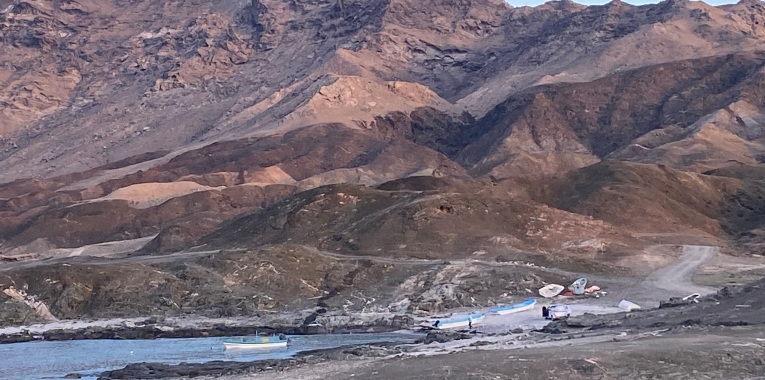
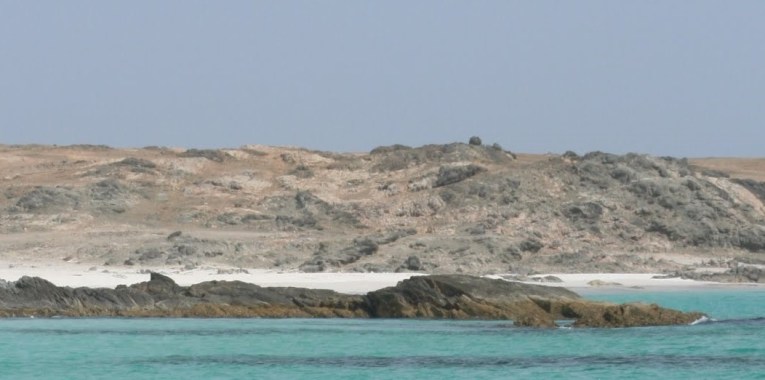
  • Gorgeous Nature – Pristine, empty beaches; snorkeling over reefs; boat rides, skimming along next to pods of leaping dolphins; sitting in the desert or on a beach with no ambient lights so you could a dark night sky full of stars; green mountains in the monsoon season
  • Animals – lizards and chameleons; seeing foxes, hearing wolves; the parrots which came to my guava tree; flamingos; camels, especially baby camels
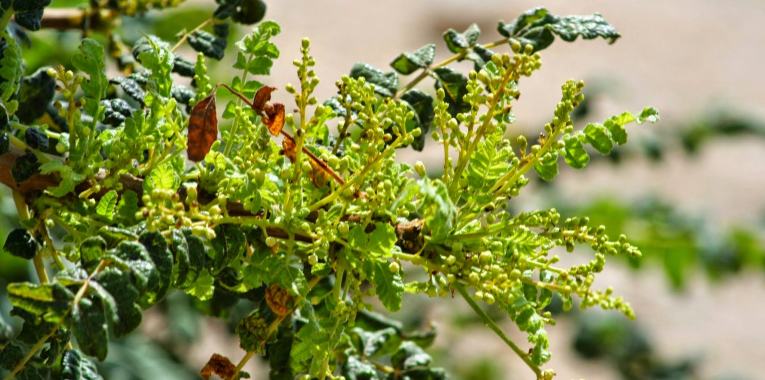
  • Plants – palm trees; banana trees; lemon trees; fig trees; my gardens with papaya trees, henna trees, neem trees, olive trees, hibiscus, bougainvillea, oleander, gardenia, jasmine, aloes, lemongrass, yellow trumpet flower
  • Food – fresh coconut milk, schwarmas, fresh Yemeni bread, lobsters cooked over coals, fresh fruit juice, Balbek (if you know, you know), fresh lemon and mint, fresh fish
  • Teaching literature and 98% of my students – Although it cost me $100s a year, it was fun buying and reading books as I searched for new poems and stories to teach. It was a joy to craft syllabi with texts from different time periods and cultures with similar characters, plots and/ or themes and then the best part, talking about these texts with students who had great insights and could make connections to other texts and their own lives. Some classes were an uphill climb but in some classes we laughed all semester.
  • Discussing religion – Everyone I knew believed in God and was up for talking about religious beliefs; I could say, “I will pray for you” and ask, “Will you pray for me?” as a part of ordinary conversations
  • Multi-cultural everythings – Walking through the grocery store and not knowing what I was looking at: new vegetables, new fruit, words I didn’t understand on jars; all different kinds of clothes and fabrics
  • Active ethnography – I was always watching, listening, trying to figure out what was going on: What was that word? Why did that person do that? It was exhausting but always interesting
  • Constantly learning – students were always teaching me new expressions and gestures; the research guys teaching me how to how to drive on sand (only getting stuck three times!), up steep inclines and over rocks
  • Language barriers – Being able to go through the day without understanding most of the conversations around me was relaxing; now I constantly overhear people venting when I walk home or sit in a café
  • My truck – Driving in Oman is so fun on flat desert roads, twisting mountain roads, roads that curve along the shoreline
  • Houses – High ceilings, archways, lots of counter-space in the kitchen, well-designed bathrooms

What’s nice about where I am

  • Being able to easily see/ talk to friends, my mom and family
  • Working with kind and competent people: no lying, no back-stabbing, no drama and every single person says “Hello”
  • Flower stores, especially Kendall Flower Shop, Brattle Square Florist and Petali
  • Breakfast sandwiches, pizza, salads and ice cream without freezer burn
  • Not sharing my apartment with mice, spiders, bees or armies of ants – quiet ACs

Outline and Chapter Abstracts for ‘Researching, Teaching and Working on the Arabian Peninsula: Creating Effective Interactions’

Practicalities of Moving to the Arabian Peninsula: Using the Arabic Language

Ethnography – Finding the Middle Ground, part 1 of Discussing Photographs

Returning to USA – Culture Shock essays

Reflections on Ethnographic Work: Being Safe and Secure

One aspect of talking to expats is that if I intimated that something they did might not be safe in my opinion, my advice often had to be negated by them pointing out my actions were unsafe, particularly me going camping with only Omani men. This makes me think of how to define “safe” in terms of my life in Oman. On one hand, I camped with men I had known for years and I had usually met members of their family: brothers, cousins, parents, wives and children. On the other hand, I frequently felt insecure and lost. I was constantly telling myself to trust them, trust the process and that, if nothing else, I was going to have a useful learning experience. “Useful,” not necessarily fun or easy.

One Wednesday night, I got phone call at 9pm. It was hard to hear with the sound of wind and waves in the background. A group of the research guys were camping at a beach far from town and they had decided I should come. I wrote out what they wanted me to bring (water, more water and wood), hung up and started prepping. I had to proctor an exam at 8am, which meant getting up, going to work, stopping at store on the way home while I was still in regular clothes, putting everything in the car, buying drive-through McDonalds for lunch, then lots of driving.  

I got to the beach around 4pm. We talked, then they decided that they would take me for a short boat ride. This was not “How are you feeling?,” “Would you like a boat ride?” or “What have you eaten today, as in what are the chances you will throw up if we go out in the boat?’ No, it was: “Now you will go in the boat.”

So, I changed into boat clothes and out we went. It was very nice; the sea was calm and it was lovely to see the shore and hills… but wait. We appeared to be stopping. They were maneuvering a large barrel full of fishing line with many 4 inch hooks imbedded in soft foam to the edge of the boat. Oh, it was a curtain met, a long, strong fishing line to which plastic laundry soap bottles are tied at intervals so it didn’t sink and every 6 feet of so, a short line going down with a hook which they baited with a sardine (like the “icicles” type of Christmas lights which have a long horizontal line with short verticals going down). 

Hooking sardines and tossing the line out took over an hour. The sun sank lower, it got colder, they didn’t let me help so I watched the ocean, shore and seabirds trying not to think about being cold. Then we drove off in the direction opposite camp. I wanted to say that I wanted to go back, but I stayed quiet. If we were driving over to the other side of the bay, they must have a reason.

As the guy who was steering the boat turned off the motor, I realized we were going to a stop next to a fish-trap buoy. He had driven to one of his “boxes” (fish traps) which was very close to shore, meaning it probably had lobsters and since they know I like lobsters, he was deliberately going to the box most likely to have them for my sake (they think lobsters are so-so and would much rather have fish). And, yes, the trap had 8 large lobsters but no fish.

We drove back to shore and moved our camp to up to the top of small headland with a small bay to one side and the large bay (about 2km across) on the other. There were no lights visible so the sky was full of stars. They made a dinner of white rice, a kind of chutney made from various cooked vegetables and lobster taken out of the shell and cooked directly on rocks heated by coals. 

As the rice was cooking, one of the guys took a small shark they had caught earlier in the day and prepped it for drying. He cut it open, took out the guts, then cut the meat into long, thin strips which are all attached to the back of the head so it looked sort of like an octopus (or a small alien from the movie Alien). This is tossed over a rope to dry in the sun for a few days, then eaten. I saw the man cutting the shark, but hadn’t realized he had had put it on a rope that was tied between my truck and their truck.

After dinner, I glanced over at my truck and saw something white, taller than a cat and odd-shaped underneath it. This thing was less than 10 feet away from me so I called the name of the guy who was sitting closest to me, about 6 feet away.

He did not respond, so I said his name again. He said, “fox.” I said fearfully, “that is not a fox” as I have never seen a fox come so close to humans and the thing seemed to be square-shaped. I heard him shift, then his phone light shone on exactly the place I was looking. It was a fox whose hair for some reason glowed white in the darkness and it was standing at an angle so I could see the side of its body and hindquarters, with its tail was wrapped around its body so it looked like a square.

The point of this story is that when I turned back around, I realized that I had been blocking his view. The research guy heard me say his name, saw me looking back towards my truck and said, “fox” without knowing why I was saying his name or what I was looking at. He had instantly put together from how my head was turned that I was looking at the area below where the drying shark meat was hung and the anxiety in my voice meant there was something I could not understand – so the answer had to be “fox.” When I said, “that is not a fox,” he moved over and picked up his phone to show me that, with no visual or sound cues, he knew what it was better than me, the person who was staring at the fox.

So sometimes I felt cold, confused, tired or worried and yet, at the same time, always secure.

Reflections on Ethnographic Work – Trying to Make Sense of Words and Actions

Two poems for courage: “Against Hesitation” by Charles Rafferty and “Thalassa” by Louis MacNeice

Presentation – “Windguru and Other Gurus: Fishing off the Coast of Dhofar, Oman”

Predator Anthropologists, Anthropologist Predators: Anthropological Metaphors in Popular Movies

photo by Hussein Baomar

Reflections on Ethnographic Research: Deciding to Hire Expat Workers (part 1 of 4)

Overview

By chance in the past few weeks I have read several articles about labor and migration on the Arabian Peninsula such as

  • Gardner, Andrew and Sharon Nagy. (2008). “Introduction: New Ethnographic Fieldwork Among Migrants, Residents and Citizens in the Arab States of the Gulf.” City and Society 20.1: 1-4.
  • Nagy, Sharon. (1998). “‘This Time I Think I’ll Try a Filipina’: Global and Local Influences on Relations Between Foreign Household Workers and Their Employers in Doha, Qatar.” City and Society 10: 83-103.
  • Sarmadi, Behzad. (2013). “‘Bachelor’ in the City: Urban Transformation and Matter Out of Place in Dubai.” Journal of Arabian Studies 3: 196-214.

There are lots of numbers, data sets, opinions and ideas in these texts – but no sense of what it’s like to interact with other expat workers. There is ethnographic work with and about them, but nothing about the writer’s personal economic exchanges: how to hire, discuss and pay wages, decide work load, etc. This isn’t a fault of the articles which have different objectives, but reading these texts made me reflect on my connections to other expat workers, how I manage them and how they manage me.

This essay will talk about my decision to hire help, later essays will talk in detail about some of the people who have worked for me and the types of adjustments that we both make. [The information about wages and dates are from monthly lists of expenses that I have kept since I moved to Dhofar. 1 Omani Riyal is about $2.40; there are 1000 baisa in one Riyal so the 500 baisa bill is worth about $1.20.]

***********

(photo by S. B.)

It is difficult to write about hiring people without sounding complacent, a point that was brought home when I read an ethnographic text about Western expats on the Arabian Peninsula who hired nannies and housekeepers. The author vilified the employers as spoiled, lazy, racist and delusional. The author had obviously never hired anyone to do work for them and had a healthy dislike of those who did.

Writing back against that attitude is not easy. I know I could do all the housework myself but I choose to hire someone to clean my house. This can be seen as indolent but I think it’s more helpful to situate one’s positionality when being critical. “I would never…” is very different than “I have never been in the position to…”.

My decision to hire help is predicated on several lifestyle differences such as how housing designs here allow bugs and sand to enter, the monsoon season and the size of houses.

When I visit my mom in the summer it always takes me a few days to tone down my bug vigilance. “MOM, CRUMBS!!!” I yell on the first morning when I walk into the kitchen and see evidence of sliced bread on the countertop. I quickly rinse the bread board, wipe down the bread knife and inspect the countertops for any speck of bread. Luckily, she has great tolerance for this and within a day or two I mellow out as I remember that a few crumbs on the counter sink will not induce hordes of critters to invade her kitchen.

When I get back to my own kitchen in Dhofar, I return to my watchful ways because I live in a cement block house where ants and cockroaches come out from cracks in the tiling and up from the sink and floor drains. They even crawl out though the electric outlet openings. Twice I have had mice scurry up to my first-floor apartment through the washing machine outtake pipe. There are lizards on the walls, bees flying in through the AC vents and spiders galore.

When I talk about the people I have hired to help me by cleaning my house, I know it can seem like I am lazy. I moved to the Middle East with bona fides of self-sufficiency. When I was a child, I had daily chores and once I lived on my own, I have doing all the cleaning myself. But life is different herein Oman.

For example, I have done my own laundry since I was in 6th grade and it’s simple: put everything in washing machine, then the dryer, fold and put away. But there are no dryers here and my top-loading washer has two bins. You put the clothes in the left-hand side bin, add soap, let it fill with water and turn the knob to agitate the water. Then you let the water drain and lift the sopping wet fabric up and place it in the right-hand bin which spins the water out. Then you hang everything on drying racks, wait for it all to dry, fold and put away. Going to a friend’s house and using her washer/dryer combo in the States makes me ask, “What do you do with all your spare time? Put your clothes in the machine, come back an hour later to find everything clean and dry? It’s a dream!”

Also, my friends’ houses are not in close proximity to deserts. “Sweeping the floor” means one thing in my mom’s house and something very different after a 3-day, 40 kph sandstorm in my Dhofari house where you can see daylight between the window frames and house walls. It’s a joy to sweep in my mom’s house; it takes about 5 minutes and you end up with a tiny pile to discard. After a sandstorm here I need to sweep the entire house and dust everything which takes hours. And there are usually more than 5 sandstorms every winter.

In addition, from June until the end of August, Dhofar has a monsoon season with drizzle and fog on most days. As this is also the time of annual vacation, if there is no one to clean the floors, turn fans on and off and keep watch, mold can grow. I brought a friend home from the airport when she returned to start the school year and when we walked into her living room, her sofas were coated with black mold. When I came back from vacation this summer and opened my car door, the front seats and dashboard cover were green with mold, there were even threads of mold hanging down from steering wheel.

When I lived in Madison, Boston, Minneapolis, and Grand Forks, I had a studio or one-bedroom apartment which was easy to take care of. In Salalah, apartment buildings are usually exclusively expat and I want to live in Omani neighborhoods, which means renting a small house or a floor of a house which are built for extended families. My “small” apartment has a salle, majlis, kitchen, 3 small bedrooms and 3 bathrooms. Friends who have rented houses with 4 or 5 bedrooms just shut the doors of the rooms they don’t use but I would rather hire someone to clean all the spaces.

A related point is that it’s better for me to have a slightly larger place to live as there are fewer “third spaces” here. In the month of Ramadan, for example, cafes are closed until after sunset. In the monsoon season, roads can be so crowded, it’s better to stay home. During Covid lockdowns and curfews I was really grateful I could turn the 3rd bedroom into a work space for on-line teaching. I also like that the woman who cleans my house has a key and can feed the cats if I am away for the weekend camping.

In addition to the calculations of spending time (washing clothes, sweeping, getting rid of mold) vs. spending money (paying someone to clean my house), there is the aspect of how easy it is to get help from someone who wants to work.

When I owned a car in the States, I would wash it now and then but here it is a government regulation that cars must be clean. So I could either spend ten minutes every morning wiping the sand off my truck or I hire someone to do it for me. In most parking lots of large stores, there are expat men who do this work for a small fee. Where I work, there are two men who come every morning to the covered parking area. You can pay them 500 baisa for each cleaning if you want it now and then or 10 Riyal for the month.

There are many such opportunities and I usually much hire and/ or tip everyone both because it makes my life easier and because I have been in need in my own life. I spent years without health insurance because I couldn’t afford it. I have always worked since I was in high school but I had to take out student loans for college. If my older brother had not kindly settled my student loans, it would have taken me at least a decade to pay them off. After the 1997 Red River flood, I ate Red Cross meals for weeks. Having received so much help in my life, I feel I need to be generous.

Every week, I give a money to the people who clean the building where I work and I tip the men who bag groceries. Although it’s not habitually done here, I always tip wait-staff and delivery men. When expat government employees are cutting weeds near my house, I hand out cash and bottles of water. If it’s safe to pull to the side of the road and I have cash in dashboard cubby hole, I give cash to the men who sweep streets. If I have time when there is a team of expat men gardening along the roadside near my house, I will buy cookies, as well as liters of water and soda, and hand them over.

Before I became an Associate Professor, I worked in sandwich shops, restaurants, libraries, a bookstore and an antique store and I can push my own grocery cart. But if I am walking in the parking lot of a grocery store and a man in the jumpsuit uniform of a cleaner walks towards me with his hands extended, I know he is asking to bring my cart to my car for a 1 Riyal tip. So I step away from my cart and let him push – a move that can be seen as being lazy/ exploitative or giving someone a chance to earn extra money.

Memories of Covid Khareefs (and a few gentle reminders for tourists)

Some images from past khareefs (monsoon season) and if I may say,

  • please put on your headlights because a grey, black or white car on grey road in fog = invisibility
  • it is usually not a great idea to pass a local driver at high speed (when I was driving this morning, I slowed down as I knew that there was a dip in the road ahead that collected water, a car from other country raced ahead of me at high speed, hit the puddle and slid across the road into the other lane)
  • I understand that kids like to hang out of car windows, but allowing them to do this while you are driving 120 kph… that’s hard for me to understand
  • please do not drive on grass in the mountains – it is the food for Dhofar’s camels, cows, goats and donkeys
  • and most importantly: the mountains are kinda permanent. They are not going to move, thank heavens. Also, the many beautiful places in Dhofar are not going to relocate anytime soon. Muqsal, Ittin, Ain Razat and many other lovely locations are waiting for you and they will not go anyplace else. Darbat has given me a special promise that Darbat will stay exactly where it is until you arrive. And we all want you to arrive safely, so there is no need for anyone to honk, tailgate, overtake on blind curves or cut off another car – other drivers and all of Dhofar’s wonderful wildlife, especially the cows who like to sleep on the roads, will thank you!

    This slideshow requires JavaScript.

New Research Pertaining to Dhofar

New book: Language and Ecology in Southern and Eastern Arabia,

https://www.bloomsbury.com/uk/language-and-ecology-in-southern-and-eastern-arabia-9781350184473/

*Table of Contents*
Introduction, Janet C.E. Watson (University of Leeds, UK), Jon Lovett (University of Leeds, UK) and Roberta Morano (University of Leeds, UK)
1. Language, Gesture and Ecology in Modern South Arabian Languages, Jack Wilson (University of Salford, UK), Janet C.E. Watson (University of Leeds, UK), Andrea Boom (University of Leeds, UK) and Saeed al-Qumairi (Hadhramawt University, Yemen)
Part I. Arabia: The Significance of Names
2. What’s in a Name? Miranda Morris (Independent Researcher)
3. When Water Shapes Words: Musandam’s Kumzari People and the Language of the Sea, Erik Anonby (Carleton University, Canada), AbdulQader Qasim Ali Al Kamzari (Sultanate of Oman) and Yousuf Ali Mohammed Al Kamzari (Ministry of Health, Oman)
4. Water and Culture Among the Modern South Arabian-Speaking People, Fabio Gasparini (Freie Universität Berlin, Germany) and Saeed al Mahri (Independent Researcher)
5. A Botanical and Etymological Approach to Plant Names in Southern Arabia, Shahina A. Ghazanfar (Kew Gardens, UK) and Leonid Kogan (National Research University, Russia)
6. Traditional Knowledge and Vocabulary around Weather and Astronomy in Qatar, Kaltham Al Ghanim (Qatar University, Qatar)
7. Plant and Animal Terms in ?a?rami Arabic Idiomatic Expressions, Proverbs, and Chants, Abdullah H. Al Saqqaf (Independent Researcher)
Part II. Arabia: Narratives and Ecology
8. The Language of Kumzari Folklore, Christina van der Wal Anonby (Carleton University, Canada)
9. Orature and Nature in Southern Arabia, Sam Liebhaber (Middlebury College, USA), Kamela al-Barami (University Leeds, UK), and Ahmed al-Mashikhi (Sultan Qaboos University, Oman)
10. Climatic Disasters and Stories of Resilience in Southern and Northern Oman, Suad Al-Manji (Ministry of Education, Oman) and Janet C.E. Watson (University of Leeds, UK)
Part III. Arabia: Conservation and Revitalisation
11. People’s (Non-)Participation in Conservation: A Case from Oman, Dawn Chatty (University of Oxford, UK)
Conclusion
Index

Editor: Janet Watson – https://ahc.leeds.ac.uk/languages/staff/151/janet-c-e-watson

https://ahc.leeds.ac.uk/centres-groups/doc/centre-endangered-languages-cultures-ecosystems-1

https://ahc.leeds.ac.uk/modern-south-arabian-languages

Articles by Kamala Russell

The surface of politesse: Acting murtāh in Dhofar, Oman.’ (2022) in Rethinking Politesse with Henri Bergson ed. Duranti, Allesandro. Oxford University Press.

‘Facing another: The attenuation of contact as space in Dhofar, Oman.” (2020) Signs in Society, 8(2): 290-318.

Bibliography of the Modern South Arabian languages compiled by Janet Watson and Miranda Morris, updated Jan. 2023

https://www.researchgate.net/publication/345983960_Bibliography_of_the_Modern_South_Arabian_languages_Compiled_by_Janet_Watson_and_Miranda_Morris

Foodways: Cultural Issues Pertaining to Litter

(photos by S. B.)

I recently heard a lecture by Dr. Sean Smith about Pro-Nature/ Anti-Litter Environmental Discourses in Oman which led me to reflect on cultural understandings relating to litter in Dhofar.

Three issues come to the forefront for me: hierarchies of need, time and the re-use of materials. It’s also important to think about creating research that opens up discussions about blame and the role of people hired to pick up trash.

First, I want to give a short example of how “litter” can be conceived in different contexts. Last summer, I was walking around Boston with a cup of coffee. When I had drunk as much as I wanted and decided to toss the cup, I realized that I felt compelled to put my leftover coffee into the ground. Putting a liquid into a trash can felt like “littering” to me.

I hadn’t known before how much I had internalized this aspect of Dhofari culture. If one is inside a building, liquids stay in the bottle/ can/ cup and get tossed away, but if one is outside, then you empty the liquid into the earth (or in the ocean if you are in a boat) before putting the container in the trashcan. This means less weight in trash bags and less chance of spilled liquids, but to me there is also an intangible sense that you should put liquids back into the earth. Sometimes there is a more prosaic reason; while camping, you pour leftover liquids onto a fire to stop the wood from burning so you can use the wood later or to leave useable wood for someone else.

So I stood on the Boston sidewalk and looked around for an area without cement to pour my coffee. I finally found a small piece of ground next to a tree but it was very dry and hard-packed; as I poured, some coffee splashed back up and stained the hem of my skirt, the rest flowed off the dirt and onto the sidewalk. Hmmm. A research moment indeed – I was used to pouring liquid into forgiving sand.

Below are some cultural understandings of litter/ waste in Dhofar.

Hierarchies of Need

1 – making recyclable trash convenient to take is more important than maintaining clean areas by dumpsters

If someone saw me put a bag of aluminum soda cans next to a dumpster, they might think I was being lazy but several years ago a company started to pay for empty/ used cans so expat workers started to collect them. To help in this effort (and to save people from the indignity of having to get into a dumpster) Dhofaris often put empty cans next to, not inside of, dumpsters. So I collect my soda cans in my kitchen and, when I have a bag-full, I set it close to the dumpster.

At picnic sites, Dhofaris often separate cans from other trash, sometimes leaving them in a small pile by dumpsters or leaving trash in closed (knotted) plastic bags with the aluminum cans in heap nearby.

Some people, including myself, do the same with cardboard boxes. Boxes are flattened and set near dumpsters either for people to take and sell to the recycling company, or for people to take, tear into pieces and feed to goats.

2 – leaving food in a way that is palatable for animals is more important that picking up all food containers

In general, Dhofaris try very hard not to waste food. On picnics, leftovers might be carefully packaged and given to other people (even strangers) who are sitting nearby or expat workers, such as gas station attendants. If people are sitting far from others and/ or will be returning home late, extra food is usually set out for animals.

If there are clean-swept, flat rocks nearby, the food is placed there. If not, the food is placed on a piece of plastic or in a flimsy metal container. Even members of my research group, who pick up every piece of litter before leaving, will leave the food container so that wild animals (foxes, stray cats and dogs, seagulls by beaches, etc.) will have “clean” food. To set food on sandy ground is seen as not just unkind but wasteful as the food will not be eaten.

3 – taking food in a way that makes it easy to give to other people (usually strangers) is more important than not having a single-use container

It is normal in some cultures to bring glass containers to restaurants, so that leftovers can be taken home without using additional packaging. But Dhofaris do not often eat “old” food, leftover food from restaurants is either left on the table or set into foil or plastic containers and put into a plastic or paper bag which is then handed over to an expat laborer.

Time

It took me awhile to understand that during a picnic or camping trip, litter has a time component. The men in my research group will toss bottles and cans behind them (away from the campfire) or towards periphery of the living area as we talk and eat. My attempts to stop this behavior was met with firm disapproval. “Let the people take their rest,” I was told.

At the end of the evening, when the men get up and start to put belongings into their cars, one or more of them (without discussion) will do clean-up duty, pouring liquids into the earth, putting all the trash into bags and setting aside aluminum cans. So now I do the same, flinging soda cans with abandon during dinner and assiduously picking up everything later.  

If a person came in the middle of dinner/ the camping trip and saw the mess at the outskirts of where we were sitting, they might do an internal condemnation such as I used to do. Yet, in over 17 years of picnics and camping, I have never seen any Dhofari leave litter at a picnic or camping site.

Reusing

From what I have seen, only two items (aluminum cans and cardboard boxes) are collected to be sold back to a recycling company, but two other items are put to new uses: glass containers with metal screw-tops and plastic laundry soap/ cleaning fluid jugs.

Both small and large glass containers are cleaned and reused. Small glass jars bottles (with the previous label removed) are used for storing bukhoor, small pieces of wood perfumed with aromatic oils.

Large glass bottles, such as Vimto bottles, are used for honey from local hives. That size container is a standard measurement and giving honey is a smaller container would be seen as being cheap.

The large plastic jugs for laundry soap/ cleaning fluid/ automobile oil are used by fishermen to mark their fish traps. The containers are large and brightly colored (thus, can be seen from a distance), cheap, sea-worthy, long-lasting and buoyant. Several are tired to a rope attached to a fish trap which is resting on the seabed. The colors of the jugs and the way they are tired are distinctive for each fisherman so he can easily find his own traps.

[This brings up a topic I will discuss in a later essay: replacing plastics means reflecting on all the ways that item is used. For example, banning plastic laundry soap jugs would cause hardship for fishermen. One alternative might be incorporating an environmentally practical alternative in conjunction with meeting the needs of the community, such as requiring stores to carry only biodegradable laundry soap pods sold in cardboard boxes and making free, colored buoys available to all fishermen.]

Importance of Multi-faceted Research – Issue of  Blaming Tourists

The presentation quoted someone who made fun of the “blame the tourist” excuse for litter on Omani beaches/ scenic places but I have never seen a Dhofari who owned or was related to someone who owned herd animals (camels, cows, goats) leave litter after a picnic or camping. Nor have I ever seen a fisherman toss anything plastic into the ocean as “it will stay too long time.” The people who live here and are connected to animal husbandry or fishing are aware that litter will kill animals/ hurt the environment that they count on for their livelihood.

Importance of Multi-faceted Research – Issue of Cleaners

The presentation also quoted someone who suggested that the government should stop paying for workers to clean the beaches as a way to teach people to pick up after themselves.

My take on this point of view is that there is no one alive who thinks littering is a good idea. People don’t litter because they are unaware that it’s wrong, they do it because they are lazy. If such are people are confronted with a beach full of trash, they will simply find another beach and destroy that one.

And given the prevalent “don’t interfere with other people” mentality in Oman, having people police each other is not going to work. [The one scenario that might be effective is if one or more older men talked to a group of young men, but that would require the older men arriving at exactly the right time, the ages to be clear (young men would not shame older men) and for there to be no women as in Dhofar, a man will not approach a group with women he doesn’t know unless there is an emergency.]  

In Dhofar, the men who clean beaches are incorporated into systems of giving. As I mentioned above, the men in my research group will always separate out empty aluminum cans for the cleaners to sell to the recycling company; half-empty jugs of water and extra containers of drinks will also be left. Also, if staying in a shelter, Dhofaris often leave extra foodstuffs, such as vegetables and fruit, tied up to the rafters of shelters for anyone to take.

Thus there is a mutually symbiotic relationship. The picnickers/ campers can leave their trash in an organized manner (in the dumpster or in tied plastic bags) so that they don’t need to carry it home and they can leave any leftover goods knowing that they will be used. Cleaners are paid for their work and are often able to take away foodstuffs that might be eaten or sold.

sb - beach 2

Cows

As I did a post on camels – Camels and Camel-Owners  – I have to give equal time to cows. If Dhofaris have herd animals, it is usually either camels OR cows, not often does a family have both. Although it is common to own goats either alone or with camels or cows. None of the three types of animals like to be in the same area at the same time. In khareef  (the monsoon season which is ending now), camels are taken out of areas which get rain as their flat feet can’t get traction on slippery ground.  Cows are usually kept indoors during the day because of the swarms of mosquitos. With the start of fall weather (sunny and dry), camels will soon be herded back to the regular grazing grounds in the mountains and cows will be let out during the day; but the two types of animals usually keep to separate areas. Goats are almost always let out of pens with a herder, who will steer them away from the larger animals. 


cows

a mountain cow pen (photo used with permission)


IMG_3577

mountains in khareef

cows in mountain

cows in khareef

cows on beach

cows on the beach

You Have Nothing to Fear from Sheep’s Eyes but Beware the Carrot Sweet: Researching Foodways in Southern Oman

During over a decade of picnics with men from southern Oman, I have never been offered the eyes, brain, tongue or tail of any animal. The cliché of guests being offered the ‘unloved’ parts of an animal doesn’t hold here in the Dhofar region. And it’s not that large platter of rice and meat that will cause you problems. Men will encourage you to eat, but if you gather up a few grains of rice in your hand and lift it towards your mouth, the host’s attention will move on.

If you are given a fish, you can turn the head away from you and start to eat from tail up, scattering by chance a few shreds of lettuce over the eyes. Then you declare yourself full before you need to deal with the stomach area, much less digging into the skull for the fish cheeks.

What you should fear is ladies’ parties with lots of very generous, caring, strong-arming women.

Men usually have dinner with friends on the beach or in a scenic place in the mountain. It’s dark, eating is done quickly and men come and go freely; there is little policing of who eats what. Although the cook might toss special pieces of meat or fish towards you, if you don’t want to eat them, simply leave them alone.

But women parties are usually indoors, with lots of light and everyone sits in their places for several hours so you are constantly under observation.

I love wedding parties because the air is full of beautiful perfumes and everyone is in gorgeous, comfortable, multi-color thobes (the loose, traditional Dhofari dress). And the food is delicious, but you cannot escape it. Either waitresses or relatives of the groom will bring around trays of drinks and sweets and everyone, not just the hostess, but all the other guests, will encourage you to partake.

You have had four cups of super-leaded, espresso-strength, cardamom-spiced Omani qahwa (coffee)? The generous women would like you to have a fifth cup! “You didn’t drink anything! Do you not like the coffee? Do you want tea! BRING TEA, SHE WANTS TEA!”  they call.

You protest but, alas, give up. The tsunami of kindness is coming for you. Take up the tea cup and drink. And as soon as you set down the cup, here come someone with juice, soda, instant coffee, chai ahmar (“red tea,” black tea with only sugar added), chai haleeb (“milk tea,” black tea with milk and sugar), or karak (loose tea with spices and milk).

Then come the sweets accompanied by women benevolently asking you to take another spoonful of halwa, the traditional Omani dessert. And like a swan-dive into a bowl of whipped cream, you submit to your fate: a small plate of carrot sweet, a bowl of crème caramel, a slice of cake, a bowl of ice cream, fruit salad, luqaymat/ loqeemat (sweet fried dough with a sugar syrup), basbousa, and wrapped chocolates.

And now, just as you give up any thought of ever moving again, dinner is served. A generous woman hands you a plate heaped high with a selection of appetizers (hummus, fattoush, baba ghanoush, etc., with pita bread) and qabooli (a dish with spices, rice and meat). Then, of course, dessert is served.

There have been weekends in which I have inhabited both worlds. One night was spent wearing loose cotton trousers and a tunic top with a plain blue headscarf and sitting on a plastic mat on a beach out of sight from any man-made lights. Dinner was fresh-caught fish cooked over a fire. The men in my research group and I ate with our hands, drank Dew, looked at the stars, listened to the sea and talked until 1am. The next night I wore a decorated velvet thobe with full make-up, my meager supply of gold jewelry and a lot of duty-free perfume, in a room full of air-conditioning, bright lights, and delightful women who wanted to stuff me until I burst.

Omani people are very open-hearted and open-handed and doing research on foodways is a lot of fun, but it is not for the meek or the small of stomach.