Musing

Conference presentation on fishing off the coast of Dhofar, Oman

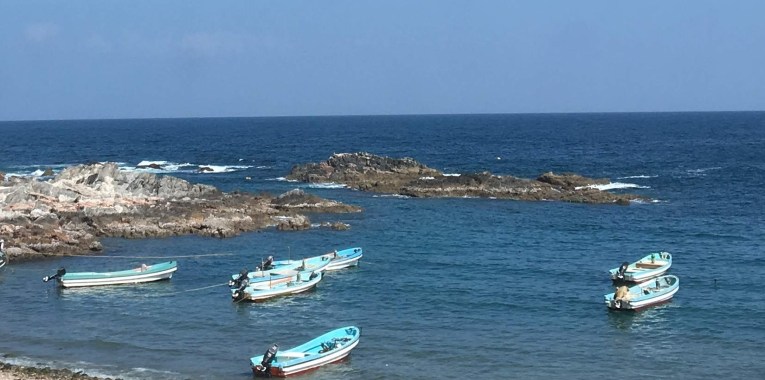
I am happy to announce that I will be presenting “Windguru and Other Gurus: Fishing off the Coast of Dhofar, Oman” for the Navigating the Transcultural Indian Ocean: Texts and Practices in Contact Conference, sponsored by the Rutter Project, June 5, 2024.

Research on Fishing in Dhofar

Foodways: Researching Fishing Practices in Dhofar and Selected Bibliographies

– طرق الطعام : بحث في ممارسات الصيد في ظفار وببليوجرافيات مختارة – Foodways: Researching Fishing Practices in Dhofar (in Arabic) and Selected Bibliographies

Recent publications on important archeological sites in the Dhofar region, updated April 10, 2024

Aston, Warren. 2022. “Mysteries in Stone: The Enigmatic Minjui – Potential Traces of a Forgotten Dynasty in Dhofar.” Popular Archaeology. 1-17. https://popular-archaeology.com/article/mysteries-in-stone/

Degli Esposti, Michele. 2022. “Khor Kharfut (Dhofar). A Reassessment of the Archaeological Remains.” Archeologie tra Oriente e Occidente (CISA) 1: 15-34. http://www.serena.unina.it/index.php/cssaunior/article/view/9559

Ghidoni, Alessandro and Alexia Pavan. 2022. “Boats, Horses, and Moorings: Maritime Activities at al-Balīd in the Medieval Period.” Proceedings of the Seminar for Arabian Studies Volume 51: 169-82. https://archaeopresspublishing.com/ojs/index.php/PSAS/article/view/599

Giunta, Roberta and Alexia Pavan. 2022. “First Archaeological Activities by the University of Naples L’Orientale in Dhofar, Sultanate of Oman.” Archeologie tra Oriente e Occidente 1: 1-10. https://doi.org/10.6093/archeologie/9712

Lischi, Silvia. 2023. “A First Definition of the Dhofar Coastal Culture Archaeological Exploration on the Inqitat Promontory in the Khor Rori Area (Dhofar, Sultanate of Oman).” Ancient Civilizations and Cultural Resources 1: 23-38. https://www.academia.edu/104462977/A_First_Definition_of_the_Dhofar_Coastal_Culture_Archaeological_Exploration_on_the_Inqitat_Promontory_in_the_Khor_Rori_Area_Dhofar_Sultanate_of_Oman

Pavan, Alexia. 2024. “After the Fall of the Caravan Kingdoms: Notes about the Occupation of Sumhuram and the Area of ​​Khor Rori (Oman) from the Fifth Century AD to the Islamic Period.” Études et Travaux 36: 111–31. https://doi.org/10.12775/EtudTrav.36.006

—. 2020. “The Port of Al Baleed (southern Oman), the Trade in Frankincense and its Coveted Treasures.” Polish Archaeology in the Mediterranean 29.1: 249-65.  https://doi.org/10.31338/uw.2083-537X.pam29.1.13.

Pavan, Alexia, Agnese Fusaro, Chiara Visconti, Alessandro Ghidoni, and Arturo Annucci. 2020. “New Researches at The Port of Al Balid and Its Castle (Husn): Interim Report (2016-2018).” The Journal of Oman Studies 21: 172-99.

Rose, Jeffrey. 2023. “Conclusion: Progress Report on the State of Palaeolithic Research in Arabia.” Paléorient: Revue pluridisciplinaire de préhistoire et de protohistoire de l’Asie du Sud-Ouest et de l’Asie centrale 49.1: 155-60.

Two poems for courage: “Against Hesitation” by Charles Rafferty and “Thalassa” by Louis MacNeice

“Against Hesitation,” by Charles Rafferty

If you stare at it long enough

the mountain becomes unclimbable.

Tally it up. How much time have you spent

waiting for the soup to cool?

Icicles hang from January gutters

only as long as they can. Fingers pause

above piano keys for the chord

that will not form. Slam them down

I say. Make music of what you can.

Some people stop at the wrong corner

and waste a dozen years hoping

for directions. I can’t be them.

Tell every girl I’ve ever known

I’m coming to break her door down,

that my teeth will clench

the simple flower I only knew

not to give … Ah, how long did I stand

beneath the eaves believing the storm

would stop? It never did.

And there is lightning in me still

“Thalassa,” Louis MacNeice

Run out the boat, my broken comrades;

Let the old seaweed crack, the surge

Burgeon oblivious of the last

Embarkation of feckless men,

Let every adverse force converge–

Here we must needs embark again.

Run up the sail, my heartsick comrades;

Let each horizon tilt and lurch–

You know the worst: your wills are fickle,

Your values blurred, your hearts impure

And your past life a ruined church–

But let your poison be your cure.

Put out to sea, ignoble comrades,

Whose record shall be noble yet;

Butting through scarps of moving marble

The narwhal dares us to be free;

By a high star our course is set,

Our end is Life. Put out to sea.

My Job

Reflections on Ethnographic Research in Dhofar Oman

A good poem for hard times – “Atlas” by U. A. Fanthorpe

Antigone and Ismene – Making Difficult Choices

Two poems about nature and rest: “The Peace of Wild Things” by Wendell Berry and “Sleeping in The Forest,” Mary Oliver

Two poems about nature and rest: “The Peace of Wild Things” by Wendell Berry and “Sleeping in The Forest,” Mary Oliver

“Sleeping in The Forest,” Mary Oliver

I thought the earth remembered me,

she took me back so tenderly,

arranging her dark skirts, her pockets

full of lichens and seeds.

I slept as never before, a stone on the river bed,

nothing between me and the white fire of the stars

but my thoughts, and they floated light as moths

among the branches of the perfect trees.

All night I heard the small kingdoms

breathing around me, the insects,

and the birds who do their work in the darkness.

All night I rose and fell, as if in water,

grappling with a luminous doom. By morning

I had vanished at least a dozen times

into something better.

“The Peace of Wild Things,” Wendell Berry

When despair for the world grows in me

and I wake in the night at the least sound

in fear of what my life and my children’s lives may be,

I go and lie down where the wood drake

rests in his beauty on the water, and the great heron feeds.

I come into the peace of wild things

who do not tax their lives with forethought

of grief. I come into the presence of still water.

And I feel above me the day-blind stars

waiting with their light. For a time

I rest in the grace of the world, and am free

Reflections/ Research on Teaching Cultural Studies and Literature

Selected Bibliography: Primary and Secondary Texts for Literature Teachers on the Arabian Peninsula

Suggestions for Literature Teachers in the Middle East

Two poems for spring: “Dear March – Come in” by Emily Dickinson and “March” by Goethe

“March,” Goethe


Look, it’s snowed for hours,

The time is not yet right,

For all the little flowers,

For all the little flowers,

To fill our hearts with light.

The sunlight is deceiving,

Mild but false it shone,

Even the swallow’s cheating,

Even the swallow’s cheating,

Why? He comes alone!

Alone, could I be happy

Even though spring is near?

But if you were with me,

But if you were with me,

Suddenly summer’s there.

“Dear March – Come in,” Emily Dickinson

Dear March – Come in –

How glad I am –

I hoped for you before –

Put down your Hat –

You must have walked –

How out of Breath you are –

Dear March, how are you, and the Rest –

Did you leave Nature well –

Oh March, Come right upstairs with me –

I have so much to tell –

I got your Letter, and the Birds –

The Maples never knew that you were coming –

I declare – how Red their Faces grew –

But March, forgive me –

And all those Hills you left for me to Hue –

There was no Purple suitable –

You took it all with you –

Who knocks? That April –

Lock the Door –

A good poem for hard times – “Atlas” by U. A. Fanthorpe

Foodways and Literature – Animal Poems

Foodways and Literature – Food Stories and Poems

Literature and Ethnography

A good poem for hard times – “Atlas” by U. A. Fanthorpe

“Atlas,” by U. A. Fanthorpe, from Safe as Houses


[Atlas is the Greek God who holds up the sky]


There is a kind of love called maintenance

Which stores the WD40 and knows when to use it;


Which checks the insurance, and doesn’t forget

The milkman; which remembers to plant bulbs;


Which answers letters; which knows the way

The money goes; which deals with dentists


And Road Fund Tax and meeting trains,

And postcards to the lonely; which upholds


The permanently rickety elaborate

Structures of living, which is Atlas.


And maintenance is the sensible side of love,

Which knows what time and weather are doing

To my brickwork; insulates my faulty wiring;

Laughs at my dry rotten jokes; remembers

My need for gloss and grouting; which keeps

My suspect edifice upright in air,

As Atlas did the sky.


“The Function of Poetry” by Billy Collins

Reflections/ Research on Teaching Cultural Studies and Literature

Teaching Literature and Staying au courant – The Man from Nowhere and the Ancient Greeks

Using Cultural Understandings to Improve Teaching, part 1


U.A. Fanthorpe

https://www.poetryfoundation.org/poets/ua-fanthorpe

U A Fanthorpe

Antigone and Ismene – Making Difficult Choices

This is a wonderful article:

https://www.washingtonpost.com/opinions/2024/01/15/hong-kong-security-law-chow-hang-tung-jailed/

I have taught Antigone many times. The first was almost by chance. I needed a Greek play and didn’t want to do Oedipus, so I picked up Antigone and was amazed by how powerful the play was. I had forgotten its strength and, importantly for a literature professor, how it balances out everyone’s POV. There is something to be said about each person’s argument. Teaching it was a joy. All the students had an opinion about what should happen and were happy to engage with the characters and plot. I ended up writing some essays and doing some presentations about using Greek plays on the Arabian Peninsula but what was most interesting about Antigone was that students did not judge Ismene harshly.

Gan’s article sets up a dichotomy with Antigone as the brave/ correct one and Ismene as the sister who must be forgiven. My students did not not make that division – each sister was doing what she felt was right. Most agreed that Antigone was correct to bury her brother against the laws of the state, but that did not necessarily mean that Ismene was behaving badly. I found that quality of acceptance very heartening.

Articles:

“Using Cultural Understandings to Improve Teaching in Oman,” in Unpackaging Theory and Practice in Educational Sciences. Abdülkadir Kabadayı, ed. Lyon: Livre de Lyon. 2023: 129-141.  https://www.livredelyon.com/educational-sciences/unpackaging-theory-practice-in-educational-sciences_595.

“Teaching Paired Middle Eastern and Western Literary Texts,” in Advancing English Language Education. Wafa Zoghbor and Thomaï Alexiou, eds. Dubai: Zayed University Press, 2020: 221-223.

“Teaching Literature on the Arabian Peninsula,” Anthropology News website, October 7 2019. http://www.anthropology-news.org/index.php/2019/10/07/teaching-literature-on-the-arabian-peninsula/

“Writing Prompts to Facilitate Creativity and Interesting Texts,” Proceedings of the 15th Oman International ELT Conferences. Muscat: Sultan Qaboos University Press, 2016: 46-52.

“Selecting the Right Literary Texts for Middle Eastern Students: Challenges and Reactions,” in Focusing on EFL Reading: Theory and Practice. Rahma Al-Mahrooqi, ed. Muscat: Sultan Qaboos University Press, 2014: 165-188.

“Who Are You Calling ‘Coddled’?: ‘Cloistered Virtue’ and Choosing Literary Texts in a Middle Eastern University,” Pedagogy 13.3, 2013: 415-427.

“Do You know a Creon?: Making Literature Relevant in an Omani University,” in Literature Teaching in EFL/ESL: New Perspectives. Rahma Al-Mahrooqi, ed. Muscat: Sultan Qaboos University Press, 2012: 302-314.

Selected Fiction (Novels and Short Stories) – Arabian Peninsula

A history-focused Whatsapp group I belong to recently had a discussion which elicited numerous suggestions about fictional works set on the Arabian Peninsula. I am including the works mentioned below along with some texts I have taught in my literature classes and/ or used for my research.

Anthologies

Akers, Deborah and Abubaker Bagader, eds. and trans. 2008. Oranges in the Sun: Short Stories from the Arabian Gulf. London: Lynne Rienner.

Jayyusi, Salma Khadra, ed. 1988. The Literature of Modern Arabia: An Anthology. London: Kegan Paul International.

Michalak-Pikulska, Barbara. 2016. Modern Literature of the Gulf. Bern: Peter Lang GmbH.

Pedagogy

Heble, Ayesha. 2007. “Teaching Literature On-line to Arab students: Using Technology to Overcome Cultural Restrictions.” Arts and Humanities in Higher Education 6.2: 219-226.

Michalak-Pikulska, Barbara. 2006. “The Mosaic of Quotations and the Labyrinth of Interpretations: The Problems of Intertextuality in the Modern Literature of the Gulf.” Intertextuality in Modern Arabic Literature since 1967. 187-200.

Ramsey, Gail. 2006. “The Past in the Present: Aspects of Intertextuality in Modern Literature in the Gulf.” Intertextuality in Modern Arabic Literature since 1967. 161-86.

—. 2004. “Confining the Guest Labourers to the Realm of the Subaltern in Modern Literature from the Gulf. Orientalia Succana, 53: 133-42.

Webb, Allen. 2012. Teaching the Literature of Today’s Middle East. London: Routledg

Short stories/ novels

‘Abd al-Majd / Abde Meguid, Ibrahim. The Other Place.

Algosaibi, Ghazi. An Apartment Called Freedom.

Alshammari, Shahd. Notes on the Flesh.

Wilson, G. Willow. 2012. Alif the Unseen. New York, Grove Press.

Oman

Al-Farsi, Abdulaziz. 2013. Earth Weeps, Saturn Laughs: A Modern Omani Novel. Trans. Nancy Roberts. Cairo: American University of Cairo Press.

Al-Harthi, Jokha. Celestial Bodies

Hamed, Huda. I Saw Her in my Dreams.

Michalak-Pikulska, Barbara. 2002. Modern Poetry and Prose of Oman. Krakow: The Enigma Press.

UAE

Al‑Murr, M. 1998. “The Wink of the Mona Lisa” and Other Stories from the Gulf. J. Briggs, trans. Dubai: United Arab Emirates: Motivate Publishing.

—. 2008. Dubai Tales. P. Clark and J. Briggs, trans. Dubai: Motivate Publishing.

Al-Suwaidi, Thani. The Diesel.

Johnson-Davies, Denys, ed. 2009. In a Fertile Desert: Modern Writing from the United Arab Emirates. Cairo: The American University in Cairo Press.

Krishnadas. 2007. Dubai Puzha.

Michalak-Pikulska, Barbara. 2012. Modern Literature of the United Arab Emirates. Krakow: Jagiellonian University Press.

Unnikrishnan, Deepak. Temporary People.

Kuwait

Abulhawa, Susan. 2020. Against the Loveless World.

Al-Nakib, Mai. 2022. An Unlasting Home.

Alsanousi, Saud. The Bamboo Stalk.

Saudi

Aima, Rahel. Moon Rose – short story https://www.eflux.com/architecture/cascades/400332/moon-rose/

Al-Khamis, Omaima Abdullah. Al-Bahriyat.

al-Sanea, Rajaa. Girls of Riyadh.

Alireza, Marianne. 2002. At the Drop of a Veil.

Alwan, Mohammed. 1988. “Love and Rain” in The Literature of Modern Arabia: An Anthology. Ed. Salma Khadra Jayyusi. London: Kegan Paul International. 302-306.

Benyamin. Goat Days.

Ferraris, Zoe. Finding Noof. 2008. New York: Little Brown, 2012. (also Kingdom of Strangers and City of Veils)

Munif, Abdul Rahman. Cities of Salt.

Yemen

‘Abd al-Wali, Mohammad. They Die Strangers.

Ba-Amer, Salih. 1988. “Dancing by the Light of the Moon,” in The Literature of Modern Arabia: An Anthology. S. K. Jayyusi, ed. London: Kegan Paul International. 318-22.

Bajaber, Khadija Abdalla. 2021. House of Rust.

Dammaj, Zayd Mutee’. The Hostage.

Hunter, Barry Stewart Hunter. 2017. Aden.

Fairy/ Folk Tales

Al Taie, Hatim and Joan Pickersgill. 2008. Omani Folk Tales. Muscat, Oman: Al Roya Press and Publishing House.

Al Thahab, Khadija bint Alawi. 2012. Stories of My Grandmother. [Dhofari] Trans. W. Scott Chahanovich. Washington, D.C:  Sultan Qaboos Cultural Center.

ElMahi, Ali Tigani and Ahmed Mohamed al Khatheri. 2015. “A Folk Story from Dhofar: A Pathway to Indigenous Knowledge.” Journal of Arts and Social Sciences 6.2: 5-12. DOI:10.24200/jass.vol6iss2

Hamad, Abdulsalam. Omani Folk Tales. 2006. Seeb: Al-Dhamri Bookshop.

Johnstone, T.M. 1974. “Folklore and Folk Literature in Oman and Socotra.” Arabian Studies 1: 7-24.

Johnstone, T.M. 1978. “A St. George of Dhofar.” Arabian Studies 4: 59-65.

Johnstone, T. M. 1983.“Folk-Tales and Folk-lore of Dhofar.” Journal of Oman Studies 6.1: 123-127.

Mershen, Birgit. 2004. “Ibn Muqaarab and Naynuh: A Folk-tale from Tiwi.” Journal of Oman Studies 13: 91-97.

Paine, Patty, Jesse Ulmer and Michael Hersrud, eds. 2013. The Donkey Lady and Other Tales from the Arabian Gulf.  Highclere, Berkshire: Berkshire Academic Press.

Todino-Gonguet, Grace. 2008. Halimah and the Snake, and other Omani Folk Tales. London: Stacey International.

Also of interest

The Saif Ghobash Banipal Prize for Arabic Literary Translation [https://www.banipaltrust.org.uk/prize/ ]

Banipal Magazine [ https://www.banipal.co.uk/ ] which has special issues on specific countries, for example: Yemen [ https://www.banipal.co.uk/back_issues/73/issue-36/ ]

Literature and Ethnography

Teaching Literature and Staying au courant – The Man from Nowhere and the Ancient Greeks

Reflections/ Research on Teaching Cultural Studies and Literature

Foodways and Literature – Food Stories and Poems

Foodways and Literature – Animal Poems

Reflections on Ethnographic Work – Trying to Make Sense of Words and Actions

I recently asked one class what “lullaby” meant and one answer I heard was “candy.” I like those moments when I can make sense of where the distortion is as the ‘b’/ ‘p’ distinction is sometime difficult for native speakers of Arabic. I walked to the board and wrote “lullaby” and “lollypop.”

I explained the difference between the two words, then we started another loop of misunderstandings.  I said, “lullaby sounds like your term: lowlay.” My students looked at me in confusion, so I said, “lowlay” again. They were still confused so I tried to change my pronunciation,  “lowlie,” but the word had no meaning for them.

At the start of a different class, I asked, “Does the term ‘lowlay’ mean anything to you?” A few students called out, “it’s a lullaby.”  Aha! I had thought lowlay was a general Arabic term, but it turns out it has only a regional usage.

It’s sometimes exhausting, sometimes fun to be constantly in the middle of making meaning. Of course I expect this when I am teaching and walking my students through color metaphors (such as the connotations of saying “I’m blue,” “she looked green” and “he’s yellow”) and the various shifting frameworks that come up, such as how it’s polite in some cultures to hand cash directly to a person and in other cultures that is rude.

But I believe that as soon as you leave your door-yard, you are confused. I was recently at a grocery store check-out counter sorting things into different bags as some items needed to go to my house, some stayed in the car for camping and some had to go to my office. When I was done, I looked at the clerk and she asked me in Arabic, “Why are you doing this?” and pressed her lips together. “Are you sick?”

Pressing lips together in the States is a common physical reaction to concentrating but it did not hold that meaning for her; she thought it was a reaction to being in pain. I said, “I do this when I am trying to think carefully.” She nodded. I am glad she asked because there are so many chances to misunderstand something or guess the wrong meaning, it’s always better to check.

This makes those moments when I know what to do so much sweeter. Last week I went to an ATM on salary day, the 21st of the month when almost every company in Oman pays the monthly salary and ATMs are very busy. As expected a few men were waiting, not in a line but spaced out to the left and right of the ATM.

I got out of my car and instead of going to stand as close to the ATM as possible (which would signal that I was trying to claim the female and/or expat privilege of cutting into the line), I leaned against the side of the hood. I glanced quickly at the other men, then gazed off into the middle distance. When new men came, I glanced at them quickly and when all the men who were there before me had taken cash, I walked up to the machine.

Because that’s how you do it. There is no clear queue; you need to look at everyone who was scattered around the ATM when you arrived and instantly memorize them (it’s not polite to stare!). Then you wait and watch so that when all the people who were there before you have finished, you move towards the machine. (Make a QUICK first move so the guys who are waiting won’t try to jump ahead of you, then walk slowly.)

When I got back into my car, one of the research guys walked past. He glanced at me and kept walking. So I rolled down the window and read articles on my phone; when he was done, he came to my car and we chatted for 10 minutes.

He first walked by without acknowledging me because to stop would throw off the rhythm; the men who came after him would not know that he was waiting for the ATM. Better to take his position, get his cash, then talk to me. If I had driven off, he would assume that I was in a hurry or that I felt ‘shy’ to speak to him in front of so many men. By waiting and putting the window down, I was signaling that I was happy to talk. If he had walked away without speaking, it would mean he was in a hurry or that there was an older person in the car (i.e. he should not keep that person waiting).

It took a lot of questions in similar circumstances to figure out the permutations of dealing with ATMS and running into research guys by chance. Now I am glad I’ve got the basics down. Sometimes it’s “every new day is a chance to wildly misunderstand what is going on” and sometimes it’s  “every new day is a chance to learn.”

Reflections on Ethnographic Research: What is Missing and What Changes

Reflections on Ethnographic Research: Claiming Knowledge and Shifting Perceptions

Reflections on Ethnographic Research: Getting it Wrong

Reflections on Ethnographic Research: Expat Workers and Issues of Payment (part 4 of 4)

Reflections on Ethnographic Research: Deciding to Hire Expat Workers (part 1 of 4)

Reflections on Ethnographic Research: Situating Expat Workers (part 2 of 4)

Reflections on Ethnographic Research: Expat Workers and Reciprocity (part 3 of 4)

Overview

By chance in the past few weeks I have read several articles about labor and migration on the Arabian Peninsula such as

  • Gardner, Andrew and Sharon Nagy. (2008). “Introduction: New Ethnographic Fieldwork Among Migrants, Residents and Citizens in the Arab States of the Gulf.” City and Society 20.1: 1-4.
  • Nagy, Sharon. (1998). “‘This Time I Think I’ll Try a Filipina’: Global and Local Influences on Relations Between Foreign Household Workers and Their Employers in Doha, Qatar.” City and Society 10: 83-103.
  • Sarmadi, Behzad. (2013). “‘Bachelor’ in the City: Urban Transformation and Matter Out of Place in Dubai.” Journal of Arabian Studies 3: 196-214.

There are lots of numbers, data sets, opinions and ideas in these texts – but no sense of what it’s like to interact with expat workers. There is ethnographic work with and about them, but nothing about the writer’s personal economic exchanges: how to hire, discuss and pay wages, decide work load, etc. This isn’t a fault of the articles which have different objectives, but reading these texts made me reflect on my connections to other expat workers, how I manage them and how they manage me.

This essay will talk about issues with payment. [The information about wages and dates are from monthly lists of expenses that I have kept since I moved to Dhofar. 1 Omani Riyal is about $2.40; there are 1000 baisa in one Riyal so the 500 baisa bill is worth about $1.20.]

***************

In the previous essays I gave examples of me hiring other expats to work for me. In this essay I want to write about some of the bumps along the way. First was my almost complete ignorance about how to hire/ manage people. When a friend told me that I should have someone clean my house, I thought it was a great idea but was not sure about the protocols.

I thought about the examples I knew from my parents and what I would want if someone hired me. From watching my parents interact with people who they hired to help cut bush and work in their gardens, I knew that I should agree on a price beforehand, pay in cash promptly and always have drinks (water/ juice/ soda) on hand.

Over the years, my father made several joking comments to me wondering what his short, small cleaning lady was doing with all the pairs of size 13 shoes he left for her, so I learned that if you have anything to throw away, leave it clean and neatly arranged in a place for the cleaning person to take if they want. And I hated having someone watch over me if I was trying to work, so I was determined to leave the person alone to work in peace.

I had only hired movers on my own before moving to Oman (paid in cash and given lots of soda) so I tried to assimilate these lessons as I started to navigate labor practices in my daily life with N (manager at a housing compound), M (car-cleaner) and T (house cleaner).

When I moved to a house in a small compound, the manager (N) asked for a small salary for cleaning my car, sweeping the sidewalks and watering the garden. This all went well until one day I noticed that none of the work was being done, so I walked over to N’s room to see what was going on. He was sitting on the bench outside his door and told me that he was supposed to go home that week. It was the time for his yearly free trip home but the company that hired him was stalling, refusing to pay for the ticket. He was not going to do any work as it was his right to go home for his vacation. I have never crossed a picket line in my life and this was clearly a protest strike so it was incumbent on me to stand in solidarity. I did the sweeping and watering (and kept paying his salary) until he was able to go home.

After cleaning my car for a few months, M told me (in an English sentence he had memorized) that his daughter was getting married and he needed an extra month’s salary. I was startled but realized that the 10 Omani Riyal was not that important to me, but that amount was important to him. So I handed it over. In the nine years he worked for me, he came several more times with requests and I always said yes.

T cleaned my house for 14 1/2 years. After she had worked for me for 4 years, she told me that her son was at the age to start school. Since she was an expat, she would have to pay for a private school and she needed the fees up-front. She needed the equivalent of 5 months’ salary that week then, she said, she would work for the coming 5 months without pay.

I did not want to hand over all that money. First it would require me taking some cash out of savings and forgoing some items I had wanted to buy that month. Second, it meant trusting that she would, in fact, show up for the next 5 months. Plus, I knew I would feel guilty about her working without pay and would leave some cash for every week so there would be an extra cost for me.

I briefly thought of going to the school myself, to arrange for a monthly payment plan that I would handle. But doing that would infantilize her; I should either give the cash outright or refuse. It was a moment in which my ideals and beliefs confronted everyday-life; the request got right to the core of who I thought I was and what I thought about my place in the world.

On one hand, I couldn’t know for certain that money was for school fees, but if it was for school and I didn’t help her, her son might lose the chance to get an education. As a teacher, I felt I had to respect someone’s efforts to help her child learn. So, I gave her the money. She worked for 5 months with no salary, with me leaving her a few Riyal every week.

Two years later, she again asked for an advance. She wanted to buy a car and needed 4 months’ salary ahead of time. Having a car would make her life immeasurably easier because she would not have to depend on taxis. I agreed.

When Covid hit, I kept paying her salary (as did all the other expats I know who have hired someone to help them clean), but asked her not to come to my house. When it became clear that the disease was spread through direct contact; she and I created a new schedule so that I was always out of the house for an hour before and after she came.

Here is a final example to illustrate the question of how much I am/ should be responsible for those who work for me.

I sort my trash four ways. Soda cans get put in a bag to be set next to dumpsters for people to take for recycling. Non-meat food waste gets composted. Anything that is usable or edible is set to the left side of my front door for the cleaning person or gardener to take if they want and other trash is put in biodegradable bags with the tops tied shut to be thrown out.

One day I had to run back home from work while T (the woman who cleans my house) was still working. As I came up the stairs, I realized that she had opened the trash bags, taken out items I had tossed and put them into other bags for her to take home. The things I had thrown out which she wanted were foodstuff that were older than their “best before” date. I stood on the steps and thought: What do I do about this? How much am I my sister’s keeper?

I asked T to come out to the stairs, pointed to the things she had set aside and said, “not good to eat.” She nodded and said that she would throw them out, but I don’t know if she did.

How long you can use food or medicine after it has passed its sell by/ expired date is something reasonable people can disagree about. My point of view is never to use anything after that date because to reach Salalah, most items are in transit for a long time in trucks that are not temperature-controlled. I often open food that should still be good to find that it is spoiled and I have had enough cases of food poisoning to be wary. I try to use whatever I buy before the “best before” date, but if something expires, I toss it. I know others disagree with me and use medicine weeks or months after the recommended date printed on the package.

My choices were to tell T not to open the trash bags, not do anything or make sure that the expired things were not useable in some way.

Telling her not to open trash bags didn’t really make sense. I have learned from teaching to never say something that you can’t back up and I am almost never at home when she cleans so I cannot tell what she was doing.

To let her decide for herself raised the issue that she might not be able to read/ understand “sell-by” dates. On the other hand, she might understand but was willing to try expired food and medicine as a way to save money.

By tossing out the food and medicine myself, I would be doing what I thought was right but perhaps wasting perfectly usable items. I finally decided to off-the-cuff evaluate what I put in my trash. Now I throw expired items that I think should not be eaten away myself, anything else I leave for T to make her own decisions about.

For me, the through-line in all of these cases is my uncertainty; I didn’t know then and don’t know now if I did the right thing. Being a “boss” is not something I had experience with before I moved here. From the outside, I might look like a confident American expat, but I feel like I am slowly finding my way in the dark, making mistakes and constantly wondering if I am misunderstanding the situation.

Reflections on Ethnographic Research: Making Adjustments for Positive Multi-Cultural Exchanges/ Events

Ethnography: Conversations about Men/ Masculinity, part 1

Using Cultural Understandings to Improve Teaching, part 1

Reflections on Ethnographic Research: (Not) Asking Questions