Considering Cartoons/ Graphic Art about Foodways

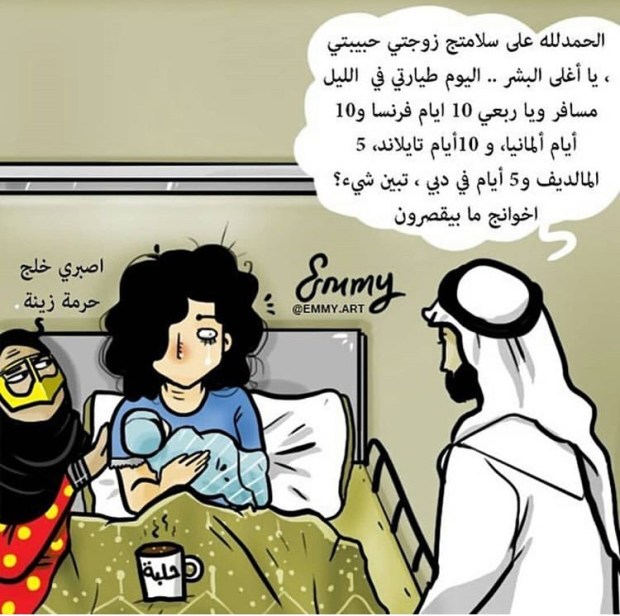
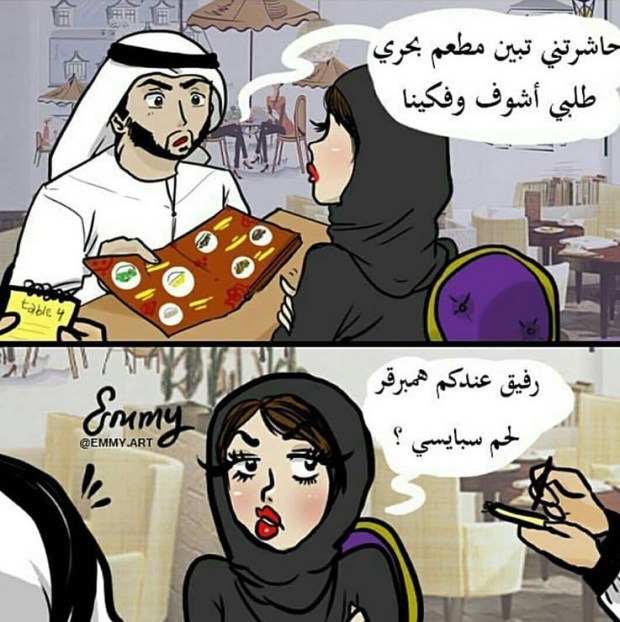
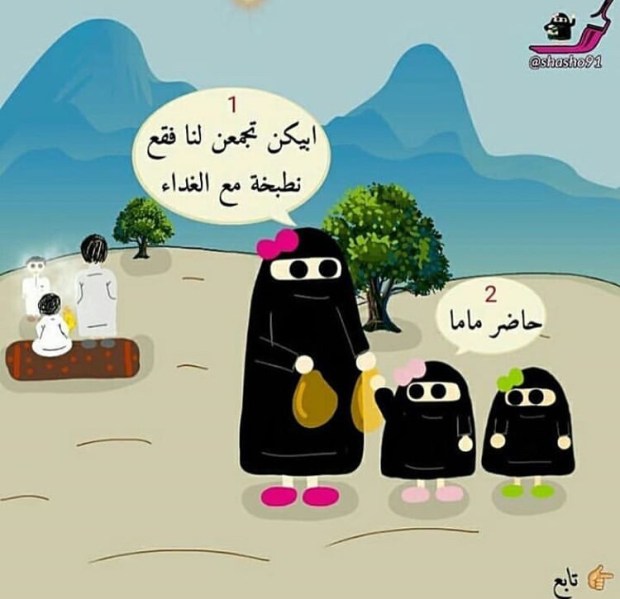
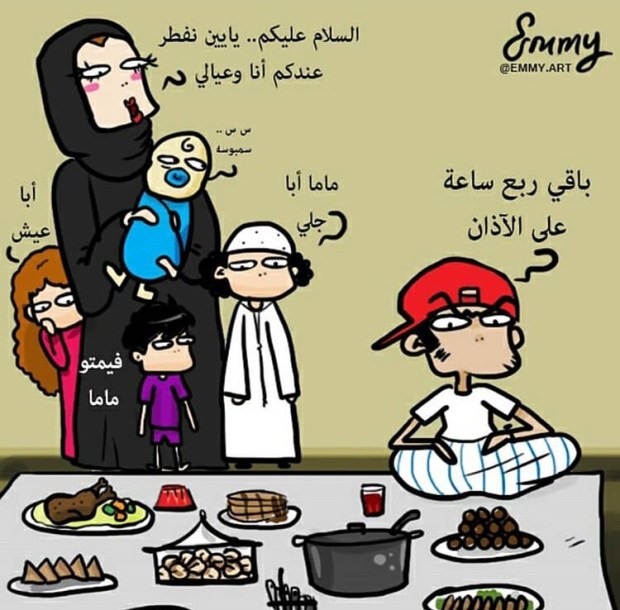
I started to look at cartoons (sent by Omani friends or posted on Instagram) because I wanted to see how buying, making, eating and sharing food was portrayed in graphic art. The cartoons are fascinating because they give personal insights into many aspects of Arab/ Muslim/ Gulf cultures, not just what food is eaten (when, where and why) but what is said (and the subtext), who is talking,  what clothes are worn (and what do the clothes signal?), body issues (how close do people stand to each other? do they face each other directly? how much can you tell about body size/ shape? can you see hair?), background (how is the place drawn? is it in the home or in public?), even how the words are spelled (are the people speaking formal Arabic?) and grammar choices mark the characters vis a vis status, nationality, sub-culture, etc.

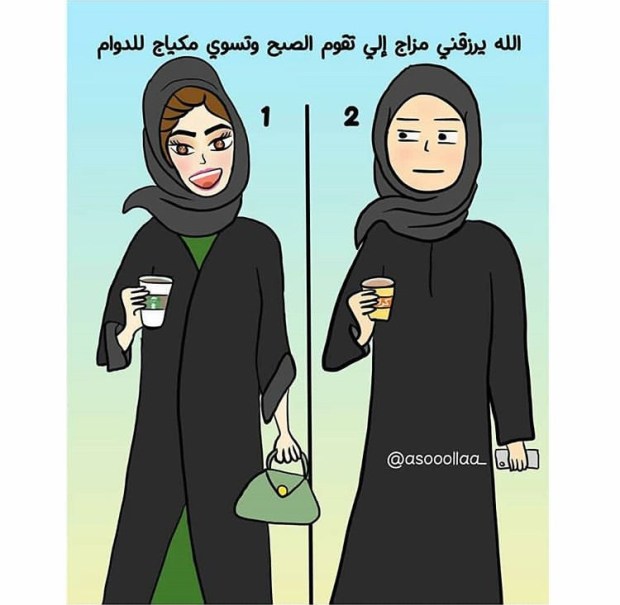
For example in this cartoon – the woman on the left is drawn as less traditional with hair piled up under her sheila, hair showing, shaped eyebrows, prominent eyes (eyeliner? mascara? colored lens?), open-mouth smile (lipstick?), open abayah, colored dress and purse, showing more of her forearm showing (is her lighter skin tone deliberate?) but also because she is carrying a coffee clearly drawn with a green round label like Starbucks. The coffee is grey and in a larger cup; while the other woman is carrying a small cup filled with a light brown liquid that looks like tea with milk. The woman with the less conservative look goes to the expensive and foreign coffee company – the woman with the more conservative appearance drinks tea in the (traditional) smaller cup.

2 women.jpg

Not all of the cartoons below have food but all give important insights into cultural issues.

ramadan love

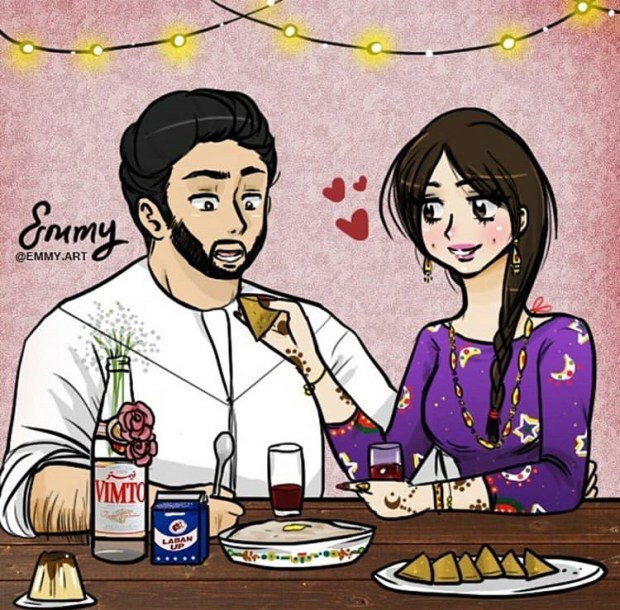
Vimto/ laban signal Ramadan because they are usually drunk at Iftar but henna is not usually worn during Ramadan so this image points towards Eid, especially with the moon design of the henna, the lights and the creme carmel.

looking at woman

new baby

argue man and woman


abayahs

share ramadan


Relationship Cartoons – Worthy of Study

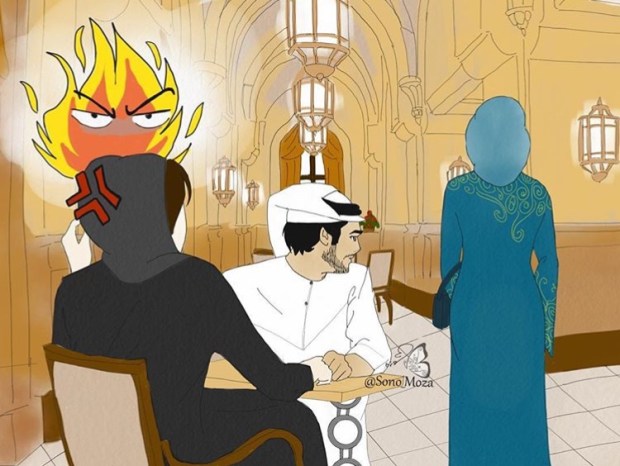
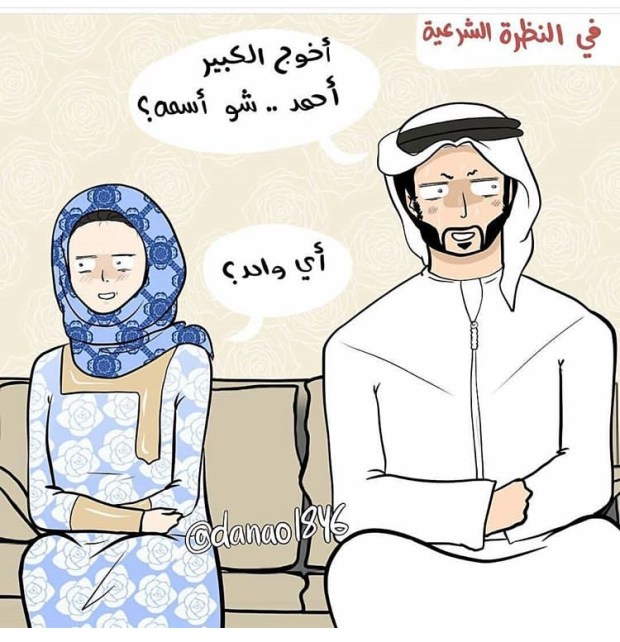
shopping with manIt’s not my area of expertise, but I find relationship cartoons posted on social media fascinating. There is so much cultural information to be unpacked for example, many have women with uncovered hair in settings with other women, whereas Dhofari women keep their hair covered even if sitting in the salle with other women. Here are a few I find particularly interesting. I hope someone from or living on the Arabian Peninsula does some kind of systematic study by country, topic, etc.

emmy - brother asking


dano - legal look


emmy - girl guy apart


emmy - hair


emmy - fight

“Accounts from the Journeys of the Brig ‘Palinurus’ along the Dhofar Coast Oman in the mid-1800s” – presentation at the National Maritime Museum, Greenwich, Sept. 15, 2018

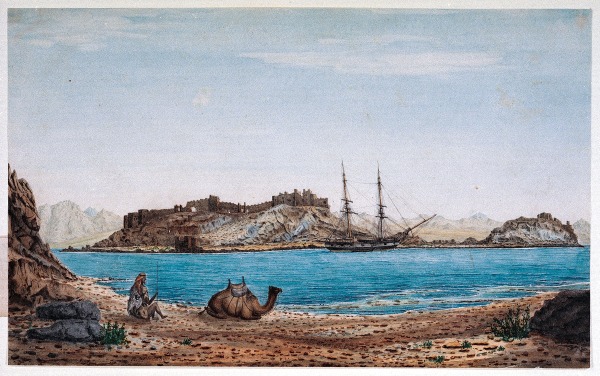
[painting: Island of Faroun near the head of the Sea of Akabah. Showing the HEIC’s surveying vessel Palinurus. © National Maritime Museum, Greenwich, London]

I will be presenting “Accounts from the journeys of the brig ‘Palinurus’ along the Dhofar Coast in the mid-1800s” at the Exploration and Memory Conference, Mational Maritime Museum, September 14 and 15th.

https://www.rmg.co.uk/see-do/exhibitions-events/exploration-and-memory-conference

This three-day conference, from Thursday to Saturday, will consider exploration from the vibrant perspective of memory studies. Presentations will focus on the history, poetics, and material and visual culture of exploration, exploring how these have changed over the years and what their legacies have been, and continue to be.

Thursday

  • Collections and memory

Unseen Art of Australia’s First Fleet; Naval collecting between Cook and Darwin; Sir Rex Nan Kivell: ‘Collecting the explorers’ and not recalling ones’ past

  • Remembering people

Mapping movement and memories of coastal South America, 1680–1750; Representations of James Cook in Australia during the 1920s and 1930s; Convicts and Cartography in the Australian Colonies

  • Memorialization

Remembering the shipwreck of the Querina, 1431–32; Lost and forgotten: the story of the first Cook memorial; 21st Century challenges to the memorialisation of explorers

Friday

  • Knowledge and Encounter

British perceptions of difference in voyage narratives to the South Seas in the 1740 and 1760s; Encountering a “Savage” Land in the Romantic Era; Indigenous knowledge in New South Wales and London in the early nineteenth century

  • Histories

The Afro-Brazilian architectural heritage in Nigeria and the Republic of Benin; Exploring inter-personal spaces in India-Bangladesh borderlands

  • Making memory

Pacific Encounters: museums and memory making; The Taonga have memories too; Rites of space at ‘the shrine of geography’: the Royal Geographical Society, memory and exploration

  • Film, science and exploration

Arctic expedition and encounter; Fragmented Landscapes: Memory, Photography and the Polar Expedition

Saturday

  • Memory and encounter

Cabeza de Vaca’s Naufragios: exploration, ethnography, and identity negotiation; The Battle of Goringhaiqua and the death of Viceroy D’Almeida: contested histories, popular memory and ancestral voices

  • Travel writing

Between poles of memory in Ed O’Loughlin’s Minds of Winter;  Accounts from the journeys of the brig ‘Palinurus’ along the Dhofar Coast in the mid-1800s; Time and memory in Antarctic exploration literature for children

I will be presenting at the Maritime Exploration and Memory Conference, National Maritime Museum, Greenwich, England – Sept. 2018

Accounts from the Journeys of the Brig “Palinurus” Along the Dhofar Coast in the mid-1800s

Dr. Marielle Risse

Although there is a fair amount of written descriptions about the northern part of Oman, there were few travelers who wrote about the southern region of Dhofar until the 1970s. The first sustained exploration by Westerners was done by two teams on the Brig “Palinurus.” Captain Haines and his crew from the Indian Navy surveyed and explored the Dhofar coast in 1834, 1835 and 1836. Commander J. P. Saunders, with the same ship and some of the same crew, continued this surveying work in 1844-1846. Both Haines and Saunders published accounts of their voyages.

The primary focus of these journeys was to figure out how the lands investigated might be of use to the British government and merchant class, as when Haines tried to buy the island of Socotra from Sultan Omar to use as a depot for steam-boat traffic between India and England. But there is a fascinating wealth of cultural and historical information from the articles written by members of the “Palinurus.” For example, the brig’s assistant-surgeon, Henry Carter, wrote up a brief archeological survey of “The Ruins of El Balad” (1846), in which he includes a succession of rulers/ governors of the Dhofari coast. Cruttenden’s short article (1838) details his journey from “Morebat” [Mirbat] to Dyreez [Dhariz],” approximately 71 kilometers along the coast.

My paper will discuss the articles published in relation to the “Palinurus” voyages along the Dhofar coast to compare the details of what was recorded in the mid 1800s to the present day. I will also briefly mention later travelers who came to the region by boat including Theodore & Mabel Bent and Bertram Thomas.


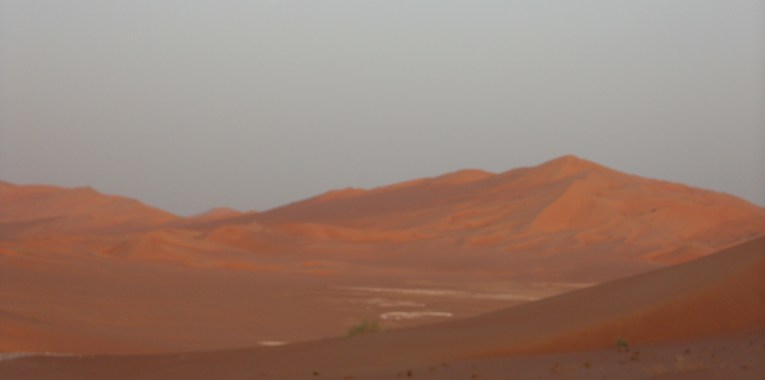
(photo by M. A. Al Awaid)

My Job

(photo by M. A. Al Awaid)


It’s possible for someone to be your mentor without every meeting them. Over ten years ago, when I started to do anthropology research, I found articles and books by Lila Abu Lughod and realized that she set the standard I wanted to emulate. Now a professor at Columbia University, she did research among the Awlad’ Ali tribe in Egypt for years, writing numerous articles and books which make the women come alive as complex, thinking, reasoning beings.

When I first read her work, I had a profound sense of relief – HERE was someone, finally, writing about Arab, Muslim, tribal women who were not passive, oppressed cardboard figures but real women who experienced emotions, trying to create a good life for themselves and their families. The women in her work are like the women I know here.

Her Writing Women’s Worlds: Bedouin Stories (1993/ 2008) is brilliant: section after section of real people talking about real life. One part that stands out for me is her writing about an older married man talking with his first wife, and later private conversations with each one about the changes in their lives when he married again. Abu Lughod lets the couple speak; she shows the short- and long-term effects and costs of multiple marriages on all the people involved and how the effects change over time. It is a nuanced, heart-breaking discussion of polygamy, how different people think different things are important at different times and she shows the cost to the husband. This section, and all her work, stand in contrast to so much lazy, sloppy, overheated and stereotypical writing about Muslim and Arab people who have never spent significant time in the area.

So I was stunned when I went to a conference and another woman on my panel made a dismissive remark about her – how could an Arab, Muslim woman disparage Abu Lughod, who has dedicated her life to understanding and helping others understand the lives of Arab, Muslim women? I talked to the woman for a while, trying to get to the root of her anger. She explained that she felt Abu Lughod was being used by traditionalists to show that Arab, Muslim women are happy and they have all their freedoms (i.e. there is no need for change and/ or reform in terms of women’s lives and choices).

I countered, as I can’t address how traditionalists/ conservationist are using Abu Lughod’s work, that she has spent her life articulating the lives of Arab, Muslim women. But therein lay another problem. The young academic felt that Abu Lughod had positioned her work towards non-Muslims, non-Arabs rather than working for increasing women’s freedoms in the Arab world.

I couldn’t think of a way to argue back because the statement which came to mind [“It’s not the responsibility of all women to fight the fight you are most interested in”] sounded too curt, so we agreed to disagree.

At the same conference, another Muslim, Arab woman took issue with a statement I made that it’s not my duty to make my students “modern.” I was speaking about trying to find texts that fit within the conservative worldview of the area where I teach; the woman suggested that I put modern novels (about social change) on my syllabus even if I don’t discuss them in class. I responded that it wasn’t my job to teach works with aspects (alcohol, adultery, etc.) that were not acceptable in the local culture. She countered that it was my job to open my students to new/ modern/ open ways to thinking. I laughed and said that as an American Christian, some students and some of their parents are already nervous that I might try to push a political or social agenda in my teaching and “It’s not my responsibility to change my students.” That conversation also ended in a strained silence.

As I wrote in an earlier essay, the image that comes to mind is the velvet rope blocking off the entrance to a room in a museum. The tour guide slips under the rope and shows off the treasures of the room, explaining their history and importance while the tourists stay outside, looking in. Against the colleagues who believe that Westerners should ‘liberate’ the students, I believe my job is to show that there are different ways to live and different ways to believe. The presentation should be honest but neither cheerleading (we do it better!) nor insulting. The tourist/ student should learn about different cultures but not feel pressured to adopt the manners and customs depicted, in the same way that I see Omani culture but am not able to enter fully as I am not Muslim or Arab. If the tourist/ student wants to change, that is a personal choice, not the responsibility of the tour guide.

When I worked at MIT, I went to a lecture by Noam Chomsky. During the question period, another person in the audience asked what could he (we) do about the persecution of the Falun Gong in China. Chomsky said, “Nothing.”  He continued by explaining that we weren’t there. A person can only work honestly and effectively in the place where they are.

The two Arab women I met at the conference had ideas and strategies that were effective from them where they are, but they would not work for me where I am, or for Abu-Lughod where she is. She specifically addresses these issues in a recent article [“The Cross-publics of Ethnography: The Case of ‘the Muslimwoman’,” American Ethnologist Nov. 2016].

Time and time again in her writing Abu Lughod argues that:

others live as we perceive ourselves living – not as automatons programmed according to ‘cultural rules’ or acting out social roles, but as people going through life wondering what they should do, making mistakes, being opinionated, vacillating, trying to make themselves look good, enduring tragic personal losses, enjoying others, and finding moments of laughter (Writing Women’s Worlds 27)

My students and the people I write about in my research are people who live valid lives and make valid choices – it is not my job to change them. It is my job to listen carefully and speak honestly. In teaching, I should find interesting, relevant texts and give assignments that allow students to express their own opinions and improve their language skills. In my research, I should observe as accurately as possible, ask questions and write only after reflection and double-checking. That’s my job.

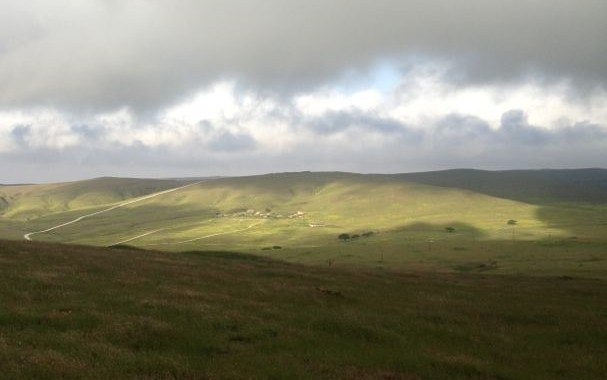
“I Came to You for Good”: An Ethnographic Discussion of Folk Tales from Southern Oman. RAI, London, October 26, 2017

baby baby

(photo by M. A. Al Awaid)

Risse, Marielle. “‘I Came to You for Good’: An Ethnographic Discussion of Folk Tales from Southern Oman.” Third Joint Seminar of The Folklore Society and the Royal Anthropological Institute;  Royal Anthropological Institute, London. October 26, 2017.

http://folklore-society.com/events/folklore-and-anthropology-in-conversation-1

In the 1970s Dr. Tom Johnstone documented the un-written, Modern South Arabian languages of Gibali and Mehri in the Dhofar region of southern Oman by recording autobiographical stories and folk tales. Several of these spoken folk tales were translated into written English and published by Aaron Rubin in 2014. My presentation will explain how these folk tales, recorded just at the beginning of modernization, reflect worldviews that I see daily in my anthropological work in Dhofar.

I will demonstrate how these texts are representative of southern Omani culture by analyzing the various textual elements of the folk tales such as use of setting, characters, plot events and theme. These texts are among the very few documents transliterated in Gibali and help illustrate ways in which the Dhofari culture has, and has not changed, since the rapid modernization after the 1970s. I am specifically interested in how the folk tales reflect still current understandings of the nature of the relationship between married couples and the existence of djinn.