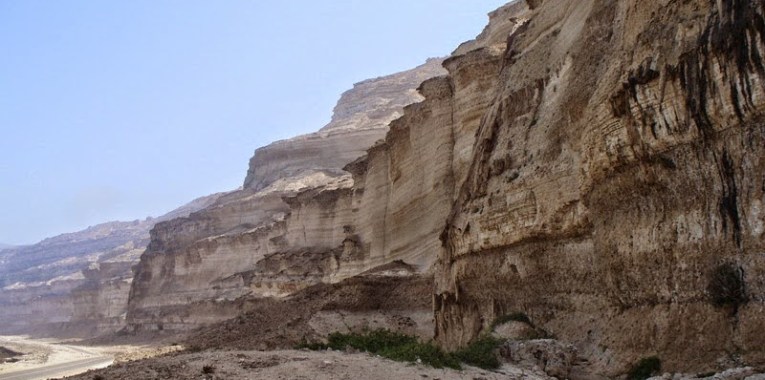
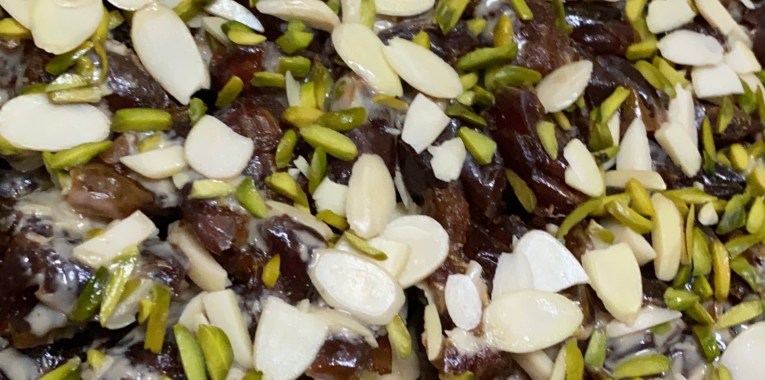
I will be presenting ”Private Lives in Public Spaces: Perceptions of Space-Usage in Southern Oman” on Dec. 2 at the MESA annual meeting

‘Private Lives in Public Spaces: Perceptions of Space-Usage in Southern Oman’ – Dr. M. Risse

photos by: Onaiza Shaikh; plans by: Maria Cristina Hidalgo https://www.mariacristinah.com/

Middle East Studies Association annual meeting

https://mesana.org/annual-meeting/current-meeting

abstract

This presentation discusses issues related to the cultural perceptions of space and privacy on the Arabian Peninsula. The Merriam-Webster definition of privacy is: the quality or state of being apart from company or observation, and it’s the “apart from observation” aspect that I want to focus on because if someone is in public spaces, they aren’t alone (i.e. can’t be “apart from company”) but they can be unobserved.  Based on fifteen years of experience and research in southern Oman, I will focus on how men and women navigate the same or nearby public spaces at the same time. Using examples from shops, grocery stores, universities, restaurants, cafes, airports and hospitals I will discuss who moves where according to cultural rules about position and proximity. For example, an initiative at one bank to have a “women’s only” teller fizzled out (as did a scheme to give women customers pink bank cards), but customers and clerks continue to follow strict, unwritten rules about who stands where. Another example is universities. In some Gulf countries, there are separate campuses for men and women. Omani institutions of higher learning have only one campus yet there are both physical (having two sets of doors for classrooms) and mental (where students choose to sit) barriers to gender-mixing.

I am happy to announce that I will be presenting “Bringing Language Teaching into Literature Classrooms”

l will be presenting “Bringing Language Teaching into Literature Classrooms” at the English Scholars Beyond Borders – Dhofar University International Conference. Dec. 4-5, 2021.

My presentation will argue that in non-Anglospheric institutions such as Dhofar University, literature teachers will always need to be language and culture teachers. Given that many students on the Arabian Peninsula will use English when traveling or teaching primary or secondary students, texts must be chosen for their linguistic and cultural, as well as literary, qualities. I will use examples from teaching literature, cultural studies and education on the Arabian Peninsula for over 15 years to discuss how to create syllabi which reflect both the literary canon and students’ needs, with an emphasis on teaching multi-level classes and explicating cultural narration differences, as well as sneaking in language lessons. For example, folding language teaching into literature classes means both silent editing (such as not calling attention to spoken mistakes but repeating the student’s words with the correct pronunciation and/ or grammar) and short, explicit lessons. Lastly, it is vital to foreground cultural differences in plot, characters, settings and themes, in addition to narrative structures as an analysis of a literary text in English is expected to have the author’s opinion clearly stated with proof in the form of quotes and specific details, a format that Arabian Gulf students sometimes have not learned.

Bibliographies on topics connected to Dhofar, Oman

(photo by S. B.)

Bibliography of the Modern South Arabian languages, compiled by Janet Watson and Miranda Morris, updated October 2021

https://www.researchgate.net/publication/345983960_Bibliography_of_the_Modern_South_Arabian_languages_Compiled_by_Janet_Watson_and_Miranda_Morris

Bibliographies I have compiled

Houseways

Pre-historical and Historical Houseways in the Dhofar Region: Selected References

Foodways

Updated bibliography from my research on Foodways in Southern Oman

Selected Bibliography: Animals, Birds and Fish in Southern Oman

What I’ve Been Reading: Food, Cooking, Cuisine, Culture, Anthropology, & History

General

Bibliography of Works Consulted for Research on Dhofar, Oman

Annotated Bibliography of Texts Pertaining to the Dhofar Region of Oman

Short bibliography of books about Dhofar in Arabic

Teaching Literature

Selected Bibliography: Primary and Secondary Texts for Literature Teachers on the Arabian Peninsula

I am pleased to announce the publication of my essay “Questions about Food and Ethics”

“Questions About Food and Ethics,” in Emanations: When a Planet was a Planet. Brookline, MA: International Authors, 2021. 403-408.

(photo by Salwa Hubais)

selection from “Questions about Food and Ethics”

Is there a benefit to stating kind intentions? Should you explain that you planned to do something thoughtful (but couldn’t actually do it) or simply keep quiet? I would like to use this question as a starting point to think about how what’s “good” and “right” in terms of eating and disposing of food as perceptions can change dramatically between cultures.

What interests me about this topic is the question of whose ethics are you talking about? A behavior which makes perfect sense in one culture, looks odd in another. There is no way to resolve the issues with one ‘best’ answer, but I think it’s helpful to see examples of how ethical systems differ.

First, if I bring cookies to a picnic, I don’t want to open the package because if no one wants them the cookies will get soggy from the humidity and the cookies will be ‘wasted.’ This is not acceptable in Oman. I should open the box, pass the cookies around and then set them out for birds if no one eats them.

I don’t want to feed the birds, especially not my prized Fortnum and Mason cookies but in Dhofar it is shameful to bring something to a picnic/ group meeting and then try to leave with it. If you have brought any kind of prepared food or foodstuff, it should not return to your car and be brought back to your home. If I have brought cookies, either the box needs to be opened or I should give the unopened box to one of the men to give to his children.

A second example is that unwanted food is never spread on sand or dirt as that is seen as unkind to the animals. If there are no rocks, the food is left on pieces of plastic. A few times when I have tried to pick up the plastic that leftover food was placed on, not wanting to leave litter, I was told to leave it. The Gibali men in my research group pick up all the trash from campsites, but it is judged worse to put leftover food on sand than it is to leave it on plastic bags.

Leaving plastic on the ground is not just litter; when eaten by camels and cows, it can cause illness and death. But even a man who owns camels will leave food on a piece of plastic so foxes and birds can have ‘clean’ food, valuing the idea of making sure that the food is eaten, more than the idea of keeping the area clean and preventing a possible future harm.

New essay: “Za” on the Arabic Alphabet website

“Za is for Saffron” by Michael Beard, illustrated by Houman Mortazavi

http://alifbatourguide.com/the-arabic-alphabet/za/

http://alifbatourguide.com/the-arabic-alphabet

Za is for Saffron

Za and Ra come from different ancestors, though you wouldn’t guess it from their appearance. Today only the dot distinguishes them. This was not always the case.

Among the letters which don’t connect on the left (Za is our fourth), there are other family connections you wouldn’t ordinarily see. It is a tangled genealogy. Today Ra and Za look like twins, except for the dot over Za, but in Nabataean, the R sound had a different twin. R was represented by a letter pretty much identical to the one which represented the sound of D. (Both looked like an inverted capital Roman L.) The Z sound was at that time a simple vertical stroke. None of the three had a dot. Gradually the shapes of Dal and Ra grew apart, who knows why, Dal with the sharper angle, while Ra grew smoother and began to sit lower on the line. Meanwhile Ra and Za converged. Sometime around the fourth century, Za and Ra became the look-alikes, too close for practical use. There was a separation, and Za got the dot. Then both shapes, Za and Ra, developed, thanks to the reed pen, the identical curved bodies we see today.

There is probably some scientific principle to explain the evolution of letters from one form to another, why one rotates 90 degrees, lengthens, thickens or bends. Perhaps the changes are arbitrary, or perhaps there is a process of natural selection, in which the most useful ones, the most legible, the easiest to distinguish, or the most beautiful, survive. The reed pen exerted its shaping power. As Islam spread, and there were frequent occasions to treat letters with respect, in calligraphy, inscriptions, seals and written prayers, the most beautiful (or malleable) were the survivors.

Zayn in Arabic means beauty. For years I thought that in Arabic Zayn was the name of the letter. (It isn’t.) Way back, as far back as the evidence goes, the Phoenician ancestor of Za, something like a capital H on its side, had a name (Zayin, in Phoenician “weapon,” evidently a sword). The current shape has lost the name, but it looks more like a sword.

continued at:  http://alifbatourguide.com/the-arabic-alphabet/za/

New essay: “Ra” on The Arabic Alphabet website

The Arabic Alphabet: A Guided Tour 

by Michael Beard, illustrated by Houman Mortazav

Ra is for Rigel (first section)

http://alifbatourguide.com/the-arabic-alphabet/ra/

Ra is proverbial for smallness (as iota is proverbial for the slight and diminutive in Greek): a simple swoop from the baseline downward. No connection on the left. It just descends, comes to a point and stops. Drawn with a reed pen it thickens half-way down and narrows again as the angle of the reed shifts. Add a dot overhead and you have the letter pronounced Z. (Add three dots and you have the sound added by Persian speakers in the 15th century, Zha.)

In their early forms the Ra and Dâl shapes look, to my eye at least, identical. Evidently early users felt the same way. Writers of Syriac distinguished them by a dot: Ra had a dot added above, Dâl had one added below. In later forms Ra (now dotless) came to descend below the base line and distinguish itself from Dâl by position. (Dâl was higher.) Dâl is often thicker at the top. Most Ra s seem aerodynamic, immersed in a right-left current which blows the thinner edges leftward. The lower point can curl up. In thulûth script Ra can extend until it almost connects on the left, because the lower point may curl up and seem to connect, as if to make the point tickle the underside of the letter which follows. In handwriting today Dal and Ra can still look very much the same.

The sound is a trilled R; when it is doubled (unlike doubled R in English, as in “current” or “barracks”), you hear the prolongation. This is the case of the two (or four) R sounds which occur in the basmala (Bism Allâh al-raḥmân al-raḥîm), where the Ra is doubled because “L-R” is pronounced as RR. (Long story. It requires knowing more about Lam.) Ra is one of those letters whose sound takes on a lot of disguises. In Sorani Kurdish it takes two identities: the familiar trilled R is written with a little V shape close underneath. The naked, stand-alone R shape is pronounced something like a glottal stop.

Anne Meneley, research on Yemen

(photo of Sarfait, close to the Dhofar border with Yemen, taken by M. A. Al Awaid)

I was so pleased that Anne Meneley came to the session on “Social Attitudes Toward Food and Eating” at the recent Just Food conference. It was her work on ‘food and morality’ that helped me start to think about the connections between food and ethical behavior in Dhofar. Although her research focus has moved beyond Yemen (see below) I would like to list four publications which have greatly helped me in understanding Southern Arabia.

Meneley, Anne. 2017. “The Zabidi House,” in Architectural Heritage of Yemen: Buildings that Fill my Eye. Trevor Marchand, ed. London: Gingko Library. 195–203.

—. 2011. “Food and Morality in Yemen,” in Food: Ethnographic Encounters. Leo Coleman, ed. New York: Berg. 17-29.

—. 2007. “Fashions and Fundamentalisms in Fin-De-Siecle Yemen: Chador Barbie and Islamic Socks.” Cultural Anthropology 22.2: 214–243.

—. 1996.  Tournaments of Value: Sociability and Hierarchy in a Yemeni Town. Toronto: University of Toronto Press, Re-released on the 10th and 20th anniversary of publication – https://www.goodreads.com/book/show/1436862.Tournaments_of_Value

Selected publications from her website:

https://www.trentu.ca/anthropology/faculty-research/anne-meneley

2020  Anthropology News, 29 June 2020 The Distance of a Hockey Stick, Pandemic Insights.

2020a Hope in the Ruins: Seeds, Plants, and Possibilities of Regeneration. Environment and Planning E: Nature and Space, online.

2020b The Olive and Imaginaries of the Mediterranean. History and Anthropology 31 (1):66-83.

2019 Walk This Way: Fitbit and Other Kinds of Walking in Palestine. Cultural Anthropology 34(1):130-154.

2018 Consumerism. Annual Review of Anthropology 47:117-32.

2017 The Zabidi House. Architectural Heritage of Yemen: Buildings that Fill My Eye. Ed. Trevor H.J. Marchand, pp. 194-203. London: Gingko Library.

2016 Checking Your Waistline at the Checkpoint: Dieting as a Peace Initiative. Jerusalem Quarterly 68:90-103.

2014a The Accidental Pilgrims: Olive Pickers in Palestine. Religion and Society: Advances in Research 5: 186-199.

2014b Resistance is Fertile! The Re-invention of Food: Connection and Mediation, Cristina Grasseni and Heather Paxson, guest editors. Special Edition of Gastronomica Vol. 14(4):70-79.

2014c The Qualities of Palestinian Olive Oil in Fat: Culture and Materiality, Christopher E. Forth and Alison Leitch, eds. pp. 17-31. New York: Bloomsbury.

2014d Discourses of Distinction in Contemporary Palestinian Extra-Virgin Olive Oil Production. Food and Foodways 22 (1-2): 48-64.

2014e Comment on Andrew Bevan’s “Mediterranean Containerism.” Current Anthropology 55 (4):408-409.

2011 Blood, Sweat and Tears in a Bottle of Palestinian Olive Oil.  Food, Culture and Society 14 (2): 275-290.

2011 Food and Morality in Yemen.  In Food: Ethnographic Encounters.  Editor, Leo Coleman.  New York: Berg. Pp. 17-29.

2008 Time in a Bottle: The Uneasy Circulation of Palestinian Olive Oil.  Middle East Research and Information Project (MERIP). Fall 248:18-23.

2007 Fashion and Fundamentalisms in Fin de Siècle Yemen: Chador Barbie and Islamic Socks. Cultural Anthropology 22:214-243.

2003 Scared Sick or Silly?  Social Analysis 47(2):21-39.   Also reprinted in Illness and Irony.  M. Lambek and P. Antze, eds. 2004  New York: Berghahn.

1999 Goods and Goodness. Social Analysis 43(3):69-88.

1999 Introduction to “The Structuring of Subjectivities in Material Worlds.”  Social Analysis 43(3):1-5.

1998 Analogies and Resonances in the Process of Ethnographic Understanding.  Ethnos 63:202-226.

I am pleased to be asked to present on my work at the International College of Engineering and Management, Muscat

I will be speaking about “Using Cultural Insights to Enhance Productive Learning – How Teachers Can Work Effectively with Students” on Thursday, March 25 for the International College of Engineering and Management, Muscat.

I will be using recent research and insights from my article: Understanding the Impact of Culture on the TESOL Classroom.


New essay: “Dâl” on “The Arabic Alphabet” website

Dâl is for Dinar

http://alifbatourguide.com/the-arabic-alphabet/dal/

Dâl is the fourth basic shape. We started with the shape of Alif (population one). Ba, with that simple plate shape, plus dots, gave us the second and least interesting of the shapes. Jîm was the mold for three or four additional letters. The Dâl shape marks the end of a series (with one companion letter to follow). The four shapes in sequence spell abjad. ابجد. ) .د .ج .ب .ا)

Dâl in its simplest form is just two lines which splay out leftward from a point usually at the base line. In calligraphy the upper line can be thick or thin, drawn with the full width of the reed’s edge, but it is almost always nearly upright, leaning at perhaps the 11:00 position. The lower line ramps down to the left, usually at a slight angle, perhaps 8:00.  From the Nabataean predecessor, an inverted L, Dâl has rotated not quite 180 degrees clockwise. More schematically, we can imagine it as simply two thirds of an equilateral triangle with the left side missing. Its Greek counterpart, Delta, adds the third side, to form the complete triangle.

Perhaps because it is a simple letter, in calligraphy there is room for considerable variation. It may curl up as it tapers. You may see the lower mandible almost join the upper one. There are lengthened versions which allow them to stretch out left in long, straight parallel lines.

The Arabic Alphabet: A Guided Tour

by Michael Beard

illustrated by Houman Mortazavi