I will be talking about ‘Omani Rituals, Feast and Fasts’ on July 14th for the ‘World on a Plate’ class at University of Mary Washington, VA

I am happy to announce that I will be talking about ‘Omani Rituals, Feast and Fasts’ on July 14th for the ‘World on a Plate’ class at University of Mary Washington.

Cognitive Dissonance and Food Identification

Foodways: Iftars in Ramadan

Foodways: Cultural Issues Pertaining to Litter

Foodways: Catching Lobsters and Diving for Abalone

Foodways: Cultures, Food Selfishness and “Could I Have a Little Bite?”

I am happy to announce that my book ‘Ethnographic Reflections on Marriage in Dhofar, Oman’ has been published

I am happy to announce that my book ‘Ethnographic Reflections on Marriage in Dhofar, Oman’ has been published by Anthem Press, available here

My interview about the book is available here

My essay about marraige and peace is available here

Table of Contents

Preface – Second Wives

Introduction

Dhofar

Discussion of References

Definitions

Husband, Wife and Marriage

Family

Household

Status

My Positionality

My Background

Limitations

Data Collection

Learning from Teaching

Female Friends and Informants

Working with the “Research Guys”

Men, Trust, Cars and Cats

Men and Self-Control: The Story of Z

Relationships Before Marriage

Marriage – Main Understandings

Age and Marriage

Example Marriage

Choosing a Spouse

Finding a Bride within the Family

Finding a Bride not within the Family

Finding a Husband

Asking to Marry

“Fighting”/ “Convincing” To Marry or Not Marry

Deciding to Marry

Engagement

Getting the Room Ready

Wedding Announcements, Invitations and Photos

Wedding Announcements and Invitations

Wedding Photos – General

Wedding Photos – Women

Wedding Photos – Men

Wedding Parties

When the Wedding is Called Off, Postponed or Changed

Wedding Parties – Men

Wedding Parties – Women at a Hall

Wedding Parties – Women at Home

After the Wedding

Creating a Marital Relationship

A Wife’s Work

A Husband’s Work

Meals

Cars and Hotels

Being Content in Marriage

Not Being Content in Marriage

Gross Misconduct – Extra-marital Sex and Alcohol

Marriage and Placement

Men and Placement

Women and Placement

End of a Marriage

After Divorce or Death of a Spouse

Second Wives/ Co-wives

Children

Pregnancy

Birth and Naming

Female Genital Mutilation

Differences/ Distinctions – Which Culture Does Marriage Better?

Family Time

Who Has Free Time (and When)

Health

Coda

References

(photo by Onaiza Shaikh)

Reflections on Ethnographic Research in Dhofar Oman

Reflections/ Research on Teaching Cultural Studies and Literature

Reflections on Ethnographic Research: Getting it Wrong

Practicalities: Managing a Short Research Trip to the Arabian Peninsula

Interview on New Books Network about ‘Ethnographic Reflections on Marriage in Dhofar, Oman’

I am happy to announce this interview with Amisah Bakuri: Marielle Risse, “Ethnographic Reflections on Marriage in Dhofar, Oman” (Anthem Press, 2026) – New Books Network

(photo by M. A. Al Awaid)

Ethnographic Reflections on Marriage in Dhofar, Oman | Anthem Press

Summary

In this episode of the New Books Network, we explore Ethnographic Reflections on Marriage in Dhofar, Oman (Anthem Press, 2026), with anthropologist Dr Marielle Risse. Drawing on nearly two decades of ethnographic fieldwork, Dr Risse offers a nuanced examination of marriage practices among Sunni Muslim communities in southern Oman, challenging many of the assumptions that often underpin Western discussions of gender, family, and personal autonomy.

Rather than portraying marriage as either oppressive or emancipatory, Dr Risse presents it as a complex social institution shaped by kinship networks, religious values, and community expectations. Risse’s work encourages readers to reconsider familiar ideas about family, marriage, household, intimacy, autonomy, and social life.

Amisah Bakuri (PhD) is an Assistant Professor in the Faculty of Social Sciences and Humanities at Vrije Universiteit Amsterdam. Her work explores the intersections of religion, sexuality, gender, and migration, especially within African diasporic communities in the Netherlands.Researching and Working on the Arabian Peninsula: Creating Effective Interactions

Reflections/ Research on Teaching Cultural Studies and Literature

Team Thesiger: ‘Arabian Sands’, ‘The Worst Journey in the World’, ‘The Snow Leopard’ and ‘Into Thin Air’

Marriage and Peace/ Marriage and Joy in Dhofar

Reflections on Ethnographic Research in Dhofar Oman

Houseways: Windows, Looking In and Looking Out

I recently found a few photos of windows in my files. In both older and more modern houses, the goal of a window is to allow the movement of air, without allowing anyone to see inside the building. In older houses, this is done with wooden decorations (mashrabiyya). In modern homes, this is done with gauze, voile, lawn or muslin curtains during the day and a heavier, second layer of curtains pulled across the window at night. The second layer is usually made of silk, rayon, velvet or blackout material.

Below are some examples of older houses. Note that some have boards behind the window because the house is not in use now. 

Here are some modern examples. In one, because the balcony door is above street level and set back, the door can be left open as there is no angle to see inside the building. Note also that windows have reflective covering which also makes it impossible to see inside.

Houseways: Windows/ Design, Construction and Safety

Houseways: Windows/ Sightlines

Houseways: Placement of Furniture and Sightlines

Houseways: ‘Homespaces’ Away from Home

Houseways: Photos of Older Houses in the Dhofar Region of Oman

A Dhofari friend recently posted these older photos of houses in the Dhofar region. 

Houseways: House plans

Houseways: Doorways – Design and Culture/ المداخل

Houseways: Entrance Ways – Form Follows Function; طرق المداخل – الشكل يتبع الاختصاص

Selected references related to Houseways in Southern Oman, Oct. 2022

Reflections on Houseways Research


Essay published: What a Frog in Boiling Water Knows: Oman, Before and After

I am happy to announce that my chapter “What a Frog in Boiling Water Knows: Oman, Before and After” has been published in Emanations 12. Brookline, MA: International Authors, 2026: 304-311. link to book

excerpt

At the Boston Museum of Fine Arts I like ‘Woman and Flowers’ by Alma-Tadema, one of my favorite painters, but the painting I love most is ‘Rest on the Flight into Egypt’ by Luc Olivier Merson, such a quiet, graceful scene.

I bought a membership to the museum and within a month I was back. I paid a visit to the Egyptian section, then ventured further out, into the American and impressionists exhibits. Two weeks later, I spent another morning walking around without a map. It was nice to come across Paul Revere’s silverwork and the painting of flowers exhibit, but the only places I really wanted to be was in front of Merson’s painting or anything Middle Eastern from before 1500 CE.

Walking into a room in the Ancient Egyptian section that I hadn’t seen before, I suddenly understood why the museum brought me such serenity. The cases were full of small, wooden boats full of men in white sarongs. Oh, I realized, they look like the research guys.

Most of the Omani men I did ethnographic research with are full- or part-time fishermen. And they wear a wazar, a piece of fabric wrapped around their waists that falls to their knees which is often plain white cotton or white with a light checkered or striped pattern.

And the man in the painting ‘Rest on the Flight into Egypt’ sleeps as the research guys sleep when they are camping, directly on sand next to a fire with a blanket underneath and a blanket over which is pulled up to cover the face. For everyone else, the man in the painting is Joseph; for me, it’s one of 15 different men who I was friends with, went fishing with, had hundreds of picnics with, asked questions of and who I miss terribly.

My grief is much smaller than most people who have been displaced by wars and hatred. Relatives co-signed my lease so I have a place to stay; my mom helps me get through a Boston winter by gifting flannel sheets and sweaters. But I stand in front of that painting and cry as it seems to hold all the harmony that I have lost.

Then, as so often happens, the book I needed to understand how I felt appeared at the right time. Amidst the postcards and scarves in the museum shop, I saw ‘All the Beauty in the World: The Metropolitan Museum of Art and Me’ by Patrick Bringley. Although my favorite museum is the Frick, I also love the Met and the cover mentioned something about grief, so I thought it would be interesting.

I read it in one morning, crying all the way through. What Bringley gets so right is how a loss, even when you know it’s coming and you have a pretty good idea how much it is going to hurt, stops the forward motion of your life. His book isn’t ‘feel-good’ or & ‘how to’; after his brother died, Bringley walked away from his career and became a security guard at the Met for ten years.

Marriage and Peace/ Marriage and Joy in Dhofar

Houseways: ‘Homespaces’ Away from Home

Living Expat, A Remembrance of Happier Times on the Arabian Peninsula

Team Thesiger: ‘Arabian Sands’, ‘The Worst Journey in the World’, ‘The Snow Leopard’ and ‘Into Thin Air


Screenshot

Two Views of Corfu: Lawrence Durrell’s Prospero’s Cell and Gerald Durrell’s My Family and Other Animals

Handout from discussion at Boston Athenaeum, April 25th

When Should You Arrive at Your Ithaca? Thinking about Cavafy, Gerald Durrell, Lawrence Durrell and Corfu (Boston Athenaeum, April 25, 10am)

Lawrence Durrellhttps://lawrencedurrell.org/wp_durrell/

known for fiction: Alexandria Quartet (Justine, Balthazar, Mountolive, Clea) and The Avignon Quintet (Monsieur, Livia, Constance, Sebastian, Quinx)

  • light humor: The Best of Antrobus, Esprit de Corps
  • travel writing: Prospero’s Cell (Corfu), Reflections on a Marine Venus (Rhodes), Bitter Lemons (Cyprus), Caesar’s Vast Ghost (Provence), Spirit of Place (collection of travel writing)
  • biography: Larry: A New Biography of Lawrence Durrell, 1912-1945; Lawrence Durrell: A Biography by Ian S. MacNiven
  • if you like his fiction, maybe try: The English Patient
  • if you like his light humor, maybe try: Hotel Splendide, La Bonne Table, Bemelmans
  • if you like his travel writing, maybe try: Provence, F. M. Ford; The Station, Robert Bryon

Gerald Durrellhttps://www.durrell.org/visit-jersey-zoo/

known for autobiographical books set on Corfu in his childhood: My Family and Other Animals, Birds, Beasts and Relatives; The Garden of the Gods

  • animal collecting/ creating a zoo: Three Singles to Adventure. A Zoo in my Luggage, The Bafut Beagles, The Whispering Land, The Aye-Aye and I, Menagerie Manor
  • animal/ nature conservation: The Ark’s Anniversary, Amateur Naturalist
  • autobiography: Myself and Other Animals
  • biography: Gerald Durrell: The Authorised Biography by Douglas Botting
  • if you like amusing adventures, maybe try: Whatever You Do, Don’t Run: True Tales of a Botswana Safari Guide; A Short Walk in the Hindu Kush

Other texts

  • Whatever Happened to Margo? Margo tells HER side of the story!
  • Dining with the Durrells: Stories and Recipes from the Cookery Archive of Mrs Louisa Durrell – mom’s recipes!
  • The Durrell-Miller Letters: 1935-1980

Marriage and Peace – essay published

“Yemen with Yul,” travel essay published

Team Thesiger: ‘Arabian Sands’, ‘The Worst Journey in the World’, ‘The Snow Leopard’ and ‘Into Thin Air’

Marriage and Peace/ Marriage and Joy in Dhofar

(photograph by Onaiza Shaikh)

When the publisher of my forthcoming book about marriage in Dhofar, Oman asked for a short article about my book to put on their webpage, I didn’t know what to write [ blog.anthempress.com/2026/04/17/marriage-and-peace/ ]. In literature, marriage is the ending for comedies, but the Arabian Peninsula and Arabian/ Persian Gulf are now enveloped in tragedies. It feels wrong to be writing about joy in the midst of such grief. But perhaps that is the point: hoping for the return of joy by remembering and explaining that joy when everything is bleak, like Samwise talking about the Shire when he and Frodo are on Mount Doom.

As I was writing the book, I focused on trying to accurately describe the information I knew connected to marriages of Dhofari Omanis and the stories I heard. It was only later I realized that, in focusing on being exact, I didn’t talk about how wonderful it is to attend women’s wedding parties.

An ethnographer is supposed to participate, understand, record, interpret and, if need be, replicate. Maybe there is fun along the way, but I don’t remember reading in any of the anthropology texts about the Arabian Peninsula: I had such a blast at the party, I want to go one every week!*

But I told the research guys that, for me, a perfect month meant two weekends camping, one weekend at home and one weekend with a woman’s wedding party. They rolled their eyes. The research guys are always glad when a brother, cousin, friend or colleague is getting married, but their wedding parties are not very relaxing. First of all, men usually need to give money, which means budgeting finds to make sure there is enough to give (see Risse 2015). Women only give gifts to very close female friends and relatives. If a woman does not work, other women will pay her share.

Second, Dhofari men have wider circles of acquaintances whose wedding they need to attend. Men are usually expected to appear at the wedding of all cousins (which can be mean 50 or more people), aunts and uncles (who might be younger than him), neighbors and friends. Both brothers and sisters gather to figure out who will go to which wedding parties on any given weekend but men often end up with 5 to 15 parties on one weekend, while women will attend one. For example, if a set of brothers and sisters have 6 close relatives who will marry in one weekend, all brothers usually go to all 6 male wedding parties and each sister would go to one of the brides’ parties. The brothers figure out the order in which they will visit the parties; the sisters will divide the parties between them.

If a man works in an office with ten men, he will often go to the party if any of the men, or their sons, marry. If a Dhofari woman works with ten other women, they will often be a party in the office (sometimes subsidized by the company or each women bringing one item), but not the expectation that all women will attend each other’s weddings.

Men only need to stay at the party for 15-30 minutes, but given that the events might be in 4 different towns, they can spend from 9am until 2pm on a Saturday driving and visiting. Plus the ‘system’ of every party is the same so there is almost no variation. Every man is in a clean dishdash; there is tea and coffee to drink, rice and meat to eat.

Also men need to make sure they comport themselves carefully when they are in public: recognizing and greeting each other, appearing serious, speaking well and listening to elders. A wedding party can be a chance to catch-up and chat, but there are so many people around, it’s not wise to have private conversations. I always think of men at gatherings as being at ‘parade rest’ in that men are never really relaxed. A good man in public is always looking about him, noticing who is there, who is talking to who, etc. Only with their own group, men he has known for years if not decades, can men let down their guard.

But Dhofari female wedding parties are fun. If it is at the bride’s house, there are plenty of women to share the work. I have gone to several in which I was invited by a sister of the bride, who was busy ten minutes an hour or so; the rest of the time she chatted with me or greeted other guests.

All women walk around and greet all the other women when they arrive, so you know who is there and it’s fine to ask someone as you shake their hand, “who are you?” or introduce yourself. Everyone is happy, chatting and (oh so important!) wearing what they want. Some women go all out with the make-up, jewelry, fabulous up-do and a dress that reflects hours of work getting the right fabric, the right design and the right trim. Or you can show up in a cotton dhobe (loose housedress) and a bare face. Sisters of the bride and groom and a woman who was recently married often need to be in fancy clothes, but there is lee-way for a woman who doesn’t want to have an elaborate presentation.

So you show up in a long, loose dress; get warmly greeted; choose what to drink from trays of coffee, tea and juice that are offered; and sit surrounded by girls and women in colorful dresses. There’s lots of perfumes, lots of finger-food, dancing and plenty of time to chat, but you can also pull out your phone and tune out for awhile. What’s not to love? (Well maybe if you are allergic to perfumes…)

The first one wedding I attended was a little awkward. I didn’t know the bride that well and I was with several other ex-pats; none of us knew what to do. And I left one wedding party early because the person who invited me wasn’t there and women were unfriendly. But the other 17 parties were wonderful.

I have many happy memories of chatting with good friends and laughing with new acquaintances. I was always asked if I was married and sometimes when I said no, women would offer to marry me to their husband. So we would run with that joke for a hour, me asking how much money I would get as dowery, if I would get my own house, etc. or we would talk about where I worked, or they would explain who all the other women were. It was all relaxed and, as one friend said, “no protocols.” If you needed to leave early, you left. If you didn’t want to eat, as long as you had a token amount of food on a plate in front on you, you could avoid pressure from your hostess.

Sitting in a bright pink velvet dress festooned with rhinestones, which had been sprayed with glitter perfume, an armful of colored bangles and bare feet, I was as happy as a clam. I don’t think I will ever have an occasion in the States to wear that many sparkles.

At picnics with the research guys, I was in drab-colored loose pants and long tunic, no make-up and no perfume but the feeling was similar. For the people in the hakli (also referred to as qara) groups of tribes I do research with, communal events means people working to create a positive atmosphere. The goal is always no drama. If you have a bad day or are in the middle of a personal tragedy, you do your best not to show it.

I have written about how this emphasis on staying positive is sometimes not seen as work by non-Omanis, but if you have ever had to attend a celebration in the midst of a personal struggle, you know how difficult it is. I joke that there is no TMI or over-share in Dhofar as the people I know keep their emotions in check. My male and female friends are in their 30s, 40s and 50s so self-control is of paramount importance.

I am happy to announce that my new book is now available for pre-order: Ethnographic Reflections on Marriage in Dhofar, Oman

Predator Anthropologists, Anthropologist Predators: Anthropological Metaphors in Popular Movies

Food Essays – Grocery Stores, Recipes, Expat Food and Littering

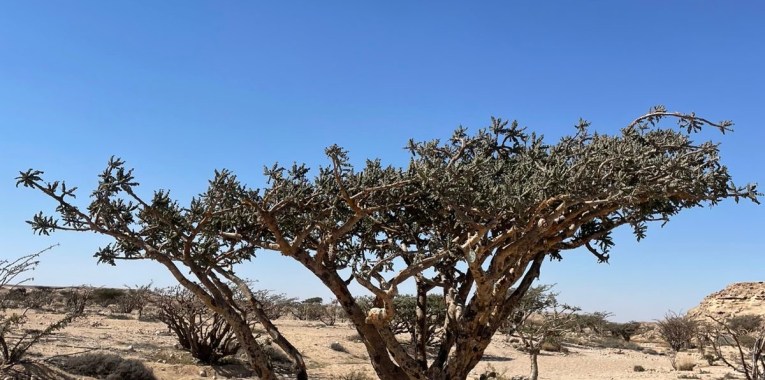
Frankincense in Dhofar, Oman

Risse, M. “Generosity, Gift-giving and Gift-avoiding in Southern Oman,” Proceedings of the Seminar for Arabian Studies 45 (Oxford: Archeopress) 2015: 289-296.

* Some of the accounts about Yemen had a little of that attitude, especially about qat chews but there was always a need for justification. Qat fields take up water that could be used for growing food and fodder and explaining that sitting around and chatting for many hours every day is a necessary part of life can mean sidestepping the issue of what structures and supports are in place that allow for certain groups to spend every afternoon and evening relaxing.

When Should You Arrive at Your Ithaca? Thinking about Cavafy, Gerald Durrell, Lawrence Durrell and Corfu (Boston Athenaeum, April 25, 10am)

I will be leading a discussion about Gerald Durrell’s My Family and Other Animals and Lawrence Durrell’s Prospero’s Cell at the Boston Athenaeum on April 25th. It’s interesting to come to the books by the two brothers again so many years after first reading them. I went through all Gerald’s books in middle school and Lawrence’s when I was in college.

On rereading them, Gerald’s book stands up: it’s charming and erudite. Lawrence’s is still excellent, but now the sexism is clear and, in a way, debilitating because you can now see what he missed. He wrote best in and about Greece. Although Caesar’s Vast Ghost is wonderful, nothing he wrote in France is as good as what was sparked by the more difficult landscapes of North Africa and Greece.

Rereading them makes me wonder, when is the best time to find your Ithaca? Both autobiographies recount their days on Corfu. But as Gerald is 12 years younger, he experienced Corfu as the background of a magical childhood. Lawrence, newly married, had the magic of first love in a perfect little beach house, complete with sailboat, good friends, excellent food, splendid weather and the time to write.

So is it better to have an enchanted childhood, and have those memories to fall back on, or perhaps lead you on, for all your life? Or better to have your glorious golden years in your early twenties? Cavafy famously urges you to arrive late in life:

When you set out for Ithaka

ask that your way be long,

full of adventure, full of instruction.

The Laistrygonians and the Cyclops,

angry Poseidon – do not fear them:

such as these you will never find

as long as your thought is lofty, as long as a rare

emotion touch your spirit and your body.

The Laistrygonians and the Cyclops,

angry Poseidon – you will not meet them

unless you carry them in your soul,

unless your soul raise them up before you.


Ask that your way be long.

At many a Summer dawn to enter

with what gratitude, what joy –

ports seen for the first time;

to stop at Phoenician trading centres,

and to buy good merchandise,

mother of pearl and coral, amber and ebony,

and sensuous perfumes of every kind,

sensuous perfumes as lavishly as you can;

to visit many Egyptian cities,

to gather stores of knowledge from the learned.

Have Ithaka always in your mind.

Your arrival there is what you are destined for.

But don’t in the least hurry the journey.

Better it last for years,

so that when you reach the island you are old,

rich with all you have gained on the way,

not expecting Ithaka to give you wealth.


Ithaka gave you a splendid journey.

Without her you would not have set out.

She hasn’t anything else to give you.


And if you find her poor, Ithaka hasn’t deceived you.

Wise as you have become, with so much experience,
you must already have understood what Ithacas mean.

When I read My Family I wished I lived on a Greek island, although I had a shorter, but similar, experience: as a child, I spents three weeks every year in the ruins of a sugar mill in the Caribbean. Reading Lawrence’s books in my late teens and early 20s helped pull me out into the world. I wanted to go to the places he described so I managed to get myself to Cairo, Alexandria, Athens, Corfu, Cyprus, Rhodes and other Greek islands, as well as his house in Sommières. But I didn’t find my Ithaca, the Dhofar region, until I was 39. Then I had to move away so I now agree with Cavafy. Arrive at your Ithaca late, so you never have to leave it.


Boston Athenaeum – April 25, 10amhttps://bostonathenaeum.org/whats-on/discussion-groups/

Join us for a discussion of two very different books which feature the same landscape and main characters. Most people know only one of the Durrell brothers, but each one has his own brilliance. Lawrence writes about the historical and literary landscape in an artistic and serious manner, while Gerald focuses on the local wildlife, a group which includes his older siblings. The juxtapositions between what each one thinks is important and noteworthy makes reading the books in tandem a delight. Gerald doesn’t deign to mention his brother’s wife; Lawrence ignores the fauna. Gerald has nothing to say about Greek myths; Lawrence pretends he is not with his family. Read one book or both and join a short visit to the gorgeous Greek island of Corfu. If the conversation leads to a wider discussion of Lawrence’s fiction (The Alexandria Quartet), Gerald’s impressive improvements in how zoos are designed and the Boston area’s best Greek restaurants, all the better.

Back from Ubar or What to Read if You Insist on Staying Home

Research on Travelers and Tourists in Dhofar

Marriage and Peace – essay published

The Beauty of Beau Geste


Marriage and Peace – essay published

I am happy to announce that my essay on ‘Marriage and Peace’ has just been published. The photographs were taken by Onazia Shaikh. 

It is difficult to write about my book, Ethnographic Reflections on Marriage in Dhofar, Oman, given the current war in the Middle East. The anthropological study of people’s lives seems unimportant in the face of such terrors and tragedy. Also it’s hard to understand why such a peaceful country as Oman has been pulled into the war, given that for over 50 years its unofficial motto has been ‘Friend to All, Enemy to None’. Salalah, the city in southern Oman where I lived for 19 years, has been bombed twice.

Anthropology in war is a fraught undertaking; the Human Terrain project, the American government’s attempt to merge military logic with ethnography, did not work.

Anthropology is more along the lines of ballroom dancing. You need peace now, peace in the recent past and the expectation of peace in the future to get started; you also need a group of people who are willing to learn a new way of movement. I like the analogy because people who haven’t done ballroom dancing can dismiss it as frivolous but learning when to turn, when to cross, how to follow the music and how to move in clothes and shoes that are unfamiliar while making the right kind of small talk is excellent training to become an ethnographer.

And marriage is a peace-time activity; you need peace and food security to think of adding someone to the family and for people and goods to travel to the celebration. So my book is a peace-time book. It reflects my thinking about how Omanis in the southernmost region go about finding someone to spend their life with and how to create a peaceful life together. I cover how men and women decide to start looking for a partner and all the following steps, including the dissolution of a marriage and old age. I did most of my work with people from the hakli, or qara, group of tribes whose first language is a Modern South Arabian language called Gibali (Jebbali/Shahri /Shehret).

The full essay is here.

I am happy to announce that my new book is now available for pre-order: Ethnographic Reflections on Marriage in Dhofar, Oman

Living Expat, A Remembrance of Happier Times on the Arabian Peninsula

Reflections on Ethnographic Research: (Not) Asking Questions

Team Thesiger: ‘Arabian Sands’, ‘The Worst Journey in the World’, ‘The Snow Leopard’ and ‘Into Thin Air’