Cognitive Dissonance and Food Identification

The monsoon season (finally) started yesterday so, in celebration, I went for the first time to a small, cute shop which sells food made by a local woman. I had driven by and seen it but never gone in. With the drizzle coming down at a steady pace, I decided to have a small party, support women who are selling food, and, of course, continue my food research!

As I viewed the sandwiches, cooked food and cakes on display, I discussed the food in a mixture of Arabic and English with the expat man who was working. “Is this strawberry cake?” I asked, pointing to a cake with a pink layer of what looked like jam. He said yes. I repeated the question in Arabic to make sure, then moved on, “Is this cake with coffee flavor? Is this chicken? Is the chicken spicy or normal?” etc. I bought a selection of things, went home and produced them for my guests: this is non-spicy chicken, this is strawberry cake, this is coffee cake.

Wrong. All of it wrong. The chicken was fiery hot, it wasn’t strawberry and the brown cake was ‘Lotus’ flavored, not coffee. Sigh. Last week it was at KFC, I ordered 4 chicken strips and Dew with ice; I got someone else’s order and was told that the Dew, which had no ice, has “ice inside.” Sigh. In these kinds of example, it’s a mixture of linguistics and culture. I would not think of a ‘biscuit-flavored cake’; a white cake with medium brown frosting looks like ‘coffee’ to me. ‘Ice’ to me is cubes the size of cherry tomatoes, not that the soda is cold.

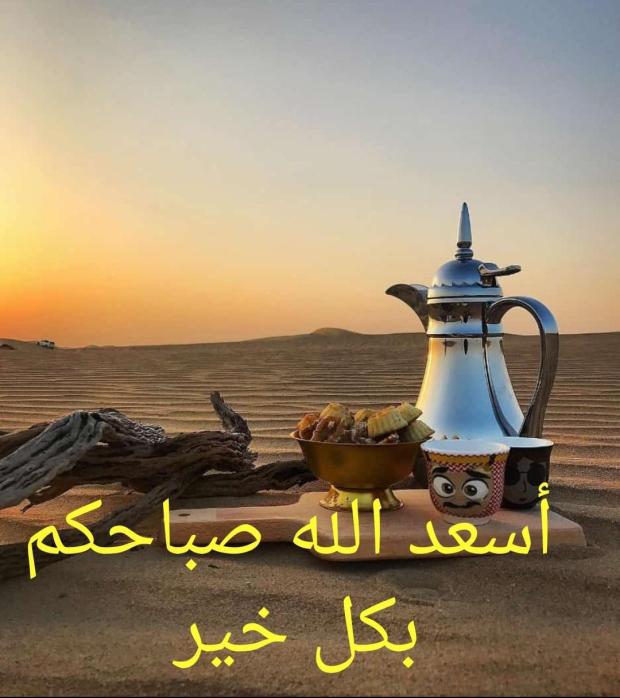
good morning - wood

Sometimes it is an issue of what you ask for is not what you get but sometimes it’s a visual and cultural problem, as in the photo above – I enlarged that photo several times, tilting my head, thinking “WHAT is that in the little bowl?” Finally I decided it was walnuts and date maamoul (dates with spices cooked into a paste, surrounded by a heavy sugar cookie dough and baked). I don’t think of  walnuts as breakfast food so I had to wait until my eyes could “see” them. Several times I have seen shallow bowls of dates and assumed it was pieces of meat and vice versa. One trick I learned is that if there is a coffee dallah (traditional Arabian coffee pot) it is dates; if there are cups of tea, it is probably meat. [Or in the above photo, the piece of wood doesn’t look like what I expect ‘camp fire wood’ to look like: it’s dark, full of holes, almost insubstantial looking. But from camping in the desert, I know this is typical of wood you can find or buy and it serves as a marker, “we are very far from town.”]

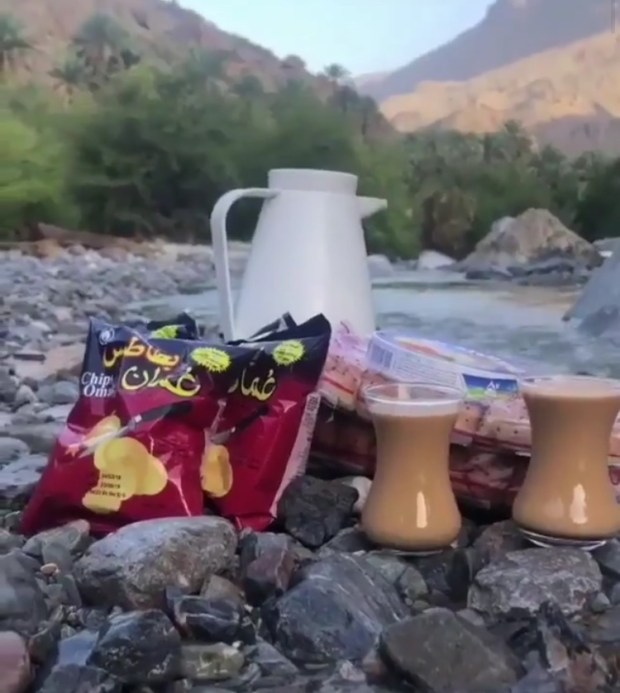
There is another level of difficulties: seeing various food items and not understanding how they fit together. A friend remembers being in a grocery store with me when we were in grad school. As we came around the corner of an aisle and the end cap had: cans of tuna, cans of peas, cans of sliced mushrooms, egg noodles, salt and canned cream of mushroom soup. I looked at her and said how this combination of food was a culturally-bound signifier of middle-class American in middle America, an implied recipe without stated recipe. Everyone who saw that display would know that all these items should be bought and cooked together to create a tuna casserole. But someone from outside that culture would see a collection of disparate items. Such as the photo below: chips, processed cheese and bread. This might be read as “put cheese on bread and eat with chips.” But Omanis know, you open the bag a little then crush the chips. Put cheese on bread, sprinkle on chip fragments and then roll up into a tube.

Eating begins with the eyes and everyone sees food through their cultures, upbringing and experiences. Learning to see again, see new, and re-see is a long process that I am still in the middle of.

tea with chips


My article “An Ethnographic Discussion of Fairy Tales and Folktales from Southern Oman” will be published in Fabula

I am pleased to announce that my article “An Ethnographic Discussion of Fairy Tales and Folktales from Southern Oman” will be published in Fabula [https://www.degruyter.com/view/j/fabl]

This article discusses a collection of fairy and folktales from southern Oman to explain how some of the physical and cultural markers described in the texts which are still extant today. The tales, most of which were recorded in the 1970s, were originally spoken in Gibali (also known as Jibbali or Shahri, a non-written, Modern South Arabian language) and are published in Rubin’s The Jibbali Language of Oman: Grammar and Texts (2014). This paper does not place these texts within established codices; rather, the exegesis turns inward, examining how these stories, recorded at the beginning of modernization in the Dhofar region, reflect many traditional elements of Gibali cultures. Further, the article compares the texts to other Dhofari/ Omani fairy and folktales from Al Thahab’s Stories of My Grandmother: Folk Tales from Dhofar (2012), Al Taie and Pickersgill’s Omani Folk Tales (2008), and Todino-Gonguet’s Halimah and the Snake and other Omani Folk Tales (2008) to highlight how the Johnstone/ Al Mahri/ Rubin texts show Dhofari beliefs about oath-taking and the importance of teaching morality in written, but not oral, texts.


Ramadan and Foodways – Images of food in connection to greetings and good behavior, Vimto and selling food

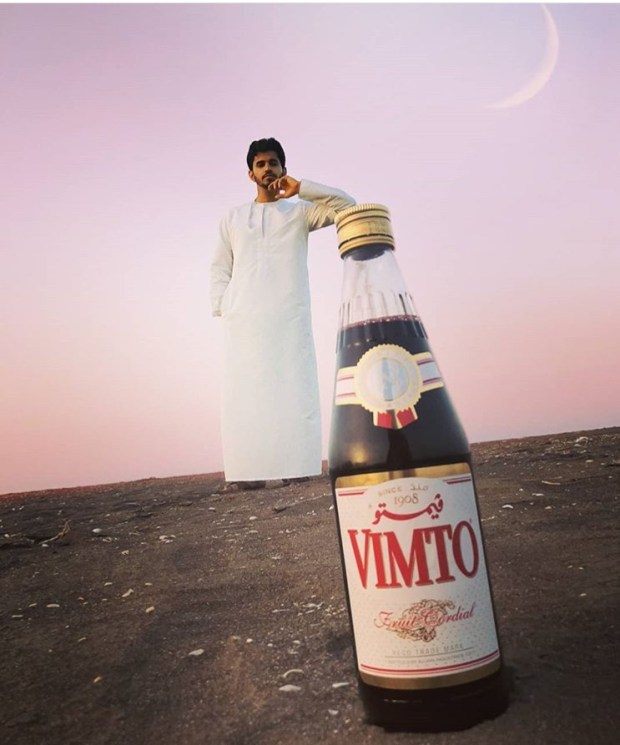
Marieke Brandt (2017) and John Postill (2016) have written about using social media to do anthropological research in places that are difficult to reach; it is also valuable when you are living in the same area. Scanning social media in Dhofar helps me to understand how food is conceptualized during the holy month of Ramadan. The analysis of the images comes next, but for now I am trying to discover the range of images and sorting through to see what kind of categories are found (and not found). In this post are some examples of food images in Ramadan greetings, different type of images with Vimto (a drink that has become associated with Ramadan), efforts by the government/ official channels to encourage good eating and generous behavior and an example of how prepared food is sold.

Food as a part of typical Ramadan greetings


The importance of Vimto!


Vimto at McDonald’s and Baskin-Robbins


Vimto as decoration


Fun with Vimto

vimto - moon

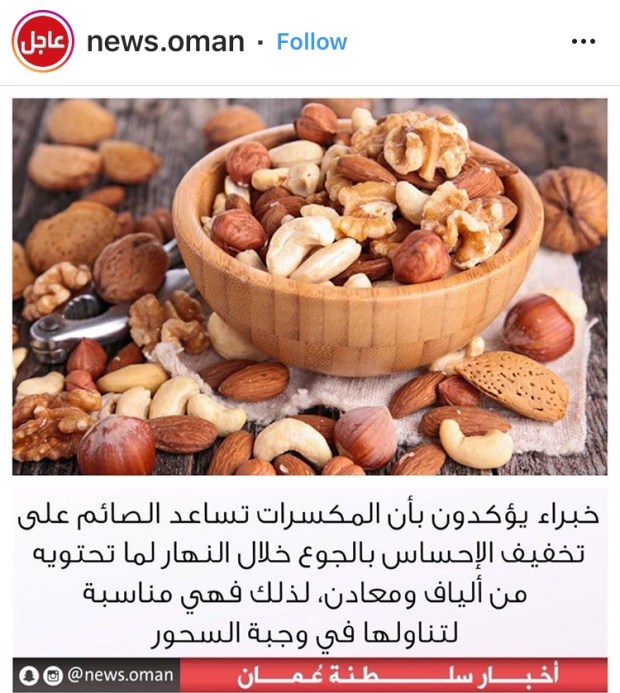
Efforts by government and private entities to improve eating habits during Ramadan

ramadan - nuts

This slideshow is stills from an ad which makes fun of people who have too much of something as a way to caution people against making too much (and then wasting) food at Iftar: a man who has several watches, a woman who has several TVs, a man wearing several hats, then the message.


This slideshow requires JavaScript.

Stills from a short video reminding people to not embarrass (judge) others during Ramadan. The video starts with 2 women preparing iftar, one is seen by a man as she eats a samosa. Then you see the family sitting at the table and enjoying iftar. The man pretends to ask the girl if she is enjoying the food, then humiliates for breaking her fast. As she looks sad, his wife pulls his dishdash and explains that she has a lawful reason not to fast.


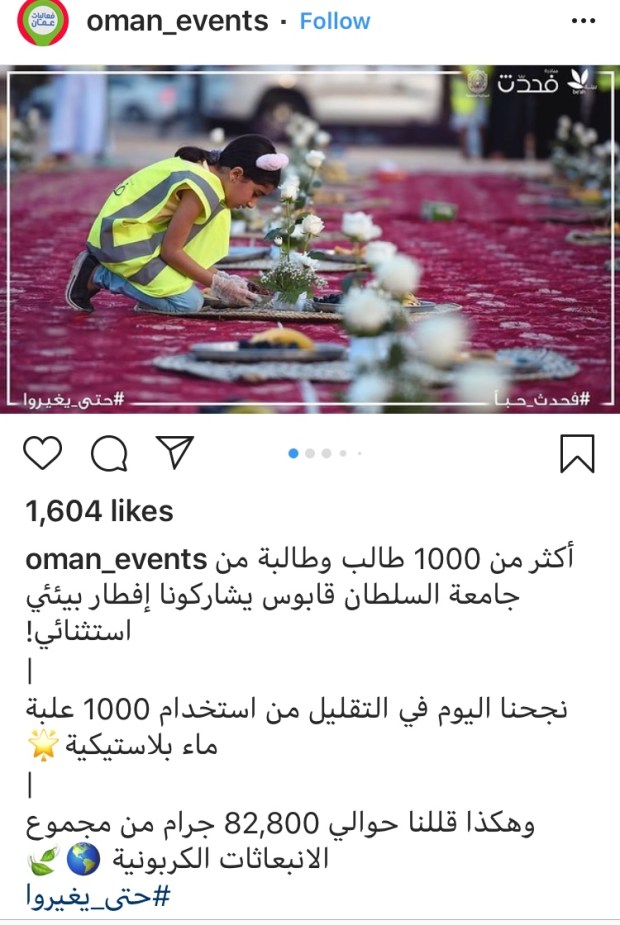
There are many photos to children helping to prepare Iftar/ handing out food

iftar help

Selling prepared food for Iftar:


The photos of the woman selling food are taken from an ad on social media which shows close-ups of several types of food and an description of the exact location of her tent.


Favorite Quotes on Anthropology

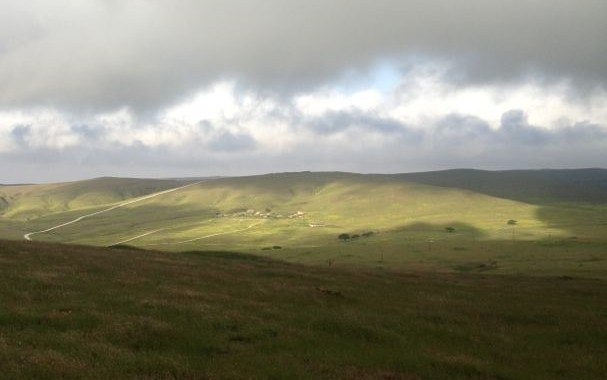
(photo by M. A. Al Awaid)

Ethnography is unlike literature and like science in that it endeavors to describe real people systematically and accurately, but it resembles literature in that it weaves facts into a form that highlights patterns and principles. As in good literature, so in good ethnography the message comes not through explicit statement of generalities but as concrete portrayal. (Peacock 1986 83).

What is significant is the vision of someone’s (the native’s) existence interpreted through he sensibilities of someone else (the ethnographer) in order to inform and enrich the understanding of the third party (the reader or listener). Ethnography in this sense is like literature: as a source of psychological and philosophical insight (and possibly aesthetic pleasure) when read as the author’s struggle to elucidate a perspective on life through his portrayal of a way of living – as he experienced it and analyzed it. (Peacock 1986 100)

The travel account is generally self-confident and authoritative in tone, and certain of a readership that wants a culturally shared translation of another way of life… but the realist ethnographic account has long been dogmatically dedicated to presenting material as if it were, or faithfully represented, the point of view of its cultural subjects rather than its own culture of reference (Marcus and Cushman 1982 34). [in anthropology] “the style of reportage was always pushed firmly toward generalization rather than maintained at the level of mere detailing of particular facts… it is impossible to work back from a final account to original fieldwork enterprise in anything like the way a chemist can work back through an experiment reported by another chemist (35).

the fact that one’s self is not expendable for a great many people, even when life offers turbulence and disaster; and self-representations shift and change, has two implications: It shelters you from some of the problems attendant on freedom to move ahead-that of keeping a hold of oneself through life. It also anchors you in a material world that clings to you and your biography…You are what you are by virtue of your connection to these things and this world: the same house, the same clothes, the same darned people. Your body, too anchors, you, being for most people a medium we cannot silence. This does not mean that things are fixed, immutable. But they persist, and you have to hang on to them, not just trade in the old car of a new one. (Wikan 1995 275)

Bibliographies: Research on Dhofar, Food & Anthropology, and Teaching Literature

(photo by M. A. Al Awaid)

Bibliography of Works Consulted for Research on Dhofar, Oman

Annotated Bibliography of Texts Pertaining to the Dhofar Region of Oman

Selected References for Research on Foodways and Society in Dhofar, Oman  – primarily texts relating to food/ cooking/ cuisine and anthropology

Selected Bibliography: Primary and Secondary Texts for Literature Teachers on the Arabian Peninsula


What I’ve Been Reading: Food, Cooking, Cuisine, Culture, Anthropology, & History

(image from Instagram account of Tiny Spoon, tiny_spoon, full image below)

Food Practices in Southern Oman – My current research focuses on food practices in the Dhofar region, specifically how food is used to show personal generosity and how eating together defines and enhances social relationships.

[this post reflects my current reading – the permanent link for my updated food/ culture bibliography is: Selected References for Research on Foodways and Society in Dhofar] 


Al-Hamad, Sarah. (2016). Cardamom and Lime: Flavors of the Arabian Gulf, the Cuisine of Saudi Arabia, Kuwait, Bahrain, Oman, Qatar and the U.A.E. Singapore: IMM Lifestyle Books.

Avieli, Nir and Rafi Grosglik. (2013). Food and Power in the Middle East and the Mediterranean: Practical Concerns, Theoretical Considerations. Food, Culture and Society 16.2: 181-195.

Appaduari, Arjun. (1985). Gratitude as a Social Mode in South India. Ethos 13.3: 236-245.

Boxhall, P. G. 1966. Socotra: ‘Island of Bliss’. The Geographical Journal 132.2: 213-222.

Brown, Victoria. (2014). Language: A Taste of Reality. One Dish Closer. http://www.onedishcloser.com/food-anthropology/2014/3/19/language-a-taste-of-reality.html

Campbell, Felicia. (2015). The Food of Oman: Recipes and Stories from the Gateway to Arabia. London: Andrew McMeel.

Clements, Frank. (1977). The Islands of Kuria Muria: A Civil Aid Project in the Sultanate of Oman Administered from Salalah, Regional Capital of Dhofar. Bulletin (British Society for Middle Eastern Studies) 4.1: 37-39.

Cleveland, Ray. (1960). The 1960 American Archaeological Expedition to Dhofar. Bulletin of the American Schools of Oriental Research 159: 14-26.

Ciezadlo, Annia. (2011, April 25). Eat, Drink, Protest: Stories of the Middle East’s Hungry Rumblings: Buying Peace, One Feast at a Time. Foreign Policy 186. https://foreignpolicy.com/2011/04/25/eat-drink-protest/

—.  (2011, March 15). Eating My Way Through the Cedar Revolution (excerpt). Foreign Policy. http://foreignpolicy.com/2011/03/15/eating-my-way-through-the-cedar-revolution-2/

Coleman, Leo, ed. (2012). Food: Ethnographic Encounters (Encounters: Experience and Anthropological Knowledge). Oxford: Berg.

Counihan, Carole and Penny van Esterik, eds. (2012). Food and Culture: A Reader. London: Routledge.

Crowther, Gillian. (2018). Eating Culture: An Anthropological Guide to Food. Toronto Press: University of Toronto Press.

De Regt, Marina. (2010). Ways to Come, Ways to Leave: Gender, Mobility, and Il/legality among Ethiopian Domestic Workers in Yemen. Gender and Society 24.2: 237-260.

—.  (2009). Preferences and Prejudices: Employers’ Views on Domestic Workers in the Republic of Yemen. Signs 34.3: 559-581.

Deeb, Lara and Jessica Winegar. (2012). Anthropologies of Arab-Majority Societies. Annual Review of Anthropology 41: 537-558.

Elie, Serge. (2006). Soqotra: South Arabia’s Strategic Gateway and Symbolic Playground. British Journal of Middle Eastern Studies 33.2: 131-160.

Ferguson, Priscilla. (2011). The Senses of Taste. American Historical Review 116.2:  371-384.

Fieldhouse, Paul. (1998). Food and Nutrition: Customs and Culture. Cheltenham, UK: Stanley Thomas.

Fisher, Jennifer. (2003-2004). “Arabian Coffee” in the Land of Sweets. Dance Research Journal 35.2: 146-163.

Fox, Robin. (2018). Food and Eating: An Anthropological Perspective. Social Issues Research Centre. http://www.sirc.org/publik/foxfood.pdf

Gilette, Maris. (2019). Muslim Foodways, in The Handbook of Food and Anthropology. Jakob Klein and James Watson, eds. London: Bloomsbury Academic. 48-73.

Goody, Jack. Cooking, Cuisine and Class. Cambridge: Cambridge University Press, 1982.

Julier, Alice. (2013). Eating Together: Food, Friendship, and Inequality. Chicago: University of Illinois, 2013.

—. (2013). Meals: ‘Eating In’ and ‘Eating Out’ in The Handbook of Food Research. Anne Murcott, Warren Belasco and Peter Jackson, eds. London: Bloomsbury Academic.

Julier, Alice and Lindenfeld. (2005). Mapping Men onto the Menu: Masculinities and Food. Food & Foodways, 13:1–16.

Jurafsky, Dan. (2014). The Language of Food: A Linguist Reads the Menu. New York: W. W. Norton.

Klein, Jakob and James Watson, eds. (2019). The Handbook of Food and Anthropology. London: Bloomsbury Academic.

Lichfield, Gideon. (2010, January 15). A Look Inside the Middle East’s New Weapons of Mass Consumption. Foreign Policy. https://foreignpolicy.com/2010/01/15/food-fight-4/

Maclagan, Ianthe. (1994). Food and Gender in a Yemeni Community, in A Taste of Thyme: Culinary Cultures of the Middle East. Sami Zubaida and Richard Tapper, eds. New York: I.B. Tauris Publishers. 159-72

Mauss, Marcel. (2011/ 1924). The Gift: Forms and Functions of Exchange in Archaic Societies. Mansfield Centre, CA: Martino Publishing.

Mbaga, Msafiri Daudi. (2015). The Prospects of Sustainable Desert Agriculture to Improve Food Security in Oman. Consilience 13: 114-128. http://www.jstor.org/stable/26427275

Meneley, Anne. (2007). Fashions and Fundamentalisms in Fin-De-Siecle Yemen: Chador Barbie and Islamic Socks. Cultural Anthropology 22.2: 214–243.

Miller, Anthony, Miranda Morris, and Susanna Stuart-Smith. (1988). Plants of Dhofar, the Southern Region of Oman: Traditional, Economic, and Medicinal Uses. Muscat: Office of the Adviser for Conservation of the Environment, Diwan of Royal Court.

Mintz, Sidney. (1996). Tasting Food, Tasting Freedom: Excursions into Eating, Culture, and the Past. Boston: Beacon Press.

Mintz, Sidney, and Du Bois, Christine. (2002). The Anthropology of Food and Eating. Annual Review of Anthropology 31:99-119.

Morris, Miranda. (1997). The Harvesting of Frankincense in Dhofar, Oman. In Alessandra Avanzini, ed.  Profumi d’Arabia. Rome: L’Erma Bretschneider: 231-250.

—. (1987). ‘Dhofar – What Made it Different’ in Oman: Economic, Social and Strategic Development. B.R. Pridham, ed. London: Croom Helm. 51-78.

Nagy, Sharon. (2000). Dressing up Downtown: Urban Development and Government Public Image in Qatar. City and Society 12(1): 125-47.

—. (1998). “This Time I think I’ll try a Filipina”: Global and Local Influences on Relations between Foreign Household Workers and their Employers in Doha, Qatar. City and Society 10(1): 83-103.

Omezzine, Abdallah. (1998). On-shore Fresh Fish Markets in Oman. Journal of International Food and Agribusiness Marketing 10(1): 53-69.

Omezzine, Abdallah, Lokman Zaibet and Hamad Al-Oufi. (1996). The Marketing System of Fresh Fish Products on the Masirah Island ion the Sultanate of Oman. Marine Resources Economics 11: 203-210.

Popp, Georg. (2018). Notes on the Omani Kitchen Eating with Tradition. Just Landed. https://www.justlanded.com/english/Oman/Articles/Culture/Notes-on-the-Omani-Kitchen

Rodionov, Mikhail. (2012). Honey, Coffee, and Tea in Cultural Practices of Ḥaḍramawt in Herbal Medicines in Yemen: Traditional Knowledge and Practice, and Their Value for Today’s World. Ingrid Hehmeyer and Hanne Schönig, eds. Brill: Boston. 143-152.

Roseberry, William. (1996). The Rise of Yuppie Coffees and the Reimagination of Class in the United States. American Anthropologist, New Series, 98.4: 762-775.

Rubin, Aaron. (2015). Recent Developments in Jibbali. Journal of Semitic Studies 60: 431–441.

Sadeghin, Farideh. (2015, Oct. 27). The Food of Oman is Too Good to Ignore: Recipe-testing a Middle Eastern Cookbook Gives our Test Kitchen Director a New Love for an Under-appreciated Cuisine. Saveur. https://www.saveur.com/food-of-oman-cookbook-cuisine-felicia-campbell

Stoller, Paul and Cheryl Olkes. (1986). Bad Sauce, Good Ethnography. Cultural Anthropology 1.3: 336-352.

Stork, Joe. (1973, March). Socialist Revolution in Arabia: A Report from the People’s Democratic Republic of Yemen. MERIP Reports 15: 1-25.

Swift, Candice Lowe, ed. (2015). Teaching Food and Culture. London: Routledge.

vom Bruck, Gabriele. (2005). The Imagined ‘Consumer Democracy’ and Elite Re-Production in Yemen. Journal of the Royal Anthropological Institute 11.2: 255-275.

van Esterik, Penny, Alice Julier and Carole Counihan, eds. (2018). Food and Culture: A Reader. London: Routledge.

Watson, Janet C.E. (2013). Travel to Mecca in the Pre-motorized Period in The Hajj: Collected Essays. Venetia Porter and Liana Saif, eds. London: The British Museum. 96–99.

Watson, Janet C.E. & Abdullah al-Mahri. (2017). Language and Nature in Dhofar, in  RiCOGNIZIONI. Rivisti di Lingue e Letterature straniere e Culture moderne.  Simone Bettega and Fabio Gasparini, eds. Turin: University of Turin. 87–103.

Webster, Roger. (1991, October). Notes on the Dialect and Way of Life of the Āl Wahība Bedouin of Oman. Bulletin of the School of Oriental and African Studies 54.3: 473-485.

Weir, Shelagh. (2007). A Tribal Order: Politics and Law in the Mountains of Yemen. Austin: University of Texas Press.

Yamani, Mai. (2000). You Are What You Cook” Cuisine and Class in Mecca in A Taste of Thyme: Culinary Cultures of the Middle East. Sami Zubaida and Richard Tapper, eds. New York: I.B. Tauris Publishers. 159-72.

Blogs – Omani Food

Mariya. Omani Food. https://omanifood24.blogspot.com/

Omani Recipes. (2015). Arabic Recipeshttp://www.encyclopediacooking.com/recipes_in_english/omani-recipes-53-1.html

Traditional Omani Food. (2008, March 1). https://ward-traditionalomanifood.blogspot.com/

Yasmeen. (2018). Omani Cuisine. http://www.omanicuisine.com/

Websites – Expat, Tourist and Commercial

The Delicious Cuisine of Oman! (n. d.). Holidify. https://www.holidify.com/pages/omani-food-230.html

Food and Drink – About Oman. (2018). Rough Guides. https://www.roughguides.com/destinations/middle-east/oman/food-drink/

Guide to Omani Cuisine. (2017, June 14). Expat Woman.com. https://www.expatwoman.com/oman/guide/guide-to-omani-cuisine

Medhat, Gehad. (2017, Dec, 27). The 10 Best Coffee and Tea Shops in Salalah, Oman. Culture Trip. https://theculturetrip.com/middle-east/oman/salalah/food-misc/

Medhat, Gehad. (2017, Dec, 27). The Top Restaurants in Salalah, Oman. Culture Trip. https://theculturetrip.com/middle-east/oman/articles/the-top-restaurants-in-salalah-oman/

Oman. (2018). Countries and Their Cultures.  http://www.everyculture.com/No-Sa/Oman.html

Omani Food. (2015). Best Country. http://www.best-country.com/asia/oman/food

Omani recipes and cuisine. (2018). Nestle.  http://www.nestle-family.com/english/omani-recipes.aspx

Popp, Georg. (2018). Notes on the Omani Kitchen Eating with Tradition. Just Landed. https://www.justlanded.com/english/Oman/Articles/Culture/Notes-on-the-Omani-Kitchen


mini truck

(image from Instagram account: Tiny Spoon)