One Year Away – Missing Oman

I left Salalah a year ago and am still processing that loss. I miss my friends and so many aspects of Dhofari life, especially:

  • Long conversations – When you sit down to talk to a friend in Oman, it’s expected you will talk for hours. I miss having coffee with a female friend for 2 or 3 hours; picnic dinners with the research guys which could mean 6 or 7 hours of chatting.
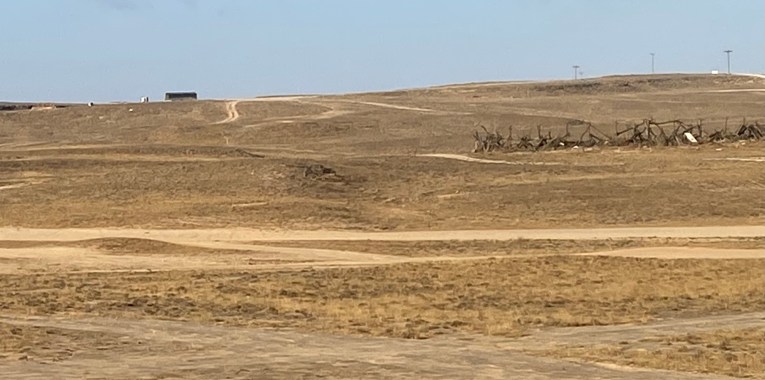
  • Gorgeous Nature – Pristine, empty beaches; snorkeling over reefs; boat rides, skimming along next to pods of leaping dolphins; sitting in the desert or on a beach with no ambient lights so you could a dark night sky full of stars; green mountains in the monsoon season
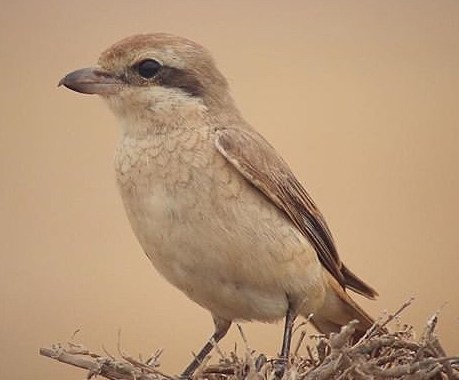
  • Animals – lizards and chameleons; seeing foxes, hearing wolves; the parrots which came to my guava tree; flamingos; camels, especially baby camels
  • Plants – palm trees; banana trees; lemon trees; fig trees; my gardens with papaya trees, henna trees, neem trees, olive trees, hibiscus, bougainvillea, oleander, gardenia, jasmine, aloes, lemongrass, yellow trumpet flower
  • Food – fresh coconut milk, schwarmas, fresh Yemeni bread, lobsters cooked over coals, fresh fruit juice, Balbek (if you know, you know), fresh lemon and mint, fresh fish
  • Teaching literature and 98% of my students – Although it cost me $100s a year, it was fun buying and reading books as I searched for new poems and stories to teach. It was a joy to craft syllabi with texts from different time periods and cultures with similar characters, plots and/ or themes and then the best part, talking about these texts with students who had great insights and could make connections to other texts and their own lives. Some classes were an uphill climb but in some classes we laughed all semester.
  • Discussing religion – Everyone I knew believed in God and was up for talking about religious beliefs; I could say, “I will pray for you” and ask, “Will you pray for me?” as a part of ordinary conversations
  • Multi-cultural everythings – Walking through the grocery store and not knowing what I was looking at: new vegetables, new fruit, words I didn’t understand on jars; all different kinds of clothes and fabrics
  • Active ethnography – I was always watching, listening, trying to figure out what was going on: What was that word? Why did that person do that? It was exhausting but always interesting
  • Constantly learning – students were always teaching me new expressions and gestures; the research guys teaching me how to how to drive on sand (only getting stuck three times!), up steep inclines and over rocks
  • Language barriers – Being able to go through the day without understanding most of the conversations around me was relaxing; now I constantly overhear people venting when I walk home or sit in a café
  • My truck – Driving in Oman is so fun on flat desert roads, twisting mountain roads, roads that curve along the shoreline
  • Houses – High ceilings, archways, lots of counter-space in the kitchen, well-designed bathrooms

What’s nice about where I am

  • Being able to easily see/ talk to friends, my mom and family
  • Working with kind and competent people: no lying, no back-stabbing, no drama and every single person says “Hello”
  • Flower stores, especially Kendall Flower Shop, Brattle Square Florist and Petali
  • Breakfast sandwiches, pizza, salads and ice cream without freezer burn
  • Not sharing my apartment with mice, spiders, bees or armies of ants – quiet ACs

Outline and Chapter Abstracts for ‘Researching, Teaching and Working on the Arabian Peninsula: Creating Effective Interactions’

Practicalities of Moving to the Arabian Peninsula: Using the Arabic Language

Ethnography – Finding the Middle Ground, part 1 of Discussing Photographs

Returning to USA – Culture Shock essays

Outline and Chapter Abstracts for ‘Researching, Teaching and Working on the Arabian Peninsula: Creating Effective Interactions’

Outline and Chapter Abstracts for Researching, Teaching and Working on the Arabian Peninsula: Creating Effective Interactions [ https://link.springer.com/book/10.1007/978-981-96-5326-3 ]

Chapter 1 – Situating Work and Research on the Arabian Peninsula 1

Overview 1

Audience 3

Locals 5

Non-locals 7

Becoming Local and Controlling Interpretations 8

My Background 11

Doing Research 14

Research and Safety 16

Other Voices 18

References 24

Chapter 2 – Literature Review for the Arabian Peninsula 27

Overview 27

Ethnography and the Importance of Changing Your Ideas 28

Ethnography and the Importance of Writing About When

You Are Wrong 29

General Anthropology Texts 32

Textbooks 32

Fieldwork Journals 33

Discussing Fieldwork/Fieldsites 33

General Texts About Anthropology and/or Arab/Islamic Countries 35

Arabian Peninsula Countries 36

Situating Arabian Peninsula Studies/History 36

Bahrain and Kuwait 37

Oman 38

Qatar 38

Saudi Arabia 39

The United Arab Emirates 40

Yemen 41

Arabian Peninsula Themes 43

From the Society 43

Islam 44

Labor/Migration 46

Partner Studies 47

Politics/Power 47

Social/Family 47

Survive/Thrive 48

Tribes 49

Women 50

References 53

Chapter 3 – Before Moving to the Arabian Peninsula 77

Overview: Thinking About Adjustments 77

Learn the Alphabet 79

Starting to Understand Islam If You Aren’t Muslim 80

Ramadan 80

Religion and Public Performance 82

Get Ready for Culture Shock 83

Get Ready for the Weather 85

Get Photos, Make Copies, Find a Bank and Get Change 86

Get in Touch with People 87

Buy Stuff 88

Plan for Happiness 88

For Travelers 89

Starting Out—Working 91

Starting Out—Teaching 92

Starting Out—Researching 94

Thinking About Fieldsites 95

Think About How You Present Yourself 96

Figure Out Your Way of Taking Notes, and Be Ready to Entirely Change It 97

Be Able to Explain Your Research in Ways That Make Sense to the People You Are Talking To 97

Proceed Slowly and Hope for a Hand-Off 98

References 100

Chapter 4 – Adjusting to Life on the Arabian Peninsula 103

Starting Out—General Points 103

Know Yourself and Be Prepared 103

Smile 104

Over-Explain 106

Don’t Lie 107

Refine Your Ability to Read People 108

Get Local 108

Get Generous 109

Be Yourself in Your Downtime 110

Time/Money Continuum 111

Safety/Anonymity 112

Transportation 113

Communication 114

Visual Cultures 118

Information Brokers 120

Friendship/Hospitality 121

Family 123

Busy/Lazy 125

References 130

Chapter 5 – Key Topics for Expat Researchers on the Arabian Peninsula 133

Overview—Positionality 133

Tribes 134

You Aren’t in a Tribe/You Are in a Tribe 135

Talking About Tribes 137

Clothes 138

Language 140

Knowing/Not Knowing Arabic 140

Age and Gender 142

Men 143

Special Themes 146

Exhaustion 146

Authenticity/Modernity 150

Prejudices 151

What Happens When You Love (or Hate) the People You Talk To? 153

Claiming Expertise 156

Safety 156

Payback 157

References 164

Chapter 6 – Strategies for Research on the Arabian Peninsula 167

Overview 167

Research Practicalities—Meeting Other Researchers 168

Getting in Touch with Other People for Information and Assistance 168

When You Meet 169

After Meeting 169

When Other People Get in Touch with You for Information 170

Research Practicalities—In the Field 171

Be the Most Cautious Version of Yourself Until You Are a Little Settled 171

Be Careful About Becoming a Dancing Monkey 172

Be Careful of Newspaper/Radio Interviews 173

Be Calm/Don’t Be Calm 174

Start Talking/Stop Talking 175

Go with the Flow 176

Think About Different Explanations 177

Be Wary of the Inclination to Save Anyone from Anything 178

Be Ready for Deflection Strategies and Deal with Them Calmly 179

Accept There Will Always Be Changes to Make and More to Do 180

Refinements 180

Have Situational Awareness 180

Sit Where You Are Told to Sit and Stay Seated 181

Giving and Receiving 182

References 184

Chapter 7 – Suggestions for Expat Professional Workers on the Arabian Peninsula 185

Overview 185

Starting Out 186

Greet Everyone 186

Modesty Is Equally Important for Men and Women 187

Stay Formal at Workplaces 187

Ask Questions 188

Understand That “Yes” Does Not Mean Agreement 188

Everything Is a Precedent 189

Do Not Notice When What Was Impossible Becomes Possible (or What Was Done for Years Becomes Impossible) 189

At a Job 190

Keep a Change List 191

Sit in Your Seat 192

Names and Phone Calls 192

Find Your Dumping Ground 193

Find Mercy 193

Find Your Expat Veneer 194

Dissembling 194

Meeting Important People 195

Pay Attention to and Follow Up on Off-Hand Comments 196

Don’t Be Evil 196

Cultural Understandings 197

Power and the Chain of Command 197

Value Honesty 198

Louise Penny as Management Guru 199

Tribes in the Workplace 200

Refinements 201

Judging Behavior 201

Providing Food 201

Making a House Visit 202

Attending a Funeral 203

References 205

Chapter 8 – Suggestions for Teachers on the Arabian Peninsula 207

Overview 207

Arrival and Expectations 209

Research on Teaching 209

Culture and Pedagogy 210

The “Third” Option 211

Cultural Constructions Within High Context Cultures 212

Cultural Constructions of “Power” and “Authority” 213

Cultural Constructions of “Magic Words” 215

Cultural Constructions of “Patience” 216

Cultural Constructions of “Shame” 217

Techniques 218

Understand That Fear May Appear as Anger or Silence 218

Stay in Calm and in Control 219

Check for Understanding 221

Make Statements Instead of Asking Personal Questions 221

Explain Your Reasoning 222

Do Not Fight the Family 223

Do Not Make False Threats 224

Use Distraction 225

Use Humor 226

Stay Realistic—What You Can Control 227

Stay Realistic—Expectations 228

Give Clear Directions 229

What I Had to Rethink 231

Assumption: Students with a Low Level of English Will Be the Hardest to Teach 231

Assumption: Teachers’ Interactions with Students Are Based on Professional Considerations 232

Assumption: You Make Your Choices and You Live with the Consequences 233

Assumption: Try the New 234

Teaching Fiction to Non-literature Majors 235

References 237

Abstract

Researching and Working outlines strategies for current or soon-to-be anthropologists, government employees, business professionals, researchers and teachers to communicate, study and work effectively on the Arabian Peninsula. Using first-person accounts, as well as scholarly research from the fields of anthropology, history, literature, political science and travel writing, this text gives clear advice so long- and short-term visitors can create successful interactions with people from Arabian Peninsula societies. By discussing how the practicalities of work and research intersect with cultural norms, this book fills the gap between guides aimed at the casual tourists and academic texts on narrowly defined topics. The author has lived and taught on the Arabian Peninsula for more than 20 years and this book is a distillation of observations, academic research and longstanding, deep involvement with local communities in southern Arabia.

Chapter 1 – Situating Work and Research on the Arabian Peninsula

Chapter 1 begins by discussing the audience and scope of the book. It then delves into the questions of who is “local” on the Arabian Peninsula and who speaks for whom? Next there is a brief overview of the author’s background and work in the United Arab Emirates and Oman. Lastly, the author gives several extended examples of research and teaching to highlight elements of cross-cultural communication and confusion.

Chapter 2 – Literature Review

Chapter 2 is an annotated bibliography of texts from the fields of anthropology, history, literature, political science and travel writing which relate to the Arabian Peninsula. The books and articles are arranged by topic and country for researchers interested to see what kinds of work have been done and for readers looking for more in-depth information. There are also short essays on the importance of changing your ideas and acknowledging when you are wrong while doing research, as well as how to pick a fieldsite. Next the chapter gives a selected bibliography of texts pertaining to specific Arabian Peninsula counties. This is followed by short lists of texts pertaining to reoccurring themes in Arabian Peninsula research: Islam, Partner studies, Labor/ Migration, Politics/ Power, Social life/ Family, Survive/ Thrive, Tribes and Woman.

Chapter 3 – Before Moving to the Arabian Peninsula

This chapter is for teachers, researchers and business professionals who have not spent significant time on the Arabian Peninsula. It covers basics such as learning the Arabic alphabet, starting to understand Islam and managing Ramadan as a non-Muslim. It also has specific advice on how cope, for example how to deal with the hot weather, the need for using an international bank and how to prepare paperwork. The chapter includes information for how to get in touch with people before arrival and how to plan for happiness in-country. It ends with sections for specifically for business professionals and teachers. For researchers, there is information about how to create a network of acquaintances, integrate with the local community, decide how to present yourself and figure out the way to take notes.

Chapter 4 – Adjusting to Life on the Arabian Peninsula

This chapter covers the nuts and bolts of first steps on the Arabian Peninsula for teachers, researchers and business professionals. For example, it explains that new arrivals are often taken directly from the airport to meet colleagues and/or start house hunting. The chapter sets out necessary adjustments such as the importance of smiling, over-explaining, not lying and learning how to read people. In addition, the chapter addresses topics such as safety/anonymity, movement through public spaces, effective communication and the consequences of working in cultures that are often visual-, not text-based. How friendships, family relations and information brokers are handled on the Arabian Peninsula are also discussed.

Chapter 5 – Key Topics for Researchers on the Arabian Peninsula

This chapter is for researchers and addresses the issues of positionality, tribal structures, clothing, language and gender. The text includes advice on general topics such as coping with exhaustion, handling prejudices and claiming expertise. It also discusses what happens when you love (or hate) the people you talk to, how to keep safe and how to manage payback.

Chapter 6 – Strategies for Research on the Arabian Peninsula

This chapter helps researchers think through specifics. There are sections about how to do interviews, talk about your project, deal with the press, give presentations and keep up connections with interlocutors. It gives suggestions about being the most cautious version of yourself until you are a little settled and not allowing yourself to be set up for public mockery. It covers how to cope with deflection strategies and keep up situational awareness.

Chapter 7 – Suggestions for Expat Professional Workers on the Arabian Peninsula

This chapter is for business professionals and travelers with guidance for how to prepare for the weather and bureaucracy on the Arabian Peninsula. It explains the need for quiet, modest and formal behavior at workplaces, public spaces, cultural locations and homes/hotels/hostels. It explains that a “yes” is not necessarily an agreement and “I can” does not necessarily mean the person has that ability. Further, it clarifies how to create a positive work environment within cultures which often value family-based events (births, weddings, deaths, recovery from illness, etc.) more important than work requirements. It gives details about settling into the work environment with details about power structures, the value of honesty, how to behave with important people and the importance of having an expat veneer.

Chapter 8 – Suggestions for Teachers on the Arabian Peninsula

This chapter is for teachers and covers how to set achievable expectations for classroom management and workplace behaviors. The focus is on how meanings of words such as “power,” “authority,” “patience” and “shame” carry specific, and possibly new meanings, within high context cultures on the Arabian Peninsula. The chapter sets out techniques to create a positive classroom atmosphere, check for understandings, stay realistic and use distraction. Lastly, the text explains the concept of the “third way,” meaning a combination of the teacher’s pedagogical background and local expectations within a classroom can create a space for win-win interactions between students and teachers.

Practicalities: Managing a Short Research Trip to the Arabian Peninsula

Practicalities: Managing a Short Business Trip to the Arabian Peninsula

Ethnography – Whatever You Do, Don’t Smile, part 2 of Discussing Photographs

Practicalities of Moving to the Arabian Peninsula: How to Sit, Not Wear Shoes and Use Your Hands

Poem: “For a Student Who Used AI to Write a Paper,” Joesph Fasano

“For a Student Who Used AI to Write a Paper,” Joseph Fasano

Now I let it fall back
in the grasses.
I hear you. I know
this life is hard now.
I know your days are precious
on this earth.
But what are you trying
to be free of?
The living? The miraculous
task of it?
Love is for the ones who love the work.

****

“Sudden Hymn in Winter,” Joseph Fasano

What if, after years
of trial,
a love should come
and lay a hand upon you
and say,
this late,
your life is not a crime

Two poems for courage: “Against Hesitation” by Charles Rafferty and “Thalassa” by Louis MacNeice

A good poem for hard times – “Atlas” by U. A. Fanthorpe

Poems – “Finding Poems for my Students” by Mohja Kahf

Poems

New book – Researching and Working on the Arabian Peninsula: Creating Effective Interactions

I am happy to announce that my 4th book, Researching and Working on the Arabian Peninsula: Creating Effective Interactions, has been accepted for publication at Palgrave Macmillan. I am very grateful to the two anonymous reviewers who gave positive and helpful comments.

This book outlines strategies for current or soon-to-be business professionals, government employees, anthropologists, researchers and teachers to communicate, study and work effectively on the Arabian Peninsula. Using first-person accounts, as well as scholarly research from the fields of anthropology, history, literature, political science and travel writing, this text gives clear advice so long- and short-term visitors can create successful interactions with people from Arabian Peninsula societies. By discussing how the practicalities of work and research intersect with cultural norms, this book fills the gap between guides aimed at the casual tourists and academic texts on narrowly defined topics.

Reflections on Ethnographic Work: Leaving and Learning

Presentation – “Windguru and Other Gurus: Fishing off the Coast of Dhofar, Oman”

Culture Shock – (Not) Being Under Observation

Predator Anthropologists, Anthropologist Predators: Anthropological Metaphors in Popular Movies


Teaching: Reflections on Culture Shocks

I had a wonderful time teaching for 21 years on the Arabian Peninsula; I wish I could have stayed longer. My students were smart, funny, creative and kind. Yet, coming from a different culture, I had some assumptions which I needed to unlearn. I realize the following might sound negative so I want to be clear: there are difficult students no matter where you teach. My students in the Emirates and Oman were 99% lovely and 1% challenging.

teachers control all areas of a school

This was the first assumption I had to unlearn. On the Arabian Peninsula, teachers are in control of only their students only in the classroom only during class time; any other attempts to correct behavior can be seen as an unwarranted invasion of privacy. Asking a student who is leaning against a “no smoking” sign in a hallway to stop smoking was met with a furious denunciation most of the time. Asking students to stop screaming in the hallway was likewise often met with contempt, in addition to louder screaming, hysterical giggles and rude words.

The first few times this happened, I thought I was dealing with unusually difficult students but I soon realized this was the norm. It didn’t matter if I asked politely, merely gestured or evoked my status; very few students would willingly put out the cigarette or stop yelling. I did not have the right to police hallways.

if students make mistakes, they will be polite

On the Arabian Peninsula, the older you are, the more self-control you are expected to have. This can set up a kind of get-out-of-jail-free card for students in that if they are rude, they believe that the elder teacher must keep their temper. A common tactic was for a student do something wrong, act rudely, elicit anger from teacher, then claim victim status, thus shifting the conversation from the student’s mistake to the teacher’s anger.

Nothing was more infuriating for a student than a composed teacher, such as my saying sadly and slowly, “I am so sorry, this paper is more than a week late so I can’t give you a grade. I will review it for mistakes so you are ready for the midterm, but your grade is zero.” My staying calm meant they could not get traction to change the focus from their not doing the work to my being “angry.” My expressing sorrow and speaking quietly meant the discussion centered on them, not me.

students with a low level of English will be the hardest to teach

This seemed to me quite straightforward, the less I could communicate with a student, the less I would be able to teach them. But the opposite was true. Students with low language skills would either make an effort by focusing in class, getting help from friends, coming to see me in my office or signing up for tutoring. A few tried to cheat, but if I caught them, they would either give up and drop the class or settle down to work honestly.

The worst difficulties were always with the students who had a high level of English. There was often a terribly dynamic in which they felt that, since they had always received straight As, high grades were their right. Other teachers had feted their ability to speak fluently, so they felt they had mastered all the necessary skills.

The most grueling conversations I had were with students who expected a perfect grade for perfect English combined with problematic elements such as giving a presentation while twisting their body, clutching their clothing and reading long paragraphs off PowerPoint slides or someone who wrote an essay without any grammar mistakes which was a hodge-podge of ideas in no discernable order.

Trying to explain that there was a difference between writing correct sentences and having well-organized essays was futile. Trying to explain that even good writers revised and reorganized their work was futile. It was also futile to explain that shorter sentences and essays divided into paragraphs are expected in English essays. Some students had gone through high school and some university-level classes with non-native speakers of English who allowed 60-word sentences and two-page essays which were all one paragraph. My saying that this was not usual in academic English was viewed as an attempt to steal their well-deserved marks.

It was frustrating for both me and the student to have these kinds of conversations. My point was, “you have the basics down, now let’s get you to the next level of writing with stronger openings, more fluid transitions between topics, better quotes, more interesting endings, etc.” Their point was, “I am getting 100/ 100 in my other classes, I know everything I need to know.”

teachers’ interactions with students are based on professional considerations

The most common metaphor for teachers is that they should be like a “mom,” i.e. endlessly forgiving and accepting. And like any situation with one mom and several children, students were always on the lookout for any signs of partiality.

Over the years, I tried to refine my teaching to eliminate any chance of being accused of favoritism. Instead of asking “who wants to read” or picking a random student, I would always start with the student who was sitting to the far right in the semi-circle. I used rubrics with highlighters to grade papers. For example, if a student lost points because of grammar issues, I would highlight the word “grammar” on the rubric in yellow and then highlight the paper’s grammar mistakes in yellow so they could easily see the correlation between their paper and their grade.

When they handed in an exam, I would immediately flip over the cover page with their name and I graded exams by going through everyone’s first page, then everyone’s second page (without looking back to see how a student did on page 1), etc.

All this effort mitigated some of the complaints but there was no way to make all the grades unbiased in their opinion. For example, I based the portion of the grade for “class participation” on three types of grades: 1) homework and recitations, 2) if they participated in group work and 3) reading checks, when I would walk around the room at the start of class to see if they had written notes/ definitions for the text we would read that day.

I picked which days I would check for reading at random and would write them in my planner ahead of time so I would not base my decision given who was present or whether I could see writing in their texts as I walked into class. But students would still complain, “She KNEW I didn’t do the reading, that’s why she checked today.”

One semester, as I walked out of the last class, one student was telling the others (in English, i.e., wanting to make sure I understood) “She ONLY checked readings on the days I didn’t prepare for class.” I know this was a self-preservation tactic (related to the next point) but the ones who practiced it created an unhealthy atmosphere of distrust towards teachers.

you make your choices and you live with the consequences

I went through my education with the idea that my grades were under my control. However, some students held the view that their grades were concocted from mysterious forces beyond their ken. Bad grades were not a result of them deciding not to do homework, come to class, ask questions or study; bad grades were the result of bad teaching and “circumstances.”

Being caught cheating on an exam or copying from the internet produced anger at me for not telling them that they were not allowed to copy paragraphs verbatim from other sources. When I printed out and highlighted the sections of the syllabus and assignment which explained that copying was not allowed, they said that they had not read that and hence didn’t know, so I did not have the right to lower their grade.

Some students had what I call the “two-world theory”; if they were late to class, they have a good reason but there was no acceptable excuse if another person (such as a food delivery person) was late. This odd dichotomy played out often. Students who missed 25% of my class complained viciously if a teacher missed their office hours. Students who turned in papers late complained about unorganized teachers. Students who broke rules such as using their phones in class, talking incessantly and copying homework from their friends complained if someone in administration did not do their job properly.

I never quite saw the contours of this problem – was it that the students were so endlessly coddled at home that they truly believed nothing could ever be their fault, or they felt so endlessly put upon that they were going to fight for whatever advantage they could get, or they felt everything was unfair and everyone was behaving badly so it didn’t matter if they did as well?

Of course, not all students acted like this, but the ones who did held on to the two-world theory so tightly that pointing out their hypocrisy (“yesterday you complained to me about how that person did not organize their time well and today you were 15 mintues late to class”) effected no change in attitude.

communal cultures means students will work well in groups

This is another issue that I don’t see all the contours of. I assumed that given the students were from tribe-based cultures and often spoke of the Omani dedication to peaceful coexistence, that group work would be a breeze. I quickly learned that a tribal upbringing meant that students would never rat out the students who did no work. It got to the point that a student wrote me an anonymous note asking me to stop doing group work as she had to do all the assignments; the other students in her group did nothing but she couldn’t say that publicly.

So I reworked groups as just discussion-based and told them that I would pick one student from the group at random to explain what the group had decided. This solved the issue of some students not participating.

But another problem remained: some students refused to speak to other students. I would set students in groups, then sit at my desk and pretend I was busy with paperwork. After a few minutes, I would look up and try to asses what was going on. Often if they were in groups of three, two students would talk and ignore the third one. So I learned to put students in pairs or groups of five. And I would always decide on the groups (deliberately splitting up any pairs of friends) as, the few times I let them choose, they would either pick their one friend, sit by the person they thought was the smartest person in the class or sit silently alone, making no effort to create an alliance, which is related to my next point.

try the new

When I was an undergraduate at University of Wisconsin-Madison, I signed up for a class on Northern European history on a whim because I didn’t know anything about that topic. On the first day we were given a list of possible topics for a presentation which would involve us teaching an entire class on the subject we picked. I choose the Finnish Civil War as I knew nothing about it.

When I went to the library to find some books on my topic, I discovered that my professor had written the definitive three volume history of the Finnish Civil War. I researched and cobbled a draft together, then went to his office to ask some questions and ended up sobbing as I was overwhelmed by having to explain this war to all my classmates in front of a Finnish professor. The poor man calmed me down and I managed to pull through.

I continued on this path of picking classes that were way beyond my knowledge base with similar consequences. When I studied at a German university, I took a class on Russian drama because I had never read one. German universities give collective exams after 3 years of study, but since I was transferring back to Wisconsin, I had to go to the professor’s office and have an oral exam at the end of the semester. One of his questions was “What is distinctive about Chekhov’s dramas?” I answered the best I could but I could not get the right answer which was the pauses between when actors speak. I had no idea about this feature as I had only read the plays; I had never seen one performed.

When I was accepted into my Masters of Education program for foreign language and social studies, the university required that I take two American History classes. I picked one on the 1600s and 1700s and one on the civil war. The Early American class had Masters and PhD in American History students and was based on class discussions. In the Civil War class, my classmates were two American History PhD students and we three traded off presenting books we had read. I was in way over my head all semester. I also moved overseas three times without knowing anyone in the country and traveled solo through Europe and several Asian countries.

I am laying this all out to explain why I was surprised that students generally refused to take any new class, even when they had lobbied for the class to be added to the plan of study. The first time a course was offered, so few students would sign up that it was closed or run with only a handful of students. Sometimes a new class was offered for 2 or 3 semesters before it was finally had enough participants. And the first semester of teaching a new class was misery as students dealt with their anxiety by skipping class.

Even a new type of assignment (such as writing a shape poem or a dialog with a character) was met with steep resistance. There would be endless questions and if I said “just go ahead and try, just write something, there’s no grade for this, dive in” inevitably several students would simply stare at the paper until I came and reexplained what to do to them personally. It was never a language issue; they understood what I was asking them to do, they were simply paralyzed at the thought of trying a new style of writing.

Reflections on Ethnographic Work: Ending and Beginning

Teaching Metaphors: Conducting a Jazz Symphony

Teaching: Reflective Teaching and Motivation

Teaching Paired Literary Texts

Reflections/ Research on Teaching Cultural Studies and Literature

Reflections on Ethnographic Work: Ending and Beginning

Now that my time in Oman is ending, I am thinking about when I first came here. My friendships began in the usual ways: meeting colleagues, accepting an invitation to dinner, deciding to take an evening class, accepting a lunch invitation, deciding to teach a summer class and deciding to take language lessons. These small decisions had many consequences, but not life-changing consequences. If I had not accepted that dinner invitation, there would have been another one, or if I had not met that person, I would have met someone else.

Starting my unexpected foray into ethnography was quite different; my academic work hinged on two insignificant, random acts: reading a footnote and cutting vegetables. Thanks to those two actions, I published three books and several articles, gave many presentations and tried to help newcomers with orientation sessions. I also have a whole set of life skills I will probably never use again from making a fire with damp wood to driving up steep inclines to sitting patiently for hours to speaking colloquial Arabic.

The story of the footnote starts on the first day of khareef (the monsoon season) in June 2006. A few Omani men (who were part of a larger group of Omanis and expats that I was part of) sent me a message saying they were in town and wanted to meet. I invited them to my house, sad that the heavy mist would mean that we would have to sit indoors instead of enjoying my nice garden.

But when they arrived, they picked up the trays of water, soda, chips and cookies and brought everything outside. “Khareef!” they proclaimed joyfully as we sat amidst the mosquitos and drizzle. “This is not fun” I thought, but their enjoyment of the humidity and light rain made me realize that there was a lot about them I did not understand. And what field of study helps people comprehend foreign behavior? Anthropology.

So I asked my dissertation professor, Michael Beard, if he had any recommendations for basic anthropology texts to help understand the cultures I was now living amongst. By chance he had a friend and colleague who taught anthropology and was retiring; Gretchen Lang kindly boxed up 20 texts and sent them to me.

I read the books throughout the fall. They were interesting but so few of the texts’ examples dealt with the Arabian Peninsula, I felt that they didn’t pertain to my life. Then I read a footnote that referenced Wikan’s work in Oman as an example of a particular phenomenon. And it was off to the races.

I read all of Wikan, then started reading the works in her bibliographies, leaving my home provinces of literature, pedagogy and travel writing for archeology, architecture, cultural studies, folklore, history, Islamic studies, political science and tourism, then farther afield to animal husbandry, city planning, house construction, fishing, ornithology, use of public spaces and zoology. I ended up writing about Dhofar/ Oman in terms architecture, comparative literature, cultural acquisition, ethnography, fairytales, foodways, gift/ gift theory, houseways and urban studies.

The second act happened in August, 2013. By this time I was part of two research groups with Dhofai men, which were centered around A and B (see note). B’s group included C and some of his friends. In August, C invited me for a picnic dinner with only his friends. We all had a good time and one week later, C invited me again. As we settled down on the mat, he handed me a plate of vegetables and said, “cut these.” I took the metal plate and knife and got to work. From that night until covid hit and we stopped meeting, cutting vegetables was my job. After the covid restrictions waned, the guys started to bring prepared food from home and my job changed to bringing the soda and water.

Years later, when we were talking about how we all met and how long we had all known each other, I mentioned those first beach picnics and C said that his asking me to cut vegetables was a test as he wanted to understand my personality. If I had refused, then he never would have invited me again.

His words were not surprising because by then I knew how the men always teased and tested friends, but it struck me that so much had rested on one small act.

All the men in A’s group spoke at least some English and had traveled; most of the men in B’s group spoke some English and had met other Western people. Also, when I hung out with A’s and B’s groups, we usually met in spaces where they would not see anyone they knew.

But in his group, C was the only one who spoke English so I generally spoke only Arabic. In over 300 picnics with C’s groups I had the chance to improve my Arabic, meet dozens of men, go camping and ask endless research questions. We celebrated weddings and births, mourned deaths, ate a lot of (too spicy!) meals and discussed all sorts of geo-political upheavals.

And, since none of the men had ever socialized/ eaten a meal with a Western, female Christian we went through a lot of steep learning curves together. This June I handed a package of cookies to one man and he replied by saying “Duck?” in Arabic. I thought that was odd, so I repeated “Duck?” then thought, he is making a joke by asking if I am giving him duck food! So I said, “Duck” again and began to quack.

C, who was scrolling through his phone, said, “Open” in English. Oops! I misunderstood; the man said “Open?” in the local slang of Hindi, not “Duck?” in Arabic – two words which sound somewhat similar. And by “Open?” he meant: should I open the cookies now or save them for my children? So I said, “for your children” in Arabic. No one commented on the fact that I had enthusiastically quacked for 10 seconds. This is what you have to put up with when you have friends from different cultures.

Reflecting on over eleven years of meetings, I brought up the subject of how we started to work together with C a few weeks ago. I asked him if he remembered the first time he invited me to a picnic, then the second invitation and “did you ask me to cut vegetables?”

He said, “yes,” then asked me why I was thinking of that subject.

The conversation in Arabic went something like this:

me: Now that I am going, I am thinking of the beginning, and I remember you told me once that when you asked me to cut vegetables it was a test. And I am thinking that it was a chance, an important chance, and if I had said no, then we would not be friends.

C: It is important to test people you don’t know. If they will just sit and never work, there will be trouble later. So it is better to see how a person is at the beginning.

me: I understand, but I am thinking if I was in a bad mood or sick and said “no,” maybe I would have missed knowing you and these men. It was just that one chance. You said you would have not invited me again.

C: I would have invited you once or twice more. You have to give space for a person, maybe they are tired or maybe they are saying “no” because they don’t know what to do. If you had said, “no” I would have given you another chance, because maybe you would have said, “I don’t know how.”

I nodded and we changed the subject. The next day I decided to check my recollections by looking at my excel spreadsheet where I have information (date, place, names, what we ate, what we talked about etc.) on all picnics and camping. For August 11, 2013 I have an entry about meeting at ‘the place’ with C and four of his (now my) friends. For August 17, there is another entry about meeting at the same place with the same people and after the summary for what we had for dinner is the note “me cutting vegetables.”

It’s nice to see my research life validates two of my constant talking points with other researchers: document everything and you may never know the good thing you do that will open doors for you.

Note: For the research guys, their friend groups are never conceived of as being “centered” on one person. I use this terminology as it reflects my reality. In each group there was one man I met first, who introduced me to the other men and ran interference in terms of me asking questions (what should I wear?) and other men asking questions about me.

Antigone and Ismene – Making Difficult Choices

Conference presentation about conducting research on the Arabian Peninsula

Reflections on Ethnographic Work: The Grasshopper

Reflections on Ethnographic Research: Claiming Knowledge and Shifting Perceptions

Reflections on Ethnographic Research: What is Missing and What Changes

Two poems for courage: “Against Hesitation” by Charles Rafferty and “Thalassa” by Louis MacNeice

“Against Hesitation,” by Charles Rafferty

If you stare at it long enough

the mountain becomes unclimbable.

Tally it up. How much time have you spent

waiting for the soup to cool?

Icicles hang from January gutters

only as long as they can. Fingers pause

above piano keys for the chord

that will not form. Slam them down

I say. Make music of what you can.

Some people stop at the wrong corner

and waste a dozen years hoping

for directions. I can’t be them.

Tell every girl I’ve ever known

I’m coming to break her door down,

that my teeth will clench

the simple flower I only knew

not to give … Ah, how long did I stand

beneath the eaves believing the storm

would stop? It never did.

And there is lightning in me still

“Thalassa,” Louis MacNeice

Run out the boat, my broken comrades;

Let the old seaweed crack, the surge

Burgeon oblivious of the last

Embarkation of feckless men,

Let every adverse force converge–

Here we must needs embark again.

Run up the sail, my heartsick comrades;

Let each horizon tilt and lurch–

You know the worst: your wills are fickle,

Your values blurred, your hearts impure

And your past life a ruined church–

But let your poison be your cure.

Put out to sea, ignoble comrades,

Whose record shall be noble yet;

Butting through scarps of moving marble

The narwhal dares us to be free;

By a high star our course is set,

Our end is Life. Put out to sea.

My Job

Reflections on Ethnographic Research in Dhofar Oman

A good poem for hard times – “Atlas” by U. A. Fanthorpe

Antigone and Ismene – Making Difficult Choices

Two poems about nature and rest: “The Peace of Wild Things” by Wendell Berry and “Sleeping in The Forest,” Mary Oliver

Antigone and Ismene – Making Difficult Choices

This is a wonderful article:

https://www.washingtonpost.com/opinions/2024/01/15/hong-kong-security-law-chow-hang-tung-jailed/

I have taught Antigone many times. The first was almost by chance. I needed a Greek play and didn’t want to do Oedipus, so I picked up Antigone and was amazed by how powerful the play was. I had forgotten its strength and, importantly for a literature professor, how it balances out everyone’s POV. There is something to be said about each person’s argument. Teaching it was a joy. All the students had an opinion about what should happen and were happy to engage with the characters and plot. I ended up writing some essays and doing some presentations about using Greek plays on the Arabian Peninsula but what was most interesting about Antigone was that students did not judge Ismene harshly.

Gan’s article sets up a dichotomy with Antigone as the brave/ correct one and Ismene as the sister who must be forgiven. My students did not not make that division – each sister was doing what she felt was right. Most agreed that Antigone was correct to bury her brother against the laws of the state, but that did not necessarily mean that Ismene was behaving badly. I found that quality of acceptance very heartening.

Articles:

“Using Cultural Understandings to Improve Teaching in Oman,” in Unpackaging Theory and Practice in Educational Sciences. Abdülkadir Kabadayı, ed. Lyon: Livre de Lyon. 2023: 129-141.  https://www.livredelyon.com/educational-sciences/unpackaging-theory-practice-in-educational-sciences_595.

“Teaching Paired Middle Eastern and Western Literary Texts,” in Advancing English Language Education. Wafa Zoghbor and Thomaï Alexiou, eds. Dubai: Zayed University Press, 2020: 221-223.

“Teaching Literature on the Arabian Peninsula,” Anthropology News website, October 7 2019. http://www.anthropology-news.org/index.php/2019/10/07/teaching-literature-on-the-arabian-peninsula/

“Writing Prompts to Facilitate Creativity and Interesting Texts,” Proceedings of the 15th Oman International ELT Conferences. Muscat: Sultan Qaboos University Press, 2016: 46-52.

“Selecting the Right Literary Texts for Middle Eastern Students: Challenges and Reactions,” in Focusing on EFL Reading: Theory and Practice. Rahma Al-Mahrooqi, ed. Muscat: Sultan Qaboos University Press, 2014: 165-188.

“Who Are You Calling ‘Coddled’?: ‘Cloistered Virtue’ and Choosing Literary Texts in a Middle Eastern University,” Pedagogy 13.3, 2013: 415-427.

“Do You know a Creon?: Making Literature Relevant in an Omani University,” in Literature Teaching in EFL/ESL: New Perspectives. Rahma Al-Mahrooqi, ed. Muscat: Sultan Qaboos University Press, 2012: 302-314.

Selected Fiction (Novels and Short Stories) – Arabian Peninsula

A history-focused Whatsapp group I belong to recently had a discussion which elicited numerous suggestions about fictional works set on the Arabian Peninsula. I am including the works mentioned below along with some texts I have taught in my literature classes and/ or used for my research.

Anthologies

Akers, Deborah and Abubaker Bagader, eds. and trans. 2008. Oranges in the Sun: Short Stories from the Arabian Gulf. London: Lynne Rienner.

Jayyusi, Salma Khadra, ed. 1988. The Literature of Modern Arabia: An Anthology. London: Kegan Paul International.

Michalak-Pikulska, Barbara. 2016. Modern Literature of the Gulf. Bern: Peter Lang GmbH.

Pedagogy

Heble, Ayesha. 2007. “Teaching Literature On-line to Arab students: Using Technology to Overcome Cultural Restrictions.” Arts and Humanities in Higher Education 6.2: 219-226.

Michalak-Pikulska, Barbara. 2006. “The Mosaic of Quotations and the Labyrinth of Interpretations: The Problems of Intertextuality in the Modern Literature of the Gulf.” Intertextuality in Modern Arabic Literature since 1967. 187-200.

Ramsey, Gail. 2006. “The Past in the Present: Aspects of Intertextuality in Modern Literature in the Gulf.” Intertextuality in Modern Arabic Literature since 1967. 161-86.

—. 2004. “Confining the Guest Labourers to the Realm of the Subaltern in Modern Literature from the Gulf. Orientalia Succana, 53: 133-42.

Webb, Allen. 2012. Teaching the Literature of Today’s Middle East. London: Routledg

Short stories/ novels

‘Abd al-Majd / Abde Meguid, Ibrahim. The Other Place.

Algosaibi, Ghazi. An Apartment Called Freedom.

Alshammari, Shahd. Notes on the Flesh.

Wilson, G. Willow. 2012. Alif the Unseen. New York, Grove Press.

Oman

Al-Farsi, Abdulaziz. 2013. Earth Weeps, Saturn Laughs: A Modern Omani Novel. Trans. Nancy Roberts. Cairo: American University of Cairo Press.

Al-Harthi, Jokha. Celestial Bodies

Hamed, Huda. I Saw Her in my Dreams.

Michalak-Pikulska, Barbara. 2002. Modern Poetry and Prose of Oman. Krakow: The Enigma Press.

UAE

Al‑Murr, M. 1998. “The Wink of the Mona Lisa” and Other Stories from the Gulf. J. Briggs, trans. Dubai: United Arab Emirates: Motivate Publishing.

—. 2008. Dubai Tales. P. Clark and J. Briggs, trans. Dubai: Motivate Publishing.

Al-Suwaidi, Thani. The Diesel.

Johnson-Davies, Denys, ed. 2009. In a Fertile Desert: Modern Writing from the United Arab Emirates. Cairo: The American University in Cairo Press.

Krishnadas. 2007. Dubai Puzha.

Michalak-Pikulska, Barbara. 2012. Modern Literature of the United Arab Emirates. Krakow: Jagiellonian University Press.

Unnikrishnan, Deepak. Temporary People.

Kuwait

Abulhawa, Susan. 2020. Against the Loveless World.

Al-Nakib, Mai. 2022. An Unlasting Home.

Alsanousi, Saud. The Bamboo Stalk.

Saudi

Aima, Rahel. Moon Rose – short story https://www.eflux.com/architecture/cascades/400332/moon-rose/

Al-Khamis, Omaima Abdullah. Al-Bahriyat.

al-Sanea, Rajaa. Girls of Riyadh.

Alireza, Marianne. 2002. At the Drop of a Veil.

Alwan, Mohammed. 1988. “Love and Rain” in The Literature of Modern Arabia: An Anthology. Ed. Salma Khadra Jayyusi. London: Kegan Paul International. 302-306.

Benyamin. Goat Days.

Ferraris, Zoe. Finding Noof. 2008. New York: Little Brown, 2012. (also Kingdom of Strangers and City of Veils)

Munif, Abdul Rahman. Cities of Salt.

Yemen

‘Abd al-Wali, Mohammad. They Die Strangers.

Ba-Amer, Salih. 1988. “Dancing by the Light of the Moon,” in The Literature of Modern Arabia: An Anthology. S. K. Jayyusi, ed. London: Kegan Paul International. 318-22.

Bajaber, Khadija Abdalla. 2021. House of Rust.

Dammaj, Zayd Mutee’. The Hostage.

Hunter, Barry Stewart Hunter. 2017. Aden.

Fairy/ Folk Tales

Al Taie, Hatim and Joan Pickersgill. 2008. Omani Folk Tales. Muscat, Oman: Al Roya Press and Publishing House.

Al Thahab, Khadija bint Alawi. 2012. Stories of My Grandmother. [Dhofari] Trans. W. Scott Chahanovich. Washington, D.C:  Sultan Qaboos Cultural Center.

ElMahi, Ali Tigani and Ahmed Mohamed al Khatheri. 2015. “A Folk Story from Dhofar: A Pathway to Indigenous Knowledge.” Journal of Arts and Social Sciences 6.2: 5-12. DOI:10.24200/jass.vol6iss2

Hamad, Abdulsalam. Omani Folk Tales. 2006. Seeb: Al-Dhamri Bookshop.

Johnstone, T.M. 1974. “Folklore and Folk Literature in Oman and Socotra.” Arabian Studies 1: 7-24.

Johnstone, T.M. 1978. “A St. George of Dhofar.” Arabian Studies 4: 59-65.

Johnstone, T. M. 1983.“Folk-Tales and Folk-lore of Dhofar.” Journal of Oman Studies 6.1: 123-127.

Mershen, Birgit. 2004. “Ibn Muqaarab and Naynuh: A Folk-tale from Tiwi.” Journal of Oman Studies 13: 91-97.

Paine, Patty, Jesse Ulmer and Michael Hersrud, eds. 2013. The Donkey Lady and Other Tales from the Arabian Gulf.  Highclere, Berkshire: Berkshire Academic Press.

Todino-Gonguet, Grace. 2008. Halimah and the Snake, and other Omani Folk Tales. London: Stacey International.

Also of interest

The Saif Ghobash Banipal Prize for Arabic Literary Translation [https://www.banipaltrust.org.uk/prize/ ]

Banipal Magazine [ https://www.banipal.co.uk/ ] which has special issues on specific countries, for example: Yemen [ https://www.banipal.co.uk/back_issues/73/issue-36/ ]

Literature and Ethnography

Teaching Literature and Staying au courant – The Man from Nowhere and the Ancient Greeks

Reflections/ Research on Teaching Cultural Studies and Literature

Foodways and Literature – Food Stories and Poems

Foodways and Literature – Animal Poems

Reflections on Ethnographic Work – Trying to Make Sense of Words and Actions

I recently asked one class what “lullaby” meant and one answer I heard was “candy.” I like those moments when I can make sense of where the distortion is as the ‘b’/ ‘p’ distinction is sometime difficult for native speakers of Arabic. I walked to the board and wrote “lullaby” and “lollypop.”

I explained the difference between the two words, then we started another loop of misunderstandings.  I said, “lullaby sounds like your term: lowlay.” My students looked at me in confusion, so I said, “lowlay” again. They were still confused so I tried to change my pronunciation,  “lowlie,” but the word had no meaning for them.

At the start of a different class, I asked, “Does the term ‘lowlay’ mean anything to you?” A few students called out, “it’s a lullaby.”  Aha! I had thought lowlay was a general Arabic term, but it turns out it has only a regional usage.

It’s sometimes exhausting, sometimes fun to be constantly in the middle of making meaning. Of course I expect this when I am teaching and walking my students through color metaphors (such as the connotations of saying “I’m blue,” “she looked green” and “he’s yellow”) and the various shifting frameworks that come up, such as how it’s polite in some cultures to hand cash directly to a person and in other cultures that is rude.

But I believe that as soon as you leave your door-yard, you are confused. I was recently at a grocery store check-out counter sorting things into different bags as some items needed to go to my house, some stayed in the car for camping and some had to go to my office. When I was done, I looked at the clerk and she asked me in Arabic, “Why are you doing this?” and pressed her lips together. “Are you sick?”

Pressing lips together in the States is a common physical reaction to concentrating but it did not hold that meaning for her; she thought it was a reaction to being in pain. I said, “I do this when I am trying to think carefully.” She nodded. I am glad she asked because there are so many chances to misunderstand something or guess the wrong meaning, it’s always better to check.

This makes those moments when I know what to do so much sweeter. Last week I went to an ATM on salary day, the 21st of the month when almost every company in Oman pays the monthly salary and ATMs are very busy. As expected a few men were waiting, not in a line but spaced out to the left and right of the ATM.

I got out of my car and instead of going to stand as close to the ATM as possible (which would signal that I was trying to claim the female and/or expat privilege of cutting into the line), I leaned against the side of the hood. I glanced quickly at the other men, then gazed off into the middle distance. When new men came, I glanced at them quickly and when all the men who were there before me had taken cash, I walked up to the machine.

Because that’s how you do it. There is no clear queue; you need to look at everyone who was scattered around the ATM when you arrived and instantly memorize them (it’s not polite to stare!). Then you wait and watch so that when all the people who were there before you have finished, you move towards the machine. (Make a QUICK first move so the guys who are waiting won’t try to jump ahead of you, then walk slowly.)

When I got back into my car, one of the research guys walked past. He glanced at me and kept walking. So I rolled down the window and read articles on my phone; when he was done, he came to my car and we chatted for 10 minutes.

He first walked by without acknowledging me because to stop would throw off the rhythm; the men who came after him would not know that he was waiting for the ATM. Better to take his position, get his cash, then talk to me. If I had driven off, he would assume that I was in a hurry or that I felt ‘shy’ to speak to him in front of so many men. By waiting and putting the window down, I was signaling that I was happy to talk. If he had walked away without speaking, it would mean he was in a hurry or that there was an older person in the car (i.e. he should not keep that person waiting).

It took a lot of questions in similar circumstances to figure out the permutations of dealing with ATMS and running into research guys by chance. Now I am glad I’ve got the basics down. Sometimes it’s “every new day is a chance to wildly misunderstand what is going on” and sometimes it’s  “every new day is a chance to learn.”

Reflections on Ethnographic Research: What is Missing and What Changes

Reflections on Ethnographic Research: Claiming Knowledge and Shifting Perceptions

Reflections on Ethnographic Research: Getting it Wrong