Foodways and Literature – Food Stories and Poems

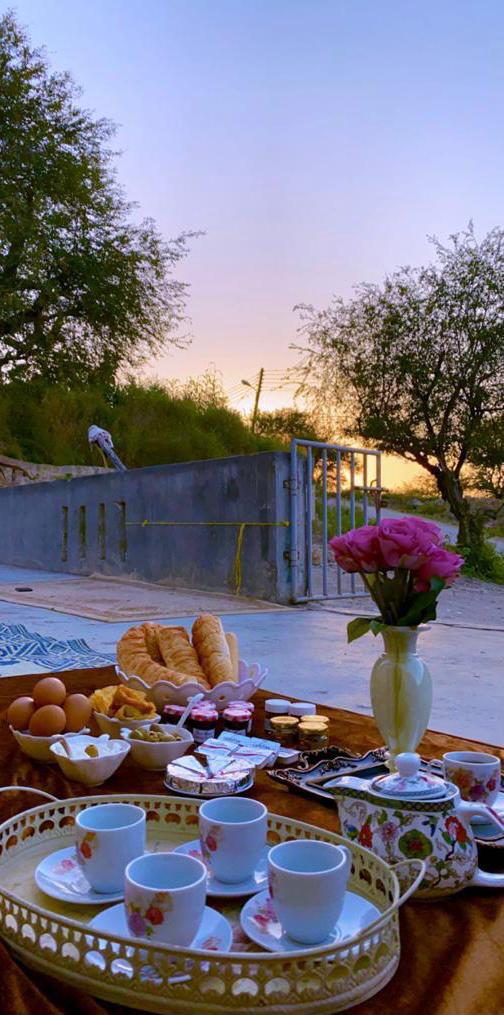
(photo by Salwa Hubais)

I teach literature classes but my most recent book is on foodways, which might seem like two dissimilar topics but food is omnipresent in poems, stories and dramas so my students and I often have conversations that include foodways, literature and cultural differences. Explaining a reference to Persephone in a poem led to my telling the story of Demeter/ Ceres, which led to a conversation about cereals.

Sometimes I focus simply to the vocabulary aspect: explicating “civil as an orange/ and something of that jealous complexion” in Much Ado about Nothing or “cucumber sandwiches”  and “sugar tongs” in The Importance of Being Earnest. But occasionally food takes center stage as with the fishing with a sword scene in Tawfiq Al Hakim’s Princess Sunshine when the question of ‘who makes dinner’ helps carry the theme of the play. Another food-centered example is the dual breakfast scene in Thornton Wilder’s Our Town. On our first run-through, it’s simply a confusing jumble of random statements. But when we have read it a few times and then ‘perform’ it with one student per character, the beauty (and sadness) of that section shine through. Students often remark, “it’s like that at my home.”

Some stories show cultural similarities, such as Laura bringing food to the widow in Mansfield’s “Garden Party,” but they can also show differences. Unlike in Oman, only Laura visits the house (not with her mother and older sister) and she only stays a brief time.

Another Mansfield story “The Doll’s House” uses food to give insights into the social standing of the schoolgirls – having a sandwich with meat shows wealth while a jam sandwich wrapped in newspaper points to poverty. Similarly, the social niceties observed in the dining room at the beginning of Room with a View preview the theme of the novel. Who sits at which table reveals the hierarchies which Lucy will eventually break.

Food issues can even be the comic element of a story as with Elizabeth Gaskell’s magnificent Cranford with its details of manage your cook, take care of your cow and why you should eat your orange in your room (so you can roll it under your bed to check if anyone is hiding there and then slurp the orange sections in private).

Food essays are also wonderful for sparking good student writing. “Jam” and “A Thing Shared” from The Gastronomical Me  by M. F. K. Fisher, “Girl” by Jamaica Kincaid and “In Search of Our Mother’s Gardens” by Alice Walker are great example texts to help students see how to write about their own food experiences.

As for poems about food, we have to start with

“Talk,” Gökhan Tok

You never hear it

but at breakfast the sweetest talk

is between the jam and the honey.

and Naomi Shihab Nye’s wonderful “Arabic Coffee,” “My Father and the Fig Tree,” “Sifter,” “The Traveling Onion” and “The Tray.” For more, please see https://www.poetryfoundation.org/poets/naomi-shihab-nye and https://poets.org/poet/naomi-shihab-nye

Other poems include:

  • “After Apple-Picking,” Robert Frost
  • “The Angler,” Thomas Buchanan Read
  • “The Bean-Stalk,” Edna St. Vincent Millay
  • “Blackberry-Picking,” Seamus Heaney
  • “Coolness of the Melons,” Matsuo Basho
  • “Cynddylan on a Tractor,” R.S. Thomas
  • “The [Date] Palm Tree,” Adnan Mohsin
  • “The Fisherman,” Goethe
  • “From Blossoms,” Li-Young Lee
  • “I Return to the Place I was Born,” T’ao Yuan Ming
  • “Love Poem With Toast,” Miller Williams
  • “Mending Wall,” Robert Frost
  • “The Solitary Reaper,” William Wordsworth
  • “Sorry I Spilled It,” Shel Silverstein
  • “What’s That Smell in the Kitchen?” Marge Piercy

A few food-oriented short stories include: “A Dash of Light” by Ibrahim Aslan, “I Saw the Date Palms” by Radwa Ashour, “A Cup of Tea” by  Katherine Mansfield and “Lamb to the Slaughter” by Roald Dahl, as well as several by Mohammed al Murr including “A Late Dinner,” “The Night’s Catch,” “Look After Yourself” and my favorite: “Dinner by Candlelight.”
y - morning coffee

Selected Bibliography: Animals, Birds and Fish in Southern Oman

It is important to look at foodways in the context of the region, so I have been exploring what has been written about animals, birds, fish and the environment in southern Oman.  (photo by S. B.)

Selected Bibliography

Al Hikmani, Hadi and Khaled al Hikmani. 2012. “Arabian Leopard in Lowland Region on the South face of Jebel Samhan, Oman.” Cat News 57: 4-5.

Al-Jufaili, Saud Greg Hermosa, Sulaiman S. Al-Shuaily and Amal Al Mujaini. 2010. “Oman Fish Biodiversity.” Journal of King Abdulaziz University 21.1: 3-51.

Al Kindi, Nasser. 2014. Birds in Oman. Muscat: Muscat Printing Press.

Al-Marshudi, Ahmed Salim and Hemesiri Kotagama. 2006. “Socio-Economic Structure and Performance of Traditional Fishermen in the Sultanate of Oman.” Marine Resource Economics 21: 221-30.

Al Rashdi, K. and E. Mclean. 2014. “Contribution of Small-Scale Fisheries to the Livelihoods of Omani Women: A Case Study of the Al Wusta Governorate.” Gender in Aquaculture and Fisheries: Navigating Change – Asian Fisheries Science Special Issue 27S: 135-149.

Ball, Lawrence, Douglas MacMillan, Joseph Tzanopoulos, Andrew Spalton, Hadi Al Hikmani and Mark Moritz. 2000. “Contemporary Pastoralism in the Dhofar Mountains of Oman.” Human Ecology. https://doi.org/10.1007/s10745-020-00153-5

Choudri, B., Mahad Baawain, and Mustaque Ahmed. 2016. “An Overview of Coastal and Marine Resources and their Management in Sultanate of Oman.” Journal of Environmental Management and Tourism 7.1: 21-32.

Erikesen, Hanne and Jens Eriksen. 2010. Common Birds in Oman: An Identification Guide. Muscat: Roya Press.

—. 2005. Common Birds in Oman. Muscat: Roya Press.

Eriksen, Jens, Dave Sargeant and Reginald Victor. 2003. Oman Bird List. Muscat: Sultan Qaboos University, Centre for Environmental Studies and Research.

Galletti, Christopher, Billie Turner, and Soe Myint. 2016. “Land Changes and their Drivers in the Cloud Forest and Coastal Zone of Dhofar, Oman, between 1988 and 2013.” Regional Environmental Change 16.7: 2141–53

Gardner, Andrew. 2013. The Amphibians and Reptiles of Oman and the UAE. Frankfurt: Edition Chimaira.

Hildebrandt, Anke and Elfatih Eltahir. 2008. “Using a Horizontal Precipitation Model to Investigate the Role of Turbulent Cloud Deposition in Survival of a Seasonal Cloud Forest in Dhofar.” Journal of Geophysical Research: Biogeosciences 113 (G4). doi:10.1029/2008JG000727.

Hildebrandt, Anke, Mohammed Al Aufi, Mansoor Amerjeed, Mahaad Shammas, and Elfatih A. B. Eltahir. 2007.“Ecohydrology of a Seasonal Cloud Forest in Dhofar:1. Field Experiment.” Water Resources Research 43 (W10411). doi:10.1029/2006WR005261.

Hildebrandt, Anke and Elfatih Eltahir. 2007. “Ecohydrology of a Seasonal Cloud Forest in Dhofar: 2. Role of Clouds, Soil Type, and Rooting Depth in Tree-Grass Competition.” Water Resources Research 43 (W11411). doi: 10.1029/2006WR005262.

— . 2006. “Forest on the Edge: Seasonal Cloud Forest in Oman Creates its own Ecological Niche.” Geophysical Research Letters 33 (L11401). doi: 10.1029/2006GL026022.

The Journal of Oman Studies: Special Report 2: The Oman Flora and Fauna Survey 1975. 1980. Muscat: Diwan of H. M. for Protocol.

Lancaster, William and Fidelity Lancaster. 1995. “Nomadic Fishermen of Ja’alân, Oman.” Nomadic Peoples 36/37: 227-44.

McKoy, John, Neil Bagley, Stéphane Gauthier, and Jennifer Devine. 2009. Fish Resources Assessment Survey of the Arabian Sea Coast of Oman – Technical Report 1. Auckland: Bruce Shallard and Associates and the New Zealand National Institute of Water and Atmospheric Research.

Omezzine, Abdallah. 1998. “On-shore Fresh Fish Markets in Oman.” Journal of International Food and Agribusiness Marketing 10.1: 53-69.

Omezzine, Abdallah, Lokman Zaibet and Hamad Al-Oufi. 1996. “The Marketing System of Fresh Fish Products on the Masirah Island in the Sultanate of Oman.” Marine Resources Economics 11: 203-10.

Sale, J. 1980. “The Ecology of the Mountain Region of Dhofar.” The Journal of Oman Studies: Special Report 2: The Oman Flora and Fauna Survey 1975. Muscat: Diwan of H. M. for Protocol. 25-54.

Siddeek, M., M. Fouda and G. Hermosa. 1999. “Demersal Fisheries of the Arabian Sea, the Gulf of Oman and the Arabian Gulf.” Estuarine, Coastal and Shelf Science 49.1: 87-97.

Spalton, Andrew, Hadi Al Hikmani, and Khalid Mohammed Al Hikmani. 2014. The Arabian Leopards of Oman. London: Stacey International.

Spalton, Andrew, Hadi Musalam al Hikmani, David Willis and Ali Salim Bait Said. 2006. “Critically Endangered Arabian Leopards (Panthera pardus nimrpersist) in the Jabal Samhan Nature Reserve, Oman.” Oryx 40.3: 287-294.

Partial list of wild animals

from: Spalton, Andrew, Hadi Musalam al Hikmani, David Willis and Ali Salim Bait Said. 2006. “Critically Endangered Arabian Leopards (Panthera pardus nimr) Persist in the Jabal Samhan Nature Reserve, Oman.” Oryx 40.3: 287-294. 291

  • Arabian leopard
  • Wildcat
  • Arabian wolf
  • Striped hyaena
  • Honey badger
  • Blanford’s fox
  • Red fox
  • African small-spotted genet
  • White-tailed mongoose
  • Nubian ibex
  • Arabian gazelle
  • Rock hyrax
  • Indian crested porcupine
  • Ethiopian hedgehog
  • small rodents including gerbil, jird, mice, spiny mice, rat, and shrew
  • gecko, lizard, chameleon, skink, toad
  • bees, butterfly, dragonfly, grasshopper, locust, and moth
  • scorpion, tick, wasp, and snakes, including cobra and viper

Partial list of birds

from: Al Kindi, Nasser. 2014. Birds in Oman. Muscat: Muscat Printing Press.

  • Dhofari and/or migratory: bee-eater, dove, hoopoe, roller, silverbill, swallow and weaver
  • coast – avocet, bittern, coot, crake, duck (pintail), egret, grebe, flamingo, gull, heron, ibis, moorhen, spoonbill, tern, wader
  • grasslands – pipit, raven, grackle, stork
  • wadi/ mountains – courser, partridge, sandgrouse, owl
  • semi-wooded/ woodlands – bunting, cuckoo, flycatcher, grosbeak, kingfisher, pigeon, owl, shrike, sunbird, warbler
  • semi-desert/ desert – bunting, lark, owl, sand partridge, warbler, wheatear
  • raptors – eagle, falcon, kestrel. osprey, vulture