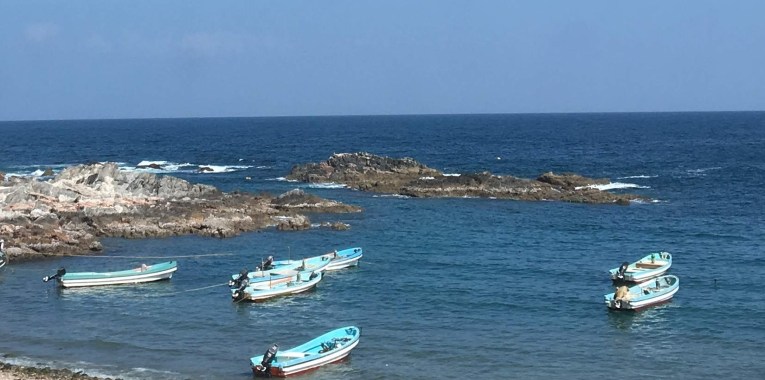
Foodways: Thinking about Uses of Plastic Bags and Bottles in Dhofar

In a previous essay [ Foodways: Cultural Issues Pertaining to Litter ] I talked about some issues pertaining to litter. I would like to expand on these reflections by discussing the use of plastic bags and plastic bottles.

Decreasing the use of plastics is a worthy goal and I believe that can effectively happen when the reasons for why and methods of how people use plastic products is investigated in terms of the cultural context. In my opinion, to find replacements that will be widely adopted, it needs to be clear which specific qualities are important. Thus, the substitutes for plastic bags and bottles need to meet cultural needs, as well as environmental needs.

Cultural Understandings of Plastic Usage: Plastic Bags

1 – anything given to another person should be in a bag, not put directly into someone’s hand

There is a cultural understanding that objects should be transferred in some sort of package, never passed by hand.

2 – adults seldom carry large bags and/ or anything on their shoulders

Only schoolchildren wear backpacks. It is not common for grown-up men to bear anything on their shoulders. Some female college students will carry a small rectangular bag on their shoulder, but only within the campus area. In a mall or public place, goods are carried by hand in bags.

3 – foodstuffs, including raw meat and fresh fish, are often distributed among relatives and friends

As I have discussed in my food research, many Dhofaris give extra or purpose-bought food for others. This is almost always handed over in plastics bags. For example, it is perceived as cleaner and easier to give fish and pieces of meat in plastic bags. If this was given in a dish or pot, it would need to be cleaned and returned. Also, giving food in a dish might result in spillage whereas plastic bags can be tied shut.

4 – accessibility of paper bags

Small paper bags, often printed with a store’s name or a decorative design, are common and can be used for transporting some items such as limes, books, dhobes and bukhoor. Thus there is a lot of re-use of printed paper bags with short handles which are bought for gift-giving and/or given away by stores. However, these bags usually only circulate among women as they often found in perfume/ make-up stores and men will not usually buy decorated gift bags.

4 – it is common to give food and unwanted supplies to expat laborers who travel by bike

In addition to Dhofaris giving food stuffs to family and neighbors, they often give left-over food to expat workers. As these laborers usually travel by bikes which do not have panniers, they need a bag which will easily fit over their handlebars.

For example, I sometimes buy packages of cookies for the man who cleans my car. I have to put them in a plastic bag so that he can transport the cookies home. The shopping bags for sale in the large grocery store are too large and unwieldy to be hooked over handle bars and bikes usually do not have a flat rack behind the seat.

5 –  issues of privacy/ safety/ smell

In some cultures, small, mesh/  jute/ string bags are used for everyday carrying. But open-weave bags would not always work in Dhofar as there are cultural understandings of keeping goods private, i.e. not allowing everyone to see what you are transporting. For example, in large supermarkets, there is always a pile of small plastic bags near the sanitary supplies so women can put what they are buying into a plastic bag, then set it in their shopping cart. As in many aspects of Dhofari life, people want to keep their private life private.

Another concern is that Dhofar has three months of drizzle during the khareef (monsoon) and frequent wind/sand storms in winter. Moving anything in an open-weave bag could result in the contents being splashed with mud or covered in sand.

Lastly, bad smells are perceived as very negative. Sometimes meat or fish bought at the souq is put in a plastic bag and tied the rear-bumper of the car to be taken home because no one wants the smell to permeate the car.

To me, thinking about decreasing the use of plastic bags means looking for solutions which fit within the culture. For example, one use of plastic bags among fishermen is to put pieces of sardines in a plastic bag with sand and place this within a fish box (metal fish trap which sits on the bottle of the ocean). One fisherman I know did this for years as the sand keeps the sardines at the bottom of the trap, allowing the scent of the fish to mix slowly with the water to attract larger fish. Last year, he decided to re-think this usage and now uses a sharp, large needle to pierce a group of sardines with fishing line into a circle (looking like a necklace of sardines) which is tied to the side of trap. This keeps the sardine in the trap and allows the water to carry the scent, without the plastic bag.

Small, plain brown paper bags with handles could be used in some circumstances instead of plastic bags and it might make sense to have them widely available. Another idea might be to have large stores sell or give away sturdy, long-use shopping bags which are smaller than the ones currently found. The smaller bag might also have a wide flap which could be placed over the opening (to keep what is inside clean) or simply left hanging inside the bag when not needed.

Cultural Understandings of Plastic Usage: Plastic Bottles

* hosts should give guest unopened bottles of drinks

Fresh fruit juice can be brought out for guests in (preferably clear glass) pitchers but usually water and all other beverages are served in individual bottles to be opened by the person who will drink. At restaurants, soda and water are brought to the table in closed bottles, opened and poured in front of customers; the only place you can get a pre-poured soda is at fast-food restaurants.

Many Dhofaris have a “bubbler” (a large, plastic jug of water upended into a stand; to get a glass of water, you push a small lever – some bubblers will heat or cool the water). Water jugs can be bought at stores but big families usually have a regular delivery service in which full ones are dropped off and used ones picked up. It is not common to have a bubbler in the majlis or salle; they are usually found in the kitchen.

* it’s not easy to find potable water to refill a thermos/ water bottle

In some cultures, many people carry water bottles with them, but in Dhofar it is not always easy to find potable water through water fountains. Most drinking water is carried in plastic bottles.

*a bottle of water is a kind of currency

I don’t use small bottles of water for drinking but I always have a 12-pack at home and my office to give away. At work I hand them out to the man who repairs the copy machine, the FedEx delivery guy, the worker who comes to fix the AC and the cleaner. At home I give them to the repairmen. As they don’t carry water bottles and it’s often over 85 degrees, a plastic bottle of water is a welcomed gift.

To me, thinking about how to lessen the use of plastic bottles means thinking about practical measures that would work within a Dhofari context. For example, an expat faulted me for giving away plastic bottles of water but the alternatives would be handing over a glass of water to be drunk immediately or giving a thermos full of water, which might cause the recipient to wonder how fresh the water was. I could get a bubbler in my office, hand the worker a thermos and let them fill it themselves, but then they would have to carry around the thermos. The best option is the most expensive: I would need a supply of thermoses with carrying straps and a bubbler. And not everyone has time and easy access to a sink and soap to clean the thermos. The safety issue is paramount – hot weather and high humidity can mean water becoming contaminated quickly.

Some milk is sold in cardboard containers; that is one method that might be tried for water and juice. Another idea might be for water and juice to be sold in small glass bottles which could be delivered to houses and restaurants in flat; then the empties could be picked up, washed by the company and reused.

You Have Nothing to Fear from Sheep’s Eyes but Beware the Carrot Sweet: Researching Foodways in Southern Oman

During over a decade of picnics with men from southern Oman, I have never been offered the eyes, brain, tongue or tail of any animal. The cliché of guests being offered the ‘unloved’ parts of an animal doesn’t hold here in the Dhofar region. And it’s not that large platter of rice and meat that will cause you problems. Men will encourage you to eat, but if you gather up a few grains of rice in your hand and lift it towards your mouth, the host’s attention will move on.

If you are given a fish, you can turn the head away from you and start to eat from tail up, scattering by chance a few shreds of lettuce over the eyes. Then you declare yourself full before you need to deal with the stomach area, much less digging into the skull for the fish cheeks.

What you should fear is ladies’ parties with lots of very generous, caring, strong-arming women.

Men usually have dinner with friends on the beach or in a scenic place in the mountain. It’s dark, eating is done quickly and men come and go freely; there is little policing of who eats what. Although the cook might toss special pieces of meat or fish towards you, if you don’t want to eat them, simply leave them alone.

But women parties are usually indoors, with lots of light and everyone sits in their places for several hours so you are constantly under observation.

I love wedding parties because the air is full of beautiful perfumes and everyone is in gorgeous, comfortable, multi-color thobes (the loose, traditional Dhofari dress). And the food is delicious, but you cannot escape it. Either waitresses or relatives of the groom will bring around trays of drinks and sweets and everyone, not just the hostess, but all the other guests, will encourage you to partake.

You have had four cups of super-leaded, espresso-strength, cardamom-spiced Omani qahwa (coffee)? The generous women would like you to have a fifth cup! “You didn’t drink anything! Do you not like the coffee? Do you want tea! BRING TEA, SHE WANTS TEA!”  they call.

You protest but, alas, give up. The tsunami of kindness is coming for you. Take up the tea cup and drink. And as soon as you set down the cup, here come someone with juice, soda, instant coffee, chai ahmar (“red tea,” black tea with only sugar added), chai haleeb (“milk tea,” black tea with milk and sugar), or karak (loose tea with spices and milk).

Then come the sweets accompanied by women benevolently asking you to take another spoonful of halwa, the traditional Omani dessert. And like a swan-dive into a bowl of whipped cream, you submit to your fate: a small plate of carrot sweet, a bowl of crème caramel, a slice of cake, a bowl of ice cream, fruit salad, luqaymat/ loqeemat (sweet fried dough with a sugar syrup), basbousa, and wrapped chocolates.

And now, just as you give up any thought of ever moving again, dinner is served. A generous woman hands you a plate heaped high with a selection of appetizers (hummus, fattoush, baba ghanoush, etc., with pita bread) and qabooli (a dish with spices, rice and meat). Then, of course, dessert is served.

There have been weekends in which I have inhabited both worlds. One night was spent wearing loose cotton trousers and a tunic top with a plain blue headscarf and sitting on a plastic mat on a beach out of sight from any man-made lights. Dinner was fresh-caught fish cooked over a fire. The men in my research group and I ate with our hands, drank Dew, looked at the stars, listened to the sea and talked until 1am. The next night I wore a decorated velvet thobe with full make-up, my meager supply of gold jewelry and a lot of duty-free perfume, in a room full of air-conditioning, bright lights, and delightful women who wanted to stuff me until I burst.

Omani people are very open-hearted and open-handed and doing research on foodways is a lot of fun, but it is not for the meek or the small of stomach.

Research on fishing in Dhofar

(photo by S. B.)

I have been looking at the theme of generosity, including sharing food, for more than ten years. For my book, Foodways in Southern Oman (Routledge, 2021), I conducted several interviews about fishing practices in Dhofar. In Spring 2020, I started a second round of formal interviews which provided the information used in the publication, presentation and essays found here: Research on Fishing in Dhofar


– طرق الطعام : بحث في ممارسات الصيد في ظفار وببليوجرافيات مختارة – Foodways: Researching Fishing Practices in Dhofar (in Arabic) and Selected Bibliographies

original post: https://mariellerisse.com/2022/02/19/foodways-researching-fishing-practices-in-dhofar-and-selected-bibliographies/

Arabic translation by Aruba Al Mashikhi

(تصوير: حسين باعمر)

الدافعية  

تطرقت في كتابي الأول للكتابة قليلا عن الصيادين الظفاريين من حيث نظرتهم إلى استقلالهم وترابطهم. و في كتابي الثاني ، كتبت عن شراء الأسماك وإهدائها. وبعد ذلك غيرت تركيزي البحثي إلى المنازل.

في أوائل عام 2021 سمعت نقاشًا بين العديد من الباحثين الذين يعتقدون أن الظفاريون ليسوا مرتبطين بالعالم الطبيعي كما كان الحال في الأجيال السابقة. وقد أكد أحدهم أن رجال ظفار توقفوا عن العمل بأيديهم. كما أخبرني باحث آخر بأنه يتم الآن عن طريق الاستعانة بالعمالة الوافادة كمصادر خارجية في الصيد.

أثار اهتمامي سماع هذا الأمر لأنني أحسبه مهما أن يعرف الباحث كيف يمكن للباحثين المختلفين رؤية نفس المنطقة بطرق مختلفة. يتحدث هؤلاء الباحثون لأناس مختلفين وينظرون إلى قضايا مختلفة عما أنظر أنا إليه أنا. الرجال في مجموعتي البحثية قاموا جميعًا وما زالوا يقومون بأنواع مختلفة من العمل اليدوي ، بما في ذلك الصيد اليومي.

يقوم الكثير من المغتربين بالصيد الاعتيادي في ظفار: يصطاد غير العمانيين من الشاطئ و / أو في قوارب مستأجرة لممارسة رياضة الصيد أو صيد عدد قليل من الأسماك لتناول العشاء. هناك أيضًا عمال وافدون مرتبطون بصناعة صيد الأسماك من خلال العمل على تنظيف القوارب وإصلاح الشباك وتركيب مصائد الأسماك ومساعدة الصيادين في تحميل وتفريغ القوارب وما إلى ذلك.

من ناحيتي كنت أتحدث مع الصيادين الظفاريين الذين يعملون في المدن الساحلية صلالة [المدينة الرئيسية في منطقة ظفار] ، طاقة (28 كم شرق صلالة) ، مرباط (70 كم شرقًا) ، سدح (135 كم شرقًا). ) ، حدبين (167 كم شرقاً) وحاسك (187 كم شرقاً) لأكثر من 15 عاماً. لقد كنت مع رجال ظفاريون في قوارب لرمي الشباك وصناديق الصيد – والتي تسمى محليا قراقير-  وصيد سمك التونة والصيد بالطُعم الحي خلال أكثر من اثنتي عشرة رحلة صيد في القوارب ، فضلاً عن أكثر من 20 رحلة صيد من الشاطئ.  لقد قمت أيضًا بالعديد من الرحلات الاستكشافية بالقوارب. كما سنح لي مشاهدة الصيادين الظفاريون وهم يغادرون ويعودون إلى الشاطئ عشرات المرات واستمعت إلى الرجال وهم يناقشون رحلات الصيد خلال أكثر من 350 رحلات عشاءًا حضرتها. لقد رأيت مرة واحدة فقط عاملاً وافدًا يشارك في رحلة صيد على متن قارب.

ولذلك، عند سماع هذا النقاش بين الباحثين ، فكرت في أفضل السبل التي يمكنني من خلالها تحديد ما رأيته لإضافته إلى المحادثات الجارية حول مختلف الثقافات الظفارية. وكانت إحدى الأفكار توثيق الأنواع المختلفة من العمل الذي يشارك فيه الرجال في مجموعتي البحثية مثل رعي الإبل ، وفكرتي الأخرى هي محاولة ترميز عدد الساعات التي يقضونها يوميًا في الخارج في مواقع مختلفة.  ولكن نظرًا لاستمرار الوباء ، أدركت أنني بحاجة إلى العمل على شيء يمكن القيام به عن بعد. و أردت أيضًا العمل على شيء لا توجد عنه بيانات حالية أو القليل منها.

قررت أخيرًا أن اسأل سؤالًا بسيطًا: كم يكلف الصيد؟ يمكنني إجراء مقابلات على الشواطئ العاصفة من أجل السلامة وخلال بحثي عن الطعام لم أجد أي بحث آخر مماثل في شبه الجزيرة العربية على الرغم من وجود عمل على أنواع الأسماك على طول الساحل العماني مثل:

مسار البحث

تركز معظم الأبحاث حول الصيد على أنواع الأسماك التي تم صيدها وكيفية بيعها. أردت أن أنظر إلى الصيد من زاوية أخرى: كيف يستعد الصيادون الظفاريون لصيد السمك؟ أنا ممتنة جدًا للساعات العديدة التي قضوها معي الأشخاص الذي أعتبرهم مصادري في المعلومات لمراجعة التكاليف والإجابة على الأسئلة خلال العام الماضي. كما أعرب عن امتناني لهيلين ماكبث واللجنة الدولية لأنثروبولوجيا الغذاء والتغذية لتنظيمهما مؤتمر “الأسماك كغذاء: أسلوب الحياة ومستقبل مستدام” المثير للاهتمام للغاية الذي استضافته جامعة ليفربول في سبتمبر 2021 [ http://www.icaf2021.uk/ ].

عندما بدأت بحثي حول تكاليف الصيد ، كنت أفكر في تأطير المناقشة بالحديث عن التكاليف والفوائد غير النقدية لصيد الأسماك ، لكن البيانات التي جمعتها قادتني إلى اتجاه آخر. أولاً ، بالنظر إلى النفور الثقافي من التباهي بالأعمال الصالحة أو الإبلاغ عنها ، لم يكن من السهل إقناع الصيادين بالتحدث عن الكيفية التي يتبرعون بها عن الأسماك في كثير من الأحيان. ثانيًا ، للدهشة ، لم يلاحظ الصيادون أي عيوب في الصيد. كنت أفترض أن الابتعاد عن المنزل لفترات طويلة قد يُنظر إليه على أنه يخلق صعوبات لأفراد الأسرة ، لكن الصيادين أكدوا أنهم إما سيشترون لوازم للمنزل قبل مغادرتهم أو أن أفراد الأسرة الآخرين سيساعدون في إحضار المطلوب .

قضيت معظم وقتي في محاولة لمعرفة تكلفة جميع احتياجات رحلة الصيد ، ولكن المحادثات الأكثر إثارة كانت حول كيفية تقسيم صيد اليوم. في إحدى المقابلات ، تخلصت من سلسلة من الافتراضات المتعلقة بمسألة الأعداد مثل: إذا اصطاد أربعة رجال 100 كيلو من الأسماك ، فكم كيلو سيأخذ كل شخص إلى المنزل وكم سيباع؟

بدأ الأشخاص الذين يساعدونني في بحثي العمل على خلال أشجار قرارات طويلة بينما أردت رقمًا واضحًا. بعد دقائق من الإحباط ، أدركت أنني كنت آتية للموضوع من إتجاه خاطئ لأن نظرتي غير قبلية وغير قائمة على المجتمع. ليست هنالك إجابة على السؤال التالي: إذا اصطاد أربعة رجال 100 كيلو من السمك ، فكم كيلو جرام سيأخذ كل شخص إلى المنزل؟ إنه سؤال لا معنى له لأن كل رجل في ظفار سيأخذ في الاعتبار سلسلة كاملة من العوامل قبل أن يقرر كيفية تقسيم الأسماك مثل عدد الأشخاص الذين يعيشون في كل منزل من منازل الرجال.

أدت محاولتي لتوضيح كيفية اتخاذ القرارات بشأن مشاركة الأسماك والربح إلى العديد من المناقشات الشيقة والتي ترتبط بعملي السابق حول تقديم الهدايا في ظفار (في قائمة المراجع أدناه).

ثلاثة مفاهيم ثقافية اتضحت لي خلال العديد من المحادثات على رياح الشواطئ أولاً ، أخبرني الصيادون أن مالك القارب في أجزاء أخرى من عمان يأخذ نصيبًا مضاعفًا من الأرباح. على سبيل المثال، إذا ذهب 4 رجال للصيد وكان الربح 200 ريال عماني ، سيتم تقسيم المال بخمس طرق ، حيث يأخذ مالك القارب 80 ريال عماني (سهمان بقيمة 40 ريال عماني لكل منهما). بينما في ظفار ، يدفع الرجال الأربعة جميع تكاليف رحلة الصيد أولاً ، ثم يقسمون الأرباح على 4 ، مع أخذ مالك القارب نفس نصيب الرجال الآخرين.

وعلى أية حال، إذا احتاج القارب أو المحرك إلى الإصلاح ، فسيتم سحب هذه الأموال أيضًا من الربح قبل تقسيم الأموال. على سبيل المثال إذا حقق 4 رجال ربح 200 ريال عماني بعد دفع مصاريف الغاز والطعام والطعم. إلخ ، ولكن المحرك قد تم إصلاحه للتو بتكلفة 100 ريال عماني ، ويحصل مالك القارب على 100 ريال عماني. سيتم تقسيم الـ 100 ريال المتبقية بالتساوي بين الرجال الأربعة. [المال لإصلاح القوارب والمحركات أحيانًا يكون مقدمًا من قبل الرجل الذي يشتري المصيد ، ثم يتم سداده من الأرباح المستقبلية دون أي فوائد.]

ثانيًا ، يجب دائمًا تقسيم الأسماك بنفس الطريقة ، حتى لو تم استخدام الأسماك لأغراض مختلفة. على سبيل المثال ، أوضح أحد الصيادين لنقل بأنه (س) أنه غالبًا ما ذهب للصيد مع رجل (ص)  يعيش في منزله عدد قليل فقط من الأشخاص بينما كان لدى (س) أكثر من 25 شخصًا في منزلين قام بتزويدهم بالسمك. قبل بيع المصيد ، سيخصص (س) ما لا يقل عن 3 أسماك كبيرة لعائلته ويضع نفس الكمية جانبًا لـ(ص) وسوف يصر (ص) على عدم احتياجه لكل هذه الأسماك ويصر (س) على أن يأخذ الاثنان حصة متساوية حتى لو كان (ص) لايحتاج هذه الأسماك وسيقوم بتوزيعها على أشخاص آخرين غير عائلته.

أخيرًا ، نظرًا لعملي على بحثي السابق في تقديم الهدايا ، كنت أعتقد أنه قد يطلب الصياد سمكًا إضافيًا ، على سبيل المثال ، إذا كان يخطط للذهاب للتخييم مع أصدقائه وكان يحتاج إلى المزيد من الأسماك. أو قد يرفض اصطياد السمك إذا كان جميع أفراد أسرته خارج المنزل ، لذلك لا داعي لإحضار السمك لتناول العشاء. أو إذا عُرف أن أحد الصيادين بحاجة إلى ذلك ، أقسم الآخرون أن كل العائدات ستذهب إليه أو يمكن للرجل أن يطلب أكثر من نصيبه كقرض. وتساءلت كيف يتعامل الصيادون مع رجل يطلب في كثير من الأحيان المزيد من الأسماك أو المال.

وكانت الإجابات على هذه الاستفسارات هي أن مجموعة من الرجال قد يصطادون معًا لمدة موسم أو عدة مواسم أو لسنوات [يغير الرجال المجموعات بسبب شخص يشتري أو يبيع قاربًا ، ولديه وقت أكثر أو أقل للصيد ، وما إلى ذلك] ولكن مرة واحدة في مجموعة يحاول الجميع الحفاظ على توزيع عادل ومستوى للأسماك والأرباح في جميع الأوقات. لا ينبغي لأحد أن يطلب أكثر من حصته أو يحاول رفض حصته.

إذا احتاج رجل يمكنه سؤال أصدقائه بعد التوزيع. كانت التفاهمات الثقافية التي كنت قد توصلت إليها في السابق تتعلق بالمواقف الشخصية. قيل لي إن الصيد كان “عملاً” ، وضمن “العمل” يجب أن يكون هناك اهتمام دقيق بأن يحصل الجميع على نصيب متساوٍ. يتم ذلك جزئيًا لأن الظفاريون عادة ما يحاولون تغطية مشاكلهم.

أحد الأمثلة التي أعطيت لي أنه إذا ذهب -أ- و –ب- و –ج- و –د-  للصيد واقترح -أ- إعطاءهم ربح اليوم إلى –ب- لأنه سيتزوج قريبًا ، أو على سبيل المثال إذا خطط –ج- لاصطحاب أحد أفراد الأسرة إلى مسقط من أجل حالة طوارئ صحية ولديه بالفعل حاجة أكبر للمال. بدلاً من محاولة تحديد من لديه ما يحتاج إليه ، يتم تقسيم السمك والمال بالتساوي ولكن ليس بمستويات محددة مسبقًا مثل أن يحصل الصياد على 5 كيلوغرامات.

في مرحلة ما ، سأود أن أشارك في المقالات المدرجة أدناه فيما يتعلق بكيفية توافق أبحاث الآخرين مع السياق الظفاري ، لا سيما مع مناقشة لانكستر الممتازة والمفصلة عن الصيد في جعلان والراشدي ومقال ماكلين حول النساء و صيد السمك في الوسطى.

Resources

  • selected bibliography – fish and fishing in Oman
  • related research on M. Risse’s website
  • related publications and presentations by M. Risse
    • books
    • other publications
    • presentations
    • research in partnership with other members of the Dhofar University community

Selected Bibliography – Fish and Fishing in Oman

Al-Jufaili, Saud, Greg Hermosa, Sulaiman S. Al-Shuaily and Amal Al Mujaini. 2010. “Oman Fish Biodiversity.” Journal of King Abdulaziz University 21.1: 3-51.

Al-Marshudi, Ahmed Salim and Hemesiri Kotagama. 2006. “Socio-Economic Structure and Performance of Traditional Fishermen in the Sultanate of Oman.” Marine Resource Economics 21: 221-30.

Al Rashdi, K. and E. Mclean. 2014. “Contribution of Small-Scale Fisheries to the Livelihoods of Omani Women: A Case Study of the Al Wusta Governorate.” Gender in Aquaculture and Fisheries: Navigating Change – Asian Fisheries Science Special Issue 27S: 135-149.

Chittick, Neville. 1980. “Sewn Boats in the Indian Ocean, and a Survival in Somalia.” International Journal of Nautical Archaeology 9.4: 297-310.

Choudri, B., Mahad Baawain, and Mustaque Ahmed. 2016. “An Overview of Coastal and Marine Resources and their Management in Sultanate of Oman.” Journal of Environmental Management and Tourism 7.1: 21-32.

Clements, Frank.  1977. “The Islands of Kuria Muria: A Civil Aid Project in the Sultanate of Oman Administered from Salalah, Regional Capital of Dhofar.” Bulletin (British Society for Middle Eastern Studies) 4.1: 37-39.

Field, Richard. 2013. Reef Fishes of Oman. Gharghur, Malta: Richard and Mary Field.

Gardner, Andrew. 2013. The Amphibians and Reptiles of Oman and the UAE. Frankfurt: Edition Chimaira.

Haines, Stafford. 1939. “Memoir to Accompany a Chart of the South Coast of Arabia from the Entrance of the Red Sea to Misenat, in 50, 43, 25 E. Part I.” Journal of the Royal Geographical Society of London 9: 125-56.

—. 1845. “Memoir of the South and East Coasts of Arabia: Part II.” Journal of the Royal Geographical Society of London 15: 104-60.

Harrison, David. 1980. The Journal of Oman Studies: Special Report 2: The Oman Flora and Fauna Survey 1975. Muscat: Diwan of H. M. for Protocol.

Janzen, Jorg. 1986. Nomads in the Sultanate of Oman: Tradition and Development in Dhofar. London: Westview Press.

The Journal of Oman Studies: Special Report 2: The Oman Flora and Fauna Survey 1975. Muscat: Diwan of H. M. for Protocol.

Kenderdine, Sarah and Tom Vosmer. 1994. “Maritime Graffiti in Oman.” Bulletin of the Australian Institute for Maritime Archaeology 18: 33-45.

Lancaster, William and Fidelity Lancaster. 1995. “Nomadic Fishermen of Ja’alân, Oman.” Nomadic Peoples 36/37: 227-44.

McKoy, John, Neil Bagley, Stéphane Gauthier, and Jennifer Devine. 2009. Fish Resources Assessment Survey of the Arabian Sea Coast of Oman – Technical Report 1. Auckland: Bruce Shallard and Associates and the New Zealand National Institute of Water and Atmospheric Research.

Mendonca, Vanda, Barry Jupp, Musallam Al Jabri, Thuraya Al Sariri and Mohamed Al Muzaini. 2003. National Report on the State of the Marine Environment. Muscat: Ministry of Regional Municipalities, Environment & Water Resources, Marine Pollution and Coastal Zone Management Section.

Morris, Miranda. 1987. “Dhofar – What Made it Different’,” in Oman: Economic, Social and Strategic Development. B.R. Pridham, ed. London: Croom Helm. 51-78.

“National Aquaculture Sector Overview-Oman.”  2019.  Food and Agriculture Organization of the United Nations-Fisheries and Aquaculture Department. http://www.fao.org/fishery/countrysector/naso_oman/en

Omezzine, Abdallah. 1998. “On-shore Fresh Fish Markets in Oman.” Journal of International Food and Agribusiness Marketing 10.1: 53-69.

Omezzine, Abdallah, Lokman Zaibet and Hamad Al-Oufi. 1996. “The Marketing System of Fresh Fish Products on the Masirah Island in the Sultanate of Oman.” Marine Resources Economics 11: 203-10.

Randall, John. 1996. Coastal Fishes of Oman. Honolulu: Univ. of Hawaii Press.

Saunders, J. P. 1846. “A Short Memoir of the Proceedings of the Honorable Company’s Surveying Brig ‘Palinurus,’ during Her Late Examination of the Coast between Ras Morbat and Ras Seger, and between Ras Fartak and the Ruins of Mesinah.” Journal of the Royal Geographical Society of London 16: 169-86.

Serjeant, Robert. 1995. “Customary Law Among the Fishermen of al-Shihr,”in Farmers and Fishermen in Arabia: Studies in Customary Law and Practice. G. Rex Smith, ed. Aldershot: Variorum. 193-203.

—. 1968. “Fisher-Folk and Fish-Traps in al-Baḥrain.” Bulletin of the School of Oriental and African Studies, University of London 31.3: 486–514.

Siddeek, M., M. Fouda and G. Hermosa. 1999. “Demersal Fisheries of the Arabian Sea, the Gulf of Oman and the Arabian Gulf.” Estuarine, Coastal and Shelf Science 49.1: 87-97.

“Sustainable Management of the Fisheries Sector in Oman: A Vision for Shared Prosperity, World Bank Advisory Assignment.” 2015. Washington, D.C.: World Bank Group and Muscat: Ministry of Agriculture and Fisheries Wealth.

Tabook, Salim Bakhit. 1997. Tribal Practices and Folklore of Dhofar, Sultanate of Oman. Unpublished PhD thesis, Faculty of Arts, Exeter University.

Vosmer, Tom. 1997. “Indigenous Fishing Craft of Oman.” The International Journal of Nautical Archaeology 26.3: 217-35.

—. 1993. “The Omani Dhow Recording Project: Sultanate of Oman.” Indian Ocean Review 6.2: 18-21.

Wilkinson, J. C. 2013. Water & Tribal Settlement in South-East Arabia (Studies on Ibadism and Oman). New York: Georg Olms Verlag.

related research on M. Risse’s website: https://mariellerisse.com/

related publications and presentations by M. R. Risse

books

Foodways in Southern Oman. Routledge, 2021

This book examines the objects, practices and beliefs relating to producing, obtaining, cooking, eating and disposing of food in the Dhofar region of southern Oman. The chapters consider food preparation, who makes what kind of food, and how and when meals are eaten. Dr. Risse connects what is consumed to themes such as land usage, gender, age, purity, privacy and generosity. She also discusses how foodways are related to issues of morality, safety, religion, and tourism. The volume is a result of fourteen years of collecting data and insights in Dhofar, covering topics such as catching fish, herding camels, growing fruits, designing kitchens, cooking meals and setting leftovers out for animals.

Community and Autonomy in Southern Oman. Palgrave Macmillan, 2019

This book explores how, in cultures which prize conformity, there is latitude for people who choose not to conform either for a short time and how the chances to assert independence change over time. The main focus is on how the traits of self-control and self-respect are manifested in the everyday actions of several groups of tribes whose first language is Gibali (Jebbali/ Jebali, also referred to as Shari/ Shahri), a non-written, Modern South Arabian language. Although no work can express the totality of a culture, this text describes how Gibalis are constantly shifting between preserving autonomy and signaling membership in family, tribal and national communities.

other publications

“Questions About Food and Ethics,” in Emanations: When a Planet was a Planet. Brookline, MA: International Authors, 2021. 403-408.

“What’s in Your Bag?” Anthropology News. American Anthropological Association. Oct. 30, 2019. http://www.anthropology-news.org/index.php/2019/07/23/whats-in-your-bag-2019-edition/

“Generosity, Gift-giving and Gift-avoiding in Southern Oman,” Proceedings of the Seminar for Arabian Studies 45 (Oxford: Archeopress) 2015: 289-296.

presentations

“The Costs and Benefits of Fishing in Southern Oman.” Fish as Food: Lifestyle and a Sustainable Future, annual conference of the International Commission on the Anthropology of Food and Nutrition, hosted at the University of Liverpool. Sept. 1, 2021.

“Ethical Eating in Southern Oman.” Just Food, virtual conference of the Association for the Study of Food and Society; Agriculture, Food and Human Values Society; Canadian Association for Food Studies and the Society for the Anthropology of Food and Nutrition, hosted by the Culinary Institute of America and New York University. June 12, 2021.

“Foodways in Southern Oman.” for the session “Uncovering Truths, Building Responsibility in A Pandemic: Insights from Emerging Monographs at the Nexus of Culture, Food, and Agriculture.” American Anthropological Association, on-line conference. Nov. 9, 2020.

“Foodways in Southern Oman” (June 23) and “Overview of Community and Autonomy in Southern Oman” (June 16) for the Language and/or Nature in Southern Arabia Workshop, sponsored by Arabic and Middle Eastern Studies, University of Leeds. 2020.

“Foodways and Society in Southern Oman.” British Society for Middle Eastern Studies, University of Leeds. June 26, 2019.

“Accounts from the Journeys of the Brig ‘Palinurus’ Along the Dhofar Coast in the mid-1800s.” Maritime Exploration and Memory Conference, National Maritime Museum, Greenwich, England. Sept. 15, 2018.

“‘Words Mean Nothing’: Fluency in Language and Fluency in Culture in Anthropology Fieldwork in Southern Oman.” British Society for Middle Eastern Studies, University of Wales. July 15, 2016.

“‘A Man Was Always Catching Fish’: Fairy Tale Elements in the Ali al-Mahri/ Johnstone/ Rubin Gibali Texts from Southern Oman.” American Comparative Literature Association Conference, Harvard University, Cambridge, MA. March 18, 2016.

“Generosity, Gift-giving and Gift-avoiding in Southern Oman.” British Foundation for the Study of Arabia’s Seminar for Arabian Studies, The British Museum, London. July 27, 2014.

research in partnership with other members of the Dhofar University community

“Culinary Examples,” photographs by Salma Hubais as part of the Foodways in Southern Oman project, 2019-2020.

“Fishing Boats,” photographs by Onaiza Shaikh as part of the Fishing Practices in Dhofar project, August-December 2021.

Foodways: Fishing from or near the Shore – Sardines (in Arabic) – السردين – طرق الغذاء

original post: Foodways: Fishing from or near the Shore – Sardines

Arabic translation by Aruba Al Mashikhi

النوع الثاني من صيد السمك بالقرب من الشاطئ هو صيد أسماك السردين عن طريق تطويقها بشبكة يتم سحبها إلى الشاطئ. ويصعب ذلك في الأماكن ذات قاع المحيط الصخري لأنها قد تسبب في شرخ الشبكة، لذلك يتم تطبيقها فقط من صلالة [المدينة الرئيسية في محافظة ظفار] إلى الشرق بإتجاه ولاية طاقة (28 كم شرق صلالة) وولاية مرباط ( 70 كم شرقًا).

نظرًا لأن هذا العمل يتطلب انتقال العديد من الأشخاص إلى مكان معين بسرعة ، فإن الإعداد لذلك يختلف عن أنواع الصيد الأخرى. أولاً، الرجال الذين يمتلكون قاربًا وشبكة كبيرة (تكلفته 300 ريال عماني على الأقل) سيغادرون عند الفجر مع العديد من الرجال ذوي الخبرة في قاربهم. تعني “الخبرة” في هذه الحالة معرفة مكان وجود الأسماك وكيفية تحرك أسراب  سمك السردين ، بالإضافة إلى فهم تفصيلي لخط الساحل، حيث لا يتم إلقاء شبكة الصيد إلا في المناطق الخالية من الصخور. من أجل التوضيح هنا، سأشير إلى الرجل الذي يملك القارب والشبكة على أنه “قبطان” ولكن المصطلح المستخدم هو رُبّان ؛ تستخدم هذه الكلمة فقط لتمييزه عن غيره من الرجال الذين يحملون نفس الاسم ، وليس لفظًا مشرفًا للنداء اليومي.

المجموعة الثانية هم الرجال الذين اعتادوا العمل مع القباطنة لسحب الشباك. يجتمعون في مطعم معين في طاقة من السبت إلى الخميس بين الساعة 7 و 8 صباحًا. سيعمل كل رجل مع قبطان واحد فقط خلال الموسم من أكتوبر إلى مارس وسيعمل معظم الأيام ؛ ومع ذلك ، هناك عدد كافٍ من الرجال في كل طاقم بحيث أن الأمر متروك لكل رجل ليقرر العمل أم لا. كما هو الحال مع مباريات كرة القدم غير الرسمية ، في كثرة العدد من الرجال فمن لا يرغب في العمل يتم إبعاده. أحيانًا يكون هناك 15-20 شخصًا يسحبون الشباك ، وأحيانًا أكثر من 40 رجلاً.

العنصر الثالث هم الرجال الذين يستخدمون سيارات لاند كروزر ، شاحنات البيك أب ذات الكابينة الواحدة وهم الذين ينقلون الرجال إلى حيث يوجد السردين ويحضرون السردين إلى الوسيط. واحد على الأقل من هؤلاء الرجال على اتصال بالقبطان ؛ على سبيل المثال ، إذا كان القبطان يخطط لمغادرة الشاطئ في وقت معين ، فسوف يخبر الرجال الذين لديهم شاحنات متى يجب أن يكونوا مستعدين.

يقود القبطان والرجال الذين في قاربه كل صباح بمحاذاة الشاطئ بحثًا عن أسراب من الأسماك. وعندما يتم رصد مجموعة من سمك السردين ، سيتصل القبطان بأحد السائقين ليخبره بمكان وجود الأسماك. سيجتمع الرجال المنتظرون في عدة شاحنات صغيرة ويذهبون إلى المكان المحدد.

سيأتي القبطان إلى الشاطئ ويوزع أحد طرفي الشبكة ، ثم يقود ببطء في نصف دائرة كبيرة حول السمكة بينما يضع الرجال في القارب الشبكة ببطء في الماء. أخيرًا ، سيعيد القارب إلى الشاطئ ويسلم الطرف الثاني من الشبكة. وسيقوم الرجال على الشاطئ بعد ذلك بسحب الشبكة أو ربط كل طرف بإحدى الشاحنات وسحبها باستخدام رافعة أو سحب الشبكة.

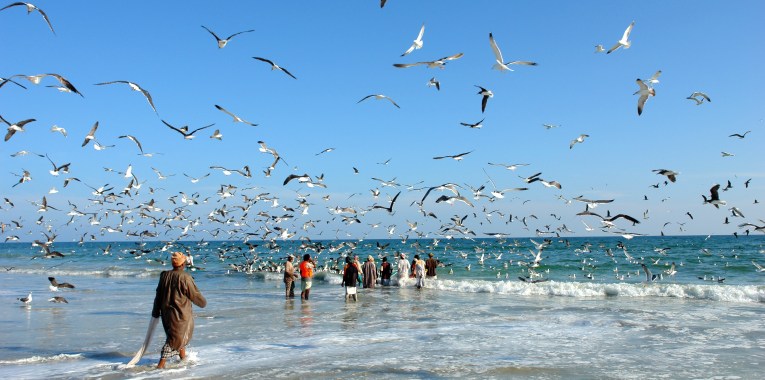
يتدفق العديد من طيور النورس إلى المنطقة على أمل الحصول على وجبة سهلة بينما يصطحب الرجال الأسماك فوق خط الماء ويخرجون الشبكة. ثم يتم تحميل الصيد خلف سيارات النقل -البيك أب-. يتم استخدام نوع واحد فقط من السيارات لأن السرير الكامل هو وحدة قياس (تريب). يتم نقل السيارات الممتلئة إلى وسيط السردين في طاقة. يخبر القبطان الوسيط ما إذا كان يريد بيع الصيد طازجًا للمطاعم ، أو بيعه مُجهزًا أو معالجًا ، ثم يأخذ السردين بنفسه لاستخدامه أو إهدائه أو بيعه.

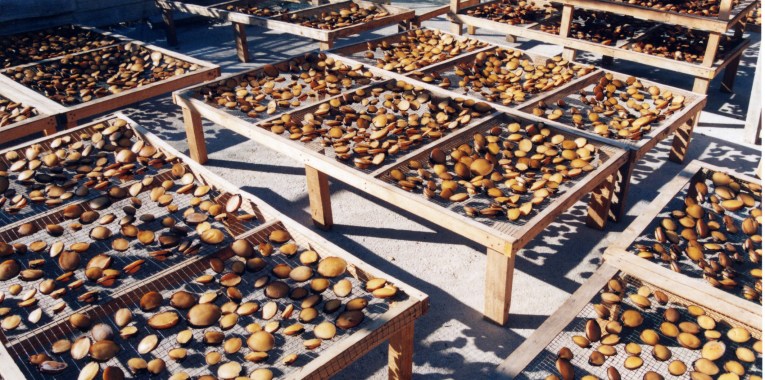
يقوم الوسيط بتدوين اسم القبطان وما قام باصطياده ، ثم يتم نشر سمك السردين المراد معالجته في الشمس ليجف ويٌقلّب مرة واحدة على الأقل. وحسب أجواء الطقس تستغرق عملية التجفيف، حيث تستغرق الأسماك الصغيرة حوالي ثلاثة أيام وتستغرق الأسماك الأكبر ستة أيام. وعندما يتم تجفيف الأسماك بشكل كافٍ ، يتم تحميلها في أكياس من القماش وتكون جاهزة للبيع.

تكلف عملية تعبئة أسماك السردين ما بين 2-4 ريال عماني ويمكن أن يستمر حوالي عام إذا تم تخزينه جيدًا، بعيداً عن الرياح والشمس وأمطار الخريف (الرياح الموسمية). هناك طلب على مختلف أحجام سمك السردين، لأن مالكي الجمال والأبقار يفضلون السردين الكبير ويفضل مالكي الماعز الحجم الصغير لاستخدامها كعلف خلال أشهر الجفاف.

قيمة التريب الواحد (حمولة سيارة من نوع البيك أب) تساوي 80-130 ريال عماني حسب الطلب ؛ الكمية الجيدة هي 15 تريب أو أكثر. هناك تعقيدات في الدفع المالي خارج نطاق هذا المقال القصير ولكن بشكل عام ، يأخذ القبطان 30٪ من السعر الإجمالي للمبلغ الإجمالي كما هو مقرر مع الوسيط. يأخذ الوسيط نسبة صغيرة مقابل أعمال تجهيز وحيازة وبيع أسماك السردين. لا يتم تقسيم المبلغ المتبقي على عدد الرجال ولكن على عدد الحصص حيث يتم منح كل رجل في القارب على الأقل نصيبًا مزدوجًا ، وربما أكثر اعتمادًا على الخبرة. كل رجل يسحب الشبكة له نصيب واحد وكل رجل يقود شاحنة له نصيب واحد. كل رجل حر في أخذ نصيبه نقدا أو في السردين الطازج أو المعالج. بعبارة أخرى ، هناك الكثير من المتغيرات ، ولكن نظرًا لأن هذا النظام موجود منذ عقود بين الرجال الذين عرفوا بعضهم البعض طوال حياتهم ، يتم تحديد المدفوعات وتوزيعها كل يوم.

تقسيمات العمل الإعتيادية هذه تعني أن الرجال ذوي المهارات والقدرات المختلفة يمكنهم المشاركة. يمكن للرجل غير القوي جسديًا أن يكسب نصيبًا من خلال أخذ شباك الجر في سيارته إلى المكان الذي يوجد فيه السردين ؛ الرجل الذي يسحب الشبكة ليس مضطرًا إلى امتلاك سيارة أو دفع ثمن الغاز. وأيضًا ، الرجل الذي يقود السيارة ويريد المساعدة في سحب الشبكة  سيحصل على نصيب مضاعف.

الكمية التي يتم صيدها تختلف بشكل كبير من يوم لآخر. قد يكون هناك سحب للسمك جيد لعدة أيام متتالية ثم لا شيء لبضعة أيام. إذا كان هناك سحب للسمك صغير في وقت مبكر من اليوم ، على سبيل المثال 4 أو 5 تريب فقط ، فقد يخرج القارب مرة أخرى بحثًا عن أسراب سردين أخرى ولكن عادة ما يتم سحب الشباك مرة واحدة فقط في اليوم.

كما هو الحال مع جميع أنواع الصيد ، هناك الكثير من الأعمال الخيرية تتخلل ممارسات سحب الشباك. يمكن لأي رجل [انظر الملاحظة أدناه] يأتي لمشاهدة أسماك السردين أثناء إحضاره أن يطلب أو قد يحصل على 1-4 أكياس (كيس بلاستيكي يستخدم لنقل البضائع من المتاجر، عادة ما يحتوي على حوالي 5 كيلوغرامات من السردين). يجب استخدام السردين كطعام أو كطعم ، وليس لبيعه لشخص آخر. إذا أراد أي شخص أكثر من هذا “الاستخدام العادل” (مصطلحي) ، يقوم بالدفع مقابل السردين.

كما يصطاد بعض الصيادين سمك السردين الواقف على الشاطئ أو في قارب بالقرب من الشاطئ عن طريق رمي الشباك الصغيرة. وهي عبارة عن شباك دائرية تغرق بسرعة بعد رميها بسبب الأوزان الصغيرة المخيطة في محيط الشبكة. يتم بعد ذلك ربط الشبكة بسحب حبل يجمعها معًا في كيس، ثم يتم نقلها إلى الشاطئ أو إلى القارب. ينفق الصيادون الذين يصطادون بطعم حي حوالي 50 ريال عماني سنويًا لشراء شباك صيد أسماك السردين لأنهم يحتاجون إلى أحجام مختلفة من السردين الصغير والمتوسط ​​والكبير ؛ يمتلك معظم الصيادين 5 أو 6 شباك بسعر 25-80 ريال عماني لكل منها وتباع بناءً على قياسين. أولاً ، بواسطة “العين” ، أي حجم الحفرة ، أي حجم ثقب أصغر للأسماك الصغيرة. ثانيًا ، نصف القطر الذي يُقاس بالذراع (من الداخل ، النقطة المركزية للكوع الأيمن إلى طرف الإصبع الأوسط في اليد اليمنى) ؛ تتراوح الأحجام من 5-15 ذراع.

(تصوير: حسين باعمر)

h - fish


ملاحظة – أنا أستخدم “أي رجل” حيث يتم نقل السردين في كثير من الأحيان على امتداد شواطئ ليست قريبة من المنازل أو المتاجر ؛ وبالتالي ، لا يوجد سوى الرجال العاملين والرجال الذين يقودون سياراتهم. غالبًا ما لا تقود المرأة / المرأة الظفارية على طول الشاطئ أثناء النهار. عندما يكون الصيد قريبًا من المناطق المتطورة ، يأتي الكثير من الناس للبحث ولكن نادراً ما تسير المرأة الظفارية بالقرب من المكان الذي يتم فيه أخذ أسماك السردين من الشبكة ووضعه في الشاحنات حيث يوجد الكثير من الضوضاء كضجيج الرجال العاملين هناك، وتقلب الأسماك وطيور النورس. المرأة التي تريد بعض السردين ترسل قريبها من الذكور ليسأل، أو إذا كان أحد الأقارب يعمل، تسأله عبر الهاتف. غالبًا ما تقترب السائحات لالتقاط الصور. لقد رأيت عمليات سحب يتم إحضارها عدة مرات ولكن لا أقترب لأنني أشعر أن الرجال يعملون في إيقاع معين يمكن أن تقطعه امرأة أجنبية تتفحص عملهم. أنا متأكدة من أنني إذا طلبت كيسًا من السردين، فسأحصل على واحدة، لكن بما أنني أعيش هنا، لا أريد أن أجذب الانتباه إلي بهذه الطريقة.


Related Essays on Fishing

Foodways: Researching Fishing Practices in Dhofar and Selected Bibliographies

Foodways: Fishing from or near the Shore – Boxes

Foodways: Catching Lobsters and Diving for Abalone

Foodways: Fish traps

Foodways: Photos for my presentation “The Costs and Benefits of Fishing in Southern Oman,” ‘Fish as Food’ conference, International Comm. on the Anthro. of Food and Nutrition

Foodways: Data for my presentation “The Costs and Benefits of Fishing in Southern Oman,” ‘Fish as Food’ conference, International Comm. on the Anthro. of Food and Nutrition


Foodways: Fishing from or near the Shore – Boxes (in Arabic) – الصيد من او بقرب الشاطئ

original post: https://mariellerisse.com/2022/02/01/foodways-fishing-from-or-near-the-shore-boxes/

Arabic translation by Aruba Al Mashikhi

أود أن اشكـر المشاركون في الدراسة على صبرهم و مساعدتهم لي. كما اتوجه بالشكر أيضاً للمترجمة عُـروبة و الاساتذة د. علي الغرياني و د. ياسر سبتان و د. عامر أحمد على ما قدموه من عون و دعم.


قطاع الصيد في ظفار ينقسم إلى ثلاثة مجالات. المجال الأول هو القوارب الخشبية؛ والتي يتم استخدامها لصيد أسماك القرش والتونة والهامور وأنواع أخرى. والمجال الثاني يختص بالأفراد الذين يملكون أو يستأجرون قوارب الصيد ويستخدمونها إما بصفة دائمة أو مؤقتة لصيد السردين أو أذن البحر (الصفيلح) أو التونة أو سرطان البحر المسمى محليا “شارخة” أو الحبار أو بعض أنواع الأسماك الموسمية -. أصغر وثالث مجال هو صيد الأسماك او الحبار من وقت لآخر من الشاطئ أو عن طريق وضع مصائد بالقرب من الشاطئ، بإلاضافة للنساء اللاتي يجمعن المحار و أذن البحر (الصفيلح) من الصخور بقرب الشاطئ اثناء انخفاض مستوى البحر. وهناك أيضًا – بعض القوارب  التي غالبا  ما تديرها  فنادق وشركات أجنبية لتسيير رحلات صيد للسياح.

تركيزي – هنا – مُسلّط على – الظفاري الذي يمتهن الصيد  ويتخذ- قرارات يومية – تتعلق بطريقة صيده حسب الطقس والموسم. – الطرق الاربع الرئيسية للصيد هي: رمي شباك الصيد و رمي مصيدة الأسماك “القراقير” والصيد باستخدام طعم حي أو صيد برمي الصنارة وصيد التونة. وفي هذا المقال سأناقش باختصار الصيد من أو – بالقرب من الشاطئ.

يوجد العديد من الصيادين ممن يمتهنون الصيد بطريقة عارضة من خلال – -رمي صنارة صيد بعد وضع طعم على الخطاف لجذب بعض أنواع الأسماك او الحبار في الساعات المتأخرة من فترة بعد الظهر او في – المساء – تبعًا للموسم. يصطادون – ما يكفيهم لوجبةلعشاء، أو- يهدون صيدهم لشخص ما، أو– يبيعونه بطريقة غير رسمية. ويقوم بهذا العمل الكثير من الناس بدءاً من الشبان ممن يدرسون في المدارس الثانوية -ووصولاً إلى كبار السن من المتقاعدين. -.

النساء عادة لايصطدن باستخدام صنارة او مصائد الاسماك “القراقير”، – بل  – – يجمعن المحار والصفيلح “اذن البحر” في – مواسمها وخلال انخفاض مستوى مياة البحر. – وعادة ما – – – يُجمَعُ  كميات من المحار تكفي  – لبيعه عبر التسويق الشفوي أو عن طريق مواقع التواصل الاجتماعي أو – من خلال اعطاءه لرجل من العائلة يتولى – بيعه – لمطاعم حسب الاحتياج.

 إنَّ طريقة وضع مصائد الاسماك “القراقير” – بالقرب من الشاطئ هي غالبا طريقة صيد الرجال الاكبر سنا ممن هم في سن التقاعد او لايعملون حيث – تعلموا في فترة النضوج طرق صيد تقليدية. – وعادة ما يتبع هذه الطريقة  – شخص واحد يعمل بمفرده ولا يحتاج إلى قارب. -. وهذا النوع من الصيد يعتبر -احدى طرق الصيد القديمة ولا –  تدرُّالكثير من المال  على – أصحابها ولكنها – جسرٌ يربط بين الحاضر والماضي الذي انعدمت فيه القوارب البخارية -. وبالاضافة لذلك؛ يعتبر هذا النوع من الصيد اقليمي، حيث – يعتبرُ الشخص صاحب المصائد في المكان – مسؤولاً عن المكان او صاحب منطقة الصيد وعلى الصيادين الاخرين البحث عن أماكن اخرى.

ويتم احترام هذه الحدود في مجتمعات الصيادين حيث – يرثُ الرجالُ مناطق وضع مصائد الأسماك أبا عن جد. عندما لا يجد الشخص عملا يمكنه أن يحتلَّ الموقع الذي يستخدمه والده -،  وهكذا ، يُنظرُ إلى الصيادين بوصفهم ” حماة المكان” – لأنهم يحافظون على نظافة المكانويبقونه بطريقة غير رسمية تحت سيطرتهم لأنهم أمضوا ساعات كثيرة على مر السنين – يعدون المكان لنصب القراقير. -“.

القراقير لا توضع – في الماء فقط بل- توضع  في  هياكل صخرية  مصممة بمشقّة  تًصنَعُ  بعد تجريد مناطق معينة من صخورها ، بحيث تحيطُ الصخور التي تعلو القراقير بالقراقير من جميع الجهات، ويكون للهيكل بابٌ واحد يتجه نحو الشاطيء. – —. بالإضافة لذلك؛ فإن – القراقير لا – توضع في قاع المحيط بل – على ٣  صخرات ليتمكن الماء من التحرك بحرية. هذا المفهوم الخاص بملكية مكان العمل يمكننا ان نجده أيضا في جبال ظفار، حيث – يُمنحُ الرجل الذي يزرع ويهتم بمنطقة معينة اعتراف غير رسمي بملكية الأرض تقديرا لوقته وجهده وماله.

يتم تفقد مواقع القراقير- كل ثلاثة أيام أو خلال الجزر المنخفض حيث يستطيع الصياد – الخوض في الماء أو  – الخروج منه.و في موسم الخريف ( الذي يمتدُ من يوليو إلى أغسطس) حيث تكثر الأمواج العنيفة –والتيارات السفلية الخطرة – يتم تفقد المصائد يوميا ولكن فقط في وقت الجزر لإنخفاض مستوى الماء. – وتستغرق عملية فحص كل مصيدة- ١٥ إلى ٢٠ دقيقة حيث يسبح الصياد إلى مكان مصائده ويخرجها للشاطئ أو يضعها فوق صخره قريبة تعلو- مستوى – الماء ليخرج من مصيدته الأسماك وينقلها للقارب او شبكة صيد ومن ثم يقوم – باستبدال المصيدة. وفي وقت الخريف – يقضي الصيادون وقتًا أطول – في جمع نوع من طحالب البحر السوداء التي تستهوي الأسماك ووضعها -داخل المصيدة-وخلاف ذلك لا يتم إضافة أي شيء إلى الصندوق لأن الأسماك القريبة من الشاطئ تأكل النباتات والرخويات الصغيرة ، وليس الأسماك الأخرى.

التكاليف اليومية تكاد لا تذكر حيث لا توجد حاجة لقارب أو لشراء طعام – إذ يمكن فحص المصائد بين أوقات الوجبات. تكلف المصائد “القراقير” مايقارب 25-50 ريال عماني وعادة ما يكون لدى الصياد 1-5 ، و ١٠ كحد أقصى. ونظرًا لوضعها في مياه بعمق  مترين إلى ثلاثة أمتار ، فهي أصغر حجمًا وأكثر تسطحًا من الصناديق التي يتم إلقاؤها في المياه العميقة. كما أن المصائد مصنوعة من جزأين ، الجزء العلوي الشبكي الذي يجب استبداله كل عام والقاع الحديدي الذي يستمر لمدة عامين أو ثلاثة أعوام.

القراقير “المصائد” الموضوعة بالقرب من الشاطئ مصنوعة من الألمنيوم كي لا تصدأ. وتقليديا ، كان هذا النوع من المصائد يُصنع من مادة نباتية تدوم 3 أو 4 أشهر فقط. إلى جانب تكلفة المصائد “القراقير” ، هناك بعض التكاليف الأخرى وهي عبارة عن قناع للصيد يتراوح سعره من (5-55 ريال عماني ، وعادة 20-25 ريال عماني) ، نظارة الغطس (10-12 ريال عماني) ، كيس شبكي (7 ريال عماني) وملابس للسباحة.


Foodways: Catching Lobsters and Diving for Abalone (in Arabic) – طرق الغذاء: صيد الكركن والغوص لأذن البحر  طرق الغذاء: صيد الشارخة والغوص للصفيلح

original post: https://mariellerisse.com/2022/01/25/foodways-catching-lobsters-and-diving-for-abalone/

Arabic translation by Aruba Al Mashikhi

(تصوير: م.أ. العوائد)

أود أن اشكـر المشاركون في الدراسة على صبرهم و مساعدتهم لي. كما اتوجه بالشكر أيضاً للمترجمة عُـروبة و الاساتذة د. علي الغرياني و د. ياسر سبتان و د. عامر أحمد على ما قدموه من عون و دعم.

هناك نوعان من الصيد الذي تنظمه الحكومة: الغوص لأذن البحر (صفيلح) والكركند (شارخة). عادة ما يكون موسم أذن البحر من 10 أيام إلى 3 أسابيع في نوفمبر أو ديسمبر ، ولكن يتم السماح بالغوص فقط إذا رأت الحكومة أن هناك محصولًا جيدًا حيث يمتد موسم الشارخة من مارس إلى نهاية أبريل

تبلغ التكاليف التقريبية لموسم أذن البحر (الصفيلح) حوالي 10 ريال عماني يوميًا. تبلغ التكلفة التقديرية خلال هذا الموسم حوالي حوالي 300 ريال عماني للإقامة والطعام في هذا الموسم ، ولكن عادةً ما يتم دفعها فقط من قبل الرجال الأكبر سنا من الغواصين ذوي الخبرة الذين سيعملون طوال الموسم وذلك بسبب أن الغوص صعب للغاية وبالعادة ينضم إليه العديد من الأولاد والرجال لبضعة أيام فقط

يستيقظ الغواصون عند الفجر للصلاة وشرب الشاي وبعد ذلك يذهبون إلى القوارب ، ويحددون توقيت غطسهم الأول عندما يلامس شروق الشمس الماء حتى يتمكنوا من رؤية أذن البحر على الصخور حيث يستمرون لأطول فترة ممكنة ؛ و الرجال الذين تعبوا سيجلسون في القارب ويراقبون أسماك القرش. ولكن سيبقون في مكان واحد حتى لا يعد بإمكان أحد العثور على الصفيلح ، ثم ينتقلون (ربما مرة أو مرتين خلال اليوم) ، ولن يعودوا إلى الشاطئ حتى يخرج آخر شخص من الماء ، حوالي الساعة 4 إلى 5 مساءً. نظرًا لمخاطر أسماك القرش والإرهاق ، فمن النادر جدًا أن يغوص شخص بمفرده. عادة ما يكون هناك 3 أو 4 رجال في كل قارب. في بداية الموسم ، قد يكون هناك ما يصل إلى 8 أو 9 وذلك حسب حجم القارب والمحرك ، ولكن العدد يتضاءل بسرعة.

تبلغ التكلفة اليومية لرحلات الصيد حوالي 5 ريالات عمانية لغاز القارب و 5 ريالات للماء والطعام ، عادة ما يتم دفع تكلفة الغاز من بيع الأسماك ، ثم يقسم الصيادون بقية الأرباح فيما بينهم. ومع ذلك ، بالنسبة لصيد أذن البحر ، سيدفع مالك القارب ثمن الغاز إذا اصطاد كمية جيدة من أذن البحر وإذا لم يفعل ، فإن الرجال الذين ركبوا في قاربه سيساهمون جميعًا لدفع التكاليف علاوة على ذلك ، لن يقبل مالك القارب الدفع إلا من الغواصين المتفرغين فقط و الشبان الذين يتعلمون الغوص لا يمكنهم المساهمة في الدفع .

تكاليف الموسم هي الإقامة والعتاد الشخصي. يمكن استخدام أي نوع من القوارب ،على سبيل المثال، قارب مجهز لرمي الشباك بدون ثلاجة، أو رمي صناديق الصيد مع ثلاجة واحدة أو استخدام الطعم الحي مع ثلاجتين.

التكلفة الرئيسية هي 200-300 ريال عماني للفرد الواحد وذلك لاستئجار منزل أو إقامة مخيم. عادة ما يتم تقاسم التكاليف بين 4-6 رجال على الأقل في أوائل العشرينات من العمر والغواصين الجادين والرجال الأصغر سنًا (الإخوة وأبناء العم والأصدقاء) الذين يتعلمون الغوص لبضعة أيام ، لذلك قد يكون هناك ما يصل إلى 15 رجلاً في الليالي الأولى ، لكن الغواصين بدوام جزئي لا يدفعون كما هو موضح أعلاه.

تتضمن تكاليف الإقامة أحيانًا إجراء عقدًا مع طباخ أو مطعم لإعداد وجبات الطعام لمجموعة الرجال الذين يعيشون معًا ويكون كالآتي: غداء متأخر حوالي الساعة 5 مساءً ، والعشاء في الساعة 8 أو 9 مساءً ، و وجبة الإفطار في الفجر ثم الطعام المعبأ اثناء استخدام القارب للبحث والغوص . في الغالب يكون طعام رحلة الصيد هو السندويشات والرقائق والصودا والعصير وما إلى ذلك ، ولكن بسبب صعوبات الغوص ، يتناول الرجال عادةً الماء والزبادي والخبز وبقايا الطعام المعبأة من وجبة الإفطار مثل : دقيق الشوفان و / أو العطرية (المعروف أيضًا باسم بلاليط ، طبق مصنوع من الشعيرية ؛ عادة ما يكون حلوًا جدًا ، بنكهة الهيل وماء الورد ويقدم مع عجة في الأعلى ولكن لموسم أذن البحر يتم تحضيره بالحليب وبدون بيض).

أهم قطعتين من المعدات هما بدلة الغوص والسكين. تكلف بدلات الغوص عادة حوالي 60 ريال عماني وتستمر 3 أو 4 سنوات. ونظرًا لتعارض ارتداء الملابس الضيقة مع المفاهيم الثقافية للمجتمع ، يتم شراء البدلة عادة بحجم أكبر مما هو مطلوب ، لذا فهي تناسبهم بشكل فضفاض. السكين المستخدم لنزع أذن البحر من الصخور عادة ما يكون غير مكلف (حوالي 3 غرف عمالية) ولكن الرجال يعتنون به ويحاولون استخدام نفس السكين لسنوات. من أجل جمع العديد من أذن البحر ، يجب على الرجل أن يكون قادرًا على إزالة أذن البحر من الصخور بسرعة ، لذا فإن معرفة ثقل السكين وتوازنه يوفر ثوانٍ ثمينة تحت الماء. و يجب عليهم أيضا الغوص الحر لأنه لا يسمح بخزانات الأكسجين.

تشمل المعدات الأخرى الزعانف (55 ريال عماني ، يمكن أن تستمر الأزواج عالية الجودة لأكثر من 5 سنوات) ، القناع (من 5 إلى 55 ريال عماني ، عادة 20-25 ريال عماني ، عادة ما يجلب الرجال 2 أو 3 في حالة احتياج أي شخص إلى استراحة واحدة أو واحدة) ، قصبة التنفس ( 10-12 أو ، مرة أخرى ، عادة ما يجلب كل رجل 2 في حالة احتياج أي شخص إلى استراحة واحدة أو واحدة) ، أكياس شبكية (7 تُشترى جديدة كل عام ، واحدة مرتبطة بالخصر لجمع أذن البحر تحت الماء وواحد في القارب لجمع صيد اليوم).

بالنسبة لموسم الشارخة ، تبلغ التكلفة اليومية التقريبية حوالي 25 ريال عماني وحوالي 150 ريال عماني للموسم من 1 مارس إلى نهاية أبريل. التكاليف اليومية هي الطعام والغاز للوصول من وإلى أماكن رمي الشباك. وكما هو الحال مع موسم الصفيلح لا يحتاج القارب إلى تجهيزه بأي طريقة خاصة.

يجب أن تصل الشبكة إلى قاع المحيط وأن تظل هناك لعدة ساعات ، ولكن لا يمكن استخدامها في ضوء النهار لأن الأسماك والحبار والأخطبوط سيأتيان لأكل الكركند المحاصر. لذلك توضع الشباك في الماء قبل المغرب (غروب الشمس). يمكن أن يتم الرمي بواسطة شخص واحد إذا لزم الأمر ويستغرق الرمي حوالي 5 دقائق لكل شبكة. يبدأ سحب الشبكة لأعلى بالقرب من شروق الشمس (الفجر) ويستغرق من 2 أو 3 أشخاص حوالي 20 إلى 30 دقيقة لكل شبكة ، لفترة أطول إذا كانت الشبكة عالقة بالصخور. أحيانًا يرتدي رجل بذلة غطس ويحضر قناعًا وأنبوب التنفس حتى يتمكن من الذهاب إلى الماء للمساعدة في تحرير الشبكة من العقبات. وبالتالي ، يولي الصيادون اهتمامًا دقيقًا للوقت ؛ يحتاجون إلى الوصول إلى الشباك بالقرب من شروق الشمس بحيث يكون هناك ما يكفي من الضوء لمعرفة ما إذا كان شخص ما يحتاج إلى الغوص لتحرير الشبكة ، ولكن ليس متأخرًا جدًا بحيث تتاح للمخلوقات الأخرى فرصة أكل الكركند الذي تم صيده.

عادة ما يعود الصيادون إلى الميناء في وقت الظهيرة ، ويبيعون صيدهم ، ويتناولون وجبة الغداء والراحة ، ثم يخرجون مرة أخرى لإلقاء الشباك ليلاً. مع بدء موسم الكركند في الأول من مارس ، ثم يتم إلقاء الشباك لأول مرة مساء اليوم الأخير من شهر فبراير.

تكلفة الموسم الواحد حوالي 150 ريال عماني للشباك الجديدة وإصلاح الشبكة حيث تبلغ تكلفة الشبكة حوالي 55 ريال عماني وهي مختلفة تمامًا عن شبكة الستارة المستخدمة للأسماك. شبكة الشارخة أصغر بطول 200 متر وارتفاعها 5 باع فقط ، وهي المسافة من أبعد حافة للكتف الأيسر إلى طرف الإصبع الأوسط في اليد اليمنى. يبلغ عرض شباك الصيد عادة 200 متر وارتفاعها من 8 إلى 12 باع. كما أن شباك سرطان البحر أثقل من شباك الأسماك التي يجب أن تكون مصنوعة من خيوط رفيعة / شفافة لا تستطيع الأسماك رؤيتها ؛ كما أن شباك الصيد عادة لا تلمس قاع البحر، و يجب أن تستقر شباك الكركند في قاع البحر حتى تعلق على الصخور ، مما يعني أنها بحاجة إلى الإصلاح كثيرًا.

يقوم الصيادون عادة برمي 5-10 شباك في وقت واحد، كما يصطاد البعض الشارخة في صناديق موضوعة في المياه الضحلة. تعطي الحكومة لكل الصيادين المرخصين 20 صندوقا لصيد الشارخة بحيث أن الكمية لا تتناقص كما هو الحال مع الصفيلح ولكن معظمهم يفضل استخدام الشباك

Related essays on fishing

Foodways: Researching Fishing Practices in Dhofar and Selected Bibliographies

Foodways: Fishing from or near the Shore – Sardines

Foodways: Fishing from or near the Shore – Boxes

Foodways: Fish traps

Foodways: Photos for my presentation “The Costs and Benefits of Fishing in Southern Oman,” ‘Fish as Food’ conference, International Comm. on the Anthro. of Food and Nutrition

Foodways: Data for my presentation “The Costs and Benefits of Fishing in Southern Oman,” ‘Fish as Food’ conference, International Comm. on the Anthro. of Food and Nutrition

Foodways: Fish traps (in Arabic) – مصائد الأسماك

original post:  Foodways: Fish traps

Arabic translation by Aruba Al Mashikhi

أود أن اشكـر المشاركون في الدراسة على صبرهم و مساعدتهم لي. كما اتوجه بالشكر أيضاً للمترجمة عُـروبة و الاساتذة د. علي الغرياني و د. ياسر سبتان و د. عامر أحمد على ما قدموه من عون و دعم.

A kind friend who knows I am doing research on fishing sent me these two photos from the Oman Aquarium in Muscat.
لي صديق طيب يعلم بأني أقوم ببحث عن الصيد فقام بإرسال هاتين الصورتين من حوض الأسماك في مسقط.

museum - exampleexample - text

Onaiza Shaikh took these photos of modern fish traps
قام [عنيزة شيخ] بالتقاط هذه الصور لمصائد الأسماك الحديثة

This slideshow requires JavaScript.

Fish traps in Dhofar are referred to as “boxes.” A full time fisherman usually has 20-100 boxes, with 50 as the most common amount and a maximum of 150. They are put in the ocean in September or October and taken out before storms and the khareef (the monsoon season from June to August). If the ocean is quiet, it can take about 5 hours for 2 people to check 50 boxes. A person working alone can check 20 to 30 boxes in one day.

مصائد الأسماك في ظفار تسمى [قراقير]. ويمتلك الذي يمتهن الصيد من ٢٠ الى ١٠٠ صندوق، بنسبة ٥٠  صندوقًا كمتوسط العدد و ١٥٠ كحد أقصى.و يتم وضعها في المحيط خلال سبتمبر وأكتوبر والتقاطها قبل الاعاصير وموسم الخريف في ظفار (من يوليو الى أغسطس). وعندما يكون المحيط هادئا؛ يمكن أن يمضي شخصان ٥ ساعات لتفقد ٥٠ صندوق صيد  ويمكن لشخص يعمل بمفرده أن يتفقد من ٢٠ إلى ٣٠ صندوق صيد في يوم واحد.

Related essays on fishing

Foodways: Researching Fishing Practices in Dhofar and Selected Bibliographies

Foodways: Fishing from or near the Shore – Sardines

Foodways: Fishing from or near the Shore – Boxes

Foodways: Catching Lobsters and Diving for Abalone

Foodways: Photos for my presentation “The Costs and Benefits of Fishing in Southern Oman,” ‘Fish as Food’ conference, International Comm. on the Anthro. of Food and Nutrition

Foodways: Data for my presentation “The Costs and Benefits of Fishing in Southern Oman,” ‘Fish as Food’ conference, International Comm. on the Anthro. of Food and Nutrition

Foodways: Researching Fishing Practices in Dhofar and Selected Bibliographies

(photo by Hussein BaOmar)

Impetus            

In my first book I wrote a little about Dhofari fishermen in terms of how they viewed their independence and interdependence. For my second book, I wrote about procuring and gifting fish. I then changed my research focus to houses.

However, in early 2021 I happened to hear a discussion between several researchers who believe that Dhofaris are not as connected to the natural world as they have been in previous generations. One affirmed that Dhofari men no longer work with their hands. Another researcher has told me that that fishing is now outsourced to expat laborers.

This was interesting to hear as it is a good lesson in how different researchers can view the same area in different ways. Those researchers are talking to different types of people and looking at different issues than I am. The men who are part of my research group have all done and continue to do different types of manual labor, including daily fishing.

There is a lot of casual expat fishing in Dhofar: non-Omanis fishing from shore and/ or in hired boats to do sport fishing or catch a few fish for dinner. There are also expat laborers who are connected to the fishing industry by working to clean boats, repair nets, put together fish traps, help fishermen load and unload boats etc.

My perspective is that I have been talking with Dhofari fishermen who work in the coastal towns of Salalah [the main city in the Dhofar region], Taqa (28 km east of Salalah), Mirabt (70 km E), Sudah (135 km E), Hadbeen/ Hadbin (167km E) and Hasik (187 km E) for over 15 years. I have been with Dhofari men in boats throwing nets, throwing boxes, fishing for tuna and fishing with live bait during over a dozen fishing trips in boats, as well as more than 20 fishing-from-shore outings. I have also done several boat excursions. I have watched Dhofari fishermen leaving and returning to shore dozens of times and listened to men discuss fishing trips during most of the over 350 picnic dinners I have attended. I have only once seen an expat laborer take part in a fishing trip on a boat.

Thus, after hearing that discussion between researchers, I thought about how I could best set out what I have seen to add to the on-going conversations about Dhofari cultures. One idea was to document the different kinds of labor the men in my research group are involved in such as herding camels, another was to try to code how many hours per day were spent outside in different locations. But given the persistence of the pandemic, I realized I needed to work on something that would could be done mainly by distance. I also wanted to work on something about which there was no or little current data.

I finally decided on a simple question: how much does fishing cost? I could do interviews on windy beaches for safety and during my food research I found no other similar research on the Arabian Peninsula although there has been work done on the types of fish along the Omani coast (e.g. Al-Jufaili, Hermosa, Al-Shuaily and Al Mujaini 2010; Choudri, Baawain and Mustaque 2016, Harrison 1980; McKoy, Bagley, Gauthier and Devine 2009) and how fish are sold (e.g. Al-Marshudi and Kotagama 2006; Al Rashdi and Mclean 2014; William and Fidelity Lancaster 1995; Omezzine 1998, Omezzine, Zaibet and Al-Oufi 1996; Siddeek, Fouda and Hermosa 1999).

Research Trajectory

Most research on fishing concentrates on which kinds of fish were caught and how they are sold. I wanted to look at fishing from another angle: how do Dhofari fishermen prepare to catch fish? I am very grateful for the many hours informants spent with me going over the costs and answering questions over the past year. I am also grateful to Helen Macbeth and the International Commission on the Anthropology of Food and Nutrition for organizing the very interesting “Fish as Food: Lifestyle and a Sustainable Future” conference hosted at the University of Liverpool in September, 2021 [ http://www.icaf2021.uk/ ].

When I started my research on fishing costs I had thought to frame with discussion by talking about the non-monetary costs and benefits to fishing but the data led me in another direction. First, given the cultural disinclination to brag or report good deeds, it was not easy to get fishermen to talk about how they often gave fish away. Secondly, to my surprise, fishermen did not perceive any drawbacks to fishing. I had supposed that being away from home for long periods of time might be seen as creating difficulties for family members but fishermen affirmed that they would either buy supplies for the house before they left or that other family members would help to bring anything that was needed.

Most of my time was spent trying to figure out the cost of all the component parts of a fishing trip, but the most interesting conversations were about how the day’s catch is divided. In one interview I threw out a series of math-problem hypotheticals such as: If four men caught 100 kilo of fish how many kilo would each person take home and how much would be sold?

My informant started to work through long decision trees while I simply wanted a clear number. After a few minutes of frustration, I realized that I was approaching the subject from the wrong direction as I have a non-tribal, non-community-based outlook. There is no answer to: If four men caught 100 kilo of fish how many kilo would each person take home? It’s a meaningless question because in Dhofar each of the men would take into account a whole series of factors before deciding how to divide the fish such as how many people lived in each of the men’s houses.

Trying to articulate how decisions are made about sharing the fish and the profit led to many interesting discussions and connected back to my previous work about gift-giving in Dhofar (in the list of references below).

Three cultural understandings were explained over the course of several conversations on windy beaches. First, fishermen told me that in other parts of Oman the owner of the boat takes a double share of the profit. For example if 4 men went fishing and the profit was 200 OR, the money would be split 5 ways, with the boat-owner taking 80 OR (2 shares of 40 OR each). In Dhofar, the 4 men would first pay all the costs for the fishing trip, then divide the profit by 4, with the boat owner taking the same share as the other men.

However if the boat or engine needed repair, that money would be also taken out of the profit before splitting the money. For example if 4 men had a profit of 200 OR after paying for the expenses of gas, food, bait. etc. but the engine had just been repaired at a cost of 100 OR, the boat-owner would be given 100 OR. The remaining 100 OR would be divided equally between the 4 men. [Money for boat and engine repairs is sometimes fronted by the man who buys the catch, then repaid from future profits without any interest charged.]

Secondly, the fish must always be divided in the same manner, even if the fish are used for different purposes. For example, one fisherman (X) explained that he often went fishing with a man (Y) who had only a few people living in his house while X had over 25 people in two houses for whom he supplied fish. Before selling the catch, X would set aside at least 3 large fish for his family and put the same amount aside for Y. Y would protest that he didn’t need that much fish. X insisted that Y take an equal share, even if Y’s fish would be given away and not used by Y’s family.

Lastly, given my previous work on gift-giving, I had thought that perhaps a fisherman would ask for extra fish if, for example, he planned to go camping with friends so he would need more fish. Or he might decline to take fish if all of his family was out of the house so there was no need to bring fish for dinner. Or if one fisherman was known to be in need, the others would swear that all the proceeds would go to him or a man could ask for more than his share as a loan. And I wondered how fishermen dealt with a man who frequently asked for extra fish or money.

The answers to these queries was that a group of men may fish together for a season, several seasons or for years [men change groups because of someone buying or selling a boat, having more or less time to fish, etc.] but once in a group everyone attempts to keep a fair and level distribution of fish and profits at all times. No one should ever ask for more than his share or attempt to decline his share.

If a man is in need, he can ask his friends after the distribution. The cultural understandings I had previously worked out were for personal situations. Fishing was “work,” I was told and within “work” there must careful attention that everyone is given an equal share. This is done in part because Dhofaris usually try to cover their problems.

One example I was given that if A, B, C, and D go fishing and A proposes to give that they give the day’s profit to B because B will get married soon, perhaps C is planning to take a family member to Muscat for a health emergency and actually has more need of the money. Rather than trying to decide who has what need, the fish and money are split evenly but not a predetermined levels such as each man will take 5 kilos.

At some point I would like to engage with the articles listed below in terms of how others’ research corresponds to the Dhofari context, particularly with the Lancasters’ excellent, detailed discussion of fishing in Ja’alân and Al Rashdi and Mclean’s article about women and fishing in Al Wusta.

Resources

  • selected bibliography – fish and fishing in Oman
  • related research on M. Risse’s website
  • related publications and presentations by M. Risse
    • books
    • other publications
    • presentations
    • research in partnership with other members of the Dhofar University community

Selected Bibliography – Fish and Fishing in Oman

Al-Jufaili, Saud, Greg Hermosa, Sulaiman S. Al-Shuaily and Amal Al Mujaini. 2010. “Oman Fish Biodiversity.” Journal of King Abdulaziz University 21.1: 3-51.

Al-Marshudi, Ahmed Salim and Hemesiri Kotagama. 2006. “Socio-Economic Structure and Performance of Traditional Fishermen in the Sultanate of Oman.” Marine Resource Economics 21: 221-30.

Al Rashdi, K. and E. Mclean. 2014. “Contribution of Small-Scale Fisheries to the Livelihoods of Omani Women: A Case Study of the Al Wusta Governorate.” Gender in Aquaculture and Fisheries: Navigating Change – Asian Fisheries Science Special Issue 27S: 135-149.

Chittick, Neville. 1980. “Sewn Boats in the Indian Ocean, and a Survival in Somalia.” International Journal of Nautical Archaeology 9.4: 297-310.

Choudri, B., Mahad Baawain, and Mustaque Ahmed. 2016. “An Overview of Coastal and Marine Resources and their Management in Sultanate of Oman.” Journal of Environmental Management and Tourism 7.1: 21-32.

Clements, Frank.  1977. “The Islands of Kuria Muria: A Civil Aid Project in the Sultanate of Oman Administered from Salalah, Regional Capital of Dhofar.” Bulletin (British Society for Middle Eastern Studies) 4.1: 37-39.

Field, Richard. 2013. Reef Fishes of Oman. Gharghur, Malta: Richard and Mary Field.

Gardner, Andrew. 2013. The Amphibians and Reptiles of Oman and the UAE. Frankfurt: Edition Chimaira.

Haines, Stafford. 1939. “Memoir to Accompany a Chart of the South Coast of Arabia from the Entrance of the Red Sea to Misenat, in 50, 43, 25 E. Part I.” Journal of the Royal Geographical Society of London 9: 125-56.

—. 1845. “Memoir of the South and East Coasts of Arabia: Part II.” Journal of the Royal Geographical Society of London 15: 104-60.

Harrison, David. 1980. The Journal of Oman Studies: Special Report 2: The Oman Flora and Fauna Survey 1975. Muscat: Diwan of H. M. for Protocol.

Janzen, Jorg. 1986. Nomads in the Sultanate of Oman: Tradition and Development in Dhofar. London: Westview Press.

The Journal of Oman Studies: Special Report 2: The Oman Flora and Fauna Survey 1975. Muscat: Diwan of H. M. for Protocol.

Kenderdine, Sarah and Tom Vosmer. 1994. “Maritime Graffiti in Oman.” Bulletin of the Australian Institute for Maritime Archaeology 18: 33-45.

Lancaster, William and Fidelity Lancaster. 1995. “Nomadic Fishermen of Ja’alân, Oman.” Nomadic Peoples 36/37: 227-44.

McKoy, John, Neil Bagley, Stéphane Gauthier, and Jennifer Devine. 2009. Fish Resources Assessment Survey of the Arabian Sea Coast of Oman – Technical Report 1. Auckland: Bruce Shallard and Associates and the New Zealand National Institute of Water and Atmospheric Research.

Mendonca, Vanda, Barry Jupp, Musallam Al Jabri, Thuraya Al Sariri and Mohamed Al Muzaini. 2003. National Report on the State of the Marine Environment. Muscat: Ministry of Regional Municipalities, Environment & Water Resources, Marine Pollution and Coastal Zone Management Section.

Morris, Miranda. 1987. “Dhofar – What Made it Different’,” in Oman: Economic, Social and Strategic Development. B.R. Pridham, ed. London: Croom Helm. 51-78.

“National Aquaculture Sector Overview-Oman.”  2019.  Food and Agriculture Organization of the United Nations-Fisheries and Aquaculture Department. http://www.fao.org/fishery/countrysector/naso_oman/en

Omezzine, Abdallah. 1998. “On-shore Fresh Fish Markets in Oman.” Journal of International Food and Agribusiness Marketing 10.1: 53-69.

Omezzine, Abdallah, Lokman Zaibet and Hamad Al-Oufi. 1996. “The Marketing System of Fresh Fish Products on the Masirah Island in the Sultanate of Oman.” Marine Resources Economics 11: 203-10.

Randall, John. 1996. Coastal Fishes of Oman. Honolulu: Univ. of Hawaii Press.

Saunders, J. P. 1846. “A Short Memoir of the Proceedings of the Honorable Company’s Surveying Brig ‘Palinurus,’ during Her Late Examination of the Coast between Ras Morbat and Ras Seger, and between Ras Fartak and the Ruins of Mesinah.” Journal of the Royal Geographical Society of London 16: 169-86.

Serjeant, Robert. 1995. “Customary Law Among the Fishermen of al-Shihr,”in Farmers and Fishermen in Arabia: Studies in Customary Law and Practice. G. Rex Smith, ed. Aldershot: Variorum. 193-203.

—. 1968. “Fisher-Folk and Fish-Traps in al-Baḥrain.” Bulletin of the School of Oriental and African Studies, University of London 31.3: 486–514.

Siddeek, M., M. Fouda and G. Hermosa. 1999. “Demersal Fisheries of the Arabian Sea, the Gulf of Oman and the Arabian Gulf.” Estuarine, Coastal and Shelf Science 49.1: 87-97.

“Sustainable Management of the Fisheries Sector in Oman: A Vision for Shared Prosperity, World Bank Advisory Assignment.” 2015. Washington, D.C.: World Bank Group and Muscat: Ministry of Agriculture and Fisheries Wealth.

Tabook, Salim Bakhit. 1997. Tribal Practices and Folklore of Dhofar, Sultanate of Oman. Unpublished PhD thesis, Faculty of Arts, Exeter University.

Vosmer, Tom. 1997. “Indigenous Fishing Craft of Oman.” The International Journal of Nautical Archaeology 26.3: 217-35.

—. 1993. “The Omani Dhow Recording Project: Sultanate of Oman.” Indian Ocean Review 6.2: 18-21.

Wilkinson, J. C. 2013. Water & Tribal Settlement in South-East Arabia (Studies on Ibadism and Oman). New York: Georg Olms Verlag.

related research on M. Risse’s website: https://mariellerisse.com/

related publications and presentations by M. Risse

books

Foodways in Southern Oman. Routledge, 2021

This book examines the objects, practices and beliefs relating to producing, obtaining, cooking, eating and disposing of food in the Dhofar region of southern Oman. The chapters consider food preparation, who makes what kind of food, and how and when meals are eaten. Dr. Risse connects what is consumed to themes such as land usage, gender, age, purity, privacy and generosity. She also discusses how foodways are related to issues of morality, safety, religion, and tourism. The volume is a result of fourteen years of collecting data and insights in Dhofar, covering topics such as catching fish, herding camels, growing fruits, designing kitchens, cooking meals and setting leftovers out for animals.

Community and Autonomy in Southern Oman. Palgrave Macmillan, 2019

This book explores how, in cultures which prize conformity, there is latitude for people who choose not to conform either for a short time and how the chances to assert independence change over time. The main focus is on how the traits of self-control and self-respect are manifested in the everyday actions of several groups of tribes whose first language is Gibali (Jebbali/ Jebali, also referred to as Shari/ Shahri), a non-written, Modern South Arabian language. Although no work can express the totality of a culture, this text describes how Gibalis are constantly shifting between preserving autonomy and signaling membership in family, tribal and national communities.

other publications

“Questions About Food and Ethics,” in Emanations: When a Planet was a Planet. Brookline, MA: International Authors, 2021. 403-408.

“What’s in Your Bag?” Anthropology News. American Anthropological Association. Oct. 30, 2019. http://www.anthropology-news.org/index.php/2019/07/23/whats-in-your-bag-2019-edition/

“Generosity, Gift-giving and Gift-avoiding in Southern Oman,” Proceedings of the Seminar for Arabian Studies 45 (Oxford: Archeopress) 2015: 289-296.

presentations

“The Costs and Benefits of Fishing in Southern Oman.” Fish as Food: Lifestyle and a Sustainable Future, annual conference of the International Commission on the Anthropology of Food and Nutrition, hosted at the University of Liverpool. Sept. 1, 2021.

“Ethical Eating in Southern Oman.” Just Food, virtual conference of the Association for the Study of Food and Society; Agriculture, Food and Human Values Society; Canadian Association for Food Studies and the Society for the Anthropology of Food and Nutrition, hosted by the Culinary Institute of America and New York University. June 12, 2021.

“Foodways in Southern Oman.” for the session “Uncovering Truths, Building Responsibility in A Pandemic: Insights from Emerging Monographs at the Nexus of Culture, Food, and Agriculture.” American Anthropological Association, on-line conference. Nov. 9, 2020.

“Foodways in Southern Oman” (June 23) and “Overview of Community and Autonomy in Southern Oman” (June 16) for the Language and/or Nature in Southern Arabia Workshop, sponsored by Arabic and Middle Eastern Studies, University of Leeds. 2020.

“Foodways and Society in Southern Oman.” British Society for Middle Eastern Studies, University of Leeds. June 26, 2019.

“Accounts from the Journeys of the Brig ‘Palinurus’ Along the Dhofar Coast in the mid-1800s.” Maritime Exploration and Memory Conference, National Maritime Museum, Greenwich, England. Sept. 15, 2018.

“‘Words Mean Nothing’: Fluency in Language and Fluency in Culture in Anthropology Fieldwork in Southern Oman.” British Society for Middle Eastern Studies, University of Wales. July 15, 2016.

“‘A Man Was Always Catching Fish’: Fairy Tale Elements in the Ali al-Mahri/ Johnstone/ Rubin Gibali Texts from Southern Oman.” American Comparative Literature Association Conference, Harvard University, Cambridge, MA. March 18, 2016.

“Generosity, Gift-giving and Gift-avoiding in Southern Oman.” British Foundation for the Study of Arabia’s Seminar for Arabian Studies, The British Museum, London. July 27, 2014.

research in partnership with other members of the Dhofar University community

“Culinary Examples,” photographs by Salma Hubais as part of the Foodways in Southern Oman project, 2019-2020.

“Fishing Boats,” photographs by Onaiza Shaikh as part of the Fishing Practices in Dhofar project, August-December 2021.