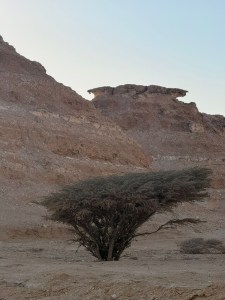
Essay published: What a Frog in Boiling Water Knows: Oman, Before and After

I am happy to announce that my chapter “What a Frog in Boiling Water Knows: Oman, Before and After” has been published in Emanations 12. Brookline, MA: International Authors, 2026: 304-311. link to book

excerpt

At the Boston Museum of Fine Arts I like ‘Woman and Flowers’ by Alma-Tadema, one of my favorite painters, but the painting I love most is ‘Rest on the Flight into Egypt’ by Luc Olivier Merson, such a quiet, graceful scene.

I bought a membership to the museum and within a month I was back. I paid a visit to the Egyptian section, then ventured further out, into the American and impressionists exhibits. Two weeks later, I spent another morning walking around without a map. It was nice to come across Paul Revere’s silverwork and the painting of flowers exhibit, but the only places I really wanted to be was in front of Merson’s painting or anything Middle Eastern from before 1500 CE.

Walking into a room in the Ancient Egyptian section that I hadn’t seen before, I suddenly understood why the museum brought me such serenity. The cases were full of small, wooden boats full of men in white sarongs. Oh, I realized, they look like the research guys.

Most of the Omani men I did ethnographic research with are full- or part-time fishermen. And they wear a wazar, a piece of fabric wrapped around their waists that falls to their knees which is often plain white cotton or white with a light checkered or striped pattern.

And the man in the painting ‘Rest on the Flight into Egypt’ sleeps as the research guys sleep when they are camping, directly on sand next to a fire with a blanket underneath and a blanket over which is pulled up to cover the face. For everyone else, the man in the painting is Joseph; for me, it’s one of 15 different men who I was friends with, went fishing with, had hundreds of picnics with, asked questions of and who I miss terribly.

My grief is much smaller than most people who have been displaced by wars and hatred. Relatives co-signed my lease so I have a place to stay; my mom helps me get through a Boston winter by gifting flannel sheets and sweaters. But I stand in front of that painting and cry as it seems to hold all the harmony that I have lost.

Then, as so often happens, the book I needed to understand how I felt appeared at the right time. Amidst the postcards and scarves in the museum shop, I saw ‘All the Beauty in the World: The Metropolitan Museum of Art and Me’ by Patrick Bringley. Although my favorite museum is the Frick, I also love the Met and the cover mentioned something about grief, so I thought it would be interesting.

I read it in one morning, crying all the way through. What Bringley gets so right is how a loss, even when you know it’s coming and you have a pretty good idea how much it is going to hurt, stops the forward motion of your life. His book isn’t ‘feel-good’ or & ‘how to’; after his brother died, Bringley walked away from his career and became a security guard at the Met for ten years.

Marriage and Peace/ Marriage and Joy in Dhofar

Houseways: ‘Homespaces’ Away from Home

Living Expat, A Remembrance of Happier Times on the Arabian Peninsula

Team Thesiger: ‘Arabian Sands’, ‘The Worst Journey in the World’, ‘The Snow Leopard’ and ‘Into Thin Air


Screenshot

When Should You Arrive at Your Ithaca? Thinking about Cavafy, Gerald Durrell, Lawrence Durrell and Corfu (Boston Athenaeum, April 25, 10am)

I will be leading a discussion about Gerald Durrell’s My Family and Other Animals and Lawrence Durrell’s Prospero’s Cell at the Boston Athenaeum on April 25th. It’s interesting to come to the books by the two brothers again so many years after first reading them. I went through all Gerald’s books in middle school and Lawrence’s when I was in college.

On rereading them, Gerald’s book stands up: it’s charming and erudite. Lawrence’s is still excellent, but now the sexism is clear and, in a way, debilitating because you can now see what he missed. He wrote best in and about Greece. Although Caesar’s Vast Ghost is wonderful, nothing he wrote in France is as good as what was sparked by the more difficult landscapes of North Africa and Greece.

Rereading them makes me wonder, when is the best time to find your Ithaca? Both autobiographies recount their days on Corfu. But as Gerald is 12 years younger, he experienced Corfu as the background of a magical childhood. Lawrence, newly married, had the magic of first love in a perfect little beach house, complete with sailboat, good friends, excellent food, splendid weather and the time to write.

So is it better to have an enchanted childhood, and have those memories to fall back on, or perhaps lead you on, for all your life? Or better to have your glorious golden years in your early twenties? Cavafy famously urges you to arrive late in life:

When you set out for Ithaka

ask that your way be long,

full of adventure, full of instruction.

The Laistrygonians and the Cyclops,

angry Poseidon – do not fear them:

such as these you will never find

as long as your thought is lofty, as long as a rare

emotion touch your spirit and your body.

The Laistrygonians and the Cyclops,

angry Poseidon – you will not meet them

unless you carry them in your soul,

unless your soul raise them up before you.


Ask that your way be long.

At many a Summer dawn to enter

with what gratitude, what joy –

ports seen for the first time;

to stop at Phoenician trading centres,

and to buy good merchandise,

mother of pearl and coral, amber and ebony,

and sensuous perfumes of every kind,

sensuous perfumes as lavishly as you can;

to visit many Egyptian cities,

to gather stores of knowledge from the learned.

Have Ithaka always in your mind.

Your arrival there is what you are destined for.

But don’t in the least hurry the journey.

Better it last for years,

so that when you reach the island you are old,

rich with all you have gained on the way,

not expecting Ithaka to give you wealth.


Ithaka gave you a splendid journey.

Without her you would not have set out.

She hasn’t anything else to give you.


And if you find her poor, Ithaka hasn’t deceived you.

Wise as you have become, with so much experience,
you must already have understood what Ithacas mean.

When I read My Family I wished I lived on a Greek island, although I had a shorter, but similar, experience: as a child, I spents three weeks every year in the ruins of a sugar mill in the Caribbean. Reading Lawrence’s books in my late teens and early 20s helped pull me out into the world. I wanted to go to the places he described so I managed to get myself to Cairo, Alexandria, Athens, Corfu, Cyprus, Rhodes and other Greek islands, as well as his house in Sommières. But I didn’t find my Ithaca, the Dhofar region, until I was 39. Then I had to move away so I now agree with Cavafy. Arrive at your Ithaca late, so you never have to leave it.


Boston Athenaeum – April 25, 10amhttps://bostonathenaeum.org/whats-on/discussion-groups/

Join us for a discussion of two very different books which feature the same landscape and main characters. Most people know only one of the Durrell brothers, but each one has his own brilliance. Lawrence writes about the historical and literary landscape in an artistic and serious manner, while Gerald focuses on the local wildlife, a group which includes his older siblings. The juxtapositions between what each one thinks is important and noteworthy makes reading the books in tandem a delight. Gerald doesn’t deign to mention his brother’s wife; Lawrence ignores the fauna. Gerald has nothing to say about Greek myths; Lawrence pretends he is not with his family. Read one book or both and join a short visit to the gorgeous Greek island of Corfu. If the conversation leads to a wider discussion of Lawrence’s fiction (The Alexandria Quartet), Gerald’s impressive improvements in how zoos are designed and the Boston area’s best Greek restaurants, all the better.

Back from Ubar or What to Read if You Insist on Staying Home

Research on Travelers and Tourists in Dhofar

Marriage and Peace – essay published

The Beauty of Beau Geste


Marriage and Peace – essay published

I am happy to announce that my essay on ‘Marriage and Peace’ has just been published. The photographs were taken by Onazia Shaikh. 

It is difficult to write about my book, Ethnographic Reflections on Marriage in Dhofar, Oman, given the current war in the Middle East. The anthropological study of people’s lives seems unimportant in the face of such terrors and tragedy. Also it’s hard to understand why such a peaceful country as Oman has been pulled into the war, given that for over 50 years its unofficial motto has been ‘Friend to All, Enemy to None’. Salalah, the city in southern Oman where I lived for 19 years, has been bombed twice.

Anthropology in war is a fraught undertaking; the Human Terrain project, the American government’s attempt to merge military logic with ethnography, did not work.

Anthropology is more along the lines of ballroom dancing. You need peace now, peace in the recent past and the expectation of peace in the future to get started; you also need a group of people who are willing to learn a new way of movement. I like the analogy because people who haven’t done ballroom dancing can dismiss it as frivolous but learning when to turn, when to cross, how to follow the music and how to move in clothes and shoes that are unfamiliar while making the right kind of small talk is excellent training to become an ethnographer.

And marriage is a peace-time activity; you need peace and food security to think of adding someone to the family and for people and goods to travel to the celebration. So my book is a peace-time book. It reflects my thinking about how Omanis in the southernmost region go about finding someone to spend their life with and how to create a peaceful life together. I cover how men and women decide to start looking for a partner and all the following steps, including the dissolution of a marriage and old age. I did most of my work with people from the hakli, or qara, group of tribes whose first language is a Modern South Arabian language called Gibali (Jebbali/Shahri /Shehret).

The full essay is here.

I am happy to announce that my new book is now available for pre-order: Ethnographic Reflections on Marriage in Dhofar, Oman

Living Expat, A Remembrance of Happier Times on the Arabian Peninsula

Reflections on Ethnographic Research: (Not) Asking Questions

Team Thesiger: ‘Arabian Sands’, ‘The Worst Journey in the World’, ‘The Snow Leopard’ and ‘Into Thin Air’


I am happy to announce that my new book is now available for pre-order: Ethnographic Reflections on Marriage in Dhofar, Oman

Ethnographic Reflections on Marriage in Dhofar, Oman

(book cover photo and post photo by Onazia Shaikh)

https://anthempress.com/books/ethnographic-reflections-on-marriage-in-dhofar-oman-hb

Examines how middle-class Muslim men and women in Dhofar, Oman, make and negotiate marital choices, tracing every stage of marriage through their own personal accounts.

Studying Marriage in Dhofar, Oman explains the choices middle-class, Muslim, tribal Dhofari men and women make when creating a life together. Based on 19 years observations of and discussions about Omani marriages, the book shows all the steps of marriage, including how people decide to get married, the wedding invitations and parties are arranged, the newlyweds’ home is organised, the work within a marriage is delineated, and a marriage succeeds or falls apart. Unlike many texts about family life on the Arabian Peninsula, the author spoke extensively to both men and women, so that the book is rich with examples of Omanis explaining their personal decisions.

There are no comparable texts which look at the complete scope of a marriage from deciding to marry, to asking to marry, arranging the wedding parties, creating a successful marriage, and coping with stresses such as children, divorce, polygamy and widowhood.

The book starts with a discussion of how a man might find a bride and how a young woman might create or avoid situations in which she would be asked to marry. There is a discussion of how people might fight to (or not to) marry and all the steps taken after the engagement, including sending out announcements and preparing where the new couple will live. All types of marriage parties are described, including taking photos and displaying the gifts. Next, there is an overview of how the couple can create a marital relationship, followed by an examination of what might go wrong in a marriage, which looks at topics such as incompatibility, gross misconduct and divorce. There is a chapter on pregnancy, which includes a discussion on how children are named. The books ends with a short overview of specific aspects of marriage such as who has free time and what ‘family time’ means.

Recreating Culture – Lessons from Bakeries and Cafeterias

Reflections – Dhofari Conversations

Photographs of Dhofar by Onazia Shaikh 

Frankincense in Dhofar, Oman

Bibliography – Arabian Peninsula Literature: Fiction, Drama, Poetry and Secondary Sources

This is a selected bibliography of texts related to Arabian Peninsula/ Middle Eastern literature.

[writers who are underlined are major authors with many other publications]

Arabian Peninsula Writing

general

Akers, Deborah and Abubaker Bagader, eds. and trans. 2008. Oranges in the Sun: Short Stories from the Arabian Gulf. London: Lynne Rienner.

Alshammari, Shahd. 2017. Notes on the Flesh. Malta: Faraxa Publishing.

Jayyusi, Salma Khadra, ed. 1988. The Literature of Modern Arabia: An Anthology. London: Kegan Paul International.

Michalak-Pikulska, Barbara. 2016. Modern Literature of the Gulf. Bern: Peter Lang GmbH.

Meguid, Ibrahim Abdel. 2006. The Other Place. Farouk Abdel Wahab, trans. Cairo: The American University in Cairo Press.

Wilson, G. Willow. 2012. Alif the Unseen. New York, Grove Press.

also note:

The Saif Ghobash Banipal Prize for Arabic Literary Translation [https://www.banipaltrust.org.uk/prize/

Banipal Magazine [ https://www.banipal.co.uk/ ] which has special issues on specific countries, for example: Yemen [ https://www.banipal.co.uk/back_issues/73/issue-36/ ]

Emirates

Al Murr, Mohammad. 2008. Dubai Tales. Peter Clark and Jack Briggs, trans. Dubai: Motivate Publishing.

—. 1998. “The Wink of the Mona Lisa” and Other Stories from the Gulf. Jack Briggs, trans. Dubai: Motivate Publishing.

Al-Suwaidi, Thani. The Diesel.

Johnson-Davies, Denys, ed. 2009. In a Fertile Desert: Modern Writing from the United Arab Emirates. Cairo: American University in Cairo Press.

Krishnadas. 2007. Dubai Puzha: When Seagulls Fly Over Dubai Creek. ‎Thrissur, Kerala: Green Books.

Michalak-Pikulska, Barbara. 2012. Modern Literature of the United Arab Emirates. Krakow: Jagiellonian University Press.

Unnikrishnan, Deepak. Temporary People.

Kuwait

Abulhawa, Susan. 2020. Against the Loveless World.

Al Nakib, Mai. 2023. An Unlasting Home. Mariner Books: New York.

Alsanousi, Saud. The Bamboo Stalk.

Oman

Al Farsi, Abdulaziz. 2013. Earth Weeps, Saturn Laughs: A Modern Omani Novel. Nancy Roberts, trans. Cairo: American University of Cairo Press.

Alharthi, Jokha. 2019. Celestial Bodies. Marilyn Booth, trans. New York: Catapult.

Hamed, Huda. I Saw Her in my Dreams.

Ibrahim, Sonallah. 2001. Warda. Hosam Aboul-Ela, trans. Yale University Press: New Haven.

Michalak-Pikulska, Barbara. 2002. Modern Poetry and Prose of Oman. Krakow: The Enigma Press.

Saudi

Al-Khamis, Omaima Abdullah. Al-Bahriyat.

Alireza, Marianne. 2002. At the Drop of a Veil.

Alsanea, Rajaa. 2007. Girls of Riyadh. London: Penguin.

Benyamin. 2021. Goat Days. Joseph Koyippally, trans. Efinito.

Ferraris, Zoe. 2008. Finding Noof. Houghton Mifflin Harcourt: New York.

—. 2010.  City of Veils. New York: Little Brown.

—. 2012. Kingdom of Strangers. New York: Little Brown.

Munif, ‘Abd al-Rahman. 1989. Cities of Salt. Peter Theroux, trans. Random House: New York.

Yemen

‘Abd al-Wali, Mohammad. They Die Strangers.

Ba-Amer, Salih. 1988. “Dancing by the Light of the Moon,” in The Literature of Modern Arabia: An Anthology. S. K. Jayyusi, ed. London: Kegan Paul International. 318-22.

Bajaber, Khadija Abdalla. 2021. House of Rust.

Dammaj, Zayd Mutee. 1994. The Hostage. Interlink Books: Northampton, MA.

Hunter, Barry Stewart. 2017. Aden.

Classical/ Pre-Modern Fiction and Poetry

Allen, Roger. 2005. The Arabic Literary Heritage: The Development of its Genres and Criticism. Cambridge: Cambridge University Press.

Arberry, A.J. 1965. Arabic Poetry: A Primer for Students. Cambridge: Cambridge University Press.

Farrin, Raymond. 2011. Abundance from the Desert: Classical Arabic Poetry. Syracuse: Syracuse University Press.

Irwin, R. 2002. Night and Horses and the Desert: An Anthology of Classical Arabic Literature. New York: Anchor.

Sells, M., trans. 1989. Desert Tracings: Six Classic Arabian Odes by Alqama, Shanfara, Labid, Antara, Al-Asha and Dhu al-Rumma. Middleton, CT: Wesleyan University Press.

Folk/fairy tales

Al Taie, Hatim and Joan Pickersgill. 2008. Omani Folk Tales. Muscat, Oman: Al Roya Press and Publishing House.

al-Thahab, Khadija bint Alawi. 2012/ Stories of My Grandmother. W. Scott Chahanovich, ed. Washington, D.C:  Sultan Qaboos Cultural Center.

Behnam, Mariam. 2001. Heirloom: Evening Tales from the East. Oxford: Oxford University Press.

ElMahi, Ali Tigani and Ahmed Mohamed al Khatheri. 2015. “A Folk Story from Dhofar: A Pathway to Indigenous Knowledge.” Journal of Arts and Social Sciences 6.2: 5-12. DOI:10.24200/jass.vol6iss2

Hamad, Abdulsalam. 2006. Omani Folk Tales. Seeb: Al-Dhamri Bookshop.

Johnstone, T.M. 1974. “Folklore and Folk Literature in Oman and Socotra.” Arabian Studies 1: 7-24.

Johnstone, T.M. 1983. “Folk-Tales and Folk-lore of Dhofar.” Journal of Oman Studies 6.1: 123-127.

—. 1978. “A St. George of Dhofar.” Arabian Studies 4: 59-65.

—. 1974. “Folklore and Folk Literature in Oman and Socotra.” Arabian Studies 1: 7-24.

Kamal, M. 1999. Juha: Last of the Errant Knights. J. Briggs, trans. Dubai: Motivate Publishing.

Mershen, Birgit. 2004. “Ibn Muqaarab and Naynuh: A Folk-tale from Tiwi.” Journal of Oman Studies 13: 91-97.

Paine, Patty, Jesse Ulmer and Michael Hersrud, eds. 2013. The Donkey Lady and Other Tales from the Arabian Gulf.  Highclere, Berkshire: Berkshire Academic Press.

Tales of the Marvelous and News of the Strange. 2014. Malcome Lyons, trans. London: Penguin.

Todino-Gonguet, Grace. Halimah and the Snake, and other Omani Folk Tales. 2008. London: Stacey International.

Wilson, G. Willow. 2012. Alif the Unseen. New York, Grove Press.

Poetry

al Hajri, Hilal. 2014. The Night is Mine. Khalid al Balushi. trans. Muscat: Ministry of Heritage and Culture.

Al Balushi, Khalid, ed. and trans. 2016. Contemporary Omani Poetry in English. Muscat: Ministry of Heritage and Culture.

Handal, N., ed. 2001. The Poetry of Arab Women: A Contemporary Anthology. New York: Interlink.

Johnstone, T. M. 1972. “The Language of Poetry in Dhofar.” The Bulletin of the School of Oriental and African Studies 35.1: 1-17.

Morris, Miranda. 1985. “A Poem in Jibbali.” Journal of Oman Studies 7: 121-30.

Arabic/ Islamic Drama, Fiction and Poetry

Al Aswany, Alaa. 2006. The Yacoubian Building (Egypt). Harper: New York.

Alghosaibi, Ghazi. 1996. An Apartment Called Freedom (Egypt). Leslie McLoughlin, trans. Kegan Paul.

Al-Hakim, T. 1981. Plays, Prefaces and Postscripts of Tawfiq Al-Hakim, Volume One. W. M. Hutchins, trans. Washington D.C.: Three Continents Press.

Carlson, M, ed. 2005. The Arab Oedipus: Four plays. New York: Martin E. Segal Theater Center Publications.

Charara, H, ed. 2008. Inclined to Speak: An Anthology of Contemporary Arab-American Poetry. Fayetteville, AK: The University of Arkansas Press.

Elmusa, S. 2008. Flawed Landscape: Poems 1987-2008. Northhampton, MA: Interlink.

Husni, R. and Newman, D., eds. 2008. Modern Arabic Short Stories: A Bilingual Reader. London: Saqi.

Johnson-Davies, Denys. ed. 2006. The Anchor Book of Modern Arabic Fiction. New York: Anchor Books/ Random House.

Johnson-Davies, Denys, ed. 1994. Arabic Short Stories. Berkeley: University of CA Press.

Kabbani, Nizar. 1999. Arabian Love Poems. B. K. Franieh and C. R. Brown, trans. London: Lynne Rienner.

Kahf, M. 2003. E-mails from Scheherazade. Gainesville, FL: University Press of Florida.

Kaldas, P. and Mattawa, K, eds. 2009. Dinarzad’s Children: An Anthology of Contemporary Arab American Fiction. Fayetteville, AK: The University of Arkansas Press.

Kamal, M. 1999. Juha: Last of the Errant Knights. J. Briggs, trans. Dubai: Motivate Publishing.

Kanafani, Ghassan. 1998. Men in the Sun and Other Palestinian Stories. Hilary Kilpatrick, trans. Boulder: ‎Lynne Rienner Publishers.

Mahfouz, Naguib. 1990. The Cairo Trilogy. Doubleday: New York.

Mersal, I. 2008. These are not Oranges, My Love. Riverdale, NY: Sheep Meadow Press.

Nye, N. S. 2002. 19 Varieties of Gazelle: Poems of the Middle East. New York: Greenwillow.

—., ed. 1996. This Same Sky: A Collection of Poems from Around the World. New York: Aladdin.

Qabbani, Nizar. 2006. On Entering the Sea: The Erotic and Other Poetry of Nizar Qabbani. Lena Jayyusi and Sharif Elmusa. trans. Northampton, MA: Interlink Publishing.

Salih, Tayeb. 1995. “The Doum Tree of Wad Hamid,” in Global Voices: Contemporary Literature from the Non-Western World. Arthur Biddle, ed. Eaglewood Cliffs, NJ: Blair Press. 512-522.

Washburn, K. and Major, J, eds. 1998. World Poetry. New York, W.W. Norton.

Williams, D. 1993. Traveling Mercies. Cambridge, MA: Alice James Books.

Literature/ language/ multi-cultural learning

Al Harthi, A. 2005. “Distance Higher Education Experiences of Arab Gulf Students in the United States: A Cultural Perspective.”  International Review of Research in Open and Distance Learning 6.3: 1-14.

Amin-Zaki, Amel. 1996. “Religious and Cultural Considerations in Translating Shakespeare into Arabic,” in Between Language and Cultures: Translation and Cross-Cultural Texts. Anuradha Dingwaney and Carol Maier, eds. Pittsburgh: University of Pittsburgh Press. 223-44.

Baer, Brian James. 2020. “From Cultural Translation to Untranslatability – من الترجمة الثقافية إلى استحالة الترجمة: Theorizing Translation outside Translation Studies.” Alif: Journal of Comparative Poetics 40: 139-63.

Bell, Duncan. 2003. “Mythscapes: Memory, Mythology, and National Identity.” The British Journal of Sociology 54.1: 63-81.

Booth, Marilyn. 2010. “‘The Muslim Woman’ as Celebrity Author and the Politics of Translating Arabic: Girls of Riyadh Go on the Road.” Journal of Middle East Women’s Studies 6.3: 149-82.

Boyd, F. 2002. “Conditions, Concessions, and the Many Tender Mercies of Learning through Multicultural Literature.” Reading Research and Instruction 42.1: 58-92.

Brooks, W. 2006. “Reading Representation of Themselves.” Reading Research Quarterly, 41, 372-392.

Gatling, Benjamin. 2020, Summer. “There Isn’t Belief, Just Believing: Rethinking Belief as a Keyword of Folklore Studies.” The Journal of American Folklore 133.529: 307-28.

Grosjean, François. 2015. “Bicultural Bilinguals.” International Journal of Bilingualism 19.5: 572–86.

Halstead, J. M. 2004. “An Islamic Concept of Education.” Comparative Education 40: 517-29.

Heble, Ayesha. 2007. “Teaching Literature On-line to Arab students: Using Technology to Overcome Cultural Restrictions.” Arts and Humanities in Higher Education 6.2: 219-226.

Jabra, Jabra. 1980. “Modern Arabic Literature and the West,” in Critical Perspectives on Modern Arabic Literature. Issa Boullata, ed. Washington, D.C.: Three Continents Press. 8-20.

Mazawi, Andreas. 2010. “Naming the Imaginary: ‘Building an Arab Knowledge Society’ and the Contested Terrain of Educational Reform for Development,” in Trajectories of Education in the Arab World: Legacies and Challenges. Osama Abin-Mershed, ed. London: Center for Contemporary Arab Studies and Routledge.

McDermott, Ray and Varenne, Herve. 2007. “Reconstructing Culture in Educational Research,” in Innovations in Educational Ethnography, G. Spindler and L. Hammond, eds. Mahwah, NJ: Lawrence Erlbaum Associates. 3-31.

Michalak-Pikulska, Barbara. 2006. “The Mosaic of Quotations and the Labyrinth of Interpretations: The Problems of Intertextuality in the Modern Literature of the Gulf.” Intertextuality in Modern Arabic Literature since 1967. 187-200.

Ogulnick, K. 2005. “Learning Language/ Learning Self,” in Intercultural Discourse and Communication: The Essential Readings. S. Kiesling and C. Bratt Paulston, eds. Oxford: Blackwell. 250-4.

Ramsey, Gail. 2006. “The Past in the Present: Aspects of Intertextuality in Modern Literature in the Gulf.” Intertextuality in Modern Arabic Literature since 1967. 161-86.

—. 2004. “Confining the Guest Labourers to the Realm of the Subaltern in Modern Literature from the Gulf. Orientalia Succana, 53: 133-42.

Stadnicki, Roman. 2023. “Branding Backlash: The Erring of Urban Advertising in Gulf Cities,” in Branding the Middle East: Communication Strategies and Image Building from Qom to Casablanca. Steffen Wippel, ed. Berlin: De Gruyter. 497-516.

Zemrani, Aziza, Deborah L. Trent and Sawsan Abutabenjeh. 2020, Dec. “Cultural Competency Teaching and Practice in the MENA.” AlMuntaqa 3.2: 64-7.

Webb, Allen. 2012. Teaching the Literature of Today’s Middle East. London: Routledge.

Using Creative Writing Prompts in Foreign Language Learning

Teaching: Reflections on Culture Shocks

Teaching Literature and Staying au courant – The Man from Nowhere and the Ancient Greeks

Navigating without Language

Poems