

My essay “Living Expat” has been published:
“Living Expat.” Emanations: Chorus Pleiades. Carter Kaplan, ed. Brookline, MA: International Authors, 2018: 308-318.
My essay “Living Expat” has been published:
“Living Expat.” Emanations: Chorus Pleiades. Carter Kaplan, ed. Brookline, MA: International Authors, 2018: 308-318.

This is not a typical breakfast – breakfast is usually a light meal eaten at home and is just for family and overnight visitors, almost always family. Any Dhofari man or woman is welcome to eat any meal at the house of any close relative, but usually they only share breakfast if they are staying in the house.
The timing varies from after the dawn (fajr) prayer to 11am on weekends and holidays. School children are fed before they leave the house, with the mother(s) eating before or after feeding younger children when they wake up and perhaps sharing tea and bread with a neighbor in the mid-morning. Eggs (scrambled, fried or boiled) are often set out and children often eat cereal and sometimes pancakes.
Almost everyone drinks tea, either plain, with a lot of sugar, with milk and/ or spices. In houses, thermoses are made by or under the direction of senior women and set out throughout the day. Some Dhofaris simply have tea or tea with toast (sliced bread from a loaf); pita bread (khbus lebnani) with butter, jam, honey and/ or processed cheese; round, thick traditional bread (called variously tanoor or kak in Arabic or godom or thakin in Gibali/ Shahri); store bought biscuits; a parata (plain or with dal or eggs inside) bought from a small, road-side restaurant or brought to the office by the “messenger,” a man who brings tea, light food, newspapers and runs errands.
The photo above shows a picnic breakfast with prepared omelettes, boiled eggs, cereal, bread, cheese, fruit, a thermos of tea and various condiments including hummus. This would be eaten on a holiday or weekend morning with the eggs prepared in the house and all the food packed into the car, then the family driving to a scenic spot to enjoy a leisurely breakfast.
Pragmatics of When and What to Eat
Breakfast is usually a light meal. The timing varies from after the dawn (fajr) prayer to 11am on weekends and holidays. Almost everyone drinks tea, either plain, with a lot of sugar, with milk and/ or spices. In houses, thermoses are made by or under the direction of senior women and set out throughout the day. Some Gibalis simply have tea or tea with toast (sliced bread from a loaf); pita bread (called khbus lebnani) with butter, jam, honey and/ or processed cheese; round, thick traditional bread (called variously tanoor or kak in Arabic or godom or thakin in Gibali); store bought biscuits; a parata (plain or with dal or eggs inside) bought from a small, road-side restaurant or brought to the office by the “tea-assistant.” Eggs (scrambled, fried or boiled) are often set out and children often eat cereal and sometimes pancakes.
Lunch is the main meal of the day and eaten around 1:30 or 2pm after kids return from school and adults return from work. In almost every Gibali household rice must be served.[i] The rice might be plain white and served with dates and fried or grilled fish; biryani with fish, meat or chicken placed on top; a “curry”; a salona; or one of the dishes seen as traditional including qabooli, kebsa, maqboos, and mandi.[ii] The main dish is served with one or more condiments called “chutney” and a chopped salad, often made with fresh vegetables such as onions, cucumbers, tomatoes, carrots, green peppers and, sometimes, lettuce; this is served without a dressing.[iii] Quartered limes and small plates of chili peppers are often set out; some families use bottled hot sauces such as Tabasco.
When the Gibali men I know say “lunch” they mean “rice with meat or fish.” There is no other definition. Although they will sometimes eat chicken, older Gibali men will usually not. More than one male Gibali friend told me that his father had never tasted chicken in his life; this is mentioned in Thomas (1929 103).
Dinner is more varied. It is eaten between 7pm and 11pm, or even later while camping or at large formal parties. There might be rice and meat, chicken or fish again, but also dishes such as potatoes and eggplants sliced thin and baked in tomato sauce; macaroni or spaghetti mixed with tomatoes and fish (usually tuna), meat, or chicken; macaroni or spaghetti with a béchamel sauce. There is usually a chopped salad, chutney, hot sauce and sometimes yogurt.
****************
[i] As Al-Hamad (2016) states, “The Arabic for rice is riz/ruz, but in the Gulf it is ‘aish,” the Arabic word for living or life. In other countries such as Egypt, bread is called ‘aish but in Oman, rice is the most important staple.
[ii] “Curry” is used locally to mean a stew or vegetables and meat, chicken or fish, not necessarily made with curry powder, which is poured onto a platter to be eaten by being scooped up with bread. Salona is usually locally to mean a thin soup with chicken, meat or fish, usually with purred tomatoes as a base which makes it dark red. It is served in bowls or tin-foil containers. People either simply dip bread in the soup or position bread between thumb and two forefingers and, using a pincher action, tear off a piece of meat. Qabooli, kebsa, maqboos, and mandi are considered traditional, local rice dishes in several Middle Eastern countries. It is beyond the scope of this paper to adjudicate origin, ingredients or recipes.
[iii] “Chutney” is not the same as chutney from India which is usually cooked with fruit. It is a condiment whose exact composition varies from family to family but usually made from blended spices with uncooked vegetables. A common one is made from pureed tomatoes, onions and spices and is similar to salsa. A more traditional one is made from pureed garlic and ginger with vinegar. When I showed several Gibali men a small dish of Indian-style mango chutney and asked “Is this chutney?” all of them said no.
This moment – like all moments – has food tastes and choices changing with some people (not necessarily from the older generation) lamenting that the change is too fast and others (not necessarily from the younger generations) lamenting that the change is too slow.[i] In “Notes on the Omani Kitchen: Eating with Tradition” (2018) Popp notes that “Until recently, dates, lemons, a few vegetables, rice, wheat, water and bread formed the basis of the Omani diet in the impenetrable interior of the country” with a goat on feast days, sometimes dried fish and on the coast “fresh fish, fruit, and goods imported by sea.” There are now far more choices than in the 1970s.[ii]
Gibali-speaking informants in my research group are aware of and often discuss culinary changes. Some food, such as locusts, are no longer eaten because the nutrition they provided can be easily obtained from other sources; others, such as wild game like gazelle and bustards, are now forbidden to be killed by the government. Some kinds of bread cooked over the fire are not made because of it is simpler to buy bread; while other kinds, such as qalb, made by pressing dough to the wall of a round, sunken oven, are still eaten frequently. Sometimes there are watershed moments when a significant food change occurs such as the opening of the McDonalds or the Carrefour grocery store which brought certain kinds of Western foods into Dhofar for the first time.[iii]
Another major difference from the 1970s is that almost all families in Dhofar have help with the cooking; with a live-in full time cook, a maid who cleans and cooks some of the meals, a person who comes every day for several hours to cook and clean, or a person who comes in to cook only one meal. Some maids/ cooks will stay with a Dhofari family for over ten years, going home for a month each year; others will work for a few months or a year and then return home or move to a different family. Since the 1980s, having outside help in the kitchen means that while most women know how, cooking is not seen as required skill. Another reason that women spend less time cooking is that now females have equal access to primary, secondary and tertiary education so that some women are able to forego household responsibilities to concentrate on their studies.
There are several other noticeable changes in food use, choice and preparation in the last ten years. One is an awareness of dieting. Several businesses such as “Smart Diet” have opened advertising “scientific” weight loss. There are storefronts which sell supplements and offer counseling, diet plans and weekly ‘weigh-ins’ to help research or maintain a healthy weight. Weight gain, and the often-accompanying diabetes, was never a problem in Dhofar until the advent of selling cheap sweets that occurred from the late 1970s onward.[iv]
A second change is food and medicine. In the past, the most common medical treatments were cauterizing and honey. Medicinal branding is used much less frequently now, but I know several men who have had it done and believe it is efficacious. Honey, especially wild honey from Yemen, was used for many aliments (see Rodionov 2012). Although bottles of honey (usually in used Vimto glass bottles) are still given as gifts, easy access to modern medicine means that honey is now used for lesser aliments such as a sore throat and as a preventative measure.
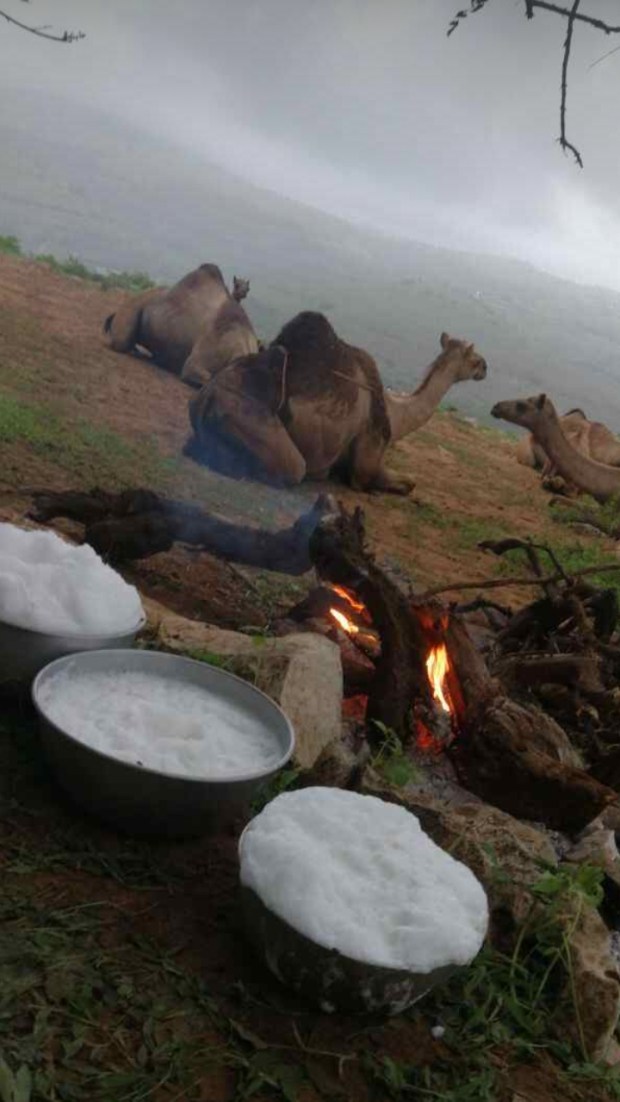
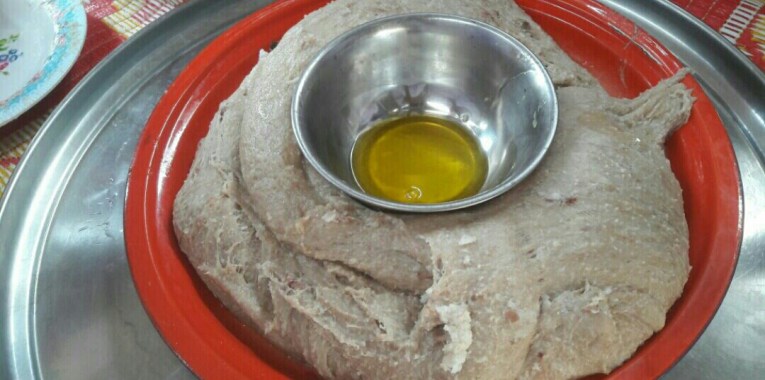
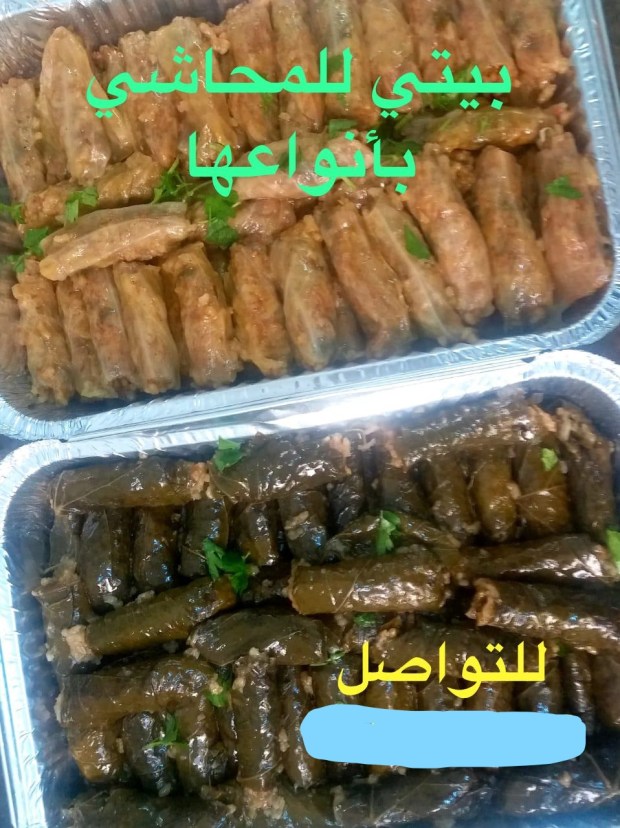
Another noticeable change is women monetizing food. Women often give away food stuffs and prepared dishes to relatives, neighbors and friends, but there are now also chances for women to sell their handiwork [see examples below]. Some women create personal bakery/ catering companies and advertise on Instagram. The local government has set up a series of women-only shopping fairs where women can rent small booths for a nominal fee and sell food meant to be eaten immediately or taken home, in a milieu of small booths selling women’s clothes, beauty products, and oud/ bukhoor. There is also an annual city festival where women can rent booths selling packaged or homemade food, in addition to traditional hearth-cooked breads.
During the khareef (monsoon) tourist season and Ramadan, women often sit under small tents next to main roads. Under the tent there is usually a table covered with food the women have made such as bread, rice and meat dishes, cooked vegetables and/ or sweets such as basboosa (coconut cake) or carrot sweet. Sometimes the women themselves sell what they have made; sometimes the women sit behind the table and male relatives walk to the cars, take orders and accept payments.[v] In addition, some women own and run small store-front businesses which sell, almost exclusively, sweets such as mini-cheesecakes, brownies, cupcakes and chocolates, often with cakes for sale by special order.
Lastly, methods of cooking are changing. In the past, heated rocks were often used to cook meat or fish. Although I have been at picnics where this has been done and most picnic cooking is still done over a fire, most men now use various accouterments such as tinfoil and tongs. Men will still cook in a traditional way, for example burying potatoes in sand and covering them with heated rocks, but they are clear that they are doing something old-fashioned for the ‘taste’ of it.
One aspect of food culture that is not changing (yet, perhaps it will in the future) is that of eating locally and in season. Given the continuing close connections between relatives who live in the mountains and those who live in the coastal villages or Salalah, seasonal delicacies such as wild roots, mushrooms, a local kind of tuber, and seed pods are brought down from the mountain and given to relatives and friends. On the coast, changes in the ocean temperature bring various fish closer to or farther from shore so that people are used to have certain fish at certain times of the year. Further, the government enforces seasons on various seafood, so that abalone and lobster, for example, can only be bought at certain times of year.
Example of photos sent through social media to advertise home-made food:

******************
[i] I was struck by Roseberry’s (1996) comment that some aspects of food culture “could be seen to represent an attempt to re-create, through consumption, a time before mass society and mass consumption” (774). I think of Dhofar as being in a state of pre-food nostalgia in that Dhofaris often talk about how society, people, family relationships etc. were “better” in the past, I have never heard anyone say that the food was better.
[ii] Writing about Oman, Boxhall (1966) states that “Rice, ghee, dates, and goats’ meat provide the Bedouin’s only sustenance, except (and very rarely) for gazelle meat” (217) and on coast there was, “tunny, king-fish, bonito, and shark…turtle, oysters, clams, sea urchins and limpets” (217, 218). Turtles are forbidden to be eaten by the government, but informants tell me that neither turtles nor sharks were eaten in the past.
[iii] The opening of McDonalds led to a certain amount of what Elie (2006) terms “‘let’s save them from modernity’ syndrome” (158) from some Dhofaris and expats. There were huge lines for a few days, then it became of the choices alongside KFC, Subway, ChicKing, etc.
[iv] In response, the government has created a series of well-maintained, well-lit walking paths next to main roads so that Dhofaris have easy access to safe places to exercise.
[v] By main roads, women sell prepared food, bread, processed food such as chips, and sometimes small bundles of wood used for campfires. Only men work in the road-side stands selling fruit (such as melons), vegetables (usually potatoes and onions) and grilled meat.
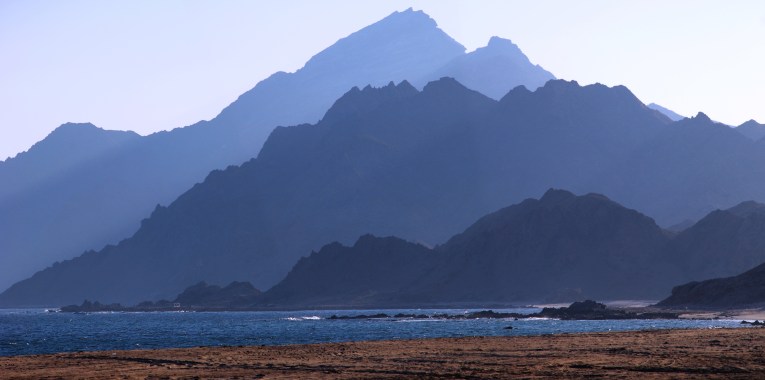
(photo by M.A. Al Awaid)
Abstract from “Issues of Autonomy in Southern Oman” by Dr. Marielle Risse
Gibali (also known as Jibbali, Śḥeret, Shari and Eḥkili) is a non-written, Modern South Arabian language spoken by several groups of tribes in the Dhofar region of Southern Oman. While teaching in Salalah for more than ten years, I have been working with several Gibali-speaking men researching the culture and life-ways of one particular group of tribes, the Qara. Gibalis, both in interviews and from my long-term observations, see their culture as giving both men and women opportunities to craft their own lives and, specifically, to gain a positive reputation for wisdom.
This paper will explore how the Gibalis create and maintain an atmosphere in which both men and women are seen as having access to positive virtues and some control over their own lives. In addition to my observations and interviews, I will include examples from the fields of political science and anthropology, as well as stories from the first set of written texts in the Gibali language.

My current research focuses on the practices and perceptions of buying, making, eating and disposing of food among Dhofaris in the southern region of Oman. I am examining details of food preparation (who makes what kind of food in which location), as well as when, where and how food is eaten. I will also compare Dhofari food traditions with anthropological accounts from Yemen and recent changes in food culture including expanding selection of foods, hiring people to help with cooking, dieting, monetizing food and cooking methods.
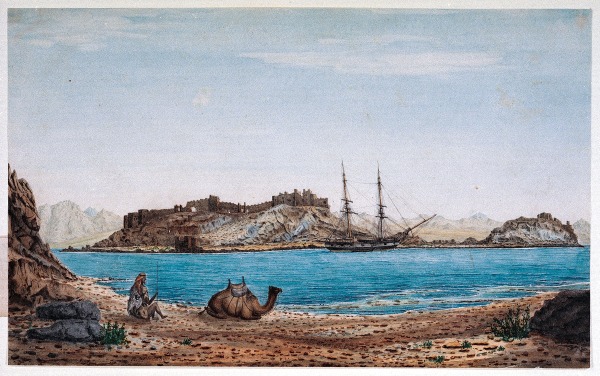
[painting: Island of Faroun near the head of the Sea of Akabah. Showing the HEIC’s surveying vessel Palinurus. © National Maritime Museum, Greenwich, London]
I will be presenting “Accounts from the journeys of the brig ‘Palinurus’ along the Dhofar Coast in the mid-1800s” at the Exploration and Memory Conference, Mational Maritime Museum, September 14 and 15th.
https://www.rmg.co.uk/see-do/exhibitions-events/exploration-and-memory-conference
This three-day conference, from Thursday to Saturday, will consider exploration from the vibrant perspective of memory studies. Presentations will focus on the history, poetics, and material and visual culture of exploration, exploring how these have changed over the years and what their legacies have been, and continue to be.
Unseen Art of Australia’s First Fleet; Naval collecting between Cook and Darwin; Sir Rex Nan Kivell: ‘Collecting the explorers’ and not recalling ones’ past
Mapping movement and memories of coastal South America, 1680–1750; Representations of James Cook in Australia during the 1920s and 1930s; Convicts and Cartography in the Australian Colonies
Remembering the shipwreck of the Querina, 1431–32; Lost and forgotten: the story of the first Cook memorial; 21st Century challenges to the memorialisation of explorers
British perceptions of difference in voyage narratives to the South Seas in the 1740 and 1760s; Encountering a “Savage” Land in the Romantic Era; Indigenous knowledge in New South Wales and London in the early nineteenth century
The Afro-Brazilian architectural heritage in Nigeria and the Republic of Benin; Exploring inter-personal spaces in India-Bangladesh borderlands
Pacific Encounters: museums and memory making; The Taonga have memories too; Rites of space at ‘the shrine of geography’: the Royal Geographical Society, memory and exploration
Arctic expedition and encounter; Fragmented Landscapes: Memory, Photography and the Polar Expedition
Cabeza de Vaca’s Naufragios: exploration, ethnography, and identity negotiation; The Battle of Goringhaiqua and the death of Viceroy D’Almeida: contested histories, popular memory and ancestral voices
Between poles of memory in Ed O’Loughlin’s Minds of Winter; Accounts from the journeys of the brig ‘Palinurus’ along the Dhofar Coast in the mid-1800s; Time and memory in Antarctic exploration literature for children

Accounts from the Journeys of the Brig “Palinurus” Along the Dhofar Coast in the mid-1800s
Dr. Marielle Risse
Although there is a fair amount of written descriptions about the northern part of Oman, there were few travelers who wrote about the southern region of Dhofar until the 1970s. The first sustained exploration by Westerners was done by two teams on the Brig “Palinurus.” Captain Haines and his crew from the Indian Navy surveyed and explored the Dhofar coast in 1834, 1835 and 1836. Commander J. P. Saunders, with the same ship and some of the same crew, continued this surveying work in 1844-1846. Both Haines and Saunders published accounts of their voyages.
The primary focus of these journeys was to figure out how the lands investigated might be of use to the British government and merchant class, as when Haines tried to buy the island of Socotra from Sultan Omar to use as a depot for steam-boat traffic between India and England. But there is a fascinating wealth of cultural and historical information from the articles written by members of the “Palinurus.” For example, the brig’s assistant-surgeon, Henry Carter, wrote up a brief archeological survey of “The Ruins of El Balad” (1846), in which he includes a succession of rulers/ governors of the Dhofari coast. Cruttenden’s short article (1838) details his journey from “Morebat” [Mirbat] to Dyreez [Dhariz],” approximately 71 kilometers along the coast.
My paper will discuss the articles published in relation to the “Palinurus” voyages along the Dhofar coast to compare the details of what was recorded in the mid 1800s to the present day. I will also briefly mention later travelers who came to the region by boat including Theodore & Mabel Bent and Bertram Thomas.
(photo by M. A. Al Awaid)

I have no fear of bugs and love camping because of the time I spent in the Caribbean as a child. The geography of Salalah also reminds me of the Caribbean island I knew because Dhofar, uniquely on the Arabian Peninsula, has a summer monsoon season (called Khareef, the Arabic word for ‘autumn’) which brings in 3 months of rain/ drizzle. Salalah has farms with coconut, papayas, mangos, bananas and limes. Many houses have gardens with bougainvillea, hibiscus, and oleander like houses in the Caribbean.
But beyond the physical remnants of the island, there is a psychological and intellectual level. Steve Caton’s Lawrence of Arabia: A Film’s Anthropology (1999) struck a deep chord with me in terms of how the “theme of the outsider, of the individual who does not feel comfortable in his or her own society” from the film resonated in his own life and in the lives of many anthropologists (145).
When I read Abu-Lughod’s question from “Writing Against Culture,” “Does difference always smuggle in hierarchy?” (1991 146), my answer is ‘not if you don’t want it to.’ I disagree with the cliché that anything that makes a difference makes a division.
Abu Lughod states that it is part of “anthropological discourse to enforce separations that inevitably carry a sense of hierarchy” (1991 138). Further, “self is always a construction, never a natural or found entity… the process of creating a self through opposition to an other always entrails the violence of repressing or ignoring other forms of difference” (140). In a later article she argues that “a difference between self and other will always be hierarchical because the self is sensed as primary, self-formed, active and complex, if not positive. At the very least, the self is always the interpreter and the other the interpreted.” (2008 13). Or put another way, “Can we think of a difference without putting it against a norm?” (Mascia-Lees, Sharpe, and Cohen 1999 29).
I think we can. I think people can code a norm as a norm for only ourselves and recognize that it is/ should not/ must not be the norm for anyone else, hence a norm without prescriptive power.
Given my background, I don’t believe that the hierarchy is an essential part of discussing cultures. I loved our island and cordially hated Columbia, the town I grew up in, but even as a child I couldn’t say that one ‘culture’ was better or worse than another – they were merely different. I have spent almost sixteen years living overseas in four different counties and have lived in seven different American states, I can’t rank any of those cultures into any kind of hierarchy.
When I hit a cultural aspect that’s difficult for me – the question is ‘why is this hard to deal with?’ The fact that you have to pay for garbage to be taken away in Vermont was annoying because I didn’t have extra cash. The fact that you don’t in North Dakota doesn’t make one state better or worse – it simply means to you have to think about all sort of factors such as cost of land, location of land-fill sites, tax burdens, ground water supplies, price of gas, cost of maintaining garbage trucks, etc. People may, or may not, always be partial to their own culture, but refusing to say, “My culture is best” is an intellectual choice. It’s impossible to say that a grilled cheese sandwich at noon is a better lunch than rice and mutton at 2pm.
Except for physical harm, most constructs that are deemed “better” simply need to be picked apart and analyzed for how that construct fits into larger issues. For example, Dhofari families with small children are often restaurants at 10pm. This is soemtimes viewed by expats as bad child-rearing. But strict and early bedtimes in America, for example, are linked into to a host of other physical and mental cultural features.
Children have an early bedtime in America because there is a cultural understanding that children and adults live on separate time schedules and do different activities. In the States it is common for children to eat different things at different times than adults. Children often have their own room, so they can be put to sleep separately from adult sleeping spaces. Parents may often not have seen each other since the morning and might welcome an hour or two of peace and quiet to watch TV or talk.
In Dhofar, children and adults live in the same rhythm, for example, eating the same food at the same. In Salalah, adults who work and school-age children get up early, but for others it’s normal to rise at 9 or 10 am. Omanis eat lunch at home, so there is two to three hours space for parents to talk in the middle of the day. Everyone takes a nap after lunch so people are refreshed for staying up late. Thus, families with children are often seen eating in restaurants, shopping or picnicking at ten or eleven at night.
 Come From Away
You must be logged in to post a comment.