Foodways and Literature – Animal Poems

As I was looking for food poems last week, I realized how many animal poems I have taught and have written out a partial list below.

One starting place is the Mu’allaqa, most of which have many vivid descriptions of desert animals, for example in Imru al-Qays “Halt, friends” and Labid’s “The campsites at Mina.” Another group of early poems which feature animals are by the sa’alik poets; no one who has read Shanfara’s Lamiyyat (“Sons of my mother”) can forget the wolf metaphors.

“Aunt Jennifer’s Tigers,” Adrienne Rich

“Bear,” Valerie Worth

“Butterflies,” Fawziyya Abu Khalid

“Cat, Valerie Harper

“The Crocodile,” Lewis Carroll

“The Darkling Thrush,” Thomas Hardy

“Darwin’s Finches,” Deborah Digges

“December Snow,” May Sarton

“The Dromedary,” Archibald Young Campbell

“The Eagle,” Alfred, Lord Tennyson

“The Face of the Horse,” Nikolai Alekseevich Zabolotsky

“The Gazelle Calf,” D. H. Lawrence

“The Goat Paths,” James Stephens

“The Horses of the Sea,” Christina Rossetti

“How To See Deer,” Philip Booth

“The Last Wolf,” Mary Tall Mountain

“Minnows,” Valerie Worth

“A Night with a Wolf,” Bayard Taylor

“Not Swans,” Susan Ludvigson

“The Nymph Complaining for the Death of her Fawn,” Andrew Marvell

“Pangur Ban,” unknown, Irish

“The Plaint of the Camel,” Charles Edward Carryl

“The Poet and the Moth,” Ahmad Qandeel

“The Raven,”  E.A.  Poe

“The Seal’s Lullaby,” Rudyard Kipling

“Sister Cat,” Frances Mayes

“Snake,” Emily Dickinson

“Snake,” Valerie Worth

“The Terrapin,” Wendell Berry

“To a Skylark,” Percy Bysshe Shelley

“Turtle Came to See Me,” Margarita Engle

“Upon a Snail,” John Bunyan

“The Vixan,” John Clare

“The War God’s Horse,” unknown, from the Navajo

“The White Stallion,” Abu I-Salt Umayyah

and many poems by Mary Oliver including “Ravens,” “Swans of the River Ayr,” “Turtle” and “White Heron”

More of her poems can be found at: https://www.poetryfoundation.org/poets/mary-oliver

Short stories: “Pepsi” by Mohammad Al Murr, “A White Heron” and “A Dunnet Shepherdess” by Sarah Orne Jewett and all the Jungle Book stories by Rudyard Kipling

Foodways and Literature – Food Stories and Poems

(photo by Salwa Hubais)

I teach literature classes but my most recent book is on foodways, which might seem like two dissimilar topics but food is omnipresent in poems, stories and dramas so my students and I often have conversations that include foodways, literature and cultural differences. Explaining a reference to Persephone in a poem led to my telling the story of Demeter/ Ceres, which led to a conversation about cereals.

Sometimes I focus simply to the vocabulary aspect: explicating “civil as an orange/ and something of that jealous complexion” in Much Ado about Nothing or “cucumber sandwiches”  and “sugar tongs” in The Importance of Being Earnest. But occasionally food takes center stage as with the fishing with a sword scene in Tawfiq Al Hakim’s Princess Sunshine when the question of ‘who makes dinner’ helps carry the theme of the play. Another food-centered example is the dual breakfast scene in Thornton Wilder’s Our Town. On our first run-through, it’s simply a confusing jumble of random statements. But when we have read it a few times and then ‘perform’ it with one student per character, the beauty (and sadness) of that section shine through. Students often remark, “it’s like that at my home.”

Some stories show cultural similarities, such as Laura bringing food to the widow in Mansfield’s “Garden Party,” but they can also show differences. Unlike in Oman, only Laura visits the house (not with her mother and older sister) and she only stays a brief time.

Another Mansfield story “The Doll’s House” uses food to give insights into the social standing of the schoolgirls – having a sandwich with meat shows wealth while a jam sandwich wrapped in newspaper points to poverty. Similarly, the social niceties observed in the dining room at the beginning of Room with a View preview the theme of the novel. Who sits at which table reveals the hierarchies which Lucy will eventually break.

Food issues can even be the comic element of a story as with Elizabeth Gaskell’s magnificent Cranford with its details of manage your cook, take care of your cow and why you should eat your orange in your room (so you can roll it under your bed to check if anyone is hiding there and then slurp the orange sections in private).

Food essays are also wonderful for sparking good student writing. “Jam” and “A Thing Shared” from The Gastronomical Me  by M. F. K. Fisher, “Girl” by Jamaica Kincaid and “In Search of Our Mother’s Gardens” by Alice Walker are great example texts to help students see how to write about their own food experiences.

As for poems about food, we have to start with

“Talk,” Gökhan Tok

You never hear it

but at breakfast the sweetest talk

is between the jam and the honey.

and Naomi Shihab Nye’s wonderful “Arabic Coffee,” “My Father and the Fig Tree,” “Sifter,” “The Traveling Onion” and “The Tray.” For more, please see https://www.poetryfoundation.org/poets/naomi-shihab-nye and https://poets.org/poet/naomi-shihab-nye

Other poems include:

  • “After Apple-Picking,” Robert Frost
  • “The Angler,” Thomas Buchanan Read
  • “The Bean-Stalk,” Edna St. Vincent Millay
  • “Blackberry-Picking,” Seamus Heaney
  • “Coolness of the Melons,” Matsuo Basho
  • “Cynddylan on a Tractor,” R.S. Thomas
  • “The [Date] Palm Tree,” Adnan Mohsin
  • “The Fisherman,” Goethe
  • “From Blossoms,” Li-Young Lee
  • “I Return to the Place I was Born,” T’ao Yuan Ming
  • “Love Poem With Toast,” Miller Williams
  • “Mending Wall,” Robert Frost
  • “The Solitary Reaper,” William Wordsworth
  • “Sorry I Spilled It,” Shel Silverstein
  • “What’s That Smell in the Kitchen?” Marge Piercy

A few food-oriented short stories include: “A Dash of Light” by Ibrahim Aslan, “I Saw the Date Palms” by Radwa Ashour, “A Cup of Tea” by  Katherine Mansfield and “Lamb to the Slaughter” by Roald Dahl, as well as several by Mohammed al Murr including “A Late Dinner,” “The Night’s Catch,” “Look After Yourself” and my favorite: “Dinner by Candlelight.”

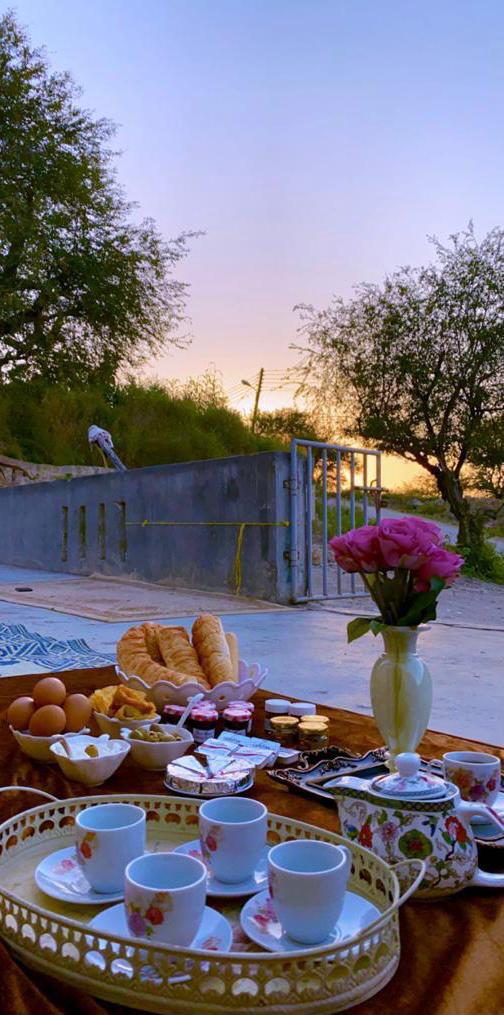
y - morning coffee

Foodways – Perceptions of “Old”/ “Fresh” Food

(photo by Salwa Hubais)

It is always interesting to have cross-cultural discussions of timing words such as “late” and “early.” If you say that you ate dinner “late,” do you mean 9pm or 2am? If you had breakfast “early,” did you eat at 5am or 8am?

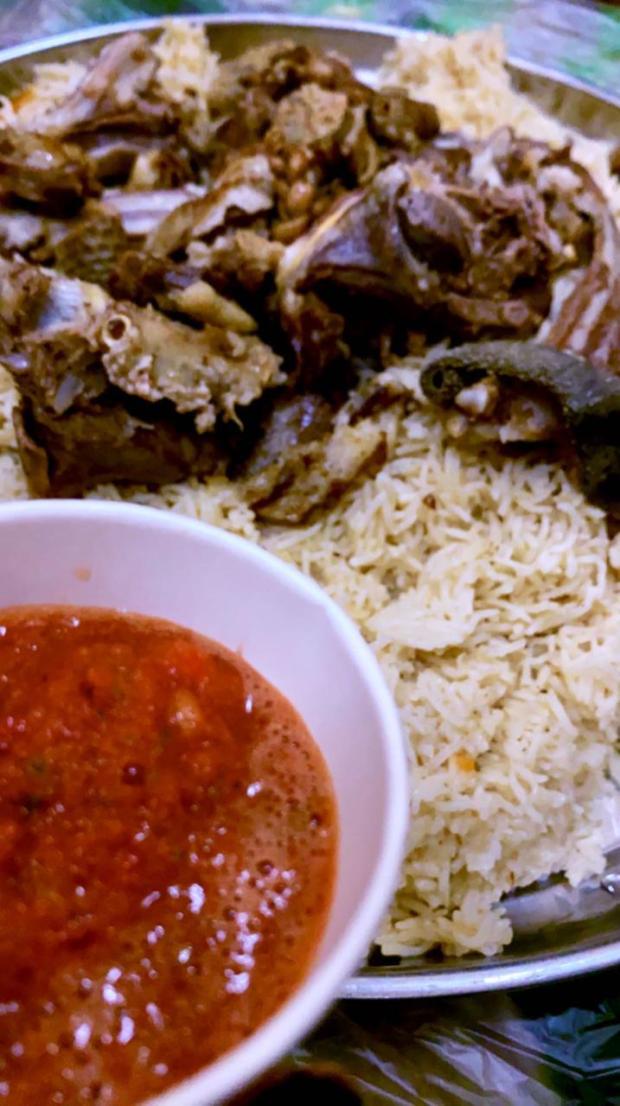
In the same way, perceptions of when food is “fresh” varies widely between cultures. For example in Dhofar a meal of rice and meat, fish or chicken should be eaten right away. After 1 to 3 hours, it is seen as “old,” i.e. not edible/ not suitable to be given away to others and should be put out for animals.

However during Ramadan, the food cooked for iftar is usually left out for snacking for several hours. It is often covered with plastic wrap and placed on a side table but could also be simply left on the ‘table’ (thin plastic drop-cloth) on the ground for a few hours. For example, set out before the sunset call to prayer then people would eat, pray, perhaps eat again, relatives/ friends might stop by to eat, and the food is finally cleaned up/ thrown out/ given away at 10 or 11pm.

How is one meal “old” and another not “old” after several hours? This difference is partially because of method of serving and food choices. A rice and protein for lunch is usually served on a platter with a few sides dishes/ condiments, but iftars should have a much wider variety of food but with fewer portions, thus there is not usually one platter, but many plates (holding, for example, samosas) and small, glass open-proof dishes which are easy to cover.

Rice with protein on a platter is eaten with hands, but iftar choices are usually spooned out of a container or finger food so that when a person takes something, nothing else on the plate is touched. Examples of typical food served at an iftar – spooned out of baking dish: mashed potatoes spread on top of tuna with tomatoes and spices, baked macaroni with white sauce, shredded chicken with tomato and spices, baked compilation of vegetables (pieces of potatoes, onion, carrots, green peppers);  by hand: samosas, baked potatoes wedges, pieces of watermelon and melon.

The same idea obtains for water. On a picnic, water and drinks are usually give out of a coolbox (cooler) or a plastic bag, signaling that they were just bought and hence “fresh.” Since my friends know I always carry water in my car, if I offer anyone a bottle of water that they have not seen me take out of a bag from a store, they will ask, “How long was it in your car?” If I say, “a few days,” they will decline as they don’t want “old” water.

A related cultural construct is what happens when people finish eating? When I have dinner with Italian friends, we talk while eating and then sit at the dinner table for at least an hour after we are done. Dhofaris usually refrain from long conversations while eating and so soon as everyone is finished, the food is taken back to the kitchen or, on a picnic, covered and set aside. One doesn’t talk over the remains of a meal.

meat rice and solona

(photo by Salwa Hubais)


I am pleased to announce that my book, Foodways in Southern Oman, is now available for pre-order.

Foodways in Southern Oman. Routledge, ISBN: 978-0-367-85955-8

Foodways in Southern Oman examines the objects, practices and beliefs relating to producing, obtaining, cooking, eating and disposing of food in the Dhofar region of southern Oman. The chapters consider food preparation, who makes what kind of food, and how and when meals are eaten. Marielle Risse connects what is consumed to themes such as land usage, gender, age, purity, privacy and generosity. She also discusses how foodways are related to issues of morality, safety, religion, and tourism. The volume is a result of fourteen years of collecting data and insights in Dhofar, covering topics such as catching fish, herding camels, growing fruits, designing kitchens, cooking meals and setting leftovers out for animals. It will be of interest to scholars from a range of disciplines, including anthropology, sociology, food studies, Middle Eastern studies and Islamic studies.

https://www.barnesandnoble.com/w/foodways-in-southern-oman-marielle-risse/1137456632?ean=97803678595587

‘Foodways in Southern Oman’ at the AAA annual conference

I recently spoke about my ‘Foodways in Southern Oman’ project at the session: “Uncovering Truths, Building Responsibility in a Pandemic: Insights from Emerging Monographs at the Nexus of Culture, Food, and Agriculture” at the American Anthropological Association on-line conference. November 9, 2020.

https://www.researchgate.net/publication/344707985_Foodways_in_Southern_Oman_session_Uncovering_Truths_Building_Responsibility_in_a_Pandemic_Insights_from_Emerging_Monographs_at_the_Nexus_of_Culture_Food_and_Agriculture

(photo by Salwa Hubais)

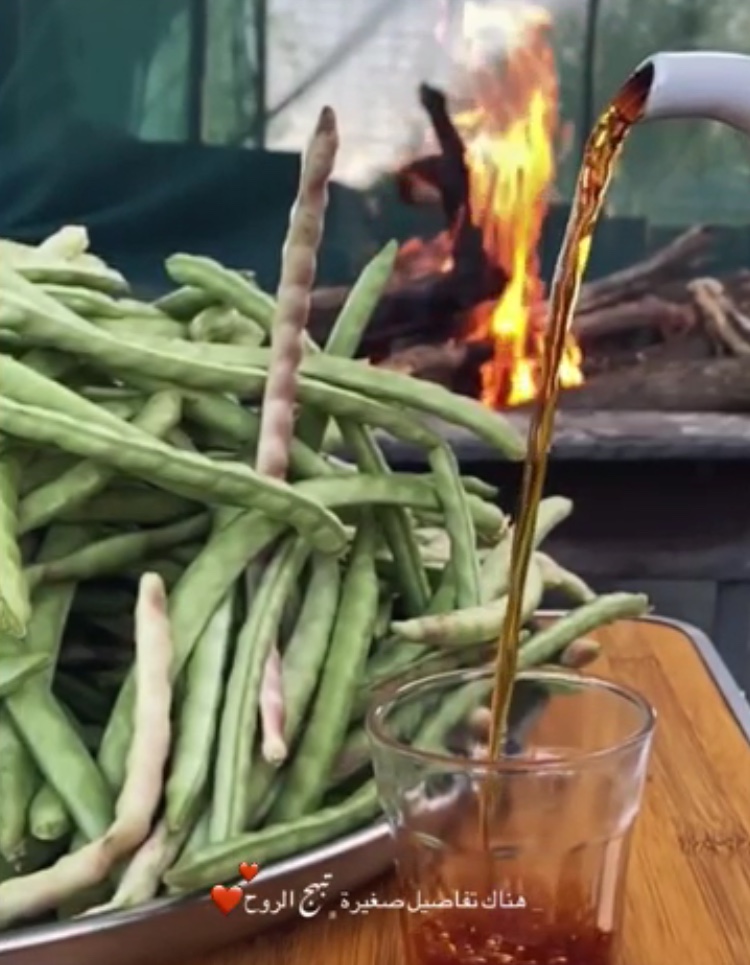
Dugar/ Cowpeas

When I asked Dhofari informants about their favorite food, I was often told ‘dugar and rice.’ When it came time to figure out exactly what dugar was, the way it was described (small, round, dry, cooked in water) I thought it was a kind of lentil. Then I was told it was a bean (foul). When I asked another person, I was shown a photo of green beans and told “this is it.” Finally I talked to a fourth person who told me that dugar had different colors, which is certainly not a green bean. Finally I got the answer: cowpeas, which are small, round, dry, cooked in water, look like green beans before the peas are taken out and are different colors.

Dugar is a traditional crop in Dhofar in the rain-fed, rock-walled mountain farms which were usually planted on June 21.

I am glad I have finally found a good photo on social media.

dugar


Foodways – Images of Galley Kitchens

All houses have one large kitchen for the household. However, sometimes a married couple will have their own, small kitchen as larger and newer houses may have small suites for each married son. This will usually consist of a bedroom with attached bathroom and a sitting room which might have a galley kitchen with a small sink and microwave so they can make tea and simple meals for themselves. Below is an example of a galley kitchen taken from a social media posting about a newly-wed’s room.