Reflections on Ethnographic Work: Being Safe and Secure

One aspect of talking to expats is that if I intimated that something they did might not be safe in my opinion, my advice often had to be negated by them pointing out my actions were unsafe, particularly me going camping with only Omani men. This makes me think of how to define “safe” in terms of my life in Oman. On one hand, I camped with men I had known for years and I had usually met members of their family: brothers, cousins, parents, wives and children. On the other hand, I frequently felt insecure and lost. I was constantly telling myself to trust them, trust the process and that, if nothing else, I was going to have a useful learning experience. “Useful,” not necessarily fun or easy.

One Wednesday night, I got phone call at 9pm. It was hard to hear with the sound of wind and waves in the background. A group of the research guys were camping at a beach far from town and they had decided I should come. I wrote out what they wanted me to bring (water, more water and wood), hung up and started prepping. I had to proctor an exam at 8am, which meant getting up, going to work, stopping at store on the way home while I was still in regular clothes, putting everything in the car, buying drive-through McDonalds for lunch, then lots of driving.  

I got to the beach around 4pm. We talked, then they decided that they would take me for a short boat ride. This was not “How are you feeling?,” “Would you like a boat ride?” or “What have you eaten today, as in what are the chances you will throw up if we go out in the boat?’ No, it was: “Now you will go in the boat.”

So, I changed into boat clothes and out we went. It was very nice; the sea was calm and it was lovely to see the shore and hills… but wait. We appeared to be stopping. They were maneuvering a large barrel full of fishing line with many 4 inch hooks imbedded in soft foam to the edge of the boat. Oh, it was a curtain met, a long, strong fishing line to which plastic laundry soap bottles are tied at intervals so it didn’t sink and every 6 feet of so, a short line going down with a hook which they baited with a sardine (like the “icicles” type of Christmas lights which have a long horizontal line with short verticals going down). 

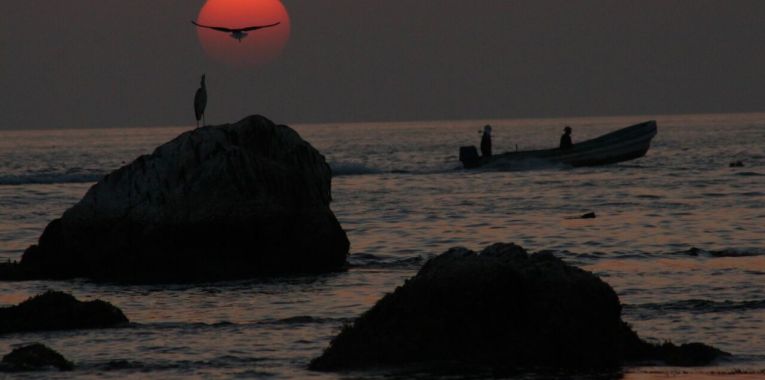
Hooking sardines and tossing the line out took over an hour. The sun sank lower, it got colder, they didn’t let me help so I watched the ocean, shore and seabirds trying not to think about being cold. Then we drove off in the direction opposite camp. I wanted to say that I wanted to go back, but I stayed quiet. If we were driving over to the other side of the bay, they must have a reason.

As the guy who was steering the boat turned off the motor, I realized we were going to a stop next to a fish-trap buoy. He had driven to one of his “boxes” (fish traps) which was very close to shore, meaning it probably had lobsters and since they know I like lobsters, he was deliberately going to the box most likely to have them for my sake (they think lobsters are so-so and would much rather have fish). And, yes, the trap had 8 large lobsters but no fish.

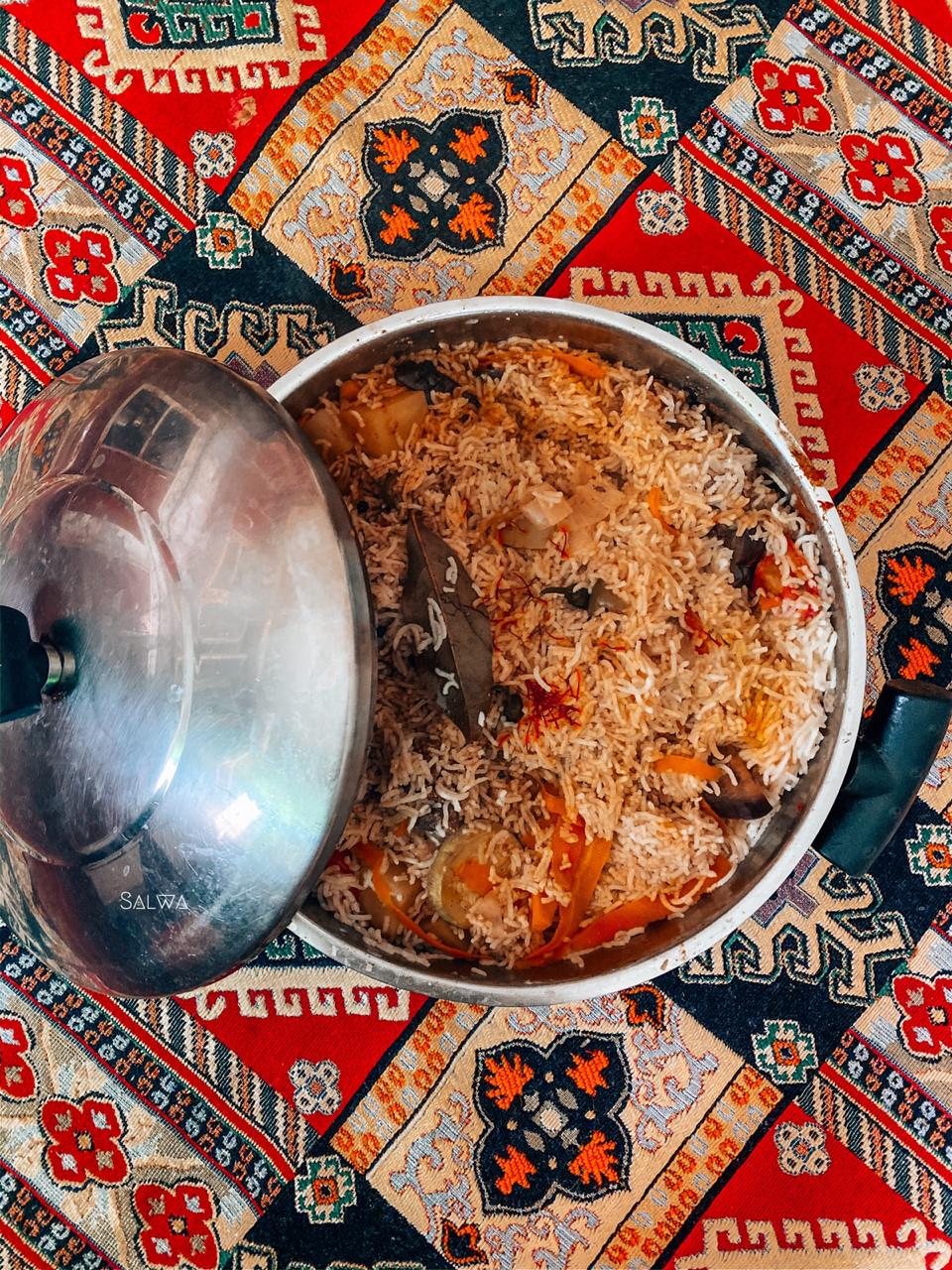
We drove back to shore and moved our camp to up to the top of small headland with a small bay to one side and the large bay (about 2km across) on the other. There were no lights visible so the sky was full of stars. They made a dinner of white rice, a kind of chutney made from various cooked vegetables and lobster taken out of the shell and cooked directly on rocks heated by coals. 

As the rice was cooking, one of the guys took a small shark they had caught earlier in the day and prepped it for drying. He cut it open, took out the guts, then cut the meat into long, thin strips which are all attached to the back of the head so it looked sort of like an octopus (or a small alien from the movie Alien). This is tossed over a rope to dry in the sun for a few days, then eaten. I saw the man cutting the shark, but hadn’t realized he had had put it on a rope that was tied between my truck and their truck.

After dinner, I glanced over at my truck and saw something white, taller than a cat and odd-shaped underneath it. This thing was less than 10 feet away from me so I called the name of the guy who was sitting closest to me, about 6 feet away.

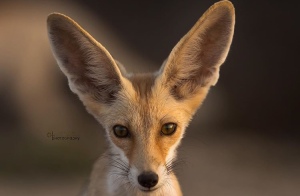
He did not respond, so I said his name again. He said, “fox.” I said fearfully, “that is not a fox” as I have never seen a fox come so close to humans and the thing seemed to be square-shaped. I heard him shift, then his phone light shone on exactly the place I was looking. It was a fox whose hair for some reason glowed white in the darkness and it was standing at an angle so I could see the side of its body and hindquarters, with its tail was wrapped around its body so it looked like a square.

The point of this story is that when I turned back around, I realized that I had been blocking his view. The research guy heard me say his name, saw me looking back towards my truck and said, “fox” without knowing why I was saying his name or what I was looking at. He had instantly put together from how my head was turned that I was looking at the area below where the drying shark meat was hung and the anxiety in my voice meant there was something I could not understand – so the answer had to be “fox.” When I said, “that is not a fox,” he moved over and picked up his phone to show me that, with no visual or sound cues, he knew what it was better than me, the person who was staring at the fox.

So sometimes I felt cold, confused, tired or worried and yet, at the same time, always secure.

Reflections on Ethnographic Work – Trying to Make Sense of Words and Actions

Two poems for courage: “Against Hesitation” by Charles Rafferty and “Thalassa” by Louis MacNeice

Presentation – “Windguru and Other Gurus: Fishing off the Coast of Dhofar, Oman”

Predator Anthropologists, Anthropologist Predators: Anthropological Metaphors in Popular Movies

photo by Hussein Baomar

Reflections on Ethnographic Research: Getting it Wrong

I have been looking at collections of ethnographic essays and several essays show in up most or all texts: Bohannan’s “Shakespeare in the Bush” (1966), Lee’s “Eating Christmas in the Kalahari” (1969) and Miner’s “Body Ritual Among the Nacirema” (1956). There is another essay that is often included, Geertz’s “Deep Play: Notes on the Balinese Cockfight” (1972). In looking over these 4 essays, I wondered, why are these the most widely anthologized?

What they have in common is that in Bohannan’s, Lee’s and Geertz’s essays, the first-person authors are revealed to be completely wrong in an amusing and memorable fashion. In Miner’s essay it is the reader who learns that they were wrong as the essay is set up to de-familiarize American culture (Nacirema = American).

In Bohannan’s, Lee’s and Geertz’s texts, the first-person narrator starts out facing a common field-work task and ends up being the one out of control. Bohannan wants to explain Hamlet to a group of interlocutors she has been gathering stories from, but she is taught the true meaning of the play. Lee wants to get a fat bull to give his interlocutors a feast but, although he gets the largest animal he can find, he is accused of being stingy. Geertz and his wife are trying to integrate into their new research environment, a small village in Bali. They succeed not by their academic reasonings but because they run away when police raid a cock fight. Fleeing in terror and ending up in a stranger’s courtyard pretending to drink tea is what gets them included in village life.

Bohannan, Lee and Geertz confidently set out on their paths, get linguistically/ culturally/ physically lost but end up with valuable insights that help them understand the cultures they are studying. To me, they are popular for the same reason The Wizard of Oz, Alice’s Adventure in Wonderland and the new Super Mario Brother’s Movie are popular. It’s fun to watch someone else live through a tornado/ drop down a rabbit hole/ fall into a tunnel, arrive in a foreign county and slowly learn the ropes.

And I think there is something hopeful and reassuring in hundreds of anthropology professors assigning these essays over the last 50-odd years. Reading them is a reminder that things can go very wrong in fieldwork and still turn out ok. They are anthropological equivalent of the Tolkien quote:

It’s like in the great stories, Mr. Frodo. The ones that really mattered. Full of darkness and danger they were. And sometimes you didn’t want to know the end. Because how could the end be happy? How could the world go back to the way it was when so much bad had happened? But in the end, it’s only a passing thing, this shadow. Even darkness must pass. A new day will come. And when the sun shines it will shine out the clearer. Those were the stories that stayed with you. That meant something, even if you were too small to understand why. But I think, Mr. Frodo, I do understand. I know now. Folk in those stories had lots of chances of turning back, only they didn’t. They kept going, because they were holding on to something.

Brief, non-life-threatening panic is useful, like the concept that nightmares aren’t telling you something terrible will happen, but simply trying to get your attention. And it’s helpful that all three essays highlight the randomness of the panic in that the three narrators felt confident in what they were doing until, suddenly, they were lost. That’s exactly how ethnographic research goes; the panic can come at any time.

A few months ago, I brought food for a meeting with the research guys. I usually bring the firewood and drinks as I don’t cook, but there is one restaurant in town that is trusted so I try to bring dinner now and then.

Like Lee, I was happy to know that I had managed to bring good food for people who have been helping me with my research for years. I unpacked the hummus, salads, bread and plates of grilled meats with pride. One of the men motioned me to put one of the plates of meat back into a cooler, saying “there is enough.” I knew this was in keeping with their normal practice of not setting all the food out as untouched food could be given to other people if not needed. It’s better to have everyone eat from one or two plates which are picked clean than have three or four half-eaten plates with the leftovers thrown out for animals.

We started to eat and, after a while I noticed that the plates were emptying faster than I had anticipated. Soon, there were only scraps left on table. I looked at the man I know best (X) and he glared at me. I felt horrible. I had failed. I had not provided enough food. I was miserly. What a stupid mistake to not bring enough! I glanced again at X and he glared at me again. I was a huge disappointment! I wanted to sink into the sand.

Then I reflected – wait, these guys do not care about food! I wrote an entire book about these men do not care about food. They can handle being hungry for hours; they take pride in their self-control. And they had all eaten at least some meat; no one was starving. So why was X glaring at me?

I looked at X for a third time and he glanced over at the cooler. Suddenly I remembered, I had put an extra plate in the cooler to save for a late comer. So I reached over, opened the cooler, pulled out the plate, took off the tin-foil and set it in the middle of the mat. Everyone dived in.

Ah-ha! The issue was NOT that I had not brought enough dinner but that I had not offered all that I had. Given the importance of self-control in their cultures, they were not going to ask me to give them more food. I brought the meal, so I needed to be the one to offer it. Since I was not offering the last plate, perhaps I wanted to keep that food for myself. And they were not going to lose their dignity by asking for it.

X wasn’t glaring because I had underestimated how much to buy but because I was acting like a miser. Not buying enough is ok; selfishness and stupidity are not ok. I should have remembered the last plate and immediately set it out.

A few weeks later, I checked my insight with X and he agreed with my understanding. He thought maybe I had forgotten the extra plate, but he wasn’t sure, and he had to leave the decision up to me. Then I ran this whole story by another research guy who was not there that night and got the same reaction: no one would care if I didn’t provide as much as everyone wanted to eat, but to have food in the cooler and not share it – that was bad behavior.

The event made me think of Lee’s essay and Alice playing croquet with flamingos. It’s fun to read about other people’s moments of confusion and frustration, and so difficult to live through those moments yourself.

(photo by S. B.)

Reflections on Ethnographic Research: Claiming Knowledge and Shifting Perceptions

Reflections on Ethnographic Research: What is Missing and What Changes

Reflections on Ethnographic Research: (Not) Asking Questions

Reflections on Ethnographic Work: Behaving Badly and Defending Grandpa

Reflections on Ethnographic Work: Shopping, Safety and Maneval’s New Islamic Urbanism (2019)

– طرق الطعام : بحث في ممارسات الصيد في ظفار وببليوجرافيات مختارة – Foodways: Researching Fishing Practices in Dhofar (in Arabic) and Selected Bibliographies

original post: https://mariellerisse.com/2022/02/19/foodways-researching-fishing-practices-in-dhofar-and-selected-bibliographies/

Arabic translation by Aruba Al Mashikhi

(تصوير: حسين باعمر)

الدافعية  

تطرقت في كتابي الأول للكتابة قليلا عن الصيادين الظفاريين من حيث نظرتهم إلى استقلالهم وترابطهم. و في كتابي الثاني ، كتبت عن شراء الأسماك وإهدائها. وبعد ذلك غيرت تركيزي البحثي إلى المنازل.

في أوائل عام 2021 سمعت نقاشًا بين العديد من الباحثين الذين يعتقدون أن الظفاريون ليسوا مرتبطين بالعالم الطبيعي كما كان الحال في الأجيال السابقة. وقد أكد أحدهم أن رجال ظفار توقفوا عن العمل بأيديهم. كما أخبرني باحث آخر بأنه يتم الآن عن طريق الاستعانة بالعمالة الوافادة كمصادر خارجية في الصيد.

أثار اهتمامي سماع هذا الأمر لأنني أحسبه مهما أن يعرف الباحث كيف يمكن للباحثين المختلفين رؤية نفس المنطقة بطرق مختلفة. يتحدث هؤلاء الباحثون لأناس مختلفين وينظرون إلى قضايا مختلفة عما أنظر أنا إليه أنا. الرجال في مجموعتي البحثية قاموا جميعًا وما زالوا يقومون بأنواع مختلفة من العمل اليدوي ، بما في ذلك الصيد اليومي.

يقوم الكثير من المغتربين بالصيد الاعتيادي في ظفار: يصطاد غير العمانيين من الشاطئ و / أو في قوارب مستأجرة لممارسة رياضة الصيد أو صيد عدد قليل من الأسماك لتناول العشاء. هناك أيضًا عمال وافدون مرتبطون بصناعة صيد الأسماك من خلال العمل على تنظيف القوارب وإصلاح الشباك وتركيب مصائد الأسماك ومساعدة الصيادين في تحميل وتفريغ القوارب وما إلى ذلك.

من ناحيتي كنت أتحدث مع الصيادين الظفاريين الذين يعملون في المدن الساحلية صلالة [المدينة الرئيسية في منطقة ظفار] ، طاقة (28 كم شرق صلالة) ، مرباط (70 كم شرقًا) ، سدح (135 كم شرقًا). ) ، حدبين (167 كم شرقاً) وحاسك (187 كم شرقاً) لأكثر من 15 عاماً. لقد كنت مع رجال ظفاريون في قوارب لرمي الشباك وصناديق الصيد – والتي تسمى محليا قراقير-  وصيد سمك التونة والصيد بالطُعم الحي خلال أكثر من اثنتي عشرة رحلة صيد في القوارب ، فضلاً عن أكثر من 20 رحلة صيد من الشاطئ.  لقد قمت أيضًا بالعديد من الرحلات الاستكشافية بالقوارب. كما سنح لي مشاهدة الصيادين الظفاريون وهم يغادرون ويعودون إلى الشاطئ عشرات المرات واستمعت إلى الرجال وهم يناقشون رحلات الصيد خلال أكثر من 350 رحلات عشاءًا حضرتها. لقد رأيت مرة واحدة فقط عاملاً وافدًا يشارك في رحلة صيد على متن قارب.

ولذلك، عند سماع هذا النقاش بين الباحثين ، فكرت في أفضل السبل التي يمكنني من خلالها تحديد ما رأيته لإضافته إلى المحادثات الجارية حول مختلف الثقافات الظفارية. وكانت إحدى الأفكار توثيق الأنواع المختلفة من العمل الذي يشارك فيه الرجال في مجموعتي البحثية مثل رعي الإبل ، وفكرتي الأخرى هي محاولة ترميز عدد الساعات التي يقضونها يوميًا في الخارج في مواقع مختلفة.  ولكن نظرًا لاستمرار الوباء ، أدركت أنني بحاجة إلى العمل على شيء يمكن القيام به عن بعد. و أردت أيضًا العمل على شيء لا توجد عنه بيانات حالية أو القليل منها.

قررت أخيرًا أن اسأل سؤالًا بسيطًا: كم يكلف الصيد؟ يمكنني إجراء مقابلات على الشواطئ العاصفة من أجل السلامة وخلال بحثي عن الطعام لم أجد أي بحث آخر مماثل في شبه الجزيرة العربية على الرغم من وجود عمل على أنواع الأسماك على طول الساحل العماني مثل:

مسار البحث

تركز معظم الأبحاث حول الصيد على أنواع الأسماك التي تم صيدها وكيفية بيعها. أردت أن أنظر إلى الصيد من زاوية أخرى: كيف يستعد الصيادون الظفاريون لصيد السمك؟ أنا ممتنة جدًا للساعات العديدة التي قضوها معي الأشخاص الذي أعتبرهم مصادري في المعلومات لمراجعة التكاليف والإجابة على الأسئلة خلال العام الماضي. كما أعرب عن امتناني لهيلين ماكبث واللجنة الدولية لأنثروبولوجيا الغذاء والتغذية لتنظيمهما مؤتمر “الأسماك كغذاء: أسلوب الحياة ومستقبل مستدام” المثير للاهتمام للغاية الذي استضافته جامعة ليفربول في سبتمبر 2021 [ http://www.icaf2021.uk/ ].

عندما بدأت بحثي حول تكاليف الصيد ، كنت أفكر في تأطير المناقشة بالحديث عن التكاليف والفوائد غير النقدية لصيد الأسماك ، لكن البيانات التي جمعتها قادتني إلى اتجاه آخر. أولاً ، بالنظر إلى النفور الثقافي من التباهي بالأعمال الصالحة أو الإبلاغ عنها ، لم يكن من السهل إقناع الصيادين بالتحدث عن الكيفية التي يتبرعون بها عن الأسماك في كثير من الأحيان. ثانيًا ، للدهشة ، لم يلاحظ الصيادون أي عيوب في الصيد. كنت أفترض أن الابتعاد عن المنزل لفترات طويلة قد يُنظر إليه على أنه يخلق صعوبات لأفراد الأسرة ، لكن الصيادين أكدوا أنهم إما سيشترون لوازم للمنزل قبل مغادرتهم أو أن أفراد الأسرة الآخرين سيساعدون في إحضار المطلوب .

قضيت معظم وقتي في محاولة لمعرفة تكلفة جميع احتياجات رحلة الصيد ، ولكن المحادثات الأكثر إثارة كانت حول كيفية تقسيم صيد اليوم. في إحدى المقابلات ، تخلصت من سلسلة من الافتراضات المتعلقة بمسألة الأعداد مثل: إذا اصطاد أربعة رجال 100 كيلو من الأسماك ، فكم كيلو سيأخذ كل شخص إلى المنزل وكم سيباع؟

بدأ الأشخاص الذين يساعدونني في بحثي العمل على خلال أشجار قرارات طويلة بينما أردت رقمًا واضحًا. بعد دقائق من الإحباط ، أدركت أنني كنت آتية للموضوع من إتجاه خاطئ لأن نظرتي غير قبلية وغير قائمة على المجتمع. ليست هنالك إجابة على السؤال التالي: إذا اصطاد أربعة رجال 100 كيلو من السمك ، فكم كيلو جرام سيأخذ كل شخص إلى المنزل؟ إنه سؤال لا معنى له لأن كل رجل في ظفار سيأخذ في الاعتبار سلسلة كاملة من العوامل قبل أن يقرر كيفية تقسيم الأسماك مثل عدد الأشخاص الذين يعيشون في كل منزل من منازل الرجال.

أدت محاولتي لتوضيح كيفية اتخاذ القرارات بشأن مشاركة الأسماك والربح إلى العديد من المناقشات الشيقة والتي ترتبط بعملي السابق حول تقديم الهدايا في ظفار (في قائمة المراجع أدناه).

ثلاثة مفاهيم ثقافية اتضحت لي خلال العديد من المحادثات على رياح الشواطئ أولاً ، أخبرني الصيادون أن مالك القارب في أجزاء أخرى من عمان يأخذ نصيبًا مضاعفًا من الأرباح. على سبيل المثال، إذا ذهب 4 رجال للصيد وكان الربح 200 ريال عماني ، سيتم تقسيم المال بخمس طرق ، حيث يأخذ مالك القارب 80 ريال عماني (سهمان بقيمة 40 ريال عماني لكل منهما). بينما في ظفار ، يدفع الرجال الأربعة جميع تكاليف رحلة الصيد أولاً ، ثم يقسمون الأرباح على 4 ، مع أخذ مالك القارب نفس نصيب الرجال الآخرين.

وعلى أية حال، إذا احتاج القارب أو المحرك إلى الإصلاح ، فسيتم سحب هذه الأموال أيضًا من الربح قبل تقسيم الأموال. على سبيل المثال إذا حقق 4 رجال ربح 200 ريال عماني بعد دفع مصاريف الغاز والطعام والطعم. إلخ ، ولكن المحرك قد تم إصلاحه للتو بتكلفة 100 ريال عماني ، ويحصل مالك القارب على 100 ريال عماني. سيتم تقسيم الـ 100 ريال المتبقية بالتساوي بين الرجال الأربعة. [المال لإصلاح القوارب والمحركات أحيانًا يكون مقدمًا من قبل الرجل الذي يشتري المصيد ، ثم يتم سداده من الأرباح المستقبلية دون أي فوائد.]

ثانيًا ، يجب دائمًا تقسيم الأسماك بنفس الطريقة ، حتى لو تم استخدام الأسماك لأغراض مختلفة. على سبيل المثال ، أوضح أحد الصيادين لنقل بأنه (س) أنه غالبًا ما ذهب للصيد مع رجل (ص)  يعيش في منزله عدد قليل فقط من الأشخاص بينما كان لدى (س) أكثر من 25 شخصًا في منزلين قام بتزويدهم بالسمك. قبل بيع المصيد ، سيخصص (س) ما لا يقل عن 3 أسماك كبيرة لعائلته ويضع نفس الكمية جانبًا لـ(ص) وسوف يصر (ص) على عدم احتياجه لكل هذه الأسماك ويصر (س) على أن يأخذ الاثنان حصة متساوية حتى لو كان (ص) لايحتاج هذه الأسماك وسيقوم بتوزيعها على أشخاص آخرين غير عائلته.

أخيرًا ، نظرًا لعملي على بحثي السابق في تقديم الهدايا ، كنت أعتقد أنه قد يطلب الصياد سمكًا إضافيًا ، على سبيل المثال ، إذا كان يخطط للذهاب للتخييم مع أصدقائه وكان يحتاج إلى المزيد من الأسماك. أو قد يرفض اصطياد السمك إذا كان جميع أفراد أسرته خارج المنزل ، لذلك لا داعي لإحضار السمك لتناول العشاء. أو إذا عُرف أن أحد الصيادين بحاجة إلى ذلك ، أقسم الآخرون أن كل العائدات ستذهب إليه أو يمكن للرجل أن يطلب أكثر من نصيبه كقرض. وتساءلت كيف يتعامل الصيادون مع رجل يطلب في كثير من الأحيان المزيد من الأسماك أو المال.

وكانت الإجابات على هذه الاستفسارات هي أن مجموعة من الرجال قد يصطادون معًا لمدة موسم أو عدة مواسم أو لسنوات [يغير الرجال المجموعات بسبب شخص يشتري أو يبيع قاربًا ، ولديه وقت أكثر أو أقل للصيد ، وما إلى ذلك] ولكن مرة واحدة في مجموعة يحاول الجميع الحفاظ على توزيع عادل ومستوى للأسماك والأرباح في جميع الأوقات. لا ينبغي لأحد أن يطلب أكثر من حصته أو يحاول رفض حصته.

إذا احتاج رجل يمكنه سؤال أصدقائه بعد التوزيع. كانت التفاهمات الثقافية التي كنت قد توصلت إليها في السابق تتعلق بالمواقف الشخصية. قيل لي إن الصيد كان “عملاً” ، وضمن “العمل” يجب أن يكون هناك اهتمام دقيق بأن يحصل الجميع على نصيب متساوٍ. يتم ذلك جزئيًا لأن الظفاريون عادة ما يحاولون تغطية مشاكلهم.

أحد الأمثلة التي أعطيت لي أنه إذا ذهب -أ- و –ب- و –ج- و –د-  للصيد واقترح -أ- إعطاءهم ربح اليوم إلى –ب- لأنه سيتزوج قريبًا ، أو على سبيل المثال إذا خطط –ج- لاصطحاب أحد أفراد الأسرة إلى مسقط من أجل حالة طوارئ صحية ولديه بالفعل حاجة أكبر للمال. بدلاً من محاولة تحديد من لديه ما يحتاج إليه ، يتم تقسيم السمك والمال بالتساوي ولكن ليس بمستويات محددة مسبقًا مثل أن يحصل الصياد على 5 كيلوغرامات.

في مرحلة ما ، سأود أن أشارك في المقالات المدرجة أدناه فيما يتعلق بكيفية توافق أبحاث الآخرين مع السياق الظفاري ، لا سيما مع مناقشة لانكستر الممتازة والمفصلة عن الصيد في جعلان والراشدي ومقال ماكلين حول النساء و صيد السمك في الوسطى.

Resources

  • selected bibliography – fish and fishing in Oman
  • related research on M. Risse’s website
  • related publications and presentations by M. Risse
    • books
    • other publications
    • presentations
    • research in partnership with other members of the Dhofar University community

Selected Bibliography – Fish and Fishing in Oman

Al-Jufaili, Saud, Greg Hermosa, Sulaiman S. Al-Shuaily and Amal Al Mujaini. 2010. “Oman Fish Biodiversity.” Journal of King Abdulaziz University 21.1: 3-51.

Al-Marshudi, Ahmed Salim and Hemesiri Kotagama. 2006. “Socio-Economic Structure and Performance of Traditional Fishermen in the Sultanate of Oman.” Marine Resource Economics 21: 221-30.

Al Rashdi, K. and E. Mclean. 2014. “Contribution of Small-Scale Fisheries to the Livelihoods of Omani Women: A Case Study of the Al Wusta Governorate.” Gender in Aquaculture and Fisheries: Navigating Change – Asian Fisheries Science Special Issue 27S: 135-149.

Chittick, Neville. 1980. “Sewn Boats in the Indian Ocean, and a Survival in Somalia.” International Journal of Nautical Archaeology 9.4: 297-310.

Choudri, B., Mahad Baawain, and Mustaque Ahmed. 2016. “An Overview of Coastal and Marine Resources and their Management in Sultanate of Oman.” Journal of Environmental Management and Tourism 7.1: 21-32.

Clements, Frank.  1977. “The Islands of Kuria Muria: A Civil Aid Project in the Sultanate of Oman Administered from Salalah, Regional Capital of Dhofar.” Bulletin (British Society for Middle Eastern Studies) 4.1: 37-39.

Field, Richard. 2013. Reef Fishes of Oman. Gharghur, Malta: Richard and Mary Field.

Gardner, Andrew. 2013. The Amphibians and Reptiles of Oman and the UAE. Frankfurt: Edition Chimaira.

Haines, Stafford. 1939. “Memoir to Accompany a Chart of the South Coast of Arabia from the Entrance of the Red Sea to Misenat, in 50, 43, 25 E. Part I.” Journal of the Royal Geographical Society of London 9: 125-56.

—. 1845. “Memoir of the South and East Coasts of Arabia: Part II.” Journal of the Royal Geographical Society of London 15: 104-60.

Harrison, David. 1980. The Journal of Oman Studies: Special Report 2: The Oman Flora and Fauna Survey 1975. Muscat: Diwan of H. M. for Protocol.

Janzen, Jorg. 1986. Nomads in the Sultanate of Oman: Tradition and Development in Dhofar. London: Westview Press.

The Journal of Oman Studies: Special Report 2: The Oman Flora and Fauna Survey 1975. Muscat: Diwan of H. M. for Protocol.

Kenderdine, Sarah and Tom Vosmer. 1994. “Maritime Graffiti in Oman.” Bulletin of the Australian Institute for Maritime Archaeology 18: 33-45.

Lancaster, William and Fidelity Lancaster. 1995. “Nomadic Fishermen of Ja’alân, Oman.” Nomadic Peoples 36/37: 227-44.

McKoy, John, Neil Bagley, Stéphane Gauthier, and Jennifer Devine. 2009. Fish Resources Assessment Survey of the Arabian Sea Coast of Oman – Technical Report 1. Auckland: Bruce Shallard and Associates and the New Zealand National Institute of Water and Atmospheric Research.

Mendonca, Vanda, Barry Jupp, Musallam Al Jabri, Thuraya Al Sariri and Mohamed Al Muzaini. 2003. National Report on the State of the Marine Environment. Muscat: Ministry of Regional Municipalities, Environment & Water Resources, Marine Pollution and Coastal Zone Management Section.

Morris, Miranda. 1987. “Dhofar – What Made it Different’,” in Oman: Economic, Social and Strategic Development. B.R. Pridham, ed. London: Croom Helm. 51-78.

“National Aquaculture Sector Overview-Oman.”  2019.  Food and Agriculture Organization of the United Nations-Fisheries and Aquaculture Department. http://www.fao.org/fishery/countrysector/naso_oman/en

Omezzine, Abdallah. 1998. “On-shore Fresh Fish Markets in Oman.” Journal of International Food and Agribusiness Marketing 10.1: 53-69.

Omezzine, Abdallah, Lokman Zaibet and Hamad Al-Oufi. 1996. “The Marketing System of Fresh Fish Products on the Masirah Island in the Sultanate of Oman.” Marine Resources Economics 11: 203-10.

Randall, John. 1996. Coastal Fishes of Oman. Honolulu: Univ. of Hawaii Press.

Saunders, J. P. 1846. “A Short Memoir of the Proceedings of the Honorable Company’s Surveying Brig ‘Palinurus,’ during Her Late Examination of the Coast between Ras Morbat and Ras Seger, and between Ras Fartak and the Ruins of Mesinah.” Journal of the Royal Geographical Society of London 16: 169-86.

Serjeant, Robert. 1995. “Customary Law Among the Fishermen of al-Shihr,”in Farmers and Fishermen in Arabia: Studies in Customary Law and Practice. G. Rex Smith, ed. Aldershot: Variorum. 193-203.

—. 1968. “Fisher-Folk and Fish-Traps in al-Baḥrain.” Bulletin of the School of Oriental and African Studies, University of London 31.3: 486–514.

Siddeek, M., M. Fouda and G. Hermosa. 1999. “Demersal Fisheries of the Arabian Sea, the Gulf of Oman and the Arabian Gulf.” Estuarine, Coastal and Shelf Science 49.1: 87-97.

“Sustainable Management of the Fisheries Sector in Oman: A Vision for Shared Prosperity, World Bank Advisory Assignment.” 2015. Washington, D.C.: World Bank Group and Muscat: Ministry of Agriculture and Fisheries Wealth.

Tabook, Salim Bakhit. 1997. Tribal Practices and Folklore of Dhofar, Sultanate of Oman. Unpublished PhD thesis, Faculty of Arts, Exeter University.

Vosmer, Tom. 1997. “Indigenous Fishing Craft of Oman.” The International Journal of Nautical Archaeology 26.3: 217-35.

—. 1993. “The Omani Dhow Recording Project: Sultanate of Oman.” Indian Ocean Review 6.2: 18-21.

Wilkinson, J. C. 2013. Water & Tribal Settlement in South-East Arabia (Studies on Ibadism and Oman). New York: Georg Olms Verlag.

related research on M. Risse’s website: https://mariellerisse.com/

related publications and presentations by M. R. Risse

books

Foodways in Southern Oman. Routledge, 2021

This book examines the objects, practices and beliefs relating to producing, obtaining, cooking, eating and disposing of food in the Dhofar region of southern Oman. The chapters consider food preparation, who makes what kind of food, and how and when meals are eaten. Dr. Risse connects what is consumed to themes such as land usage, gender, age, purity, privacy and generosity. She also discusses how foodways are related to issues of morality, safety, religion, and tourism. The volume is a result of fourteen years of collecting data and insights in Dhofar, covering topics such as catching fish, herding camels, growing fruits, designing kitchens, cooking meals and setting leftovers out for animals.

Community and Autonomy in Southern Oman. Palgrave Macmillan, 2019

This book explores how, in cultures which prize conformity, there is latitude for people who choose not to conform either for a short time and how the chances to assert independence change over time. The main focus is on how the traits of self-control and self-respect are manifested in the everyday actions of several groups of tribes whose first language is Gibali (Jebbali/ Jebali, also referred to as Shari/ Shahri), a non-written, Modern South Arabian language. Although no work can express the totality of a culture, this text describes how Gibalis are constantly shifting between preserving autonomy and signaling membership in family, tribal and national communities.

other publications

“Questions About Food and Ethics,” in Emanations: When a Planet was a Planet. Brookline, MA: International Authors, 2021. 403-408.

“What’s in Your Bag?” Anthropology News. American Anthropological Association. Oct. 30, 2019. http://www.anthropology-news.org/index.php/2019/07/23/whats-in-your-bag-2019-edition/

“Generosity, Gift-giving and Gift-avoiding in Southern Oman,” Proceedings of the Seminar for Arabian Studies 45 (Oxford: Archeopress) 2015: 289-296.

presentations

“The Costs and Benefits of Fishing in Southern Oman.” Fish as Food: Lifestyle and a Sustainable Future, annual conference of the International Commission on the Anthropology of Food and Nutrition, hosted at the University of Liverpool. Sept. 1, 2021.

“Ethical Eating in Southern Oman.” Just Food, virtual conference of the Association for the Study of Food and Society; Agriculture, Food and Human Values Society; Canadian Association for Food Studies and the Society for the Anthropology of Food and Nutrition, hosted by the Culinary Institute of America and New York University. June 12, 2021.

“Foodways in Southern Oman.” for the session “Uncovering Truths, Building Responsibility in A Pandemic: Insights from Emerging Monographs at the Nexus of Culture, Food, and Agriculture.” American Anthropological Association, on-line conference. Nov. 9, 2020.

“Foodways in Southern Oman” (June 23) and “Overview of Community and Autonomy in Southern Oman” (June 16) for the Language and/or Nature in Southern Arabia Workshop, sponsored by Arabic and Middle Eastern Studies, University of Leeds. 2020.

“Foodways and Society in Southern Oman.” British Society for Middle Eastern Studies, University of Leeds. June 26, 2019.

“Accounts from the Journeys of the Brig ‘Palinurus’ Along the Dhofar Coast in the mid-1800s.” Maritime Exploration and Memory Conference, National Maritime Museum, Greenwich, England. Sept. 15, 2018.

“‘Words Mean Nothing’: Fluency in Language and Fluency in Culture in Anthropology Fieldwork in Southern Oman.” British Society for Middle Eastern Studies, University of Wales. July 15, 2016.

“‘A Man Was Always Catching Fish’: Fairy Tale Elements in the Ali al-Mahri/ Johnstone/ Rubin Gibali Texts from Southern Oman.” American Comparative Literature Association Conference, Harvard University, Cambridge, MA. March 18, 2016.

“Generosity, Gift-giving and Gift-avoiding in Southern Oman.” British Foundation for the Study of Arabia’s Seminar for Arabian Studies, The British Museum, London. July 27, 2014.

research in partnership with other members of the Dhofar University community

“Culinary Examples,” photographs by Salma Hubais as part of the Foodways in Southern Oman project, 2019-2020.

“Fishing Boats,” photographs by Onaiza Shaikh as part of the Fishing Practices in Dhofar project, August-December 2021.

Houseways: House Construction, part 2

(photos by Onaiza Shaikh)

This is the second of two posts which show the stages of house construction in Dhofar. I am very grateful to Onaiza Shaikh for taking such clear and helpful photos of several houses to show the basic steps.

[Steps 1 – 6 are explained here: Houseways: House construction, part 1 ]

1 – prepare the plot by smoothing the ground and outlining the shape in white chalk

2 – excavating the footprint

3 – building a series of cement block squares that are painted with water-proof paint, then a rebar metal frame in placed inside and the inside is filled with liquid cement, then the surrounding space is re-filled with dirt

4 – creating the sub-base (plinth) and foundation slab by packing earth over the filled-in cement squares, then building up a low cement exterior wall (the outline of the house) and low cement block walls (the interior load-bearing walls), each of these sections are filled in packed earth then covered with a layer of cement – rebar is set into this foundation and sticks up from the smoothed cement base – the result is a base about one meter off the ground with smooth cement walls and a surface which is marked by the tops of cement blocks (6″ or more high) which show the outline of the interior walls

5 – building walls of cement block reinforced with columns of steel and cement (created from liquid cement that is poured into wooden forms constructed around the rebar)

6 – the house begins to take shape

(in this posting)

7 – poles are set up to support wooden forms for the ceilings/ roof/ floors of upper stories

8 – the second story is constructed

9 – the roof is poured using a stretch pumper and the roof wall is built

10 – the major construction is now finished and the house can stay in this unfinished state for months

11 – exterior finishing is added: plaster/ paint, windows and doors

12 – the boundary wall is built

Steps 7 – 9

This slideshow requires JavaScript.

Steps 10 – 12

This slideshow requires JavaScript.

Construction equipment

A note on house photos: I hired Onaiza Shaikh to take photos of design elements (such as windows) and house construction. Given that those photos show only a small part of the house or an unfinished house, it is not possible to tell whose house it is or where it is. Ms. Shaikh or I removed all identifying markers such as signs stating the owner’s name and any people, including workers. Photos of a complete house are a different matter. On one hand, I do not want to post a photo of a house that someone might recognize without the owner’s permission. On the other hand, if I post photos for which I have permission, i.e. photos of friends’ and informants’ houses, then many people in Dhofar will know the houses, thus know who my informants are. I have not yet figured out the answer to this problem.

New Essay: “Dha” on the ‘The Arabic Alphabet’ website

The Arabic Alphabet: A Guided Tour

by Michael Beard, illustrated by Houman Mortazavi

http://alifbatourguide.com/the-arabic-alphabet/dha/

Opening of Dha is for Zildjian

فی ذکری
PBW
(1945-2021)

It is unseemly, says a friend of the Persian poet Sa‘dî, and contrary to the judgment of the wise, for two things to happen:

ذو الفقار علی در نیام و زبان سعدی در کام
Dhû al-fiqâr-e ‘Ali dar niyâm va zabân-e Sa‘dî dar kâm
…for `Ali’s sword to remain in its scabbard and for Sa`dî’s tongue to remain in his mouth

Sa‘dî’s friend is revving him up to write his masterpiece, the Golestân. It was clearly a convincing argument.There are readers who may say that eloquence is more powerful when the tongue operates inside  the mouth rather than outside, but it’s not as if we didn’t know what Sa‘di’s friend means. It’s a powerful argument, cunningly located, since it makes the creation of the Golestân a kind of heroism, heroism without the sword.

Islamic tradition has tales of heroism and chivalry which will be understandable to western readers. As with us, a hero’s sword may have a name, in the manner of Excalibur in the Arthur stories and Roland’s Durendal. Ali, the Prophet’s nephew, was a historical figure, but he became a legendary hero with enough cachet to deserve a legendary sword. Dhû al-fiqâr (usually transliterated as Zulfiqâr) is etymologically that which possesses a backbone (from fiqâr, spine, from a stem meaning to pierce or perforate). Sa‘dî’s friend makes a clearer case: if you have a tongue with the power of Ali’s sword, out with it. En garde, miscreants.

Dhû means possessor, owner, holder or master of… You can be master of an object or a concept. Dhû al-Qa‘da and Dhû al-Ḥijja are names of months in the lunar calendar. During Dhû al-Qa‘da, military conflict was suspended (since it’s a month characterized by qa‘da, “sitting,” thus “sitting out the action”). Dhû al-Ḥijja is the month of pilgrimage (Ḥijja, the pilgrimage). Dhû ‘aql, possessing reason, understanding, is a term for an intelligent person. Dhû al-Ḥiyyâtayn, the possessor of two lives, is an amphibian. Dhû al-Qarnayn is “the one who possesses two horns” (from qarn, “horn”). In European tradition the hero with horns would be Moses (which we know from Michelangelo’s statue of a horned Moses with the ten commandments); in Islam Dhû al-Qarnayn is Alexander the Great, well known in the Islamic world as Iskandar, who is portrayed in Sura 18 of the Qur’ân, building a wall to keep out Yâ’jûj and Mâ’jûj , our Gog and Magog (Q 18.93-97). Dhû al-Nûn is an epithet of Jonah (Nûn can mean a Ḥût, “whale”): it demonstrates that dhû doesn’t always mean “possessor,” unless we think of Noah as owning the whale. “He of the whale.”

New essays: “Ba”and “Ta” on “The Arabic Alphabet”website (by Michael Beard)

(illustration  by Houman Mortazavi)

Ba: http://alifbatourguide.com/the-arabic-alphabet/ba/

Peh: http://alifbatourguide.com/the-arabic-alphabet/peh/

Ta: http://alifbatourguide.com/the-arabic-alphabet/ta/

excerpt from “Ta is for Dragoman”

Ta is for the Arabic verb T-M-M tamma, to be complete. (Tamma, “it’s over.”) One verbal noun is the word tammâm, completion, perfection, the end, a word which readers of the first edition of FitzGerald’s Rubai‘yât of ‘Umar Khayyâm (1859) will see at the bottom of the page under the last poem, where he adds, without translation, “Tamám shud,” the Persian term for “It’s over,” “it’s complete,” “that’s all she wrote,” “finito,” “finis,” “khalâṣ,” “the end,” “ta ta.”

If we’re in this for the shape of the letters we should be ready for disappointment. Except for the dots, it’s just another saucer shape like Ba or Pa. Ta and Ba do not, however, come from the same ancestor. Ta (like the following letter, Tha) was, in an early Nabataean form, two vertical lines, one of which bends to touch the other, something like our lower-case “h.” In successive shapes it gets simpler and simpler, loses its visual identity, gives in to peer pressure, and assimilates to the shape of Ba, with nothing to distinguish it but the dots.

The two dots float side by side above the plate shape (or above the lip at the beginning of a word, or the little notch in the middle of one). In its terminal form two dots above the curved horizontal line seem a little like two eyes hovering over a narrow, wan smile. It would make a good emoticon.

Ta is one of the commonest prefixes in Arabic, and a common suffix as well, an alphabetical handyman who is likely to show up in any part of the word. At the end of a past tense verb (actually verb tenses in Arabic are complicated, but leave that to the experts), Ta can designate the first person. The same suffix can signal that the agent of a past-tense verb is feminine (object or person). In a present tense verb (present being, again, an approximate term) Ta at the beginning can mean it’s a second-person “you” who performs the action. The same prefix attached to a third-person verb signals feminine agent. For other reasons, independent of tense, it can show up in the middle of a word with no warning for the uninitiated reader.

Hard Worker

The new student of Arabic is greeted early on with a list of variations around the three consonants. The stem D-R-S, “to write,” in default form is darasa, “he studied” or “learned.” Double the middle consonant (i.e. darrasa) and we have the second form, “he caused to learn,” or “he taught.” Lengthen the first vowel, and it’s dârasa, “to study.” (There are seven other potential forms that I know of, not our subject.) That second form, darrasa, has a verbal noun with a Ta prefix, tadrîs, “learning,” “instruction.”

Arabic dictionaries are alphabetized by verbal stem, so Ta often just gets in the way. You see the word tadrîs and you may want to look it up: you won’t find it under Ta, but under Dâl, for D-R-S. Pick up a passage of Arabic and we see Ta words everywhere on the page, but most of them are prefixes. Actual Ta words take up only thirteen pages (out of 1301) of the Hans Wehr Arabic dictionary. It’s different in Persian or Turkish dictionaries, where the Arabic verbal nouns are heard as separate loan words and listed under Tay, so that all those Ta prefixes look like separate words, and the Ta entries in Persian or Turkish dictionaries go on for a while.

Tatmîm, “completion,” comes from a Ta verb, T-M-M. Taḥqiq, “research,” comes from a stem Ḥ-Q-Q, “to be correct.” (The noun Haqq, “truth,” is a family member.) The stem which gives us the Arabic numeral “one,” W-Ḥ-D, as a number is wâḥid. Tawḥîd means “unity,” but in a religious sense “belief in the oneness of God,” “profession of faith,” one of the five pillars of Islam.

ta-chapter-head

Cooking in a Chair?!? – Abductive Reasoning and Foodways in Khareef

In “Ethnography Is an Option,” Yadav discusses abductive reasoning, which she describes as:

an iterative process of “sense-making.” Rather than beginning with a research question and testable hypothesis, abductive inquiry rests on the articulation of a puzzle, where what “makes a puzzle ‘anomalous’ is a misfit between experience and expectations.”

This is good way of thinking about how I try to understand foodways and cultures, although I don’t always get to “sense-making.” Sometimes I end up still confused as I try to catch and hold onto those moments in which my expectations are not met; sometimes a new level of understanding opens up. A week or so after I moved into a villa, I heard loud thuds and rustling from outside my window. I forced myself to open the curtain and look – there was nothing in my yard, but the sound was loud and frightening. I decided the safest thing was to go up on the roof, so I could look down at whatever it was. It was a herd of donkeys eating the grass on the other side of my garden wall. Once I saw them, the sounds which were discordant and scary coalesced into stamping, breathing, tearing grass and rubbing against the wall.

So when those moments of perplexity come, I need to stop and reflect. For example, in this video a man is pouring honey on small brown objects.

honey on dates 1

Certain things I can ‘read’ – that’s a man’s hand, he’s wearing a dishdash, that mat is typically used in Dhofari picnics, the background looks like Dhofar in khareef. Certain things I can guess from experience: the man is not from Dhofar because Dhofari men on picnics will usually take off their dishdash and wear t-shirts and wizar, a sarong-like item of clothing made of thick cotton with a plaid pattern. The honey is in an unlabeled, Vimto-style bottle which means it is local honey, from the mountains, perhaps from Yemen. It is expensive and not commercially produced, hence probably not bought in a store but at a roadside stand or from a local contact.

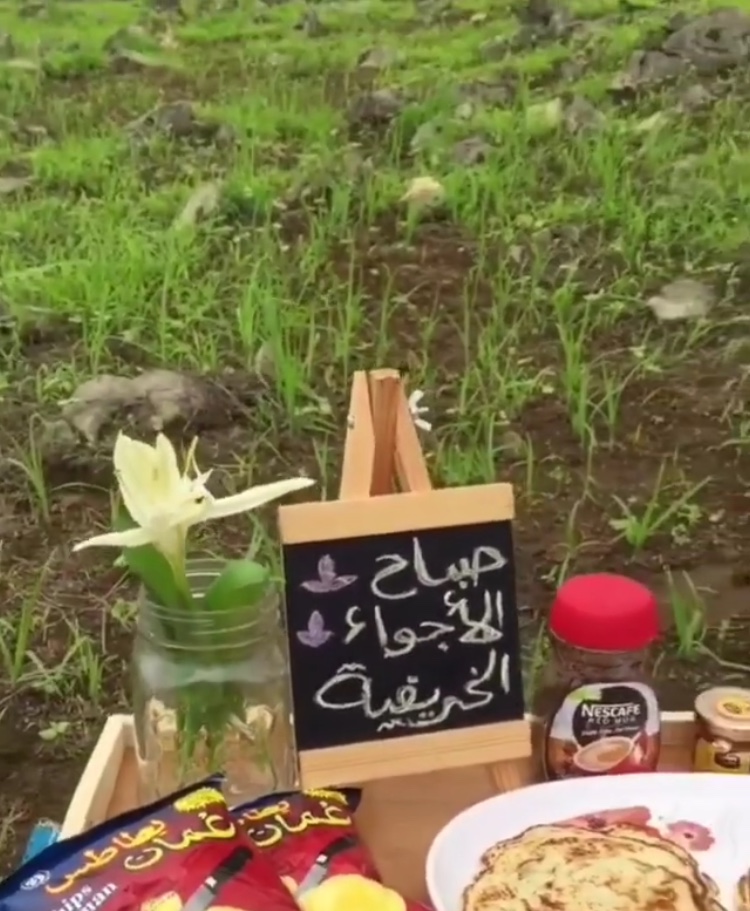
It’s slightly odd to me that there is nothing else in the photo. There is a habit of showing a cup of tea alone (as above), or a tea kettle with cups, but usually shots of eating during khareef have more food items (like the photo below, which has its own mystery: why are there potato chips with the ‘good morning’ sign and pancakes, which signify that this is breakfast. Is it because they are ‘Chips Oman’ and the photographer wanted to emphasize that this is Oman?)

bkfst khareef1

But the biggest question is – what is he pouring the honey on? It that dates or meat? I asked an Omani friend who said, “dates, people from the north do that.” But when I sent the photo to another friend, I got the response, “honey and meat.” So this is something I need to do more research on.

More moments of abductive reasoning come up when looking at photos of foodways in khareef and I have to catch myself when I think, “Why are they doing that?” For example, seeing a video of a man cooking meat while sitting in a chair made me surprised. Cooking in a chair?!? How odd. Then I had to process my surprise – I have never seen a man cook while sitting in a chair in Dhofar, why was that?

A partial answer is in what is cooked and how. In Dhofar, most food I have seen prepared is time-, but not labor-, intensive for cooks. Fish or lobster, for example, can be wrapped in foil, placed in coals and left to cook. Curries require a lot of cutting and then stirring for a few moments, but then can be left to simmer. Cooking meat on heated rocks (madhbi) requires that the cook be next to the rocks, sitting in a chair would be too far away. But visitors in khareef often cook 1) on gas rings or with small metal BBQs, not a fire, and 2) prepared foods which need careful watching such as pancakes, scrambled eggs, and meat kebabs. Further, when Dhofar men have a picnic, they are usually stream-lined: in addition to the food stuffs (meat, vegetables, salt, tea bags, sugar, bottled water, rice and/ or bread) one needs a mat, some wood, a tea kettle, cups, a pot, a knife, and a round plate to cut meat and vegetables on and to eat off of. A big spoon to stir is helpful, but the knife can be used in a pinch; extras like canned milk, fruit, limes, spices, spicy sauce, biscuits etc. are welcome but not necessary. Thus what strikes me as odd in the photo below is not the cows, but the windscreen for the fire. What a luxury to have a metal windscreen instead of tearing cardboard from the box holding the water bottles and propping it up with rocks to screen the fire!

khareef cows

The last photo stunned me: tables! for a picnic! and bolster pillows! My first thought was ‘I want to go on a picnic with you!’ My second was ‘good grief, it must take ages to get the car unpacked and then packed again, and to get those pillows dry.’ This led me to considering the connection between food and relaxation in Dhofar: what is needed to make one comfortable while cooking and eating? Why do I see spartan picnics as preferable? It’s partially because that’s what I am used to, but also a factor of time. I once watched a group of western expats take over an hour to set-up a camp site: foldable picnic table, table for food, table to cook on, tent with groundsheet, chairs, multiple mats. The pièce de résistance was a wooden caddy with two kinds of ketchup, 2 kinds of brown sauce and 2 kinds of mustard.

meal khareef

In Oman, hospitality is linked to speed – the good host gives everything that is available happily, quickly and gracefully. A guest who arrives should not have to wait for the host to produce something intricate or expensive, a simple cup of tea served with kindness is the mark of generosity.

(photos from social media)

Yadav, Stacey Philbrick. Ethnography Is an Option: Learning to Learn in/through Practice. DOI:10.1093/oso/9780190882969.003.0014

What We Talk About When We Talk About Drinks and Sweets in Dhofar

This is the first of a few posts about what kinds of food are eaten/ served to guests on different occasions in Dhofar. These short essays are not meant to be exhaustive or prescriptive. From purchasing food, cooking, eating and doing formal interviews with Dhofari informants for over ten years, as well as academic inquiries, I am attempting to build up a general picture of Dhofari foodways, with the understanding that there are elements I am missing and there is a wide variety of practices between house-holds (n.b., when I write “Dhofari” I am referring to Omanis who live in Dhofar, although there are many people from different countries who live in Dhofar with their own food traditions). For more details, see: Foodways and Society in Dhofar, Oman

All of my informants agree that guests should immediately be offered drinks and sweets, but what are “drinks and sweets”? Even saying “coffee” or “tea” is not that specific because there are several kinds.

There are three main kinds of coffee. The most important and most traditional is qahwa (in Arabic) or “Omani coffee” which is made from roasted coffee beans that are ground, then boiled (plain or with spices), then other spices and flavors (cardamom, ginger, rose water, etc.) are added. In the northern parts of Oman, it is required to serve this with dates; this is also offered in Dhofar, but tea with cakes or qahwa with halwa (see below) can also be served.

“Coffee” can also mean instant coffee, sometimes called Nescafe although there are other brands of instant coffee for sale, which is usually served with canned milk and sugar. “Coffee” can also mean a drink from one of the several kinds of recently introduced coffee-capsule machines. For example, a guest might be offered a caramel macchiato, cappuccino, latte or mochaccino.

Tea is usually “red” tea [chai ahmar] which is black tea with only sugar added, “milk” tea [chai haleeb] which is black tea with canned milk and sugar, or karak which is loose tea with spices and canned milk. Green tea is sometimes offered; iced tea (Lipton cans) is rarely offered.

A selection of cold drinks are usually offered; this includes bottled water because tap water is usually not given to guests. Sodas include Coke and Pepsi products as well as various flavored “malt beverages” which usually have young men playing or watching sports in their advertisements and are packaged in green glass bottles with a shape similar to beer bottles. [see images at the end of this post]

Juices come in cardboard packages with added sugar and marketed to children (e.g. Suntop), clear plastic bottles and large jugs from a Dhofari (A’Safwah) or Saudi (Almarai) brand, or freshly blended and served in a pitcher, usually melon. The Omanis I know usually order fresh lemon with fresh mint in restaurants, but I have never seen that served in a home although I assume some families do. Mango juice is also a popular drink in restaurants but I haven’t seen in homes, probably because it is more labor-intensive to make. There is a vast array of powered fruit drinks available; the powered drink section of one grocery store is about five feet high and over ten feet long. These are loved by kids, but not usually given to guests.

Some changes in drinks over the past ten years include the introduction of soy milk, almond milk and commercially produced camel milk in the refrigerator section of stores. There is a limited, but growing selection of specialty drinks, such as root beer, Arizona Ice Tea, coconut milk and drinks from the Philippines.

Processed milk comes from three firms: A’Safwah (Dhofari), Al Razat (Dhofari) and Al Almarai (Saudi) (see images below). There have been a lot of changes over the last ten years, including offering plain milk in different sized containers and new types of milk such as low-fat and flavored with chocolate and strawberry. A’Safwah (Dhofari) and Al Almarai (Saudi) have a long running competition with milk-based products: if one introduces a new product, the other will have the same within a few months so there are now all sorts of choices such as low-fat and flavored yogurts and different kinds of cooking creams.

Before modernization, the more frequent drink was milk from goats, cows or camels – many families still drink it unprocessed. In the past, and sometimes now on picnics if someone is feeling nostalgic, rocks are cleaned and then put on coals to be heated. Once hot, they were dropped one by one into a bowl of camel’s milk. [see images at end of this post]. Camels and cows are milked by men; with camels, the man and camel are both standing. Men usually milk goats, but women will also do so.

Omani halwa (the Arabic word for sweet) is made with sugar, water, clarified butter, cornstarch and flavorings such as cardamom, saffron, sesame seeds, almonds and cashews. It is slow cooked in large batches and then poured into various-sized plastic trays and bowls. The color varies from a light blond to almost black to reddish depending on ingredients. The consistency is like a tough Jell-O. To eat, one scoops out a teaspoon- to tablespoon-sized piece with a spoon and eats it plain or plops the piece on of a small piece of a thin, plain cracker-like bread (khoubz raqaq/ raqeeq or kak) and eats both together. You usually take some mouthful by mouthful.

Snacks for guests include home-made and store-bought mini-cheesecakes, basbousa (usually flavored with coconut), baklava, small pieces of fried dough, mini-pizzas, etc. Fresh fruit is usually also put out, either whole or as a fruit salad with small bowls to take a serving, Whole fruits are usually grapes, oranges, and apples, as well as bananas which are grown in Dhofar. Although guava, mangos, papayas are also grown in Dhofar, they are not set out but found chopped into the fruit salads.

Images of drinks

Stills from a Ramadan greeting video in which a man is taking a heated stone from the fire (left) and placing it into a pan of fresh camel milk (right)

Processed milk

The “beer” in Root beer and Ginger Beer  are changed to “Bev”

IMG_2474

Various drinks packaged in ways that are similar to alcoholic beverages.