“Arabic Coffee,” a poem by Naomi Shihab Nye

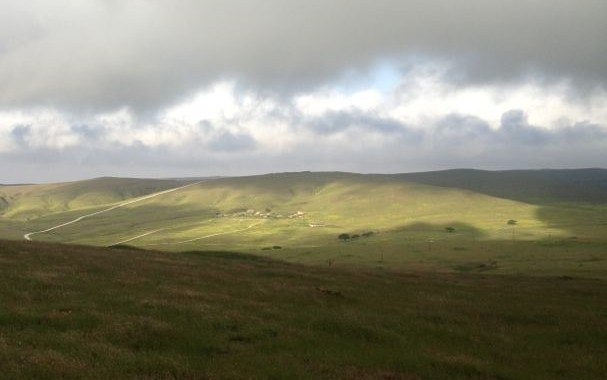
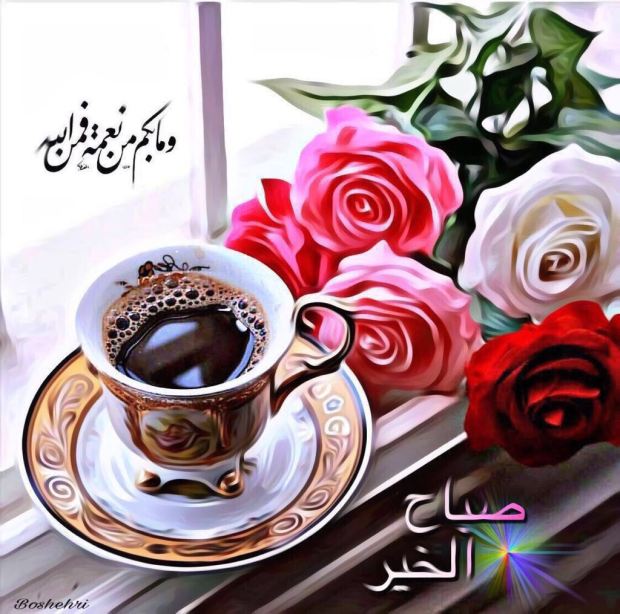
A lovely poem by a wonderful poet.   (complete image is below)

It was never too strong for us:

make it blacker, Papa,

thick in the bottom,

tell again how the years will gather

in small white cups,

how luck lives in a spot of grounds.

Leaning over the stove, he let it

boil to the top, and down again.

Two times. No sugar in his pot.

And the place where men and women

break off from one another

was not present in that room.

The hundred disappointments,

fire swallowing olive-wood beads

at the warehouse, and the dreams

tucked like pocket handkerchiefs

into each day, took their places

on the table, near the half-empty

dish of corn. And none was

more important than the others,

and all were guests. When

he carried the tray into the room,

high and balanced in his hands,

it was an offering to all of them,

stay, be seated, follow the talk

wherever it goes. The coffee was

the center of the flower.

Like clothes on a line saying

You will live long enough to wear me,

a motion of faith. There is this,

and there is more.

Nye, Naomi Shihab. (2002). Arabic Coffee. Poems by Naomi Shihab Nye. Now Classroom. http://www.pbs.org/now/arts/nyepoems2.html

Essays about Teaching Poems

John Clare Looks Good in a Dishdash: Linking John Clare to Middle Eastern Poetry

Marlowe in Salalah: Making English Poetry Relevant – 2008

Teaching Literature and Staying au courant – The Man from Nowhere and the Ancient Greeks

Foodways and Literature – Food Stories and Poems

Foodways and Literature – Animal Poems

Teaching Paired Literary Texts

Translating Western Conceptions of “Nature” to the Middle East – 2009
gm - coffee 2

‘Little c’ Culture: Flooded Roads and Cheese Triangles

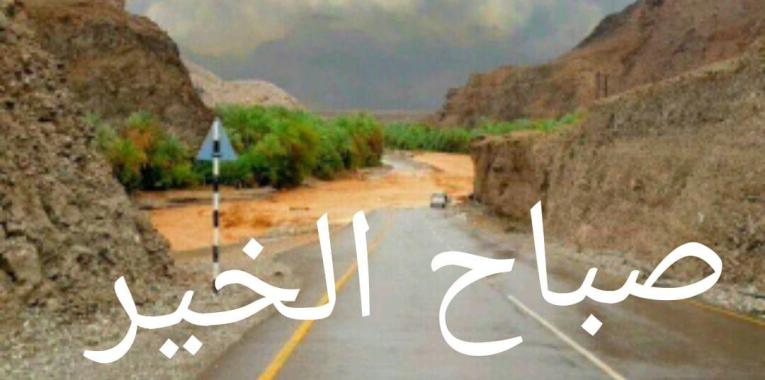
I am interested in ‘little c’ culture – everyday life examples of the values and principles of a culture, not the grand statements. For example, I love this ‘good morning’ greeting (see end of essay). It looks odd at first: “Good morning! The road is flooded and you can’t drive!” In some cultures it might be seen as sarcastic, but here it is heartfelt. Water is a blessing and it’s wonderful to have the wadis full. On the other hand, flooding can be dangerous and both the central government and civic entities work to limit damage by installing flood markers along roads; giving frequent forecasts and warnings; sending military personal to make sure no one attempts to go into flooded areas; and maintaining and training rescue teams, including helicopters.

Two keys to the image (which is don’t think is from Dhofar) are the trees and the clouds. The trees give the reason that the flood is good – periodic inundation means healthy plants and abundant crops. In Western cultures, clouds are a negative symbol, meaning something unclear, blighted, disappointing, but on the Arabian Peninsula clouds are positive. These clouds (which might be a little photoshopped) bring joy, not just for the rain but a respite from the sun. It’s telling that Arab cultures celebrate the moon (the nicest compliment for a woman is that she looks like the moon) while Western songs and poems celebrate the sun (“You are My Sunshine,” “Here Comes the Sun,” “I’ll Tell You How the Sun Rose” by Emily Dickinson, “The Sun Rising” by John Donne and “Solar” by Philip Larkin:

Suspended lion face
Spilling at the centre
Of an unfurnished sky
How still you stand,
And how unaided
Single stalkless flower
You pour unrecompensed.

The eye sees you
Simplified by distance
Into an origin,
Your petalled head of flames
Continuously exploding.
Heat is the echo of your
Gold.

Coined there among
Lonely horizontals
You exist openly.
Our needs hourly
Climb and return like angels.
Unclosing like a hand,
You give for ever.

Another examples of  “little c” culture is the cheese sambosas that are a common Iftar treat in Dhofar. My first year here, I attended an all expat women’s Iftar and someone brought cheese sambosas. I was in heaven! Fried cheese pastries, what more could I want? I asked where they came from and was told a bakery. A few days later, I went to a bakery to buy some but none were available. I checked several more places and no luck.

I asked a Dhofari and was told that they usually made at home. Only a few places sold them and then only during Ramadan, which by now had ended. So I waited until the next Ramadan and went searching again, no luck. WHERE ARE THEY HIDING? I asked Dhofari friends and finally learned that they are usually only sold in the 2 hours before Iftar, and only in bakeries with special outdoor stands. I had been walking into bakeries during the morning when I should gone looking at 5pm for bakeries with sloping glass-front display cases set up outside the store.The clues had been there – but I hadn’t read them correctly. Now I am an expert at buying cheese sambosas, but I will never ever tell a Dhofari how I eat them (cold for breakfast with English-style chutney).

good moring - road flooded

Bibliographies: Research on Dhofar, Food & Anthropology, and Teaching Literature

(photo by M. A. Al Awaid)

Bibliography of Works Consulted for Research on Dhofar, Oman

Annotated Bibliography of Texts Pertaining to the Dhofar Region of Oman

Selected References for Research on Foodways and Society in Dhofar, Oman  – primarily texts relating to food/ cooking/ cuisine and anthropology

Selected Bibliography: Primary and Secondary Texts for Literature Teachers on the Arabian Peninsula